The New Narrative of the $5000 Era: The 'Old King' Returns to the Throne, How to Understand the Tokenization Logic of Gold?

比推Publicado a 2026-01-28Actualizado a 2026-01-28

Resumen

Gold is experiencing a historic rally, surpassing $5,000 per ounce, driven by macro uncertainties, geopolitical risks, and concerns over dollar stability. This resurgence reaffirms gold’s role as a consensus asset independent of sovereign promises. However, traditional gold—whether physical bars with high storage costs or paper gold/ETFs limited to institutional liquidity—fails to meet modern needs for flexibility and usability. Tokenized gold, like Tether’s XAUt, bridges this gap by combining physical backing (each token represents one ounce of auditable gold) with blockchain-based liquidity. Unlike paper gold, tokenized gold enables global, 24/7 transfer, fractional ownership, and interoperability with other digital assets and DeFi protocols. It transforms gold into a versatile, digitally native asset that can be held in self-custody wallets (e.g., imToken Web), used in payments, or integrated into broader financial strategies. This shift modernizes gold’s utility while preserving its timeless value as a hedge against uncertainty.

Author: imToken

Original Title: The New Narrative of the $5000 Era: The 'Old King' Returns to the Throne, How to Understand the Tokenization Logic of Gold?


If someone had told you a year ago that gold would quickly rise to $5000 per ounce, most people's first reaction would probably have been that it was wishful thinking.

But that's exactly what happened. In just half a month, the gold market has been like a runaway horse, successively breaking through multiple historical barriers at $4700, $4800, and $4900 per ounce, and heading toward the $5000 moment that the market collectively anticipated with almost no looking back.
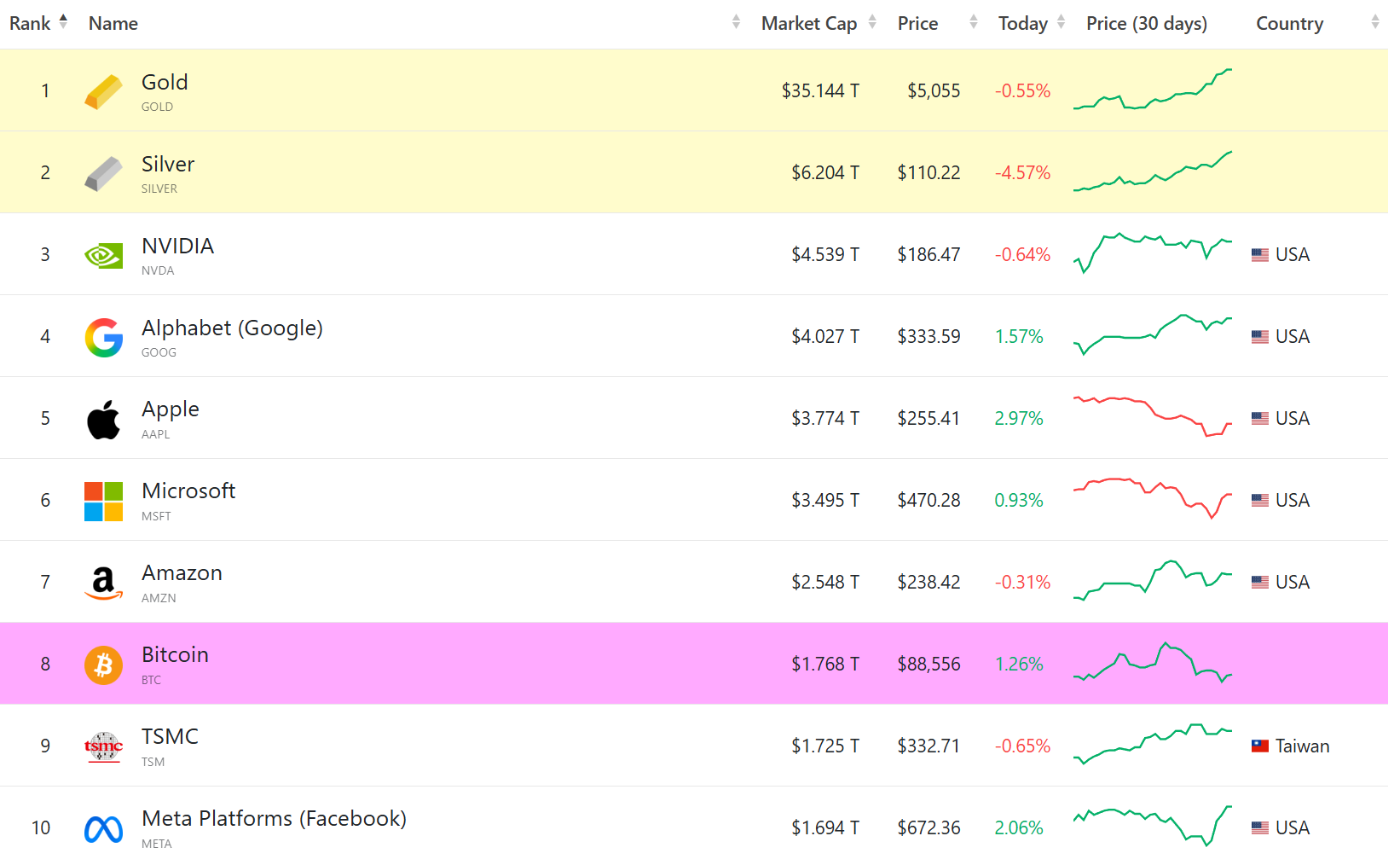
Source: companiesmarketcap.com

It can be said that after global macroeconomic uncertainties have been validated repeatedly, gold has returned to its most familiar position—as a consensus asset that does not rely on any single sovereign promise.

But at the same time, a more practical question is emerging: as the gold consensus returns, are traditional methods of holding it no longer sufficient to meet the demands of the digital age?

I. The Inevitability of the Macro Cycle: The 'Old King' Returns to the Throne

From a longer macroeconomic cycle perspective, this round of gold's upward cycle is not short-term speculation but a structural return against the backdrop of macroeconomic uncertainty and a weakening US dollar:

Geopolitical risks have extended from Russia-Ukraine to key resource and shipping lane regions such as the Middle East and Latin America; the global trade system has been repeatedly interrupted by tariffs, sanctions, and policy games; the US fiscal deficit continues to expand, and the long-term stability of the US dollar's credit is being discussed more frequently. In such an environment, the market will undoubtedly accelerate its search for a value anchor that does not rely on any single country's credit and does not require endorsement from others.

From this perspective, gold does not need to prove that it can generate returns; it only needs to repeatedly prove one thing: in an era of credit uncertainty, it still exists.

This also partly explains why BTC, which was once expected to be a 'digital gold,' has not fully assumed the same consensus role in this cycle—at least in the dimension of macroeconomic hedging, the choices of capital have already provided the answer, which we will not elaborate on here (for further reading, see 'From Trustless BTC to Tokenized Gold: Who Is the Real 'Digital Gold'?').

However, the return of the gold consensus does not mean that all problems have been solved. After all, for a long time, investors have almost had to choose between two imperfect ways of holding gold.

The first is physical gold. It is secure enough and sovereign, but it almost lacks liquidity. Locking gold bars in a safe means high storage, anti-theft, and transfer costs, and it also means that it can hardly participate in real-time trading or daily use.

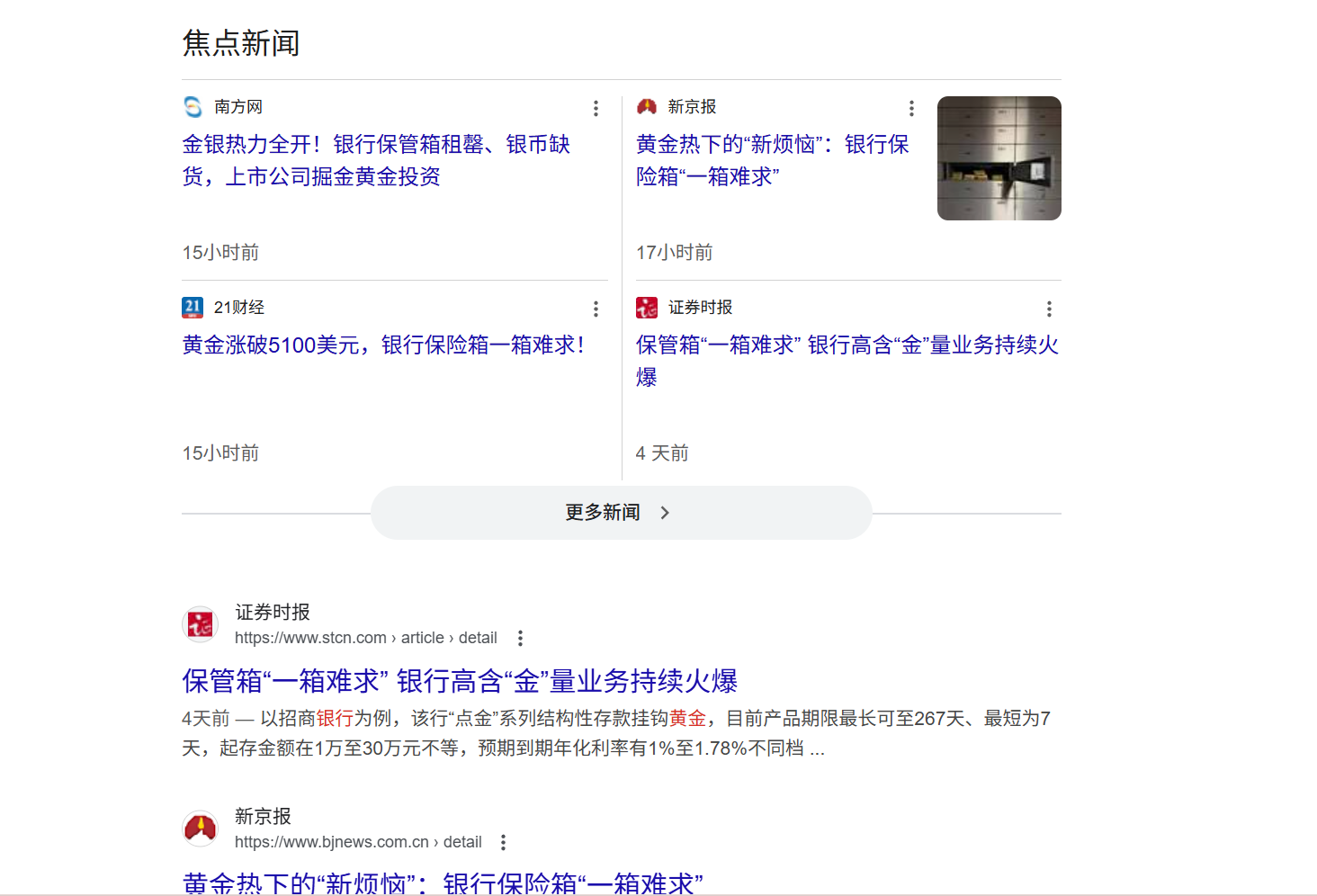
The recent phenomenon of 'no safe deposit boxes available' in many banks precisely illustrates that this contradiction is being amplified, meaning that more and more people want to hold gold in their own hands, but reality does not always cooperate.
The second is paper gold or gold ETFs. They somewhat make up for the physical holding threshold of physical gold. For example, paper gold products issued by bank accounts or brokerage systems are essentially a claim on financial institutions, giving you a settlement promise backed by the account system.

However, the problem is that this liquidity itself is not complete—what paper gold and gold ETFs provide is only liquidity locked within a single financial system. It can be bought and sold within a specific bank, exchange, or clearing system but cannot be freely transferred outside this system.

This means it cannot be split, combined, or collaborated with other assets across systems, let alone used directly in different scenarios. It is only 'in-account liquidity,' not true asset liquidity.

For example, the first gold investment product I owned, 'Tencent Micro Gold,' was like this. From this perspective, paper gold does not truly solve the liquidity problem of gold but only temporarily replaces the inconvenience of physical form with counterparty credit.

In the end, security, liquidity, and sovereignty have long been in a state where it is difficult to have all three. And in a highly digitalized and cross-border era, such trade-offs are becoming increasingly unsatisfactory.

It is against this background that tokenized gold has begun to enter the视野 of more people.

II. Tokenized Gold: Returning 'Complete Liquidity' to the Asset Itself

Tokenized gold, represented by XAUt (Tether Gold) issued by Tether, attempts to solve not just the surface-level problem of 'making gold easier to hold/trade,' which paper gold can also achieve, but a more fundamental proposition:

How can gold achieve the same complete liquidity and composability as crypto assets that can flow across systems, without sacrificing its 'physical backing'?

If we take XAUt as an example and dissect its design logic, we will find that it is not radical but even quite traditional and restrained: each XAUt token corresponds to 1 ounce of physical gold in a London vault, and the physical gold is stored in professional vaults, auditable and verifiable, while tokenized gold holders have the right to claim the underlying gold.

This design does not introduce complex financial engineering, nor does it attempt to amplify gold's attributes through algorithms or credit expansion. Instead, it deliberately maintains respect for the traditional gold logic—first ensuring the physical attribute is established, then discussing the changes brought by digitization.

In the final analysis, tokenized gold like XAUt and PAXG is not 'creating a new gold narrative' but is repackaging the oldest asset form in a blockchain way. So in this sense, XAUt is more like a 'digital physical gold' than a speculative derivative in the crypto world.

But at the same time, the more important change lies in the fundamental shift in the liquidity level of gold. As mentioned above, in the traditional system, whether it is paper gold or gold ETFs, the so-called liquidity is essentially in-account liquidity—it exists within a specific bank, brokerage, or clearing system and can only be bought, sold, and settled within set boundaries.

The liquidity of XAUt is directly attached to the asset itself. Once gold is mapped as an on-chain token, it naturally possesses the basic attributes of crypto assets: it can be freely transferred, split, combined, and circulated among different protocols and applications without needing permission from any centralized institution.

This means that for the first time, gold no longer relies on an 'account' to prove its liquidity but exists as the asset itself, circulating freely globally 24/7. In the on-chain environment, XAUt and others are no longer just 'tradable gold tokens' but basic asset units that can be recognized, called, and combined by other protocols:

  • It can be freely exchanged with stablecoins and other assets;

  • It can be incorporated into more complex asset allocation and combination strategies;

  • It can even be used as a value carrier to participate in consumption and payment scenarios;

This is precisely the part of 'liquidity' that paper gold has never been able to provide.

III. From 'On-Chain' to 'Usable': The True Watershed for Digital Physical Gold

For this reason, if tokenized gold only completes the step of 'going on-chain,' it is far from reaching the finish line.

The true watershed lies in whether this 'digital physical gold' can truly be easily held, managed, traded, and even used as 'currency' for consumption and payment by users? That is, returning to the point mentioned above, if tokenized gold remains just a string of code on the chain and is ultimately encapsulated within a centralized platform or a single entry point, then it is no different from paper gold.

Against this background, the significance of lightweight self-custody solutions like imToken Web begins to emerge. Taking imToken Web's exploration as an example, it allows users to access it through a browser—like opening a webpage, instantly managing their tokenized gold and other crypto assets on any device.

Moreover, in a self-custody environment, the private key is entirely controlled by the user. Your gold does not exist on any service provider's server but is truly in a blockchain address.

Additionally, thanks to the interoperability of Web3 infrastructure, XAUt is no longer a heavy metal sleeping in a safe. It can be used as a flexible small-asset purchase and can also, when needed, release gold's purchasing power into global consumption scenarios in real time through payment tools like the imToken Card.
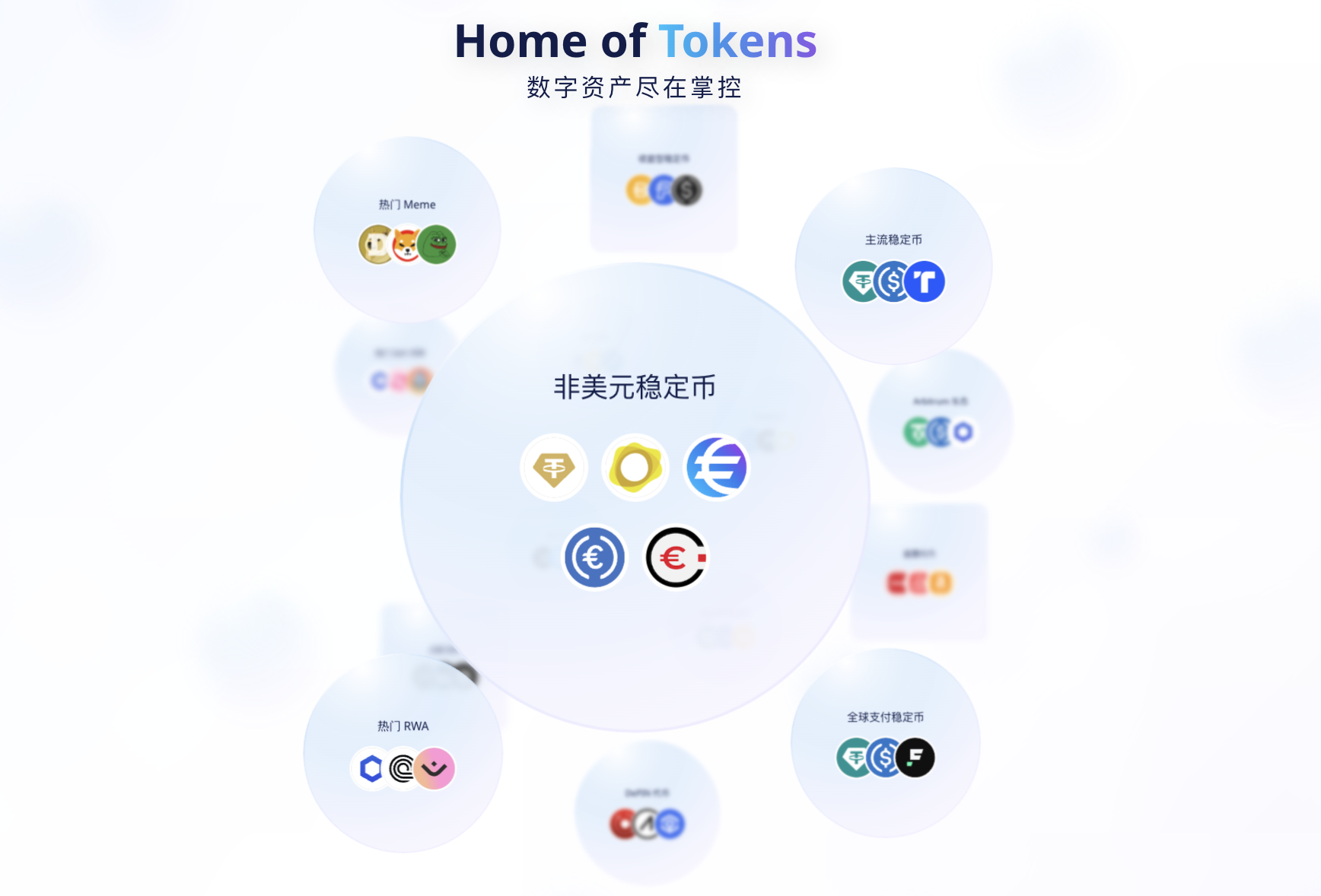
Source: imToken Web

In short, in the Web3 environment, XAUt can not only be traded but also combined with other assets, exchanged, and even connected to payment and consumption scenarios.

And when gold simultaneously possesses extremely high storage certainty and modern usage potential for the first time, it truly completes the leap from an 'old-school safe haven' to a 'future currency.'

After all, gold, as a consensus that can span millennia, is not inherently outdated; what is outdated is only the way of holding it.

Therefore, when gold enters the chain in the form of XAUt and returns to personal control through self-custody environments like imToken Web, what it continues is not a new narrative but a logic that spans eras:

In an uncertain world, true value is to rely as little as possible on the promises of others.


Twitter:https://twitter.com/BitpushNewsCN

Bitpush TG Discussion Group:https://t.me/BitPushCommunity

Bitpush TG Subscription: https://t.me/bitpush

Original link:https://www.bitpush.news/articles/7606562

Criptos en tendencia

Preguntas relacionadas

QWhat is the main reason for gold's recent surge to $5000 per ounce according to the article?

AThe article attributes gold's surge to macro uncertainties and a weakening US dollar, driven by geopolitical risks, disruptions in global trade systems, and concerns over the long-term stability of the US dollar's credit.

QWhat are the two traditional ways of holding gold mentioned, and what are their limitations?

AThe two traditional ways are physical gold (secure but illiquid with high storage and transfer costs) and paper gold or gold ETFs (offering limited liquidity within specific financial systems but lacking true cross-system flexibility and usability).

QHow does tokenized gold, like XAUt (Tether Gold), aim to improve gold's liquidity?

ATokenized gold represents physical gold on the blockchain, providing full liquidity and composability. It can be freely transferred, split, combined, and used across different protocols and applications without relying on centralized institutions, enabling global 24/7 circulation.

QWhat role does imToken Web play in the context of tokenized gold?

AimToken Web offers a lightweight self-custody solution that allows users to manage tokenized gold (like XAUt) through a browser, with private keys controlled by the user. It enables easy access, trading, and even spending of gold via tools like imToken Card in global consumption scenarios.

QHow does tokenized gold bridge the gap between traditional gold and modern digital assets?

ATokenized gold combines the high store-of-value certainty of physical gold with the liquidity, divisibility, and usability of digital assets. It allows gold to be traded, combined with other assets, and used in payments, making it a 'digital physical gold' rather than just a speculative derivative.

Lecturas Relacionadas

Base Under Pressure

**Title: The Pressure Mounts for Base** Base, the Ethereum Layer 2 scaling solution backed by Coinbase, is facing significant pressure and public scrutiny from its leadership following the launch of Robinhood Chain. Base co-founder Jesse Pollak recently acknowledged strategic missteps, admitting that the chain's past focus on social and creator tokens (e.g., through Farcaster, Zora) failed to deliver sustainable adoption. He has refocused on core infrastructure, handing leadership of the Base App back to Coinbase's Cobie. While Base remains a top L2 contender alongside OP Mainnet and Arbitrum, and boasts the highest TVL (nearly $12B), its weaknesses are being highlighted by the new competitor. Key criticisms include its slow progress on decentralization. Base has faced issues with its single sequencer causing block production halts, and L2BEAT is reportedly considering downgrading its decentralization rating from Stage 1 to Stage 0. This contrasts sharply with the rapid initial success of Robinhood Chain, whose DEX quickly entered the top five by volume. The leadership styles of the parent companies are also being compared: Robinhood's CEO actively engages with new projects, while a recent incident where Coinbase's Brian Armstrong briefly changed his profile picture—sparking and then crashing a related meme token—drew community ire and mockery. Pollak stated Base is working with Coinbase on tokenized stocks backed 1:1 by real equity, differentiating it from Robinhood's derivatives model. However, the article argues that Base's most urgent task is to address its long-standing technical and trust issues. With more traditional finance players likely to emulate Robinhood's path, Base must use this competitive pressure to solidify its position as long-term financial infrastructure.

Foresight NewsHace 5 min(s)

Base Under Pressure

Foresight NewsHace 5 min(s)

White House Concession Removes Ethical Hurdle, Clarity Act Races Against Final Window Before Recess?

On July 21st, industry sources reported that the Trump administration has agreed to include an ethics provision in the "Clarity Act" (Digital Asset Market Clarity Act of 2025). This concession addresses the long-standing conflict-of-interest concerns regarding government officials and the crypto industry, potentially removing the final major obstacle to the bill's progress. Additionally, Patrick Witt, the executive director of the White House's Digital Asset Advisory Committee, confirmed he will remain in his role to help finalize the bill, alleviating previous concerns about his potential departure. The Clarity Act aims to establish a unified federal regulatory framework for the U.S. digital asset market. Its core objective is to resolve regulatory ambiguity by defining different types of digital assets (digital commodities, investment contract assets, and permitted payment stablecoins) and clarifying the respective oversight roles of the SEC and CFTC. This would end the long-running jurisdictional dispute between the two agencies and provide clearer compliance paths for the industry. With the ethics issue moving toward resolution, the most urgent challenge now is time. The U.S. Congress is set to begin its August recess in mid-August, leaving only a few working weeks to finalize the text and advance the bill through the Senate. Industry advocates, like the Blockchain Association's Kristin Smith, stress that this is a critical moment. If negotiations conclude successfully in the coming weeks, the Clarity Act could pass a key hurdle before the recess; otherwise, it may face significant delays. If enacted, the Clarity Act could mark a historic turning point in crypto regulation. By providing a clearer and more predictable legal framework, it aims to reduce uncertainty for businesses, developers, and traditional financial institutions looking to enter the digital asset space, potentially setting a global benchmark for market structure regulation.

Odaily星球日报Hace 10 min(s)

White House Concession Removes Ethical Hurdle, Clarity Act Races Against Final Window Before Recess?

Odaily星球日报Hace 10 min(s)

AI Era, Industrial Revolution, and Future Civilization Interview — Zhang Dingwen: The Future Does Not Belong to Chasers

"AI Era, Industrial Revolution and Future Civilization: An Interview with Zhang Dingwen – The Future Does Not Belong to Those Who Chase" In this interview, entrepreneur Zhang Dingwen reflects on his entrepreneurial journey and philosophy, moving beyond discussions of financing or success to emphasize understanding the "era" itself. He argues that true entrepreneurs should not chase short-term trends ("winds"), but position themselves in the direction of long-term technological and societal evolution. Zhang shares key lessons from his early days, including the realization that user value does not automatically translate to commercial value. For him, the core of entrepreneurship is not building a company but constantly upgrading one's own "cognition" – the ability to interpret information, ask the right questions, and understand the underlying "causes" behind business outcomes, not just the effects. His thinking has evolved from a focus on creating good products to a strategic focus on building "entrances" – platforms that naturally connect users to digital services. He sees smart wearables, like watches, not merely as hardware but as potential future gateways combining technological, financial, social, and even fashion attributes to create sustained user relationships and ecosystems. Ultimately, Zhang's vision transcends individual products or companies. He discusses business competition in three stages: product, platform, and finally, "civilization" – where the greatest companies influence how society operates by defining new rules and ways of life. He believes the mission of a truly great enterprise is to solve problems of its time, build enduring trust, and contribute lasting value, leaving behind not just wealth but a positive impact on how the world works. The future, he concludes, belongs not to the fastest, but to those with the correct long-term direction and a commitment to continuous learning and evolution.

marsbitHace 21 min(s)

AI Era, Industrial Revolution, and Future Civilization Interview — Zhang Dingwen: The Future Does Not Belong to Chasers

marsbitHace 21 min(s)

Cryptocurrency & Stock Market Barometer丨Strategy Cash Reserves Increase to $3.23 Billion, Halting BTC Purchases; Vanguard and Other Asset Managers Increase Holdings in Strategy Stock (July 21)

Market Overview & Warnings: The article warns of high volatility in South Korean stocks and continued dependence on U.S. stocks on geopolitics. Chinese A-shares remain under pressure. It advises against using leverage in current equity markets. For crypto-linked stocks, most have limited growth except Robinhood, with caution advised. U.S. Stock Market: Bearish bets on U.S. stocks, particularly targeting AI-related companies, have reached record highs since 2010, signaling deep skepticism about the sustainability of the AI-driven rally. Tech and chip stocks led a market decline, with the Philadelphia Semiconductor Index potentially entering a bear market. Increased expectations for Federal Reserve interest rate hikes and geopolitical tensions contributed to the negative sentiment. Bitcoin Treasury Company Updates: * Strategy: Increased its cash reserves to $3.23 billion and paused Bitcoin purchases. Several major asset managers, including Vanguard Group and Capital Group, increased their holdings of Strategy (MSTR) stock. * Global corporate Bitcoin buying slowed significantly to just $1.33 million last week. * Other notable activity: Strive purchased 21 BTC; ORANGE JUICE raised $40 million for Bitcoin acquisitions; Bitcoin Japan Corp. raised $60 million, allocating $4.08 million for its first BTC purchase. Other Crypto Treasury Holdings: * Ethereum: BitMine increased its ETH holdings to 5.78 million, nearing its 5% of supply goal. Its total crypto assets, cash, and securities are valued at $11.5 billion. * Solana: No significant corporate treasury activity reported. * Altcoins: HypeStrat made no adjustments to its treasury; its mNAV ratio fell to a long-term low. (Note: This summary is for informational purposes only and does not constitute investment advice.)

marsbitHace 22 min(s)

Cryptocurrency & Stock Market Barometer丨Strategy Cash Reserves Increase to $3.23 Billion, Halting BTC Purchases; Vanguard and Other Asset Managers Increase Holdings in Strategy Stock (July 21)

marsbitHace 22 min(s)

Trading

Spot

Artículos destacados

Cómo comprar ERA

¡Bienvenido a HTX.com! Hemos hecho que comprar Caldera (ERA) sea simple y conveniente. Sigue nuestra guía paso a paso para iniciar tu viaje de criptos.Paso 1: crea tu cuenta HTXUtiliza tu correo electrónico o número de teléfono para registrarte y obtener una cuenta gratuita en HTX. Experimenta un proceso de registro sin complicaciones y desbloquea todas las funciones.Obtener mi cuentaPaso 2: ve a Comprar cripto y elige tu método de pagoTarjeta de crédito/débito: usa tu Visa o Mastercard para comprar Caldera (ERA) al instante.Saldo: utiliza fondos del saldo de tu cuenta HTX para tradear sin problemas.Terceros: hemos agregado métodos de pago populares como Google Pay y Apple Pay para mejorar la comodidad.P2P: tradear directamente con otros usuarios en HTX.Over-the-Counter (OTC): ofrecemos servicios personalizados y tipos de cambio competitivos para los traders.Paso 3: guarda tu Caldera (ERA)Después de comprar tu Caldera (ERA), guárdalo en tu cuenta HTX. Alternativamente, puedes enviarlo a otro lugar mediante transferencia blockchain o utilizarlo para tradear otras criptomonedas.Paso 4: tradear Caldera (ERA)Tradear fácilmente con Caldera (ERA) en HTX's mercado spot. Simplemente accede a tu cuenta, selecciona tu par de trading, ejecuta tus trades y monitorea en tiempo real. Ofrecemos una experiencia fácil de usar tanto para principiantes como para traders experimentados.

420 Vistas totalesPublicado en 2025.07.17Actualizado en 2026.06.02

Cómo comprar ERA

Discusiones

Bienvenido a la comunidad de HTX. Aquí puedes mantenerte informado sobre los últimos desarrollos de la plataforma y acceder a análisis profesionales del mercado. A continuación se presentan las opiniones de los usuarios sobre el precio de ERA (ERA).

活动图片