The Most Miserable Public Offering: Over $60 Million Raised, Infinex's Public Sale Attracts Only $460,000 After 1 Day

marsbitPublicado a 2026-01-06Actualizado a 2026-01-06

Resumen

Infinex, a prominent crypto project founded by Synthetix creator Kain Warwick, has experienced one of the most disappointing public token sales in recent memory. Despite raising over $65 million in earlier funding rounds from major VCs and industry figures, its public sale—launched in early 2026—attracted only $460,000 within the first 30 hours, less than 10% of its reduced $5 million goal. The project had already significantly lowered its valuation from $300 million to $100 million in response to weak market conditions. However, strict participation limits—capping contributions at $2,500 per address—and a one-year token lockup deterred wider interest. Even after removing the cap and adjusting allocation rules, participation remained low, with only 508 transactions totaling $1.34 million by the following day. Infinex aims to offer a unified DeFi interface with perpetual contracts, cross-chain bridging, and simplified key management. But its failed sale highlights deeper structural issues in the current market: declining risk appetite, reduced on-chain activity, and growing investor skepticism toward long lockups and high valuations. This case may signal challenges for other upcoming token launches in a cooling market.

Author: Gu Yu, ChainCatcher

Just a few days into 2026, the most dismal public offering of a well-known project in the crypto industry in recent years may have already occurred: nearly 30 hours after the Infinex token public sale launched, the subscription amount was only $460,000, less than 10% of the target.

It's important to note that the Infinex project team had already considered the bleak market conditions and made significant concessions in valuation, fundraising targets, and terms. The valuation for this public offering was drastically reduced from the $300 million announced last November to $100 million, and the planned fundraising amount was cut from $15 million to $5 million.

Even with such drastic adjustments, Infinex's public offering still met with a cold reception from the market, which came as a surprise to many observers. After all, Infinex, as a star project, had previously raised over $60 million, and its founding team and investor background are very impressive. Infinex's situation is a true reflection of the current downturn in the crypto market.

What is the Infinex Project?

Founded by DeFi OG and Synthetix founder Kain Warwick, Infinex became independent from Synthetix in 2023. Initially positioned as a decentralized perpetual contract protocol, it has gradually evolved into a comprehensive crypto application that allows users to seamlessly switch between different DeFi protocols and chains on a unified interface. Its current focus is on perpetual contracts based on Hyperliquid, cross-chain bridging and trading, multi-chain asset management, yield earning, and other functions.
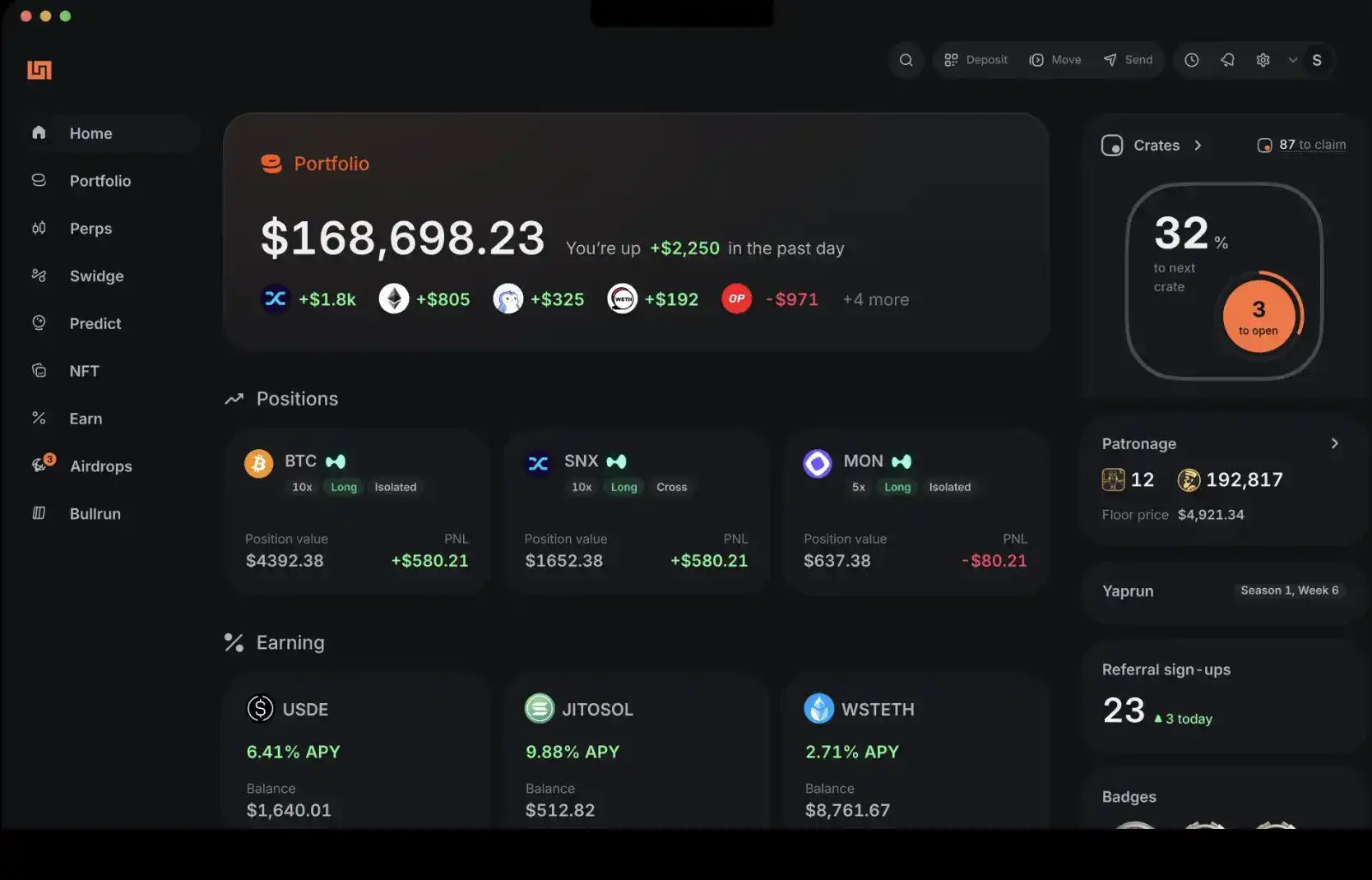
Another main feature is its use of a new security architecture centered on on-chain smart accounts and keys, which replaces traditional seed phrases and email modes, making login more convenient and faster. It also supports using biometric technology (touch or face ID) for on-chain transaction signing.

Overall, Infinex aims to be user-experience oriented, emphasizing lowering user barriers, integrating multi-chain liquidity, and attempting to solve the long-standing issues of complexity and asset fragmentation in DeFi at the product level.

In October 2024, Infinex recently raised $65.3 million in sponsorship revenue by selling "Patron NFTs," which were sold in four rounds to retail traders, venture capital firms like Solana Ventures and Breyer Capital, and well-known individuals such as Solana founder Anatoly Yakovenko and Aave founder Stani Kulechov, totaling 41,252 NFTs.

Infinex recently revealed in an article that the implied valuation for this NFT financing round was $400 million, and participants have priority allocation rights in the latest public sale round.
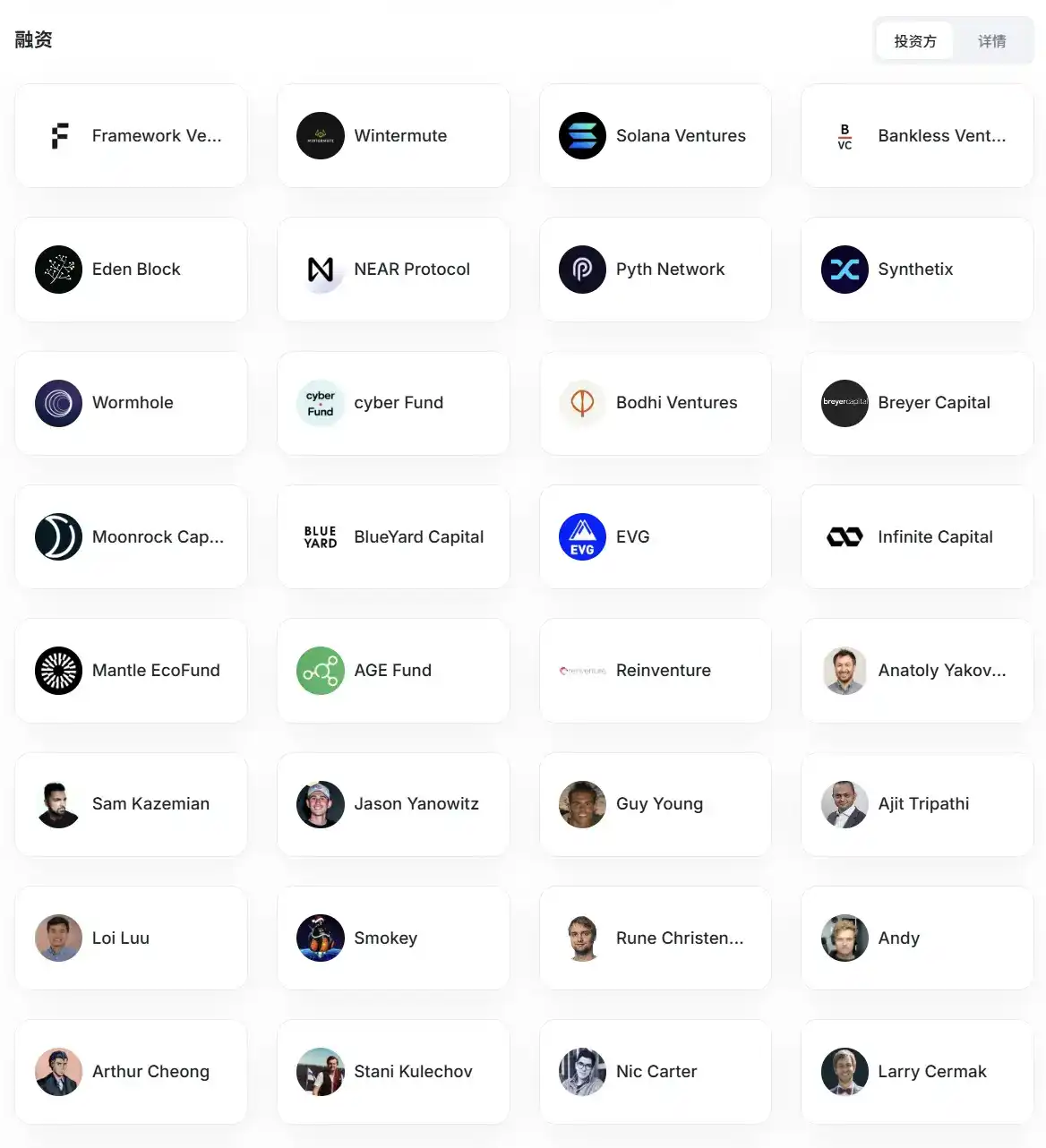
Infinex Investor Lineup Source: RootData

Why Did the Public Sale Flop?

From $65.3 million to $460,000, Infinex's public sale has experienced a stark contrast in treatment. While the bleak market is certainly a factor, the primary issue lies in the project team's strategic missteps.

According to the public sale rules, Infinex limited each address to a maximum investment of $2,500. This setting was intended to attract more participants and reduce the impact of whale addresses on token concentration. Although the intention was positive, market feedback shows that the team did not consider that the number of active on-chain users is far lower than expected in the recent sluggish market. Only 285 addresses participated in the public sale after it launched, with only 134 addresses reaching the $2,500上限.

Infinex's latest tweet response expressed a similar sentiment: "We tried to balance existing NFT patrons, new participants, and fair distribution, but the result was that almost no one was willing to participate in this sale."

All INX tokens purchased in this public sale will be locked for 1 year, which is unusually long compared to other public sales. Although buyers can choose to redeem the tokens early, the purchase valuation must be correspondingly increased to $300 million.

Furthermore, the significant valuation下调 may have also played a negative role. Although Infinex's intention in lowering the valuation was to show goodwill to the market, such a drastic adjustment objectively intensified the wait-and-see sentiment among some investors. For some participants, the "plunge-like correction" in valuation反而 reinforced their judgment of a downward trend in the overall industry expectations, rather than constituting a reason to enter.

In response to the糟糕的公募状况, Infinex announced on January 5th the removal of the per-address maximum limit and a change from random allocation to a "max-min fair distribution," also known as "waterfall allocation." Everyone's allocation will increase equally until the上限 is reached or sold out.Infinex founder Kain Warwick also tweeted that he would fund the project's operations himself if necessary.

However, even after the rule adjustments, the market still did not respond positively. As of noon on January 6th, on-chain data showed that the cumulative investment in this public sale was $1.34 million from 508 transactions, still $3.66 million short of the $5 million target. This suggests that the problem may not just be "unfriendly rule design" but rather a systematic decline in investors' interest in participating in such public sales.

The Deep Structural Contradictions of the Public Sale Model

To some extent, Infinex's public sale failure is particularly striking because it occurred at a time when "ICOs seem to be warming up."

Since the second half of 2025, as Bitcoin prices stabilized and some sectors experienced阶段性反弹, discussions about "primary market recovery" in the crypto market have gradually increased. Projects like Monad, Pump.Fun, Plasma, Falcon Finance, and others have重新 chosen token public sales for fundraising. The ICO public sale model, which had been明显边缘化 in the past two years, began to reappear in the industry's视野, with fundraising platforms like Buidlpad and echo also rising rapidly.

But rather than a return of the ICO热潮, this is more of a passive choice.

In the current environment, traditional venture capital investment frequency has significantly decreased, valuation systems have become more conservative, and fundraising cycles have been noticeably lengthened. For many projects that have not yet formed stable revenue but need continuous development investment, token public sales have become one of the few still "feasible" fundraising paths. It does not rely entirely on institutional endorsement nor require accepting extremely compressed private placement terms, theoretically allowing direct access to market liquidity.

It is against this background that more and more projects are turning to public sales. However, Infinex's experience clearly shows: a project's fundraising motivation does not equate to the market's willingness to provide capital.

More critically, this current wave of "ICO resurgence" is exposing the deep structural contradictions of the token public sale model.

On one hand, projects attempt to demonstrate restraint and rationality to the market by lowering valuations, extending lock-up periods, and emphasizing long-termism; on the other hand, investors are expressing冷淡 towards this narrative with their actions. In an environment of insufficient liquidity and limited secondary market capacity, long-term lock-ups are not seen as a value consensus but rather as a one-sided risk transfer.

In past cycles, the core appeal of public sales came from two premises: the expectation of quick circulation and market sentiment premium. Currently, both premises have significantly weakened. Token issuance is increasingly resembling a transaction of "cashing in the future early," but the market is in no hurry to price these futures.

Infinex's public sale results precisely reveal this misalignment. As more projects choose to raise funds through public sales, the market has not correspondingly expanded its risk-bearing capacity for public sale assets but has instead become more selective. The result is that even with solid project backgrounds and significantly reduced valuations, public sales can still encounter collective观望.

In the coming period, well-known projects like Zama (January 12th) and MegaETH will相继 launch their public sales. With Infinex serving as a negative example, this will be an excellent test to检验 market confidence and the effectiveness of the public sale mechanism.

In a cycle of contracting liquidity, declining risk appetite, and increasingly rational investors, any form of token issuance will face stricter scrutiny. For the entire industry, this is both pressure and an unavoidable reality check.


Lecturas Relacionadas

Understanding CPO (Co-Packaged Optics) in One Article: Why Nvidia Is Willing to Spend $3.2 Billion on a Fiber?

NVIDIA and Corning announced a multi-year strategic partnership on May 6, 2026, with NVIDIA committing up to $3.2 billion to support Corning's U.S. expansion. This investment will triple Corning's manufacturing plants and significantly boost its optical fiber and communications production capacity. The core driver behind this massive investment is the fundamental shift from copper to optical interconnect technology within AI data centers. As GPU clusters scale, copper wires face critical limitations: severe signal attenuation over distance, high energy consumption for signal integrity, and excessive heat generation. Optical fiber, transmitting light instead of electrical signals, solves these issues with minimal loss, near-light speed, and lower power needs. The article outlines a three-stage evolution of data center interconnect: 1. **Traditional Copper Interconnects:** The mainstream solution of the 2010s, now being phased out due to scaling bottlenecks. 2. **Pluggable Optical Modules:** The current mainstream, where modules convert electrical signals to light externally. This process still introduces energy loss and latency. 3. **CPO (Co-Packaged Optics):** The next-generation technology where the optical engine is integrated directly with the GPU chip package. This drastically reduces the electrical signal travel distance to mere millimeters, slashing power consumption and latency while boosting data density. NVIDIA CEO Jensen Huang has identified CPO as an essential core technology for AI infrastructure. NVIDIA's investment signifies a strategic shift from being a buyer to actively controlling its supply chain for critical components. With demand for specialized optical fiber far outstripping supply—evidenced by soaring prices—securing long-term manufacturing capacity has become a competitive necessity. While Corning's expansion may pressure some suppliers, a projected global fiber supply gap of 5-15% over the next few years creates a significant opportunity window, particularly for Chinese manufacturers competitive in optical preforms, chips, and modules. Ultimately, NVIDIA's move is not about chasing a trend but an engineering imperative. The transition to light-based interconnects like CPO is driven by the physical limits of copper, marking a definitive step in the ongoing AI computing revolution.

marsbitHace 3 min(s)

Understanding CPO (Co-Packaged Optics) in One Article: Why Nvidia Is Willing to Spend $3.2 Billion on a Fiber?

marsbitHace 3 min(s)

KOL's Perspective: Why Is SOL Set to Rise from This Point?

**Summary: Why SOL is Positioned for Growth at This Level** The article argues that SOL is poised for an upward move from its current price point, citing several key factors. Primarily, SOL has just broken out of a 4-month consolidation phase. This breakout signals a return of risk appetite to the broader crypto market, as SOL is seen as a key indicator of overall crypto health. The token's ownership has reportedly shifted from short-term traders and tourists to long-term accumulators, leading to low volume. Any meaningful increase in trading activity could thus trigger significant upward momentum. Fundamental strengths include strong institutional adoption, integration with DeFi and RWAs (Real-World Assets), and the potential benefits from the Clarity Act. Despite its high volatility—having dropped 70% from its all-time high but still up 12x from its bear market low—SOL is highlighted as one of the few tokens from the last cycle to reach new highs. It boasts a robust ecosystem of applications, users, and protocols. Future catalysts include the expected influx of AI developers following the Miami Accelerate conference, which focused on AI on Solana. Furthermore, Solana is positioned as the premier chain for memecoin activity, a trend expected to continue and drive network usage and fees. The article concludes that recent price action reflects a healthy transfer to long-term holders, setting the stage for growth.

marsbitHace 53 min(s)

KOL's Perspective: Why Is SOL Set to Rise from This Point?

marsbitHace 53 min(s)

Those Pre-Bitcoin PoW Protocols Have Recently Been Reimplemented

This article details a recent surge in replicating pre-Bitcoin Proof-of-Work (PoW) protocols, specifically focusing on Hal Finney's 2004 RPOW (Reusable Proofs of Work). Within five days in May 2026, multiple independent builders in the Bitcoin/cypherpunk community launched projects inspired by this early electronic cash proposal. The initiative began with Fred Krueger's `rpow2.com`, a centralized but auditable system that replaced RPOW's original IBM 4758 hardware with Ed25519 signatures. Initially a faithful replica, it later adopted Bitcoin-like features (21M supply cap, difficulty adjustment) and a controversial 5.24% founder allocation. This sparked rapid forks, including `rpow4.com` which incorporated full Bitcoin parameters, a prediction market (`rpowmarket.com`), and a DEX (`rpow2swap.com`). Concurrently, Mike In Space created a prototype of Wei Dai's 1998 b-money proposal (`b-money.replit.app`), pushing the historical exploration even further back. The article contrasts these centralized, server-dependent experiments with Bitcoin's core innovation of decentralized, trustless consensus. It also highlights a parallel development: the `HASH` project on Ethereum, which uses smart contract hooks to enable a purely fair-launch, browser-mineable PoW token with 0% allocations to team or VCs. The collective activity is framed as a meme-driven, educational exploration of cypherpunk history rather than a serious financial movement, with all projects heavily disclaiming any investment value.

marsbitHace 58 min(s)

Those Pre-Bitcoin PoW Protocols Have Recently Been Reimplemented

marsbitHace 58 min(s)

South Korean Exchanges 'Battle' Regulators, Challenging the Boundaries of Enforcement and Legislation

South Korea's cryptocurrency industry is engaged in a rare, direct confrontation with regulators. The Financial Intelligence Unit (FIU), the primary anti-money laundering (AML) watchdog, has recently imposed heavy penalties on major exchanges like Upbit and Bithumb for alleged violations involving unregistered overseas VASPs and AML procedures. However, exchanges are now actively challenging these actions in court and through industry associations. In a significant shift, the Seoul Administrative Court ruled in favor of Upbit's operator, Dunamu, overturning part of an FIU-ordered business suspension. The court found the FIU's penalty criteria and justification insufficiently clear. Similarly, the court suspended the enforcement of a six-month business suspension against Bithumb pending a final ruling, citing potential irreversible harm to the exchange. Beyond legal battles, the industry is contesting proposed legislative amendments. The Digital Asset eXchange Alliance (DAXA) strongly opposes a draft rule that would mandate Suspicious Transaction Reports (STRs) for all crypto transfers over 10 million KRW (~$6,800). DAXA argues this "poison pill" clause violates legal principles and would overwhelm the STR system, increasing reports from 63,000 to an estimated 5.45 million annually for major exchanges, thereby crippling effective AML monitoring. This conflict highlights a structural tension in South Korea's crypto governance: comprehensive digital asset laws are still developing, while regulators rely heavily on AML enforcement. The industry's move from passive compliance to active legal and legislative challenges signifies a new phase, pressing for clearer rules and more proportionate enforcement. While short-term disputes may intensify, this clash could ultimately lead to a more mature and sustainable regulatory framework for South Korea's vibrant crypto market.

marsbitHace 1 hora(s)

South Korean Exchanges 'Battle' Regulators, Challenging the Boundaries of Enforcement and Legislation

marsbitHace 1 hora(s)

Trading

Spot
Futuros
活动图片



