The FBI Launched a Coin, and It's More Legitimate Than Half of the Crypto Projects Out There

marsbitPublicado a 2026-05-21Actualizado a 2026-05-21

Resumen

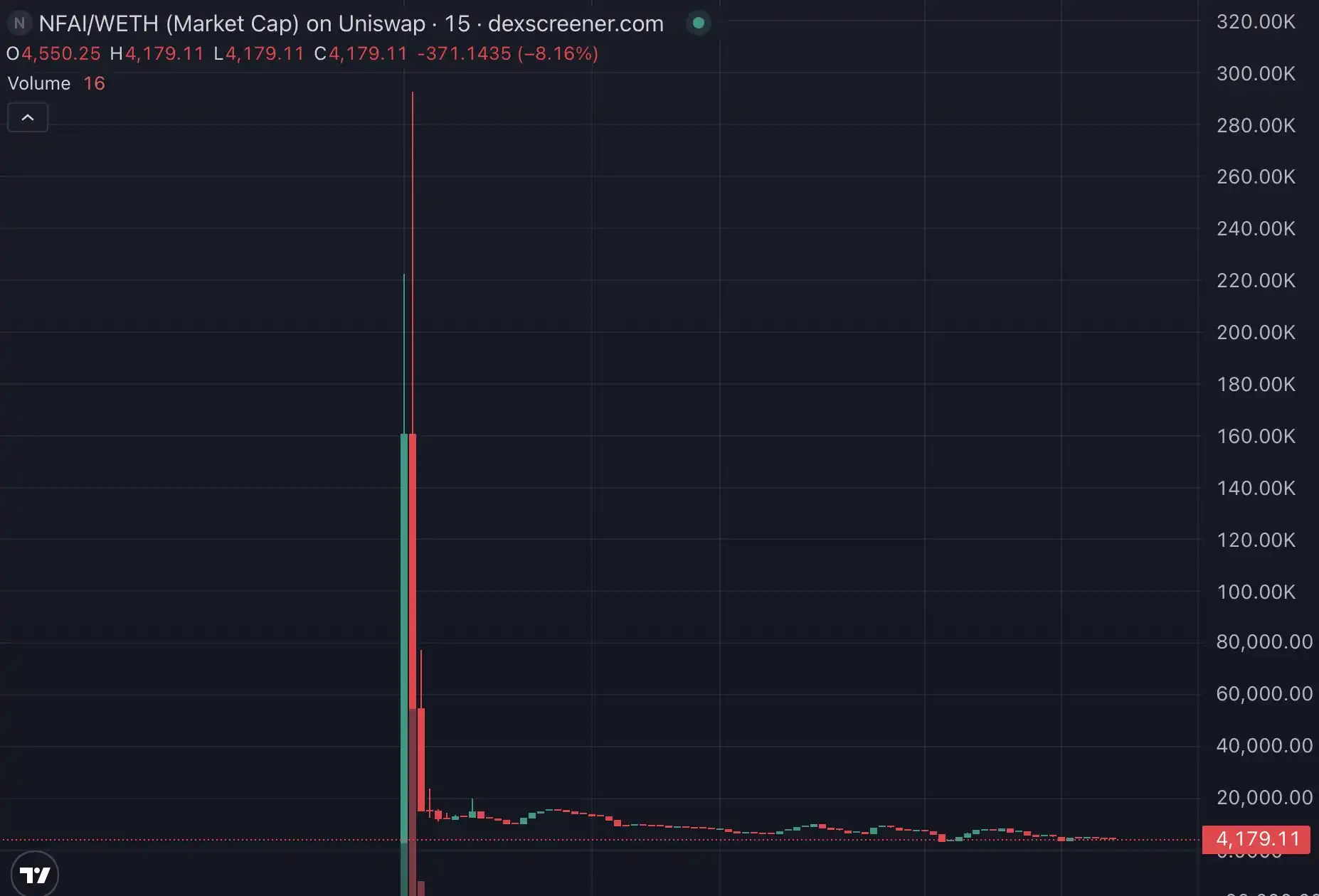
In an undercover operation dubbed "Operation Token Mirrors," the FBI created a fake cryptocurrency project called NexFundAI on Ethereum to expose widespread market manipulation. Posing as a project team, FBI agents approached several market-making firms—including Gotbit, ZM Quant, CLS Global, and MyTrade—to artificially inflate trading volume. All firms agreed without questioning the project's legitimacy, with one founder admitting on tape that they profited by ensuring retail investors lost money. The investigation, spanning two years and three continents, led to charges against 28 individuals and the seizure of over $25 million in crypto assets. Key cases involved firms like Saitama, which allegedly manipulated its token to a $7.5 billion market cap using coordinated buying and market makers, and Lillian Finance, which promoted a fraudulent charity narrative. Evidence included internal spreadsheets tracking fake versus real trading volume and Telegram chats discussing manipulation tactics. The FBI's fake project website now warns visitors about its investigative purpose and offers a victim compensation portal. Ironically, within 24 hours of the DOJ's announcement, a copycat token based on NexFundAI's contract was launched, netting its creator over $127,000—highlighting how quickly such schemes are replicated in the crypto space.

Author: Curry, Shenchao TechFlow

Two years ago, FBI agents pretended to be the founding team of an investment project at the "intersection of AI and finance," launched a token called NexFundAI on Ethereum, complete with an official website, whitepaper, and business plan, looking no different from any legitimate project on the market.

Then they approached market makers to provide liquidity.
One function of market makers is sometimes to help project teams boost trading volume. The industry term is "volume support," which translates to volume manipulation.

The undercover FBI agents contacted several well-known market makers in the industry one by one, stating upfront: we have a new project and need someone to help boost the trading volume.

According to the indictment released by the U.S. Department of Justice, every single one said, okay.

No one asked if the project was compliant, no one asked if the token had any real utility, no one asked if this was illegal. According to court documents released by the U.S. Department of Justice, four market makers—Gotbit, ZM Quant, CLS Global, MyTrade—all took the job.

During a meeting with an undercover agent, the founder of one of these firms, on a recording device, referred to himself as the "mastermind." He explained in detail how his company used bots to simultaneously place buy and sell orders to create fake trading volume, and how to make the price chart look like a rollercoaster to lure retail investors to jump in.

Then he said something that the FBI recorded verbatim. According to Cointelegraph quoting the indictment, he said:

We have to make them lose money for us to make money.

"Them" refers to retail investors.

The operation was code-named Operation Token Mirrors. According to a U.S. Department of Justice announcement on October 9, 2024, the first batch of 18 people were charged, with over $25 million in crypto assets seized. According to an IRS announcement on March 30 of this year, a second batch of 10 people were charged, with three extradited to the U.S. from Singapore.

Two years, three continents, 28 people. This is the largest market manipulation enforcement action in cryptocurrency history. And it's not over yet.

A Price Quote

How did these market makers operate?

According to the indictment released by the U.S. Department of Justice, Gotbit's founder, Andriunin, maintained a spreadsheet within the company with two columns of data side by side: one labeled "Created Volume" and the other "Market Volume."

To translate, one column was the fake volume they generated themselves, the other was the actual trading happening in the market.

In a 2019 interview with CoinDesk, while still a sophomore at Moscow State University, this 20-year-old was already explaining in detail on camera how he wrote code to create fake volume and helped clients get their tokens onto CoinMarketCap's trending lists. According to the CoinDesk article, he himself said this business was "not entirely ethical."

After the interview aired, he didn't receive any subpoenas; instead, he gained five new clients.

By the time of his arrest in 2024, Gotbit had been operating for six years, serving projects worldwide. According to the U.S. Department of Justice's sentencing announcement, Andriunin was ultimately sentenced to 8 months in prison, Gotbit was ordered to dissolve, and approximately $23 million in crypto assets were forfeited.

Gotbit wasn't the cheapest.

According to a price quote from another market maker disclosed in the indictment, the cost of generating $1 million in daily trading volume was about $200. According to Cointelegraph citing court documents, an employee of ZM Quant explained to an FBI undercover agent on a recorded call: "We use one to two thousand wallets, trading ten times per hour, or ten times per minute, to reach the target volume."

Each transaction cost about $3.

And CLS Global went even further. According to SEC investigation documents, this company registered in the UAE used 30 wallets to execute 740 wash trades, creating nearly $600,000 in fake trading volume, accounting for 98% of the total trading volume of the fake token NexFundAI created by the FBI during that period.

$7.5 Billion of Thin Air

Market makers are tools; the people hiring them are the main actors.

According to the U.S. Department of Justice indictment, the biggest client exposed by this FBI sting operation was called Saitama, a crypto company registered in Massachusetts in 2021, with a peak market cap reportedly reaching $7.5 billion.

What does $7.5 billion mean? It was larger than many legitimate publicly traded companies on Nasdaq at the time.

But how did that number come about, according to the indictment? Starting in July 2021, Saitama's management coordinated actions in a Telegram group, using multiple wallets to place small buy orders, creating the illusion of "a large influx of new buyers."

According to Telegram chat logs cited in the indictment, a core member explained the purpose of the operation: "We want these small buys to look like more buyers, that’s the plan."

The chat logs also included "PUMP IT" emojis and GIFs they sent to each other to confirm buys and celebrate when retail investors followed.
According to the same indictment, Saitama then paid market makers including ZM Quant and Gotbit to conduct large-scale wash trading on exchanges like BitMart and LBank. After the market cap was inflated, the management quietly sold their own tokens, cashing out tens of millions of dollars. According to a DOJ announcement, Saitama's CEO was arrested in the UK, and five former and current employees were charged, with three pleading guilty.

Saitama wasn't the only one.

According to the same indictment, a project called Lillian Finance was founded by 48-year-old Bradley Beatty from Florida. This person publicly claimed to be a defense contractor, stated he had spoken before Congress on cryptocurrency issues, and promised that part of the token sale proceeds would go to charity to help children receive medical care.

According to the indictment, all these claims were fabricated. Beatty pocketed the profits meant for charity.

Defense contractor, congressional speech, children's medical charity—you just need to weave a compelling enough narrative and hire a market maker to paint a pretty price chart, and that's enough to attract some people to FOMO.

Looking back at these cases, what feels most unsettling isn't how sophisticated the scams were, but rather, how crude they were.

The FBI's Coin Was Pretty Legit

After the operation concluded, the FBI did one more thing.

According to a U.S. Department of Justice announcement, the NexFundAI website is still up, but now with a banner at the top that reads: "This website was created under the direction of the Federal Bureau of Investigation as part of an investigation into cryptocurrency fraud and market manipulation." Below the banner is a link to the full DOJ indictment.

The FBI also specifically opened a victim registration channel. According to the DOJ announcement, anyone who lost money on NexFundAI or related tokens can fill out a form to apply for compensation and legal protection.

The FBI launched a token, proactively disclosed information after the operation ended, and even opened a compensation channel for those who lost money; compared to the projects caught in this sting, the process was arguably much more legitimate.

The most absurd part is yet to come.

According to a report by blockchain analytics firm TRM Labs, within 24 hours of the DOJ announcement, someone cloned the FBI's NexFundAI smart contract and launched a copycat token. This person started with about $2,300, cashed out over 52 ETH within 24 hours, worth approximately $127,000 at the time.

The FBI used a fake token to prove market maker manipulation; the day the news broke, someone used the same tactic to launch a new meme and make another profit. Law enforcement took two years, but the market digested and absorbed the entire event in two hours, by launching yet another new shitcoin.

So next time you see a meme coin suddenly skyrocketing, you might want to think about whether it's a performance or real trading.

Of course, it could also be the FBI.

Preguntas relacionadas

QAccording to the article, what was the primary tactic used by the 'market makers' exposed in the FBI sting operation?

AThey used automated bots or a network of wallets to place simultaneous buy and sell orders, creating fake trading volume to make a project appear more active and legitimate, thereby attracting real investors.

QWhat was the name of the fake project the FBI created, and what action did they take regarding its website after the operation concluded?

AThe fake project was called NexFundAI. After the operation, the FBI added a prominent banner to its website explaining it was a law enforcement investigation tool and provided links to official documents and a victim compensation form.

QWhich major project with a peak claimed valuation of $75 billion was implicated as a major client of the exposed market makers? What was the alleged method they used to inflate its value?

AThe project was Saitama. Its management allegedly coordinated through Telegram groups to place numerous small buy orders from multiple wallets, creating the illusion of widespread organic buying demand to pump the price before selling their own holdings.

QWhat ironic event occurred shortly after the Department of Justice announced the results of 'Operation Token Mirrors'?

AWithin 24 hours, someone cloned the NexFundAI smart contract and launched a copycat memecoin. Starting with about $2,300, the creator cashed out over 52 ETH (approx. $127,000 at the time), demonstrating the very market behavior the operation aimed to expose.

QWhat specific, self-incriminating quote from one of the market maker founders did the FBI record and highlight in the article?

AThe founder said, 'We have to make them lose money for us to make money,' where 'them' referred to retail investors.

Lecturas Relacionadas

SpaceX, OpenAI, Anthropic: The Three AI Giants Racing for IPO, Which One Is Worth Betting On?

SpaceX, OpenAI, and Anthropic are poised for historic IPOs within weeks, potentially raising a combined $180 billion—a sum exceeding the entire internet bubble's fundraising. The hosts of the Limitless Podcast argue this isn't just individual company financing but an unprecedented capital concentration for AI infrastructure, driven by an insatiable need for compute, data centers, power, and chips. SpaceX's IPO is notable for reportedly changing market index rules to allow faster inclusion, potentially funneling trillions in passive retirement funds into its stock, despite its unproven space-based data center business model. In contrast, Anthropic demonstrates explosive growth, with ARR reportedly hitting $45 billion and approaching profitability, fueled by strong enterprise adoption of products like Claude Code. Google's separate $80 billion raise highlights the immense capital pressure, even for giants. The discussion acknowledges bubble risks but leans optimistic. The hosts contend the massive spending is building essential physical infrastructure for the next technological era. A key bottleneck isn't capital but the real-world limits of chip manufacturing and construction speed. As long as demand for AI compute outstrips supply, this investment cycle represents a foundational build-out rather than a purely financial bubble. All three companies are seen as foundational bets on the future, with Anthropic often cited as the most immediately compelling due to its proven revenue trajectory.

marsbitHace 37 min(s)

SpaceX, OpenAI, Anthropic: The Three AI Giants Racing for IPO, Which One Is Worth Betting On?

marsbitHace 37 min(s)

From 'Old Guys' to 'New Favorites': How AI Is Revaluing Old Infrastructure from Dell to Nokia?

From "Vintage Tech" to "New AI Darlings": How AI Revalues Old Infrastructure One year ago, tech giants like Dell, Nokia, Cisco, and Western Data were seen as slow-growth, low-valuation stories, far from the AI spotlight dominated by players like Nvidia. Now, these legacy tech stocks are gaining market attention, sparking debate on whether this is genuine industry revaluation or a temporary narrative. As AI moves from model parameters to real-world data centers, the market is recognizing companies with proven delivery and infrastructure capabilities. This shift marks a change in the AI investment thesis: from pure model and GPU focus to the complex systems engineering required for deployment. Companies like Dell, HPE, and Corning are being revalued not for being "sexy" AI innovators, but for their decades of accumulated expertise in supply chains, enterprise delivery, and infrastructure—assets that have become critical in the AI buildout phase. The revaluation is unfolding across three key infrastructure lines: 1. **Servers & System Integration:** Dell and HPE are emerging as crucial system integrators or "general contractors" for AI data centers, translating GPU orders into complete, deployable server racks integrated with power, cooling, and networking. 2. **Networking & Connectivity:** AI's scale demands robust high-speed connections. Corning (fiber optics), Nokia (AI-RAN, 6G), and Cisco (data center switches) are gaining importance for enabling efficient data transfer within and between AI clusters. 3. **Storage:** Beyond high-speed memory (HBM/DRAM), the AI data explosion is driving demand for high-capacity hard drives (HDDs) from companies like Western Digital and Seagate to handle training data, logs, and cold storage cost-effectively. For this revaluation to be substantive and not just a narrative, three criteria are key: 1) Concrete AI-related order and revenue growth (e.g., Dell's AI server sales), 2) Upward revisions to company financial guidance, and 3) Sustainable improvements in profit quality, not just top-line revenue spikes. In essence, AI's transition to a real construction phase is re-pricing "old assets" against "new demand." The opportunity, however, is selective. Only those legacy firms that are demonstrably integrated into the capital expenditure chains of data center and enterprise AI deployment are likely to experience a true "logic re-rating" rather than just a temporary valuation bounce.

marsbitHace 43 min(s)

From 'Old Guys' to 'New Favorites': How AI Is Revaluing Old Infrastructure from Dell to Nokia?

marsbitHace 43 min(s)

The Merger of Codex and ChatGPT Marks the Beginning of a Major Reshuffle in Programming Tools

OpenAI is shifting its strategic focus from ChatGPT to Codex, merging them along with the browser tool Atlas into a unified desktop super-app. This move signals an internal belief that Codex, originally a programming tool, represents the next evolution of AI more than conversational models like ChatGPT. Over the past year, Codex's weekly active users have surged past 5 million. The key distinction is that while ChatGPT answers questions, Codex executes tasks. Enterprises increasingly value this ability to get work done over simply receiving advice. Consequently, Codex is attracting professionals beyond developers, including analysts, bankers, marketers, and product managers. OpenAI's reorganization and increased investment in Codex stem from recognizing that the future of AI competition lies in execution capabilities, not just conversation. The company is launching role-specific plugins (e.g., for data analysis, sales, design) to transform Codex into a broad knowledge work platform that automates and redefines white-collar workflows. Beyond being a tool, Codex reflects OpenAI's ambition to redefine software. New features like "Sites"—which generates interactive websites from documents—and collaborative "Annotations" aim to create a paradigm where the AI understands the goal and handles the tools and steps, functioning more like a digital colleague than traditional software. The ultimate goal is a unified experience where the user cares only about the completed task.

marsbitHace 53 min(s)

The Merger of Codex and ChatGPT Marks the Beginning of a Major Reshuffle in Programming Tools

marsbitHace 53 min(s)

Interpreting Investment Opportunities in the Age of Great Navigation, Invesco Great Wall Fund Releases '2026 Report on Chinese Enterprises Going Global'

Invesco Great Wall Fund has released its "2026 China Corporate Globalization Report," titled "The 'Great Navigation Era' of Chinese Enterprises." The report analyzes the new trends and investment opportunities as Chinese companies expand globally, moving from simple product exports to comprehensive overseas operations involving services, branding, and local production. Driven by factors like trade friction, the pursuit of higher profit margins abroad, and policy support, globalization is becoming essential for Chinese companies. The report outlines an evolution: from early product export ("Globalization 1.0") to the current "Globalization 2.0," characterized by overseas capacity, capital goods investment, consumer brand expansion, and service exports. Chinese firms' competitive advantages are highlighted, including a vast engineer talent pool, low-cost and robust infrastructure, and complete industrial clusters. Specific sectors with significant出海 potential are identified: * **Capital Goods** (e.g., engineering machinery, power equipment): Benefiting from global demand, especially in Belt & Road markets and the AI-driven power grid upgrade cycle. * **Consumer Brands**: Transitioning from cost to brand advantage, leveraging供应链 efficiency. * **Technology & Innovation**: Including AI applications, optical modules within global tech supply chains, and new energy vehicles focusing on local production. * **Pharmaceuticals**: Chinese biotech firms are becoming preferred partners for global pharma, with potential for breakthrough drugs in areas like oncology and weight loss. The report concludes that corporate globalization represents a sustained, core theme for China's capital markets, though companies must navigate challenges like geopolitics and localization.

marsbitHace 1 hora(s)

Interpreting Investment Opportunities in the Age of Great Navigation, Invesco Great Wall Fund Releases '2026 Report on Chinese Enterprises Going Global'

marsbitHace 1 hora(s)

Trading

Spot
Futuros

Artículos destacados

Cómo comprar F

¡Bienvenido a HTX.com! Hemos hecho que comprar Synfutures (F) sea simple y conveniente. Sigue nuestra guía paso a paso para iniciar tu viaje de criptos.Paso 1: crea tu cuenta HTXUtiliza tu correo electrónico o número de teléfono para registrarte y obtener una cuenta gratuita en HTX. Experimenta un proceso de registro sin complicaciones y desbloquea todas las funciones.Obtener mi cuentaPaso 2: ve a Comprar cripto y elige tu método de pagoTarjeta de crédito/débito: usa tu Visa o Mastercard para comprar Synfutures (F) al instante.Saldo: utiliza fondos del saldo de tu cuenta HTX para tradear sin problemas.Terceros: hemos agregado métodos de pago populares como Google Pay y Apple Pay para mejorar la comodidad.P2P: tradear directamente con otros usuarios en HTX.Over-the-Counter (OTC): ofrecemos servicios personalizados y tipos de cambio competitivos para los traders.Paso 3: guarda tu Synfutures (F)Después de comprar tu Synfutures (F), guárdalo en tu cuenta HTX. Alternativamente, puedes enviarlo a otro lugar mediante transferencia blockchain o utilizarlo para tradear otras criptomonedas.Paso 4: tradear Synfutures (F)Tradear fácilmente con Synfutures (F) en HTX's mercado spot. Simplemente accede a tu cuenta, selecciona tu par de trading, ejecuta tus trades y monitorea en tiempo real. Ofrecemos una experiencia fácil de usar tanto para principiantes como para traders experimentados.

205 Vistas totalesPublicado en 2024.12.21Actualizado en 2026.06.02

Cómo comprar F

Discusiones

Bienvenido a la comunidad de HTX. Aquí puedes mantenerte informado sobre los últimos desarrollos de la plataforma y acceder a análisis profesionales del mercado. A continuación se presentan las opiniones de los usuarios sobre el precio de F (F).

活动图片













