The Evolution Path of Physical Bitcoin

marsbitPublicado a 2026-05-27Actualizado a 2026-05-27

Resumen

The Evolution of Physical Bitcoin Bitcoin's digital nature is its core strength, enabling self-custody and rapid global transfers. However, its intangibility also hinders mainstream adoption. For over a decade, creators have attempted to materialize Bitcoin while preserving its cash-like properties, yielding notable results. Casascius Coins, launched in 2011, were the first and most iconic physical Bitcoin. Creator Mike Caldwell generated private keys offline, printed them on coins, and sealed them with tamper-evident holograms. This model relied on user trust in the centralized issuer. Production ceased in 2013 due to regulatory pressure from FinCEN. RavenBit Coins emerged in 2014 aiming to decentralize minting by letting users generate and apply their own keys. However, this led to trust issues with numerous untrusted minters and insecure key generation methods. In 2016, Coinkite introduced Opendimes—a breakthrough in bearer asset technology. These USB-shaped devices generate and store keys internally. Funds can be received by checking the public key, but spending requires physically breaking the device to extract the private key. While innovative and open-source, its cost (~$20) and form factor limit its use for small, everyday transactions. Satochip's Satodime, a card-shaped device using similar secure chip technology, followed. It supports NFC interaction and comes in various forms. While potentially cheaper in bulk (~13€), it remains a high-security hardware wallet...

Author: Juan Galt

Compiled by: Saoirse, Foresight News

Bitcoin's digital nature is its core strength. Thanks to its programmability, Bitcoin enables self-custody, making it significantly harder for assets to be stolen or seized. Meanwhile, its digital form allows for extremely fast circulation, enabling global value transfer and settlement to be completed in just a few minutes.

However, Bitcoin has also been controversial due to its intangible nature. In its native state, Bitcoin cannot be touched or held in hand; people can only rely on imagination and understanding to perceive it, which has also become a major obstacle to its widespread acceptance. For over a decade, entrepreneurs and creators have continuously attempted to physicalize Bitcoin, striving to preserve its core characteristics similar to cash. Although no one has completely solved all the problems so far, related explorations have yielded many results and have given rise to a large number of classic physical products.

Casascius Coins
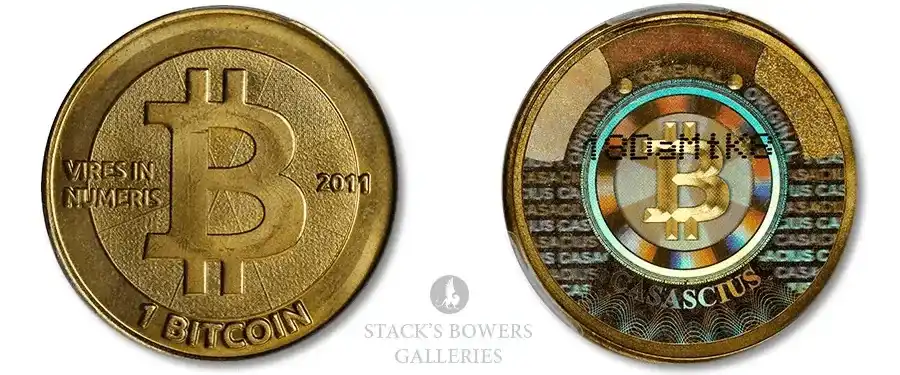
Image source: Stacks Bowers Galleries

Casascius Coins were first minted on September 6, 2011, when the price of a single Bitcoin was only $8. It is undoubtedly the most iconic physical Bitcoin collectible in history, and a large number of imitations have appeared since then. The name originates from Mike Caldwell's username on the Bitcointalk forum. The numerous design concepts established by this coin have also become important references for subsequent various physical Bitcoin products.

A major challenge in creating physical Bitcoin is the safekeeping of the private key. Bitcoin is a native digital asset that operates based on cryptographic public-private key pairs. The private key, as confidential information, can generate the corresponding public key through Bitcoin-specific encryption algorithms. Mike Caldwell used an offline device to generate private keys, printed them, and attached them to precious metal coins, and likely destroyed any private key backups left on the computer. He also detailed the entire set of security measures on his personal website for potential buyers to review.

The printed private key would be covered with a special tamper-evident sticker. Once the sticker is removed, a clear honeycomb-like pattern would remain on the surface. Based on this, buyers could determine whether the private key of a coin purchased from a third party had been previously accessed.

Private key management is the biggest security risk in creating physical Bitcoin. The solution of Casascius Coins relied on user trust in the developer. By the standards of the time, Mike Caldwell was transparent and meticulous, and he still maintains a good reputation today. The trust of users has been rewarded. Such collectibles now command a considerable collector's premium on top of the intrinsic value of the Bitcoin itself and the precious metal value, and holders have thus reaped substantial returns.

In November 2013, Casascius Coins officially ceased production. The Financial Crimes Enforcement Network (FinCEN) under the U.S. Department of the Treasury informed Mike Caldwell that the act of minting physical Bitcoins was considered a money transmission business, requiring strict compliance. The centralized trust mechanism involved in the private key generation process also made him a focus of regulatory attention.

RavenBit Coins

One year after Casascius Coins ceased production, RavenBit was officially launched, aiming to solve the problem of trustworthy minting in the physical Bitcoin space by attempting to decentralize the minting process. RavenBit's appearance is very similar to Casascius Coins, but it did not come pre-installed with a private key, and the tamper-evident sticker was also unsealed. Users could generate their own key pair, paste it onto the coin, and then seal it with the tamper-evident sticker.

Theoretically, this design achieved decentralization of minting rights, which could be considered a breakthrough. However, in practice, it only spawned a large number of unbranded, low-reputation individual minters, and many of the office devices used to generate private keys might have been infected with malware. When you received a RavenBit coin from someone else, you had no way to confirm whether they kept a copy of the private key or if they had implemented proper security measures.

The RavenBit project has long since ceased operations, but it also brought enlightenment to the entire industry: to truly achieve the physicalization of Bitcoin, more advanced technology is needed.

Opendimes
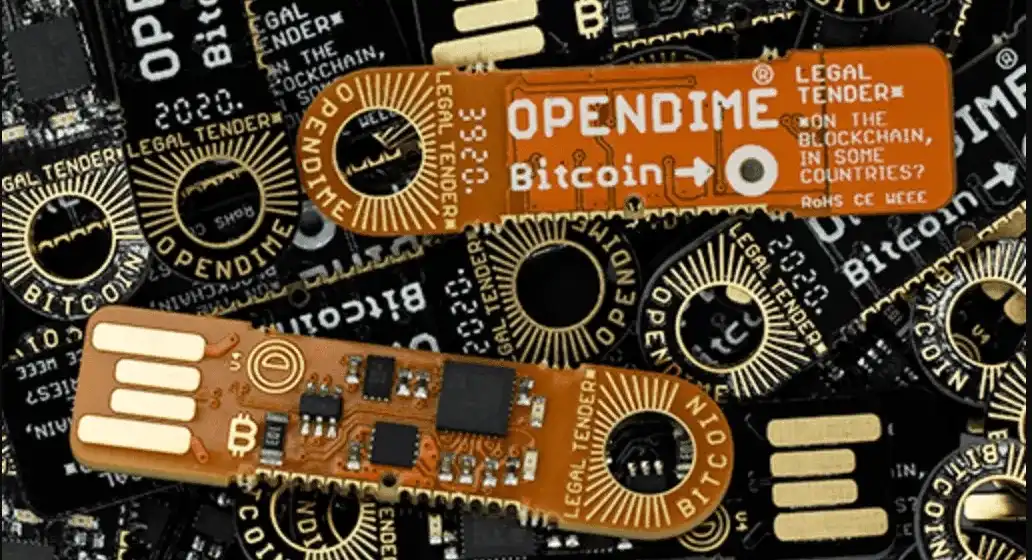
To completely solve the trust problem in minting physical Bitcoin in both centralized and decentralized scenarios, hardware wallet manufacturer Coinkite developed Opendimes. This is a micro hardware device specifically designed to carry Bitcoin bearer assets. NVK, co-founder of Coinkite, discussed the motivation behind the product in an interview with Bitcoin Magazine: "Bitcoin is a digital currency. Everything we do is just to create a physical backup for it. Perhaps someone in the future can manually crack the secp256k1 algorithm, but for now, generating valid Bitcoin keys always requires a computer. The computer is the current 'minting tool.'"

The design of Opendimes is based precisely on this core logic. The device has a built-in chip that can autonomously generate public-private key pairs and securely store the private key using a silicon-based tamper-resistant structure.

When initializing the device, users need to import files or other forms of random entropy. The chip combines this data to generate a Bitcoin wallet. This open-source random key generation logic, paired with high-quality entropy input, further ensures the security of the keys.

Connecting an Opendimes to a computer like a regular USB drive allows viewing the wallet's public key, and the account balance can be queried in real-time on a block explorer. Users can transfer Bitcoin to the device, but to extract the assets, they must physically destroy the device. This action unlocks the circuit to read the private key, while also leaving obvious damage marks on the device.

Opendimes is a major breakthrough in bearer asset technology. The product was priced as low as $13 in 2016, and due to inflation, its unit price is now around $20. It has also become an iconic product in the industry, with many artists incorporating it into high-end Bitcoin artworks, and it has gradually become a cultural symbol within the Bitcoin community.

For a hardware wallet, a price of $13 to $20 is not considered high, and the model where users deposit their own coins effectively solves the minting trust problem. However, its price and appearance are still far from everyday cash. Looking solely at hardware cost, the $20 threshold is not low. Referring to the approximately 20% premium standard of Casascius Coins, an Opendimes would need to hold at least $100 worth of Bitcoin to match the hardware cost and have circulation value, which also prevents it from being suitable for most small daily transactions.

Furthermore, while this USB drive-shaped device has a unique style, it cannot intuitively display internal asset information. Each device is unique and lacks the fungibility of cash. The industry has therefore realized the need to develop cheaper, more versatile alternatives.

Satodime
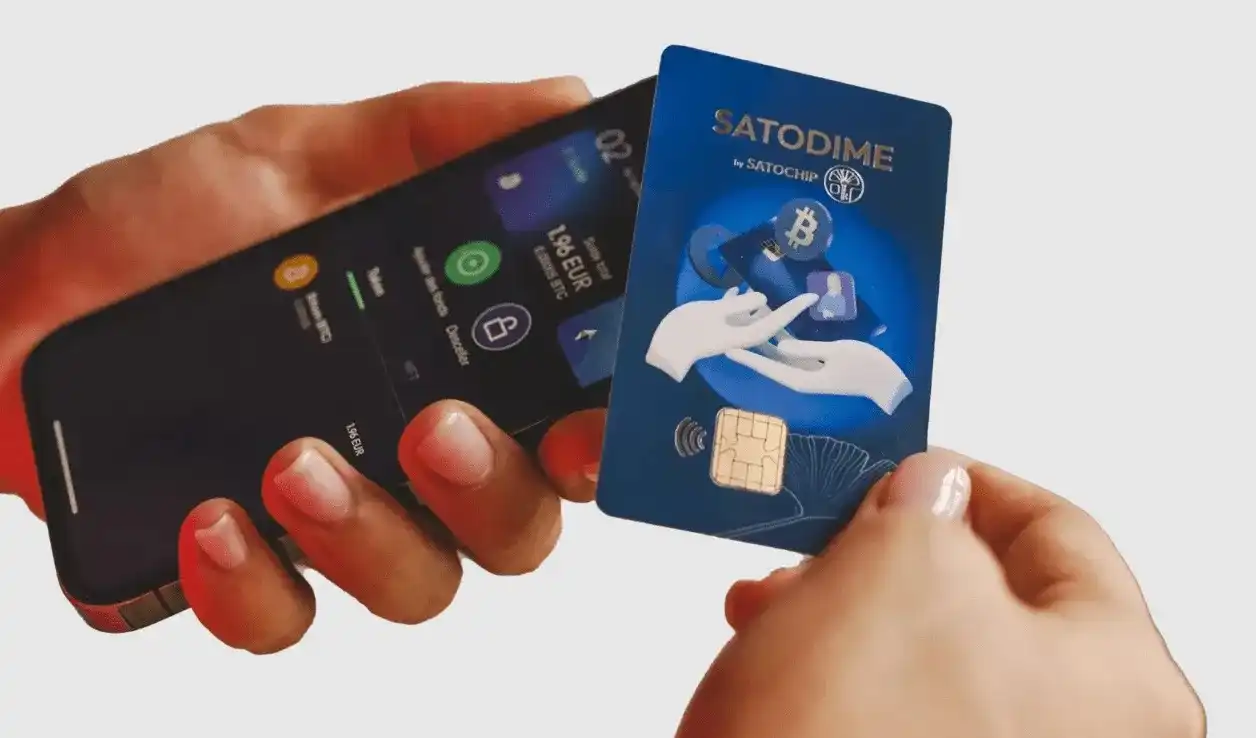
Building on the concept of Opendimes, Belgian hardware wallet manufacturer Satochip launched the more user-friendly, open-source product Satodime. It resembles a bank card in shape, with core functions similar to Opendimes. It can generate Bitcoin public-private key pairs, and some versions also support transaction signing. Users can interact with the device via a mobile app using Near Field Communication (NFC) functionality. The product also comes in forms such as rings and physical coins, with the same chip and functions inside.

In bulk purchases, the hardware unit price of Satodime can be as low as 13 euros, making it more affordable than Opendimes and bringing it a step closer to the standard of everyday cash, though the gap remains significant. Satodime is essentially a high-security hardware wallet, not a cash vehicle intended for daily circulation. The inherently high cost of these high-performance microchips also makes it difficult for the product price to fall below the $10 threshold for now.

The Cost Dilemma: The Underlying Limit Hard to Surpass

What level does the hardware cost need to be reduced to for physical Bitcoin to have commercial popularization value?

According to data from the Federal Reserve, the production cost of a U.S. dollar banknote ranges between 4.1 cents and 11.3 cents. The lower the denomination, the higher the unit production cost, and even a $1 bill can incur a 4.1% manufacturing loss.

Based on this calculation, the hardware cost of a physical Bitcoin carrying 20,000 satoshis (approximately $16 at the current price) must be controlled within $1. However, currently, the vast majority of chips capable of running Bitcoin encryption algorithms cannot meet this cost requirement. Nevertheless, the NTAG X DNA chip launched by NXP has shown the industry a possibility.

This chip uses a thin sticker antenna design, is only a few millimeters thick, and can run various encryption programs like Elliptic Curve Digital Signature Algorithm (ECDSA) and Elliptic Curve Cryptography (ECC), supporting key generation, transaction signing, and information encryption. However, it does not have the Bitcoin-specific secp256k1 encryption curve built-in and cannot natively run Bitcoin-related programs.

Even so, when the 2025 model NTAG chip is in sufficient supply, its unit price is about $3, proving that there is significant room for price reduction in encryption chips.

Unfortunately, the foldable paper money form used in daily life can damage delicate chips. The Coinkite team personally verified this issue during their research and development of Bitcoin bearer asset hardware.
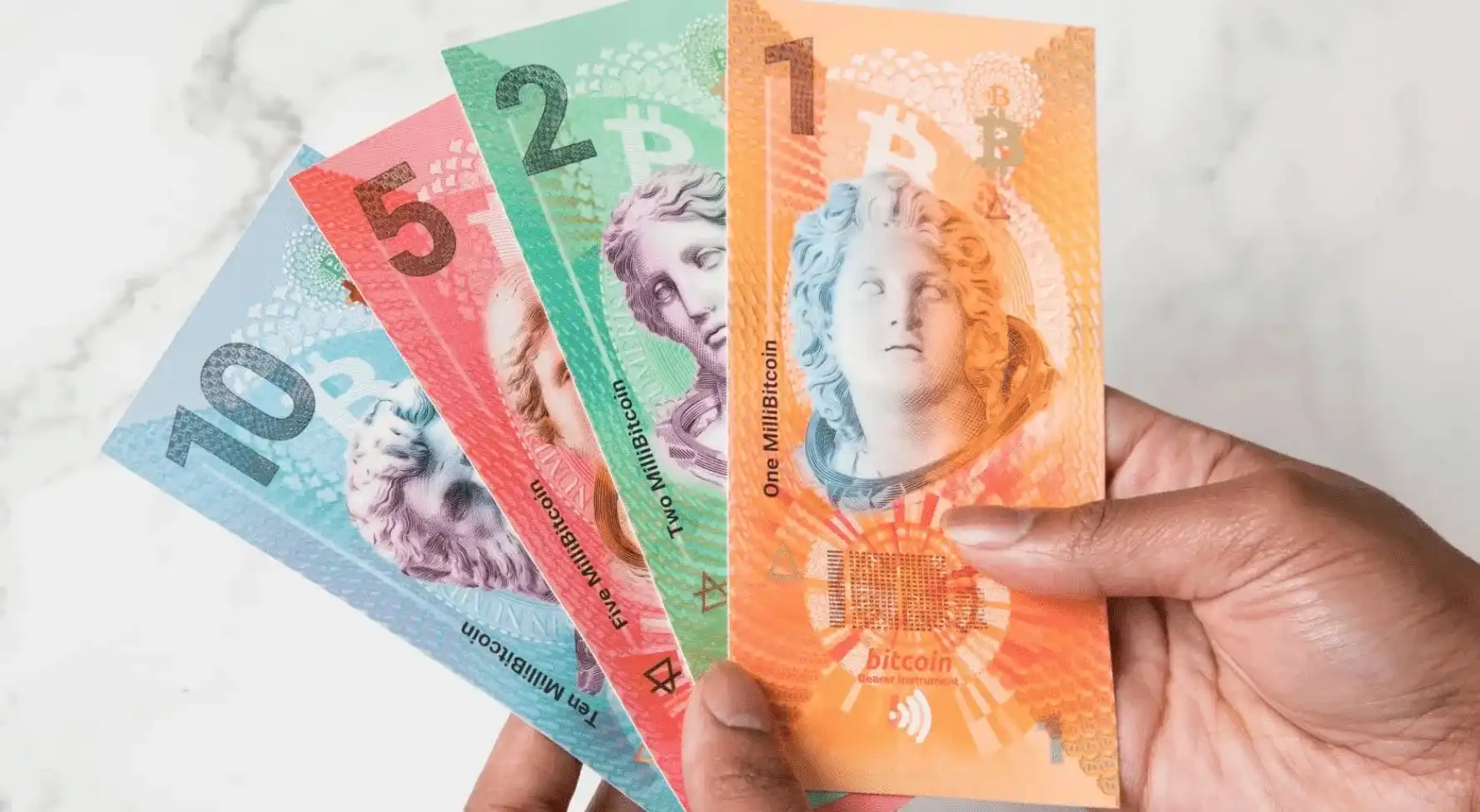
The product created by OfflineCash is currently the solution that looks most like traditional banknotes. This Bitcoin-denominated note is equipped with an NTAG series NFC chip. The chip stores a key generated by the user, while the company retains a second key on its server, forming a 2-of-2 multisignature wallet. The server-side key has a time lock, and after it expires, the multisignature wallet converts into a single-signature wallet, allowing the user to extract the assets. This scheme attempts to avoid the trust risk of traditional minting but ultimately creates a new problem of decentralized minting. However, it cannot be denied that its banknote appearance is highly aesthetic and has collectible value.

Developing an NTAG chip that natively supports Bitcoin algorithms requires an initial investment of millions of dollars. If the R&D team lacks expertise in the cryptography field, vulnerabilities are highly likely to occur when adapting to Bitcoin encryption programs. Simultaneously, such chips must be completely open-source to ensure there are no backdoor programs.

As a bearer asset, physical Bitcoin faces another fundamental problem: even if a low-cost, banknote-like hardware carrier is created, since Bitcoin is inherently a digital asset, users must connect to the internet to verify whether the device contains real assets.

If one chooses to trust the issuing institution and recognize the exchange value of the banknote's face, the verification problem might be solved, but this would deviate from Bitcoin's design初衷 of self-custody and trustless cash. Of course, this model might be able to operate in regions with favorable regulatory environments.

In summary, products like OfflineCash, which combine security chips and banknote forms, though conceptually appealing, still have a long way to go before large-scale adoption. Moreover, at present, such products are somewhat "over-engineered"—there is currently no Bitcoin change system in the market; after spending, one would still receive fiat change. Perhaps in a future fully Bitcoinized era, it could truly realize its value.

Within the foreseeable scope, Coinkite believes the card form is a superior solution to banknotes, which is also why the company launched Tapsigner.

Tapsigner
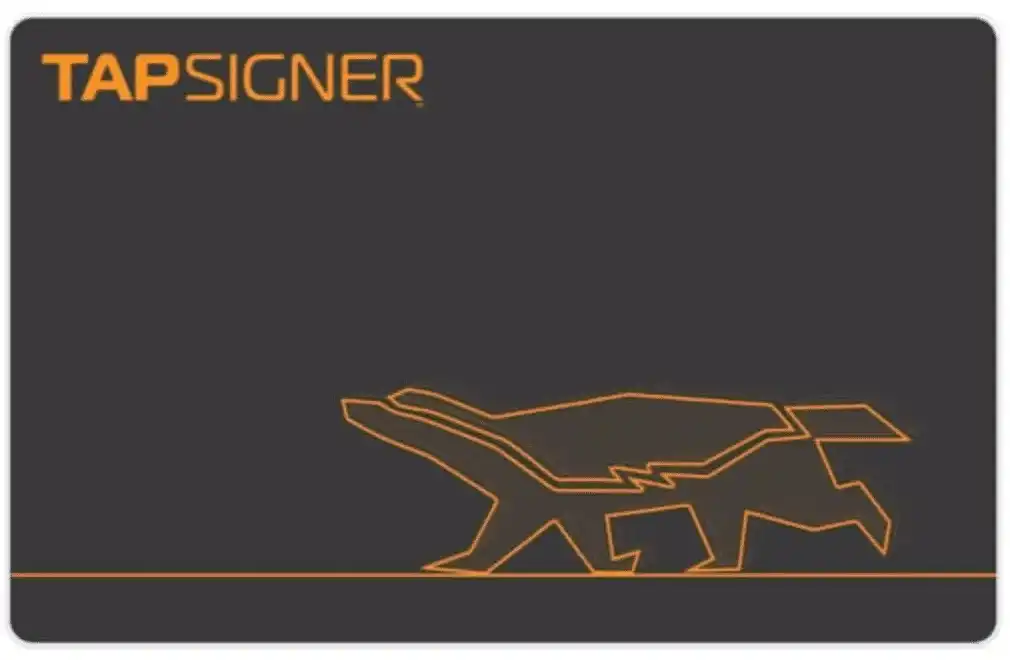
Tapsigner is equipped with Coinkite's self-developed Bitcoin NFC chip, which performs comparably to the NXP NTAG X DNA, has stronger functionality, and is relatively more expensive. The product adopts the familiar shape of a debit card, has a built-in security chip, supports NFC tap-to-pay, and offers multiple design options.

The chip has a complete Bitcoin wallet function built-in, runs the secp256k1 encryption program, can generate and securely store private keys, can complete transaction signing internally, and then the paired mobile device broadcasts the transaction information. The mobile end can also provide transaction information verification for the user, serving as a security aid.

Tapsigner can be used as a bearer asset carrier but is more suitable as a rechargeable hardware wallet. Like a regular bank card, it can make directed payments of fixed amounts of Bitcoin, perfectly solving the change problem while being compatible with mainstream tap-to-pay functionality.

This product costs around $20. Its emergence shifts the focus of Bitcoin payment development back to offline retail adoption and ecological integration with mainstream corporate finance and payment software, a process actively promoted by platforms like Cashapp and Square.


Preguntas relacionadas

QWhat are the core advantages of Bitcoin's digital nature according to the article?

AAccording to the article, Bitcoin's digital nature enables self-custody due to its programmability, making theft and confiscation significantly more difficult. Its digital form also allows for near-instantaneous global transfer and settlement of value within minutes.

QWhat was the key security challenge addressed by Casascius Coins, and what was its solution?

AThe key security challenge was private key custody. Casascius Coins' solution involved generating the private key offline, printing it, and physically attaching it to the coin under a tamper-evident hologram. This model relied on trust in the creator, Mike Caldwell, who maintained transparency and a good reputation.

QHow did Opendimes fundamentally improve upon earlier physical Bitcoin models regarding the 'trust' issue?

AOpendimes improved the 'trust' issue by removing the need to trust a centralized mint. The device itself contains a chip that generates the private key internally using user-provided entropy, and the key is never exposed. The only way to spend the funds is to physically destroy the device, which permanently reveals the private key and leaves visible damage.

QWhat is identified as a major fundamental obstacle to creating a cost-effective, mass-market physical Bitcoin like a banknote?

AA major obstacle is the high hardware cost. For a physical Bitcoin to be viable for everyday, low-value transactions, its hardware cost needs to be under $1. However, the specialized chips capable of running Bitcoin's cryptographic algorithms (like secp256k1) currently cost significantly more, making them unsuitable for low-denomination, disposable cash-like use.

QWhat is the stated purpose of the Tapsigner product, and how does it differ from earlier physical Bitcoin concepts like Opendimes?

ATapsigner is designed as a reusable hardware wallet for facilitating Bitcoin payments, particularly in offline retail settings. Unlike Opendimes, which is a single-use bearer instrument, Tapsigner functions more like a reloadable debit card, allowing for repeated top-ups and fixed-amount payments, and it integrates with NFC 'tap-to-pay' systems for easier merchant adoption.

Lecturas Relacionadas

Anthropic's IPO Launch: Commercial Miracle or Valuation Bubble?

Anthropic has confidentially filed for an IPO, led by Morgan Stanley and Goldman Sachs, potentially going public by October. Following its latest $650 billion funding round, its pre-IPO valuation stands at $965 billion, with projections reaching up to $2 trillion at listing, which would make it the highest-valued private company ever. The article, written by Fu Sheng, addresses skepticism that this represents an AI bubble akin to the 2000 dot-com crash. It argues the current situation differs fundamentally. Unlike the internet bubble era, which relied on speculative narratives with little revenue, Anthropic's valuation is backed by unprecedented, measurable financial performance. Key data points include: * **Revenue Growth:** ARR skyrocketed from $10 billion in early 2025 to $470 billion by May 2026, targeting $100 billion by year-end—a growth curve unmatched in business history. * **Profitability:** It achieved operating profitability in Q2 2026 with an estimated $5.6 billion profit. * **Efficiency:** With ~3,000 employees and ~$470 billion ARR, its revenue per employee exceeds $10 million. Products like Claude Code, launched less than a year ago, already generate $25 billion in annualized revenue. * **Enterprise Adoption:** It boasts a strong enterprise client base, with 8 of the Fortune 10 and over 1,000 large firms spending over $1 million annually on Claude. The valuation is framed using a traditional SaaS model (e.g., a 10x Price-to-Sales multiple on $100 billion revenue). The author contends the core question for analysts has shifted from "How big could this be?" to "How much is it earning and will earn next quarter?" The discussion extends beyond Anthropic to a broader paradigm shift: the transition from a "carbon-based" to a "silicon-based" economy. Companies are increasingly prioritizing investment in compute and AI capabilities over human resources, as these directly scale productivity and competitive advantage. Anthropic's IPO is thus positioned not just as a corporate milestone, but as a price anchor for this new economic era.

链捕手Hace 2 hora(s)

Anthropic's IPO Launch: Commercial Miracle or Valuation Bubble?

链捕手Hace 2 hora(s)

Near Returns to the AI Stage: Transformation into a Public Chain Due to 'Payroll Difficulties,' Agent and Privacy Emerge as New Growth Narratives

NEAR Returns to AI Origins: From Payroll Struggles to Blockchain, Now Focusing on AI Agents and Privacy NEAR Protocol's journey began not with grand blockchain ambitions, but from a practical hurdle: its AI startup founders, including Transformer paper co-author Illia Polosukhin, couldn't efficiently pay international developers in 2017. This led them to pivot and build a high-performance, scalable blockchain. After years navigating various crypto narratives like sharding and cross-chain interoperability, NEAR is now leveraging its AI roots to re-enter the AI arena. A key driver is its "NEAR Intents" layer, which abstracts complex cross-chain transactions. Users simply state their goal (e.g., swap BTC for ETH), and a solver network finds the optimal route. This system has processed over $20B in cross-chain volume, generating significant fee revenue. A major growth area is private transactions via "Confidential Intents/Swaps," which hide trade details until settlement to protect against MEV and front-running. Remarkably, private swaps recently accounted for over 40% of NEAR's transaction volume, highlighting strong demand but also potential regulatory scrutiny. With its AI-founder pedigree, NEAR is positioning itself at the intersection of blockchain, AI agents, and privacy, aiming to become infrastructure for the emerging agent economy while navigating the challenges of its rapid adoption.

marsbitHace 5 hora(s)

Near Returns to the AI Stage: Transformation into a Public Chain Due to 'Payroll Difficulties,' Agent and Privacy Emerge as New Growth Narratives

marsbitHace 5 hora(s)

Trading

Spot
Futuros

Artículos destacados

Qué es BITCOIN

Entendiendo HarryPotterObamaSonic10Inu (ERC-20) y Su Posición en el Espacio Cripto En los últimos años, el mercado de criptomonedas ha sido testigo de un aumento en la popularidad de las monedas meme, capturando el interés no solo de los comerciantes, sino también de aquellos que buscan compromiso comunitario y valor de entretenimiento. Entre estos tokens únicos se encuentra HarryPotterObamaSonic10Inu (ERC-20), un proyecto intrigante que mezcla referencias culturales en el tejido de las criptomonedas. Este artículo profundiza en los aspectos clave de HarryPotterObamaSonic10Inu, explorando sus mecanismos, ethos impulsado por la comunidad y su relación con el paisaje cripto más amplio. ¿Qué es HarryPotterObamaSonic10Inu (ERC-20)? Como su nombre sugiere, HarryPotterObamaSonic10Inu es una moneda meme construida sobre la blockchain de Ethereum, clasificada bajo el estándar ERC-20. A diferencia de las criptomonedas tradicionales que pueden enfatizar la utilidad práctica o el potencial de inversión, este token prospera en el valor de entretenimiento y la fuerza de su comunidad. El proyecto tiene como objetivo fomentar un entorno donde los usuarios comprometidos puedan reunirse, compartir ideas y participar en actividades inspiradas por diversos fenómenos culturales. Una característica notable de HarryPotterObamaSonic10Inu es su cero impuestos en las transacciones. Este atractivo elemento tiene como objetivo incentivar el comercio y la participación comunitaria, sin cargos adicionales que puedan disuadir a los comerciantes de pequeña escala. El suministro total de la moneda está establecido en mil millones de tokens, una cifra que marca su intención de mantener una circulación sustancial dentro de la comunidad. Creador de HarryPotterObamaSonic10Inu (ERC-20) Los orígenes de HarryPotterObamaSonic10Inu están algo envueltos en misterio; los detalles sobre el creador siguen siendo desconocidos. El desarrollo de este token carece de un equipo identificable o de un plan explícito, lo cual no es inusual dentro del sector de monedas meme. En cambio, el proyecto ha surgido de manera orgánica, con su progreso muy dependiente del entusiasmo y la participación de su comunidad. Inversores de HarryPotterObamaSonic10Inu (ERC-20) En cuanto a inversiones externas y respaldo, HarryPotterObamaSonic10Inu también sigue siendo ambiguo. El token no lista ninguna fundación de inversión conocida o apoyo organizacional significativo. En cambio, la savia del proyecto es su comunidad de base, que informa su crecimiento y sostenibilidad a través de la acción colectiva y el compromiso en el espacio cripto. ¿Cómo Funciona HarryPotterObamaSonic10Inu (ERC-20)? Como una moneda meme, HarryPotterObamaSonic10Inu opera principalmente fuera de los marcos tradicionales que a menudo rigen el valor de los activos. Hay varios aspectos distintivos que definen cómo funciona el proyecto: Transacciones Sin Impuestos: Sin tarifas impositivas en las transacciones, los usuarios pueden comprar y vender el token libremente sin preocuparse por costos ocultos. Compromiso Comunitario: El proyecto prospera en la interacción comunitaria, aprovechando plataformas de redes sociales para crear entusiasmo y facilitar la participación. Las discusiones, el intercambio de contenido y el compromiso son elementos cruciales que ayudan a expandir su alcance y fomentar la lealtad entre los seguidores. Sin Utilidad Práctica: Cabe señalar que HarryPotterObamaSonic10Inu no ofrece utilidad concreta dentro del ecosistema financiero. Más bien, se clasifica como un token principalmente para actividades de entretenimiento y comunitarias. Referencia Cultural: El token incorpora astutamente elementos de la cultura popular para atraer interés, conectando con entusiastas de los memes y seguidores de las criptomonedas por igual. HarryPotterObamaSonic10Inu ejemplifica cómo las monedas meme operan de manera diferente a los proyectos de criptomonedas más tradicionales, ingresando al mercado como construcciones sociales innovadoras en lugar de activos utilitarios. Cronología de HarryPotterObamaSonic10Inu (ERC-20) La historia de HarryPotterObamaSonic10Inu está marcada por varios hitos notables: Creación: El token surgió de un meme viral, capturando la imaginación de muchos entusiastas de las criptomonedas. Las fechas específicas de creación no están disponibles, subrayando su ascenso orgánico. Listado en Exchanges: HarryPotterObamaSonic10Inu ha llegado a varios exchanges, permitiendo un acceso y comercio más fácil por parte de la comunidad. Iniciativas de Compromiso Comunitario: Actividades continuas destinadas a mejorar la interacción comunitaria, incluyendo concursos, campañas en redes sociales y generación de contenido por parte de fanáticos y defensores. Planes de Expansión Futuros: La hoja de ruta del proyecto incluye el lanzamiento de una colección de NFT, mercancía y un sitio de comercio electrónico relacionado con sus temas culturales, involucrando aún más a la comunidad e intentando añadir más dimensiones a su ecosistema. Puntos Clave Sobre HarryPotterObamaSonic10Inu (ERC-20) Naturaleza Impulsada por la Comunidad: El proyecto prioriza la participación colectiva y la creatividad, asegurando que la involucración de los usuarios esté a la vanguardia de su desarrollo. Clasificación como Moneda Meme: Representa la epítome de las criptomonedas basadas en el entretenimiento, diferenciándose de los vehículos de inversión tradicionales. Sin Afiliación Directa con Bitcoin: A pesar de la similitud en el nombre del ticker, HarryPotterObamaSonic10Inu es distinto y no tiene relación con Bitcoin u otras criptomonedas establecidas. Enfoque en la Colaboración: HarryPotterObamaSonic10Inu está diseñado para crear un espacio para la colaboración y el intercambio de historias entre sus poseedores, proporcionando una vía para la creatividad y el vínculo comunitario. Perspectivas Futuras: La ambición de expandirse más allá de su premisa inicial hacia NFTs y mercancías describe un camino para que el proyecto potencialmente ingrese a avenidas más tradicionales dentro de la cultura digital. A medida que las monedas meme continúan capturando la imaginación de la comunidad de criptomonedas, HarryPotterObamaSonic10Inu (ERC-20) se destaca debido a sus lazos culturales y su enfoque centrado en la comunidad. Si bien puede no encajar en el molde típico de un token impulsado por la utilidad, su esencia radica en la alegría y la camaradería fomentadas entre sus seguidores, destacando la naturaleza en evolución de las criptomonedas en una era cada vez más digital. A medida que el proyecto continúa desarrollándose, será importante observar cómo las dinámicas comunitarias influyen en su trayectoria en el cambiante paisaje de la tecnología blockchain.

1.7k Vistas totalesPublicado en 2024.04.01Actualizado en 2024.12.03

Qué es BITCOIN

Cómo comprar BTC

¡Bienvenido a HTX.com! Hemos hecho que comprar Bitcoin (BTC) sea simple y conveniente. Sigue nuestra guía paso a paso para iniciar tu viaje de criptos.Paso 1: crea tu cuenta HTXUtiliza tu correo electrónico o número de teléfono para registrarte y obtener una cuenta gratuita en HTX. Experimenta un proceso de registro sin complicaciones y desbloquea todas las funciones.Obtener mi cuentaPaso 2: ve a Comprar cripto y elige tu método de pagoTarjeta de crédito/débito: usa tu Visa o Mastercard para comprar Bitcoin (BTC) al instante.Saldo: utiliza fondos del saldo de tu cuenta HTX para tradear sin problemas.Terceros: hemos agregado métodos de pago populares como Google Pay y Apple Pay para mejorar la comodidad.P2P: tradear directamente con otros usuarios en HTX.Over-the-Counter (OTC): ofrecemos servicios personalizados y tipos de cambio competitivos para los traders.Paso 3: guarda tu Bitcoin (BTC)Después de comprar tu Bitcoin (BTC), guárdalo en tu cuenta HTX. Alternativamente, puedes enviarlo a otro lugar mediante transferencia blockchain o utilizarlo para tradear otras criptomonedas.Paso 4: tradear Bitcoin (BTC)Tradear fácilmente con Bitcoin (BTC) en HTX's mercado spot. Simplemente accede a tu cuenta, selecciona tu par de trading, ejecuta tus trades y monitorea en tiempo real. Ofrecemos una experiencia fácil de usar tanto para principiantes como para traders experimentados.

5.1k Vistas totalesPublicado en 2024.12.12Actualizado en 2026.06.02

Cómo comprar BTC

Qué es $BITCOIN

ORO DIGITAL ($BITCOIN): Un Análisis Integral Introducción al ORO DIGITAL ($BITCOIN) ORO DIGITAL ($BITCOIN) es un proyecto basado en blockchain que opera en la red Solana, cuyo objetivo es combinar las características de los metales preciosos tradicionales con la innovación de las tecnologías descentralizadas. Aunque comparte un nombre con Bitcoin, a menudo referido como “oro digital” debido a su percepción como un refugio de valor, ORO DIGITAL es un token separado diseñado para crear un ecosistema único dentro del paisaje Web3. Su meta es posicionarse como un activo digital alternativo viable, aunque los detalles sobre sus aplicaciones y funcionalidades aún están en desarrollo. ¿Qué es ORO DIGITAL ($BITCOIN)? ORO DIGITAL ($BITCOIN) es un token de criptomoneda diseñado explícitamente para su uso en la blockchain de Solana. A diferencia de Bitcoin, que proporciona un papel de almacenamiento de valor ampliamente reconocido, este token parece centrarse en aplicaciones y características más amplias. Aspectos notables incluyen: Infraestructura Blockchain: El token está construido sobre la blockchain de Solana, conocida por su capacidad para manejar transacciones de alta velocidad y bajo costo. Dinámicas de Suministro: ORO DIGITAL tiene un suministro máximo limitado a 100 cuatrillones de tokens (100P $BITCOIN), aunque los detalles sobre su suministro circulante no se han divulgado actualmente. Utilidad: Si bien las funcionalidades precisas no están delineadas explícitamente, hay indicios de que el token podría ser utilizado para diversas aplicaciones, potencialmente involucrando aplicaciones descentralizadas (dApps) o estrategias de tokenización de activos. ¿Quién es el Creador de ORO DIGITAL ($BITCOIN)? En la actualidad, la identidad de los creadores y el equipo de desarrollo detrás de ORO DIGITAL ($BITCOIN) sigue siendo desconocida. Esta situación es típica entre muchos proyectos innovadores dentro del espacio blockchain, particularmente aquellos alineados con las finanzas descentralizadas y fenómenos de monedas meme. Si bien tal anonimato puede fomentar una cultura impulsada por la comunidad, intensifica las preocupaciones sobre la gobernanza y la responsabilidad. ¿Quiénes son los Inversores de ORO DIGITAL ($BITCOIN)? La información disponible indica que ORO DIGITAL ($BITCOIN) no tiene patrocinadores institucionales conocidos ni inversiones destacadas de capital de riesgo. El proyecto parece operar en un modelo de peer-to-peer centrado en el apoyo y la adopción de la comunidad en lugar de rutas de financiamiento tradicionales. Su actividad y liquidez se sitúan principalmente en intercambios descentralizados (DEX), como PumpSwap, en lugar de plataformas de trading centralizadas establecidas, lo que resalta aún más su enfoque de base. Cómo Funciona ORO DIGITAL ($BITCOIN) Los mecanismos operativos de ORO DIGITAL ($BITCOIN) pueden elaborarse en función de su diseño blockchain y atributos de red: Mecanismo de Consenso: Al aprovechar el único proof-of-history (PoH) de Solana combinado con un modelo de proof-of-stake (PoS), el proyecto asegura una validación de transacciones eficiente que contribuye al alto rendimiento de la red. Tokenómica: Si bien los mecanismos deflacionarios específicos no se han detallado extensamente, el vasto suministro máximo de tokens implica que podría atender microtransacciones o casos de uso nicho que aún están por definirse. Interoperabilidad: Existe el potencial de integración con el ecosistema más amplio de Solana, incluyendo varias plataformas de finanzas descentralizadas (DeFi). Sin embargo, los detalles sobre integraciones específicas permanecen no especificados. Cronología de Eventos Clave Aquí hay una cronología que destaca hitos significativos relacionados con ORO DIGITAL ($BITCOIN): 2023: El despliegue inicial del token ocurre en la blockchain de Solana, marcado por su dirección de contrato. 2024: ORO DIGITAL gana visibilidad al estar disponible para trading en intercambios descentralizados como PumpSwap, permitiendo a los usuarios comerciar contra SOL. 2025: El proyecto presencia actividad de trading esporádica y potencial interés en compromisos liderados por la comunidad, aunque no se han documentado asociaciones notables o avances técnicos hasta el momento. Análisis Crítico Fortalezas Escalabilidad: La infraestructura subyacente de Solana soporta altos volúmenes de transacciones, lo que podría mejorar la utilidad de $BITCOIN en varios escenarios de transacción. Accesibilidad: El potencial bajo precio de trading por token podría atraer a inversores minoristas, facilitando una participación más amplia debido a oportunidades de propiedad fraccionada. Riesgos Falta de Transparencia: La ausencia de patrocinadores, desarrolladores o un proceso de auditoría conocidos públicamente puede generar escepticismo sobre la sostenibilidad y confiabilidad del proyecto. Volatilidad del Mercado: La actividad de trading depende en gran medida del comportamiento especulativo, lo que puede resultar en una volatilidad de precios significativa y en incertidumbre para los inversores. Conclusión ORO DIGITAL ($BITCOIN) surge como un proyecto intrigante pero ambiguo dentro del ecosistema de Solana en rápida evolución. Si bien intenta aprovechar la narrativa del “oro digital”, su alejamiento del papel establecido de Bitcoin como refugio de valor subraya la necesidad de una diferenciación más clara de su utilidad y estructura de gobernanza previstas. La aceptación y adopción futura dependerán probablemente de abordar la actual opacidad y de definir sus estrategias operativas y económicas de manera más explícita. Nota: Este informe abarca información sintetizada disponible hasta octubre de 2023, y pueden haber ocurrido desarrollos más allá del período de investigación.

83 Vistas totalesPublicado en 2025.05.13Actualizado en 2025.05.13

Qué es $BITCOIN

Discusiones

Bienvenido a la comunidad de HTX. Aquí puedes mantenerte informado sobre los últimos desarrollos de la plataforma y acceder a análisis profesionales del mercado. A continuación se presentan las opiniones de los usuarios sobre el precio de BTC (BTC).

活动图片