The DAO Returns After a Decade, Establishes a $220 Million Security Fund

marsbitPublicado a 2026-02-02Actualizado a 2026-02-02

Resumen

The DAO, the record-breaking 2016 Ethereum crowdfunding project that led to a major hack and the Ethereum Classic split, is making a symbolic return a decade later. Over 75,109 ETH (worth approximately $220 million) from the incident’s unresolved funds will be used to establish The DAO Security Fund. This fund, managed by a multisig group including key figures like Vitalik Buterin and Taylor Monahan, will focus entirely on enhancing Ethereum’s security. The majority of the ETH (around 69,420) will be staked to create a perpetual endowment, with staking yields and remaining assets funding security efforts such as smart contract audits, core protocol upgrades, and wallet safety improvements. While the initiative aims to turn a historic failure into long-term ecosystem protection, it remains controversial. Questions persist around the legitimacy of repurposing what some consider original token holders' assets and the degree of decentralization in the fund’s governance. Nonetheless, The DAO’s evolution reflects Ethereum’s maturation and the resilience of its community.

In the history of Ethereum's development, nothing is more iconic than the "The DAO" incident in 2016. It was not only the most astonishing crowdfunding project in Ethereum's history but also the protagonist of the hacker attack that led to the split of the Ethereum community and the birth of "Ethereum Classic (ETC)".

After a decade, this name that once nearly destroyed Ethereum—The DAO—is making a comeback in another form. It will launch "TheDAO Security Fund," transforming the remaining over 75,109 ETH (worth more than $220 million) from the incident into a long-term fund focused on Ethereum's security development.

Historical Retrospective: A Crowdfunding Myth That Led to an Ecosystem Crisis

Rewind to 2016. At that time, TheDAO set a crowdfunding record with $150 million in financing, attracting a staggering 14% of Ethereum's total supply.

The vision of this decentralized autonomous organization excited the entire crypto ecosystem, but it soon encountered a catastrophic attack. Hackers exploited a recursive call vulnerability in the smart contract to steal a large amount of funds, prompting the Ethereum community to make a highly controversial decision—implement a hard fork to recover the stolen assets. This move directly led to a split in the community's philosophy, giving birth to Ethereum Classic (ETC).

But fund recovery was never simple. Although the hard fork resolved the redemption of standard DAO tokens, it could not handle all edge cases. Thus, a group of veteran Ethereum community members voluntarily formed the "TheDAO Curator Multisig Wallet" to take on the responsibility of resolving these complex legacy issues.

TheDAO Security Fund Emerges

Griff Green, who served as TheDAO's community manager and is now a co-founder of Giveth, was one of the core members of the "TheDAO Curator Multisig Wallet" back then. According to the official announcement, as early as August 2016, these core administrators clearly stated an important plan: if the leftover funds from these edge cases remained unclaimed after January 31, 2017, they would be used to support Ethereum smart contract security development.

Then, these funds lay "dormant" for nearly a decade. Griff Green said in an interview with Unchained: "As of 2026, we have never touched these funds, and the rise in Ethereum's price has led to substantial appreciation. This is an extremely dramatic turn of events—the 'leftover funds' from back then are now worth far more than TheDAO's original $150 million crowdfunding total."

The DAO Fund's Goal: Safeguarding Ethereum Security

According to the official announcement, the funding sources for TheDAO Security Fund are mainly divided into two parts, totaling over 75,109 ETH (worth $220 million):

· Approximately 70,500 ETH in the ExtraBalance contract, which can still be claimed by eligible individuals.

· Approximately 4,600 ETH and some DAO tokens in TheDAO Curator Multisig, worth about $13.5 million, for which there are no clear claimants.
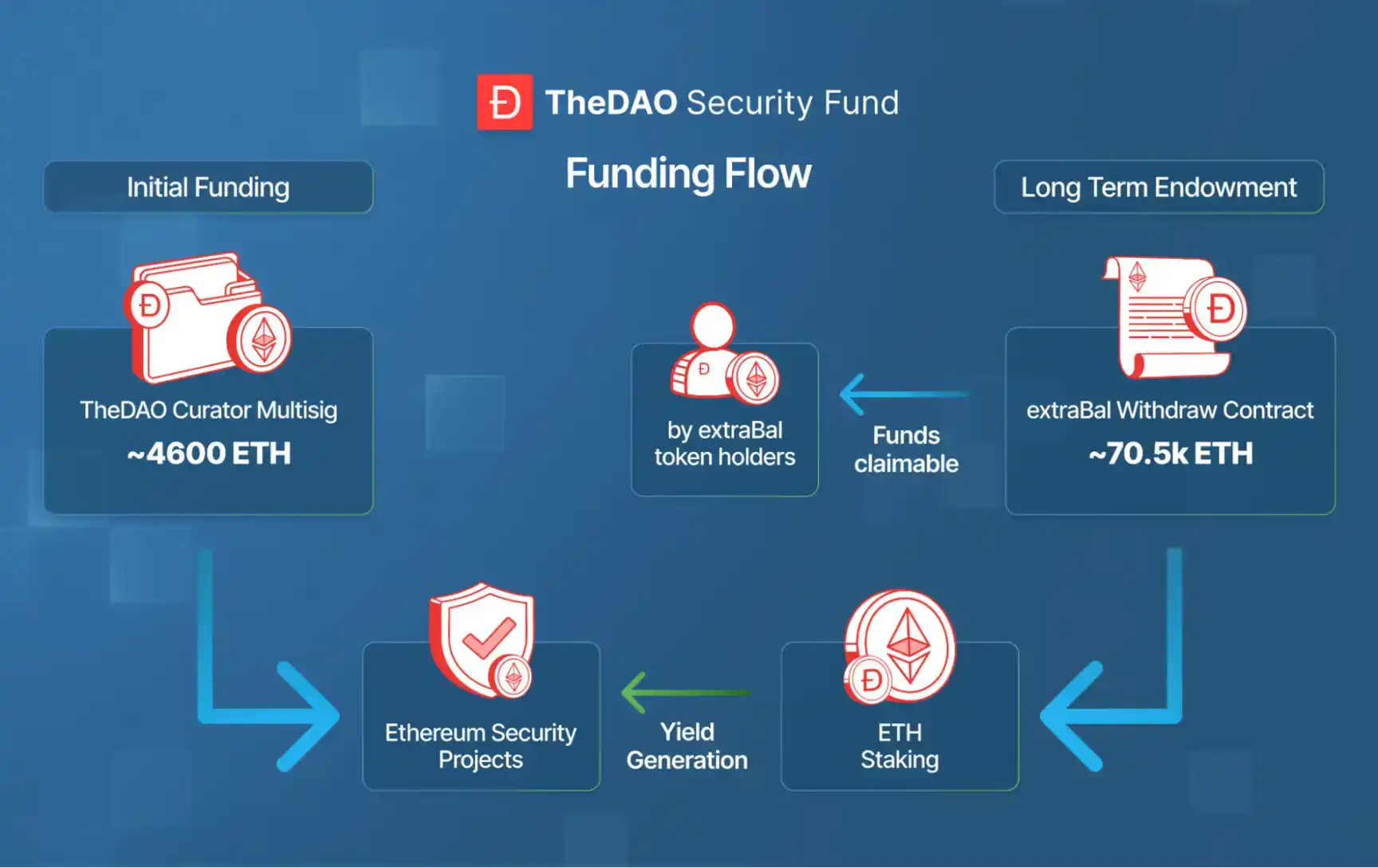
The operation and usage plan for TheDAO Security Fund's funds are clear and specific: 69,420 ETH allocated from the ExtraBalance contract will be staked, generating staking rewards to form a perpetual endowment fund, providing long-term financial support for Ethereum security development. The staking rewards will be combined with the 4,600 ETH from TheDAO Curator Multisig to jointly fund various Ethereum security-related projects. Simultaneously, the ExtraBalance withdrawal contract will retain a portion of ETH to ensure the rights of legitimate claimants are unaffected.

Regarding the scope of funding, TheDAO Security Fund's core objective is very specific—prioritizing the security of the entire Ethereum ecosystem, covering all dimensions of security development: from wallet user experience optimization and smart contract security audits, to emergency response for security incidents and security upgrades for the Ethereum core protocol, to security protection for Layer 2 networks and cross-chain bridge ecosystems. All work contributing to enhancing Ethereum's security level falls within the fund's funding scope.
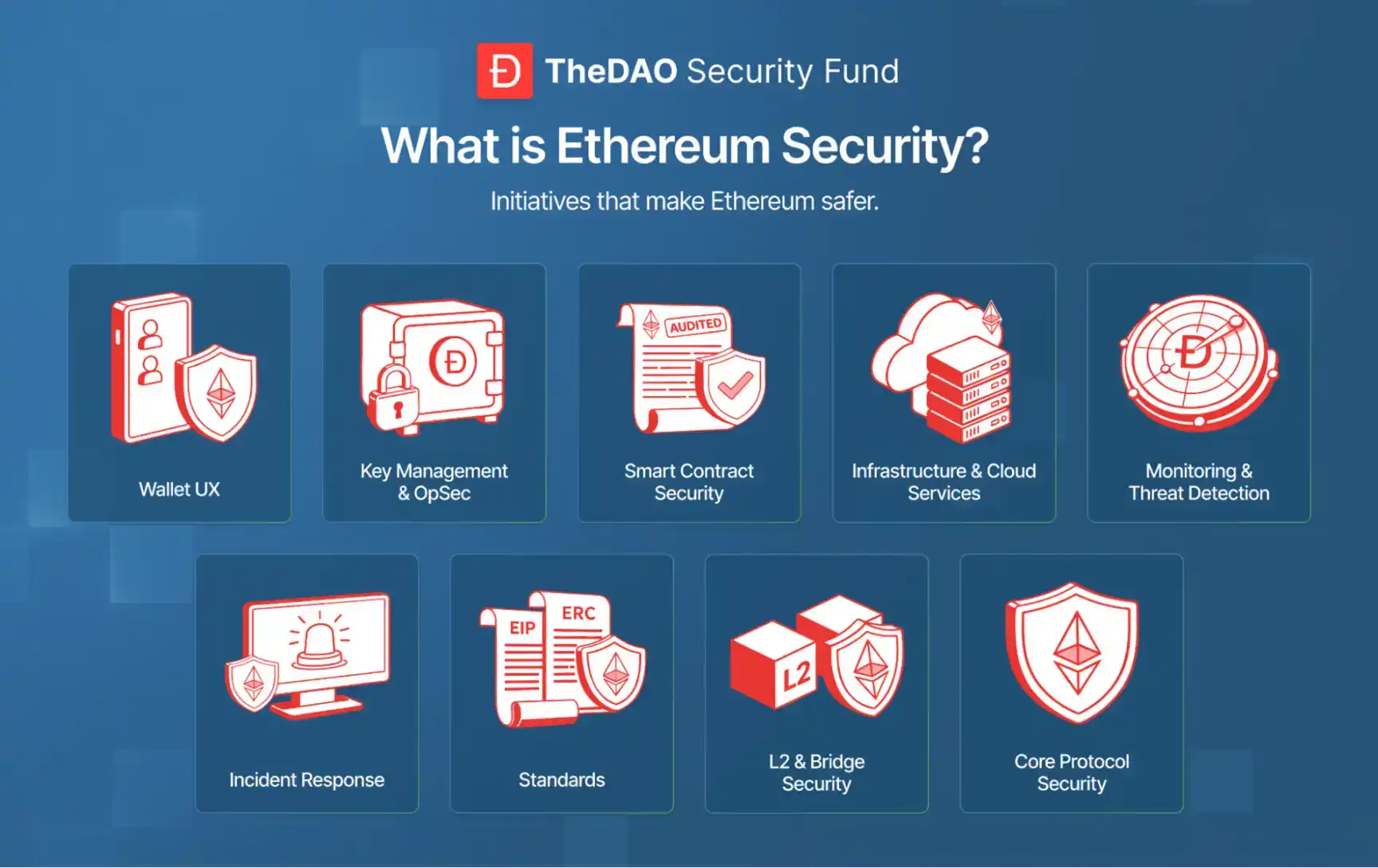
Additionally, the fund will rely on the optimization directions and opportunities in the current security landscape outlined by the Ethereum Foundation's Trillion Dollar Security initiative, combined with ongoing communication with ecosystem partners, to determine the specific scope and focus of each funding round.

In terms of the fund allocation mechanism, TheDAO Security Fund adheres to open, bottom-up governance principles. It will employ diverse methods such as quadratic funding, retroactive funding, and request for proposal (RFP)-based ranking votes to carry out funding work in rounds, allowing ecosystem participants to jointly participate in fund allocation decisions.

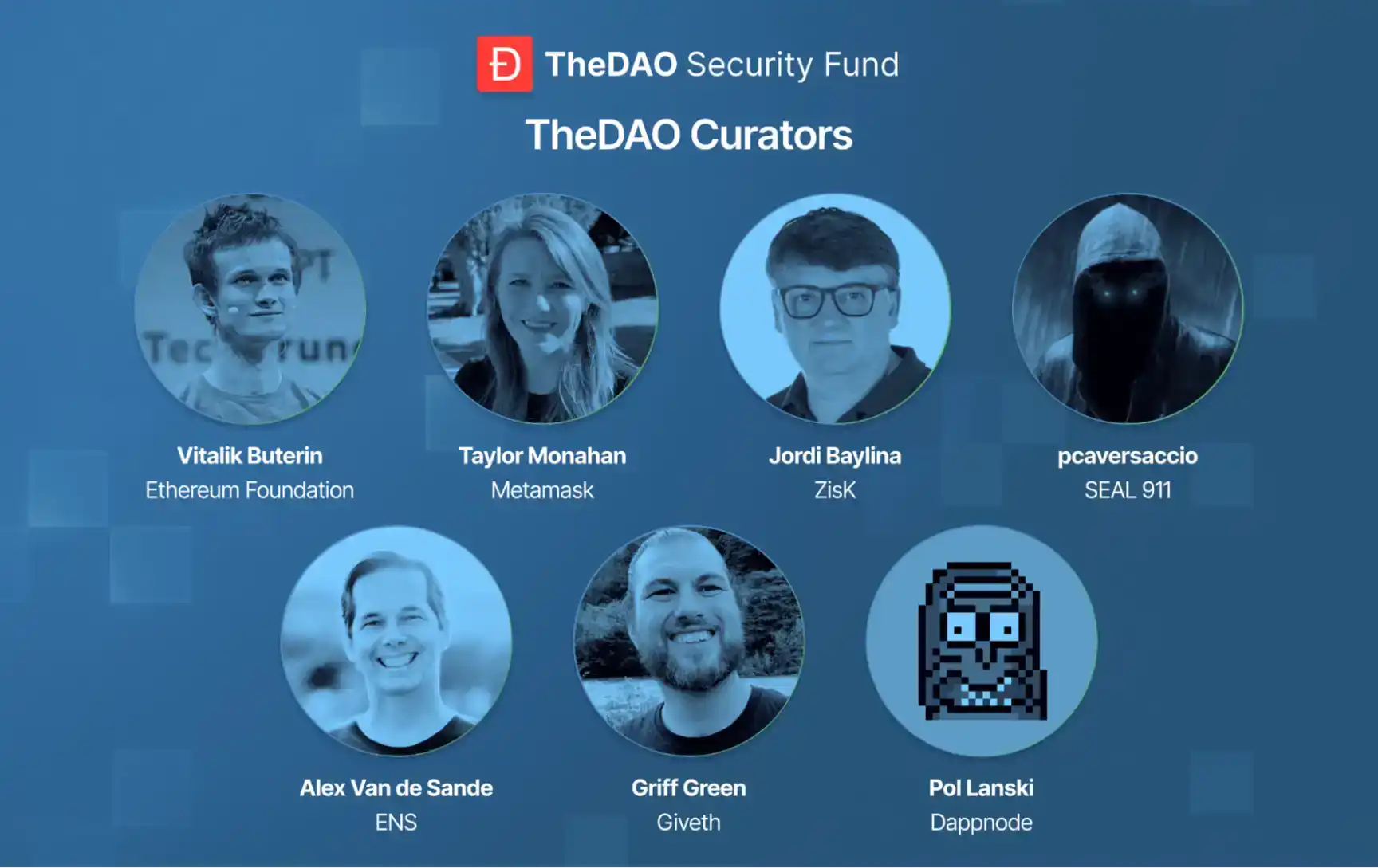
Currently, the fund has assembled a professional curator team to provide expert guidance and supervision for the fund's operation and funding decisions. Team members are all veteran practitioners and security experts in the crypto ecosystem: including Ethereum founder Vitalik Buterin, MetaMask security engineer Taylor Monahan, Zisk, Giveth co-founder Jordi Baylina, security expert pcaversaccio, ENS co-founder Alex Van de Sande, and Dappnode CEO Pol Lanski.
Summary

TheDAO Security Fund is not without controversy. Its core disputes still revolve around two main issues: first, the "legitimacy of the purpose" of using these leftover funds for a security fund, and second, the "degree of decentralization" of the fund's governance mechanism.

Should this huge asset be considered the "private property" of all original token holders, or has it already been deemed ownerless property to be used for the "public good"?

These controversies not only continue the philosophical divide within the Ethereum community sparked by the 2016 The DAO incident but also reflect the deep-seated contradictions in the current crypto ecosystem at the governance level—the balance between the ideal of decentralization and the efficiency of actual operations, as well as the compliance of asset disposal, remains a subject that the entire industry needs to continuously explore.

But setting aside the controversies, from the 2016 crowdfunding myth and ecosystem crisis to the 2026 security fund and ecosystem safeguarding, the decade-long cycle of The DAO is itself a microcosm of Ethereum's ecosystem development. It witnesses Ethereum's growth from immaturity to maturity and confirms the resilience and community strength of the crypto ecosystem.


Criptos en tendencia

Preguntas relacionadas

QWhat was the original purpose of The DAO in 2016 and what major event occurred?

AThe DAO was a decentralized autonomous organization launched in 2016 that raised a record $150 million in crowdfunding, attracting 14% of the total Ethereum supply. However, it suffered a catastrophic hack where attackers exploited a recursive call vulnerability in its smart contract, leading to a major theft of funds.

QHow is The DAO returning after ten years and what is the value of the new initiative?

AThe DAO is returning through the launch of 'The DAO Security Fund,' which repurposes over 75,109 ETH (worth more than $220 million) from the 2016 incident into a long-term fund dedicated to Ethereum security development.

QWhat are the two main sources of funding for The DAO Security Fund?

AThe funding comes from two sources: approximately 70,500 ETH from the ExtraBalance contract (which can still be claimed by eligible individuals) and about 4,600 ETH and some DAO tokens from The DAO Curator Multisig (valued around $13.5 million, with no clear claimants).

QHow will The DAO Security Fund allocate and use its resources to support Ethereum security?

AThe fund will stake 69,420 ETH from the ExtraBalance to generate yield for a perpetual endowment, while the staking rewards and the 4,600 ETH from the multisig will be used to fund Ethereum security projects. It will support areas like wallet UX, smart contract audits, emergency response, core protocol upgrades, and L2/cross-chain security.

QWho are some of the key members of the guardian team overseeing The DAO Security Fund?

AThe guardian team includes Ethereum founder Vitalik Buterin, MetaMask security engineer Taylor Monahan, Zisk, Giveth co-founder Jordi Baylina, security expert pcaversaccio, ENS co-founder Alex Van de Sande, and Dappnode CEO Pol Lanski.

Lecturas Relacionadas

Analyzing the Impact of AI on Economic Growth and Productivity

**Title: Analyzing AI's Impact on Economic Growth and Productivity** This article examines three contrasting views on AI's influence on economic growth and productivity. **The Optimistic View** posits that AI, especially through automating R&D ("recursive self-improvement"), could dramatically accelerate growth, even triggering a technological "singularity" with explosive, potentially infinite, economic expansion. **The Moderate/Mainstream View** acknowledges AI's productivity benefits but emphasizes significant real-world constraints that could limit its impact. These include: limited cost savings per task, structural ceilings on which jobs and industries are "exposed" to AI, adoption bottlenecks (e.g., compute, energy, regulatory hurdles), and the "weak link" effect where non-automatable tasks cap overall gains. Consequently, the realized AI dividend may be far lower than optimistic projections, with estimates typically ranging from 0.1% to 1.3% annual productivity growth. **The Pessimistic View** stems from two strands. The first aligns with the moderate view but applies extremely conservative assumptions about task exposure and efficiency gains, yielding minimal projected impact. The second introduces a demand-side critique: if AI primarily replaces rather than augments labor, it could depress labor's share of income, weaken consumer demand, and create a "demand trap" that ultimately stifles growth, unless offset by redistribution policies. **The authors' assessment** is nuanced: * **Short-term (1-2 years):** AI will support growth primarily through investment spending, not significant productivity gains. * **Medium-term (3-5 years):** Three potential paths emerge based on AI demand and bottleneck severity: 1. **"Optimistic Path":** High demand, few bottlenecks. Rapid productivity gains but risk of major job displacement and social conflict without redistribution. 2. **"Moderate Path" (most likely):** High demand but significant, surmountable bottlenecks. Leads to moderate productivity gains, financial market volatility (K-shaped returns), and sectoral job losses. 3. **"Pessimistic Path":** Low demand or severe bottlenecks. Minimal productivity and growth impact, triggering financial market corrections but allowing a smoother societal transition with less labor disruption. * **Long-term:** AI holds potential for a major productivity revolution and prosperity. The conclusion stresses that no path is smooth. Technologically "optimistic" outcomes could be socially detrimental, while "pessimistic" technological diffusion might be more socially stable. Policymakers must monitor developments and prepare balanced responses to manage economic, financial, and social sustainability.

marsbitHace 5 min(s)

Analyzing the Impact of AI on Economic Growth and Productivity

marsbitHace 5 min(s)

The New Cold War is a Tech Stock War

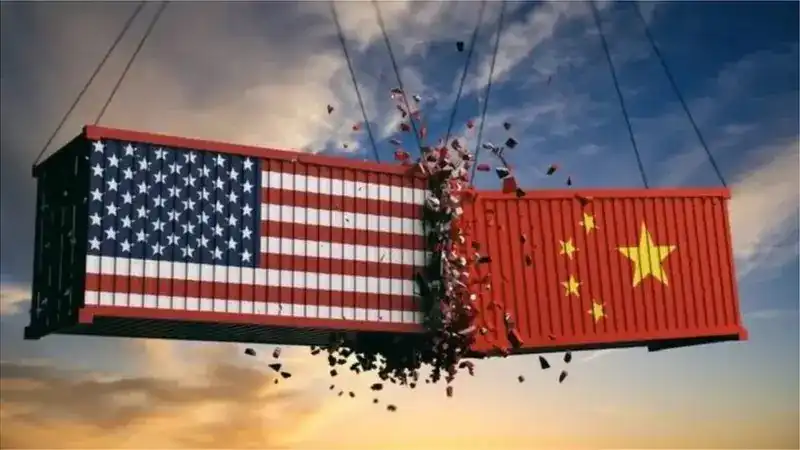
The New Cold War is a Tech Stock War The article argues that the contemporary geopolitical and economic rivalry between the US and China represents a "New Cold War," but one fundamentally fought through technology and financial markets, not physical barriers or conventional trade. Historically, US dominance was secured through financial systems. The Soviet Union, reliant on the rigid "Transferable Ruble," was ultimately undermined by its dependency on the US dollar for oil trade. Later, Japan's semiconductor challenge was countered not just by tariffs (e.g., Plaza Accord, 301 investigations) but by binding it to US Treasury bonds. China presents a more complex, "embedded" challenger. While it holds vast dollar reserves and US debt like Japan, its industrial base is stronger and more diversified than the Soviet Union's. Surviving the initial 2018 trade war phase, the conflict has evolved into a "tech-financial war." The core battlefield is now the stock market. US tech stocks (AI, semiconductors) are treated as sovereign assets, buoyed by bipartisan national will. China is pushing to strengthen its own financial markets to convert industrial strength into financial power and fund its tech ambitions. Companies like ChangXin (semiconductors), Moonshot AI, and DJI compete not just for market share but as financial proxies for their respective systems. The new paradigm is moving from globally efficient monopolies (Apple, Google) towards companies that achieve monopolistic profits within their respective geopolitical spheres. This competition over "pricing power" and financial valuation in segmented markets defines the current era, making the stock market the primary arena for this tech-centric struggle.

marsbitHace 14 min(s)

The New Cold War is a Tech Stock War

marsbitHace 14 min(s)

RWA Weekly: Ten European Financial Institutions Establish Tokenized Asset Cooperative; Ondo Launches New Execution Network Ondo Network

RWA Weekly: European Banks Form Tokenized Asset Cooperative; Ondo Launches New Execution Network Ondo Network Covering July 24-31, 2026, the RWA sector saw a steady on-chain total value locked (TVL) of $36.8 billion, with holder count hitting a record high. However, stablecoin transfer volumes fell sharply (~30%), indicating low on-chain settlement demand. Key regulatory moves include South Korea advancing stablecoin legislation and a push to scrap crypto taxes, Kenya lowering capital requirements for stablecoin issuers, and Zimbabwe approving seven projects for its crypto sandbox. In project developments, BIS-led Project Agorá successfully tested cross-border payments with tokenized funds across six currencies. Ten major European financial institutions formed the RL1 blockchain cooperative to build tokenized asset infrastructure. Other notable updates: Aviva launched a tokenized dollar liquidity fund on XRPL, POSCO International tokenized commercial invoices on Injective, and a Brazilian farmer used tokenized cattle as collateral for a loan. Additional progress includes BNY Mellon migrating its core transfer agent operations to blockchain, Securitize gaining SEC investment advisor registration, and Tether’s compliant stablecoin USA₮ launching on Celo. Ondo Finance introduced Ondo Network, a new execution layer focused on speed and privacy, moving away from its initial chain plans. An analysis highlights that despite the growing scale of on-chain RWAs (~$32B), approximately 90% remain underutilized in DeFi, pointing to a critical challenge in unlocking liquidity and fostering real-world application beyond mere issuance.

marsbitHace 15 min(s)

RWA Weekly: Ten European Financial Institutions Establish Tokenized Asset Cooperative; Ondo Launches New Execution Network Ondo Network

marsbitHace 15 min(s)

South Korean Stock Market Sees Sharp Rebound After Forceful De-leveraging, SK Hynix Rises 30%

On July 31, South Korean stocks staged a historic rebound. The benchmark KOSPI index surged 18.27%, with chipmaker SK Hynix hitting a 30% gain limit. This followed a brutal, near-40% decline in the KOSPI over the previous month, driven largely by a deleveraging spiral involving leveraged ETFs. Analysts attributed the sharp sell-off to structural liquidity issues rather than deteriorating corporate fundamentals. The rally was triggered by a confluence of positive catalysts. Firstly, strong earnings from U.S. cloud giants Microsoft and Amazon alleviated fears of an "AI bubble burst," boosting global tech sentiment. Secondly, SK Group Chairman Chey Tae-won made a rare personal purchase of SK Hynix shares, seen as a strong vote of confidence. Thirdly, the South Korean government announced a 20 trillion won ($139 billion) AI investment fund. In response to the market turmoil, South Korean regulators are tightening controls on leveraged ETFs, admitting oversight shortcomings. Measures include raising minimum cash保证金 requirements for散户 investors and suspending new product launches. While the rebound signals eased liquidity pressure, analysts note deep structural issues remain. The market's future stability is seen as dependent on global tech capital expenditure trends and memory chip price cycles, with some viewing the surge as a technical correction rather than a definitive trend reversal.

marsbitHace 35 min(s)

South Korean Stock Market Sees Sharp Rebound After Forceful De-leveraging, SK Hynix Rises 30%

marsbitHace 35 min(s)

Trading

Spot

Artículos destacados

Cómo comprar DAO

¡Bienvenido a HTX.com! Hemos hecho que comprar DAO Maker (DAO) sea simple y conveniente. Sigue nuestra guía paso a paso para iniciar tu viaje de criptos.Paso 1: crea tu cuenta HTXUtiliza tu correo electrónico o número de teléfono para registrarte y obtener una cuenta gratuita en HTX. Experimenta un proceso de registro sin complicaciones y desbloquea todas las funciones.Obtener mi cuentaPaso 2: ve a Comprar cripto y elige tu método de pagoTarjeta de crédito/débito: usa tu Visa o Mastercard para comprar DAO Maker (DAO) al instante.Saldo: utiliza fondos del saldo de tu cuenta HTX para tradear sin problemas.Terceros: hemos agregado métodos de pago populares como Google Pay y Apple Pay para mejorar la comodidad.P2P: tradear directamente con otros usuarios en HTX.Over-the-Counter (OTC): ofrecemos servicios personalizados y tipos de cambio competitivos para los traders.Paso 3: guarda tu DAO Maker (DAO)Después de comprar tu DAO Maker (DAO), guárdalo en tu cuenta HTX. Alternativamente, puedes enviarlo a otro lugar mediante transferencia blockchain o utilizarlo para tradear otras criptomonedas.Paso 4: tradear DAO Maker (DAO)Tradear fácilmente con DAO Maker (DAO) en HTX's mercado spot. Simplemente accede a tu cuenta, selecciona tu par de trading, ejecuta tus trades y monitorea en tiempo real. Ofrecemos una experiencia fácil de usar tanto para principiantes como para traders experimentados.

236 Vistas totalesPublicado en 2024.12.11Actualizado en 2026.06.02

Cómo comprar DAO

Discusiones

Bienvenido a la comunidad de HTX. Aquí puedes mantenerte informado sobre los últimos desarrollos de la plataforma y acceder a análisis profesionales del mercado. A continuación se presentan las opiniones de los usuarios sobre el precio de DAO (DAO).

活动图片