The CLARITY Act Enters a Critical Review Today: What You Should Focus On?

marsbitPublicado a 2026-05-14Actualizado a 2026-05-14

Resumen

The CLARITY Act (Digital Asset Market Clarity Act), a landmark bill to establish a regulatory framework for cryptocurrencies, enters a crucial committee markup in the U.S. Senate Banking Committee. While it has a significant chance of advancing to a full Senate vote, its path is narrowing with over 130 proposed amendments. Key tensions surround the bill: whether stablecoin rewards constitute unfair competition for bank deposits, if the legislation genuinely protects investors or merely enables industry expansion, and the push from Democrats to include ethics provisions related to the Trump family's crypto dealings. Banking lobbyists strongly oppose the stablecoin reward compromise, and with the summer recess and midterm elections approaching, the window for passage is tightening. Prediction markets currently assign about a 60% probability of the bill becoming law this year.

Editor's Note: On May 14th, at 10:30 AM Eastern Time (10:30 PM Beijing Time) today, the U.S. Senate Banking Committee will conduct a committee review of the "Cryptocurrency Market Structure Act" (known as the CLARITY Act). This is a critical step in the legislative process. If passed, the CLARITY Act will advance to a full Senate vote.

The committee's official website shows that this Executive Session has been scheduled on the agenda. Previously, Senate Banking Committee Chairman Tim Scott, along with Cynthia Lummis and Thom Tillis, released the latest version of the market structure bill text on May 12th. They stated its goal is to provide "clear rules" for digital assets, protect ordinary investors, combat illicit financial activities, and keep financial innovation within the United States.

This article is from Fortune, focusing on the political maneuvers on the eve of the CLARITY Act's review by the Senate Banking Committee. The most noteworthy aspect is not whether the bill is "pro-crypto," but how, as it nears passage, it exposes three key tensions in U.S. crypto regulation: First, whether stablecoin yields are payment incentives or de facto deposit competition; Second, whether the crypto market structure legislation is protecting investors or opening an institutional pathway for industry expansion; Third, given the deep involvement of the Trump family in crypto businesses, whether ethical constraints must be simultaneously incorporated into the market structure reforms.

From the current situation, the CLARITY Act still has a relatively good chance of entering a full Senate vote, but its margin for error is narrowing. Fortune reports that members of the Senate Banking Committee have already submitted over 130 amendments before the review, with Elizabeth Warren alone proposing 44. Meanwhile, the banking industry is concerned that stablecoin reward mechanisms could siphon off bank deposits and has sent a large number of opposition letters to Senate offices.

Although the key Republican swing vote John Kennedy has indicated a tendency to support it, and the chance of the bill entering full Senate consideration remains high, with the summer recess and midterm elections approaching, the window for the CLARITY Act's passage is narrowing. Prediction markets have also lowered its probability of passing this year to about 60%.

Below is the original text:
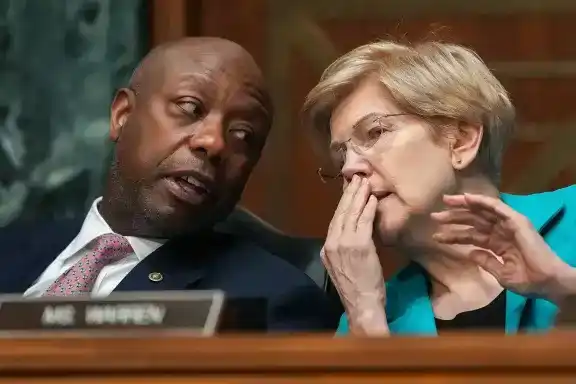
The CLARITY Act is a landmark bill aimed at establishing a regulatory framework for the U.S. crypto industry. The bill will begin its markup review process in a Senate committee starting Thursday. Its passing prospects have boosted investor sentiment, but there remain several significant hurdles to cross before Congress can send the bill to President Trump's desk.

CLARITY is short for the "Digital Asset Market Clarity Act." The bill passed the House of Representatives last year but encountered resistance in the Senate Banking Committee due to disputes between banks and stablecoin companies over whether and when rewards can be paid on stablecoin balances. Now, as senators prepare to propose amendments, Democrats are pushing to include ethical constraint clauses related to the Trump family's crypto businesses.

According to a copy of proposed amendments reviewed by Fortune, members of the Senate Banking Committee have submitted over 130 proposed amendments ahead of Thursday's markup, with Senator Elizabeth Warren alone submitting 44.

Some of the proposed amendments are minor, but others aim to advance the positions of the bill's opponents. These opponents include banking interests concerned that stablecoins could weaken the deposit base of banks, as well as those worried about ethical and national security risks accompanying the crypto industry's expansion.

"I think it will pass, based on the progress made in both chambers of Congress so far and the White House's support for this bill," Steve Yelderman, general counsel for the Ethereum-focused initiative Etherealize, told Fortune. "Having said that, this is Washington, and anything can happen."

Earlier this year, the CLARITY Act came close to entering a Senate Banking Committee markup, but Coinbase withdrew its support for the bill over a proposed ban on stablecoin rewards. Since then, Senator Thom Tillis (R-N.C.) and Senator Angela Alsobrooks (D-Md.) reached an agreement on the stablecoin yield issue. However, banking lobbying groups now complain that this compromise is too friendly to stablecoin companies. Reportedly, members of the American Bankers Association have sent over 8,000 letters to Senate offices criticizing this yield compromise.

A Senate aide told Fortune that during tomorrow's markup, Senate Banking Committee Chairman Tim Scott (R-S.C.) is expected to emphasize protecting "ordinary people," safeguarding national security, and keeping crypto innovation in the United States as the main goals of the CLARITY Act. Another Senate aide said Democrats are expected to focus on the ethical issues raised by President Trump's numerous crypto connections.

"Democrats are increasingly concerned that if ethics provisions are not included in the version of the bill marked up by the Banking Committee, they may not be included later," the staffer said. They added that Democrats are focused on addressing the issue of the Trump family profiting from cryptocurrencies within the market structure legislation. Republicans and Democrats have met several times this week to discuss how to add ethics clauses to the CLARITY Act.

For now, the bill's chances of reaching a full Senate vote remain significant. A key Republican who had previously been hesitant about the CLARITY Act in the Banking Committee, Senator John Kennedy of Louisiana, told Semafor he plans to support the bill. However, with the summer recess and midterm elections approaching, the margin for error for the CLARITY Act remains quite limited. Traders on Polymarket have become less optimistic about the bill's prospects this week. The prediction market currently puts the probability of the bill passing this year at 60%.


Preguntas relacionadas

QWhat is the CLARITY Act and what is its primary goal?

AThe CLARITY Act refers to the 'Digital Asset Market Clarity Act'. It is a landmark bill aimed at establishing a regulatory framework for the crypto industry in the U.S., with the primary goal of providing clear rules for digital assets while protecting retail investors, combating illicit finance, and keeping financial innovation in the United States.

QWhy was the progression of the CLARITY Act in the Senate Banking Committee previously stalled?

AThe bill's progress in the Senate Banking Committee was previously stalled due to disputes between banks and stablecoin companies over the question of whether and when stablecoin balances could pay rewards.

QWhat are the key tensions in U.S. crypto regulation highlighted by the CLARITY Act's progress?

AThe article highlights three key tensions: 1) Whether stablecoin rewards are a payment incentive or a form of indirect deposit competition; 2) Whether the crypto market structure legislation protects investors or opens a regulatory pathway for industry expansion; 3) Whether market structure reform must incorporate ethical constraints given the deep involvement of the Trump family in crypto businesses.

QWhat is one major concern Democrats are trying to address with proposed amendments to the CLARITY Act?

ADemocrats are trying to address ethical concerns by pushing to incorporate ethical constraint clauses related to the Trump family's crypto business profits into the market structure legislation.

QAccording to prediction markets, what is the current estimated probability of the CLARITY Act passing in 2025?

AAccording to the prediction market Polymarket, the estimated probability of the CLARITY Act passing in 2025 is currently around 60%.

Lecturas Relacionadas

AI Trading Cools, South Korean Stocks Plunge 1.8%, Spot Gold Rises 1%, Bitcoin Dives

A sell-off in AI-related stocks, triggered by Broadcom's disappointing earnings forecast, sent shockwaves through global markets. South Korea's KOSPI led Asia's decline, plunging 1.8% as the risks from concentrated chip stock gains and surging leveraged investments came to the fore. The tech-heavy Nasdaq 100 futures fell 0.5% following Broadcom's 14% after-hours plunge, which signaled a slower-than-expected transition to AI clients. This pullback extended Wall Street's weakness, halting the S&P 500's nine-day rally amid hawkish Fed signals and renewed Middle East tensions. South Korean authorities convened an emergency meeting, pledging "immediate measures" against market volatility and warning of record-high stock margin debt. The adjustment rippled across assets: Bitcoin fell to around $64,000, its lowest since February, while safe-haven gold rose 1% on bargain hunting. Oil prices dipped on Middle East ceasefire news. Market analysts noted the sell-off was driven by profit-taking after massive gains, particularly in chip stocks like Samsung and SK Hynix, which now dominate the KOSPI. Wall Street banks are divided on Korea's outlook, with Goldman Sachs raising its target while Citigroup and others warn of overvaluation and a potential bubble. Bridgewater's Ray Dalio noted that great technological shifts often create bubbles. Meanwhile, Fed officials' hints at potential future rate hikes added to the cautious mood ahead of key U.S. jobs data.

华尔街日报Hace 20 min(s)

AI Trading Cools, South Korean Stocks Plunge 1.8%, Spot Gold Rises 1%, Bitcoin Dives

华尔街日报Hace 20 min(s)

Seeking Alpha's Hot Article: Why Might the U.S. Stock Market Crash in June?

In a recent Seeking Alpha article, financial professor and analyst Damir Tokic argues that the US stock market may be poised for a significant crash in June 2026. The core thesis centers on a "mega-bubble" in equities, particularly within the technology sector, which has driven the S&P 500 to near-record valuations, with a Shiller P/E ratio exceeding 40—a level comparable to the 2000 dot-com bubble. Tokic identifies two primary catalysts for a potential collapse. First, he points to unsustainable market exuberance fueled by what he terms the "Trump Stimulus"—massive AI capital expenditure by tech giants, which he believes is politically driven and cannot last. Second, and more urgently, he highlights the escalating Iran war as a critical threat. The ongoing closure of the Strait of Hormuz has created a severe global energy supply crunch. Strategic petroleum reserves are projected to hit critically low operational levels by June, potentially causing oil prices to spike above $200 per barrel and triggering a severe, supply-driven inflationary shock. This scenario, Tokic warns, would force the Federal Reserve's hand. Despite currently maintaining a dovish bias, the Fed would likely be compelled to officially pivot to a hawkish stance at its June FOMC meeting to combat soaring inflation and bond yields. He contends that such a shift—or even a failure to act, which would destroy Fed credibility—could be the trigger that punctures the market bubble. The resulting downturn, he concludes, could rival the bear markets of 2000 and 2008, advising investors to prepare for a major correction.

marsbitHace 42 min(s)

Seeking Alpha's Hot Article: Why Might the U.S. Stock Market Crash in June?

marsbitHace 42 min(s)

AI PC Battle: Bet on the Toll Booth, Not the Camp

**Title:** The AI PC Battle: Don't Bet on Sides, Bet on the Tollbooth **Summary:** The AI PC competition is moving beyond simple "x86 vs. Arm" narratives. The core investment thesis should focus on identifying which players can sustain margins, cash flow, and pricing power throughout the upgrade cycle, rather than backing a particular architecture. The opportunity is analyzed in three layers: 1. **The Advanced Foundry Tollbooth:** TSMC is positioned to collect "tolls" regardless of which chip designer wins, due to its dominant ~70% share in advanced semiconductor manufacturing, which is essential for high-end AI PC chips. 2. **Compute & Platform Spillover:** AMD represents an offensive in the x86 CPU+GPU space, while NVIDIA leverages its GPU and CUDA software stack dominance. Both benefit from the demand for increased local AI compute. 3. **Architecture Diffusion & Turnaround Plays:** ARM and Intel offer potential for significant upside (elasticity), but investments here require stricter discipline due to higher execution risks and competitive challenges. The industry is transitioning from concept to shipment validation. While short-term forecasts for AI PC adoption have been revised down slightly due to tariffs and procurement delays, the long-term trend towards AI becoming a standard PC feature remains intact. The key driver for upgrade cycles will be whether compelling enterprise applications (e.g., privacy-sensitive computing, low-latency inference) emerge beyond consumer-focused features like meeting summarization. Investment strategy should prioritize companies with platform-level advantages and recurring revenue streams. TSMC offers high certainty as the foundational tollbooth. AMD presents a strong offensive play within the established ecosystem. ARM and Intel are higher-risk, higher-potential-reward turnaround bets. The report cautions against chasing short-term hype and emphasizes a disciplined, long-term approach focused on buying ecosystem strength and cash-flow certainty after market enthusiasm subsides. **Key Risks:** Underwhelming AI PC applications slowing upgrade cycles; slow improvement in Windows on Arm compatibility; macro/tariff impacts on PC demand; potential advanced node supply-demand mismatches affecting TSMC; high overall AI sector valuations making stocks vulnerable to a risk-off shift in markets.

marsbitHace 57 min(s)

AI PC Battle: Bet on the Toll Booth, Not the Camp

marsbitHace 57 min(s)

Ten-Thousand-Word Analysis: From $10 to $290, MRVL Wins the Entire AI Era by 'Not Making GPUs'

Marvell Technology's stock price surged from under $10 in 2016 to a record $290 in June 2026, fueled not by making GPUs, but by dominating AI infrastructure connectivity. This analysis argues the market misvalues MRVL as merely a smaller Broadcom in custom AI chips, overlooking its true, unique position. Marvell's core strength lies in enabling high-speed data flow for AI clusters through three interconnected businesses. First, it holds a commanding ~70% market share in high-speed optical DSPs (essential for data center light modules), a deep-moat business with accelerating growth. Second, its custom AI chip design business serves hyperscalers like AWS, Microsoft, and Google, with a significant revenue pipeline despite lower margins. Third, stable cash flows come from Ethernet switch chips and enterprise storage controllers. Together, they form a full-stack "AI data movement" platform. CEO Matt Murphy's transformative leadership since 2016, involving strategic divestments, key acquisitions (like Inphi for optical DSPs), and securing long-term agreements with major cloud providers, repositioned the company. A pivotal $2 billion strategic investment from NVIDIA in 2026 underscored Marvell's critical role in the AI ecosystem, particularly through collaborations like NVLink Fusion. While Marvell faces risks—including client concentration (losing the Amazon Trainium3 design), lower-margin business mix, competitive threats, insider selling, and complex supply chains—its fundamentals remain strong. The optical interconnect moat is widening with the acquisition of Celestial AI (photonics fabric), and financial metrics show accelerating revenue growth and operating leverage. With a PEG ratio suggesting undervaluation relative to its growth, the thesis is that the market undervalues Marvell's monopolistic position in AI "plumbing" while overemphasizing its competitive custom chip segment. The story transcends investing, symbolizing how in any complex system—from the internet to AI—the value of "connection" ultimately surpasses that of individual "nodes."

marsbitHace 1 hora(s)

Ten-Thousand-Word Analysis: From $10 to $290, MRVL Wins the Entire AI Era by 'Not Making GPUs'

marsbitHace 1 hora(s)

Trading

Spot
Futuros
活动图片




