The Billionaires Behind the Most Expensive Midterm Election in History

marsbitPublicado a 2026-05-11Actualizado a 2026-05-11

Resumen

"The Most Expensive Midterm Elections and Their Billionaire Backers" This analysis details the unprecedented scale of spending in the 2026 midterm elections, highlighting the key billionaire donors shaping the political landscape. Jeff Yass, founder of Susquehanna International Group, has contributed over $81 million, ranking third among individual donors behind George Soros ($102.6M) and Elon Musk ($84.8M). Yass is a major donor to Trump's MAGA Inc. and supports school choice and various candidates. Overall, federal committees have raised over $4.7 billion this cycle, with political ad spending projected to reach $10.8 billion. Republican-aligned groups are significantly out-raising their Democratic counterparts. "Dark money" from undisclosed sources continues to grow. The core stakes involve control of Congress and policy direction for Trump's final term. Donors are also motivated by specific issues: Sergey Brin and Chris Larsen are funding opposition to a proposed California wealth tax and supporting crypto-friendly policies. Other top donors include OpenAI's Greg Brockman and his wife Anna ($50M total to MAGA Inc. and an AI-focused PAC), Richard Uihlein ($45.3M to conservative causes), venture capitalists Marc Andreessen and Ben Horowitz (each over $44M to crypto/AI PACs and MAGA Inc.), Miriam Adelson ($42.6M to GOP leadership PACs), Paul Singer ($33.9M), and Diane Hendricks ($25.8M to MAGA Inc.). The article notes that the peak fundraising period is still ahead, with ...

Written by: Amanda L. Gordon, Biz Carson, Bill Allison, Bloomberg

Compiled by: Saoirse, Foresight News

Jeff Yass, the billionaire founder of market-making firm Susquehanna International Group, has been frequently active this election season, donating over $80 million to midterm candidates and related political causes so far.

According to data compiled by Bloomberg News, this donation amount ranks third among individual donors this election cycle, behind only George Soros and Elon Musk. While Soros and Musk's donations primarily flowed to their respective super PACs, Jeff Yass is a major donor to Trump's MAGA Inc., while also directly funding a wide array of other recipients.

His donations cover his key areas of interest—including a $15 million donation to the School Freedom Fund, which advocates for school choice—as well as numerous political candidates, such as a $20 million contribution to a federal PAC supporting Ohio gubernatorial candidate Vivek Ramaswamy.

He also directed funds to some niche political causes, including a $675,000 donation to the Aurora Action Network, which seeks to repeal ranked-choice voting in Alaska, far from his home state of Pennsylvania. Yass did not respond to requests for comment.

With a net worth of $83.8 billion according to the Bloomberg Billionaires Index, Yass is just one player in this, the most expensive midterm election in history, as an analysis of big donors shows.

Bloomberg's analysis shows federal political committees have raised over $4.7 billion from individuals, companies, dark money groups and other entities this election cycle, a figure that doesn't include donations at the state and local levels. Political ad tracker AdImpact projects spending on political ads alone will reach $10.8 billion, a more than 20% increase from 2022.

Business Tycoons Plunging into U.S. Politics
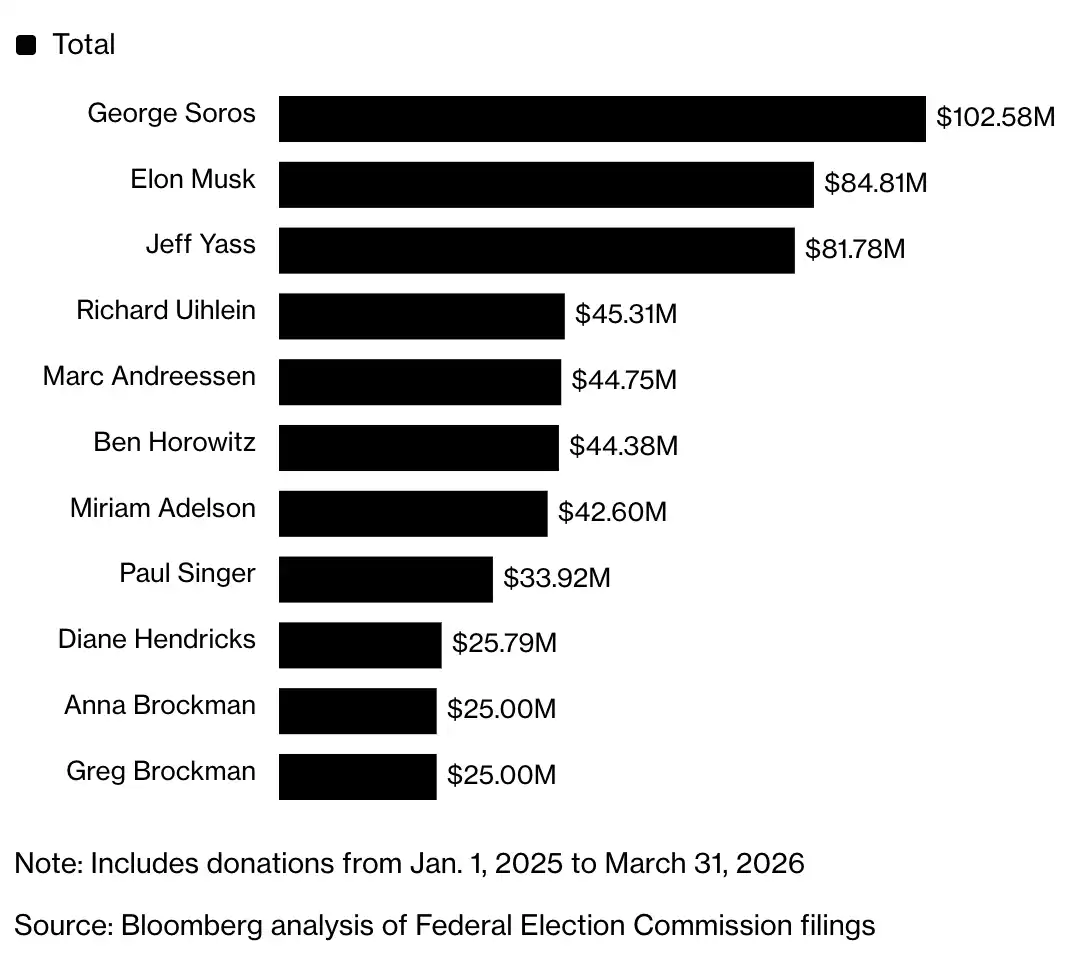
Top individual donors to federal committees (total) in the 2026 election cycle

So far, the bulk of the big money is flowing into Republican coffers: The Republican party and its allied super PACs for the Senate and House, along with Trump's political committee and MAGA Inc., raised a combined $917 million in the first quarter.

That was 3.5 times the $262 million raised by the Democratic National Committee and its Senate, House, and allied super PACs. However, in overall campaign fundraising, Democratic candidates are still outraising their Republican counterparts.

And that's just the traceable money. "Dark money"—political donations routed through nonprofits that don't have to disclose their funding sources—has played an increasing role in recent elections and is expected to do so again in 2026.

At the core of this money race is the battle for control of Congress and the direction of policy during the final two years of a Trump presidency. But for the super-rich writing the checks, there are equally pressing issues at stake: whether California will implement a billionaire tax, what regulatory rules will govern the AI and cryptocurrency industries, and the outcomes of local elections across states.

Google co-founder Sergey Brin has poured more than $60 million into California over the past four months, largely to oppose a proposed wealth tax. Ripple co-founder Chris Larsen has also spent millions fighting the billionaire tax proposal, while donating to organizations seeking to shape the state's political landscape; his company also gave $48.5 million to the pro-crypto PAC Fairshake.

Illinois Governor and potential 2028 presidential candidate JB Pritzker donated $10 million to a PAC helping the state's Lieutenant Governor, Juliana Stratton, who has won the Democratic nomination for the state's Senate seat.

The peak fundraising period is still ahead, with key primaries in May and June, including the fight for Mitch McConnell's Senate seat in Kentucky and the competitive California gubernatorial race.

Some top donors from previous elections have remained quiet so far, and more billionaires are expected to join the ranks of top donors as the Nov. 3 election approaches.

For example, Citadel founder Ken Griffin, a key donor in the 2018 and 2022 elections, has kept a low profile this midterm. His current donations are focused on Republican-aligned state political committees in Florida, where he moved his family home and business four years ago.

The following are the billionaires who have given the most to federal political committees so far in this midterm election cycle. All individuals on the list either did not respond to interview requests or declined to comment.

Details on Top Donors

George Soros

Illustration: 731; Source: Getty Images

Total Donated: $102.6 million

Key Recipients: $102 million to Democracy PAC; $265,500 to the Democratic Senatorial Campaign Committee; $250,000 to the Democratic Congressional Campaign Committee.

Influence: The 95-year-old Soros, a long-time political activist and funder of progressive causes, operates through foundations, PACs, and nonprofits linked to Democratic and liberal causes. His Democracy PAC, run by his son Alex, funds the Working Families Party and progressive candidates in district attorney races; his wholly-funded 501(c)(4), the Fund for Policy Reform, also put $10 million into California's redistricting fight.

Elon Musk

Illustration: 731; Source: Bloomberg

Total Donated: $84.8 million

Key Recipients: $50 million to America PAC; $10 million to Fight for Kentucky PAC; $10 million each to the Senate Leadership Fund and the Congressional Leadership Fund.

Influence: The Tesla and SpaceX co-founder is a full-throated backer of the Trump second-term camp, even as his relationship with the president has had its ups and downs, and he plans to stay deeply involved. Operating independently, he's put the bulk of his money into his own America PAC while also giving big to mainstream PACs helping Republicans win House and Senate seats. A key motivation for the 54-year-old Musk's continued political involvement is to boost ally JD Vance's potential 2028 presidential bid. As a first step, he backed Nate Morris, who shares the vice president's views, in the Republican primary for Mitch McConnell's Senate seat in Kentucky, though Morris dropped out last week.

Jeff Yass

Illustration: 731; Photographer: Eddie Maluk

Total Donated: $81.8 million

Key Recipients: $20 million to V-PAC, supporting Ohio gubernatorial candidate Vivek Ramaswamy; $16 million to MAGA Inc.; $15 million to the School Freedom Fund.

Influence: The founder of trading firm Susquehanna International Group is one of the largest individual donors to Trump's core fundraising vehicle, MAGA Inc. Yass's business interests align closely with the president's agenda: Trump last year halted a push to ban TikTok in the U.S., and Yass and his firm hold a stake in TikTok parent ByteDance. The 67-year-old prefers to highlight his support for school-choice PACs and candidates. "I've found a way that can work to lift tens of millions of kids out of poverty," he told The Washington Post.

Greg Brockman & Anna Brockman

Photo Illustration: 731; Source: Getty Images

Total Donated: $50 million combined ($25 million each)

Key Recipients: $25 million to Leading the Future; $25 million to MAGA Inc.

Influence: OpenAI co-founder Greg Brockman and his wife Anna are key donors to Trump's super PAC, while also giving to the AI-focused Leading the Future PAC. Trump invited the Brockmans to a dinner with Saudi Crown Prince Mohammed bin Salman in November. The 38-year-old Greg Brockman plans to increase his support for Leading the Future this year, saying the shift in public sentiment makes backing AI-friendly candidates a crucial move for humanity's future.

Richard Uihlein

Total Donated: $45.3 million

Key Recipients: $39.6 million to Restoration of America PAC; $4 million to Fair Courts America; $1 million to Northwoods Future PAC, which is backing Michael Alfonso, son-in-law of Transportation Secretary Sean Duffy, for a Wisconsin House seat.

Influence: The 80-year-old heir to the Schlitz beer fortune, a hardline conservative and co-founder of packaging company Uline, is the primary funder of the Restoration of America PAC, which focuses on election integrity, a strong military, anti-abortion policies, and backing conservative candidates. He also advocates for looser regulations on the long-haul trucking industry, arguing current rules place an undue burden on truckers.

Marc Andreessen
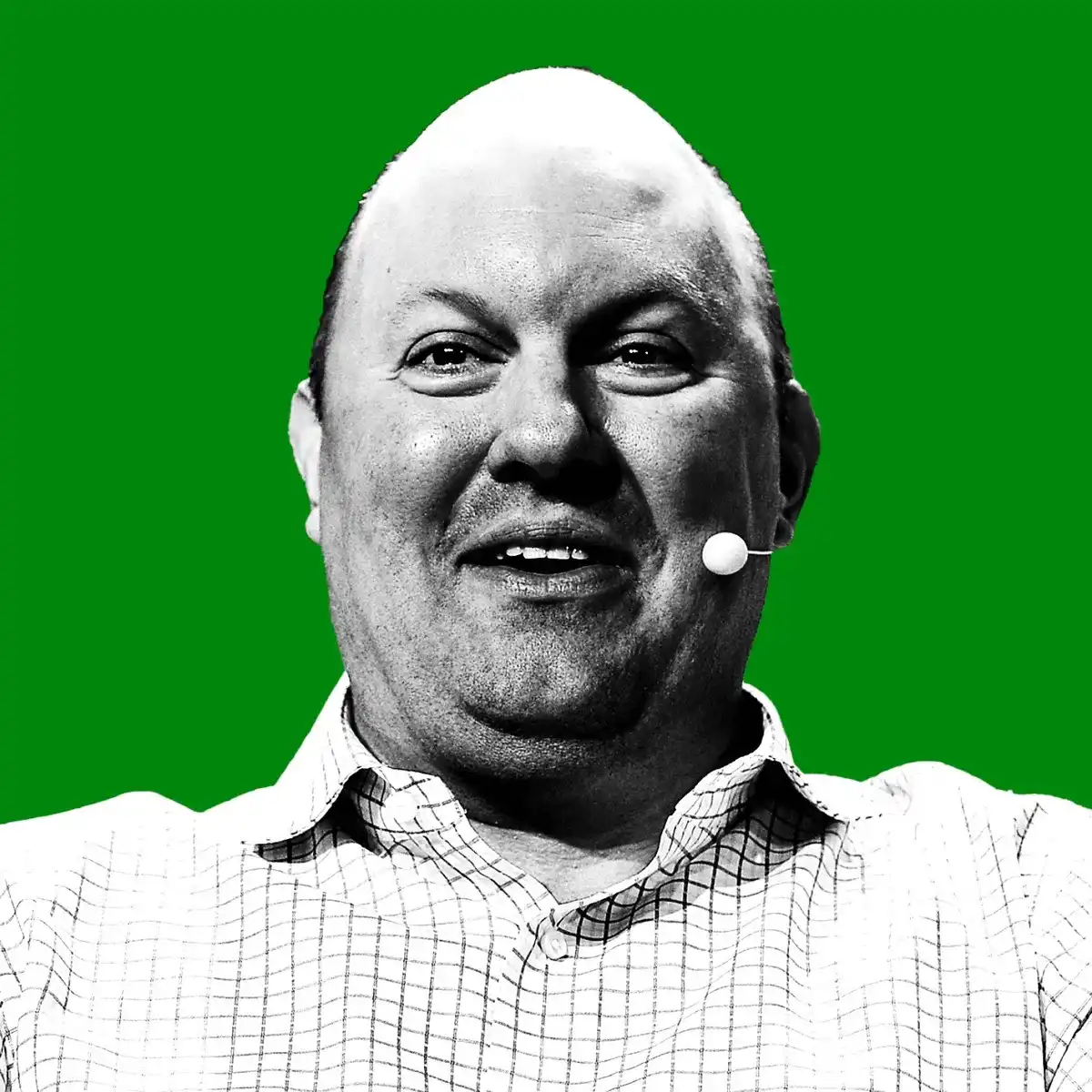
Photo Illustration: 731; Source: Getty Images

Total Donated: $44.7 million

Key Recipients: $25 million to Leading the Future; $11.9 million to Fairshake; $6 million to MAGA Inc.

Influence: The 54-year-old Andreessen, previously a bipartisan donor who backed Barack Obama in 2008, publicly endorsed Trump in July 2024 after clashing with Joe Biden over crypto and AI regulation. The Silicon Valley venture capitalist frequently speaks with Trump on the phone and is involved in shaping federal tech policy. Beyond his personal 2024 donation to Trump's campaign, his firm has backed two super PACs: Fairshake for crypto and Leading the Future for AI.

Ben Horowitz

Photo Illustration: 731; Source: Getty Images

Total Donated: $44.4 million

Key Recipients: $25 million to Leading the Future; $11.9 million to Fairshake; $6 million to MAGA Inc.

Influence: During the 2024 presidential race, Ben Horowitz and his partner Marc Andreessen hedged their bets by backing Trump over tech policy. He has typically leaned Democratic and also supported Kamala Harris's campaign as a personal friend. Since then, the 59-year-old Horowitz has focused his giving more on specific issues, with the bulk of his money this cycle going to AI and crypto-related PACs, while also giving millions to MAGA Inc. and six-figure sums to the Senate Leadership Fund PAC.

Miriam Adelson

Photo Illustration: 731; Source: Getty Images

Total Donated: $42.6 million

Key Recipients: $30 million to Senate Leadership Fund; $10 million to Congressional Leadership Fund; $1 million to Security is Strength PAC, supporting South Carolina Senator Lindsey Graham.

Influence: The 80-year-old Israeli-American physician, Miriam Adelson, and her late husband, casino magnate Sheldon Adelson, were steadfast Trump supporters, with Miriam personally giving $95 million in 2024. The couple also deeply influenced the Trump administration's Israel policy, such as pushing for the move of the U.S. embassy to Jerusalem.

Paul Singer
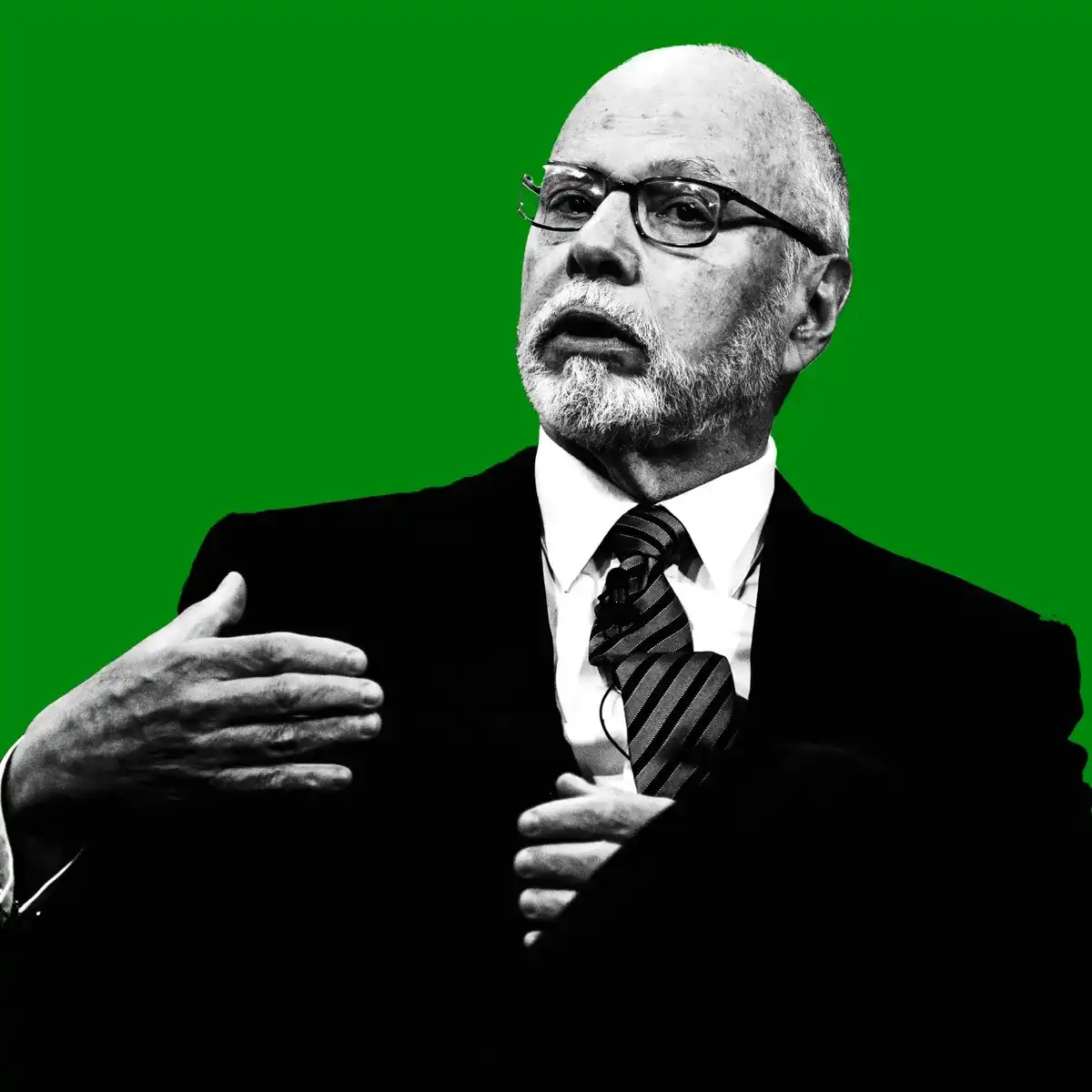
Photo Illustration: 731; Source: Getty Images

Total Donated: $33.92 million

Key Recipients: $14.5 million to Senate Leadership Fund; $8 million to Congressional Leadership Fund; $2.5 million to the United Democracy Project, linked to pro-Israel lobby AIPAC.

Influence: The activist money manager, initially skeptical of Trump, backed Nikki Haley in the 2024 Republican primary before aligning with the Trump second-term camp, particularly on support for Israel, a hard line on Iran, and tackling antisemitism on college campuses. The 81-year-old Singer has also given to PACs in key House races, including two groups working to oust Kentucky Republican Thomas Massie, who has drawn Trump's ire for supporting the release of Jeffrey Epstein-related files and voting against aid to Israel in 2023.

Diane Hendricks
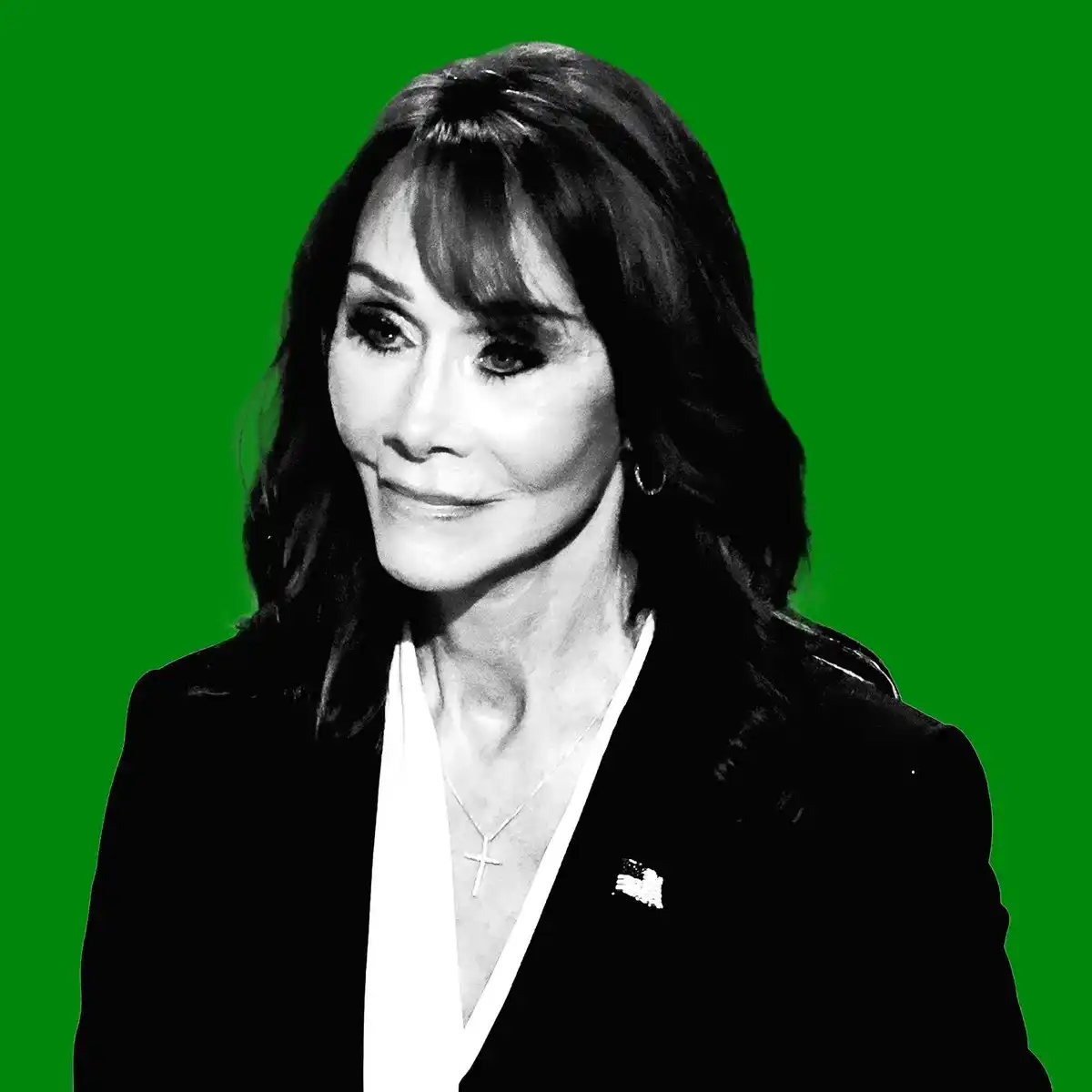
Photo Illustration: 731; Source: Getty Images

Total Donated: $25.79 million

Key Recipients: $25 million to MAGA Inc.; $413,000 to the Republican National Committee; $182,000 to Defend Our Majority, which backs House Republican candidates.

Influence: The 79-year-old Diane Hendricks, Wisconsin's richest person and co-founder of building materials distributor ABC Supply, is a long-time conservative donor to Republican candidates. She backed then-Governor Scott Walker's presidential bid in 2016 before pivoting to Trump. Trump appointed her to a national economic policy council during his first term. This year, she also attended the Winter Olympics closing ceremony as part of the presidential delegation.

Research Methodology

Bloomberg News compiled filings with the Federal Election Commission for donations of $10,000 or more from individuals and entities to parties and political action committees from Jan. 1, 2025, through March 31, 2026.

Donor names were standardized. The tally includes individuals, corporations, dark-money groups, trade associations, unions, state political committees and Native American tribes. If a joint fundraising committee attributed split donations to its members, they were counted as such.

Large donations from entities were also checked for the individuals behind them. Transfers between joint fundraising committees and beneficiary committees were excluded to avoid double counting.


Preguntas relacionadas

QAccording to the article, who are the top three individual donors in the 2026 midterm election cycle, and how much did each contribute?

AThe top three individual donors are George Soros with $102.6 million, Elon Musk with $84.8 million, and Jeff Yass with $81.8 million.

QWhat are some of the key political or policy issues motivating the major donors mentioned in the article, such as Sergey Brin and the Brockmans?

AKey motivating issues include opposing a proposed wealth tax in California (Sergey Brin), shaping AI and cryptocurrency industry regulations (Greg & Anna Brockman via Leading the Future PAC, Marc Andreessen, Ben Horowitz), and supporting school choice initiatives (Jeff Yass).

QWhat is "dark money" as described in the context of this election, and what trend is noted regarding it?

A"Dark money" refers to political donations where the source of the funds is not publicly disclosed, often channeled through non-profit organizations that are not required to reveal their donors. The trend noted is that the proportion of such "dark money" in political contributions has been consistently increasing in recent election cycles and is expected to continue in 2026.

QWhich political party's affiliated committees have raised significantly more money in the first quarter of 2026, according to the Bloomberg analysis?

ARepublican-affiliated committees, including the Republican Party, Senate and House-linked super PACs, and Trump's political committees and MAGA Inc., raised a combined $917 million in the first quarter. This is 3.5 times the $262 million raised by the Democratic National Committee and its Senate, House, and super PAC counterparts during the same period.

QBesides federal elections, what other level of political spending is highlighted, and what is the projected total for it?

ABesides federal elections, the article highlights spending on political advertising. The election ad research firm AdImpact projects that spending on political advertising alone will reach $10.8 billion, an increase of more than 20% compared to 2022.

Lecturas Relacionadas

KOL's Perspective: Why Is SOL Set to Rise from This Point?

**Summary: Why SOL is Positioned for Growth at This Level** The article argues that SOL is poised for an upward move from its current price point, citing several key factors. Primarily, SOL has just broken out of a 4-month consolidation phase. This breakout signals a return of risk appetite to the broader crypto market, as SOL is seen as a key indicator of overall crypto health. The token's ownership has reportedly shifted from short-term traders and tourists to long-term accumulators, leading to low volume. Any meaningful increase in trading activity could thus trigger significant upward momentum. Fundamental strengths include strong institutional adoption, integration with DeFi and RWAs (Real-World Assets), and the potential benefits from the Clarity Act. Despite its high volatility—having dropped 70% from its all-time high but still up 12x from its bear market low—SOL is highlighted as one of the few tokens from the last cycle to reach new highs. It boasts a robust ecosystem of applications, users, and protocols. Future catalysts include the expected influx of AI developers following the Miami Accelerate conference, which focused on AI on Solana. Furthermore, Solana is positioned as the premier chain for memecoin activity, a trend expected to continue and drive network usage and fees. The article concludes that recent price action reflects a healthy transfer to long-term holders, setting the stage for growth.

marsbitHace 8 min(s)

KOL's Perspective: Why Is SOL Set to Rise from This Point?

marsbitHace 8 min(s)

Those Pre-Bitcoin PoW Protocols Have Recently Been Reimplemented

This article details a recent surge in replicating pre-Bitcoin Proof-of-Work (PoW) protocols, specifically focusing on Hal Finney's 2004 RPOW (Reusable Proofs of Work). Within five days in May 2026, multiple independent builders in the Bitcoin/cypherpunk community launched projects inspired by this early electronic cash proposal. The initiative began with Fred Krueger's `rpow2.com`, a centralized but auditable system that replaced RPOW's original IBM 4758 hardware with Ed25519 signatures. Initially a faithful replica, it later adopted Bitcoin-like features (21M supply cap, difficulty adjustment) and a controversial 5.24% founder allocation. This sparked rapid forks, including `rpow4.com` which incorporated full Bitcoin parameters, a prediction market (`rpowmarket.com`), and a DEX (`rpow2swap.com`). Concurrently, Mike In Space created a prototype of Wei Dai's 1998 b-money proposal (`b-money.replit.app`), pushing the historical exploration even further back. The article contrasts these centralized, server-dependent experiments with Bitcoin's core innovation of decentralized, trustless consensus. It also highlights a parallel development: the `HASH` project on Ethereum, which uses smart contract hooks to enable a purely fair-launch, browser-mineable PoW token with 0% allocations to team or VCs. The collective activity is framed as a meme-driven, educational exploration of cypherpunk history rather than a serious financial movement, with all projects heavily disclaiming any investment value.

marsbitHace 13 min(s)

Those Pre-Bitcoin PoW Protocols Have Recently Been Reimplemented

marsbitHace 13 min(s)

South Korean Exchanges 'Battle' Regulators, Challenging the Boundaries of Enforcement and Legislation

South Korea's cryptocurrency industry is engaged in a rare, direct confrontation with regulators. The Financial Intelligence Unit (FIU), the primary anti-money laundering (AML) watchdog, has recently imposed heavy penalties on major exchanges like Upbit and Bithumb for alleged violations involving unregistered overseas VASPs and AML procedures. However, exchanges are now actively challenging these actions in court and through industry associations. In a significant shift, the Seoul Administrative Court ruled in favor of Upbit's operator, Dunamu, overturning part of an FIU-ordered business suspension. The court found the FIU's penalty criteria and justification insufficiently clear. Similarly, the court suspended the enforcement of a six-month business suspension against Bithumb pending a final ruling, citing potential irreversible harm to the exchange. Beyond legal battles, the industry is contesting proposed legislative amendments. The Digital Asset eXchange Alliance (DAXA) strongly opposes a draft rule that would mandate Suspicious Transaction Reports (STRs) for all crypto transfers over 10 million KRW (~$6,800). DAXA argues this "poison pill" clause violates legal principles and would overwhelm the STR system, increasing reports from 63,000 to an estimated 5.45 million annually for major exchanges, thereby crippling effective AML monitoring. This conflict highlights a structural tension in South Korea's crypto governance: comprehensive digital asset laws are still developing, while regulators rely heavily on AML enforcement. The industry's move from passive compliance to active legal and legislative challenges signifies a new phase, pressing for clearer rules and more proportionate enforcement. While short-term disputes may intensify, this clash could ultimately lead to a more mature and sustainable regulatory framework for South Korea's vibrant crypto market.

marsbitHace 1 hora(s)

South Korean Exchanges 'Battle' Regulators, Challenging the Boundaries of Enforcement and Legislation

marsbitHace 1 hora(s)

After 50x Storage Surge, Justin Sun Always Looks to the Next Decade

Sun Yuchen, known for his controversial stunts like a $30 million lunch with Warren Buffett (canceled due to a kidney stone) and eating a $6.2 million duct-taped banana, is often overshadowed by a significant fact: his decade-long track record of spotting major investment trends. In 2016, he famously advised young people to invest in Bitcoin, Nvidia, Tesla, and Tencent instead of buying property. A hypothetical $20,000 investment in Nvidia and Tesla from that list would now be worth over 50 million RMB. His latest major call was on November 6, 2025, predicting a "50x storage opportunity" tied to the AI boom, which materialized with Sandisk's stock surging nearly 50-fold by 2026. Looking ahead, Sun now focuses on the next frontier: Physical AI. He identifies four key areas: 1. **Embodied AI/Robotics**: He sees this reaching its "iPhone moment," with companies like UBTech and Galaxy General leading in commercialization. 2. **Drones**: Viewed as the first commercially viable form of Physical AI, revolutionizing sectors from warfare (e.g., AeroVironment's Switchblade) to logistics. 3. **Spatial Computing**: Beyond VR, it's about AI understanding physical space, a foundational technology for robotics and autonomous systems, exemplified by Apple's Vision Pro. 4. **Space Exploration**: After a 2025 suborbital flight with Blue Origin, Sun advocates for space as the ultimate frontier, discussing blockchain's potential role in space asset management and data transactions. His investment philosophy involves betting on entire, inevitable trends rather than single companies. For robotics, he sees Tesla (the body/manufacturer) and Nvidia (the brain/AI platform) as complementary plays. In defense drones, he highlights companies making tanks obsolete (AeroVironment) and those augmenting fighter jets (Kratos). For space, he participated in Blue Origin's flight and anticipates SpaceX's potential IPO to redefine the sector's valuation. Sun Yuchen's vision frames the next two decades not as a revolution in information flow (like the internet), but in the fundamental operation of the physical world through AI-powered robots, autonomous systems, and spatial intelligence, ultimately extending human and AI activity into space. While many still focus on conventional assets, he continues to look toward the next technological horizon.

marsbitHace 2 hora(s)

After 50x Storage Surge, Justin Sun Always Looks to the Next Decade

marsbitHace 2 hora(s)

Trading

Spot
Futuros

Artículos destacados

Qué es $S$

Entendiendo SPERO: Una Visión General Completa Introducción a SPERO A medida que el panorama de la innovación continúa evolucionando, la aparición de tecnologías web3 y proyectos de criptomonedas juega un papel fundamental en la configuración del futuro digital. Un proyecto que ha atraído la atención en este campo dinámico es SPERO, denotado como SPERO,$$s$. Este artículo tiene como objetivo reunir y presentar información detallada sobre SPERO, para ayudar a entusiastas e inversores a comprender sus fundamentos, objetivos e innovaciones dentro de los dominios web3 y cripto. ¿Qué es SPERO,$$s$? SPERO,$$s$ es un proyecto único dentro del espacio cripto que busca aprovechar los principios de descentralización y tecnología blockchain para crear un ecosistema que promueva la participación, la utilidad y la inclusión financiera. El proyecto está diseñado para facilitar interacciones de igual a igual de nuevas maneras, proporcionando a los usuarios soluciones y servicios financieros innovadores. En su esencia, SPERO,$$s$ tiene como objetivo empoderar a los individuos al proporcionar herramientas y plataformas que mejoren la experiencia del usuario en el espacio de las criptomonedas. Esto incluye habilitar métodos de transacción más flexibles, fomentar iniciativas impulsadas por la comunidad y crear caminos para oportunidades financieras a través de aplicaciones descentralizadas (dApps). La visión subyacente de SPERO,$$s$ gira en torno a la inclusividad, buscando cerrar brechas dentro de las finanzas tradicionales mientras aprovecha los beneficios de la tecnología blockchain. ¿Quién es el Creador de SPERO,$$s$? La identidad del creador de SPERO,$$s$ sigue siendo algo oscura, ya que hay recursos públicos limitados que proporcionan información de fondo detallada sobre su(s) fundador(es). Esta falta de transparencia puede derivarse del compromiso del proyecto con la descentralización, una ética que muchos proyectos web3 comparten, priorizando las contribuciones colectivas sobre el reconocimiento individual. Al centrar las discusiones en torno a la comunidad y sus objetivos colectivos, SPERO,$$s$ encarna la esencia del empoderamiento sin señalar a individuos específicos. Como tal, comprender la ética y la misión de SPERO sigue siendo más importante que identificar a un creador singular. ¿Quiénes son los Inversores de SPERO,$$s$? SPERO,$$s$ cuenta con el apoyo de una diversa gama de inversores que van desde capitalistas de riesgo hasta inversores ángeles dedicados a fomentar la innovación en el sector cripto. El enfoque de estos inversores generalmente se alinea con la misión de SPERO, priorizando proyectos que prometen avances tecnológicos sociales, inclusión financiera y gobernanza descentralizada. Estas fundaciones de inversores suelen estar interesadas en proyectos que no solo ofrecen productos innovadores, sino que también contribuyen positivamente a la comunidad blockchain y sus ecosistemas. El respaldo de estos inversores refuerza a SPERO,$$s$ como un contendiente notable en el dominio de proyectos cripto que evoluciona rápidamente. ¿Cómo Funciona SPERO,$$s$? SPERO,$$s$ emplea un marco multifacético que lo distingue de los proyectos de criptomonedas convencionales. Aquí hay algunas de las características clave que subrayan su singularidad e innovación: Gobernanza Descentralizada: SPERO,$$s$ integra modelos de gobernanza descentralizada, empoderando a los usuarios para participar activamente en los procesos de toma de decisiones sobre el futuro del proyecto. Este enfoque fomenta un sentido de propiedad y responsabilidad entre los miembros de la comunidad. Utilidad del Token: SPERO,$$s$ utiliza su propio token de criptomoneda, diseñado para servir diversas funciones dentro del ecosistema. Estos tokens permiten transacciones, recompensas y la facilitación de servicios ofrecidos en la plataforma, mejorando la participación y la utilidad general. Arquitectura en Capas: La arquitectura técnica de SPERO,$$s$ apoya la modularidad y escalabilidad, permitiendo la integración fluida de características y aplicaciones adicionales a medida que el proyecto evoluciona. Esta adaptabilidad es fundamental para mantener la relevancia en el cambiante paisaje cripto. Participación de la Comunidad: El proyecto enfatiza iniciativas impulsadas por la comunidad, empleando mecanismos que incentivan la colaboración y la retroalimentación. Al nutrir una comunidad sólida, SPERO,$$s$ puede abordar mejor las necesidades de los usuarios y adaptarse a las tendencias del mercado. Enfoque en la Inclusión: Al ofrecer tarifas de transacción bajas e interfaces amigables para el usuario, SPERO,$$s$ busca atraer a una base de usuarios diversa, incluyendo a individuos que anteriormente pueden no haber participado en el espacio cripto. Este compromiso con la inclusión se alinea con su misión general de empoderamiento a través de la accesibilidad. Cronología de SPERO,$$s$ Entender la historia de un proyecto proporciona información crucial sobre su trayectoria de desarrollo y hitos. A continuación se presenta una cronología sugerida que mapea eventos significativos en la evolución de SPERO,$$s$: Fase de Conceptualización e Ideación: Las ideas iniciales que forman la base de SPERO,$$s$ fueron concebidas, alineándose estrechamente con los principios de descentralización y enfoque comunitario dentro de la industria blockchain. Lanzamiento del Whitepaper del Proyecto: Tras la fase conceptual, se lanzó un whitepaper completo que detalla la visión, los objetivos y la infraestructura tecnológica de SPERO,$$s$ para generar interés y retroalimentación de la comunidad. Construcción de Comunidad y Primeras Interacciones: Se realizaron esfuerzos de divulgación activa para construir una comunidad de primeros adoptantes y posibles inversores, facilitando discusiones en torno a los objetivos del proyecto y obteniendo apoyo. Evento de Generación de Tokens: SPERO,$$s$ llevó a cabo un evento de generación de tokens (TGE) para distribuir sus tokens nativos a los primeros seguidores y establecer liquidez inicial dentro del ecosistema. Lanzamiento de la dApp Inicial: La primera aplicación descentralizada (dApp) asociada con SPERO,$$s$ se puso en marcha, permitiendo a los usuarios interactuar con las funcionalidades centrales de la plataforma. Desarrollo Continuo y Alianzas: Actualizaciones y mejoras continuas a las ofertas del proyecto, incluyendo alianzas estratégicas con otros actores en el espacio blockchain, han moldeado a SPERO,$$s$ en un jugador competitivo y en evolución en el mercado cripto. Conclusión SPERO,$$s$ se erige como un testimonio del potencial de web3 y las criptomonedas para revolucionar los sistemas financieros y empoderar a los individuos. Con un compromiso con la gobernanza descentralizada, la participación comunitaria y funcionalidades diseñadas de manera innovadora, allana el camino hacia un paisaje financiero más inclusivo. Como con cualquier inversión en el espacio cripto que evoluciona rápidamente, se anima a los posibles inversores y usuarios a investigar a fondo y participar de manera reflexiva con los desarrollos en curso dentro de SPERO,$$s$. El proyecto muestra el espíritu innovador de la industria cripto, invitando a una mayor exploración de sus innumerables posibilidades. Mientras el viaje de SPERO,$$s$ aún se desarrolla, sus principios fundamentales pueden, de hecho, influir en el futuro de cómo interactuamos con la tecnología, las finanzas y entre nosotros en ecosistemas digitales interconectados.

72 Vistas totalesPublicado en 2024.12.17Actualizado en 2024.12.17

Qué es $S$

Qué es AGENT S

Agent S: El Futuro de la Interacción Autónoma en Web3 Introducción En el paisaje en constante evolución de Web3 y las criptomonedas, las innovaciones están redefiniendo constantemente cómo los individuos interactúan con las plataformas digitales. Uno de estos proyectos pioneros, Agent S, promete revolucionar la interacción humano-computadora a través de su marco agente abierto. Al allanar el camino para interacciones autónomas, Agent S busca simplificar tareas complejas, ofreciendo aplicaciones transformadoras en inteligencia artificial (IA). Esta exploración detallada profundizará en las complejidades del proyecto, sus características únicas y las implicaciones para el dominio de las criptomonedas. ¿Qué es Agent S? Agent S se presenta como un marco agente abierto innovador, diseñado específicamente para abordar tres desafíos fundamentales en la automatización de tareas informáticas: Adquisición de Conocimiento Específico del Dominio: El marco aprende inteligentemente de diversas fuentes de conocimiento externas y experiencias internas. Este enfoque dual le permite construir un rico repositorio de conocimiento específico del dominio, mejorando su rendimiento en la ejecución de tareas. Planificación a Largo Plazo de Tareas: Agent S emplea planificación jerárquica aumentada por la experiencia, un enfoque estratégico que facilita la descomposición y ejecución eficiente de tareas complejas. Esta característica mejora significativamente su capacidad para gestionar múltiples subtareas de manera eficiente y efectiva. Manejo de Interfaces Dinámicas y No Uniformes: El proyecto introduce la Interfaz Agente-Computadora (ACI), una solución innovadora que mejora la interacción entre agentes y usuarios. Utilizando Modelos de Lenguaje Multimodal de Gran Escala (MLLMs), Agent S puede navegar y manipular diversas interfaces gráficas de usuario sin problemas. A través de estas características pioneras, Agent S proporciona un marco robusto que aborda las complejidades involucradas en la automatización de la interacción humana con las máquinas, preparando el terreno para una multitud de aplicaciones en IA y más allá. ¿Quién es el Creador de Agent S? Si bien el concepto de Agent S es fundamentalmente innovador, la información específica sobre su creador sigue siendo elusiva. El creador es actualmente desconocido, lo que resalta ya sea la etapa incipiente del proyecto o la elección estratégica de mantener a los miembros fundadores en el anonimato. Independientemente de la anonimidad, el enfoque sigue siendo en las capacidades y el potencial del marco. ¿Quiénes son los Inversores de Agent S? Dado que Agent S es relativamente nuevo en el ecosistema criptográfico, la información detallada sobre sus inversores y patrocinadores financieros no está documentada explícitamente. La falta de información disponible públicamente sobre las bases de inversión u organizaciones que apoyan el proyecto plantea preguntas sobre su estructura de financiamiento y hoja de ruta de desarrollo. Comprender el respaldo es crucial para evaluar la sostenibilidad del proyecto y su posible impacto en el mercado. ¿Cómo Funciona Agent S? En el núcleo de Agent S se encuentra una tecnología de vanguardia que le permite funcionar de manera efectiva en diversos entornos. Su modelo operativo se basa en varias características clave: Interacción Humano-Computadora Similar a la Humana: El marco ofrece planificación avanzada de IA, esforzándose por hacer que las interacciones con las computadoras sean más intuitivas. Al imitar el comportamiento humano en la ejecución de tareas, promete elevar las experiencias de los usuarios. Memoria Narrativa: Empleada para aprovechar experiencias de alto nivel, Agent S utiliza memoria narrativa para hacer un seguimiento de las historias de tareas, mejorando así sus procesos de toma de decisiones. Memoria Episódica: Esta característica proporciona a los usuarios una guía paso a paso, permitiendo que el marco ofrezca apoyo contextual a medida que se desarrollan las tareas. Soporte para OpenACI: Con la capacidad de ejecutarse localmente, Agent S permite a los usuarios mantener el control sobre sus interacciones y flujos de trabajo, alineándose con la ética descentralizada de Web3. Fácil Integración con APIs Externas: Su versatilidad y compatibilidad con varias plataformas de IA aseguran que Agent S pueda encajar sin problemas en ecosistemas tecnológicos existentes, convirtiéndolo en una opción atractiva para desarrolladores y organizaciones. Estas funcionalidades contribuyen colectivamente a la posición única de Agent S dentro del espacio cripto, ya que automatiza tareas complejas y de múltiples pasos con una intervención humana mínima. A medida que el proyecto evoluciona, sus posibles aplicaciones en Web3 podrían redefinir cómo se desarrollan las interacciones digitales. Cronología de Agent S El desarrollo y los hitos de Agent S pueden encapsularse en una cronología que resalta sus eventos significativos: 27 de septiembre de 2024: El concepto de Agent S fue lanzado en un documento de investigación integral titulado “Un Marco Agente Abierto que Usa Computadoras Como un Humano”, mostrando las bases del proyecto. 10 de octubre de 2024: El documento de investigación fue puesto a disposición del público en arXiv, ofreciendo una exploración profunda del marco y su evaluación de rendimiento basada en el benchmark OSWorld. 12 de octubre de 2024: Se lanzó una presentación en video, proporcionando una visión visual de las capacidades y características de Agent S, involucrando aún más a posibles usuarios e inversores. Estos marcadores en la cronología no solo ilustran el progreso de Agent S, sino que también indican su compromiso con la transparencia y la participación comunitaria. Puntos Clave Sobre Agent S A medida que el marco Agent S continúa evolucionando, varios atributos clave destacan, subrayando su naturaleza innovadora y potencial: Marco Innovador: Diseñado para proporcionar un uso intuitivo de las computadoras similar a la interacción humana, Agent S aporta un enfoque novedoso a la automatización de tareas. Interacción Autónoma: La capacidad de interactuar de manera autónoma con las computadoras a través de GUI significa un salto hacia soluciones informáticas más inteligentes y eficientes. Automatización de Tareas Complejas: Con su metodología robusta, puede automatizar tareas complejas y de múltiples pasos, haciendo que los procesos sean más rápidos y menos propensos a errores. Mejora Continua: Los mecanismos de aprendizaje permiten a Agent S mejorar a partir de experiencias pasadas, mejorando continuamente su rendimiento y eficacia. Versatilidad: Su adaptabilidad en diferentes entornos operativos como OSWorld y WindowsAgentArena asegura que pueda servir a una amplia gama de aplicaciones. A medida que Agent S se posiciona en el paisaje de Web3 y criptomonedas, su potencial para mejorar las capacidades de interacción y automatizar procesos significa un avance significativo en las tecnologías de IA. A través de su marco innovador, Agent S ejemplifica el futuro de las interacciones digitales, prometiendo una experiencia más fluida y eficiente para los usuarios en diversas industrias. Conclusión Agent S representa un audaz avance en la unión de la IA y Web3, con la capacidad de redefinir cómo interactuamos con la tecnología. Aunque aún se encuentra en sus primeras etapas, las posibilidades para su aplicación son vastas y atractivas. A través de su marco integral que aborda desafíos críticos, Agent S busca llevar las interacciones autónomas al primer plano de la experiencia digital. A medida que nos adentramos más en los reinos de las criptomonedas y la descentralización, proyectos como Agent S sin duda desempeñarán un papel crucial en la configuración del futuro de la tecnología y la colaboración humano-computadora.

429 Vistas totalesPublicado en 2025.01.14Actualizado en 2025.01.14

Qué es AGENT S

Cómo comprar S

¡Bienvenido a HTX.com! Hemos hecho que comprar Sonic (S) sea simple y conveniente. Sigue nuestra guía paso a paso para iniciar tu viaje de criptos.Paso 1: crea tu cuenta HTXUtiliza tu correo electrónico o número de teléfono para registrarte y obtener una cuenta gratuita en HTX. Experimenta un proceso de registro sin complicaciones y desbloquea todas las funciones.Obtener mi cuentaPaso 2: ve a Comprar cripto y elige tu método de pagoTarjeta de crédito/débito: usa tu Visa o Mastercard para comprar Sonic (S) al instante.Saldo: utiliza fondos del saldo de tu cuenta HTX para tradear sin problemas.Terceros: hemos agregado métodos de pago populares como Google Pay y Apple Pay para mejorar la comodidad.P2P: tradear directamente con otros usuarios en HTX.Over-the-Counter (OTC): ofrecemos servicios personalizados y tipos de cambio competitivos para los traders.Paso 3: guarda tu Sonic (S)Después de comprar tu Sonic (S), guárdalo en tu cuenta HTX. Alternativamente, puedes enviarlo a otro lugar mediante transferencia blockchain o utilizarlo para tradear otras criptomonedas.Paso 4: tradear Sonic (S)Tradear fácilmente con Sonic (S) en HTX's mercado spot. Simplemente accede a tu cuenta, selecciona tu par de trading, ejecuta tus trades y monitorea en tiempo real. Ofrecemos una experiencia fácil de usar tanto para principiantes como para traders experimentados.

847 Vistas totalesPublicado en 2025.01.15Actualizado en 2025.03.21

Cómo comprar S

Discusiones

Bienvenido a la comunidad de HTX. Aquí puedes mantenerte informado sobre los últimos desarrollos de la plataforma y acceder a análisis profesionales del mercado. A continuación se presentan las opiniones de los usuarios sobre el precio de S (S).

活动图片