The Billionaire Who Bought 30,000 Bitcoins at an Average Price of $632, Is He Also Starting to Sell?

Foresight NewsPublicado a 2026-07-03Actualizado a 2026-07-03

Resumen

A wallet suspected to be linked to billionaire venture capitalist Tim Draper deposited 1,000 BTC (worth approximately $61.82 million) into Coinbase Prime, sparking speculation that he may be selling. In April, another associated wallet sent 150.84 BTC to Coinbase, likely at a loss. Tim Draper is a renowned Silicon Valley investor in companies like Hotmail, Skype, Tesla, and SpaceX. He is also one of the most prominent Bitcoin whales, having famously purchased 29,656 BTC for roughly $632 each in a 2014 U.S. Marshals Service auction, following a total loss of 40,000 BTC in the Mt. Gox collapse earlier that year. His total cost for approximately 31,657 BTC was about $19.7 million, which is now valued at over $1.8 billion. Draper is widely known for his long-term bullish stance on Bitcoin, famously stating, "Why would I sell the future for the past?" and claiming he is a "net buyer" who never sells. He has repeatedly predicted Bitcoin would reach $250,000, though the timeline has shifted over the years. Despite building a public persona of holding through all market cycles, these recent transfers to exchanges challenge that narrative.


Author: ChandlerZ, Foresight News


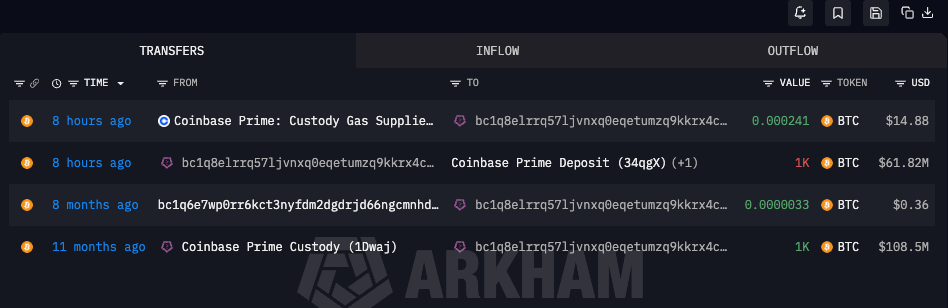
On July 3rd, according to on-chain monitoring data, a wallet address suspected to be linked to billionaire venture capitalist Tim Draper deposited 1,000 BTC into Coinbase Prime approximately 7 hours ago, worth about $61.82 million.


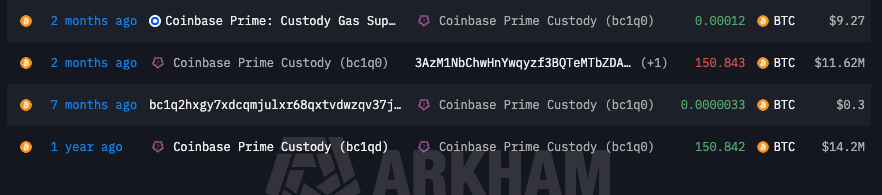
In April, another wallet linked to Tim Draper deposited 150.84 BTC (worth about $11.62 million) into Coinbase after holding for one year, suspected to be a sale, resulting in a loss of approximately $2.57 million.


Tim Draper was born in East Chicago, Indiana, and grew up in Silicon Valley. He holds a bachelor's degree in Electrical Engineering from Stanford University and an MBA from Harvard Business School. His grandfather, William Henry Draper Jr., was a founder of one of the earliest venture capital funds in Silicon Valley. His father, Bill Draper, continued the family business. Tim himself founded Draper Associates in 1985 and later co-founded DFJ (Draper Fisher Jurvetson).


His sister, Polly Draper, is an American actress and screenwriter. Both of his sons, Adam and Billy, entered the venture capital industry, with Adam founding Boost VC, focused on the crypto sector. Four generations have spanned the complete Silicon Valley cycle, from transistors to blockchain. Beyond cryptocurrency, Draper is best known as an early investor in Hotmail, Skype, Tesla, and SpaceX.


Tim Draper is one of Silicon Valley's most well-known Bitcoin whales. In 2014, he bought nearly 29,656 BTC at an average price of about $632 during a U.S. Marshals Service auction, for a total of approximately $18.7 million. At its historical peak, this batch of Bitcoin was worth about $3.74 billion, and is currently worth about $1.82 billion.


40,000 Lost to Zero, and the 30,000 Auctioned Bitcoin


Tim Draper encountered the concept that "digital assets have real value" even before Bitcoin was born.


In a Cointelegraph crypto story video, Tim Draper said that many years ago he met an entrepreneur in South Korea who needed to spend $40 to buy a virtual sword in the online game "Lineage" as a birthday gift for his son. A successful industrialist was using real currency to purchase a digital item that existed only on a server. He later said in an interview that this moment made him realize the boundary between the virtual world and the real economy would eventually blur. Seven years later, when the Bitcoin whitepaper appeared, he almost approached it with a pre-existing cognitive framework.


Tim Draper's first large-scale Bitcoin investment occurred around 2011, buying approximately 41,000 bitcoins at an average price of about $6, for a total investment of about $250,000. At today's price, this holding would be worth over $2.5 billion. But he never had the chance to profit from it. In February 2014, Mt. Gox, then the world's largest Bitcoin exchange, announced that approximately 850,000 bitcoins were stolen and filed for bankruptcy. Tim Draper's roughly 40,000 bitcoins were among those lost.


From $6 to zero, the entire first massive investment was wiped out. Most people would leave the market here. But Tim Draper did the opposite the same year.


On June 27, 2014, the U.S. Marshals Service held a public auction for bitcoins seized from Silk Road. When the FBI arrested Silk Road founder Ross Ulbricht in October 2013, they seized about 144,000 bitcoins. The first batch of about 30,000 was divided into 10 blocks for auction. 45 bidders submitted 63 bids. Participants included Barry Silbert's SecondMarket (which organized a bidding consortium of 42 investors), Pantera Capital, and Binary Financial. The Marshals Service originally planned to sell these bitcoins to different buyers. However, Tim Draper placed the highest bid on every single block, taking all 29,657 bitcoins for himself, paying about $19 million.


This event sparked extensive coverage in tech and financial media at the time: a person who had just lost 40,000 bitcoins on Mt. Gox turned around and bought back 30,000 in a single federal auction. His plan at the time was to partner with an exchange called Vaurum (later renamed Mirror) to provide cryptocurrency liquidity in emerging markets (especially in places like India) using this batch of bitcoins. This project ultimately did not scale up, but those 30,000 bitcoins remained in his possession.


In the second round of the Marshals Service auction in December of the same year, Tim Draper secured another 2,000 BTC, when the price had fallen to about $375. The two rounds combined totaled approximately 31,657 bitcoins, with a total cost of about $19.7 million.


A more ironic follow-up is that the bitcoins Tim Draper purchased were assets confiscated from Ross Ulbricht. Ulbricht was sentenced to life imprisonment without parole for operating Silk Road. Tim Draper later publicly criticized this sentence as "excessively harsh." In January 2025, on his first day in office, President Trump granted Ulbricht a full pardon.


The $250,000 Prediction, the Theranos Stain, and a Bitcoin Tie


Tim Draper gained widespread recognition outside the crypto community through his aggressive Bitcoin price predictions. The most successful one occurred in September 2014. With Bitcoin trading around $413, Tim Draper told Fox Business in an interview that Bitcoin would reach $10,000 within three years. On November 29, 2017, Bitcoin first broke $10,000, almost exactly three years later. This precise prediction established a credibility base for all his bolder judgments thereafter.


In April 2018, at an event at the Draper University he founded, Tim Draper declared that Bitcoin would reach $250,000 by the end of 2022, when Bitcoin was trading around $8,100. Since then, this number became a moving target through bull and bear cycles, with the target date pushed from 2022 to mid-2023, then to June 2025, and then to the end of 2025.


In April 2026, during a keynote speech on the Nakamoto Stage at the Bitcoin 2026 conference in Las Vegas, Tim Draper again stated he had "reason to believe" Bitcoin would reach $250,000 within 18 months. He emphasized that the path of monetary evolution might transition from fiat to stablecoins, and ultimately to Bitcoin. It would be irresponsible for companies not to allocate Bitcoin while holding large cash reserves, suggesting companies allocate at least 5% to 15% of assets to Bitcoin, families reserve at least 6 months' worth of living expenses in Bitcoin, and governments should hold sufficient Bitcoin to cope with currency crises.


Tim Draper has a trait that runs through all his decisions: once he believes in something, he goes all-in, regardless of the outcome.


This trait has made him a lot of money. In the 1990s, he invested in Hotmail, personally designed the signature line "Get your free email at Hotmail," and co-created the concept of "viral marketing" with his partners, later selling it to Microsoft for about $400 million. He invested for about 10% equity in Skype, which was acquired by eBay for $4.1 billion. He also participated in early rounds of Tesla and SpaceX. The Forbes 2026 rich list estimated his net worth at approximately $3.27 billion.


But the same trait also made him a laughingstock. As a former neighbor and close friend of Elizabeth Holmes, Tim Draper provided her with her first $1 million angel investment when Theranos was founded in 2003. After the Theranos scandal broke, Tim Draper publicly defended her multiple times, believing her ideas were great, even describing the investigation against her as a "political persecution" and a "witch hunt."


He appeared as an interviewee in the HBO documentary "The Inventor," but audiences mostly remembered the purple and gold Bitcoin tie on his chest. TIME magazine called him the documentary's "hidden protagonist."


"Why Would I Sell the Future for the Past?"


Tim Draper's most famous quote about Bitcoin comes from a Bloomberg interview. When asked if he would consider selling Bitcoin for dollars, his response later became one of the most cited quotes in the crypto community: "Why would I sell the future for the past?"


He has publicly stated multiple times that only 5% of his net worth is in fiat currency, with the rest entirely in Bitcoin and crypto assets, and that he is a "net buyer," never selling.


In 2018, when Bitcoin fell from $20,000 to $3,000, he said in an interview that "fiat currency is the past," and continued buying. In 2022, when Bitcoin crashed from $69,000 to $16,000, he told Fortune another widely circulated phrase: "Bull markets make me nervous; bear markets are my home turf." Throughout 2022, as the crypto industry faced consecutive implosions with the collapse of FTX, the implosion of Luna, and the bankruptcy of Three Arrows Capital, there is no public record showing Draper sold a single bitcoin.


The bitcoins purchased for $19 million in 2014 are still worth over $1.82 billion today, a return of nearly 100x. Even selling them all would hardly constitute a liquidation. But over 12 years, Draper has built a public persona as someone who "doesn't sell a single coin." Every transfer to an exchange makes this persona harder to maintain.

Criptos en tendencia

Preguntas relacionadas

QWho is Tim Draper and why is he notable in the cryptocurrency world?

ATim Draper is a billionaire venture capitalist from Silicon Valley. He is notably one of the largest known Bitcoin 'whales,' having purchased nearly 29,656 BTC at an average price of about $632 in a 2014 U.S. Marshals Service auction. He is also an early investor in major companies like Hotmail, Skype, Tesla, and SpaceX.

QWhat recent transaction suggests Tim Draper might be selling Bitcoin?

AOn July 3rd, a wallet address suspected to be linked to Tim Draper deposited 1,000 BTC (worth approximately $61.82 million) to Coinbase Prime. This follows a similar transaction in April where another associated wallet deposited 150.84 BTC (worth about $11.62 million) to Coinbase, resulting in an estimated loss of $2.57 million.

QWhat was Tim Draper's first major Bitcoin investment and what happened to it?

AHis first major Bitcoin investment was around 2011 when he bought approximately 41,000 BTC at an average price of about $6, with a total investment of around $250,000. However, this entire holding was lost in the 2014 collapse of the Mt. Gox exchange, where about 40,000 of his Bitcoins were among the assets declared missing.

QWhat is Tim Draper's famous long-term price prediction for Bitcoin?

ATim Draper is famously known for predicting that Bitcoin's price will reach $250,000. He first made this prediction in April 2018 when Bitcoin was around $8,100. He has since reiterated this target multiple times, most recently at the Bitcoin 2026 conference, stating he had 'reasons to believe' Bitcoin would hit $250,000 within 18 months.

QWhat quote best summarizes Tim Draper's philosophy about not selling Bitcoin?

AWhen asked by a Bloomberg reporter if he would consider selling Bitcoin for U.S. dollars, Draper famously replied: 'Why would I sell the future for the past?' This quote has become widely cited in the crypto community to represent his long-term, bullish stance on holding Bitcoin as the future of money.

Lecturas Relacionadas

Building USDC by Its Own Hands, Why Does Coinbase Turn to Support Competitor OUSD?

Coinbase, a key distributor of the dominant stablecoin USDC, has joined over 140 major companies—including Visa, Mastercard, and BlackRock—as a founding member of the Open USD (OUSD) alliance, a move that directly challenges the current stablecoin economic model. The new project aims to upend the established profit structure by offering zero minting and redemption fees and allocating the majority of reserve interest earnings to distribution partners, rather than the issuer. This shift highlights a growing power struggle in the $320+ billion stablecoin market, where platforms with massive user bases are demanding a larger share of the revenue generated from the underlying reserves. Circle, the issuer of USDC, saw its stock plummet 16% on the day of the OUSD announcement, reflecting investor concern over the potential strain on its crucial partnership with Coinbase. While Coinbase earned over $900 million from its USDC partnership in 2024, its support for a competing model gives it significant leverage as its revenue-sharing agreement with Circle nears expiration in August 2026. Circle CEO Jeremy Allaire defended the USDC model, emphasizing its decade-long development, deep liquidity, and extensive ecosystem integration, which he argues cannot be easily replicated by a large, potentially slow-moving consortium. He also questioned the sustainability of a zero-fee model and warned that diverting all reserve interest would leave issuers without funds for critical compliance and operational infrastructure. Analysts remain skeptical of OUSD's prospects, citing the "cold start" problem of building liquidity, potential governance challenges within a large alliance, and heightened regulatory scrutiny. The emergence of OUSD signals a broader industry bifurcation, where stablecoins are increasingly viewed as backend settlement tools. The core competition is shifting from technology to a direct negotiation over how profits from the network are distributed between issuers and the powerful distribution channels.

Foresight NewsHace 1 hora(s)

Building USDC by Its Own Hands, Why Does Coinbase Turn to Support Competitor OUSD?

Foresight NewsHace 1 hora(s)

Trading

Spot

Artículos destacados

Qué es BITCOIN

Entendiendo HarryPotterObamaSonic10Inu (ERC-20) y Su Posición en el Espacio Cripto En los últimos años, el mercado de criptomonedas ha sido testigo de un aumento en la popularidad de las monedas meme, capturando el interés no solo de los comerciantes, sino también de aquellos que buscan compromiso comunitario y valor de entretenimiento. Entre estos tokens únicos se encuentra HarryPotterObamaSonic10Inu (ERC-20), un proyecto intrigante que mezcla referencias culturales en el tejido de las criptomonedas. Este artículo profundiza en los aspectos clave de HarryPotterObamaSonic10Inu, explorando sus mecanismos, ethos impulsado por la comunidad y su relación con el paisaje cripto más amplio. ¿Qué es HarryPotterObamaSonic10Inu (ERC-20)? Como su nombre sugiere, HarryPotterObamaSonic10Inu es una moneda meme construida sobre la blockchain de Ethereum, clasificada bajo el estándar ERC-20. A diferencia de las criptomonedas tradicionales que pueden enfatizar la utilidad práctica o el potencial de inversión, este token prospera en el valor de entretenimiento y la fuerza de su comunidad. El proyecto tiene como objetivo fomentar un entorno donde los usuarios comprometidos puedan reunirse, compartir ideas y participar en actividades inspiradas por diversos fenómenos culturales. Una característica notable de HarryPotterObamaSonic10Inu es su cero impuestos en las transacciones. Este atractivo elemento tiene como objetivo incentivar el comercio y la participación comunitaria, sin cargos adicionales que puedan disuadir a los comerciantes de pequeña escala. El suministro total de la moneda está establecido en mil millones de tokens, una cifra que marca su intención de mantener una circulación sustancial dentro de la comunidad. Creador de HarryPotterObamaSonic10Inu (ERC-20) Los orígenes de HarryPotterObamaSonic10Inu están algo envueltos en misterio; los detalles sobre el creador siguen siendo desconocidos. El desarrollo de este token carece de un equipo identificable o de un plan explícito, lo cual no es inusual dentro del sector de monedas meme. En cambio, el proyecto ha surgido de manera orgánica, con su progreso muy dependiente del entusiasmo y la participación de su comunidad. Inversores de HarryPotterObamaSonic10Inu (ERC-20) En cuanto a inversiones externas y respaldo, HarryPotterObamaSonic10Inu también sigue siendo ambiguo. El token no lista ninguna fundación de inversión conocida o apoyo organizacional significativo. En cambio, la savia del proyecto es su comunidad de base, que informa su crecimiento y sostenibilidad a través de la acción colectiva y el compromiso en el espacio cripto. ¿Cómo Funciona HarryPotterObamaSonic10Inu (ERC-20)? Como una moneda meme, HarryPotterObamaSonic10Inu opera principalmente fuera de los marcos tradicionales que a menudo rigen el valor de los activos. Hay varios aspectos distintivos que definen cómo funciona el proyecto: Transacciones Sin Impuestos: Sin tarifas impositivas en las transacciones, los usuarios pueden comprar y vender el token libremente sin preocuparse por costos ocultos. Compromiso Comunitario: El proyecto prospera en la interacción comunitaria, aprovechando plataformas de redes sociales para crear entusiasmo y facilitar la participación. Las discusiones, el intercambio de contenido y el compromiso son elementos cruciales que ayudan a expandir su alcance y fomentar la lealtad entre los seguidores. Sin Utilidad Práctica: Cabe señalar que HarryPotterObamaSonic10Inu no ofrece utilidad concreta dentro del ecosistema financiero. Más bien, se clasifica como un token principalmente para actividades de entretenimiento y comunitarias. Referencia Cultural: El token incorpora astutamente elementos de la cultura popular para atraer interés, conectando con entusiastas de los memes y seguidores de las criptomonedas por igual. HarryPotterObamaSonic10Inu ejemplifica cómo las monedas meme operan de manera diferente a los proyectos de criptomonedas más tradicionales, ingresando al mercado como construcciones sociales innovadoras en lugar de activos utilitarios. Cronología de HarryPotterObamaSonic10Inu (ERC-20) La historia de HarryPotterObamaSonic10Inu está marcada por varios hitos notables: Creación: El token surgió de un meme viral, capturando la imaginación de muchos entusiastas de las criptomonedas. Las fechas específicas de creación no están disponibles, subrayando su ascenso orgánico. Listado en Exchanges: HarryPotterObamaSonic10Inu ha llegado a varios exchanges, permitiendo un acceso y comercio más fácil por parte de la comunidad. Iniciativas de Compromiso Comunitario: Actividades continuas destinadas a mejorar la interacción comunitaria, incluyendo concursos, campañas en redes sociales y generación de contenido por parte de fanáticos y defensores. Planes de Expansión Futuros: La hoja de ruta del proyecto incluye el lanzamiento de una colección de NFT, mercancía y un sitio de comercio electrónico relacionado con sus temas culturales, involucrando aún más a la comunidad e intentando añadir más dimensiones a su ecosistema. Puntos Clave Sobre HarryPotterObamaSonic10Inu (ERC-20) Naturaleza Impulsada por la Comunidad: El proyecto prioriza la participación colectiva y la creatividad, asegurando que la involucración de los usuarios esté a la vanguardia de su desarrollo. Clasificación como Moneda Meme: Representa la epítome de las criptomonedas basadas en el entretenimiento, diferenciándose de los vehículos de inversión tradicionales. Sin Afiliación Directa con Bitcoin: A pesar de la similitud en el nombre del ticker, HarryPotterObamaSonic10Inu es distinto y no tiene relación con Bitcoin u otras criptomonedas establecidas. Enfoque en la Colaboración: HarryPotterObamaSonic10Inu está diseñado para crear un espacio para la colaboración y el intercambio de historias entre sus poseedores, proporcionando una vía para la creatividad y el vínculo comunitario. Perspectivas Futuras: La ambición de expandirse más allá de su premisa inicial hacia NFTs y mercancías describe un camino para que el proyecto potencialmente ingrese a avenidas más tradicionales dentro de la cultura digital. A medida que las monedas meme continúan capturando la imaginación de la comunidad de criptomonedas, HarryPotterObamaSonic10Inu (ERC-20) se destaca debido a sus lazos culturales y su enfoque centrado en la comunidad. Si bien puede no encajar en el molde típico de un token impulsado por la utilidad, su esencia radica en la alegría y la camaradería fomentadas entre sus seguidores, destacando la naturaleza en evolución de las criptomonedas en una era cada vez más digital. A medida que el proyecto continúa desarrollándose, será importante observar cómo las dinámicas comunitarias influyen en su trayectoria en el cambiante paisaje de la tecnología blockchain.

1.8k Vistas totalesPublicado en 2024.04.01Actualizado en 2024.12.03

Qué es BITCOIN

Cómo comprar BTC

¡Bienvenido a HTX.com! Hemos hecho que comprar Bitcoin (BTC) sea simple y conveniente. Sigue nuestra guía paso a paso para iniciar tu viaje de criptos.Paso 1: crea tu cuenta HTXUtiliza tu correo electrónico o número de teléfono para registrarte y obtener una cuenta gratuita en HTX. Experimenta un proceso de registro sin complicaciones y desbloquea todas las funciones.Obtener mi cuentaPaso 2: ve a Comprar cripto y elige tu método de pagoTarjeta de crédito/débito: usa tu Visa o Mastercard para comprar Bitcoin (BTC) al instante.Saldo: utiliza fondos del saldo de tu cuenta HTX para tradear sin problemas.Terceros: hemos agregado métodos de pago populares como Google Pay y Apple Pay para mejorar la comodidad.P2P: tradear directamente con otros usuarios en HTX.Over-the-Counter (OTC): ofrecemos servicios personalizados y tipos de cambio competitivos para los traders.Paso 3: guarda tu Bitcoin (BTC)Después de comprar tu Bitcoin (BTC), guárdalo en tu cuenta HTX. Alternativamente, puedes enviarlo a otro lugar mediante transferencia blockchain o utilizarlo para tradear otras criptomonedas.Paso 4: tradear Bitcoin (BTC)Tradear fácilmente con Bitcoin (BTC) en HTX's mercado spot. Simplemente accede a tu cuenta, selecciona tu par de trading, ejecuta tus trades y monitorea en tiempo real. Ofrecemos una experiencia fácil de usar tanto para principiantes como para traders experimentados.

5.2k Vistas totalesPublicado en 2024.12.12Actualizado en 2026.06.02

Cómo comprar BTC

Qué es $BITCOIN

ORO DIGITAL ($BITCOIN): Un Análisis Integral Introducción al ORO DIGITAL ($BITCOIN) ORO DIGITAL ($BITCOIN) es un proyecto basado en blockchain que opera en la red Solana, cuyo objetivo es combinar las características de los metales preciosos tradicionales con la innovación de las tecnologías descentralizadas. Aunque comparte un nombre con Bitcoin, a menudo referido como “oro digital” debido a su percepción como un refugio de valor, ORO DIGITAL es un token separado diseñado para crear un ecosistema único dentro del paisaje Web3. Su meta es posicionarse como un activo digital alternativo viable, aunque los detalles sobre sus aplicaciones y funcionalidades aún están en desarrollo. ¿Qué es ORO DIGITAL ($BITCOIN)? ORO DIGITAL ($BITCOIN) es un token de criptomoneda diseñado explícitamente para su uso en la blockchain de Solana. A diferencia de Bitcoin, que proporciona un papel de almacenamiento de valor ampliamente reconocido, este token parece centrarse en aplicaciones y características más amplias. Aspectos notables incluyen: Infraestructura Blockchain: El token está construido sobre la blockchain de Solana, conocida por su capacidad para manejar transacciones de alta velocidad y bajo costo. Dinámicas de Suministro: ORO DIGITAL tiene un suministro máximo limitado a 100 cuatrillones de tokens (100P $BITCOIN), aunque los detalles sobre su suministro circulante no se han divulgado actualmente. Utilidad: Si bien las funcionalidades precisas no están delineadas explícitamente, hay indicios de que el token podría ser utilizado para diversas aplicaciones, potencialmente involucrando aplicaciones descentralizadas (dApps) o estrategias de tokenización de activos. ¿Quién es el Creador de ORO DIGITAL ($BITCOIN)? En la actualidad, la identidad de los creadores y el equipo de desarrollo detrás de ORO DIGITAL ($BITCOIN) sigue siendo desconocida. Esta situación es típica entre muchos proyectos innovadores dentro del espacio blockchain, particularmente aquellos alineados con las finanzas descentralizadas y fenómenos de monedas meme. Si bien tal anonimato puede fomentar una cultura impulsada por la comunidad, intensifica las preocupaciones sobre la gobernanza y la responsabilidad. ¿Quiénes son los Inversores de ORO DIGITAL ($BITCOIN)? La información disponible indica que ORO DIGITAL ($BITCOIN) no tiene patrocinadores institucionales conocidos ni inversiones destacadas de capital de riesgo. El proyecto parece operar en un modelo de peer-to-peer centrado en el apoyo y la adopción de la comunidad en lugar de rutas de financiamiento tradicionales. Su actividad y liquidez se sitúan principalmente en intercambios descentralizados (DEX), como PumpSwap, en lugar de plataformas de trading centralizadas establecidas, lo que resalta aún más su enfoque de base. Cómo Funciona ORO DIGITAL ($BITCOIN) Los mecanismos operativos de ORO DIGITAL ($BITCOIN) pueden elaborarse en función de su diseño blockchain y atributos de red: Mecanismo de Consenso: Al aprovechar el único proof-of-history (PoH) de Solana combinado con un modelo de proof-of-stake (PoS), el proyecto asegura una validación de transacciones eficiente que contribuye al alto rendimiento de la red. Tokenómica: Si bien los mecanismos deflacionarios específicos no se han detallado extensamente, el vasto suministro máximo de tokens implica que podría atender microtransacciones o casos de uso nicho que aún están por definirse. Interoperabilidad: Existe el potencial de integración con el ecosistema más amplio de Solana, incluyendo varias plataformas de finanzas descentralizadas (DeFi). Sin embargo, los detalles sobre integraciones específicas permanecen no especificados. Cronología de Eventos Clave Aquí hay una cronología que destaca hitos significativos relacionados con ORO DIGITAL ($BITCOIN): 2023: El despliegue inicial del token ocurre en la blockchain de Solana, marcado por su dirección de contrato. 2024: ORO DIGITAL gana visibilidad al estar disponible para trading en intercambios descentralizados como PumpSwap, permitiendo a los usuarios comerciar contra SOL. 2025: El proyecto presencia actividad de trading esporádica y potencial interés en compromisos liderados por la comunidad, aunque no se han documentado asociaciones notables o avances técnicos hasta el momento. Análisis Crítico Fortalezas Escalabilidad: La infraestructura subyacente de Solana soporta altos volúmenes de transacciones, lo que podría mejorar la utilidad de $BITCOIN en varios escenarios de transacción. Accesibilidad: El potencial bajo precio de trading por token podría atraer a inversores minoristas, facilitando una participación más amplia debido a oportunidades de propiedad fraccionada. Riesgos Falta de Transparencia: La ausencia de patrocinadores, desarrolladores o un proceso de auditoría conocidos públicamente puede generar escepticismo sobre la sostenibilidad y confiabilidad del proyecto. Volatilidad del Mercado: La actividad de trading depende en gran medida del comportamiento especulativo, lo que puede resultar en una volatilidad de precios significativa y en incertidumbre para los inversores. Conclusión ORO DIGITAL ($BITCOIN) surge como un proyecto intrigante pero ambiguo dentro del ecosistema de Solana en rápida evolución. Si bien intenta aprovechar la narrativa del “oro digital”, su alejamiento del papel establecido de Bitcoin como refugio de valor subraya la necesidad de una diferenciación más clara de su utilidad y estructura de gobernanza previstas. La aceptación y adopción futura dependerán probablemente de abordar la actual opacidad y de definir sus estrategias operativas y económicas de manera más explícita. Nota: Este informe abarca información sintetizada disponible hasta octubre de 2023, y pueden haber ocurrido desarrollos más allá del período de investigación.

108 Vistas totalesPublicado en 2025.05.13Actualizado en 2025.05.13

Qué es $BITCOIN

Discusiones

Bienvenido a la comunidad de HTX. Aquí puedes mantenerte informado sobre los últimos desarrollos de la plataforma y acceder a análisis profesionales del mercado. A continuación se presentan las opiniones de los usuarios sobre el precio de BTC (BTC).

活动图片