Texas Poker Bluffing Battle | The Key to Victory in WPT Global High-Stakes Cash Game: AK vs 99

bitcoinistPublicado a 2025-12-24Actualizado a 2025-12-24

Resumen

An analysis of a high-stakes cash game hand on WPT Global between Alan Keating (A♠K♥) and Nik Airball (9♠9♦). The hand demonstrates how player image and credibility are often more critical than raw hand strength in deep-stack play. Keating, known for a loose and aggressive style with a wide range, 3-bet pre-flop. Airball, a skilled player adept at reading opponents, responded with a 4-bet. Keating then made a large 5-bet, a polarized move representing either a very strong hand or a pure bluff. Airball called, taking position to the flop (J♠4♦6♠). With his A-K missing the flop, Keating moved all-in with a massive overbet, attempting to maximize fold equity by representing a very strong range. However, Airball instantly called. His decision was a strategic read based on Keating's image; he calculated that Keating’s line was more likely a bluff with overcards. The board ran out twice with no A or K, and Airball's pocket nines held. The hand underscores a key high-stakes concept: betting power is determined not just by the cards, but by how opponents perceive your image and credibility. Keating’s aggressive play lost its effectiveness against an opponent who correctly adjusted his calling frequency to exploit it.

Learning from real battles, stealing skills from the masters. This hand between Keating and Airball with AK versus 99 at the WPT Global high-stakes cash table is a classic example. On the surface, it's a common high card versus medium pocket pair scenario, but in reality, it's an extreme confrontation under deep stack conditions, pushing image, credibility, and range reading to the limit.

To understand the direction of this hand, we must first understand the table personas of the two players, because at this level, hand strength is just the entry point; the core of decision-making is how much your opponent believes you.

Table Personas: One Relies on Chaotic Pressure, the Other on Reading Hands to Counter

Alan Keating is one of the most popular and difficult types to face at high-stakes tables. His VPIP is extremely high, his entering range is so wide it's almost distorted—he plays strong hands, marginal hands, and even garbage hands, daring to use massive sizing to apply pressure and bluff. His bankroll depth and risk preference give him a natural advantage in many confrontations, making it hard for opponents to pin down his hole cards using traditional signals, as his raises could be AA or 72 offsuit.

This near-crazy image can yield significant fold equity in the long run, but it also erodes his credibility. Once opponents categorize him as "polarized with a high bluff frequency," his big moves are easily counter-interpreted, ultimately becoming the starting point of a tragedy.

Nik Airball is the other extreme. A regular on shows like Hustler Casino Live, he is known for his incessant speech play and strong aggression. Public opinion on him is divided, but his technical foundation should not be underestimated. He is quite solid in range reading and tempo adjustment, especially skilled at making exploitative calls against specific opponents.

Facing an overly aggressive opponent like Keating, he knows when to increase his calling frequency and when to use calls to let the opponent bluff all the way. In other words, he isn't competing with Keating to see who is more aggressive, but rather who is better at turning the opponent's image into harvestable EV.

Pre-flop Raising War: Not AK vs 99, but the Pricing of Credibility

The hand starts with Airball opening with 9♠9♦. Keating's 3bet with A♠K♥ is a standard strong hand line, aiming to isolate the opponent and establish initiative. Airball then chooses to 4bet. This move is crucial in a deep stack scenario. 99 is an awkward medium pocket pair in most frameworks—it doesn't just seek set value like small pocket pairs, nor is it as comfortable under pressure as QQ or better. Airball's 4bet is both a test and a counter, betting that Keating's 3bet range is wide enough for him to still extract value and maintain initiative in the confrontation.

The real turning point occurs when Keating makes a 5bet, raising to 165,000. For most players, a 5bet is often seen as a signal for AA or KK, but in Keating's image framework, his 5bet is closer to a polarized move—either the nuts or using deep stacks and table credibility to force a fold. The question at this moment becomes: does Airball believe Keating's "represented range"? Airball doesn't shove all-in, nor does he fold. Instead, he chooses to call, taking the decision to the flop, using position and information advantage to delay the decision—a common high-level approach in high-stakes games, preserving room to observe Keating's post-flop line.

Flop: J♠4♦6♠, The Purpose and Cost of Keating's Overbet Shove

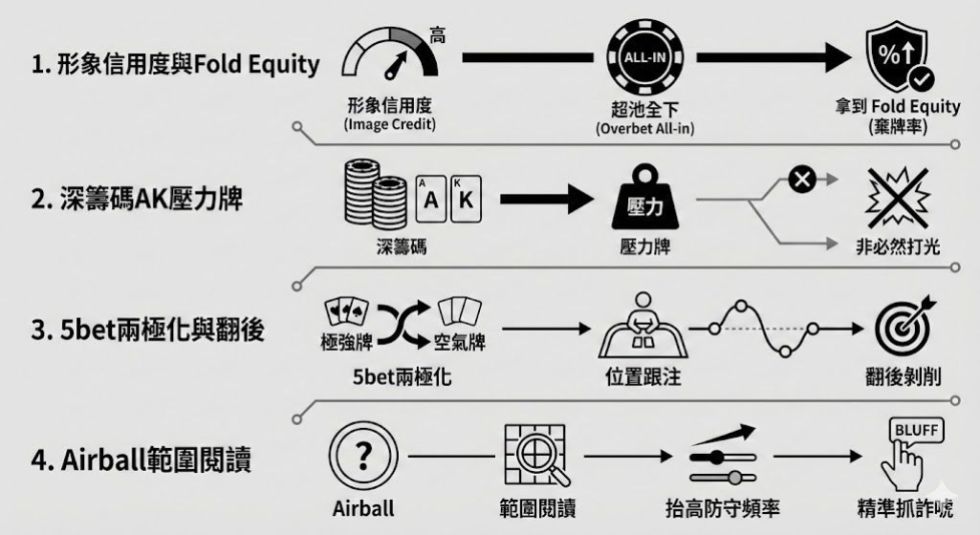
The flop doesn't bring an A or K; AK misses. Keating still chooses an overbet All-in shove. The core of this line is not hand strength, but maximizing Fold Equity. He hopes to use an extreme size to represent high-weight combinations like AA, KK, JJ, or strong flush draws, forcing a medium pocket pair like 99 to fold under immense pressure. Because if he checks or makes a small bet, AK can easily be passively led to a showdown disadvantage.

From a pure strategy perspective, this is a decision that settles the outcome in one go—success means taking the pot directly, failure means risking almost the entire buy-in.

The problem is, an overbet shove极度依赖信用度 (relies extremely on credibility). If the opponent believes you, it's a highly efficient pressure tool. If the opponent doesn't believe you, it becomes a move that locks the opponent's calling range into the "specifically designed to catch your bluff" zone, providing the opponent with the best incentive to call with your maximum size.
Airball's Instant Call: Calling with 99, Catching the Crack in Keating's Image

Airball's instant call looks like a hand strength decision, but it's actually a model decision. He calculates Keating's entire line within the framework of his opponent's persona: Keating has a wide pre-flop range, his 5bet has polarized characteristics, and when he misses the flop, he is more likely to push all the way with his two high-card air using a large size, trying to win the pot in one go.

Under this assumption, the relative strength of 99 on J♠4♦6♠ increases significantly. The call isn't about toughing it out; it's about exploiting the structural flaw of an opponent who applies excessive pressure and lacks credibility. They run it twice; neither runout produces an A or K. 99 holds its lead and busts Keating. The ending is sealed by the deal, but the logic of victory was actually determined the moment the instant call was made.

CoinPoker Gambling – The Overall Best Bitcoin Poker Gambling Site

CoinPoker has long been regarded as the most comprehensive Bitcoin gambling platform in the crypto space, establishing high competitiveness with its smooth interface, diverse gameplay, and strong bonus structure. The platform offers a 150% welcome bonus, with the first deposit going up to $2,000, making it an extremely attractive starting condition for both beginners and advanced players, and successfully solidifying its position as a mainstream BTC gambling site.

In terms of gameplay, CoinPoker offers over 15 betting markets, covering live sports, esports, virtual events, and more. It also supports deposits in multiple mainstream cryptocurrencies. Withdrawals are known for instant processing, zero fees, and anonymous settlement, ensuring players can withdraw their winnings quickly and safely. Beyond sports betting, the platform also features a mature casino system, including high-quality live dealer games, presented in HD stream from Blackjack to Roulette, allowing players to enjoy an immersion close to a physical casino on their mobile or desktop.

For poker players, CoinPoker's appeal is even more evident. The platform offers stable, active poker tables and diverse tournament formats. A 33% online poker rakeback is offered every Monday, providing substantial value for long-term players. Coupled with the platform's transparent operation and continuously promoted events, it creates a highly rated professional poker environment for global players.

CoinPoker combines Bitcoin gambling, live dealer casino, and a professional poker ecosystem, offering fast settlement,完善的奖金制度 (完善的 bonus system), and high anonymity, making it an ideal choice for crypto players seeking security, speed, and entertainment.

Enter CoinPoker to Play

Conclusion: The True Hand Strength in High-Stakes Games is How Your Opponent Sees You

The value of this hand lies in how clearly it illustrates the most essential reality of high-stakes games: the power of your bet is not only determined by the board but also by how your opponent prices your image. Keating's chaotic style can force excessive folds against many opponents, earning him a lot of non-showdown EV in the long run. But once he encounters an opponent who can calculate his bluff frequency into the equation, his 5bet and flop shove lose their intimidation power, even反过来 becoming the most comfortable calling point for the opponent. Airball wins by daring to increase his calling frequency and accurately choosing the most suitable structure to withstand the pressure.

A more realistic statement is: in a deep stack environment, AK is no longer a no-brainer all-in weapon. It's more like a pressure hand that requires credibility加成 (credibility bonus). When you are perceived as loose-aggressive, you must accept that opponents will call more boldly; your value lines need to be more direct, and your bluff lines need to be more selective. The reason this hand becomes a classic is not because 99 beat AK, but because it demonstrates the ultimate rule of high-stakes games: when your opponent sees through who you are, the cards in your hand get repriced.


Preguntas relacionadas

QWhat was the key factor that determined the outcome of the AK vs. 99 hand between Keating and Airball on the WPT Global high-stakes cash game?

AThe key factor was the players' table image and perceived credibility, not just the raw hand strength. Keating's hyper-aggressive and wide-ranging style had eroded his credibility, allowing Airball to accurately read his large bet on the flop as a likely bluff and make a profitable call with his pocket nines.

QHow did Nik Airball's playing style differ from Alan Keating's in this hand?

ANik Airball's style was based on solid range reading and making exploitative adjustments against specific opponents. He was adept at knowing when to increase his defense frequency and when to call down aggression. In contrast, Alan Keating employed a chaotic, high-VPIP style with a very wide range, using large bet sizes to apply pressure and bluff frequently.

QWhy did Alan Keating choose to make a 5-bet pre-flop and then an overbet all-in on the flop with A♠K♥?

AKeating's 5-bet pre-flop was a polarized move, representing either a very strong hand or a bluff designed to exploit his deep stack and force a fold. His overbet all-in on the J♠4♦6♠ flop was an attempt to maximize fold equity by representing a very strong hand (like an overpair or a strong draw) since his A-K had missed the board, hoping to win the pot without a showdown.

QWhat does the article suggest is the 'ultimate rule' of high-stakes poker, as demonstrated by this hand?

AThe 'ultimate rule' is that the power of a bet is not just determined by the cards, but by how an opponent prices your table image. When an opponent sees through your playing style and understands your tendencies, the value of the cards you hold is re-priced accordingly.

QAccording to the article, what makes A-K a different type of hand in a deep-stack environment against a skilled opponent?

AIn a deep-stack environment against a skilled opponent, A-K is no longer a hand to automatically commit all chips with. It becomes a pressure hand that requires credibility to be effective. If a player is perceived as loose and aggressive, opponents will be more willing to call, meaning value bets need to be more straightforward and bluffs need to be more carefully selected.

Lecturas Relacionadas

Has Hook Summer Really Arrived? sato, Lo0p, FLOOD Ignite the New Narrative of Uniswap v4

"Hook Summer" Arrives? Sato, Lo0p, FLOOD Ignite Uniswap v4 Narrative Amidst a slight market recovery, attention within the Ethereum ecosystem has shifted to Meme coins built on Uniswap v4's Hook protocol. Following ASTEROID, tokens like sato, sat1, Lo0p, and FLOOD have become market focal points, with market caps ranging from millions to tens of millions, bringing concentrated liquidity to a narrative-dry market. Uniswap v4 Hooks are "plugin smart contracts" that allow developers to inject custom logic at key points in a liquidity pool's lifecycle (initialization, adding/removing liquidity, swaps, etc.), making the AMM programmable. Recent representative projects include: * **sato**: Market cap peaked over $38M; uses a v4 curve mechanism for minting/burning, locking ETH as reserve. * **sat1**: Market cap briefly exceeded $10M, positioning as an "optimized sato," but later declined significantly. * **Lo0p**: Market cap neared $6.6M; a "lending AMM protocol" allowing users to borrow ETH against deposited LO0P tokens without immediate selling pressure. * **FLOOD**: Market cap approached $6M; channels trading reserves into Aave v3 to generate yield, which is retained in the pool. The emergence of these Hook-based tokens could drive long-term growth for the Uniswap ecosystem by attracting users and liquidity to v4 pools. Combined with Uniswap's activated fee switch (partially used to burn UNI), the long-term outlook for UNI appears positive. However, short-term UNI price appreciation is not directly guaranteed. Factors include the sustainability and lifecycle of these new tokens, their price volatility, overall market conditions, and regulatory pressures. Currently, Uniswap v4's TVL ($595M) lags behind v3 and v2, indicating Hook adoption still requires time to mature. In summary, the Hook ecosystem serves as "long-term nourishment" for UNI, but acts more as a "catalyst" than a direct "booster" in the short term. Note: These are early-stage experimental tokens and may carry unknown risks.

marsbitHace 15 min(s)

Has Hook Summer Really Arrived? sato, Lo0p, FLOOD Ignite the New Narrative of Uniswap v4

marsbitHace 15 min(s)

Has Hook Summer Truly Arrived? sato, Lo0p, FLOOD Ignite the New Uniswap v4 Narrative

With the broader market showing signs of recovery, a new wave of interest has emerged around Ethereum-based meme coins. Following ASTEROID, tokens like sato, sat1, Lo0p, and FLOOD, built upon the Uniswap v4 Hook protocol, are capturing market attention. Their market capitalizations range from millions to tens of millions of dollars, injecting much-needed focused liquidity into a market lacking narratives. This article explores whether this trend signifies an incoming "Hook Summer" and its potential impact on UNI's price. Hooks are essentially plug-in smart contracts for Uniswap v4 liquidity pools, allowing developers to inject custom logic at key points in a pool's lifecycle (like initialization, adding/removing liquidity, swaps). This transforms the AMM into programmable building blocks. Key highlighted projects include: * **sato**: Peaked over $38M market cap. It utilizes a v4 curve for minting/burning; buying locks ETH as reserve to mint new tokens, while selling redeems ETH from the reserve and burns tokens. * **sat1**: Market cap briefly exceeded $10M, promoted as an "optimized sato," but later declined significantly. * **Lo0p**: Reached nearly $6.6M. It's a lending AMM protocol where buying LO0P tokens locks them as collateral, allowing users to borrow ETH from the pool reserve at 40% LTV, aiming to improve capital efficiency for idle ETH in LPs. * **FLOOD**: Peaked near $6M. Its mechanism directs asset reserves from buys into Aave v3 to generate yield, with fees and interest retained in the pool to potentially influence the token's price long-term. In the long term, the development of the Hook ecosystem can attract users and liquidity to Uniswap v4, benefiting UNI's fundamentals—especially combined with the recent activation of the protocol fee switch, where a portion of fees is used to burn UNI. However, in the short term, these Hook-based tokens are unlikely to directly drive significant UNI price appreciation. Their impact is moderated by factors like token sustainability, price volatility, and broader market and regulatory conditions. Currently, Uniswap v4's TVL ($595M) still trails behind v2 and v3, indicating adoption and growth will take time. The article concludes that while the Hook ecosystem provides long-term "nourishment" for UNI, its short-term role is more of a "catalyst" than a "booster." Readers are cautioned that these are early-stage experimental tokens and may carry unknown risks.

Odaily星球日报Hace 27 min(s)

Has Hook Summer Truly Arrived? sato, Lo0p, FLOOD Ignite the New Uniswap v4 Narrative

Odaily星球日报Hace 27 min(s)

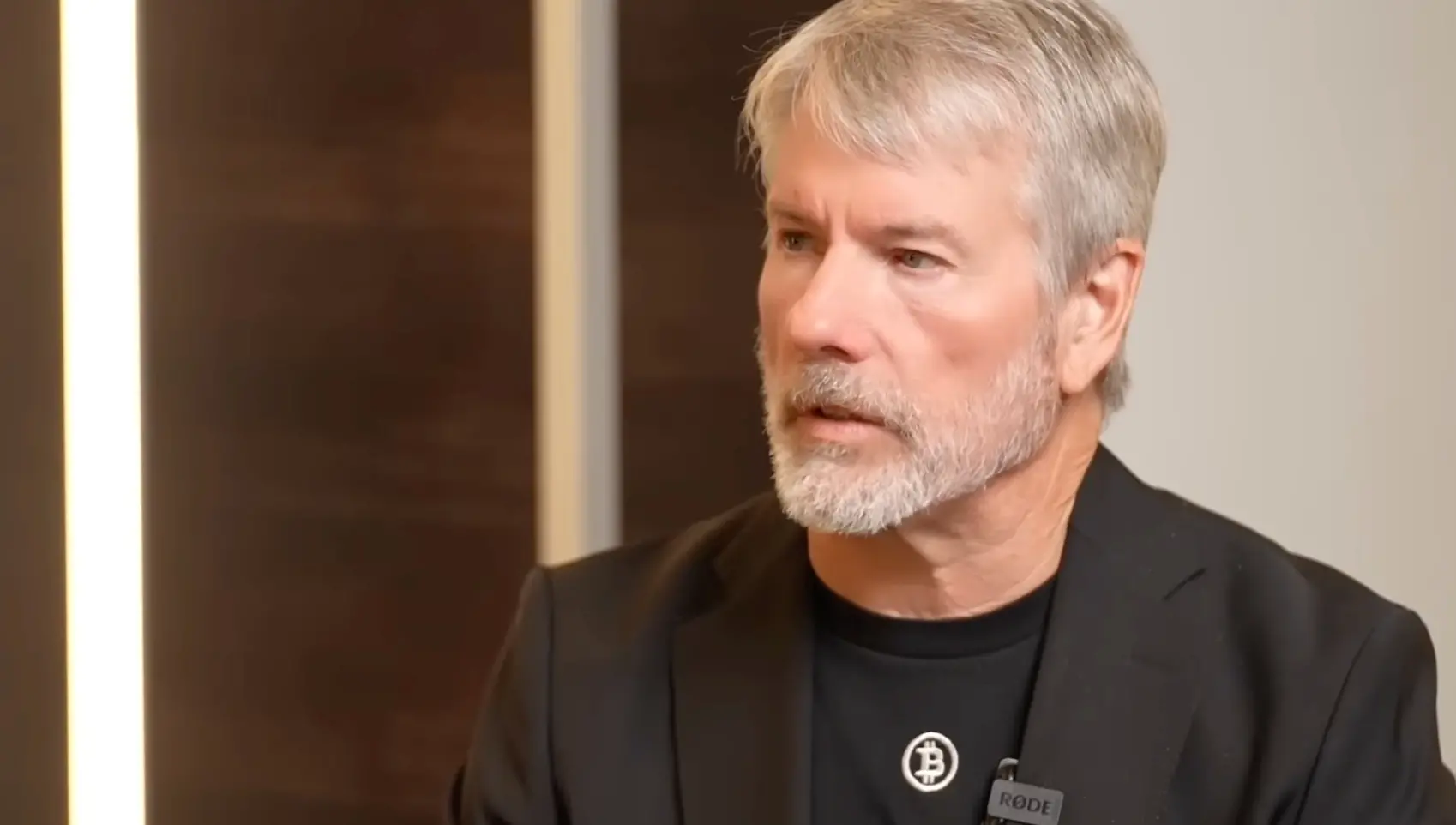
Interview with Michael Saylor: I Did Say I Would Sell Bitcoin, But Never a Net Sale

Interview with Michael Saylor: I Said We'd Sell Bitcoin, But Never Be a Net Seller In a recent podcast, MicroStrategy Executive Chairman Michael Saylor clarified the company's stance on potentially selling Bitcoin. Following MicroStrategy's earnings call statement about being prepared to sell BTC to fund dividends for its STRC (Strategic) credit product, Saylor emphasized the distinction between selling and being a "net seller." Saylor explained the core business model: MicroStrategy sells credit instruments like STRC and uses the proceeds to buy Bitcoin, which is viewed as "digital capital" expected to appreciate around 30-40% annually. A portion of these capital gains can then be used to pay the dividends on the credit products. He stressed that even if the company sells some Bitcoin for dividends, it simultaneously buys much more with new credit issuance. For example, after raising $3.2 billion from STRC sales in April, the dividend obligation was only $80-90 million, making the company a net buyer. The clarification aims to counter market narratives questioning the value of Bitcoin on MicroStrategy's balance sheet if it were never sold, and to dismiss claims of a "Ponzi scheme." Saylor reiterated his personal philosophy for investors: "Don't be a net seller of bitcoin" and ensure your Bitcoin holdings increase each year. Saylor also discussed Bitcoin's role as the foundation for "digital credit," noting that STRC has become the largest and most liquid preferred stock issue in the U.S., offering high risk-adjusted returns (Sharpe ratio). He highlighted Bitcoin's deep liquidity, stating that even large purchases by MicroStrategy do not move the market significantly, which is driven by macro factors, geopolitical tensions, and capital flows from ETFs and credit products. Finally, Saylor reflected on his early inspiration from sci-fi books, which motivated his path to MIT, and maintained his fundamental thesis on Bitcoin remains unchanged: it is superior digital capital enabling superior digital credit.

链捕手Hace 31 min(s)

Interview with Michael Saylor: I Did Say I Would Sell Bitcoin, But Never a Net Sale

链捕手Hace 31 min(s)

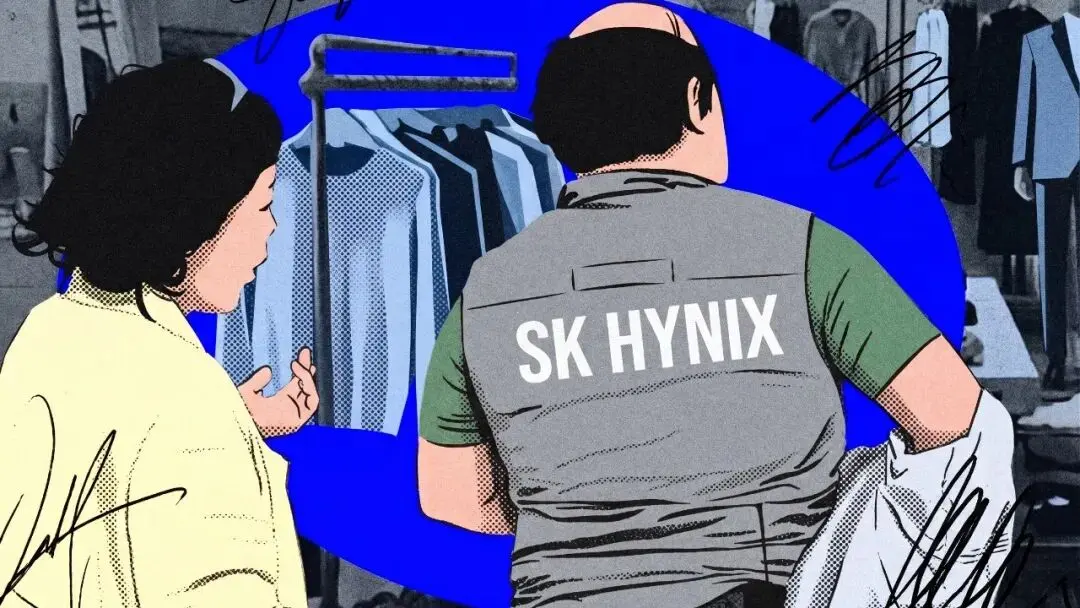
Beaten SK Hynix Employees in China: Year-end Bonus Less Than 5% of Korean Staff's

"SK Hynix Chinese Staff Hit Hard: Bonuses Less Than 5% of Korean Counterparts" Driven by the AI boom, South Korea's SK Hynix is experiencing record performance, with media reports predicting massive year-end bonuses for its employees, making them highly desirable in the matchmaking market. However, this prosperity starkly contrasts with the situation for the company's Chinese employees. According to reports, SK Hynix operates under a rule allocating 10% of operating profit for employee bonuses. While projections suggest Korean employees could receive bonuses reaching millions of RMB, a Chinese employee with over a decade of technical experience revealed the disparity: "If they get 3 million, Chinese staff get less than 5% of that." After adjustments based on KPI ratings, this employee's highest bonus was slightly over 100,000 RMB. Bonuses are paid annually in Korea but semi-annually in China. During the industry downturn in 2023-2024, Chinese employees received no bonus at all. The gap extends beyond bonuses. Recruitment posts for SK Hynix's Chinese factories (in Wuxi, Dalian, Chongqing) show engineer monthly salaries ranging from 10,000 to 35,000 RMB, with a 13th-month salary promised. Chinese employees also receive standard benefits like annual leave but lack stock incentives, which are reportedly unavailable to them. Furthermore, management positions in China are predominantly held by Korean personnel, though industry observers note a gradual increase in local middle managers over time. SK Hynix has confirmed the 10% bonus rule but cautioned that specific future bonus amounts remain unpredictable. The company forecasts strong demand for HBM and other high-value enterprise products for the next 2-3 years, driven by AI infrastructure investment. This focus on business-to-business markets may continue to constrain supply for consumer products, potentially prolonging price increases for components like memory.

链捕手Hace 45 min(s)

Beaten SK Hynix Employees in China: Year-end Bonus Less Than 5% of Korean Staff's

链捕手Hace 45 min(s)

Trading

Spot
Futuros
活动图片