Tether Scraps $20 Billion Funding Ambitions Due To Investor Opposition

bitcoinistPublicado a 2026-02-05Actualizado a 2026-02-05

Resumen

Cryptocurrency giant Tether has significantly scaled back its fundraising ambitions, reducing its target from an initial $15–20 billion to potentially as low as $5 billion. This shift follows investor resistance to the company's proposed $500 billion valuation. CEO Paolo Ardoino clarified that the $500 billion figure was a maximum valuation cap, not a firm target, and noted that internal reluctance from existing shareholders to sell equity has complicated efforts to structure a larger round. Despite the fundraising challenges, Tether reported strong 2025 net profits exceeding $10 billion and continues to expand its USDT stablecoin supply, which now circulates approximately $186 billion. The company has also diversified its reserves, including significant gold purchases, and launched a new dollar-pegged stablecoin, USA₮, for the U.S. market.

Crypto giant Tether is reportedly encountering resistance in its latest fundraising efforts, prompting a significant rethink of how much capital it plans to raise.

According to people familiar with the discussions, investor pushback over the company’s ambitious $500 billion valuation has led advisers to consider a much smaller funding round, potentially as low as $5 billion.

Shareholder Hesitation Slows Tether Fundraise

The revised target marks a sharp shift from earlier talks last year, when Tether was said to be exploring a raise of between $15 billion and $20 billion.

Chief Executive Officer Paolo Ardoino pushed back on the notion that the company was aiming to raise funds at a $500 billion valuation, describing that figure as a misunderstanding.

Speaking to the Financial Times, Ardoino said the number represented the maximum valuation at which Tether would have been willing to sell shares, not a firm objective. Ardoino also noted that interest from potential investors at that valuation had been strong, but that progress has been slowed by internal considerations.

In particular, some existing shareholders have been reluctant to sell equity, complicating efforts to structure a larger fundraising round and contributing to the decision by advisers to explore a more modest raise.

Concerns around shareholder sales have surfaced before. Last year, Bitcoinist reported that Tether was weighing several options to manage its capital strategy, including share buybacks and the potential tokenization of company shares on a blockchain once a fundraising deal is completed.

At the time, those discussions were driven by worries that certain investors selling their stakes could undermine the company’s broader fundraising plans.

Tether later confirmed it had blocked at least one shareholder from proceeding with plans to divest, calling it “imprudent” for any investor to attempt to sidestep formal processes overseen by leading global investment banks.

Profits And Reserves While Rolling Out USA₮

Despite the fundraising uncertainty, Tether’s financial position appears robust. The company reported net profits exceeding $10 billion for 2025, while the supply of its flagship stablecoin, USDT, expanded to approximately $186 billion in circulation.

By year‐end, Tether reportedly held several billion dollars in excess reserves, with total assets comfortably exceeding liabilities. That financial cushion has helped ease concerns among investors about whether the company can adequately back such a large volume of stablecoins.

Tether has also continued to diversify its reserves. Recent filings and public statements indicate that the firm purchased roughly 27 metric tons of gold in the final quarter of the year.

At the same time, Tether is expanding its footprint in the United States. The company has officially launched a new dollar‐pegged stablecoin, called USA₮, designed specifically for the US market..

The total crypto market cap drop below the $2.5 trillion mark on the daily chart. Source: TOTAL on TradingView.com

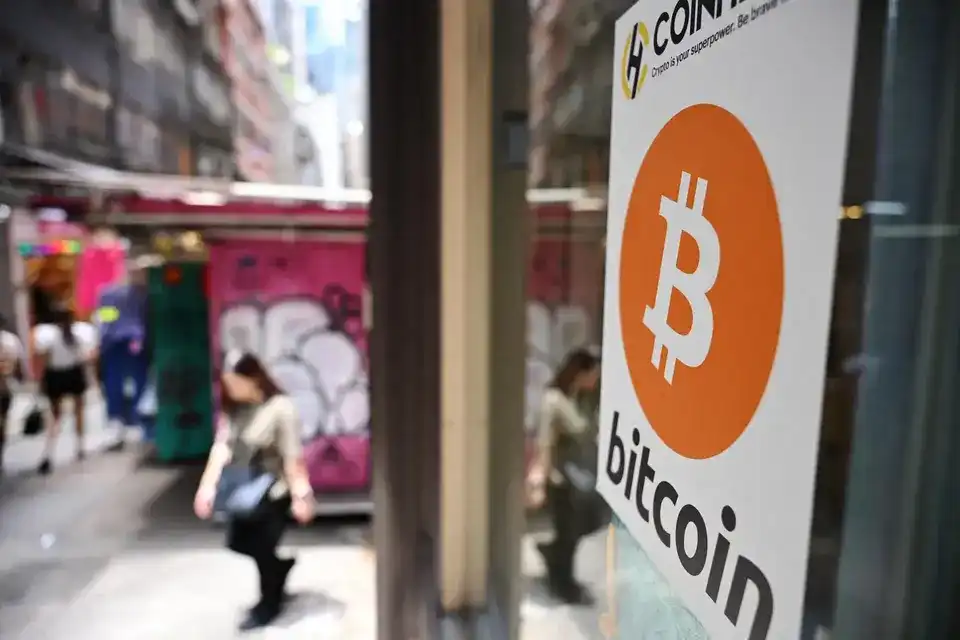
Featured image from OpenArt, chart from TradingView.com

Preguntas relacionadas

QWhy did Tether significantly reduce its fundraising target from up to $20 billion to potentially as low as $5 billion?

ATether reduced its fundraising target due to investor pushback over the company's ambitious $500 billion valuation and reluctance from some existing shareholders to sell their equity, which complicated efforts to structure a larger round.

QWhat did Tether's CEO, Paolo Ardoino, clarify regarding the reported $500 billion valuation?

APaolo Ardoino clarified that the $500 billion figure was a misunderstanding; it represented the maximum valuation at which Tether would have been willing to sell shares, not a firm objective for the fundraising.

QWhat financial performance did Tether report for 2025, and what is the current circulation of its USDT stablecoin?

ATether reported net profits exceeding $10 billion for 2025, and the supply of its USDT stablecoin expanded to approximately $186 billion in circulation.

QHow has Tether diversified its reserves, according to recent filings and statements?

ATether has diversified its reserves by purchasing roughly 27 metric tons of gold in the final quarter of the year.

QWhat new product has Tether launched specifically for the US market?

ATether has launched a new dollar-pegged stablecoin called USA₮, which is designed specifically for the US market.

Lecturas Relacionadas

China's Tech Industry Is Crossing the 'Visibility Threshold' in Bulk

China's tech industries are successively crossing a "visibility threshold" into the global market spotlight. This wave, exemplified by AI, robotics, and innovative pharmaceuticals (the "new-new three"), differs from past waves like garments/appliances or EVs/batteries/solar panels. Earlier industries met existing demand, but these new sectors are helping to *define* emerging markets and applications. Crossing this threshold signifies an industry has achieved scale, competitive advantages, rapid growth, and the ability to drive its supply chain. Recent data shows China's AI sector growing over 30%, producing 80% of certain intelligent robots, and a surge in new drug approvals. This acceleration stems from China's industrial evolution from "completeness" to "density": different sectors now share technologies, talent, and infrastructure, enabling capabilities (e.g., from EVs) to rapidly migrate to adjacent fields (e.g., robotics). This dense ecosystem, combined with improved system integration and faster market access, acts as an infrastructure for generating new industries. The nature of competition is also evolving. The visible product is just an interface; long-term advantage lies in the underlying patents, standards, and open ecosystems. While building this "moat," China's approach emphasizes openness—through open-source models and collaborative R&D—to foster wider adoption and iterative improvement. Crossing the visibility line marks the start of market validation. The consecutive emergence of these industry waves signals China is developing a sustained capacity to generate new, globally relevant innovations, shifting from being defined by global narratives to participating in shaping them.

marsbitHace 32 min(s)

China's Tech Industry Is Crossing the 'Visibility Threshold' in Bulk

marsbitHace 32 min(s)

10 Billion Repurchase Fails to Halt HYPE's Decline, Are Core Members and Multicoin Quietly Selling Tokens?

Foresight News reports that despite a massive $1 billion buyback program by the Assistance Fund, the HYPE token has fallen from its July high of $70 to around $52.40. Analyst MLM tracked data showing that since team token vesting began in December 2025, approximately 4.93 million HYPE (worth ~$270M) were allocated to core contributors. Of these, 1.19 million (~$32.5M) were sold on the open market, and 3.14 million (~$132M) were transferred to OTC desks. However, the report argues that direct team selling is not the primary driver of the price decline. In the same period, the protocol's Assistance Fund used 99% of trading fees to repurchase about 9.8 million HYPE for approximately $364 million, a rate more than double the team's selling pressure. The analysis points to other significant factors: major venture capital firms like Multicoin Capital and a16z have been unstaking and moving substantial amounts of HYPE to exchanges, with some confirming sales for portfolio management. Additionally, HYPE spot ETFs have experienced consistent daily net outflows since early July, reversing the strong inflows seen in May and June. The report concludes that while protocol buybacks absorb team selling, declining trading volume reduces this buyback power, and combined selling pressure from large investors and ETFs has significantly impacted the price.

marsbitHace 57 min(s)

10 Billion Repurchase Fails to Halt HYPE's Decline, Are Core Members and Multicoin Quietly Selling Tokens?

marsbitHace 57 min(s)

Trading

Spot
活动图片