Tether Freezes $182 Million in One Day: Is USDT Still a Neutral Currency?

marsbitPublicado a 2026-01-14Actualizado a 2026-01-14

Resumen

Tether, the issuer of USDT, froze approximately $182 million worth of USDT in a single day across five wallets on the Tron blockchain, marking one of its largest single-day enforcement actions. The frozen funds are widely suspected to belong to the Venezuelan government, potentially representing oil revenue, and the action is believed to have been conducted in coordination with U.S. authorities. This event has raised significant concerns about USDT’s role as a neutral financial tool, particularly in developing and sanctioned regions like Venezuela, where the stablecoin has become deeply embedded in the economy. Reports indicate that up to 80% of Venezuela’s oil revenue may be received in cryptocurrencies like USDT, creating a direct channel between its oil trade and the crypto economy. However, this incident demonstrates that Tether is willing to comply with law enforcement, even at the risk of undermining its reputation as a censorship-resistant alternative to traditional finance. The situation has drawn comparisons to the Euroclear moment, where frozen Russian assets sparked concerns about the safety of foreign-held euro-denominated assets. Similarly, Tether’s actions may lead international users to reconsider the perceived neutrality and safety of stablecoins. While Tether has maintained its peg so far, sustained outflows or loss of trust could pose existential risks to its offshore business model. The event underscores Tether’s growing role in global finance—and its vul...

Editor's Note: Tether's freezing of approximately $182 million USDT on the Tron chain has been regarded by some analysts as its "Euroclear moment"—that is, when a financial infrastructure originally seen as a neutral channel begins cooperating with law enforcement to freeze assets, it ceases to be just a stablecoin and becomes part of the boundaries of power.

This article delves into the controversy surrounding funds related to Venezuela, discussing how this event may impact USDT's narrative as a "dollar alternative" in the Global South and sanctioned regions, while redefining the perception of risks associated with stablecoins.

Below is the original text:
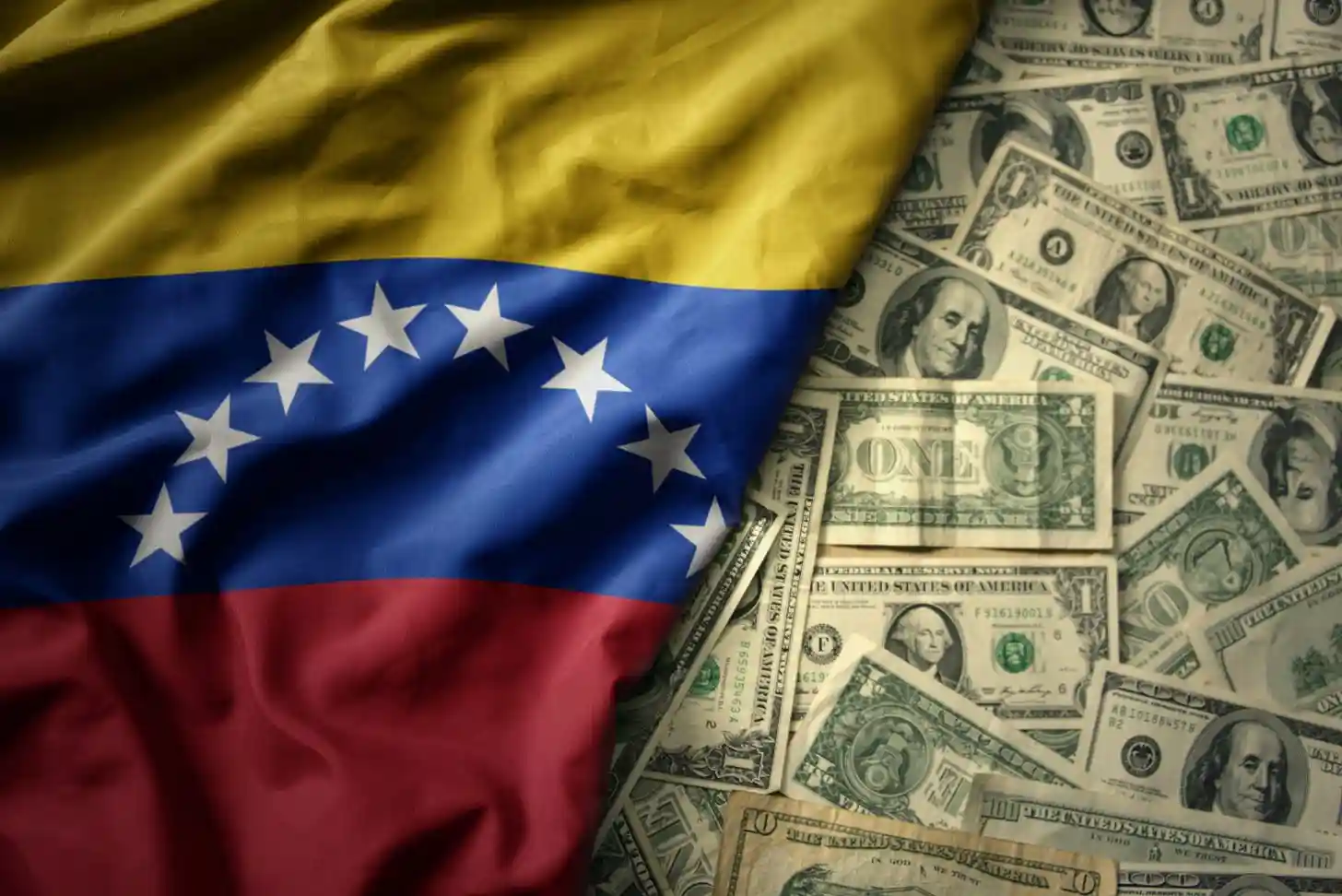
The biggest news this week was Tether's freezing of about $182 million USDT across five wallet addresses on the Tron chain in a single day, marking one of its largest single-day actions to date.

There is speculation that these assets may belong to the Venezuelan government, and Tether—long seen as a "safe haven for illicit fund flows"—is now seizing (or freezing) sovereign assets at the behest of the U.S. government.

What we can confirm so far is that this operation was indeed carried out under compliance and law enforcement procedures. Although officials have not confirmed that these addresses hold "Venezuelan oil revenues," analysts and on-chain observers widely interpret the situation as such.

Online discussions also suggest that some of the frozen funds may overlap with wallet addresses used for Venezuela-related activities. Given the country's heavy reliance on USDT, such speculation is not unfounded.

According to The Wall Street Journal, Venezuela's oil trade is deeply intertwined with Tether stablecoins. The report cited a podcast by Venezuelan economist Asdrúbal Oliveros, who mentioned that stablecoins have established a "direct channel" between Venezuela's economy and the crypto world, primarily driven by the oil industry.

In the podcast, Oliveros pointed out that nearly 80% of the country's oil revenues are being received in the form of cryptocurrencies or stablecoins. He added that this large-scale inflow of digital assets has made USDT a recurring keyword in Venezuela's commercial exchanges and corporate operations.

However, Oliveros also emphasized that the government faces difficulties converting these crypto assets into liquidity usable in the real economy, as the process requires a series of compliance reviews. This has left substantial funds "locked" on-chain. As a result, Venezuela's oil revenues are not flowing back into the domestic economy, impacting the official exchange rate and causing it to soar.

Oliveros further suggested that the Venezuelan government has not been professional in managing its cryptocurrency and stablecoin wealth. He mentioned that due to overreliance on individual wallets and a lack of internal compliance processes or regular reconciliation mechanisms, some wallets' seed phrases/private keys may have been mishandled or even lost amid managerial chaos.

An Existential Question?

If the frozen funds are indeed confirmed to belong to Venezuela, the pressing question for everyone is: How will this impact Tether's reputation as an "alternative monetary system" in developing countries, especially in regions with financial instability or under international sanctions?

On Tuesday, at the launch of Bytetree's new Bitcoin + gold combined exposure ETN product, BOLD, on the London Stock Exchange, prominent figures in London's crypto and gold investment circles speculated that this event could deliver a strong blow to stablecoins, with repercussions extending even further.

Bitcoin investor, advocate, and comedian Dominic Frisby (also a vocal supporter of digital privacy) told The Peg that he was not surprised this event would—much like the discussions around the "formal seizure of Russian assets held by Euroclear"—make international sovereign investors uneasy about euro/dollar-denominated assets, potentially triggering panic among crypto capital.

Although Tether is often portrayed as "lacking regulation, high-risk, and non-compliant," over the past year, the stablecoin giant has not concealed its increasingly close cooperation with global law enforcement agencies, even as it maintains its base in the relatively regulation-light, crypto-friendly El Salvador.

Tether CEO Paolo Ardoino told The Peg in October that Tether is the only stablecoin and crypto company that regularly collaborates with the U.S. Department of Justice (DoJ) and has also integrated the FBI and the U.S. Secret Service into its cooperation framework.

"We froze Garantex's (a Russian exchange) assets with them," he said, confirming the action while also noting that Tether is expanding its presence in commodity-related supply chain financial markets.

According to The Wall Street Journal, blockchain monitoring company TRM Labs has a partnership with Tether to help track illegal activities involving USDT on the Tron chain. TRM Labs' global policy head Ari Redbord told the media that the role of stablecoins in Venezuelan society is complex: "They (stablecoins) can be a lifeline for civilians, but they can also become tools for evasion under sanctions pressure."

This statement underscores a core reality: USDT, as a financial lifeline, is deeply embedded in Venezuela's economy, helping ordinary people combat hyperinflation. At the same time, its technology can be exploited by bad actors to move funds, raising concerns about sanctions compliance.

However, Tether has now demonstrated that when addresses are flagged for sanctions or illegal associations, it is willing to freeze USDT on networks like TRON. In other words, even if stablecoins serve as critical financial infrastructure locally, they are not exempt from human enforcement.

More importantly, this action comes after a recent policy "slam on the brakes" in Brussels (EU): After years of posturing, planning, and legal preparations, the EU ultimately hesitated at the final step of "explicitly seizing frozen Russian assets," fearing it would weaken the appeal of euro-denominated assets to international investors.

Thus, the signal to markets and nations may be that storing funds in stablecoins like Tether might be riskier than holding official assets.

Whether this reality will pose an "existential threat" to Tether's offshore business model in the coming weeks or months remains to be seen. But within crypto circles, a strong view is spreading: international investors may never look at stablecoins the same way again.

At the very least, this incident shows that the influence of the so-called "Donroe Doctrine" is no longer confined to geopolitics and national gamesmanship but is entering the core of global financial markets. And from any perspective, Tether is at the very center of this sphere of influence.

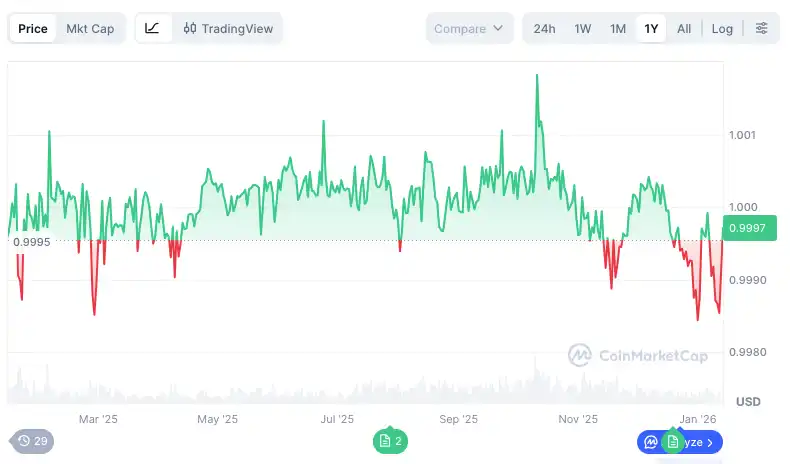
So far, aside from minor fluctuations over the past month, Tether's peg has remained stable. The real pressure signal would be a significant slowdown in inflows—or, more dangerously, a shift from net inflows to net outflows.

Tether's next reserve attestation is expected to be released in late January or early February.
Preguntas relacionadas

QWhat was the significance of Tether freezing $182 million USDT on the Tron network, and why is it being compared to the 'Euroclear moment'?

ATether's freezing of $182 million USDT is significant because it represents one of its largest single-day actions and is seen by analysts as its 'Euroclear moment.' This term refers to a financial infrastructure, originally perceived as a neutral channel, beginning to cooperate with law enforcement to freeze assets. This action shifts Tether's role from merely a stablecoin to becoming part of the power boundary, impacting its narrative as a neutral monetary tool.

QHow is USDT deeply embedded in Venezuela's economy, particularly in the oil trade?

AUSDT is deeply embedded in Venezuela's economy, with nearly 80% of the country's oil revenues being received in cryptocurrencies or stablecoins. This digital asset inflow has made USDT a key term in commercial exchanges and business operations. However, converting these crypto assets into usable liquidity for the real economy requires compliance reviews, often leaving funds locked on-chain and not reintegrated into the domestic economy, affecting official exchange rates.

QWhat are the potential risks to Tether's reputation as an 'alternative monetary system' in developing countries following this freezing event?

AThe freezing event poses a potential risk to Tether's reputation as an 'alternative monetary system' in developing countries, especially those with financial instability or under international sanctions. If the frozen funds are confirmed to belong to Venezuela, it could undermine trust in USDT as a reliable financial lifeline, as it demonstrates that stablecoins are not exempt from human enforcement actions and may be subject to geopolitical pressures.

QHow does Tether's cooperation with global law enforcement agencies, such as the DOJ and FBI, influence its operational dynamics?

ATether's cooperation with global law enforcement agencies, including the DOJ and FBI, shows its commitment to compliance and tracking illegal activities. For instance, Tether has worked with these agencies to freeze assets linked to entities like Garantex, a Russian exchange. This collaboration enhances its legitimacy but also highlights that USDT transactions are monitorable and actionable, affecting its perception as a decentralized or neutral asset.

QWhat broader implications does this event have for the stability and future of stablecoins like USDT in the global financial system?

AThis event has broader implications for stablecoins like USDT, suggesting that they may carry higher risks than official assets due to their susceptibility to enforcement actions. It could lead to reduced inflows or even net outflows, challenging Tether's offshore business model. The situation indicates that geopolitical doctrines, such as the 'Donroe Doctrine,' are influencing global financial markets, with Tether at the center, potentially altering how international investors view stablecoins.

Lecturas Relacionadas

U.S. Government Bans Foreign Nationals from Using Fable 5, Anthropic Issues Rebuttal

U.S. Government Bans Foreign Access to Fable 5, Anthropic Issues Rebuttal On June 12th, the U.S. government ordered AI company Anthropic to immediately suspend all foreign access—including foreign nationals within the U.S. and Anthropic's own foreign employees—to its newly released Fable 5 and Mythos 5 AI models, citing national security concerns. This forced Anthropic to temporarily disable access to both models for all users globally, as it cannot technically differentiate user nationality at scale. The models, released just three days prior, represent Anthropic's highest public capability tier. Fable 5 is the first publicly available model from the advanced "Mythos" family, while Mythos 5 is a less-restricted version for approved cybersecurity and critical infrastructure partners. The government's directive was reportedly triggered by claims from another company that it could "jailbreak" Mythos 5, raising alarm within the Trump administration. Anthropic, in a detailed public statement, strongly challenged this rationale. The company argues the demonstrated "jailbreak" is a narrow, non-generalized technique that merely involves identifying minor, known software vulnerabilities—a capability common to other publicly available models like OpenAI's GPT-5.5 and routinely used by cybersecurity defenders. Anthropic stated it has complied with the order but disagrees with the government's standard, warning that applying it industry-wide would halt all new frontier model deployments. The company criticized the lack of a transparent, fact-based legal process and expressed confidence the situation stems from a misunderstanding. It is working to restore access and will release more technical details within 24 hours. Other Anthropic models remain unaffected.

链捕手Hace 15 min(s)

U.S. Government Bans Foreign Nationals from Using Fable 5, Anthropic Issues Rebuttal

链捕手Hace 15 min(s)

The Revelation from the Raydium Theft Incident: New DeFi Vulnerabilities Lurking in Forgotten Old Contracts

**Raydium Exploit Reveals DeFi's Hidden Risk: Forgotten "Zombie" Contracts** A recent attack on Raydium's deprecated V3 AMM pools resulted in a loss of approximately $1.34 million. The hacker exploited pools that were no longer supported by Raydium's current UI or SDK but remained fully functional and accessible on-chain. This incident highlights a critical, often overlooked category of risk in DeFi: inactive or legacy smart contracts that projects fail to properly decommission. Since March 2025, there have been at least 8 publicly reported attacks targeting such abandoned contracts, with total losses around $10.8 million. Including older pools and deprecated features, the count rises to 10 incidents with roughly $22.5 million in losses. These "zombie contracts" represent a lifecycle management failure rather than a code vulnerability, yet they are typically misclassified under general "code bug" categories in security reports, masking the true scale of the problem. The root cause is that projects often merely document a contract as "deprecated" without taking essential technical steps to secure it: withdrawing remaining assets, disabling external call functions, and implementing ongoing monitoring. These forgotten, under-monitored components become prime targets for attackers. To address this, the industry needs to recognize "zombie contracts" as a distinct risk category and establish standardized decommissioning protocols. Essential steps should include: 1) a formal retirement announcement, 2) removal of all front-end integrations, 3) withdrawal of locked assets, 4) disabling key contract functions, 5) ongoing security monitoring, 6) clear user communication, and 7) a post-mortem analysis. The value of a DeFi project lies not only in its current TVL but also in the security of its historical codebase, which has now become a new attack surface.

Foresight NewsHace 2 hora(s)

The Revelation from the Raydium Theft Incident: New DeFi Vulnerabilities Lurking in Forgotten Old Contracts

Foresight NewsHace 2 hora(s)

Robots Begin to 'Consume Data': The Hidden Production Chain from Indian Data Factories to Billion-Dollar Humanoid Robots

Robots have started to 'consume data,' driving the formation of a new industrial supply chain focused on producing training data for embodied AI. Unlike large language models, which are trained on vast internet text corpora, embodied AI models face a 'data desert' in the physical world. This has created a massive demand for first-person perspective video data (Ego Data), captured by workers wearing cameras in places like Indian garment factories. Companies like Neocambrian AI are establishing 'data factories' where workers perform standardized tasks (e.g., sorting clothes, kitchen organization) to generate thousands of hours of video. Research, such as NVIDIA's EgoScale, demonstrates that scaling this human demonstration data predictably improves robot performance, particularly for dexterous manipulation. This has validated a training path combining large-scale human data for pre-training with smaller amounts of robot-specific data for fine-tuning. The value of different data types varies significantly, forming a 'data pyramid.' The base consists of low-cost, large-scale internet and Ego Data. Higher layers include more expensive motion-capture data (e.g., from data gloves), simulation/synthetic data, and the most costly and scarce layer: real robot teleoperation data. This demand has spawned a layered ecosystem of data suppliers: low-cost data factories, motion capture and alignment specialists, robot-native teleoperation service providers, simulation data companies, and platforms aiming for data standardization. Robot companies themselves are adopting a 'layered procurement' strategy: outsourcing generic Ego Data while building in-house capabilities for robot-specific adaptation data and the critical deployment/failure data generated in real-world applications. The industry is shifting focus from hardware and basic mobility to the data pipelines required for general-purpose capability. While parallels exist to data labeling companies like Scale AI in the LLM boom, the physical complexity of robot data—involving action success ambiguity and sim-to-real gaps—requires more integrated solutions for data collection, annotation, and a continuous feedback loop. The race is on to build the data engines that will teach robots to operate reliably in the unstructured real world.

marsbitHace 4 hora(s)

Robots Begin to 'Consume Data': The Hidden Production Chain from Indian Data Factories to Billion-Dollar Humanoid Robots

marsbitHace 4 hora(s)

Trading

Spot
Futuros

Artículos destacados

Cómo comprar ONE

¡Bienvenido a HTX.com! Hemos hecho que comprar Harmony (ONE) sea simple y conveniente. Sigue nuestra guía paso a paso para iniciar tu viaje de criptos.Paso 1: crea tu cuenta HTXUtiliza tu correo electrónico o número de teléfono para registrarte y obtener una cuenta gratuita en HTX. Experimenta un proceso de registro sin complicaciones y desbloquea todas las funciones.Obtener mi cuentaPaso 2: ve a Comprar cripto y elige tu método de pagoTarjeta de crédito/débito: usa tu Visa o Mastercard para comprar Harmony (ONE) al instante.Saldo: utiliza fondos del saldo de tu cuenta HTX para tradear sin problemas.Terceros: hemos agregado métodos de pago populares como Google Pay y Apple Pay para mejorar la comodidad.P2P: tradear directamente con otros usuarios en HTX.Over-the-Counter (OTC): ofrecemos servicios personalizados y tipos de cambio competitivos para los traders.Paso 3: guarda tu Harmony (ONE)Después de comprar tu Harmony (ONE), guárdalo en tu cuenta HTX. Alternativamente, puedes enviarlo a otro lugar mediante transferencia blockchain o utilizarlo para tradear otras criptomonedas.Paso 4: tradear Harmony (ONE)Tradear fácilmente con Harmony (ONE) en HTX's mercado spot. Simplemente accede a tu cuenta, selecciona tu par de trading, ejecuta tus trades y monitorea en tiempo real. Ofrecemos una experiencia fácil de usar tanto para principiantes como para traders experimentados.

285 Vistas totalesPublicado en 2024.12.12Actualizado en 2026.06.02

Cómo comprar ONE

Discusiones

Bienvenido a la comunidad de HTX. Aquí puedes mantenerte informado sobre los últimos desarrollos de la plataforma y acceder a análisis profesionales del mercado. A continuación se presentan las opiniones de los usuarios sobre el precio de ONE (ONE).

活动图片













