Tether Expands South Korea Trademark Filings As Stablecoin Rules Take Shape

bitcoinistPublicado a 2026-05-21Actualizado a 2026-05-21

Resumen

Tether has significantly expanded its trademark filings in South Korea, applying for seven trademarks covering its company name, logo, and Tether Gold (XAUT) token, a strategic departure from its previous focus on just product names. This move, coinciding with South Korea's development of new stablecoin regulations, suggests Tether is preparing to establish a formal business presence in the country, potentially in response to upcoming rules that may require foreign issuers to set up local branches. South Korea's large and active crypto market makes it a crucial battleground. Rival stablecoin issuer Circle has already made inroads, filing trademarks last year and increasing USDC's market share. While Circle has advanced its local relationships through high-level meetings, Tether's strategy also targets the broader payments landscape. It sees an opportunity to serve South Korea's export economy by offering faster, cheaper cross-border transactions using stablecoins as payment tools, indicating a future competition that extends beyond trading into mainstream finance.

Tether’s latest move in South Korea goes beyond protecting a product name. The company behind the world’s largest stablecoin filed seven trademark applications with the Korea Intellectual Property Rights Information Service on May 19, covering not just its tokens but its company name, official logo, and gold-backed asset Tether Gold, known as XAUT.

A Shift In Strategy

That’s a departure from how Tether has approached South Korea before. Earlier filings were limited to stablecoin product names. Covering the broader brand signals something bigger — a possible push toward establishing an actual business presence in the country, not just protecting a label.

Timing is everything here. South Korea is in the middle of drafting new rules under the second phase of its Digital Asset Basic Act.

One proposal under discussion would require foreign stablecoin companies to set up a local branch before they can legally offer their tokens to South Korean users.
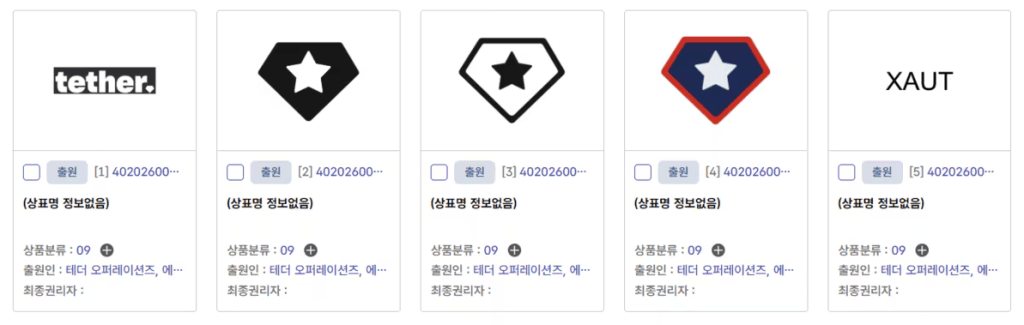
Trademarks for Tether's company name and logo filed with KIPRIS.

Tether’s trademark filings, some observers say, look like early preparation for that kind of requirement.

South Korea is not a small market. The country has one of the most active retail crypto trading populations in the world, which makes it a place no major stablecoin issuer can afford to ignore.

Circle Already Has A Head Start

Tether is not alone in moving on South Korea. Circle, the company behind USDC, filed 11 local trademarks last year and has already seen results — USDC’s market share in the country grew by 10%.

USDT market cap currently at $189 billion. Chart: TradingView

Tether now has seven active trademarks in South Korea, a number that has been growing as competition between the two stablecoin giants heats up.

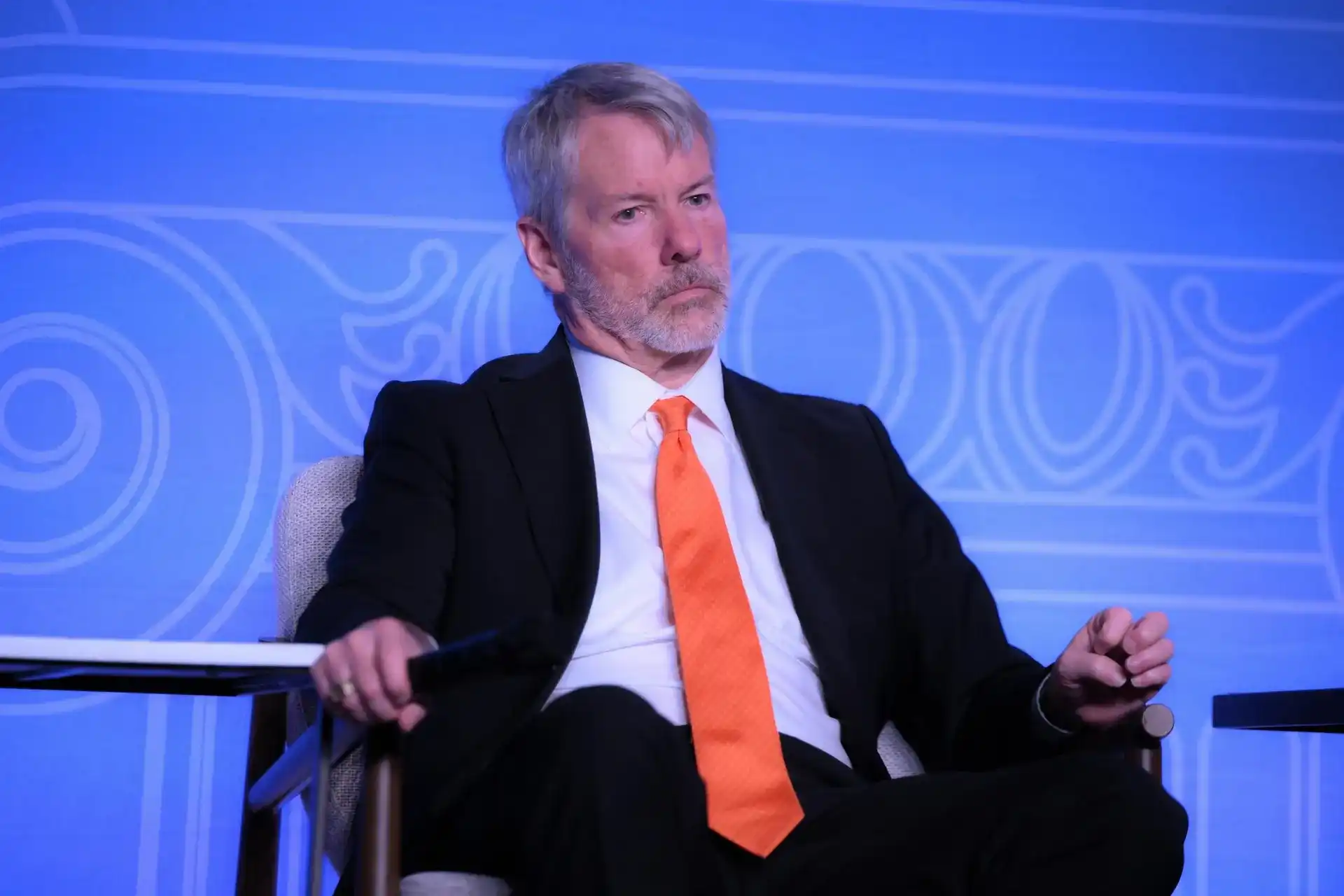
Earlier this year, Circle CEO Jeremy Allaire traveled to South Korea and held meetings with major banks and crypto exchanges, exploring possible partnerships.

That kind of ground-level relationship building puts Circle ahead in terms of local ties, at least for now.

Seoul, South Korea. Image: Silversea

Payments, Not Just Trading

The trademark filings also fit into a wider ambition Tether has for South Korea. The country runs a significant export economy, and businesses there regularly move money across borders.

Tether sees that as an opening. Using blockchain-based payments instead of traditional bank transfers through systems like SWIFT could offer faster, cheaper transactions for South Korean exporters.

That vision — stablecoins as a real payment tool, not just a trading instrument — reflects where the bigger competition between Tether and Circle may eventually play out, well beyond crypto exchanges and into mainstream finance.

Featured image from Unsplash, chart from TradingView

Preguntas relacionadas

QWhat is the main strategic shift indicated by Tether's recent trademark filings in South Korea?

AThe main strategic shift indicated is that Tether is now filing to protect its broader brand, including its company name, logo, and Tether Gold, rather than just product names. This signals a possible push toward establishing a formal business presence in the country, potentially in response to upcoming regulations.

QWhat specific regulatory requirement might Tether be preparing for with these trademark filings?

ATether might be preparing for a proposed requirement under South Korea's new Digital Asset Basic Act rules that would mandate foreign stablecoin companies to set up a local branch before legally offering their tokens to South Korean users.

QHow is Circle's position in the South Korean market different from Tether's according to the article?

ACircle already has a head start in the South Korean market. It filed trademarks last year, saw USDC's market share grow by 10%, and its CEO has personally traveled to South Korea to build ground-level relationships with major banks and crypto exchanges, giving it stronger local ties for now.

QBeyond crypto trading, what other major use case does Tether see for stablecoins in South Korea?

ABeyond crypto trading, Tether sees stablecoins as a payment tool for international commerce. It aims to serve South Korea's significant export economy by offering faster and cheaper blockchain-based cross-border payments for businesses, as an alternative to traditional systems like SWIFT.

QWhat broader competition does the article suggest is developing between Tether and Circle?

AThe article suggests the broader competition is shifting beyond dominance on crypto exchanges and into mainstream finance, specifically in establishing stablecoins as practical tools for global payments and financial services.

Lecturas Relacionadas

Claude Code Introduces Dynamic Workflows: Enabling AI to Form Teams and Collaborate

Claude Code introduces dynamic workflows, enabling AI to coordinate teams of specialized agents for complex tasks. This transforms Claude from a code assistant into a programmable workbench. Workflows address key limitations of single-agent systems: agentic laziness (premature task completion), self-preferential bias (favoring own outputs), and goal drift (losing sight of original objectives). The system allows Claude to dynamically create execution frameworks using JavaScript. It can split tasks, dispatch parallel agents for isolated work (e.g., in separate worktrees), implement adversarial validation, run tournaments, and synthesize results. This multi-agent approach is valuable for tasks requiring deep research, factual verification, code migration, root cause analysis, large-scale triage, and qualitative sorting. Key patterns include: classify-and-route, fan-out-and-synthesize, adversarial verification, generate-and-filter, tournaments, and loop-until-done. While token usage is higher, workflows excel where tasks resemble programming—needing problem decomposition, isolated context, hypothesis testing, and handling many details. They extend Claude Code's utility beyond technical work to areas like business plan review, resume screening, and naming brainstorm. The feature is not a universal solution but points to a future where AI tool competitiveness depends on organizing reliable, reusable, and auditable execution flows for complex goals.

marsbitHace 17 min(s)

Claude Code Introduces Dynamic Workflows: Enabling AI to Form Teams and Collaborate

marsbitHace 17 min(s)

Hyperliquid, Wall Street's 24/7 Trading Convenience Store

Hyperliquid: The 24/7 Trading "Convenience Store" for Wall Street Hyperliquid, a decentralized cryptocurrency exchange, has become a go-to platform for Wall Street traders seeking to trade around the clock, especially during traditional market closures. Founded by Jeff Yan, a former quantitative trader, after the FTX collapse, the platform emphasizes user self-custody of assets. It offers a wide range of perpetual contracts—leveraged derivatives with no expiry—on assets from Bitcoin and crude oil to the S&P 500 and even pre-IPO companies like SpaceX. A notable example involves a hedge fund trader who capitalized on geopolitical news over a weekend, securing a 243% return on oil derivatives before markets reopened. The platform, run by just 11 employees, generated approximately $800 million in revenue last year, and its native token HYPE has seen significant growth. Its rise highlights the merging of traditional finance and crypto. While U.S. users are currently restricted, recent CFTC rule changes could open access. The platform is known for its transparency, having processed $10 billion in liquidations during a market crash while competitors faltered. Regulators warn of the high risks and complexity of perpetual contracts for retail investors. Key to its appeal is a strong community culture, direct engagement with founders, and a simple interface. Despite rules against VPN use, it attracts global users with its permissionless approach. Hyperliquid plans to expand into prediction markets and options, aiming to eventually host all financial activity.

marsbitHace 17 min(s)

Hyperliquid, Wall Street's 24/7 Trading Convenience Store

marsbitHace 17 min(s)

Who Funds the Agents?

**Summary: Who Funds AI Agents?** OpenAI recently shut down a feature allowing AI agents to shop for users, highlighting the challenge of creating a secure and regulated environment for agent-driven transactions. While payment infrastructure exists, a crucial governance layer—defining spending limits, fraud detection, tax handling, and return policies—is largely missing. The potential is enormous: AI agents already processed $73M across 176M transactions last year, with McKinsey forecasting this could grow to $3-5T in global consumer commerce by 2030. The core competition isn't just about processing payments, which can be very cheap (especially with crypto-based settlement), but about controlling the rules that govern agent spending. Key players like Stripe and Coinbase are racing to dominate this governance layer. Stripe's acquisition of wallet provider Privy allows it to set spending policies, identity checks, and human-in-the-loop approvals directly at the wallet level. Similarly, Coinbase's stack, including its x402 protocol and AgentKit, embeds governance rules. This vertical integration across settlement, wallet, and governance layers is becoming the dominant strategy. Control over the governance layer is where significant future value lies. If agents handle trillions in transactions, even a small fee for managing compliance, fraud prevention, and policy enforcement could generate billions in annual revenue. The companies that successfully integrate across the payment stack will capture value from idle agent balances, transaction fees, and governance services, positioning themselves as the foundational banks of the AI agent economy.

marsbitHace 45 min(s)

Who Funds the Agents?

marsbitHace 45 min(s)

Trading

Spot
Futuros
活动图片