# Staking Related Articles

HTX News Center provides the latest articles and in-depth analysis on "Staking", covering market trends, project updates, tech developments, and regulatory policies in the crypto industry.

Crypto Winter is Near. Is Bitcoin Headed for a Deep Correction?

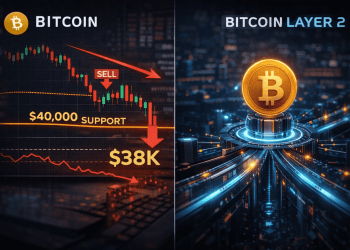
The cryptocurrency market is experiencing heightened anxiety, with high volatility and talks of a "crypto winter" fueling fears of a deep Bitcoin correction. While some investors are moving to stablecoins, others are looking at infrastructure projects built on Bitcoin. Despite being the foundational asset, Bitcoin's limitations—slow transactions, high fees, and lack of flexible smart contracts—hinder its use in DeFi and mass applications. This has increased interest in Layer 2 solutions. Infrastructure altcoins that aim to transform Bitcoin into a base for financial applications are gaining attention. Projects focusing on modular blockchains, virtual machines, and liquidity bridges are being viewed as potential leaders in the next cycle. Among them is Bitcoin Hyper and its token $HYPER, which positions itself as the first Bitcoin Layer 2 integrating the Solana Virtual Machine (SVM). This project aims to combine Bitcoin's security with Solana's high throughput, offering low latency and minimal fees. Bitcoin Hyper's architecture uses Bitcoin for finality and an SVM layer for real-time transactions and smart contracts. It claims to exceed Solana's performance with sub-cent fees, enabling DeFi, NFT platforms, and gaming applications using wrapped Bitcoin. The project has raised $29 million in its early sale, with on-chain data showing significant "smart money" interest. The $HYPER token features staking with high APY and governance rights. Bitcoin Hyper's goal is to address Bitcoin's core limitations, potentially making it a key infrastructure play that benefits from future Bitcoin growth.

bitcoinistHace 2 días 18:10

Crypto Winter is Near. Is Bitcoin Headed for a Deep Correction?

bitcoinistHace 2 días 18:10

Bitcoin's Dormant Capital Has Finally Awakened

Bitcoin, the largest and most secure cryptocurrency, has historically been underutilized, with over 60% of its supply dormant for more than a year and less than 1% engaged in DeFi. While other ecosystems like Ethereum and Solana evolved with smart contracts and vibrant economies, Bitcoin’s largely remained a passive asset due to its security-first architecture, limited scripting capabilities, slow upgrade processes, and cultural conservatism. Previous workarounds—wrapped BTC, federated systems, cross-chain bridges, and sidechains—introduced trust assumptions, custodial risks, and security vulnerabilities, failing to align with Bitcoin’s trust-minimized ethos. Recent breakthroughs are changing this. Innovations like BitVM enable Bitcoin to verify off-chain computations without executing them, allowing for Bitcoin-backed rollups, trust-minimized bridges, and programmable vaults. Upgrades like Taproot have expanded Bitcoin’s capabilities, enabling native assets (e.g., Taproot Assets for stablecoins) and more complex cryptographic structures. New models also allow Bitcoin to earn yield natively—through staking, restaking, and Lightning Network-based liquidity provision—without leaving self-custody. This emerging BTCFi ecosystem comprises infrastructure for secure execution environments, verifiable bridges, yield markets, and Bitcoin-native assets, all without compromising Bitcoin’s core security or self-custody principles. This marks the first time Bitcoin has a financial ecosystem capable of supporting its trillion-dollar market cap, potentially unlocking vast dormant capital and integrating it into a productive, decentralized economy.

深潮Hace 2 días 01:34

Bitcoin's Dormant Capital Has Finally Awakened

深潮Hace 2 días 01:34

We've Hoarded Trillions in Bitcoin, But Never Use It? That's Changing Now

A significant portion of Bitcoin's trillion-dollar market cap remains dormant, with 61% of coins not moving in over a year and only 0.8% used in DeFi. While other ecosystems like Ethereum and L2s thrive with active use cases, Bitcoin has largely functioned as a passive store of value due to architectural and cultural constraints—prioritizing security over programmability, resisting upgrades, and lacking native interoperability. Previous solutions like wrapped BTC, federated systems, and bridges attempted to unlock Bitcoin’s liquidity but introduced new risks like custodial trust, security vulnerabilities, and reliance on external validators, contradicting Bitcoin’s trust-minimized ethos. However, this is changing with recent breakthroughs. Innovations like BitVM enable Bitcoin to verify external computations without executing them, allowing for Bitcoin-secured rollups and trust-minimized bridges. Upgrades like Taproot facilitate native assets and programmable vaults. New systems now support Bitcoin staking, restaking, and Lightning Network-based yield without requiring custodial wrapping or bridging. This emerging BTCFi ecosystem—comprising infrastructure, asset, and protocol layers—finally allows Bitcoin to participate in a functional economy while preserving its security model and self-custody principles. This could unlock a portion of the dormant capital, significantly impacting the broader crypto landscape.

marsbitHace 2 días 02:55

We've Hoarded Trillions in Bitcoin, But Never Use It? That's Changing Now

marsbitHace 2 días 02:55

Institutions Are Taking Over the Crypto Market: Is This the End of Decentralization, or the Prelude to a New Cycle?

The cryptocurrency market is undergoing a structural shift in 2025, with institutional investors now accounting for approximately 95% of capital inflows, while retail participation has declined to 5–6%. According to Aishwary Gupta of Polygon Labs, this transition is driven by maturing infrastructure rather than market sentiment. Major asset managers like BlackRock, Apollo, and Hamilton Lane are allocating portions of their portfolios to digital assets via ETFs and on-chain tokenized products, leveraging public blockchains that meet traditional finance compliance standards. Key drivers include yield generation through tokenized treasuries and institutional staking, followed by efficiency gains from faster settlements, shared liquidity, and programmable assets. While retail investors retreated due to losses from meme coin cycles, Gupta believes they will return as more regulated and transparent products emerge. He argues that institutional involvement does not undermine decentralization; instead, it enhances legitimacy and fosters a hybrid financial ecosystem where DeFi, NFTs, and traditional assets coexist on public chains. Although increased compliance may limit some experimentation, it promotes more sustainable innovation. Looking ahead, institutional liquidity is expected to reduce market volatility and accelerate the growth of real-world asset tokenization and cross-chain interoperability infrastructure. This evolution signals crypto’s transition from a speculative asset to a core component of the global financial system.

比推Hace 8 hora(s)

Institutions Are Taking Over the Crypto Market: Is This the End of Decentralization, or the Prelude to a New Cycle?

比推Hace 8 hora(s)

Institutional Dominance in the Crypto Market: The End of Decentralization or the Dawn of a New Era?

In 2025, institutional investors now account for approximately 95% of cryptocurrency inflows, while retail participation has declined to just 5–6%, marking a structural shift in the market. According to Aishwary Gupta of Polygon Labs, this transition is driven by maturing infrastructure rather than sentiment. Major asset managers like BlackRock and Apollo are allocating portions of their portfolios to digital assets via ETFs and on-chain tokenized products, leveraging blockchain for yield generation and operational efficiency. Gupta highlights that institutional adoption is progressing in two phases: first, through yield-bearing products like tokenized treasuries and regulated staking, and second, via efficiency gains such as faster settlement and programmable assets. While retail interest waned due to meme coin losses, he expects gradual return as more transparent, regulated products emerge. Addressing concerns about centralization, Gupta argues that institutional involvement can enhance blockchain’s without compromising decentralization, provided infrastructure remains open. He envisions a future financial system where DeFi, NFTs, and traditional assets coexist on public chains. Although compliance may limit some experimentation, it fosters more sustainable innovation. Increased institutional participation is expected to reduce volatility and accelerate growth in areas like real-world asset tokenization and cross-chain interoperability. Ultimately, this trend signifies crypto’s evolution from a speculative asset to a core component of global finance.

marsbitHace 6 hora(s)

Institutional Dominance in the Crypto Market: The End of Decentralization or the Dawn of a New Era?

marsbitHace 6 hora(s)

Prize Pool 60,000 USDT: "TRON ECO Holiday Odyssey" Annual Ecological Exploration Gala Set to Begin

TRON ECO launches its "Holiday Odyssey" event, a large-scale year-end celebration from December 10, 2025, to January 18, 2026, featuring a total prize pool of 60,000 USDT. The event centers around five core ecosystem projects—SunPump, JUST, AINFT, BitTorrent, and WINkLink—each representing a "holiday planet" with unique interactive tasks. Participants can complete missions to earn rewards, including limited edition TRON ECO merchandise. Key activities include planet-specific tasks such as price prediction with WINkLink, engagement with BitTorrent’s decentralized storage, AI-themed meme creation via SunGenX, a Christmas blind box event with SunPump, and a DeFi strategy competition with JUST. A major "Star Challenge" from December 25 to January 8 offers a 10,000 USDT prize pool supported by sponsors including OSK, Biconomy, and PepeOnTron. Additional features include holiday-themed Twitter Spaces sessions and a joint campaign with HTX exchange boasting over 40,000 USDT in rewards. The event highlights TRON's growing ecosystem, which recently surpassed 250 million accounts and continues to expand across DeFi, AI, and storage sectors. Recent upgrades in AI infrastructure, tokenomics, and user experience tools like SunAgent aim to strengthen TRON’s position as a leading smart contract platform. "Holiday Odyssey" invites the global community to explore TRON’s ecosystem and participate in its end-of-year festivities.

深潮Hace 5 hora(s)

Prize Pool 60,000 USDT: "TRON ECO Holiday Odyssey" Annual Ecological Exploration Gala Set to Begin

深潮Hace 5 hora(s)

活动图片