Artículos Relacionados con Blockchain

El Centro de Noticias de HTX ofrece los artículos más recientes y un análisis profundo sobre "Blockchain", cubriendo tendencias del mercado, actualizaciones de proyectos, desarrollos tecnológicos y políticas regulatorias en la industria de cripto.

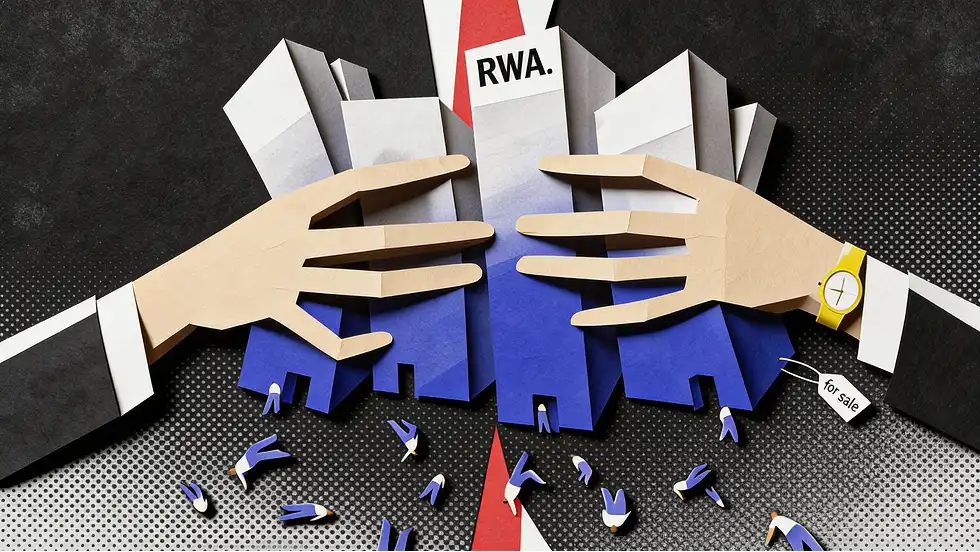
Markets Close on Weekends, Risks Never Stop: RWA is Rewriting the Market Clock

On February 28, 2026, a U.S.-Israel airstrike on Iran during a weekend exposed critical vulnerabilities in traditional financial markets. By targeting a weekend—when major exchanges like CME were closed—the attack deliberately suppressed immediate panic-driven selling in stocks and forex, granting authorities a 48-hour window to manage fallout. However, capital swiftly migrated to crypto markets, where gold tokens like XAUT and PAXG on Ethereum saw surging activity, enabling continuous price discovery and hedging absent in traditional systems. This event underscored how Real World Asset (RWA) tokenization is reshaping global financial infrastructure. Unlike traditional T+1/T+2 settlements and limited trading hours, RWAs offer 24/7 liquidity, atomic settlements, and real-time risk management. During the attack, crypto-based gold tokens effectively became price oracles, leading traditional markets upon Monday’s open and allowing arbitrageurs to capitalize on cross-market disparities. The incident highlights RWAs' core value: expanding liquidity across time and reducing systemic gaps. As geopolitical and macroeconomic risks grow, the ability to trade and hedge instantaneously via blockchain—without reliance on legacy clearinghouses or banking hours—becomes a critical advantage. This shift may accelerate institutional adoption of tokenized assets (e.g., bonds, commodities) and hybrid TradFi-DeFi strategies, ultimately redefining global market hours and liquidity access.

比推Hace 18 min(s)

Markets Close on Weekends, Risks Never Stop: RWA is Rewriting the Market Clock

比推Hace 18 min(s)

MegaETH Co-founder: The 48 Hours Escaping Dubai Made Me Rethink the Entire Crypto World

MegaETH co-founder shares a personal reflection after fleeing Dubai amid regional tensions, using the experience to critique the current state of the crypto industry. Witnessing missile defense systems in action provided a new perspective on technology’s dual role: it amplifies civilization’s trajectory, acting as a lever rather than a fundamental upgrade. In healthy cycles, tech enhances productivity and collaboration, as early internet forums did. In decline, it becomes a weapon of attention or control. The author argues crypto was meant to be a parallel system—a way to rearchitect finance with fewer borders, lower collaboration costs, and flexible exit mechanisms. Instead, the pursuit of legitimacy led to integration with traditional power structures, sidelining foundational ideals like undercollateralized loans, pension structures, and cross-border savings. Stablecoins, while functional, often just repackage sovereign currency rather than create independent monetary systems. The author calls for honesty: backend integration isn’t reinvention. The disappointment in crypto stems not from price volatility, but from misaligned priorities—choosing attention and valuation over structurally meaningful, albeit “boring,” innovations. The conclusion urges the community to reclaim its agency: build tools for real sovereignty, not amplification of insecurity. Avoid cowardice, sharpen the blade, and forge a parallel system through verification and conviction. QED.

marsbitHace 19 min(s)
MegaETH Co-founder: The 48 Hours Escaping Dubai Made Me Rethink the Entire Crypto World

marsbitHace 19 min(s)

War, Weekends, and Locked Liquidity: How RWA is Reshaping Global Trading Hours, as Seen from the Iran Airstrike Incident

This article analyzes the 2026 Iran airstrike as a pivotal moment demonstrating how Real World Asset (RWA) tokenization is reshaping global finance by eliminating traditional market hours. The attack, deliberately timed on a weekend when traditional markets (stocks, forex) were closed, created a 48-hour "trading vacuum." This exposed a critical vulnerability: traditional T+1/T+2 settlement systems and reliance on banking hours leave investors as "liquidity prisoners" during off-hours crises, unable to hedge and forced to absorb massive gap risk upon Monday's open. In stark contrast, tokenized gold assets like XAUT and PAXG on blockchain networks experienced a surge in trading, providing continuous, 24/7 price discovery and a crucial hedging mechanism. This event marked a historic shift: for the first time, pricing power for a major commodity like gold temporarily transferred to the digital asset market during a geopolitical crisis. The chain's "settlement equals清算" T+0 logic and atomic swaps allowed instant, global capital movement without counterparty risk. The conclusion is that RWA's core value is the temporal expansion of liquidity. This event will drive traditional institutions, quant funds, and market makers to integrate blockchain-based RWA trading pools to capture alpha and manage risk in a truly 24/365 global market, ultimately rendering obsolete the traditional financial infrastructure bound by working hours.

marsbitHace 1 hora(s)

War, Weekends, and Locked Liquidity: How RWA is Reshaping Global Trading Hours, as Seen from the Iran Airstrike Incident

marsbitHace 1 hora(s)

活动图片