Supreme Court 'Hits the Brakes', Trump 'Hits the Gas': Tariff Battle Reignites!

比推Publicado a 2026-02-21Actualizado a 2026-02-21

Resumen

The US Supreme Court ruled 6-3 on February 20 that the Trump administration lacked legal authority under the International Emergency Economic Powers Act (IEEPA) to impose broad tariffs. In response, former President Trump announced a new 10% global tariff using alternative legal authority, aiming to maintain similar tariff levels. The court’s decision challenges the legal foundation of Trump’s tariff framework and may lead to large-scale refunds and further legal battles. Market reactions were initially positive but tempered as policy uncertainty persisted. The ruling highlights ongoing tensions between presidential power and trade policy, with economic and political implications for U.S. trade strategy and revenue policy.

Lunar New Year’s fifth day, traditionally a day for Chinese to "welcome the God of Wealth," saw markets hoping for prosperity and smooth sailing. But in Washington, what arrived was a judicial "headwind." On February 20 local time, the U.S. Supreme Court ruled 6:3 that the Trump administration’s broad tariffs implemented under the International Emergency Economic Powers Act (IEEPA) lacked legal authorization. Within hours, the White House shifted course, with Trump announcing a 10% global tariff on top of existing duties. All current national security tariffs are fully effective immediately.

A tug-of-war over trade and presidential power has entered a new round.

Sources told The New York Times that when the Supreme Court decision was announced, Trump was meeting with governors at the White House. An assistant handed him a note, and he immediately called it "disappointing." Later, at a press conference, Trump angrily criticized the Supreme Court justices, calling them "fools and lackeys."
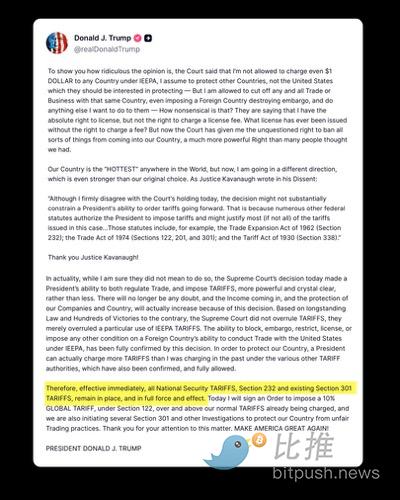
More Than Just Tariffs Halted

The Supreme Court’s majority opinion held that IEEPA does not grant the president unilateral authority to impose widespread tariffs on global goods. In other words, the president can declare an emergency but cannot use it to establish a常态化 tariff system.

The practical impact of this ruling is evident at least on two levels.

First, at the policy implementation level. The core tariff framework Trump relied on over the past year has been overturned. Although some tariffs based on national security provisions (Section 232) or 301 investigations may remain, the most efficient and broad-reaching tool has been judicially否决.

Second, at the fiscal level. Multiple institutions estimate that if the relevant tariffs are ultimately deemed invalid, the U.S. government could face massive refund pressures, potentially amounting to hundreds of billions of dollars. Bloomberg cited trade lawyers stating that the refund issue "will become the focus of the next round of litigation."

More importantly, policy certainty is declining. Businesses cannot predict the structure of trade costs for the next six months—precisely the variable global supply chains most fear.

Trump’s "Backup Button"
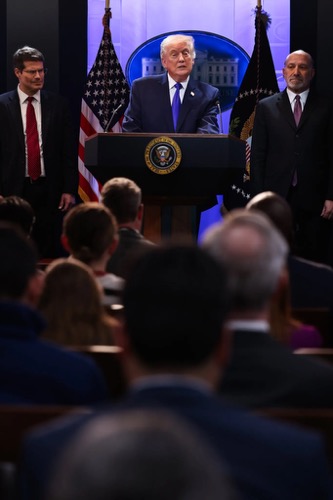
Facing the ruling, Trump’s response was very强硬. He stated at the White House, "There are many methods, many powers."

The White House plans to implement a 10% global temporary tariff within days under Section 122, lasting 150 days. If Congress does not extend it, the measure automatically expires. This clause has rarely been used historically and was originally designed as a short-term tool to balance trade deficits.

Simultaneously, Trump has not ruled out pushing Congress to legislate, granting the president clearer tariff authority. Some Republican lawmakers have publicly expressed support. However, given the narrow seat margins in both chambers of Congress, whether it can顺利推进 remains uncertain.

A Republican strategist told media that tariffs are the "cornerstone" of Trump’s economic agenda, and "he won’t give up easily."

Yale University’s Budget Lab has been simulating the impact of tariff policies during Trump’s potential term and released a new report based on the president’s latest remarks.

According to the Budget Lab’s estimates, before today’s Supreme Court ruling, the overall effective tariff rate (the average tax paid on all imported goods) was 16.9%. If the tariffs rejected by the Supreme Court become无效 and are not replaced, this number would drop to 9.1%.

But if Trump follows through on his plan to levy a 10% tariff on all goods using different legal grounds, and if he can maintain this policy, the Budget Lab estimates the effective tariff rate would eventually reach 15.4%—almost returning to the level before the day began.

Market Reaction Muted

Market volatility was limited that day. The three major U.S. stock indices rose, as investors believed corporate cost pressures might阶段性下降. In the S&P 500, manufacturing and retail sectors reliant on imported components saw relatively明显的 gains. The crypto market experienced a short-term boost. Bitcoin briefly approached $68,000, with some altcoins rising over 5%. Analysts pointed out that reduced expectations of trade friction boosted risk appetite.

However, as Trump announced the new tariff plan, the rally became more克制. The market quickly realized this wasn’t the end of policies but a路径重组.

Dual Economic and Political Pressures

The complexity of the tariff issue lies in its dual nature as both an economic tool and a political topic.
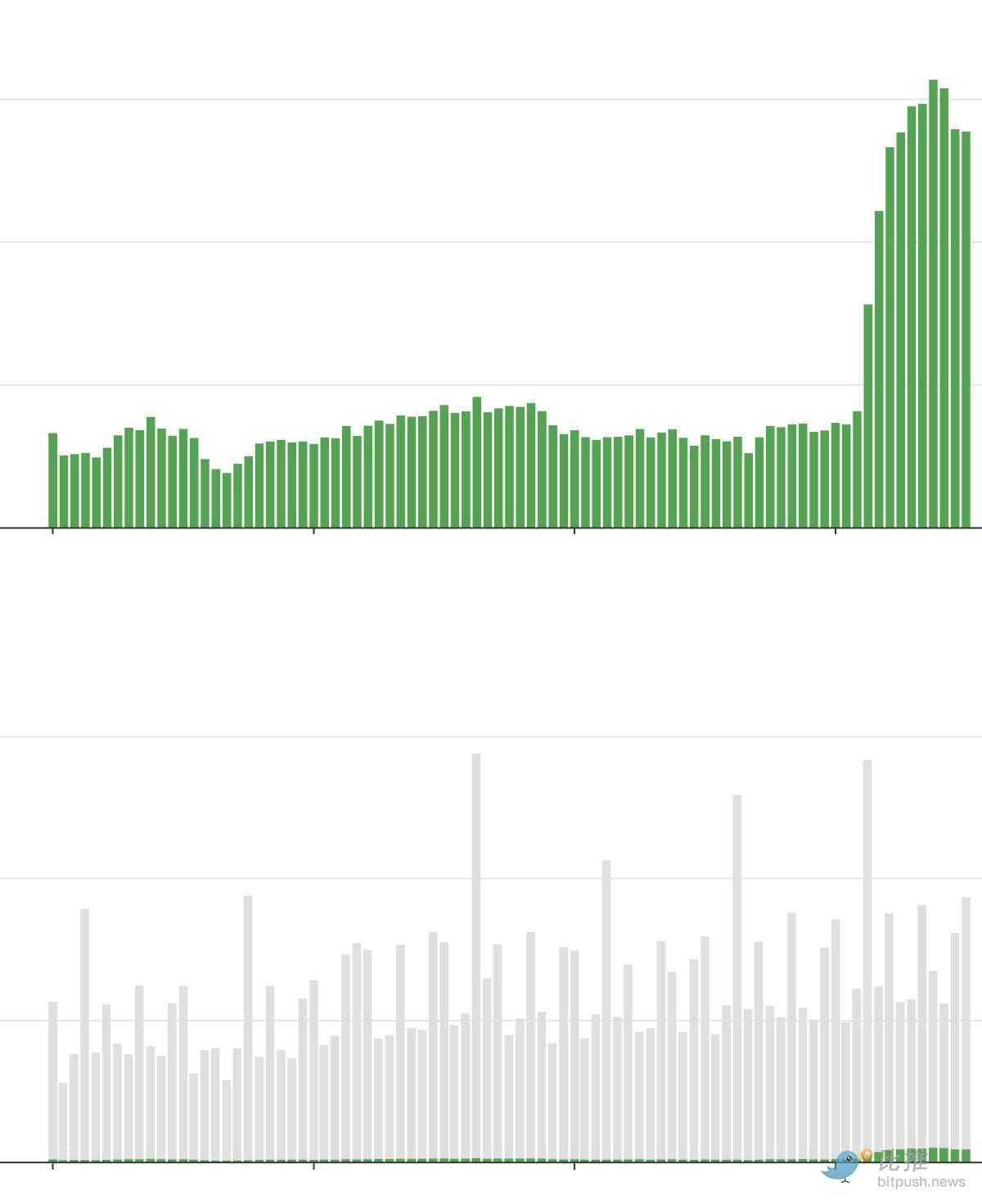
On the economic front, tariffs are generally seen as policies that raise import costs and potentially push up prices. Some Republicans私下 believe the drag on economic growth from tariffs cannot be ignored, especially with midterm elections approaching.

John Iselin, Deputy Director of Economic Analysis at Yale's Budget Lab, stated that Trump’s tariff policies have so far not achieved their goals of revitalizing U.S. manufacturing or reducing the trade deficit, but even economists who generally oppose import taxes acknowledge that tariffs have successfully increased fiscal revenue.

John said: "Frankly, compared to other viable revenue-raising options, tariffs are a more regressive way to raise revenue; there is a vast body of economic literature demonstrating the negative economic impacts of tariffs. But at the same time, we truly need significant fiscal revenue in the coming decades."

On the political front, Democrats have made "rising living costs" a primary attack point. A Democratic strategist in Pennsylvania told NBC that the price pressures from tariffs "have already had a real impact."

Meanwhile, the Trump camp emphasizes trade balance and manufacturing回流, viewing tariffs as a necessary means.

The core of this debate is not just trade itself, but the boundaries of U.S. presidential power during economic emergencies.

What Happens Next?

In the coming weeks, three issues warrant attention:

First, whether the newly announced 10% temporary tariff is implemented as scheduled and whether its scope expands;

Second, whether the refund issue enters judicial proceedings and the scale of its fiscal impact;

Third, whether Congress attempts to legislate to grant clearer tariff authority.

In the short term, markets may oscillate between "risk alleviation" and "policy volatility."

In the medium term, business decision-makers may delay some investment and expansion plans, awaiting policy clarity.

In the long term, this ruling could reshape the legal framework of U.S. trade policy.

A former federal trade official told Bloomberg: "What truly matters is not this particular tariff, but what the president can do in the future."

Author: Seed.eth


Twitter:https://twitter.com/BitpushNewsCN

Bitpush TG Discussion Group:https://t.me/BitPushCommunity

Bitpush TG Subscription: https://t.me/bitpush

Original link:https://www.bitpush.news/articles/7613431

Preguntas relacionadas

QWhat was the U.S. Supreme Court's ruling regarding the tariffs imposed by the Trump administration?

AThe U.S. Supreme Court ruled 6:3 that the Trump administration's broad tariffs implemented under the International Emergency Economic Powers Act (IEEPA) lacked legal authorization.

QHow did President Trump respond to the Supreme Court's decision on tariffs?

APresident Trump responded by announcing a new 10% global tariff on all imports, to be implemented using a different legal authority, and he criticized the Supreme Court justices, calling them 'fools and lackeys'.

QWhat are the potential economic impacts of the Supreme Court's ruling on tariffs?

AThe ruling could lead to large-scale refunds potentially totaling hundreds of billions of dollars, and it creates policy uncertainty for businesses regarding future trade costs, which could disrupt global supply chains.

QWhat alternative legal mechanism is Trump planning to use to implement new tariffs?

ATrump plans to use Section 122 to implement a 10% global temporary tariff for 150 days, a provision rarely used historically that was designed as a short-term tool to balance trade deficits.

QHow did financial markets initially react to the Supreme Court's tariff decision?

AFinancial markets showed limited volatility initially, with U.S. stock indices rising as investors anticipated reduced corporate cost pressures. Cryptocurrencies like Bitcoin also saw short-term gains approaching $68,000, though the rally became more restrained after Trump announced new tariff plans.

Lecturas Relacionadas

While Everyone Says NFTs Are 'Dead', the Art World is Quietly Completing an 'On-Chain Renaissance'

While many declare NFTs "dead" and dismiss them as overhyped JPEGs, a significant institutional shift is quietly underway within the art world, signaling a "on-chain renaissance." Traditional art, a ~$60B market, is stagnant, aging, and highly concentrated, facing a massive $80 trillion generational wealth transfer to digital-native heirs. Contrary to the narrative, leading institutions have been building infrastructure for digital and on-chain art. Major museums like MoMA, the Centre Pompidou, LACMA, and the Guggenheim have acquired seminal NFT works into their permanent collections. Top galleries like Pace, Gagosian, and Hauser & Wirth have launched NFT platforms or accepted crypto, with Pace giving a solo show to generative artist Tyler Hobbs. Auction houses Sotheby's and Christie's operate dedicated on-chain sales platforms. This follows a historical pattern where every major art movement—from Impressionism to Pop Art—was initially mocked before institutional acceptance. NFT art, only 7-12 years old, is progressing faster. Auction data shows resilience, with works by Beeple ($69.3M), Pak (~$91M), and Dmitri Cherniak ($6.2M in a bear market) achieving high prices. A new cohort of collectors (e.g., FlamingoDAO, PleasrDAO) and "Medici" figures like Cozomo de' Medici are accumulating foundational works. The core argument is that NFTs represent not a speculative asset class but a new ownership system for digital culture, solving provenance issues through immutable, timestamped blockchain records. The medium has survived the speculative crash and is being institutionalized. The bet isn't on short-term price rallies but on the long-term cultural significance of on-chain art as the defining medium for the next generation of collectors.

marsbitHace 31 min(s)

While Everyone Says NFTs Are 'Dead', the Art World is Quietly Completing an 'On-Chain Renaissance'

marsbitHace 31 min(s)

Jensen Huang's Message to Graduates: AI Won't Replace You, But Those Who Excel at Using AI Will

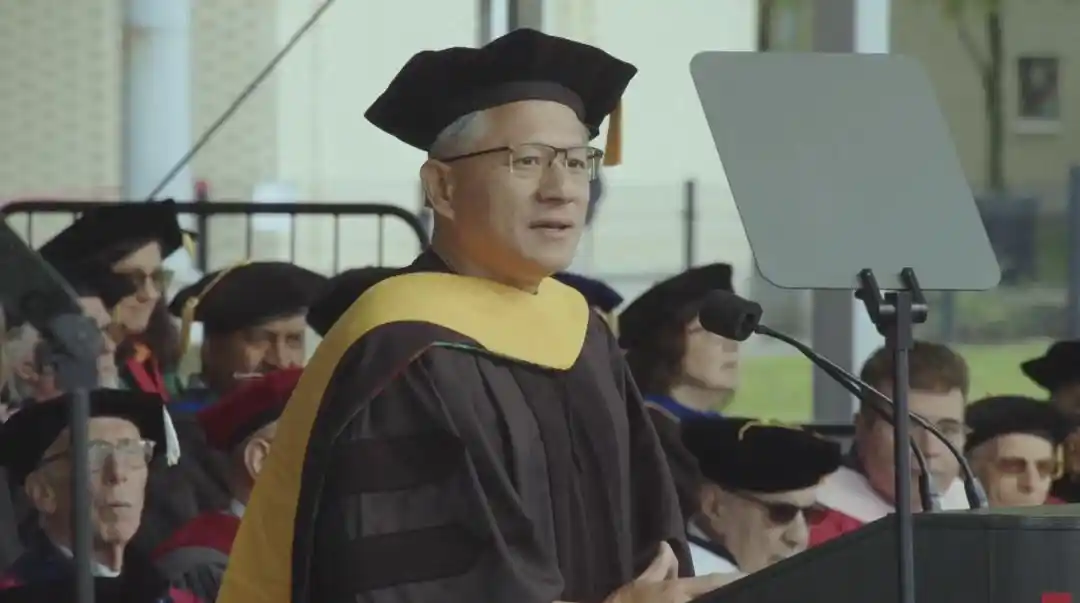
NVIDIA CEO Jensen Huang, addressing 2026 graduates at Carnegie Mellon University, emphasized that AI will not replace people, but those who leverage AI effectively will have an advantage. He delivered this message during a commencement speech where he also received an honorary doctorate, his seventh. Huang reflected on his personal journey as an immigrant, starting from humble beginnings as a dishwasher to co-founding NVIDIA. He shared early struggles, including a near-bankruptcy moment saved by honesty with Sega, highlighting resilience and learning from failure. He positioned the current era as the dawn of the AI revolution, a shift as significant as past computing waves. Huang explained that AI is redefining computing from human-written software to machine learning, creating a new industry focused on manufacturing intelligence. While acknowledging fears about job displacement, he argued that AI amplifies human capabilities rather than replaces human purpose. Tasks may be automated, but the core meaning of professions remains. Huang urged graduates to embrace this transformative time with responsibility and optimism. He stated that AI should democratize technology, bridging gaps and enabling broader participation in creation and problem-solving. His final advice was to actively engage with the opportunity: "So run, don’t walk," and to put their hearts into their work.

marsbitHace 38 min(s)

Jensen Huang's Message to Graduates: AI Won't Replace You, But Those Who Excel at Using AI Will

marsbitHace 38 min(s)

Three Scenarios for BTC's Future Direction and a Duel Between Two Strong Forces | Special Invited Analysis

**Title: Three Scenarios for BTC's Future Trajectory and a Key Duel | Invited Analysis** The market remains at a critical juncture. Over the past week, Bitcoin (BTC) consolidated broadly between $79,500 and $80,600, validating previous technical analysis. The current focus is on whether this marks the start of a new uptrend or a pause within a larger correction. **BTC Multi-Cycle Analysis & Three Possible Scenarios** BTC's daily chart structure, following its peak at $126,200 in October 2025, presents three primary technical scenarios based on Elliott Wave theory: 1. **Bullish Scenario (End of Correction):** The corrective A-B-C wave from $126,200 ended at the $60,000 low in February 2026. The current price action is the start of a major Wave I uptrend. A subsequent Wave II pullback would not break below $60,000. 2. **Bearish Scenario 1 (Complex Correction):** The correction is unfolding as an A-B-C-D-E pattern. The current move from $60,000 is a D-wave rally. After its completion, a final E-wave decline could potentially breach the $60,000 level. 3. **Bearish Scenario 2 (Larger Correction):** The entire move down from $126,200 to $60,000 was a large A-wave. The current rally is a B-wave correction within a larger A-B-C structure, to be followed by a C-wave decline below $60,000. *Analysis suggests Scenario 2 is less probable due to time disproportions between waves. The battle is effectively between the Bullish Scenario (1) and Bearish Scenario (3).* **Key BTC Levels & Weekly Strategy** On the 4-hour chart, BTC trades above a crucial consolidation zone ("Central Pivot C"). * **Key Resistance:** $83,500-$84,500; $89,000-$90,500. * **Key Support:** $78,500-$79,500 (pivot upper bound); $73,500-$75,000; $69,500-$70,500. **Weekly Outlook:** The market direction hinges on BTC's ability to hold above or break below the $78,500-$79,500 support zone. * **Mid-term Strategy:** Neutral/Wait-and-see stance due to unclear direction. * **Short-term Tactics:** Two contingency plans using 30% max capital: * **Plan A (Bullish):** Look for long entries if price holds above $78,500-$79,500 with confirming signals. Initial stop-loss below $78,500. * **Plan B (Bearish):** Consider short positions if price breaks below $73,500-$75,000 with confirming signals. Initial stop-loss above $76,500. **HYPE Analysis & Strategy** HYPE's daily chart shows a seven-segment structure from its January low of $20.46, forming a "rising pivot" zone. * **Key Level to Watch:** $45.76 (previous high). A break above would confirm the bullish structure remains intact. * **Short-term Strategy:** Focus on pivot zone boundaries ($38.41 upper, $34.44 lower). * **Long:** Consider on support near $38.41 with bullish confirmation signals. * **Short:** Consider on a break below $34.44 with bearish confirmation signals. * Position size must be below 30% with strict stop-loss discipline. **Risk Management Reminder:** Always set an initial stop-loss upon entry. Move stop-loss to breakeven at +1% profit, then trail it upwards to lock in profits dynamically. All views are based on technical analysis for informational purposes only and do not constitute investment advice. The market is inherently risky.

Odaily星球日报Hace 46 min(s)

Three Scenarios for BTC's Future Direction and a Duel Between Two Strong Forces | Special Invited Analysis

Odaily星球日报Hace 46 min(s)

Sequoia Interview with Hassabis: Information is the Essence of the Universe, AI Will Open Up Entirely New Scientific Branches

Demis Hassabis, co-founder and CEO of Google DeepMind and Nobel laureate, discusses the path to AGI and its profound implications in a Sequoia Capital interview. He outlines his lifelong dedication to AI, tracing his journey from game development (e.g., *Theme Park*)—a perfect AI testing ground—to neuroscience and finally founding DeepMind in 2009. He emphasizes the critical lesson of being "5 years, not 50 years, ahead of time" for successful entrepreneurship. Hassabis reiterates DeepMind's two-step mission: first, solve intelligence by building AGI; second, use AGI to tackle other complex problems. He highlights the transformative potential of "AI for Science," particularly in biology where tools like AlphaFold have revolutionized protein folding. He envisions AI-powered simulations drastically shortening drug discovery from years to weeks and enabling personalized medicine. Furthermore, he predicts AI will spawn new scientific disciplines, such as an engineering science for understanding complex AI systems (mechanistic interpretability) and novel fields enabled by high-fidelity simulators for complex systems like economics. He posits a fundamental worldview where information, not just matter or energy, is the essence of the universe, making AI's information-processing core uniquely suited to understanding reality. He defends classical Turing machines as potentially sufficient for modeling complex phenomena, including quantum systems, as demonstrated by AlphaFold. On consciousness, Hassabis suggests first building AGI as a powerful tool, then using it to explore deep philosophical questions. He believes components like self-awareness and temporal continuity are necessary for consciousness but that defining it fully remains an open challenge. He predicts AGI could arrive around 2030 and, once achieved, would be used to probe the deepest questions of science and reality, much as envisioned in David Deutsch's *The Fabric of Reality*.

链捕手Hace 1 hora(s)

Sequoia Interview with Hassabis: Information is the Essence of the Universe, AI Will Open Up Entirely New Scientific Branches

链捕手Hace 1 hora(s)

Trading

Spot
Futuros

Artículos destacados

Cómo comprar GAS

¡Bienvenido a HTX.com! Hemos hecho que comprar GAS (GAS) sea simple y conveniente. Sigue nuestra guía paso a paso para iniciar tu viaje de criptos.Paso 1: crea tu cuenta HTXUtiliza tu correo electrónico o número de teléfono para registrarte y obtener una cuenta gratuita en HTX. Experimenta un proceso de registro sin complicaciones y desbloquea todas las funciones.Obtener mi cuentaPaso 2: ve a Comprar cripto y elige tu método de pagoTarjeta de crédito/débito: usa tu Visa o Mastercard para comprar GAS (GAS) al instante.Saldo: utiliza fondos del saldo de tu cuenta HTX para tradear sin problemas.Terceros: hemos agregado métodos de pago populares como Google Pay y Apple Pay para mejorar la comodidad.P2P: tradear directamente con otros usuarios en HTX.Over-the-Counter (OTC): ofrecemos servicios personalizados y tipos de cambio competitivos para los traders.Paso 3: guarda tu GAS (GAS)Después de comprar tu GAS (GAS), guárdalo en tu cuenta HTX. Alternativamente, puedes enviarlo a otro lugar mediante transferencia blockchain o utilizarlo para tradear otras criptomonedas.Paso 4: tradear GAS (GAS)Tradear fácilmente con GAS (GAS) en HTX's mercado spot. Simplemente accede a tu cuenta, selecciona tu par de trading, ejecuta tus trades y monitorea en tiempo real. Ofrecemos una experiencia fácil de usar tanto para principiantes como para traders experimentados.

295 Vistas totalesPublicado en 2024.12.12Actualizado en 2025.03.21

Cómo comprar GAS

Discusiones

Bienvenido a la comunidad de HTX. Aquí puedes mantenerte informado sobre los últimos desarrollos de la plataforma y acceder a análisis profesionales del mercado. A continuación se presentan las opiniones de los usuarios sobre el precio de GAS (GAS).

活动图片