Stop Using Gold as a Reference: Bitcoin Is Not a Safe-Haven Asset

marsbitPublicado a 2026-02-16Actualizado a 2026-02-16

Resumen

In the ongoing debate about Bitcoin's role as a "digital gold" or safe-haven asset, this article argues that Bitcoin is not a reliable hedge like gold. Through statistical analysis, including correlation and cointegration tests (Engle-Granger and ADF), the data shows no robust long-term relationship or mean-reverting behavior between Bitcoin and gold. Their occasional parallel movements are coincidental rather than structurally linked. Bitcoin exhibits extreme volatility (over 50% annualized) and behaves as a high-risk speculative asset, not a stable store of value. The article dismisses narratives about capital rotation from metals to crypto as post-hoc explanations without empirical basis. Instead, it suggests that Bitcoin should be treated as a unique and evolving market, influenced more by internal factors like derivatives positioning, funding rates, open interest, and sentiment extremes than by external analogies. True market lows often coincide with extreme fear, derivative liquidations, and widespread pessimism—key indicators to watch rather than relying on cross-asset comparisons.

Editor's Note: As Bitcoin underperforms while gold and U.S. stocks repeatedly hit new highs, the narrative that "funds are rotating from precious metals to crypto assets" has once again gained popularity in the market. This article does not follow this intuitive judgment to provide trading conclusions but instead returns to the data itself to systematically examine whether there is a verifiable long-term relationship between Bitcoin and gold.

Through correlation and cointegration analysis, it can be seen that Bitcoin and gold do not have a robust mean reversion or a structural "see-saw" relationship. The so-called rotation is more of an ex-post explanation rather than a repeatable, verifiable market mechanism. Bitcoin is neither a safe-haven metal nor a stock index; it is an independent market with extremely high volatility and an evolving structure.

The article further points out that to judge Bitcoin's bottom, rather than applying analogies from other assets, it is better to focus on the factors that truly determine market trends, such as positioning, derivatives structure, and sentiment clearing. Historical experience shows that most true bottoms are formed when almost everyone has given up.

Below is the original text:

The crypto market is not exactly hot right now. While stock and metal prices continue to hit new all-time highs, crypto assets have been on the "pain train" since last October.

Recently, timelines have been flooded with claims like: "Funds are rotating from precious metals to crypto assets, and it's about to happen any time now." Unfortunately, the people making these claims are often industry-famous "talkers," whose only consistently profitable PnL comes from the engagement revenue they earn monthly on platform X.

I want to take a moment to analyze whether this so-called "rotation from precious metals to crypto" has any substantive basis (spoiler alert: it doesn't), and then share some key turning points in crypto market history and how you can identify these moments.

The Relationship Between Bitcoin and Gold

First, an obvious problem: to look for a relationship between gold peaking and Bitcoin's performance, the premise is that gold itself must frequently "peak." But in reality, over the past decade, there haven't been many true tops in gold.
Getting hyped up is fun, but when throwing out opinions on the internet, it's best to have data to back them up, so you don't sound like a complete fool. In the past decade, gold has only experienced three relatively significant pullbacks: in 2018, 2020, and 2022. That is, only three data points. This alone is enough for me to stop further research; but to finish this article, let's dig a little deeper.
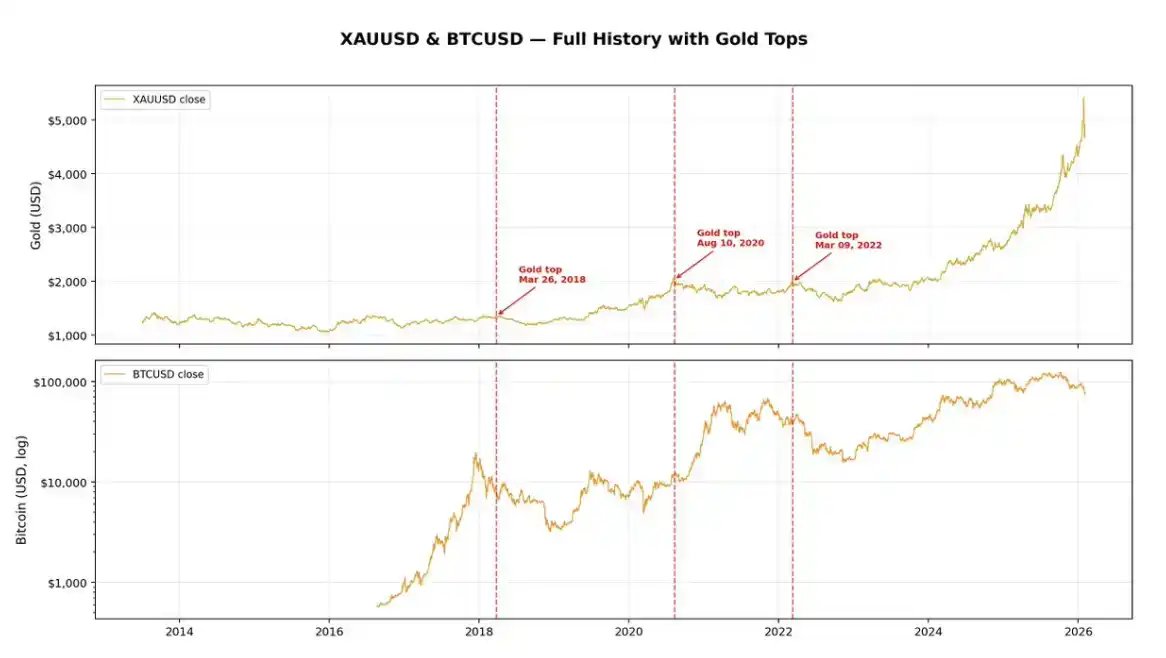
If you look at the chart above, you'll see that two of the three阶段性 highs in gold actually occurred before Bitcoin's downtrend, in 2018 and 2022. The only time Bitcoin strengthened after a gold pullback was during the typical "risk-on" frenzy of 2020.
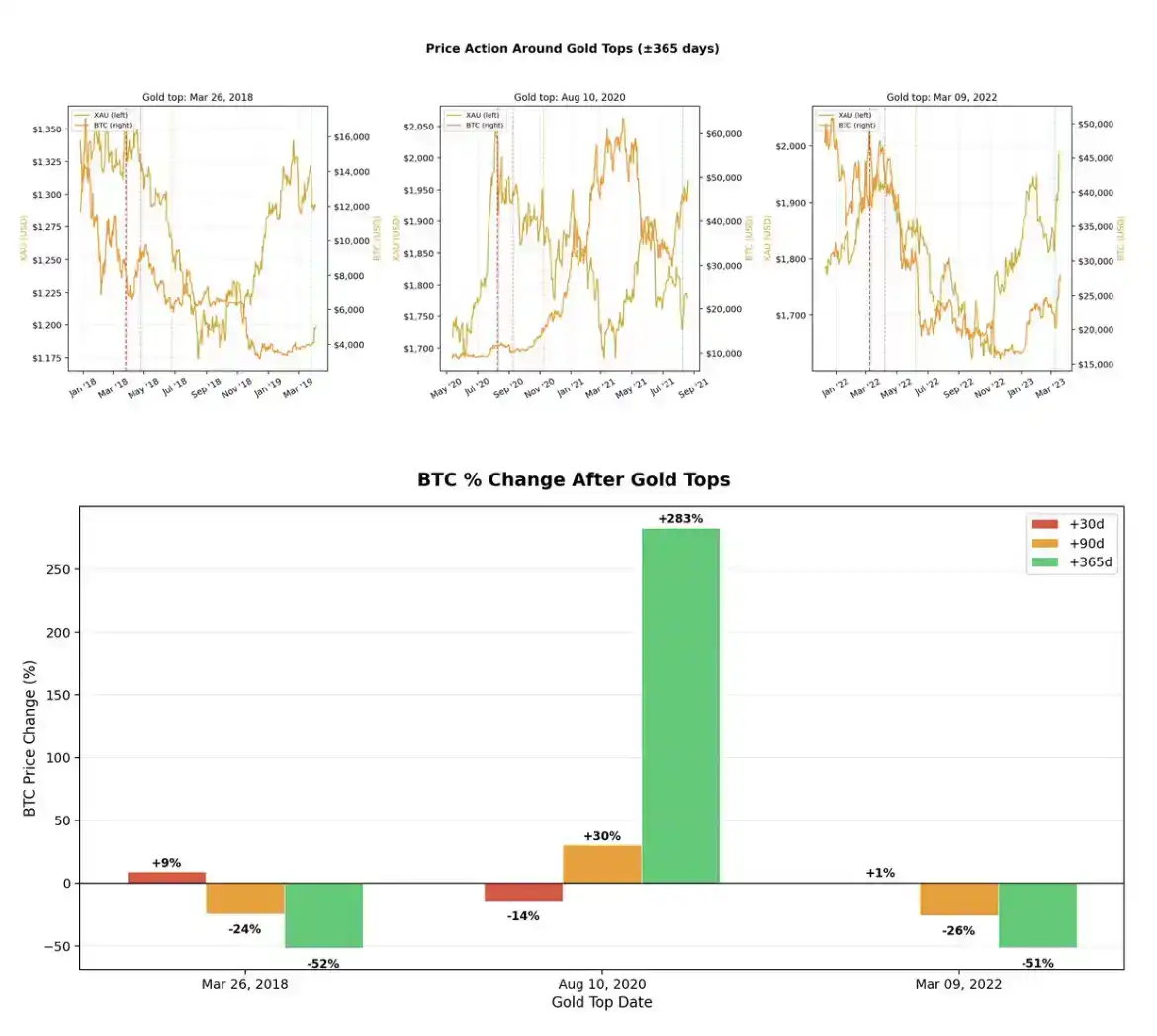
Over the past approximately 10 years of data, the overall correlation coefficient between Bitcoin and gold is close to 0.8, which is not surprising—because in the long run, both markets have been rising. But correlation doesn't answer the question you really care about.

If you want to determine whether there is a "see-saw, strength rotation, eventual reversion" relationship between two assets, looking at correlation is not enough; you need to look at cointegration.

Cointegration

Correlation measures whether two assets "rise and fall together" in daily fluctuations.
Cointegration asks another question: do these two assets maintain a stable relationship over the long term, such that any deviation is pulled back?

Think of it like two drunk people walking home together:

They may each stagger and wander chaotically (non-stationary), but if the two are tied together with a rope, they can't stray too far from each other. That "rope" is the cointegration relationship.

If the narrative of "funds rotating from gold to crypto assets" has any substance, you would at least need to see a cointegration relationship between Bitcoin and gold—that is, when gold surges and Bitcoin significantly underperforms, there should be some real force in the market that pulls them back onto the same long-term track.
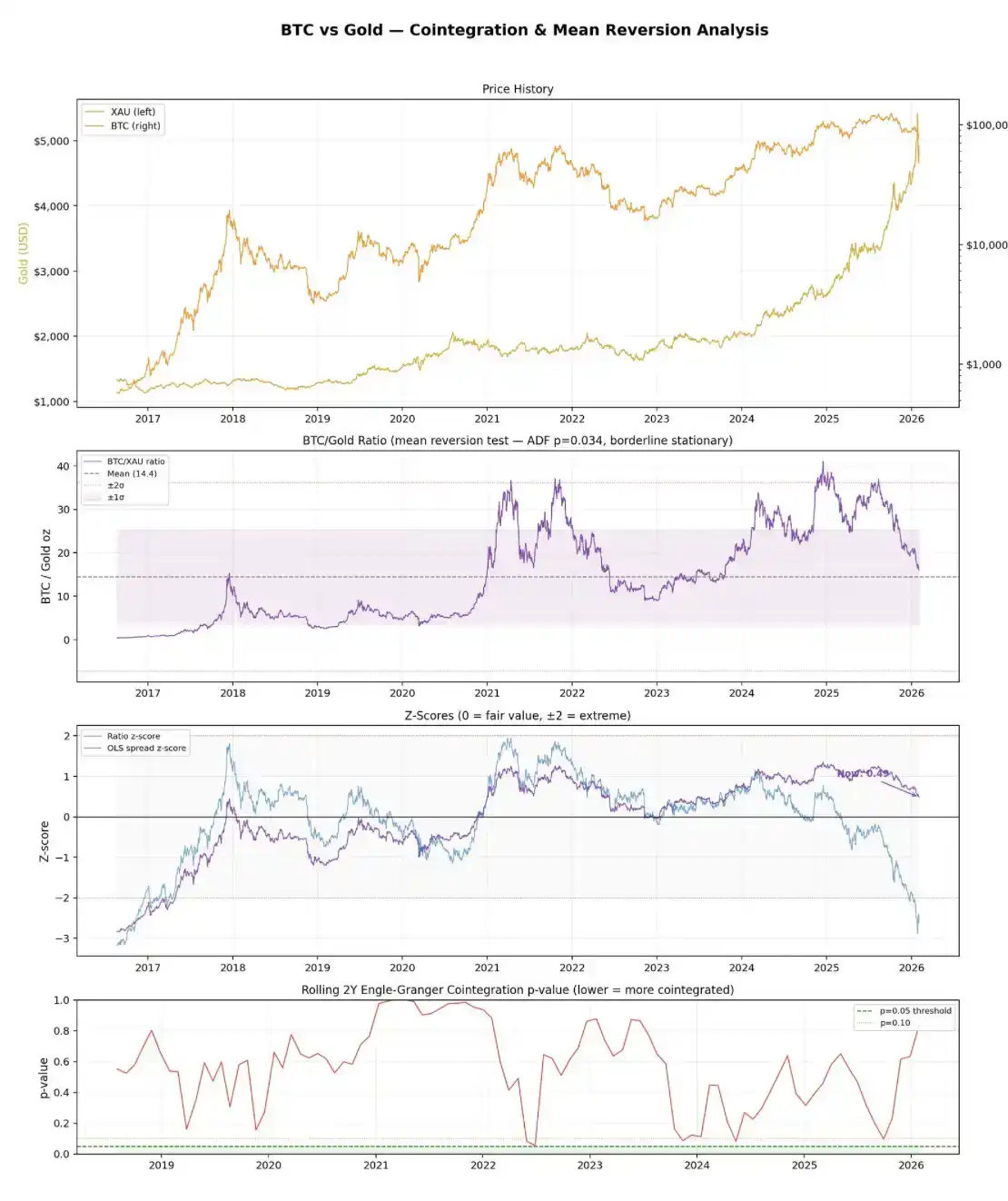
Combined with the chart above, the real message from the data is this: The Engle–Granger cointegration test did not find any cointegration relationship.

The p-value for the full sample is 0.44, well above the usual 0.05 significance threshold. Looking further at rolling two-year windows, none of the 31 intervals showed cointegration at the 5% significance level. At the same time, the spread residuals themselves are non-stationary.

The simpler BTC / gold ratio looks slightly more "optimistic," but not by much. An ADF test on this ratio is only marginally stationary (p = 0.034), meaning it may have very weak mean reversion characteristics. But the problem is that its half-life is about 216 days, or nearly 7 months—absurdly slow, almost completely淹没 in noise.

From current levels, Bitcoin's price is equivalent to about 16 ounces of gold, about 11% higher than the historical average of 14.4. The corresponding z-score is -2.62, and from a historical perspective, Bitcoin seems "relatively cheap" compared to gold.

But the key here: this reading is mainly driven by gold's recent parabolic rise, not because there is some reliable mean reversion relationship that will pull them back together.

In fact, there is no robust cointegration relationship. They are fundamentally two completely different types of assets: gold is a mature safe-haven asset; Bitcoin is a high-volatility risk asset that just happens to show an upward trend over the same period.

If you have no idea what any of that meant, here's a super brief statistics crash course:

The Engle–Granger test is the standard method for judging cointegration. It first performs a regression on the two assets, then tests whether the regression residuals (i.e., the "spread" between them) are stationary—whether they fluctuate around a stable mean rather than drifting infinitely. If the residuals are stationary, it means the two assets are cointegrated.

The ADF test (Augmented Dickey-Fuller) is used to test whether a time series is stationary. It essentially tests for the presence of a "unit root,"通俗点说, whether this series will trend发散 indefinitely or revert to the mean.
A p-value below 0.05 means you can reject the "unit root" hypothesis and consider the series stationary, i.e., mean-reverting.

Half-life describes how quickly mean reversion occurs. If a spread has a half-life of 30 days, it means that after being pulled apart, it takes about a month to修复 half of the deviation.
Short half-life = tradable;
Very long half-life = basically useless except for "holding long and praying."

Ultimately, I've always felt that trying to force Bitcoin into a relationship with any traditional financial asset is absurd in itself. Most of the time, people just use this comparison to迎合 the narrative that best suits their current position: today Bitcoin is "digital gold," tomorrow it's "leveraged Nasdaq."

In comparison, the correlation with the stock market is much more real. Over the past five years, Bitcoin's tops and bottoms have been highly synchronized with the S&P 500 (SPX)—until this phase: SPX is still稳稳地 near all-time highs, while Bitcoin has already pulled back 40% from its peak.
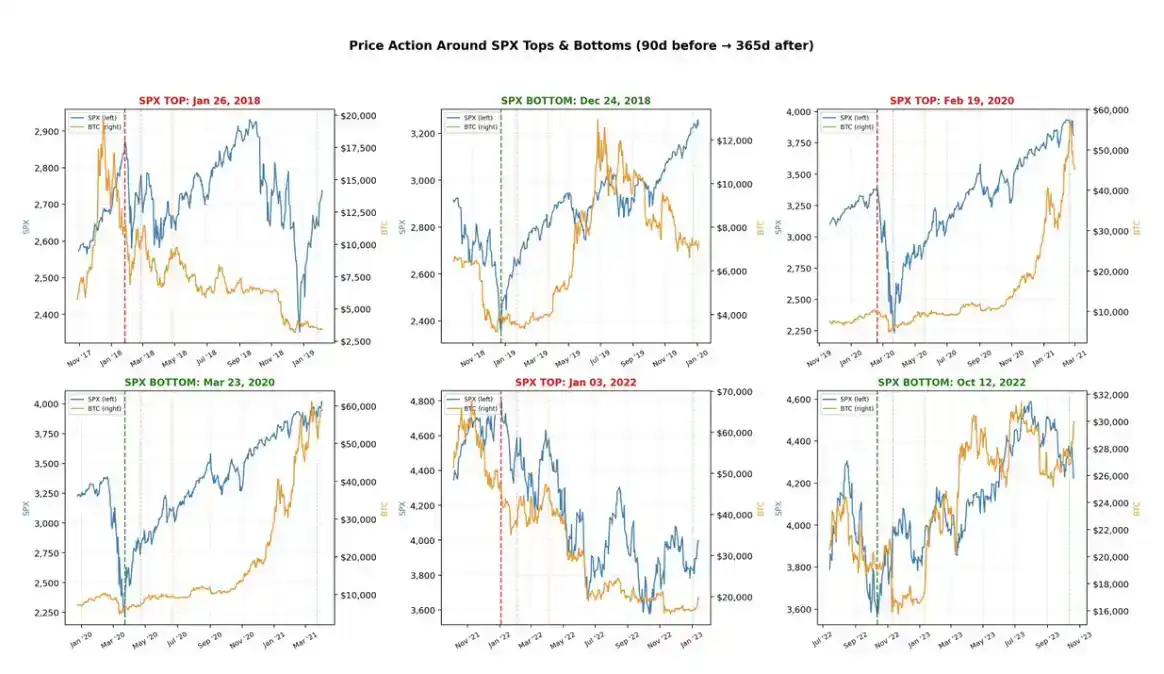
Because of this, you should view Bitcoin as an independent entity. It is not a metal—no one considers an asset with an annualized volatility exceeding 50% a safe-haven asset (for comparison, gold's annualized volatility is around 15%, and even that is considered relatively high volatility among "store of value" assets).
It is also not a stock index—Bitcoin has no constituent stocks; it is essentially just a piece of code.

Over the years, Bitcoin has been constantly套上 various narratives: payment tool, store of value, digital gold, global reserve asset, etc.

These all sound great, but the reality is that this is still a very young market, and it's hard to say whether it has clear, stable practical uses beyond being a "speculative asset." Ultimately, there's nothing wrong with treating it as a speculative asset; the key is to be清醒 and realistic about it.

The Bottom

Stably and reliably catching Bitcoin's bottom is extremely difficult—of course, it's not easy in any market, but Bitcoin's problem is that it has changed so much over the years that historical patterns themselves are becoming less and less relevant.

Ten years ago, the market structure of gold and the S&P 500 (SPX) hadn't changed much compared to now;
But in 2015, one of the main uses of holding Bitcoin was still to buy heroin online.

This has obviously changed dramatically. Today's market participants are much more "legitimate," especially after the significant growth in open interest of CME Bitcoin futures and options in 2023, and the launch of Bitcoin ETFs in 2024, which brought institutional funds正式 and大规模 into this market.
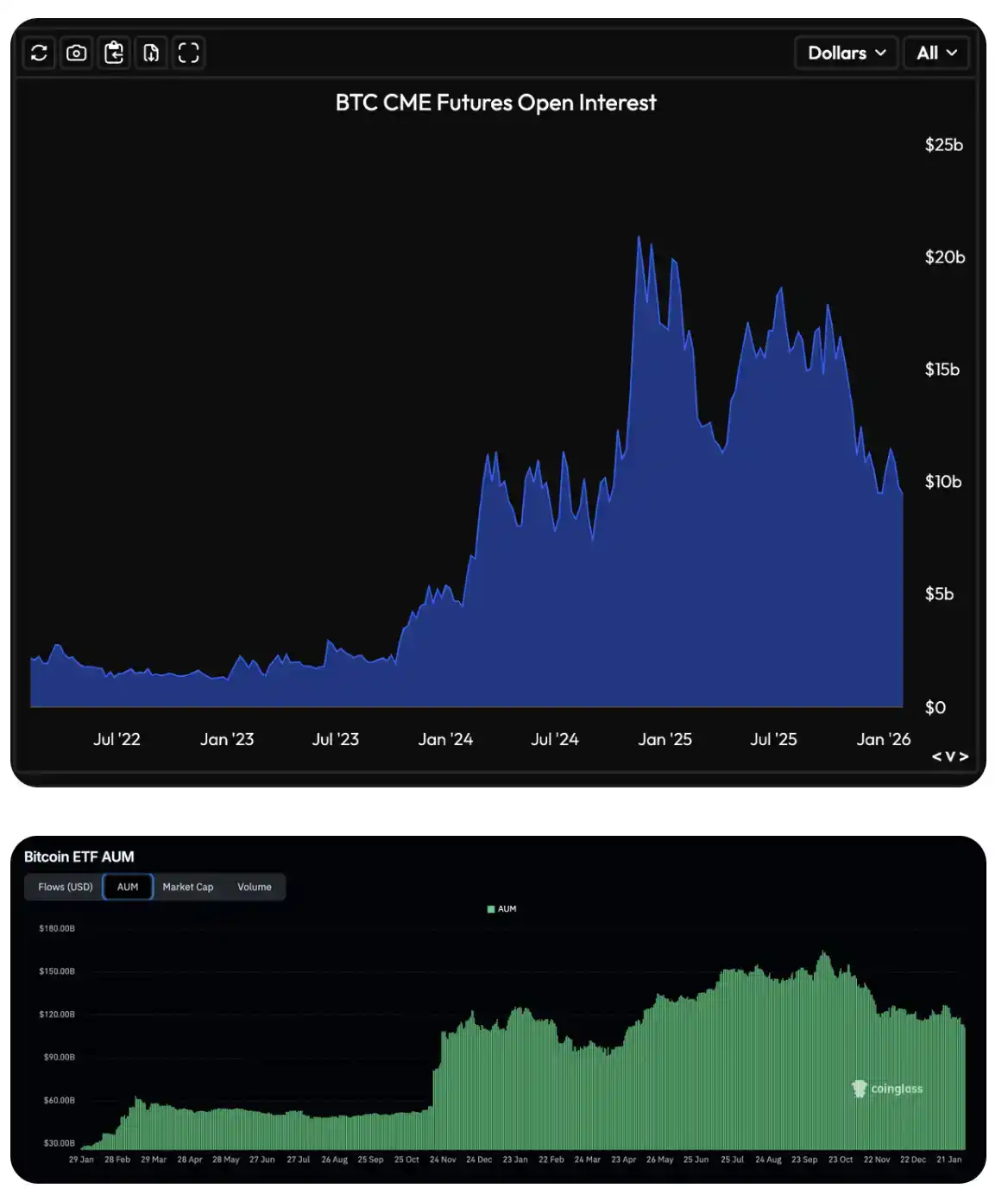
Bitcoin is a highly volatile market. If there's one conclusion we can state with relative confidence, it's this: market bottoms are accompanied by剧烈过度反应 and "stampede-like clearing" across various derivatives.

This signal is reflected both in crypto-native indicators, such as extreme fluctuations in open interest and funding rates; and in more institutionalized indicators, such as异常 changes in options skew and ETF fund flows.
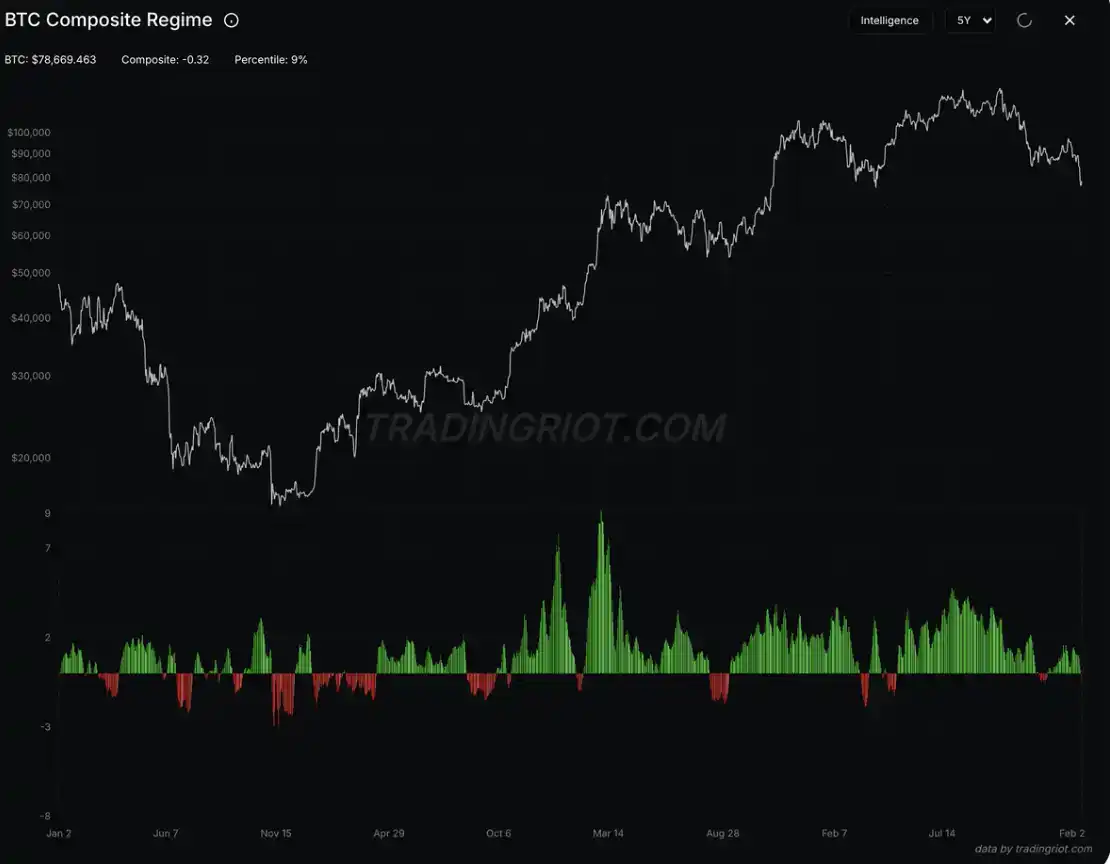
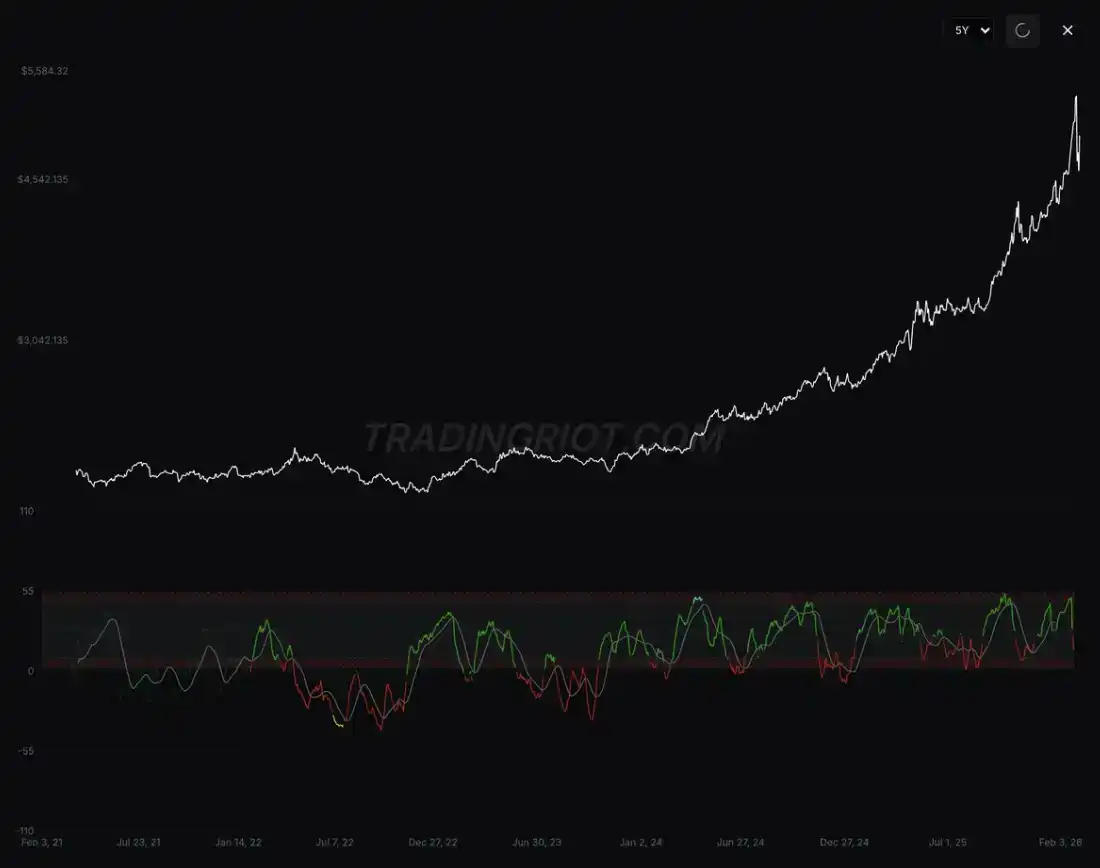
I personally built an indicator that integrates these signals into a composite regime for tracking (disclaimer: this indicator is not publicly available for now, sorry). As seen in the chart, the areas marked in red usually correspond to phases of极度低迷 market sentiment: open interest持续下降, funding rates turning negative, traders paying excessive premiums for put options, and realized volatility exceeding implied volatility.

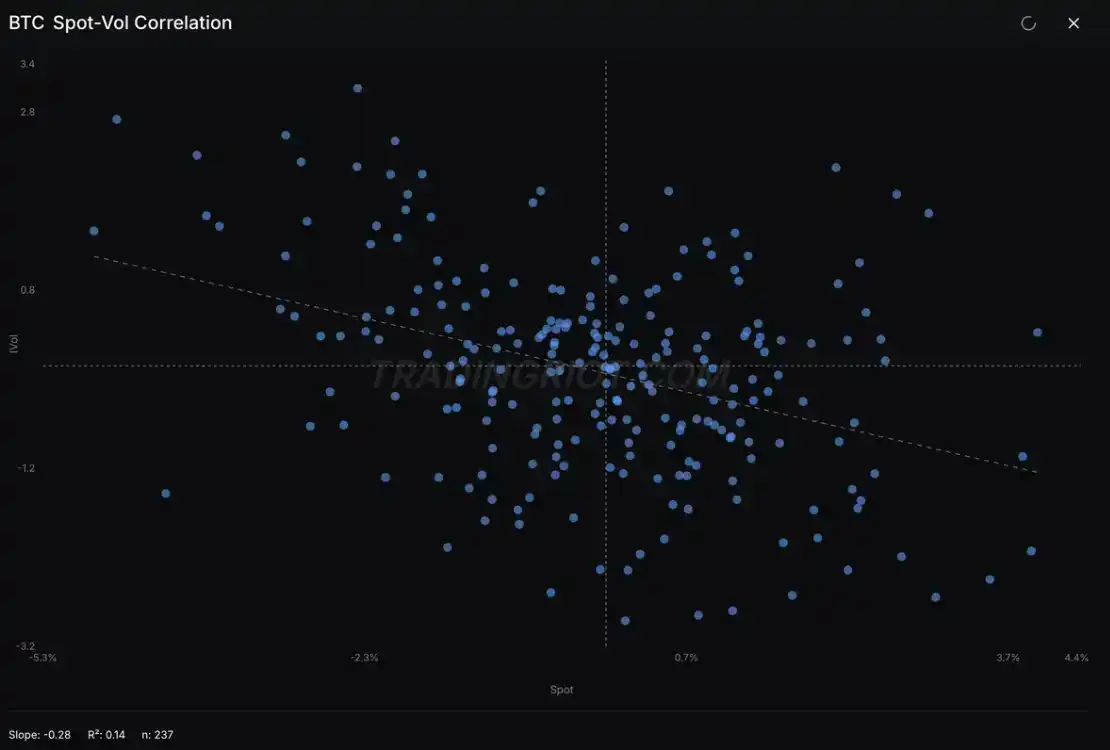
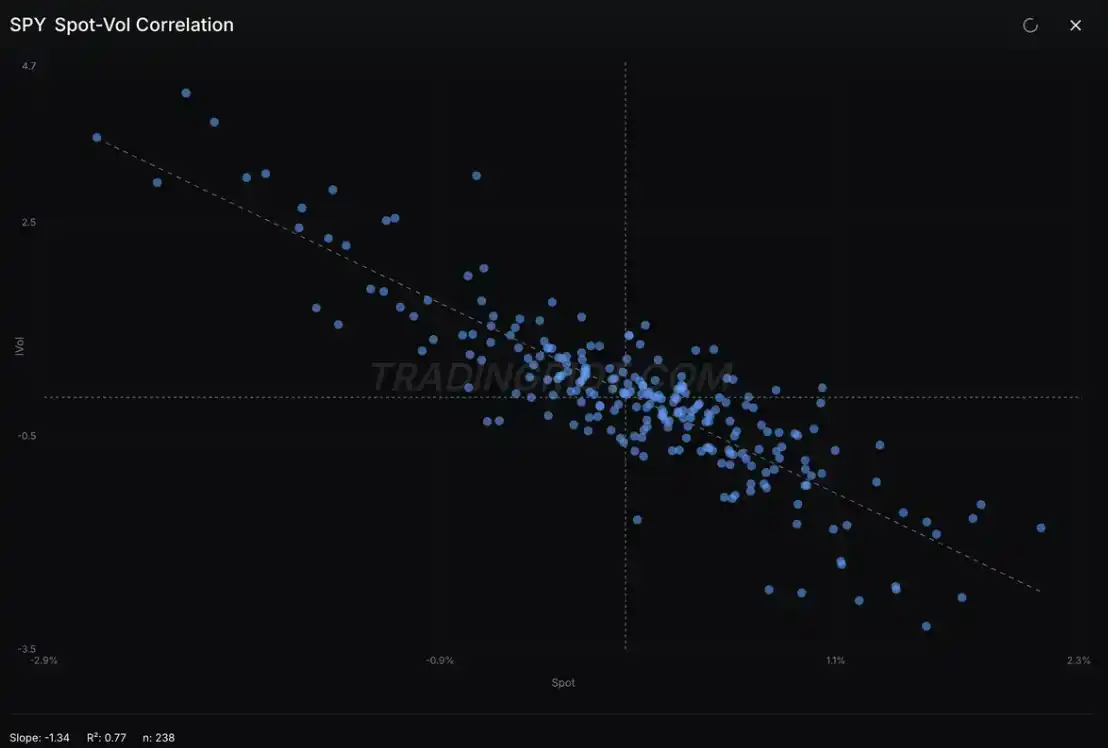
At the same time, the spot-volatility correlation in Bitcoin, while still somewhat messy overall, is increasingly showing characteristics similar to stock indices.
Summary

If you came here for "entry points, stop-loss, take-profit (Entry / SL / TP)," then I can only say sorry to disappoint you (not really that sorry).

The purpose of this analysis was more to clarify a seemingly obvious but often overlooked fact: Bitcoin is an independently operating market. At某些阶段 it looks like gold, at other times like stocks, but fundamentally, there is no necessary reason for them to move in sync over the long term.

If you're staring at the falling price right now, trying to judge when the bottom will appear, rather than applying analogies from other assets, it's better to focus on the data that truly matters to this market. Look at the positioning structure—it often tells the most真实, and also the most残酷, story.

Also remember: most true bottoms are formed when almost everyone has already given up.

Preguntas relacionadas

QWhat is the main argument of the article regarding the relationship between Bitcoin and gold?

AThe article argues that Bitcoin is not a safe-haven asset like gold, and there is no robust, verifiable long-term cointegration or 'rotation' relationship between the two. They are fundamentally different asset classes.

QWhat statistical method does the author use to test for a long-term equilibrium relationship between Bitcoin and gold?

AThe author uses the Engle-Granger cointegration test to determine if a long-term, mean-reverting relationship exists between Bitcoin and gold.

QWhat was the result of the cointegration test between Bitcoin and gold?

AThe cointegration test found no cointegration relationship. The p-value for the full sample was 0.44, far above the 0.05 significance threshold, indicating no reliable mean-reverting link.

QAccording to the article, what is a more reliable factor to watch for identifying market bottoms in Bitcoin?

AThe article suggests that instead of comparing Bitcoin to other assets, one should focus on market-specific data like positioning structure, open interest, funding rates, and options skew, which often tell the most真实 story.

QHow does the article describe the nature of the Bitcoin market?

AThe article describes Bitcoin as an independent, highly volatile, and still-maturing speculative asset with an evolving market structure, not a stable safe-haven metal or a stock index.

Lecturas Relacionadas

Trading

Spot
Futuros

Artículos destacados

Qué es BITCOIN

Entendiendo HarryPotterObamaSonic10Inu (ERC-20) y Su Posición en el Espacio Cripto En los últimos años, el mercado de criptomonedas ha sido testigo de un aumento en la popularidad de las monedas meme, capturando el interés no solo de los comerciantes, sino también de aquellos que buscan compromiso comunitario y valor de entretenimiento. Entre estos tokens únicos se encuentra HarryPotterObamaSonic10Inu (ERC-20), un proyecto intrigante que mezcla referencias culturales en el tejido de las criptomonedas. Este artículo profundiza en los aspectos clave de HarryPotterObamaSonic10Inu, explorando sus mecanismos, ethos impulsado por la comunidad y su relación con el paisaje cripto más amplio. ¿Qué es HarryPotterObamaSonic10Inu (ERC-20)? Como su nombre sugiere, HarryPotterObamaSonic10Inu es una moneda meme construida sobre la blockchain de Ethereum, clasificada bajo el estándar ERC-20. A diferencia de las criptomonedas tradicionales que pueden enfatizar la utilidad práctica o el potencial de inversión, este token prospera en el valor de entretenimiento y la fuerza de su comunidad. El proyecto tiene como objetivo fomentar un entorno donde los usuarios comprometidos puedan reunirse, compartir ideas y participar en actividades inspiradas por diversos fenómenos culturales. Una característica notable de HarryPotterObamaSonic10Inu es su cero impuestos en las transacciones. Este atractivo elemento tiene como objetivo incentivar el comercio y la participación comunitaria, sin cargos adicionales que puedan disuadir a los comerciantes de pequeña escala. El suministro total de la moneda está establecido en mil millones de tokens, una cifra que marca su intención de mantener una circulación sustancial dentro de la comunidad. Creador de HarryPotterObamaSonic10Inu (ERC-20) Los orígenes de HarryPotterObamaSonic10Inu están algo envueltos en misterio; los detalles sobre el creador siguen siendo desconocidos. El desarrollo de este token carece de un equipo identificable o de un plan explícito, lo cual no es inusual dentro del sector de monedas meme. En cambio, el proyecto ha surgido de manera orgánica, con su progreso muy dependiente del entusiasmo y la participación de su comunidad. Inversores de HarryPotterObamaSonic10Inu (ERC-20) En cuanto a inversiones externas y respaldo, HarryPotterObamaSonic10Inu también sigue siendo ambiguo. El token no lista ninguna fundación de inversión conocida o apoyo organizacional significativo. En cambio, la savia del proyecto es su comunidad de base, que informa su crecimiento y sostenibilidad a través de la acción colectiva y el compromiso en el espacio cripto. ¿Cómo Funciona HarryPotterObamaSonic10Inu (ERC-20)? Como una moneda meme, HarryPotterObamaSonic10Inu opera principalmente fuera de los marcos tradicionales que a menudo rigen el valor de los activos. Hay varios aspectos distintivos que definen cómo funciona el proyecto: Transacciones Sin Impuestos: Sin tarifas impositivas en las transacciones, los usuarios pueden comprar y vender el token libremente sin preocuparse por costos ocultos. Compromiso Comunitario: El proyecto prospera en la interacción comunitaria, aprovechando plataformas de redes sociales para crear entusiasmo y facilitar la participación. Las discusiones, el intercambio de contenido y el compromiso son elementos cruciales que ayudan a expandir su alcance y fomentar la lealtad entre los seguidores. Sin Utilidad Práctica: Cabe señalar que HarryPotterObamaSonic10Inu no ofrece utilidad concreta dentro del ecosistema financiero. Más bien, se clasifica como un token principalmente para actividades de entretenimiento y comunitarias. Referencia Cultural: El token incorpora astutamente elementos de la cultura popular para atraer interés, conectando con entusiastas de los memes y seguidores de las criptomonedas por igual. HarryPotterObamaSonic10Inu ejemplifica cómo las monedas meme operan de manera diferente a los proyectos de criptomonedas más tradicionales, ingresando al mercado como construcciones sociales innovadoras en lugar de activos utilitarios. Cronología de HarryPotterObamaSonic10Inu (ERC-20) La historia de HarryPotterObamaSonic10Inu está marcada por varios hitos notables: Creación: El token surgió de un meme viral, capturando la imaginación de muchos entusiastas de las criptomonedas. Las fechas específicas de creación no están disponibles, subrayando su ascenso orgánico. Listado en Exchanges: HarryPotterObamaSonic10Inu ha llegado a varios exchanges, permitiendo un acceso y comercio más fácil por parte de la comunidad. Iniciativas de Compromiso Comunitario: Actividades continuas destinadas a mejorar la interacción comunitaria, incluyendo concursos, campañas en redes sociales y generación de contenido por parte de fanáticos y defensores. Planes de Expansión Futuros: La hoja de ruta del proyecto incluye el lanzamiento de una colección de NFT, mercancía y un sitio de comercio electrónico relacionado con sus temas culturales, involucrando aún más a la comunidad e intentando añadir más dimensiones a su ecosistema. Puntos Clave Sobre HarryPotterObamaSonic10Inu (ERC-20) Naturaleza Impulsada por la Comunidad: El proyecto prioriza la participación colectiva y la creatividad, asegurando que la involucración de los usuarios esté a la vanguardia de su desarrollo. Clasificación como Moneda Meme: Representa la epítome de las criptomonedas basadas en el entretenimiento, diferenciándose de los vehículos de inversión tradicionales. Sin Afiliación Directa con Bitcoin: A pesar de la similitud en el nombre del ticker, HarryPotterObamaSonic10Inu es distinto y no tiene relación con Bitcoin u otras criptomonedas establecidas. Enfoque en la Colaboración: HarryPotterObamaSonic10Inu está diseñado para crear un espacio para la colaboración y el intercambio de historias entre sus poseedores, proporcionando una vía para la creatividad y el vínculo comunitario. Perspectivas Futuras: La ambición de expandirse más allá de su premisa inicial hacia NFTs y mercancías describe un camino para que el proyecto potencialmente ingrese a avenidas más tradicionales dentro de la cultura digital. A medida que las monedas meme continúan capturando la imaginación de la comunidad de criptomonedas, HarryPotterObamaSonic10Inu (ERC-20) se destaca debido a sus lazos culturales y su enfoque centrado en la comunidad. Si bien puede no encajar en el molde típico de un token impulsado por la utilidad, su esencia radica en la alegría y la camaradería fomentadas entre sus seguidores, destacando la naturaleza en evolución de las criptomonedas en una era cada vez más digital. A medida que el proyecto continúa desarrollándose, será importante observar cómo las dinámicas comunitarias influyen en su trayectoria en el cambiante paisaje de la tecnología blockchain.

1.3k Vistas totalesPublicado en 2024.04.01Actualizado en 2024.12.03

Qué es BITCOIN

Cómo comprar BTC

¡Bienvenido a HTX.com! Hemos hecho que comprar Bitcoin (BTC) sea simple y conveniente. Sigue nuestra guía paso a paso para iniciar tu viaje de criptos.Paso 1: crea tu cuenta HTXUtiliza tu correo electrónico o número de teléfono para registrarte y obtener una cuenta gratuita en HTX. Experimenta un proceso de registro sin complicaciones y desbloquea todas las funciones.Obtener mi cuentaPaso 2: ve a Comprar cripto y elige tu método de pagoTarjeta de crédito/débito: usa tu Visa o Mastercard para comprar Bitcoin (BTC) al instante.Saldo: utiliza fondos del saldo de tu cuenta HTX para tradear sin problemas.Terceros: hemos agregado métodos de pago populares como Google Pay y Apple Pay para mejorar la comodidad.P2P: tradear directamente con otros usuarios en HTX.Over-the-Counter (OTC): ofrecemos servicios personalizados y tipos de cambio competitivos para los traders.Paso 3: guarda tu Bitcoin (BTC)Después de comprar tu Bitcoin (BTC), guárdalo en tu cuenta HTX. Alternativamente, puedes enviarlo a otro lugar mediante transferencia blockchain o utilizarlo para tradear otras criptomonedas.Paso 4: tradear Bitcoin (BTC)Tradear fácilmente con Bitcoin (BTC) en HTX's mercado spot. Simplemente accede a tu cuenta, selecciona tu par de trading, ejecuta tus trades y monitorea en tiempo real. Ofrecemos una experiencia fácil de usar tanto para principiantes como para traders experimentados.

4.6k Vistas totalesPublicado en 2024.12.12Actualizado en 2025.03.21

Cómo comprar BTC

Qué es $BITCOIN

ORO DIGITAL ($BITCOIN): Un Análisis Integral Introducción al ORO DIGITAL ($BITCOIN) ORO DIGITAL ($BITCOIN) es un proyecto basado en blockchain que opera en la red Solana, cuyo objetivo es combinar las características de los metales preciosos tradicionales con la innovación de las tecnologías descentralizadas. Aunque comparte un nombre con Bitcoin, a menudo referido como “oro digital” debido a su percepción como un refugio de valor, ORO DIGITAL es un token separado diseñado para crear un ecosistema único dentro del paisaje Web3. Su meta es posicionarse como un activo digital alternativo viable, aunque los detalles sobre sus aplicaciones y funcionalidades aún están en desarrollo. ¿Qué es ORO DIGITAL ($BITCOIN)? ORO DIGITAL ($BITCOIN) es un token de criptomoneda diseñado explícitamente para su uso en la blockchain de Solana. A diferencia de Bitcoin, que proporciona un papel de almacenamiento de valor ampliamente reconocido, este token parece centrarse en aplicaciones y características más amplias. Aspectos notables incluyen: Infraestructura Blockchain: El token está construido sobre la blockchain de Solana, conocida por su capacidad para manejar transacciones de alta velocidad y bajo costo. Dinámicas de Suministro: ORO DIGITAL tiene un suministro máximo limitado a 100 cuatrillones de tokens (100P $BITCOIN), aunque los detalles sobre su suministro circulante no se han divulgado actualmente. Utilidad: Si bien las funcionalidades precisas no están delineadas explícitamente, hay indicios de que el token podría ser utilizado para diversas aplicaciones, potencialmente involucrando aplicaciones descentralizadas (dApps) o estrategias de tokenización de activos. ¿Quién es el Creador de ORO DIGITAL ($BITCOIN)? En la actualidad, la identidad de los creadores y el equipo de desarrollo detrás de ORO DIGITAL ($BITCOIN) sigue siendo desconocida. Esta situación es típica entre muchos proyectos innovadores dentro del espacio blockchain, particularmente aquellos alineados con las finanzas descentralizadas y fenómenos de monedas meme. Si bien tal anonimato puede fomentar una cultura impulsada por la comunidad, intensifica las preocupaciones sobre la gobernanza y la responsabilidad. ¿Quiénes son los Inversores de ORO DIGITAL ($BITCOIN)? La información disponible indica que ORO DIGITAL ($BITCOIN) no tiene patrocinadores institucionales conocidos ni inversiones destacadas de capital de riesgo. El proyecto parece operar en un modelo de peer-to-peer centrado en el apoyo y la adopción de la comunidad en lugar de rutas de financiamiento tradicionales. Su actividad y liquidez se sitúan principalmente en intercambios descentralizados (DEX), como PumpSwap, en lugar de plataformas de trading centralizadas establecidas, lo que resalta aún más su enfoque de base. Cómo Funciona ORO DIGITAL ($BITCOIN) Los mecanismos operativos de ORO DIGITAL ($BITCOIN) pueden elaborarse en función de su diseño blockchain y atributos de red: Mecanismo de Consenso: Al aprovechar el único proof-of-history (PoH) de Solana combinado con un modelo de proof-of-stake (PoS), el proyecto asegura una validación de transacciones eficiente que contribuye al alto rendimiento de la red. Tokenómica: Si bien los mecanismos deflacionarios específicos no se han detallado extensamente, el vasto suministro máximo de tokens implica que podría atender microtransacciones o casos de uso nicho que aún están por definirse. Interoperabilidad: Existe el potencial de integración con el ecosistema más amplio de Solana, incluyendo varias plataformas de finanzas descentralizadas (DeFi). Sin embargo, los detalles sobre integraciones específicas permanecen no especificados. Cronología de Eventos Clave Aquí hay una cronología que destaca hitos significativos relacionados con ORO DIGITAL ($BITCOIN): 2023: El despliegue inicial del token ocurre en la blockchain de Solana, marcado por su dirección de contrato. 2024: ORO DIGITAL gana visibilidad al estar disponible para trading en intercambios descentralizados como PumpSwap, permitiendo a los usuarios comerciar contra SOL. 2025: El proyecto presencia actividad de trading esporádica y potencial interés en compromisos liderados por la comunidad, aunque no se han documentado asociaciones notables o avances técnicos hasta el momento. Análisis Crítico Fortalezas Escalabilidad: La infraestructura subyacente de Solana soporta altos volúmenes de transacciones, lo que podría mejorar la utilidad de $BITCOIN en varios escenarios de transacción. Accesibilidad: El potencial bajo precio de trading por token podría atraer a inversores minoristas, facilitando una participación más amplia debido a oportunidades de propiedad fraccionada. Riesgos Falta de Transparencia: La ausencia de patrocinadores, desarrolladores o un proceso de auditoría conocidos públicamente puede generar escepticismo sobre la sostenibilidad y confiabilidad del proyecto. Volatilidad del Mercado: La actividad de trading depende en gran medida del comportamiento especulativo, lo que puede resultar en una volatilidad de precios significativa y en incertidumbre para los inversores. Conclusión ORO DIGITAL ($BITCOIN) surge como un proyecto intrigante pero ambiguo dentro del ecosistema de Solana en rápida evolución. Si bien intenta aprovechar la narrativa del “oro digital”, su alejamiento del papel establecido de Bitcoin como refugio de valor subraya la necesidad de una diferenciación más clara de su utilidad y estructura de gobernanza previstas. La aceptación y adopción futura dependerán probablemente de abordar la actual opacidad y de definir sus estrategias operativas y económicas de manera más explícita. Nota: Este informe abarca información sintetizada disponible hasta octubre de 2023, y pueden haber ocurrido desarrollos más allá del período de investigación.

83 Vistas totalesPublicado en 2025.05.13Actualizado en 2025.05.13

Qué es $BITCOIN

Discusiones

Bienvenido a la comunidad de HTX. Aquí puedes mantenerte informado sobre los últimos desarrollos de la plataforma y acceder a análisis profesionales del mercado. A continuación se presentan las opiniones de los usuarios sobre el precio de BTC (BTC).

活动图片