Stablecoins Face Tighter Rules As Delaware Unveils New Bill

bitcoinistPublicado a 2026-03-24Actualizado a 2026-03-24

Resumen

Federal efforts to shift crypto oversight from the SEC to the CFTC are influencing state-level regulation. Delaware has introduced two new bills—the Banking Modernization Act and the Payment Stablecoin Act—aimed at modernizing its financial laws and establishing a licensing framework for stablecoin issuers and digital asset service providers. The legislation, inspired by the federal GENIUS Act, includes requirements for reserves, redemptions, capital, and anti-money laundering compliance. Governor Matt Meyer supports the move, which is seen as an attempt to attract crypto businesses back to the state after recent departures. The bills must still pass through committee and floor votes, with a third related bill expected soon.

A federal push to shift crypto oversight away from the Securities and Exchange Commission may be reshaping how states like Delaware think about stablecoins and digital asset regulation in general.

Last Friday, the SEC sent two proposed rules to the White House that could lead to most crypto assets being treated outside of securities law, with the Commodities Futures Trading Commission potentially taking the lead. Days later, Delaware made its own move.

A Two-Bill Package Targeting Finance And Digital Assets

On Monday, Democratic Sen. Spiros Mantzavinos and Representative Bill Bush filed a pair of bills — Senate Bill 16 and Senate Bill 19 — designed to bring Delaware’s banking laws into the modern era.

Source: Delaware Senate Democrats

The Banking Modernization Act focuses mainly on traditional finance, updating corporate governance rules and introducing definitions for digital assets to give the sector clearer legal footing.

The Payment Stablecoin Act goes further, creating a licensing system for stablecoin issuers and digital asset service providers operating in the state.

Both bills borrow language from the federal GENIUS Act, a stablecoin bill working its way through Congress. The state measure outlines required safeguards: reserve shortfall rules, set timelines for customer redemptions, capital requirements, and anti-money laundering obligations.

If signed into law, the State Bank Commissioner would be responsible for putting the rules into effect.

Governor Matt Meyer backed the effort. “This legislative package sends a signal loud and clear,” he said, adding that Delaware aims to make it easier for residents to send, receive, and save money using only an internet connection.

Total crypto market cap currently at $2.4 trillion. Chart: TradingView

A State That Has Been Here Before

Delaware has courted stablecoins and blockchain companies for years. Back in 2016, then-Governor Jack Markell launched the Delaware Blockchain Initiative to attract firms working in the space.

Incremental regulatory changes followed over the years. But the state hit a rough patch recently when several technology and crypto companies pulled out.

Image: Worldcoin

Coinbase, one of the largest crypto exchanges in the world, reincorporated in Texas after publicly criticizing Delaware’s Chancery Court, which handles corporate disputes.

The new bills are widely seen as an attempt to win back that kind of business. “Our administration is focused on attracting the jobs of the future,” Meyer said.

Stablecoins: More Legislation Still Coming

Neither bill is close to becoming law. Both must clear the Senate Banking Committee before reaching the full Delaware Senate floor for a vote. A third bill is also on the way.

Officials said lawmakers plan to file the Delaware Money Transmission and Virtual Currency Modernization Act in the coming days.

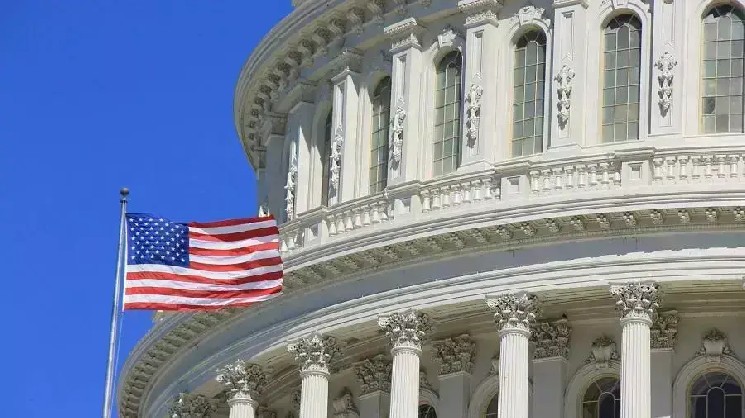
Featured image from Live Love Delaware, chart from TradingView

Criptos en tendencia

Preguntas relacionadas

QWhat is the main purpose of the two bills filed in Delaware?

AThe two bills, Senate Bill 16 and Senate Bill 19, are designed to modernize Delaware's banking laws. The Banking Modernization Act updates corporate governance rules and introduces definitions for digital assets, while the Payment Stablecoin Act creates a licensing system for stablecoin issuers and digital asset service providers operating in the state.

QWhich federal legislation did the Delaware bills borrow language from?

ABoth Delaware bills borrow language from the federal GENIUS Act, a stablecoin bill that is currently working its way through the U.S. Congress.

QWhat recent federal action may be influencing state-level crypto regulation, according to the article?

AThe SEC recently sent two proposed rules to the White House that could lead to most crypto assets being treated outside of securities law, with the Commodity Futures Trading Commission (CFTC) potentially taking the lead on oversight.

QWhy is Delaware attempting to pass this new legislation, according to the article?

AThe new bills are widely seen as an attempt to win back crypto and technology businesses, after several companies like Coinbase pulled out of the state. Governor Meyer stated the administration is 'focused on attracting the jobs of the future.'

QWhat are the next steps for the two bills before they can become law?

ANeither bill is yet law. Both must first clear the Senate Banking Committee before reaching the full Delaware Senate floor for a vote. A third bill, the Delaware Money Transmission and Virtual Currency Modernization Act, is also expected to be filed soon.

Lecturas Relacionadas

Interview with Robinhood Executive: Meme + Tokenized US Stocks as "Barbell" Customer Acquisition Strategy, All Business Lines Achieve Hundreds of Millions in Revenue

Interview with Robinhood executive Johann Kerbrat reveals the company's "barbell" customer acquisition strategy for its new Robinhood Chain, combining meme tokens with tokenized stocks. Three weeks after mainnet launch, the chain has seen over $3B in weekly DEX volume and 105M transactions. Kerbrat explains the logic behind the permissionless chain: meme tokens attract DeFi users, while tokenized real-world assets (RWA), currently over 90 US stocks and ETFs accessible in 120+ countries, serve global users. The goal is to bring Robinhood's 27 million funded accounts on-chain by simplifying DeFi with a user-friendly interface, exemplified by features like Robinhood Earn which offers yield without requiring wallet management. Built on Arbitrum's technology stack for its speed, low cost, and Ethereum's security, the chain focuses on financial products like Earn, spot trading, and perpetuals. Kerbrat downplays direct competition with platforms like Base, emphasizing the goal of expanding the overall market for on-chain assets. He details selective partnerships (e.g., Morpho, Lighter) based on compliance, unique UX, and differentiation. While regulatory clarity is pending for US perpetuals, the expansion continues via Bitstamp in Europe. Finally, Kerbrat positions Robinhood as a "super app" integrating stocks, options, crypto, banking, and AI trading, with all major business lines generating hundreds of millions in revenue. For the chain, current priority is driving adoption over maximizing gas fee revenue.

marsbitHace 2 hora(s)

Interview with Robinhood Executive: Meme + Tokenized US Stocks as "Barbell" Customer Acquisition Strategy, All Business Lines Achieve Hundreds of Millions in Revenue

marsbitHace 2 hora(s)

Fidelity Q3 Report: BTC, ETH, and SOL Continue to Build Bottoms; How Much Further Will This Crypto Bear Market Go?

Fidelity's Q3 Crypto Signal Report analyzes the current bear market, noting Bitcoin (BTC), Ethereum (ETH), and Solana (SOL) are in a prolonged bottoming phase. Key indicators like the weighted Net Unrealized Profit/Loss (NUPL) have turned negative (-0.01), signaling the market is slightly below its aggregate cost basis, with BTC acting as the primary stabilizing asset. BTC's dominance has risen to 68%, indicating a lack of capital rotation to other digital assets. Performance has been weak across the board, with BTC, ETH, and SOL down significantly year-to-date. Market sentiment is depressed, exacerbated by substantial outflows from spot ETPs and a challenging macro environment. The report compares the current ~203-day downtrend to historical ~300-day bottoming cycles, suggesting the process may be two-thirds complete, with late 2026 as a potential timeframe to monitor. For Bitcoin, NUPL at 0.09 indicates cautious sentiment, while momentum signals remain negative. The Yardstick metric points to potential undervaluation relative to network security (hashrate). Ethereum's NUPL is deep in the "capitulation" zone at -0.43, a historically positive signal for future returns, though its momentum and network fee revenue are negative. Solana shows the deepest NUPL at -0.72 but demonstrates relative resilience in on-chain activity and stablecoin transfer volume. The report concludes that while several metrics are near historical capitulation levels, a definitive market bottom has not yet been established. The path forward likely involves continued consolidation, with BTC's relative strength and fundamental on-chain usage for ETH and SOL providing key areas for investor observation.

marsbitHace 2 hora(s)

Fidelity Q3 Report: BTC, ETH, and SOL Continue to Build Bottoms; How Much Further Will This Crypto Bear Market Go?

marsbitHace 2 hora(s)

Trading

Spot

Artículos destacados

Cómo comprar PUSH

¡Bienvenido a HTX.com! Hemos hecho que comprar Push Protocol (PUSH) sea simple y conveniente. Sigue nuestra guía paso a paso para iniciar tu viaje de criptos.Paso 1: crea tu cuenta HTXUtiliza tu correo electrónico o número de teléfono para registrarte y obtener una cuenta gratuita en HTX. Experimenta un proceso de registro sin complicaciones y desbloquea todas las funciones.Obtener mi cuentaPaso 2: ve a Comprar cripto y elige tu método de pagoTarjeta de crédito/débito: usa tu Visa o Mastercard para comprar Push Protocol (PUSH) al instante.Saldo: utiliza fondos del saldo de tu cuenta HTX para tradear sin problemas.Terceros: hemos agregado métodos de pago populares como Google Pay y Apple Pay para mejorar la comodidad.P2P: tradear directamente con otros usuarios en HTX.Over-the-Counter (OTC): ofrecemos servicios personalizados y tipos de cambio competitivos para los traders.Paso 3: guarda tu Push Protocol (PUSH)Después de comprar tu Push Protocol (PUSH), guárdalo en tu cuenta HTX. Alternativamente, puedes enviarlo a otro lugar mediante transferencia blockchain o utilizarlo para tradear otras criptomonedas.Paso 4: tradear Push Protocol (PUSH)Tradear fácilmente con Push Protocol (PUSH) en HTX's mercado spot. Simplemente accede a tu cuenta, selecciona tu par de trading, ejecuta tus trades y monitorea en tiempo real. Ofrecemos una experiencia fácil de usar tanto para principiantes como para traders experimentados.

250 Vistas totalesPublicado en 2024.12.13Actualizado en 2026.06.02

Cómo comprar PUSH

Discusiones

Bienvenido a la comunidad de HTX. Aquí puedes mantenerte informado sobre los últimos desarrollos de la plataforma y acceder a análisis profesionales del mercado. A continuación se presentan las opiniones de los usuarios sobre el precio de PUSH (PUSH).

活动图片