Stablecoin Yield ‘Effectively Off The Table’: White House Narrows Rewards Debate In Latest Meeting

bitcoinistPublicado a 2026-02-21Actualizado a 2026-02-21

Resumen

The White House took a more active role in the latest meeting between the crypto industry and banking sector to resolve the stablecoin yield dispute that has stalled the CLARITY Act. The meeting included representatives from Coinbase, Ripple, a16z, and crypto trade associations, while banks were represented through their industry groups. The White House presented a draft text addressing banking concerns, effectively ruling out earning yield on idle stablecoin balances. The debate now focuses on whether crypto firms can offer rewards linked to specific activities. Banking representatives argued that competitive pressures, rather than deposit flight, are their main concern. The White House also proposed anti-evasion measures, including significant penalties for violations. Further discussions are expected as both sides assess potential compromises.

The White House reportedly took the lead during the latest Crypto Council meeting, narrowing the stablecoin rewards dispute that has delayed progress in the long-awaited crypto market structure bill.

White House Steps In On CLARITY Act Dispute

On Thursday, the White House held another meeting between the crypto industry and the banking sector to negotiate the stablecoin yield dispute that has stalled the crypto market structure bill, known as the CLARITY Act, over the past month.

According to a report from journalist Eleanor Terret, the meeting was smaller than previous ones, with only a few representatives from each side. From the crypto sector, participants included representatives from Coinbase, Ripple, a16z, the Blockchain Association, and Crypto Council for Innovation (CCI).

Meanwhile, no individual bank representatives attended; bank voices were represented through trade associations, such as the American Bankers Association, the Banking Policy Institute (BPI), and the Independent Community Bankers of America (ICBA).

Terret sources affirmed that there was a notable difference in yesterday’s meeting as the White House “took the lead in driving the discussion, rather than letting crypto firms and bank trades steer the discussion, as in prior meetings.”

For context, banks have heavily criticized the landmark stablecoin legislation, the GENIUS Act, due to “loopholes” that could pose risks to the financial system. The framework prohibits interest payments on the holding or use of payment-purpose stablecoins, but it only addresses issuers.

The banking side argues that allowing issuers and platforms to offer interest payments on stablecoins could distort market dynamics and affect credit creation in the country, hurting small- and medium-sized financial institutions in the sector.

To address these concerns, banking associations across the US urged senators to include language in the CLARITY Act that also bans digital asset exchanges, brokers, dealers, and related entities from offering yield on stablecoins.

The Senate Banking Committee’s draft proposed that issuers offer rewards for specific actions, such as account openings and cashback. However, it also prohibited issuers from providing interest payments to passive token holders.

The crypto side criticized the proposed measures, with some industry leaders publicly opposing the draft and withdrawing their support. As a result, a markup session on the Senate Banking Committee’s portion of the bill has been delayed.

Stablecoin Yield Out Of The Picture

At the Thursday meeting, Patrick Witt, executive director of the US President’s Council of Advisors on Digital Assets, reportedly brought a draft text that served as the anchor for the discussion. Sources in the room told Terret that the draft’s language acknowledged banks’ concerns raised in last week’s “Yield and Interest Prohibitions Principles” document.

Based on this, “earning yield on idle balances (...) is effectively off the table,” the journalist affirmed. The draft also clarified that any future restrictions on rewards would be narrow in scope. Therefore, the debate has now narrowed to whether crypto firms can offer rewards linked to specific activities.

An attendee from the crypto industry side reportedly said that banks’ concerns “appear to stem more from competitive pressures than from deposit flight.” Meanwhile, someone from the banking industry told Terret that they are still pushing to include a study examining the growth of payment stablecoins and their potential impact on bank deposits in the draft.

They also noted that the White House proposed anti-evasion language. The measure would give the Securities and Exchange Commission (SEC), the Commodity Futures Trading Commission (CFTC), and the Department of the Treasury authority to enforce a ban on paying yield on idle stablecoin balances, and penalties of up to $500,000 per violation, per day, against companies that breach the ban.

Now, the banking industry representatives “will brief their members on today’s discussions and gauge whether there’s room to compromise on allowing crypto firms to offer stablecoin rewards,” Terret noted, adding that some attendees believe an end-of-month deadline isn’t unrealistic as talks are set to continue in the coming days.
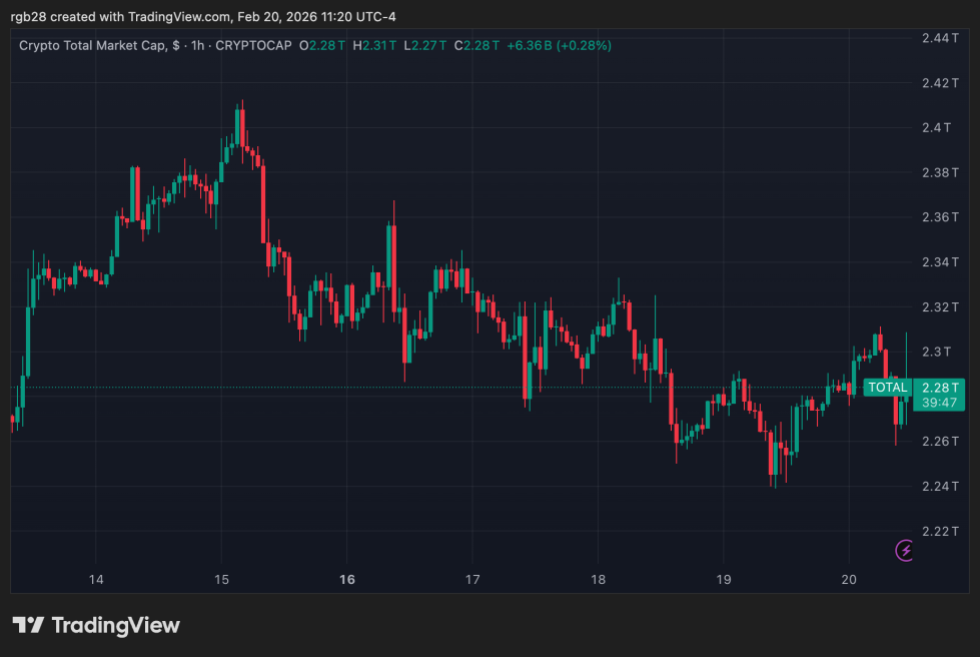
The total crypto market capitalization sits at $2.28 trillion on the one-week chart. Source: TOTAL on TradingView


Preguntas relacionadas

QWhat was the main role of the White House in the latest Crypto Council meeting according to the article?

AThe White House took the lead in driving the discussion, rather than letting crypto firms and bank trades steer it as in prior meetings.

QWhich major crypto industry representatives attended the meeting?

ARepresentatives from Coinbase, Ripple, a16z, the Blockchain Association, and Crypto Council for Innovation (CCI) attended.

QWhat is the primary concern of the banking sector regarding stablecoin legislation?

ABanks argue that allowing interest payments on stablecoins could distort market dynamics, affect credit creation, and hurt small- and medium-sized financial institutions.

QWhat was the key outcome regarding 'yield on idle stablecoin balances' from the meeting?

AEarning yield on idle balances is effectively off the table, meaning it is prohibited.

QWhat enforcement measures did the White House propose for violations of the yield ban?

AThe White House proposed giving the SEC, CFTC, and Treasury the authority to enforce the ban with penalties of up to $500,000 per violation, per day.

Lecturas Relacionadas

Can Iran 'Control' the Strait of Hormuz?

Iran has announced a comprehensive plan to assert control over the strategic Strait of Hormuz, a critical global oil shipping chokepoint. The proposed measures include requiring all vessels to obtain Iranian permission for passage, imposing fees for security, environmental protection, and navigation management—preferably paid in Iranian rials—and absolutely banning Israeli ships. Vessels from countries deemed hostile by Iran’s top security bodies may also be barred. Analysts suggest Iran’s motives are multifaceted: increasing pressure on the U.S. and Israel by leveraging control over oil transit to influence global prices and inflation; creating a new revenue stream, potentially exceeding $7.7 billion annually, to counter Western sanctions and support postwar reconstruction; and using transit permissions as bargaining chips in future negotiations, notably with the U.S. However, the plan faces significant practical and diplomatic challenges. Enforcing comprehensive interception and fee collection in the busy waterway, patrolled by international military forces, would be difficult. The U.S. has already countering with a blockade of Iranian ports and threats to intercept any ship paying fees, potentially strangling Iran’s oil exports and fee revenue. Broad international opposition, led by European and Gulf states, and legal controversies further complicate implementation. The proposal may ultimately serve more as a negotiating tactic than a feasible policy, with its execution remaining highly uncertain.

marsbitHace 45 min(s)

Can Iran 'Control' the Strait of Hormuz?

marsbitHace 45 min(s)

Trading

Spot
Futuros

Artículos destacados

Cómo comprar HOUSE

¡Bienvenido a HTX.com! Hemos hecho que comprar Housecoin (HOUSE) sea simple y conveniente. Sigue nuestra guía paso a paso para iniciar tu viaje de criptos.Paso 1: crea tu cuenta HTXUtiliza tu correo electrónico o número de teléfono para registrarte y obtener una cuenta gratuita en HTX. Experimenta un proceso de registro sin complicaciones y desbloquea todas las funciones.Obtener mi cuentaPaso 2: ve a Comprar cripto y elige tu método de pagoTarjeta de crédito/débito: usa tu Visa o Mastercard para comprar Housecoin (HOUSE) al instante.Saldo: utiliza fondos del saldo de tu cuenta HTX para tradear sin problemas.Terceros: hemos agregado métodos de pago populares como Google Pay y Apple Pay para mejorar la comodidad.P2P: tradear directamente con otros usuarios en HTX.Over-the-Counter (OTC): ofrecemos servicios personalizados y tipos de cambio competitivos para los traders.Paso 3: guarda tu Housecoin (HOUSE)Después de comprar tu Housecoin (HOUSE), guárdalo en tu cuenta HTX. Alternativamente, puedes enviarlo a otro lugar mediante transferencia blockchain o utilizarlo para tradear otras criptomonedas.Paso 4: tradear Housecoin (HOUSE)Tradear fácilmente con Housecoin (HOUSE) en HTX's mercado spot. Simplemente accede a tu cuenta, selecciona tu par de trading, ejecuta tus trades y monitorea en tiempo real. Ofrecemos una experiencia fácil de usar tanto para principiantes como para traders experimentados.

221 Vistas totalesPublicado en 2025.04.27Actualizado en 2025.04.27

Cómo comprar HOUSE

Discusiones

Bienvenido a la comunidad de HTX. Aquí puedes mantenerte informado sobre los últimos desarrollos de la plataforma y acceder a análisis profesionales del mercado. A continuación se presentan las opiniones de los usuarios sobre el precio de HOUSE (HOUSE).

活动图片