Stablecoin Rules Face 144 Questions In New FDIC Proposal

bitcoinistPublicado a 2026-04-09Actualizado a 2026-04-09

Resumen

The FDIC has proposed a new regulatory framework for stablecoin issuers, giving the public 60 days to respond to its 144 specific questions. The rules would set standards for reserves, redemptions, capital, and risk management for over 2,700 FDIC-supervised institutions, implementing the GENIUS Act signed in July 2025. A key point is that while the reserves backing stablecoins would be insured, the stablecoin holders themselves would not be covered by federal deposit insurance, as explicitly barred by the law. The FDIC argues the rules will still benefit users by ensuring issuers meet stricter standards. This proposal is part of a broader regulatory effort, with the OCC running a parallel process for other institutions.

The public has 60 days to weigh in. That’s how much time the Federal Deposit Insurance Corporation is giving Americans to respond to its newly proposed framework for regulating stablecoin issuers — a plan built around 144 specific questions the agency wants answered before it finalizes anything.

A Framework Built On Reserve And Risk Standards

The FDIC’s board voted this week to put forward rules that would set standards for reserves, redemptions, capital requirements, risk management, and custody practices for coin issuers operating under its watch.

The proposal applies to FDIC-supervised banks and savings institutions — more than 2,700 of them — and is tied to the Guiding and Establishing National Innovation for US Stablecoins Act, better known as the GENIUS Act, which was signed into law last July.
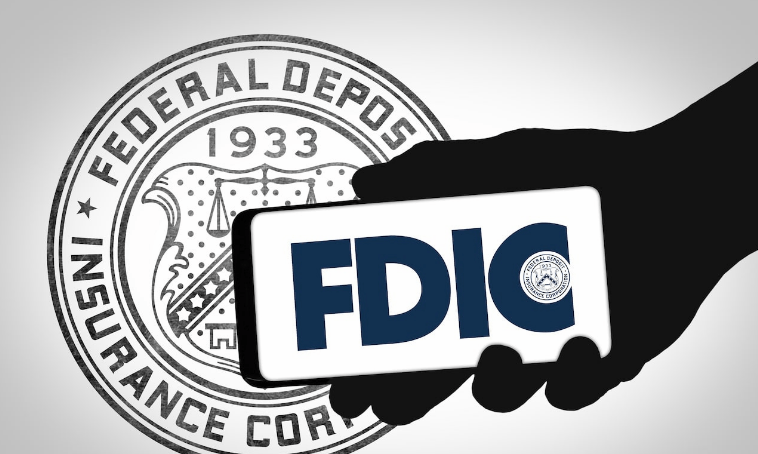
Image: Mullooly Asset Management

The law handed the FDIC formal authority over transaction activity inside the institutions it already supervises. Full implementation is scheduled for January 18, 2027, unless the rules take effect earlier.

This is the agency’s second move to put the GENIUS Act into practice. Back in December, the FDIC put forward a separate plan to set up an application process for insured depository institutions wanting to issue payment stablecoins through subsidiaries. Tuesday’s announcement builds on that earlier step.

The Coverage Gap Stablecoin Users Should Know About

Here’s the part that may surprise some holders. While the reserves that back a stablecoin would be insured under the proposed rules, the people actually holding those stablecoins would not be.

Bitcoin is now trading at $71,941. Chart: TradingView

The FDIC said extending deposit insurance directly to stablecoin holders would conflict with the text of the GENIUS Act itself, which explicitly bars payment stablecoins from being covered by federal deposit insurance.

The agency acknowledged the limitation but argued the rules would still benefit everyday users. A more tightly regulated environment, officials said, means stablecoin holders get stronger assurances that the issuers behind their tokens are being held to serious regulatory standards — even if a federal safety net doesn’t cover them directly.
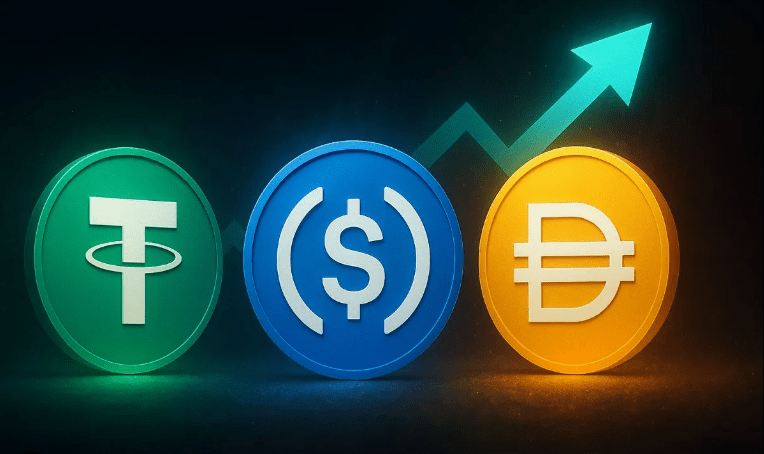
Image: TransFi

A Bigger Regulatory Picture Taking Shape

The FDIC is not working alone. The Office of the Comptroller of the Currency is running its own parallel effort to bring the GENIUS Act to life. Its reach goes further — covering national bank subsidiaries and certain nonbank stablecoin issuers that fall outside the FDIC’s jurisdiction.

Featured image from Unsplash, chart from TradingView

Preguntas relacionadas

QWhat is the main purpose of the FDIC's newly proposed framework for stablecoin issuers?

AThe main purpose is to set regulatory standards for stablecoin issuers, including requirements for reserves, redemptions, capital, risk management, and custody practices for FDIC-supervised institutions.

QHow many specific questions does the FDIC want answered before finalizing its stablecoin rules, and how long does the public have to respond?

AThe FDIC has put forward 144 specific questions and is giving the public 60 days to respond to the proposed framework.

QUnder the proposed rules, are the reserves backing a stablecoin insured, and are the stablecoin holders themselves insured?

AThe reserves backing a stablecoin would be insured under the proposed rules, but the stablecoin holders themselves would not be covered by federal deposit insurance.

QWhich act is the FDIC's proposed stablecoin framework tied to, and when is its full implementation scheduled?

AThe framework is tied to the Guiding and Establishing National Innovation for US Stablecoins Act (GENIUS Act), and its full implementation is scheduled for January 18, 2027, unless it takes effect earlier.

QWhich other federal agency is working on a parallel effort to implement the GENIUS Act, and who does its rules cover?

AThe Office of the Comptroller of the Currency (OCC) is running a parallel effort, and its rules cover national bank subsidiaries and certain nonbank stablecoin issuers outside the FDIC's jurisdiction.

Lecturas Relacionadas

If the AI Bubble Is Already Bursting, Who Will Truly Survive?

If the AI Bubble is Bursting, Who Will Remain? The debate over an AI bubble is intensifying, with figures like Ray Dalio warning of high levels and Jensen Huang seeing immense, early-stage opportunity. Both views hold truth: a speculative bubble in capital markets likely exists, mirroring the dot-com era, but the underlying technological shift is real and transformative. History shows that while bubbles burst—wiping out overvalued companies and speculative capital—they often leave behind critical physical and digital infrastructure. The dot-com bust, for instance, eliminated many firms but left the global fiber optic networks and data centers that enabled the rise of Amazon, Netflix, and cloud computing. Today's massive AI infrastructure investments (projected at trillions by 2030) in data centers, power, cooling, and GPUs may follow a similar path, creating the foundation for future applications. A key divergence from past bubbles is the "Jevons Paradox" effect in AI. As the cost of AI inference has plummeted by over 99.7% since 2023, enterprise spending on AI has skyrocketed. Cheap "tokens" have unlocked vast, previously uneconomical use cases, moving AI from simple chatbots into core business workflows—code generation, legal document review, scientific simulation, and financial analysis. The market is now in a phase of self-correction, weeding out superficial "API-wrapper" startups, but this cleansing process strengthens the ecosystem. The long-term trajectory is clear. The value is gradually shifting from capital expenditure (CapEx) on hardware to operational expenditure (OpEx) on transformative applications. As AI becomes a utility, the winners will be firms that deeply integrate it to solve vertical industry problems in law, healthcare, finance, and manufacturing. The泡沫 will recede, but the foundational shift towards an AI-powered era across all sectors is irreversible. The underlying productive force of AI contains no bubble.

marsbitHace 22 min(s)

If the AI Bubble Is Already Bursting, Who Will Truly Survive?

marsbitHace 22 min(s)

If the AI Bubble Is Already Bursting, Who Will Truly Remain?

**Summary: If the AI Bubble is Bursting, What Will Remain?** The debate around an AI bubble is intensifying, with figures like Ray Dalio warning of high valuations while Jensen Huang sees immense opportunity. This echoes the dot-com bubble, which saw massive wealth destruction but ultimately left behind critical infrastructure like undersea cables and broadband, enabling future giants like Amazon and Netflix. Similarly, today's AI boom involves trillions invested in data centers, power, cooling, and GPUs, while application-layer revenue remains comparatively modest. This investment-disparity signals a bubble. However, the core technological progress is real and accelerating. AI inference costs have plummeted by over 99.7% since 2023, making intelligence increasingly cheap and accessible. This cost collapse is unlocking vast new demand. Instead of reducing spending, enterprises are tripling their AI cloud expenditure. Cheap "tokens" enable AI to move beyond simple chatbots into complex workflows—automating code writing, legal document review, financial analysis, and scientific research. This follows "Jevons's paradox": improved efficiency leads to greater total consumption. The market is now undergoing a necessary purification, weeding out "API-wrapper" startups with no real moat. The deeper evolution involves a shift from capital expenditure (CapEx) on infrastructure to operational expenditure (OpEx) on value-creation in applications. While hardware vendors currently profit most, long-term value will migrate to AI-native firms solving vertical industry problems. Ultimately, a market correction will cleanse speculative excess but will not reverse the AI+ trend. The massive physical and algorithmic infrastructure being built will endure, becoming a cheap, utility-like foundation. Just as the internet became indispensable to all industries post-2000, AI is poised to empower and redefine every sector, moving society irreversibly toward an intelligence-augmented era. The bubble may burst, but the underlying productive momentum is solid.

链捕手Hace 29 min(s)

If the AI Bubble Is Already Bursting, Who Will Truly Remain?

链捕手Hace 29 min(s)

Microsoft CEO: In the AI Era, How Do You Define a Company's Moat?

Microsoft CEO Satya Nadella argues that in the AI era, a company's true competitive edge, or "moat," is not determined by choosing the single most powerful model, but by its ability to build a continuous "learning loop." This system integrates and evolves by connecting human workflows, domain expertise, organizational judgment, and employee experience. He posits that future companies will accumulate two types of capital: Human Capital (employee knowledge, judgment, creativity) and "Token Capital" (a firm's own built and owned AI capabilities). Importantly, AI amplifies rather than devalues human capital. Human direction is essential to guide progress, as computational power alone is aimless. The core opportunity lies in creating a closed-loop system where human and token capital reinforce each other in a compound, self-improving cycle. A company must be able to preserve its unique institutional knowledge—its "company veteran" expertise—even if it switches underlying general-purpose AI models. This requires private evaluation benchmarks, reinforcement learning environments based on internal data, and queryable knowledge bases. Nadella warns against a future where economic value is concentrated by a few dominant models that commoditize entire industries' knowledge. Instead, the priority should be building a broad "frontier ecosystem" where every company, industry, and nation can own its learning loop. This allows organizations to retain control of their intellectual property, amplify employee capabilities, and ensure the economic value created by AI is captured within their own businesses and communities. True corporate sovereignty in the AI age comes from turning organizational knowledge into a compounding system that creates enduring, defensible value.

marsbitHace 1 hora(s)

Microsoft CEO: In the AI Era, How Do You Define a Company's Moat?

marsbitHace 1 hora(s)

ETFs Are Just the Ticket: The True Institutionalization of Bitcoin Is Happening Where You Can't See It

Beyond the Bitcoin ETF spotlight, a deeper institutionalization is underway, leveraging Bitcoin as a foundational financial primitive. Institutions are using Bitcoin for purposes long reserved for assets like U.S. Treasuries and gold: as collateral for loans, insurance reserves, and the backbone of rated bonds. Examples include a Barbados-based insurer capitalizing with $40M in Bitcoin reserves and Ledn's $188M securitization of Bitcoin-backed loans, which received the first-ever investment-grade rating (BBB-) from S&P for a digital asset-backed security. This structure was stress-tested during a 27% price drop in early 2026, triggering automatic liquidations that functioned as designed but revealed the systemic risk of synchronized selling across leveraged positions. Infrastructure is evolving to support this, with platforms like Anchorage Digital's Atlas network enabling secure, institutional-grade settlement and collateral management. Strategies like basis trades and corporate treasuries (exemplified by companies like MicroStrategy issuing billions in equity and debt to fund Bitcoin acquisitions) further integrate Bitcoin into financial mechanics. While ETFs solved "how to own" Bitcoin, these developments answer "what to do with it," embedding the asset into the working machinery of finance—as collateral upon which loans, derivatives, and structured products are built. The real, enduring institutional shift is happening in these largely invisible plumbing and financing systems.

marsbitHace 1 hora(s)

ETFs Are Just the Ticket: The True Institutionalization of Bitcoin Is Happening Where You Can't See It

marsbitHace 1 hora(s)

ZEC Co-Founder Responds to Orchard Vulnerability: No Signs of Theft, Orchard Pool to Be Sealed

ZEC Co-Founder Addresses Orchard Vulnerability: No Signs of Theft, Plans to Sunset Orchard Pool A security vulnerability was recently discovered in Zcash's Orchard shielded pool, raising key concerns. The primary questions are whether the flaw was exploited, if user funds are safe, whether users can verify the total ZEC supply, and if other similar vulnerabilities exist. Analysis suggests the vulnerability was likely not exploited prior to its discovery. It was found proactively by a researcher using specialized tools, not due to an active breach. The development team and mining pools acted quickly to contain the issue. Typical financially-motivated attacks would likely have left visible on-chain evidence, which has not been observed. User funds in Orchard are considered safe and should be recoverable, assuming no prior exploitation. If the flaw was never used, all legitimate funds can be withdrawn. The article outlines risks associated with moving funds to transparent addresses or other pools, but concludes that leaving assets in place is a reasonable option. Currently, users cannot independently verify that the total ZEC supply hasn't been inflated due to this bug. However, the planned Ironwood network upgrade is designed to resolve this. It will permanently close the Orchard pool to new deposits and internal transfers, allowing only withdrawals. This mechanism will cap total withdrawals at the amount of legitimately deposited funds, enabling anyone to cryptographically verify the supply post-upgrade. Multiple teams, including Shielded Labs, have conducted extensive audits focused on counterfeiting vulnerabilities, assisted by advanced AI tools. No additional flaws of this type have been found so far, increasing confidence that no other similar undisclosed vulnerabilities exist. In summary, evidence indicates the Orchard bug was probably not used, user funds are secure, and no other counterfeiting flaws are currently known. The upcoming Ironwood upgrade will restore users' ability to independently verify the total ZEC supply, closing this chapter.

Foresight NewsHace 1 hora(s)

ZEC Co-Founder Responds to Orchard Vulnerability: No Signs of Theft, Orchard Pool to Be Sealed

Foresight NewsHace 1 hora(s)

Trading

Spot
Futuros
活动图片