SpaceX's Blazingly Hot IPO Breaks Records; The Previous Record Holder Was a Chinese Company

marsbitPublicado a 2026-06-09Actualizado a 2026-06-09

Resumen

SpaceX's upcoming IPO has ignited a feverish market response, poised to break records as the largest in US and global history with a targeted valuation of $1.77 trillion and fundraising of $75 billion. Elon Musk's assertive stance, rewriting IPO rules by allocating 30% of new shares to retail investors—far exceeding the typical 5-10%—and slashing underwriting fees below 0.75%, has fueled the frenzy. This event surpasses the previous US IPO fundraising record set by Chinese e-commerce giant Alibaba in 2014. Alibaba's landmark 2014 NYSE listing raised over $25 billion, crowning it the world's fourth-largest tech company. It symbolized China's rising consumer class and digital economy, ushering in a golden era for US-listed Chinese tech firms and even prompting Hong Kong's exchange to reform its listing rules. However, Alibaba's fortunes shifted post-2020 peak. It faced a record antitrust fine for "choosing one from two" practices, internal cultural crises, and strategic missteps. A focus on premium consumption eroded its core e-commerce market share to around 30%, while costly expansions into new retail and media incurred massive losses. In late 2023, its market value was overtaken by PDD (Pinduoduo). Now, Alibaba is pivoting to AI as a new growth engine. Its Tongyi Qianwen model boasts high user engagement, and Alibaba Cloud remains China's leading public cloud provider, with AI-related revenue growing significantly. The company is integrating AI across its ecosystem. Yet c...

Author: Aaron, Think AI

SpaceX is going public, seizing the spotlight and becoming the hottest topic in the market.

Not only will this IPO become the largest in the history of the U.S. stock market and globally.

Both the market capitalization at listing and the fundraising amount have set historical records. The valuation is set at $1.77 trillion, raising $75 billion. Each figure is stimulating public nerves.

It's also because Musk's firm stance towards investment banks and rewriting of IPO rules have pushed this IPO to its climax.

This IPO reserves 30% of the new shares for retail investors, far exceeding the U.S. IPO convention of 5-10%, breaking institutional monopolies on high-quality assets.

Moreover, Musk has pressured investment banks to lower the overall underwriting fee rate to below 0.75%, lower than the typical above 1% for large-scale IPOs, setting a new low for mega-IPO fees.

Global capital is scrambling to book quotas, betting on the space narrative, creating the most frenzied U.S. IPO market in decades. The previous record holder for the largest U.S. IPO by fundraising size was a Chinese company, Alibaba.

That was the era when Ma Yun said he couldn't find a competitor even with a telescope. In 2014, they created the largest fundraising record in U.S. stock market history, a record that stands until today, only now being broken.

How did that globally sensational IPO happen? And what has Alibaba experienced over these past ten-plus years?

The Feast Over a Decade Ago

On September 19, 2014, Alibaba officially listed on the New York Stock Exchange.

The offering price was set at the upper limit of the range, $68. On its first trading day, Alibaba opened at $92.70, a surge of about 36% from the offer price, and finally closed at $93.89. Its closing market cap reached $230 billion, surpassing Amazon and Facebook at once to become the world's fourth-largest tech company.

The originally planned fundraising was $21.76 billion. Due to the frenzy of global capital oversubscribing, the underwriters exercised the over-allotment option, ultimately raising over $25.03 billion, topping the global IPO fundraising chart at the time.
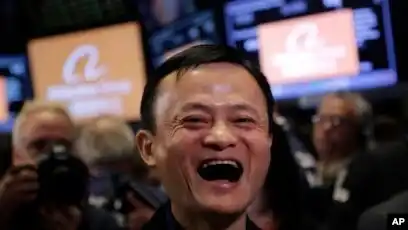
Back then, Alibaba was the combination of Taobao, Tmall, Alipay, Cainiao, Alibaba Cloud, and China's e-commerce infrastructure.

It represented a rapidly rising Chinese middle class, a continuously digitizing consumer market, and a Chinese growth story that global investors had long imagined but found hard to buy into directly.

In a sense, the 2014 Alibaba was the company closest to being the "gateway to the era" in the eyes of the capital market at that time.

Alibaba's listing made global investors realize that China could also have world-class internet platforms, entering the first tier of global tech companies, an influence that remains profound today. Simultaneously, it catalyzed the golden age of Chinese ADRs, sparking a wave of Chinese internet companies rushing to list.

In turn, it also forced the Hong Kong capital market to change.

Alibaba initially did consider Hong Kong, but its partnership structure conflicted with the Hong Kong exchange's "one share, one vote" rules at the time. Eventually, Alibaba chose to list in the U.S.

Years later, the Hong Kong exchange reformed its listing rules, allowing new economy companies with weighted voting rights to list. Companies like Xiaomi and Meituan were able to go public, and Alibaba later conducted a secondary listing in Hong Kong.

Thereafter, Alibaba's e-commerce empire entered a golden period of expansion, and in October 2020, its market capitalization peaked at $630 billion, reaching its historical zenith. During that phase, Alibaba planted a seed that wasn't the main character then, but helped Alibaba successfully transform until the AI era.

From "Pick One" to Being Surpassed by Pinduoduo in Market Cap

Just one month after Alibaba's market cap peaked, Ant Group's IPO was halted, abruptly ending the trillion-dollar valuation financial listing dream. This also marked the beginning of Alibaba's decline from its peak.

In 2021, Alibaba was fined 18.228 billion RMB for platform "Pick One" monopoly practices, setting a domestic antitrust penalty record.

The reason for the massive fine was that Alibaba, since before 2015, had abused its dominant market position by requiring merchants on its platform to exclusively open stores or participate in promotional activities on Alibaba's platform, seriously harming merchants' rights and constituting monopolistic behavior.

Subsequently, in December 2023, it was ordered to compensate JD.com 1 billion RMB, settling the decade-long "Pick One" feud.

During this period, the big-company malaise proliferated at Alibaba. Formalism and bureaucracy became rampant, with little innovation left. The sexual assault incident involving a female employee boiled over, triggering national舆论, ultimately leading to the resignation of several executives. CEO Zhang Yong publicly apologized, and Alibaba's value system was severely questioned.

Strategic misjudgments in multiple ventures during its expansion not only cost Alibaba hundreds of billions but also caused it to lose its core e-commerce moat. Alibaba bet on consumption upgrade, causing Taobao to lose its "cheap" positioning, with the market being captured by Pinduoduo. Taobao and Tmall's market share accelerated its decline from 66% in 2019 to around 30% today;

After 2016, it proposed the "New Retail" strategy, investing hundreds of billions attempting to integrate online and offline, investing in or acquiring Intime, Sun Art Retail, Suning.com, etc., all at significant losses, missing the golden period of short video and live-streaming e-commerce.

The Digital Media and Entertainment segment lost 60 billion RMB over 8 years, with its industry position continuously declining. After acquiring Youku, it fell from first place to fourth in the industry, being completely surpassed by Tencent Video and iQiyi. Xiami Music shut down in 2021. Applying technology and capital thinking to operate creative industries, it lacked content genes.

Local living services continued to be suppressed by Meituan. Then, at the end of November 2023, Pinduoduo's market cap surpassed Alibaba's for the first time. Ma Yun responded on the internal network, "Alibaba will change, Alibaba will reform," mentioning, "The AI e-commerce era has just begun."

Alibaba reached its darkest hour, and AI became Alibaba's new antidote.

AI Era Layout

Currently, Alibaba has a strong presence in the AI field. Its Tongyi Qianwen model reached a peak of 300 million monthly active users on the consumer side. Alibaba Cloud's Q1 total revenue reached 41.6 billion RMB, a year-on-year increase of 38%, with AI-related products accounting for 30% of revenue;

Alibaba Cloud has ranked first in China's public cloud IaaS market share for many consecutive years, becoming the core infrastructure for AI development in China.

It is investing in self-developed chips for AI training, and the large model is now embedded into ecosystems like Taobao, Alipay, Amap, and Feishu, accelerating commercialization. However, current challenges remain evident.

On the consumer side, it is still suppressed by ByteDance. Doubao's monthly active users far exceed Qianwen's, with higher user stickiness. After the Spring Festival activities, Qianwen's active users dropped to around 150 million.

The departure of Tongyi Qianwen's head, Lin Junyan, caused team turbulence. Competition for top AI talent is intensifying, and Alibaba's appeal is diminishing; Alibaba is wavering between AI traffic entrances (C-end users) and AI industry networks (ToB services), failing to form a clear differentiated positioning, and its technical roadmap is unstable.

Looking back at Alibaba's rise and fall over the twelve years since its listing, the fate of giants is clearly visible.

In 2014, the capital market gave Alibaba a super-high valuation, betting on the era红利 of China's consumer internet;

The subsequent years of setbacks stemmed from reckless strategic diversification driven by blind expansion, decision-making delays caused by big-company malaise, and era misjudgments from轻视 emerging sectors;

Ultimately, relying on AI for recovery proves that hardcore technology is the fundamental underpinning for tech companies to navigate through cycles.


Preguntas relacionadas

QWhat was the significance of Alibaba's IPO in 2014?

AAlibaba's IPO in 2014 set the record for the largest IPO in U.S. stock market history at that time, raising over $25.03 billion. It signaled the arrival of a world-class Chinese internet platform, propelled the company into the top tier of global tech firms, and triggered a wave of Chinese internet companies listing overseas.

QWhat major challenges did Alibaba face leading to its decline from its peak?

AAlibaba faced several major challenges, including the suspension of Ant Group's IPO, a record $2.8 billion antitrust fine for 'choosing one from two' practices, internal issues like bureaucracy and public scandals, and strategic missteps in e-commerce (losing market share to Pinduoduo), new retail investments, and the digital entertainment sector.

QHow has AI become a new focus for Alibaba according to the article?

AAI has become a new strategic focus for Alibaba. Its Tongyi Qianwen model has reached up to 300 million monthly active users. AI-related products contribute 30% of Alibaba Cloud's revenue, and the model is being integrated across its ecosystem (Taobao, Alipay, etc.). However, it faces challenges like competition from ByteDance's Doubao and talent retention.

QWhat impact did Alibaba's 2014 U.S. listing have on the Hong Kong stock exchange?

AAlibaba's choice to list in the U.S. due to conflicts with Hong Kong's 'one share, one vote' rule prompted the Hong Kong Stock Exchange to later reform its listing rules. It began allowing dual-class share structures for new economy companies, enabling listings from firms like Xiaomi and Meituan, and facilitating Alibaba's own secondary listing in Hong Kong.

QWhat key rules did Elon Musk reportedly rewrite for SpaceX's IPO as mentioned in the article?

AFor SpaceX's IPO, Elon Musk reportedly rewrote key IPO rules by allocating 30% of new shares to retail investors (far above the typical 5-10%) and pushing the overall underwriting fee rate below 0.75%, setting a new low for mega-IPOs and challenging institutional dominance.

Lecturas Relacionadas

Must-Watch Events Next Week|CLARITY Act Could Face Senate Vote; SpaceX, Circle to Report Earnings (8.3-8.9)

**Summary: Key Events and Developments to Watch (August 3-9)** The upcoming week is marked by significant financial disclosures, key legislative deadlines, and notable product updates. **Major Financial Events:** Several companies are scheduled to release their Q2 2026 earnings. American Bitcoin (ABTC) will report on August 3, followed by SpaceX and Hut 8 Mining Corp. on August 4, and Circle on August 5. Notably, a significant portion of SpaceX shares (up to 12% of total shares) will be unlocked on August 6 following their earnings release. **Key Legislative Deadline:** The U.S. Senate faces an August 7 deadline to secure 60 votes for the CLARITY Act, a bipartisan bill aiming to establish a federal regulatory framework for cryptocurrencies. The Senate may hold a full vote on the bill during the week. **Economic Data:** The U.S. July Non-Farm Payrolls report will be released on August 7, providing crucial labor market data. **Technology & Product Updates:** * **Shutdowns:** DeFi portfolio tracker Zapper and wallet app Ctrl Wallet will cease operations on August 3. * **Upgrades:** LayerZero will deprecate its v1 relayers on August 3. XRP Ledger's new version 3.3.0, featuring five new functions, is expected next week. * **AI:** Elon Musk announced that the advanced Grok 4.6 AI model is set for release around August 7. * **Bitcoin:** The BIP-110 forced signaling for a potential Bitcoin network change is scheduled to begin around August 8. **Other Notable Events:** Chinese robotics firm Unitree Tech has set its preliminary price inquiry for its IPO for August 5. South Korean exchange Upbit will delist AQT and AERGO tokens on August 3.

marsbitHace 5 min(s)

Must-Watch Events Next Week|CLARITY Act Could Face Senate Vote; SpaceX, Circle to Report Earnings (8.3-8.9)

marsbitHace 5 min(s)

Stocks Are Plummeting More Sharply Than Cryptocurrencies. Where Has the Money Gone?

Stock Markets Plunge Deeper Than Cryptocurrencies: Where Did the Money Go? In late July, Seoul's Kospi index triggered circuit breakers for two consecutive days, plummeting over 40% from its June high. The collapse was led by heavyweight stocks like SK Hynix, whose record profits still disappointed investors, and devastating leveraged ETFs, with one major product losing over 83% of its value. This signaled a global, forced deleveraging targeting the most crowded trades. Interestingly, while stocks exhibited extreme volatility akin to crypto markets, Bitcoin rose nearly 15% in July after a prior steep drop. Analysis shows the money fleeing equities did not flow into Bitcoin. Instead, Bitcoin had already absorbed its sell-off in May-June, when U.S. spot Bitcoin ETFs saw historic outflows. The true safe-haven beneficiary was gold, whose price rose over 20% year-on-year, highlighting a decoupling between Bitcoin and gold as "digital gold." The sell-off was a targeted unwinding of leveraged positions in tech and semiconductors, accelerated by broker-dealer risk management and shifts in the AI narrative, including new competition from Chinese memory chipmakers. The retreat path was clear: from high-valuation tech stocks to cash and U.S. Treasuries, then to gold. For Bitcoin to attract sustained institutional inflows, conditions like eased global liquidity pressure, a "soft-landing" Fed rate cut, and U.S. regulatory clarity via legislation like the stalled CLARITY Act are needed. Currently, Bitcoin is not a safe haven but an already-cleared asset. Its low correlation with tech stocks, however, makes it a potential diversification play for institutional portfolios once the storm passes. The money isn't here yet, but the positioning is underway.

marsbitHace 5 min(s)

Stocks Are Plummeting More Sharply Than Cryptocurrencies. Where Has the Money Gone?

marsbitHace 5 min(s)

In Conversation with Ray Dalio: We Are Currently in an AI Bubble, with 1% of My Portfolio in Bitcoin

Ray Dalio, founder of Bridgewater Associates, warns in an interview that the current AI boom shows classic bubble characteristics, which could lead to significant economic downturns as seen in past cycles like 1929 or 2000. He explains that speculative enthusiasm, fueled by debt and overvaluation, often precedes a crash when rising rates or taxation force asset sales, causing widespread losses and recession. Dalio also outlines his "Big Cycle" theory, describing an approximate 80-year pattern where widening wealth gaps, massive government deficits, and shifting geopolitical power (like China's rise) create internal conflict and global instability. He emphasizes that we are in a late-cycle, transitional phase where traditional powers like the US and UK face decline. For personal wealth protection, Dalio advises diversification beyond cash into assets like stocks, bonds, real estate, and particularly gold, which he prefers over Bitcoin. While he holds about 1% of his portfolio in Bitcoin as a non-printable hard asset, he views gold as more secure from technological or governmental threats. Regarding AI's impact, Dalio believes it will disproportionately benefit capital owners, worsening inequality by replacing both physical and cognitive labor. He suggests that human intuition and emotional intelligence, combined with AI, will be key for future workers. On taxation, Dalio argues that wealth taxes are impractical and risk triggering asset sell-offs, reducing productive investment. He points to the UK as a cautionary example of debt, low productivity, and political strife. Geopolitically, Dalio foresees a more regionalized world, with the US showing weakness in prolonged conflicts like with Iran, akin to past imperial declines. The ideal outcome, he suggests, is coexisting powerful blocs (e.g., Americas, China-Asia Pacific) without major war.

marsbitHace 4 hora(s)

In Conversation with Ray Dalio: We Are Currently in an AI Bubble, with 1% of My Portfolio in Bitcoin

marsbitHace 4 hora(s)

Daily 7.2 Trillion KRW: Foreign Capital's Record Net Buying on Friday! Wall Street Says Headwinds for Korean Stock Fund Flows Have Subsided

South Korean stock market sees a dramatic shift in fund flows. On July 31, foreign investors made a record net purchase of approximately KRW 7.2 trillion in KOSPI stocks, marking a fundamental reversal from the persistent large-scale net outflows seen in previous months. This contributed to a significant narrowing of foreign net selling in July to KRW 9.8 trillion, down sharply from KRW 48.4 trillion in June and KRW 44.5 trillion in May. Simultaneously, domestic institutional pressure eased. South Korean pension funds and asset managers turned to a net buying position in July, purchasing KRW 1.0 trillion worth of KOSPI shares, contrasting with net sales in May and June. Market volatility is expected to be dampened by new financial regulations. Effective July 31, the Financial Services Commission tightened access for retail investors to single-stock leveraged ETFs by raising the minimum cash deposit requirement. Trading volumes for these products subsequently dropped to about 50% of their monthly average. Citigroup Research maintains its year-end KOSPI target of 10,000 points. The firm cites several supportive factors: the substantial easing of headwinds from capital outflows, a robust fundamental outlook for the semiconductor sector, historically low market valuations, strong economic fundamentals, and the potential for policy support from financial authorities if needed.

marsbitHace 4 hora(s)

Daily 7.2 Trillion KRW: Foreign Capital's Record Net Buying on Friday! Wall Street Says Headwinds for Korean Stock Fund Flows Have Subsided

marsbitHace 4 hora(s)

Trading

Spot
活动图片




