South Korea Advances Tokenized Securities Framework Amid Crypto Regulation Push

bitcoinistPublicado a 2026-01-17Actualizado a 2026-01-17

Resumen

South Korea's National Assembly has passed key amendments to the Capital Markets Act and Electronic Securities Act, establishing a legal framework for issuing and trading tokenized securities using distributed ledger technology. The new rules define tokenized securities as legitimate financial instruments, including debt and equity products, and permit their distribution through licensed intermediaries. The legislation, expected to take effect in January 2027, aims to enhance investment accessibility and information. This move is part of broader crypto regulatory efforts, including plans to allow Bitcoin ETFs this year, develop stablecoin rules, and lift the ban on institutional crypto trading with proposed investment limits.

As South Korea intensifies its push for crypto regulation, lawmakers have advanced a bill to establish a legal framework for issuing and trading security token offerings (STOs) using distributed ledger technology (DLT).

Lawmakers Amend Framework For Tokenized Securities

On Thursday, South Korea’s National Assembly passed key amendments to the Capital Markets Act and the Electronic Securities Act, creating a legal framework for the issuance and distribution of tokenized securities.

According to an official government release, the revised rules define tokenized securities as a broad category that extends to both debt and equity products, and recognize them as legitimate financial instruments.

The amendments to the Electronic Securities Act will allow qualified issuers to launch tokenized securities using distributed ledger technology. Meanwhile, the Capital Markets Act changes will enable the products to be traded as investment contract securities on brokerages and other licensed intermediaries.

Notably, the existing Capital Markets Act prohibited the distribution through securities firms, deeming investment contract securities “unsuitable for distribution due to their non-standard characteristics.”

The changes are “expected to enhance accessibility to investments and improve the provision of investment information for these securities,” the official government release stated.

After legislative approval, the bill will be submitted to the State Council, followed by official presidential promulgation. Therefore, the legislation is expected to be enacted one year after being signed into law, tentatively in January 2027.

Moreover, the Financial Services Commission (FSC) is set to lead the implementation, forming a joint “Token Securities Council” with relevant agencies to ensure seamless preparatory work, including the development of supporting infrastructure and enhanced safeguards.

The consultation body will comprise the FSC, the Financial Supervisory Service, the Korea Securities Depository, the Financial Investment Association, industry participants, and experts.

South Korea’s Crypto Regulatory Push Continues

This major step follows South Korea’s efforts to develop and establish clear, comprehensive rules to regulate the local crypto industry. Last week, the government shared its 2026 Economic Growth Strategy, which included a plan to open its market to Bitcoin (BTC) Exchange-Traded Funds (ETFs) this year.

Crypto-based ETFs have been banned in South Korea since 2017. In 2024, the country’s regulator reaffirmed its stance after the US Securities and Exchange Commission (SEC) approved the investment products. However, it has now cited the success of the US and Hong Kong’s crypto funds as a key factor for their shift.

The FSC will also accelerate the next phase of its digital asset legislation this quarter to establish a clear regulatory framework for stablecoins. As reported by Bitcoinist, South Korea’s Second Phase of the Virtual Asset User Protection Act was delayed until the start of 2026 due to an ongoing disagreement between the FSC and the Bank of Korea (BOK).

The financial authorities have been clashing for months over rules related to the issuance and distribution of stablecoins, disagreeing on the extent of banks’ role in the issuance of won-pegged tokens.

Nonetheless, the main policies of the crypto framework have been decided, set to include investor protection measures, such as no-fault liability for crypto asset operators and isolation of bankruptcy risks for stablecoin issuers.

Moreover, the country is lifting its long-standing ban on institutional crypto trading, which is anticipated to begin later this year. According to local reports, the FSC is considering a rule to limit corporate cryptocurrency investments at 5% of a company’s equity capital.

Under the latest proposal, eligible firms would be able to allocate up to 5% of equity capital per year to digital assets, limited to the top 20 cryptocurrencies by market capitalization. The final draft version could be released as early as January or February.
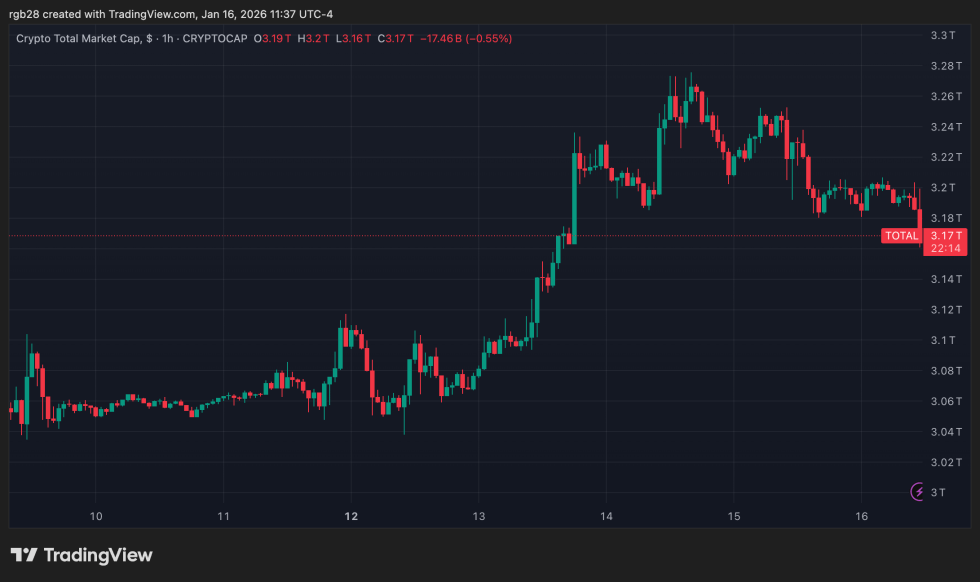
The total crypto market capitalization is at $3.17 trillion on the one-week chart. Source: TOTAL on TradingView


Preguntas relacionadas

QWhat is the purpose of the bill advanced by South Korean lawmakers regarding tokenized securities?

AThe bill aims to establish a legal framework for the issuance and trading of security token offerings (STOs) using distributed ledger technology (DLT), defining them as legitimate financial instruments and allowing their trade on licensed intermediaries.

QWhich two acts were amended by South Korea's National Assembly to create the legal framework for tokenized securities?

AThe National Assembly passed key amendments to the Capital Markets Act and the Electronic Securities Act.

QWhen is the tokenized securities legislation expected to be enacted after being signed into law?

AThe legislation is expected to be enacted one year after being signed into law, tentatively in January 2027.

QWhat is the Financial Services Commission (FSC) planning to form to ensure seamless preparatory work for tokenized securities?

AThe FSC is forming a joint 'Token Securities Council' with relevant agencies, including the Financial Supervisory Service, the Korea Securities Depository, the Financial Investment Association, industry participants, and experts.

QWhat recent change did South Korea announce regarding Bitcoin ETFs and institutional crypto trading?

ASouth Korea plans to open its market to Bitcoin ETFs this year and is lifting its long-standing ban on institutional crypto trading, with a proposed rule to cap corporate cryptocurrency investments at 5% of a company's equity capital.

Lecturas Relacionadas

Google and Amazon Simultaneously Invest Heavily in a Competitor: The Most Absurd Business Logic of the AI Era Is Becoming Reality

In a span of four days, Amazon announced an additional $25 billion investment, and Google pledged up to $40 billion—both direct competitors pouring over $65 billion into the same AI startup, Anthropic. Rather than a typical venture capital move, this signals the latest escalation in the cloud wars. The core of the deal is not equity but compute pre-orders: Anthropic must spend the majority of these funds on AWS and Google Cloud services and chips, effectively locking in massive future compute consumption. This reflects a shift in cloud market dynamics—enterprises now choose cloud providers based on which hosts the best AI models, not just price or stability. With OpenAI deeply tied to Microsoft, Anthropic’s Claude has become the only viable strategic asset for Google and Amazon to remain competitive. Anthropic’s annualized revenue has surged to $30 billion, and it is expanding into verticals like biotech, positioning itself as a cross-industry AI infrastructure layer. However, this funding comes with constraints: Anthropic’s independence is challenged as it balances two rival investors, its safety-first narrative faces pressure from regulatory scrutiny, and its path to IPO introduces new financial pressures. Globally, this accelerates a "tri-polar" closed-loop structure in AI infrastructure, with Microsoft-OpenAI, Google-Anthropic, and Amazon-Anthropic forming exclusive model-cloud alliances. In contrast, China’s landscape differs—investments like Alibaba and Tencent backing open-source model firm DeepSeek reflect a more decoupled approach, though closed-source models from major cloud providers still dominate. The $65 billion bet is ultimately about securing a seat at the table in an AI-defined future—where missing the model layer means losing the cloud war.

marsbitHace 12 min(s)

Google and Amazon Simultaneously Invest Heavily in a Competitor: The Most Absurd Business Logic of the AI Era Is Becoming Reality

marsbitHace 12 min(s)

Computing Power Constrained, Why Did DeepSeek-V4 Open Source?

DeepSeek-V4 has been released as a preview open-source model, featuring 1 million tokens of context length as a baseline capability—previously a premium feature locked behind enterprise paywalls by major overseas AI firms. The official announcement, however, openly acknowledges computational constraints, particularly limited service throughput for the high-end DeepSeek-V4-Pro version due to restricted high-end computing power. Rather than competing on pure scale, DeepSeek adopts a pragmatic approach that balances algorithmic innovation with hardware realities in China’s AI ecosystem. The V4-Pro model uses a highly sparse architecture with 1.6T total parameters but only activates 49B during inference. It performs strongly in agentic coding, knowledge-intensive tasks, and STEM reasoning, competing closely with top-tier closed models like Gemini Pro 3.1 and Claude Opus 4.6 in certain scenarios. A key strategic product is the Flash edition, with 284B total parameters but only 13B activated—making it cost-effective and accessible for mid- and low-tier hardware, including domestic AI chips from Huawei (Ascend), Cambricon, and Hygon. This design supports broader adoption across developers and SMEs while stimulating China's domestic semiconductor ecosystem. Despite facing talent outflow and intense competition in user traffic—with rivals like Doubao and Qianwen leading in monthly active users—DeepSeek has maintained technical momentum. The release also comes amid reports of a new funding round targeting a valuation exceeding $10 billion, potentially setting a new record in China’s LLM sector. Ultimately, DeepSeek-V4 represents a shift toward open yet realistic infrastructure development in the constrained compute landscape of Chinese AI, emphasizing engineering efficiency and domestic hardware compatibility over pure model scale.

marsbitHace 49 min(s)

Computing Power Constrained, Why Did DeepSeek-V4 Open Source?

marsbitHace 49 min(s)

Trading

Spot
Futuros

Artículos destacados

Cómo comprar PUSH

¡Bienvenido a HTX.com! Hemos hecho que comprar Push Protocol (PUSH) sea simple y conveniente. Sigue nuestra guía paso a paso para iniciar tu viaje de criptos.Paso 1: crea tu cuenta HTXUtiliza tu correo electrónico o número de teléfono para registrarte y obtener una cuenta gratuita en HTX. Experimenta un proceso de registro sin complicaciones y desbloquea todas las funciones.Obtener mi cuentaPaso 2: ve a Comprar cripto y elige tu método de pagoTarjeta de crédito/débito: usa tu Visa o Mastercard para comprar Push Protocol (PUSH) al instante.Saldo: utiliza fondos del saldo de tu cuenta HTX para tradear sin problemas.Terceros: hemos agregado métodos de pago populares como Google Pay y Apple Pay para mejorar la comodidad.P2P: tradear directamente con otros usuarios en HTX.Over-the-Counter (OTC): ofrecemos servicios personalizados y tipos de cambio competitivos para los traders.Paso 3: guarda tu Push Protocol (PUSH)Después de comprar tu Push Protocol (PUSH), guárdalo en tu cuenta HTX. Alternativamente, puedes enviarlo a otro lugar mediante transferencia blockchain o utilizarlo para tradear otras criptomonedas.Paso 4: tradear Push Protocol (PUSH)Tradear fácilmente con Push Protocol (PUSH) en HTX's mercado spot. Simplemente accede a tu cuenta, selecciona tu par de trading, ejecuta tus trades y monitorea en tiempo real. Ofrecemos una experiencia fácil de usar tanto para principiantes como para traders experimentados.

192 Vistas totalesPublicado en 2024.12.13Actualizado en 2025.03.21

Cómo comprar PUSH

Discusiones

Bienvenido a la comunidad de HTX. Aquí puedes mantenerte informado sobre los últimos desarrollos de la plataforma y acceder a análisis profesionales del mercado. A continuación se presentan las opiniones de los usuarios sobre el precio de PUSH (PUSH).

活动图片












