Some Issues Are Better Discussed in Person: Summer of Ethereum 2026 Is Here!

marsbitPublicado a 2026-05-15Actualizado a 2026-05-15

Resumen

Summer of Ethereum 2026 is returning, focused on bringing crucial discussions about Ethereum's long-term development to in-person meetups across multiple cities. Organized by LXDAO and ETHPanda, the initiative aims to move beyond online discourse and event scheduling by addressing Ethereum's systemic challenges through real-world connections. The core question this year is the value of offline gatherings for the Ethereum community. While online discussions on topics like the roadmap, L2, account abstraction, and governance are abundant, they often lack depth and alignment. The goal is to bring these fragmented, complex issues—such as UX, developer tools, public goods, and local community building—into shared physical spaces to foster deeper understanding, trust, and actionable collaboration. The program will not follow a rigid format but will adapt to each city's context, potentially including talks, panels, workshops, and community gatherings. Key discussion areas include protocol evolution, Ethereum UX/account abstraction, real-world applications, developer tools, and sustainable community governance. The aim is for each event to leave behind clearer problems, stronger personal connections, and tangible follow-up actions. The call is open to developers, researchers, students, community members, local organizers, projects, and media partners. Participation is encouraged whether one brings deep expertise or just genuine curiosity. For Ethereum's ecosystem—built on principl...

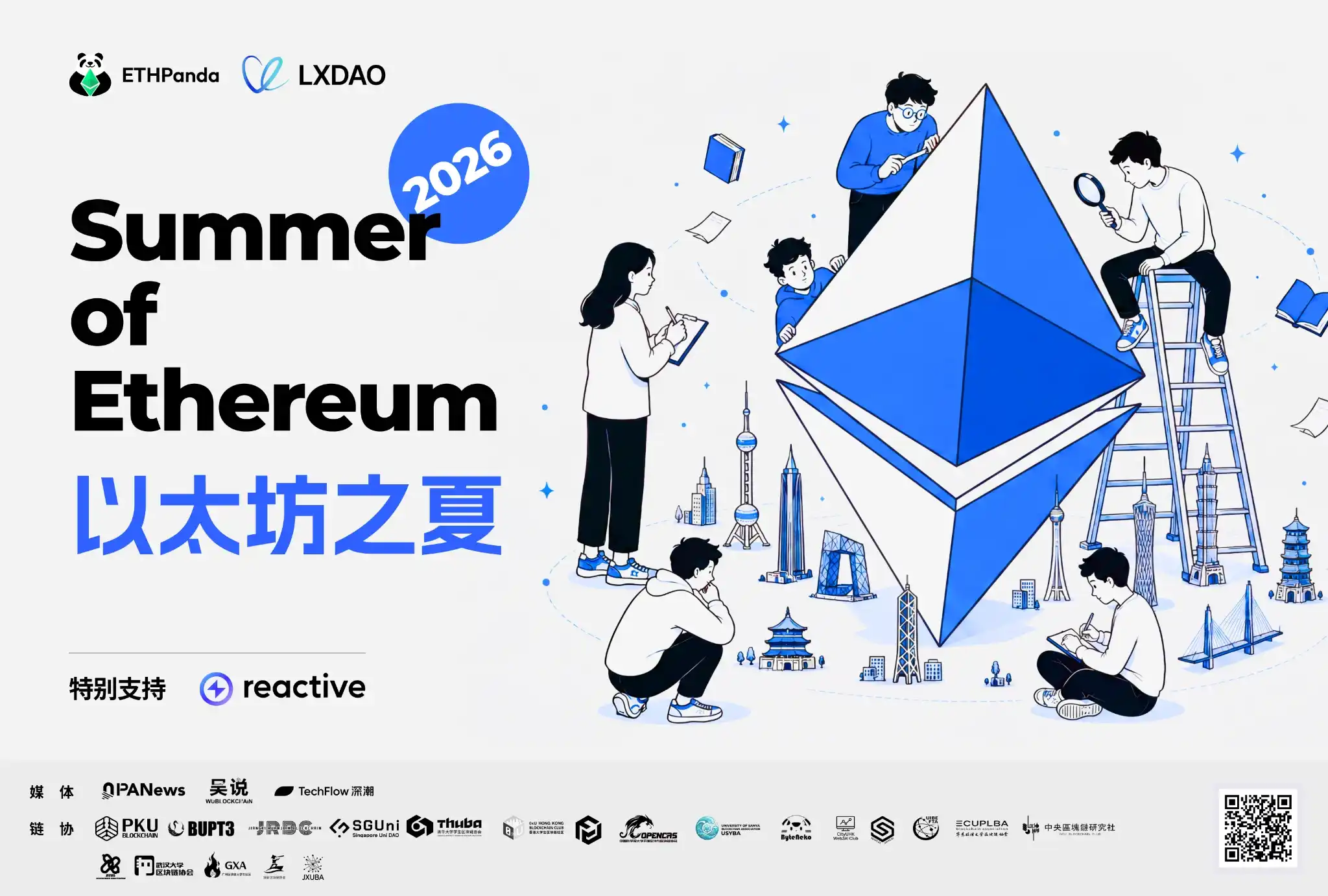
Summer of Ethereum 2026 is setting sail once again. This year, LXDAO × ETHPanda aims to bring the discussion about Ethereum's long-term development to more cities on-site: not just by scheduling a series of events, but by focusing on the key challenges Ethereum is currently facing, connecting developers, researchers, community organizers, project teams, and ecosystem partners. Together, we aim to clarify the issues, connect people, and genuinely foster new collaborations.

The preparations for Summer of Ethereum 2026 have been underway for some time. The further we go, the more we realize: this isn't just about slotting a few events into the calendar, nor is it about finding a few speakers, making some posters, and opening a few registration links, and then calling it a day.

The real difficulty lies in answering a more fundamental question:

What is the actual value of offline gatherings for the Ethereum community this year?

Over the past few years, the discussion around Ethereum has been extremely dense. Roadmaps, L2, Account Abstraction, wallet UX, public goods, governance, application adoption, developer growth... every topic is important, and every topic is complex. But often, these discussions remain confined to articles, Twitter, meeting notes, online calls, and chats within small circles. There's a lot of information, but making sense of it is hard; there are many opinions, but not necessarily many people sitting down together to align.

Once an issue is identified, the next step is to bring the discussion from online back to the physical world.

It's not about creating a new event brand, nor is it about adding a few more lively gatherings to the summer calendar. More importantly, we hope to bring those long-standing, yet often fragmented discussions into real city venues: enabling developers and researchers to meet, letting project teams hear community feedback, helping local organizers find each other, and giving more people who haven't yet entered the core discussions a chance to start with a real-life encounter, to genuinely get closer to what's happening in Ethereum.

Why Focus on "Ethereum's Key Challenges"?

Because Ethereum has reached a stage where it cannot advance solely on singular narratives.

Focusing only on technology easily overlooks real users and application scenarios; focusing only on applications underestimates the importance of protocol, infrastructure, and security boundaries; focusing only on growth pushes issues like public goods, governance, and long-term collaboration to the back burner.

These issues aren't separate items on a checklist; they are systemic challenges intertwined. Wallet UX affects application adoption; L2 and cross-chain UX affect user retention; developer tools affect the entry of new builders; public goods and governance affect whether the ecosystem can sustain open collaboration in the long term.

Therefore, this year's Summer of Ethereum aims to use "Ethereum's Key Challenges" as the central theme. It's not a pre-written, standard answer, but a way to ask questions together:

What are the most pressing issues worth serious discussion for Ethereum's next phase? Which challenges have been repeatedly mentioned but not thoroughly examined? What real experiences, counter-examples, and constructive pathways should be heard by more people?

What's the Most Evident Feeling During Preparation?

The most evident feeling is: the Ethereum community isn't short of ideas or people who care about it, but these people are often scattered across different cities, projects, communities, and contexts.

Some are more concerned with protocol and roadmaps; some care more about wallets, accounts, and UX; some work daily on developer tools; some organize the first Web3 sharing sessions in universities; some deal with very specific user problems in projects; and some are persistently investing effort into public goods, community governance, and local organizational capacity.

If these people only "see" each other online, the connection is superficial. Real change often happens after a specific in-person meeting: a problem gets re-interpreted, a collaboration gets initiated on the spot, a local community realizes they are not an isolated island, a new builder discovers that it's not just about grand narratives but also about tangible work they can get involved in.

These connections might not be as eye-catching as a major launch event, but they are arguably closer to the way the Ethereum community has always grown: slower, more distributed, relying on the continuous building of trust between people.
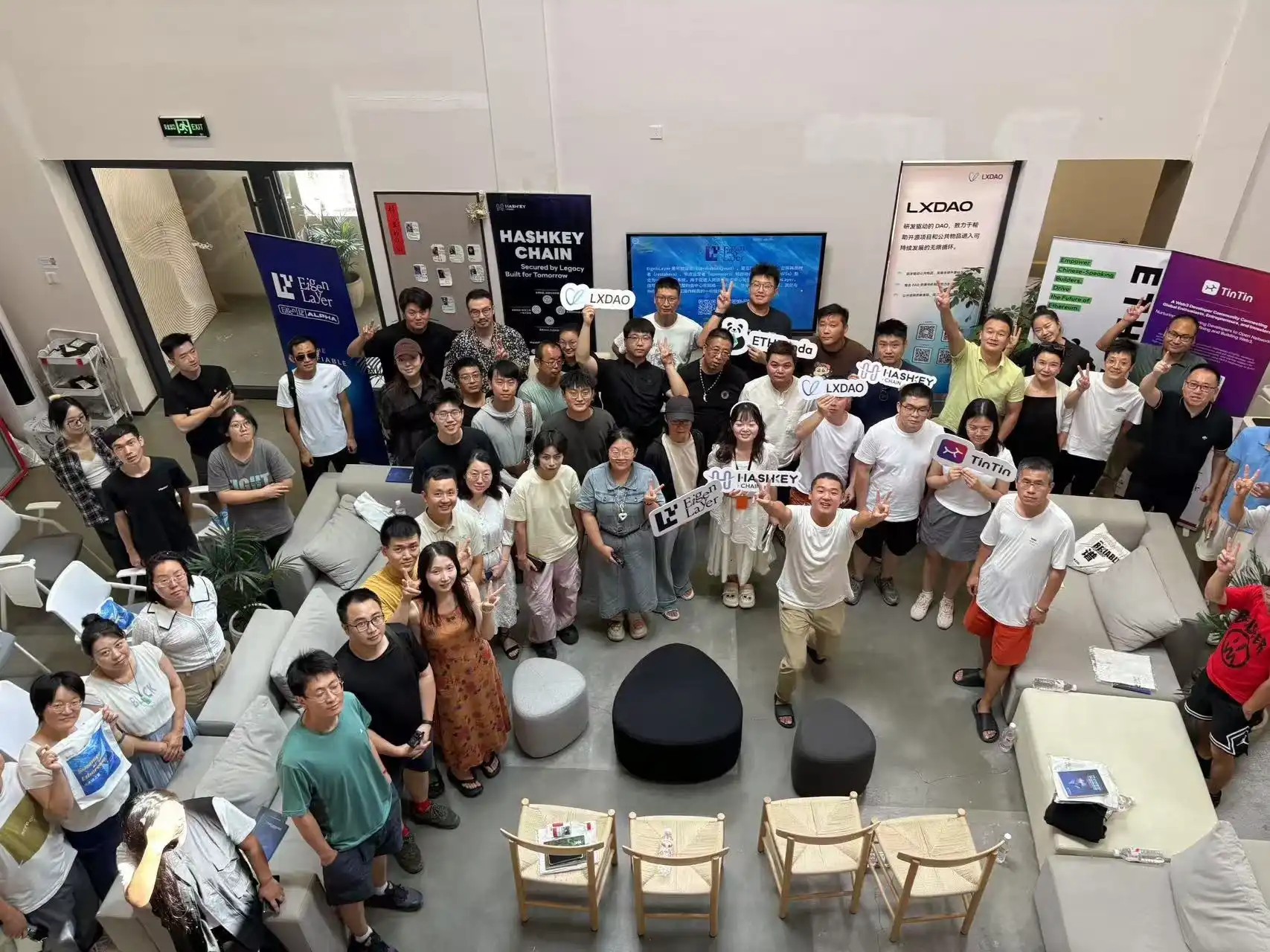
Summer of Ethereum 2025 · Xi'an Station
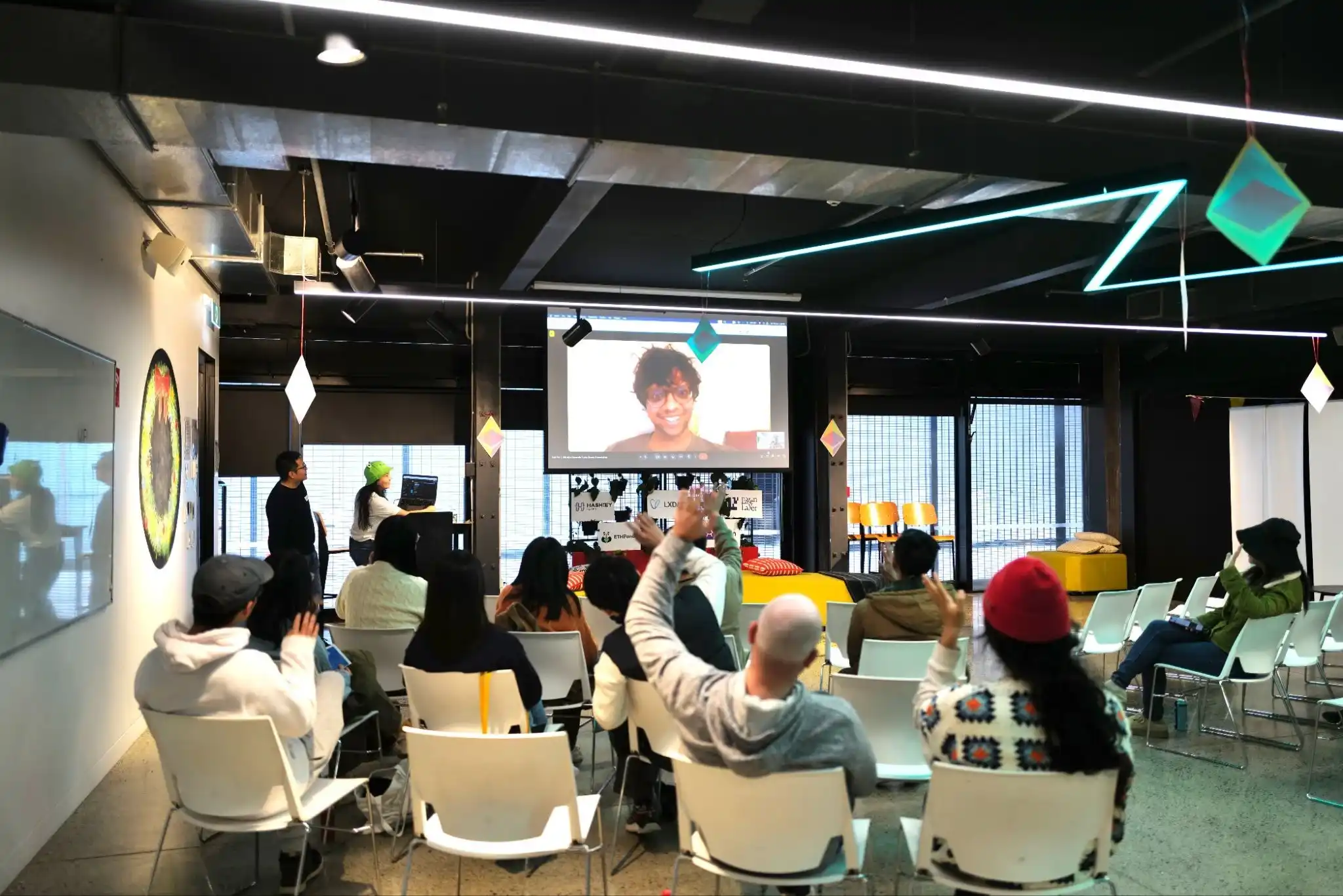
Summer of Ethereum 2025 · Auckland Station

What Will Happen This Year?

Summer of Ethereum 2026 will revolve around multi-city offline events. The event formats in different cities won't necessarily be identical; they could be keynote talks, panels, workshops, local community gatherings, project showcases, developer exchanges, or smaller, more in-depth closed-door discussions.

We hope each event doesn't simply end once it's "done," but leaves behind a few things: clearer problems, more specific connections between people, more credible resource links, and collaborative leads that can be pursued further.

Potential directions currently include:

  • Protocol Evolution & Roadmap: How these long-term topics can be genuinely understood by more builders;

  • Ethereum UX: How wallet, Gas, signing, account recovery, and cross-L2 experiences can become more usable;

  • Account Abstraction, Smart Wallets & Security Boundaries: How to find balance between convenience, permissions, and trust;

  • Stablecoins, Payments & Real-World Applications: How the on-chain world enters more concrete usage scenarios;

  • Developer Tools & Application Building: How to lower the barrier to entry, enabling more people to build sustainably;

  • Public Goods, Governance & Community Collaboration: How an open ecosystem develops longer-term organizational capacity;

  • Cities & Local Community Networks: How builders in different places can be connected, supported, and seen.

These directions won't be treated as a fixed agenda to be covered all at once. They are more like a gradually unfolding map of issues: each city, with its own resources, context, and community foundation, can find the most suitable entry point for local engagement.

Who Is Welcome to Participate?

If you are a developer, researcher, student, community member, or simply someone who has been following Ethereum, you're welcome to attend. Coming with questions is great; there's no need to start from a position of being an "expert." Many truly valuable discussions begin with a simple yet concrete question.

If you are a city lead or local organizer, welcome to bring Summer of Ethereum to your city. You might know local developers, can connect with university clubs, know suitable venues, or simply feel strongly about bringing Ethereum builders in your city together for a meetup. These are all very important starting points.

🐼 Local organizers are welcome to apply to become city co-organizers 👉 https://tally.so/r/pb01Mq

If you are a project team, ecosystem partner, or co-building partner, you're also welcome to participate. We hope collaboration goes beyond being just a name on a logo wall, but involves bringing real issues, technical practices, developer resources, workshops, case studies, and problems to the events.

If you are a media, content, venue, or resource partner, your help is also welcome. Good discussions, if not recorded, organized, and disseminated, easily remain confined to a single evening. We hope these on-site interactions can ultimately be distilled into more reusable content, relationships, and follow-up collaborations.

Why Is This Non-Negotiable?

Because the most important aspect of Ethereum has never been just a technology stack. Behind it, there have always been people who believe that open networks, public goods, verifiable rules, long-term collaboration, and a global community are worth serious building.

But this belief cannot forever stay confined to screens.

When discussions only happen online, people are easily swept along by information flow; when problems only exist in documents, they easily become the specialized language of a few. However, for Ethereum to move forward, it needs more real people to enter the discussions, understand the issues, form judgments, find their place, and then start taking action.

This is also that kind of "non-negotiable" support: not because offline events are inherently important, but because certain trust, judgment, and collaboration only begin to emerge when people truly meet people, and when problems truly land in a physical setting.

It might not be the most grandiose answer, but it can be a very concrete beginning: gathering a group of people who care about Ethereum in one city; putting different perspectives around the same table regarding a real challenge; enabling previously scattered people to have a follow-up because of one meeting.

If this summer, more cities establish new connections because of Summer of Ethereum; more builders enter longer-term collaborations because of an on-site discussion; more key issues transform from abstract concepts into actionable leads that can be pursued further, then this endeavor will have been worthwhile.

All subsequent city events, registration links, and schedule updates will be synchronized on the Luma Calendar. Welcome to follow and subscribe to get the latest event information as soon as possible: https://luma.com/SummerOfEthereum

Welcome to join Summer of Ethereum 2026.

This summer, let's bring the discussion about Ethereum's future back to the real world.

Preguntas relacionadas

QWhat is the core purpose of the Ethereum Summer 2026 initiative, and why is an in-person format emphasized?

AThe core purpose is to move critical discussions about Ethereum's long-term development from online platforms to in-person settings across multiple cities. It's emphasized because the organizers believe that deep trust, nuanced judgment, and real collaboration on complex, systemic challenges (like UX, L2 interoperability, public goods, and governance) are best forged when people meet face-to-face, allowing for alignment and the start of new, distributed collaborations.

QWhat are the 'Ethereum Key Challenges' mentioned as the thematic focus for 2026, and why are they described as 'systemic'?

AThe 'Ethereum Key Challenges' include protocol evolution, Ethereum UX (wallets, gas, signatures), account abstraction, real-world applications (stablecoins, payments), developer tools, public goods/governance, and local community building. They are described as systemic because they are deeply interconnected, not isolated issues. For example, wallet and L2 UX directly impact user adoption and retention, while developer tools and public goods funding affect the ecosystem's long-term sustainability and ability to attract new builders.

QAccording to the article, what was a key insight during the preparation for Ethereum Summer 2026 regarding the community's state?

AA key insight was that while the Ethereum community is full of ideas and dedicated individuals, these people are often dispersed across different cities, projects, and circles (e.g., protocol researchers, UX developers, local organizers). Online visibility creates only shallow connections. Real change and trust-building happen more effectively after specific in-person meetings, which can lead to clarified problems, spontaneous collaborations, and a sense of community for local builders.

QWho is invited to participate in Ethereum Summer 2026, and what roles are they expected to play?

AMultiple groups are invited: 1) Attendees: Developers, researchers, students, community members, and long-time observers are welcome to join discussions. 2) City Organizers/Local Hosts: Individuals or groups who can bring the event to their city by connecting local networks and securing venues. 3) Project Partners: Projects and ecosystem partners are encouraged to contribute real-world issues, technical workshops, and case studies. 4) Resource Partners: Media, content creators, and venue providers are needed to help document, amplify, and sustain the discussions and connections formed.

QWhat does the article suggest is the 'non-negotiable' reason for holding these in-person gatherings, beyond just organizing events?

AThe 'non-negotiable' reason is that the fundamental beliefs underpinning Ethereum—in open networks, public goods, verifiable rules, and long-term global collaboration—cannot remain confined to screens. For Ethereum to progress, more people need to genuinely understand its challenges, form their own judgments, and find their role in the ecosystem. This level of engagement, trust, and actionable insight is something the organizers believe truly begins when 'people meet people and problems land on the ground' in real-life settings.

Lecturas Relacionadas

Breaking: OpenAI Undergoes Major Reorganization, President Brockman Assumes Command

OpenAI has announced a major internal reorganization just months before its anticipated IPO. The company is merging its three flagship product lines—ChatGPT, Codex, and the API platform—into a single, unified product organization. The most significant leadership change involves co-founder and President Greg Brockman moving from a background technical role to take full, permanent control over all product strategy. This follows the indefinite medical leave of AGI Deployment CEO Fidji Simo. Additionally, ChatGPT's longtime lead, Nick Turley, has been reassigned to enterprise products, with former Instagram executive Ashley Alexander taking over consumer offerings. The consolidation, internally framed as a strategic move towards an "Agentic Future," aims to break down internal silos and create a cohesive "Super App." This planned desktop application would integrate ChatGPT's conversational abilities, Codex's coding power, and a rumored internal web browser named "Atlas" to autonomously perform complex user tasks. The reorganization occurs amid significant internal and external pressures. OpenAI has recently seen a wave of high-profile departures, including Sora co-lead Bill Peebles and other senior technical leaders, leading to concerns about a thinning executive bench. Externally, rival Anthropic recently secured funding at a staggering $900 billion valuation, surpassing OpenAI's own. Google's upcoming I/O developer conference also poses a competitive threat. Analysts suggest the dramatic restructure is a pre-IPO move to present a clearer, more focused narrative to Wall Street—streamlining operations and demonstrating decisive leadership under Brockman to counter internal turbulence and intense market competition.

marsbitHace 2 hora(s)

Breaking: OpenAI Undergoes Major Reorganization, President Brockman Assumes Command

marsbitHace 2 hora(s)

Two Survival Structures of Market Makers and Arbitrageurs

Market makers and arbitrageurs represent two distinct survival structures in high-frequency trading. Market makers primarily use limit orders (makers) to profit from the bid-ask spread, enjoying high capital efficiency (nominally 100%) but bearing inventory risk. This "inventory risk" arises from passive, fragmented, and discontinuous order fills in the limit order book (LOB). This risk, while a potential cost, can also contribute to excess profit if managed within control boundaries, allowing for mean reversion. Market makers essentially sell "time" (uncertainty over execution timing) to the market for price control and low fees. In contrast, cross-exchange arbitrageurs typically use market orders (takers) to exploit price differences or funding rates, resulting in lower nominal capital efficiency (requiring capital on both exchanges) and higher transaction costs. Their risk exposure stems from asymmetries in exchange rules (e.g., minimum order sizes), execution latency, and infrastructure risks (e.g., ADL, oracle drift). These exposures are active, exogenous gaps that primarily erode profits rather than contribute to them. Arbitrageurs essentially sell "space" (capital sunk across venues) for localized, immediate certainty. Both strategies engage in a trade-off between execution friction and residual risk. Optimal systems allow for temporary, controlled risk exposure rather than enforcing zero exposure at all costs. Their evolution converges towards hybrid models: arbitrageurs may use maker orders to reduce costs, while market makers may use taker orders or hedges for risk management. Ultimately, both use different forms of risk exposure—market makers exposing inventory, arbitrageurs immobilizing capital—to extract marginal, hard-won certainty from the market.

链捕手Hace 2 hora(s)

Two Survival Structures of Market Makers and Arbitrageurs

链捕手Hace 2 hora(s)

Who Will Define the Rules of the AI Era? Anthropic Discusses the 2028 US-China AI Landscape

This article, based on Anthropic's analysis, outlines the intensifying systemic competition between the U.S./allies and China for AI leadership by 2028. It argues that access to advanced computing power ("compute") is the critical bottleneck, where the U.S. currently holds a significant advantage through chip export controls and allied innovation. However, China's AI labs remain competitive by exploiting policy loopholes—via chip smuggling, overseas data center access, and "model distillation" attacks to copy U.S. model capabilities—keeping them close to the frontier. The piece presents two contrasting scenarios for 2028. In the first, decisive U.S. action to tighten compute controls and curb distillation locks in a 12-24 month AI capability lead, cementing democratic influence over global AI norms, security, and economic infrastructure. In the second, policy inaction allows China to achieve near-parity through continued access to U.S. technology, enabling Beijing to promote its AI stack globally and integrate advanced AI into its military and governance systems, altering the strategic balance. Anthropic contends that maintaining a decisive U.S. lead is essential for shaping safe AI development and governance. The core recommendation is for U.S. policymakers to urgently close compute and model access loopholes while promoting global adoption of the U.S. AI technology stack to secure a lasting strategic advantage.

marsbitHace 4 hora(s)

Who Will Define the Rules of the AI Era? Anthropic Discusses the 2028 US-China AI Landscape

marsbitHace 4 hora(s)

Trading

Spot
Futuros

Artículos destacados

Qué es ETH 2.0

ETH 2.0: Una Nueva Era para Ethereum Introducción ETH 2.0, conocido ampliamente como Ethereum 2.0, marca una actualización monumental para la blockchain de Ethereum. Esta transición no es solo una mejora superficial; busca mejorar fundamentalmente la escalabilidad, seguridad y sostenibilidad de la red. Con un cambio del mecanismo de consenso intensivo en energía Prueba de Trabajo (PoW) a una Prueba de Participación (PoS) más eficiente, ETH 2.0 promete un enfoque transformador para el ecosistema blockchain. ¿Qué es ETH 2.0? ETH 2.0 es un conjunto de actualizaciones interconectadas y distintivas centradas en optimizar las capacidades y el rendimiento de Ethereum. La reestructuración está diseñada para abordar desafíos críticos que el mecanismo actual de Ethereum ha enfrentado, particularmente en lo que respecta a la velocidad de transacción y la congestión de la red. Objetivos de ETH 2.0 Los objetivos principales de ETH 2.0 giran en torno a mejorar tres aspectos clave: Escalabilidad: Con el objetivo de aumentar significativamente el número de transacciones que la red puede manejar por segundo, ETH 2.0 busca superar la limitación actual de aproximadamente 15 transacciones por segundo, potencialmente alcanzando miles. Seguridad: Las medidas de seguridad mejoradas son fundamentales para ETH 2.0, particularmente a través de una mejor resistencia contra ciberataques y la preservación del ethos descentralizado de Ethereum. Sostenibilidad: El nuevo mecanismo PoS está diseñado no solo para mejorar la eficiencia, sino también para reducir drásticamente el consumo de energía, alineando el marco operativo de Ethereum con consideraciones ambientales. ¿Quién es el Creador de ETH 2.0? La creación de ETH 2.0 se puede atribuir a la Fundación Ethereum. Esta organización sin fines de lucro, que desempeña un papel crucial en el apoyo al desarrollo de Ethereum, es liderada por el notable cofundador Vitalik Buterin. Su visión de un Ethereum más escalable y sostenible ha sido la fuerza motriz detrás de esta actualización, involucrando contribuciones de una comunidad global de desarrolladores y entusiastas dedicados a mejorar el protocolo. ¿Quiénes son los Inversores de ETH 2.0? Si bien los detalles sobre los inversores de ETH 2.0 no se han hecho públicos, se sabe que la Fundación Ethereum recibe apoyo de varias organizaciones e individuos en el ámbito de blockchain y tecnología. Estos socios incluyen firmas de capital de riesgo, compañías tecnológicas y organizaciones filantrópicas que comparten un interés mutuo en apoyar el desarrollo de tecnologías descentralizadas e infraestructura blockchain. ¿Cómo Funciona ETH 2.0? ETH 2.0 se distingue por introducir una serie de características clave que lo diferencian de su predecesor. Prueba de Participación (PoS) La transición a un mecanismo de consenso PoS es uno de los cambios más destacados de ETH 2.0. A diferencia de PoW, que se basa en la minería intensiva en energía para la verificación de transacciones, PoS permite a los usuarios validar transacciones y crear nuevos bloques de acuerdo con la cantidad de ETH que apuestan en la red. Esto conduce a una mayor eficiencia energética, reduciendo el consumo en aproximadamente un 99.95%, convirtiendo a Ethereum 2.0 en una alternativa considerablemente más verde. Cadenas Shard Las cadenas shard son otra innovación crítica de ETH 2.0. Estas cadenas más pequeñas operan en paralelo con la cadena principal de Ethereum, lo que permite que múltiples transacciones sean procesadas simultáneamente. Este enfoque mejora la capacidad general de la red, abordando las preocupaciones de escalabilidad que han afectado a Ethereum. Cadena Beacon En el núcleo de ETH 2.0 se encuentra la Cadena Beacon, que coordina la red y gestiona el protocolo PoS. Funciona como un organizador de cierta manera: supervisa a los validadores, asegura que los shards permanezcan conectados a la red y monitorea la salud general del ecosistema blockchain. Cronología de ETH 2.0 El viaje de ETH 2.0 ha estado marcado por varios hitos clave que trazan la evolución de esta importante actualización: Diciembre 2020: El lanzamiento de la Cadena Beacon marcó la introducción de PoS, preparándose para la migración hacia ETH 2.0. Septiembre 2022: La finalización de “La Fusión” representa un momento crucial en el que la red Ethereum se trasladó exitosamente de un marco PoW a uno PoS, anunciando una nueva era para Ethereum. 2023: El lanzamiento esperado de cadenas shard tiene como objetivo mejorar aún más la escalabilidad de la red Ethereum, consolidando a ETH 2.0 como una plataforma robusta para aplicaciones y servicios descentralizados. Características Clave y Beneficios Escalabilidad Mejorada Una de las ventajas más significativas de ETH 2.0 es su escalabilidad mejorada. La combinación de PoS y cadenas shard permite que la red expanda su capacidad, permitiendo acomodar un volumen mucho mayor de transacciones en comparación con el sistema heredado. Eficiencia Energética La implementación de PoS representa un gran paso hacia la eficiencia energética en la tecnología blockchain. Al reducir drásticamente el consumo de energía, ETH 2.0 no solo disminuye los costos operativos, sino que también se alinea más estrechamente con los objetivos de sostenibilidad global. Seguridad Mejorada Los mecanismos actualizados de ETH 2.0 contribuyen a mejorar la seguridad en toda la red. El despliegue de PoS, junto con las medidas de control innovadoras establecidas a través de cadenas shard y la Cadena Beacon, asegura un mayor grado de protección contra posibles amenazas. Costos Más Bajos para los Usuarios A medida que la escalabilidad mejora, los efectos sobre los costos de transacción también serán evidentes. Se espera que una mayor capacidad y una menor congestión se traduzcan en tarifas más bajas para los usuarios, haciendo que Ethereum sea más accesible para transacciones cotidianas. Conclusión ETH 2.0 marca una evolución significativa en el ecosistema blockchain de Ethereum. A medida que aborda problemas fundamentales como la escalabilidad, el consumo de energía, la eficiencia en las transacciones y la seguridad general, la importancia de esta actualización no puede ser subestimada. La transición a la Prueba de Participación, la introducción de cadenas shard y el trabajo fundamental de la Cadena Beacon son indicativos de un futuro donde Ethereum puede satisfacer las crecientes demandas del mercado descentralizado. En una industria impulsada por la innovación y el progreso, ETH 2.0 se erige como un testimonio de las capacidades de la tecnología blockchain para allanar el camino hacia una economía digital más sostenible y eficiente.

166 Vistas totalesPublicado en 2024.04.04Actualizado en 2024.12.03

Qué es ETH 2.0

Qué es ETH 3.0

ETH3.0 y $eth 3.0: Un Examen Profundo del Futuro de Ethereum Introducción En el paisaje en rápida evolución de las criptomonedas y la tecnología blockchain, ETH3.0, a menudo denotado como $eth 3.0, ha surgido como un tema de considerable interés y especulación. El término abarca dos conceptos principales que merecen aclaración: Ethereum 3.0: Esto representa una posible actualización futura destinada a aumentar las capacidades de la blockchain existente de Ethereum, enfocándose particularmente en mejorar la escalabilidad y el rendimiento. ETH3.0 Meme Token: Este proyecto de criptomoneda distinto busca aprovechar la blockchain de Ethereum para crear un ecosistema centrado en memes, promoviendo la participación dentro de la comunidad de criptomonedas. Comprender estos aspectos de ETH3.0 es esencial no solo para los entusiastas de las criptomonedas, sino también para aquellos que observan tendencias tecnológicas más amplias en el espacio digital. ¿Qué es ETH3.0? Ethereum 3.0 Ethereum 3.0 se presenta como una actualización propuesta para la red de Ethereum ya establecida, que ha sido la columna vertebral de muchas aplicaciones descentralizadas (dApps) y contratos inteligentes desde su inicio. Las mejoras previstas se concentran principalmente en la escalabilidad, integrando tecnologías avanzadas como sharding y pruebas de conocimiento cero (zk-proofs). Estas innovaciones tecnológicas tienen como objetivo facilitar un número sin precedentes de transacciones por segundo (TPS), potencialmente alcanzando millones, abordando así una de las limitaciones más significativas que enfrenta la tecnología blockchain actual. La mejora no es meramente técnica, sino también estratégica; está destinada a preparar la red de Ethereum para su adopción generalizada y utilidad en un futuro marcado por una mayor demanda de soluciones descentralizadas. ETH3.0 Meme Token En contraste con Ethereum 3.0, el ETH3.0 Meme Token se aventura en un ámbito más ligero y juguetón al combinar la cultura de memes de internet con la dinámica de las criptomonedas. Este proyecto permite a los usuarios comprar, vender e intercambiar memes en la blockchain de Ethereum, proporcionando una plataforma que fomenta la participación comunitaria a través de la creatividad y los intereses compartidos. El ETH3.0 Meme Token tiene como objetivo demostrar cómo la tecnología blockchain puede intersectarse con la cultura digital, creando casos de uso que son tanto entretenidos como financieramente viables. ¿Quién es el Creador de ETH3.0? Ethereum 3.0 La iniciativa hacia Ethereum 3.0 es impulsada principalmente por un consorcio de desarrolladores e investigadores dentro de la comunidad de Ethereum, incluyendo notablemente a Justin Drake. Conocido por sus ideas y contribuciones a la evolución de Ethereum, Drake ha sido una figura prominente en las discusiones sobre la transición de Ethereum a una nueva capa de consenso, denominada “Beam Chain.” Este enfoque colaborativo para el desarrollo significa que Ethereum 3.0 no es el producto de un creador singular, sino más bien una manifestación de ingenio colectivo centrado en avanzar la tecnología blockchain. ETH3.0 Meme Token Los detalles sobre el creador del ETH3.0 Meme Token son actualmente inidentificables. La naturaleza de los tokens de memes a menudo conduce a una estructura más descentralizada y dirigida por la comunidad, lo que podría explicar la falta de atribución específica. Esto se alinea con la ética de la comunidad cripto más amplia, donde la innovación a menudo surge de esfuerzos colaborativos en lugar de individuales. ¿Quiénes son los Inversores de ETH3.0? Ethereum 3.0 El apoyo a Ethereum 3.0 proviene principalmente de la Fundación Ethereum junto con una entusiasta comunidad de desarrolladores e inversores. Esta asociación fundamental proporciona un grado significativo de legitimidad y mejora la perspectiva de una implementación exitosa, ya que aprovecha la confianza y credibilidad construidas a lo largo de años de operaciones en la red. En el clima cambiando rápidamente de las criptomonedas, el apoyo de la comunidad juega un papel crucial en impulsar el desarrollo y la adopción, posicionando a Ethereum 3.0 como un contendiente serio para futuros avances en blockchain. ETH3.0 Meme Token Si bien las fuentes actualmente disponibles no proporcionan información explícita sobre las fundaciones o organizaciones de inversión que respaldan el ETH3.0 Meme Token, es indicativo del modelo de financiamiento típico para tokens de memes, que a menudo depende del apoyo de base y la participación comunitaria. Los inversores en tales proyectos suelen consistir en individuos motivados por el potencial de innovación impulsada por la comunidad y el espíritu de cooperación que se encuentra dentro de la comunidad cripto. ¿Cómo Funciona ETH3.0? Ethereum 3.0 Las características distintivas de Ethereum 3.0 radican en su implementación propuesta de sharding y tecnología zk-proof. Sharding es un método de particionamiento de la blockchain en piezas más pequeñas y manejables o “shards,” que pueden procesar transacciones de manera concurrente en lugar de secuencial. Esta descentralización del procesamiento ayuda a prevenir la congestión y asegura que la red permanezca receptiva incluso bajo una carga pesada. La tecnología de prueba de conocimiento cero (zk-proof) contribuye con otra capa de sofisticación al permitir la validación de transacciones sin revelar los datos subyacentes involucrados. Este aspecto no solo mejora la privacidad, sino que también aumenta la eficiencia general de la red. También se habla de incorporar una Máquina Virtual de Ethereum de conocimiento cero (zkEVM) en esta actualización, amplificando aún más las capacidades y utilidad de la red. ETH3.0 Meme Token El ETH3.0 Meme Token se distingue al capitalizar la popularidad de la cultura de memes. Establece un mercado para que los usuarios participen en el comercio de memes, no solo por entretenimiento sino también por el posible beneficio económico. Al integrar características como staking, provisión de liquidez y mecanismos de gobernanza, el proyecto fomenta un entorno que incentiva la interacción y participación de la comunidad. Al ofrecer una mezcla única de entretenimiento y oportunidad económica, el ETH3.0 Meme Token tiene como objetivo atraer a una audiencia diversa, que abarca desde entusiastas de las criptomonedas hasta conocedores casuales de memes. Línea de Tiempo de ETH3.0 Ethereum 3.0 11 de noviembre de 2024: Justin Drake insinúa la próxima actualización de ETH 3.0, centrada en mejoras de escalabilidad. Este anuncio significa el comienzo de las discusiones formales sobre la futura arquitectura de Ethereum. 12 de noviembre de 2024: Se espera que la propuesta anticipada para Ethereum 3.0 se desvele en Devcon en Bangkok, preparando el escenario para una mayor retroalimentación de la comunidad y posibles próximos pasos en el desarrollo. ETH3.0 Meme Token 21 de marzo de 2024: El ETH3.0 Meme Token se lista oficialmente en CoinMarketCap, marcando su incursión en el dominio público de las criptomonedas y mejorando la visibilidad de su ecosistema basado en memes. Puntos Clave En conclusión, Ethereum 3.0 representa una evolución significativa dentro de la red de Ethereum, enfocándose en superar las limitaciones en términos de escalabilidad y rendimiento a través de tecnologías avanzadas. Sus actualizaciones propuestas reflejan un enfoque proactivo hacia las demandas y la usabilidad futura. Por otro lado, el ETH3.0 Meme Token encapsula la esencia de la cultura impulsada por la comunidad en el espacio de las criptomonedas, aprovechando la cultura de memes para crear plataformas atractivas que fomentan la creatividad y participación del usuario. Comprender los distintos propósitos y funcionalidades de ETH3.0 y $eth 3.0 es fundamental para cualquiera interesado en los desarrollos en curso dentro del espacio cripto. Con ambas iniciativas abriendo caminos únicos, subrayan colectivamente la naturaleza dinámica y multifacética de la innovación en blockchain.

178 Vistas totalesPublicado en 2024.04.04Actualizado en 2024.12.03

Qué es ETH 3.0

Cómo comprar ETH

¡Bienvenido a HTX.com! Hemos hecho que comprar Ethereum (ETH) sea simple y conveniente. Sigue nuestra guía paso a paso para iniciar tu viaje de criptos.Paso 1: crea tu cuenta HTXUtiliza tu correo electrónico o número de teléfono para registrarte y obtener una cuenta gratuita en HTX. Experimenta un proceso de registro sin complicaciones y desbloquea todas las funciones.Obtener mi cuentaPaso 2: ve a Comprar cripto y elige tu método de pagoTarjeta de crédito/débito: usa tu Visa o Mastercard para comprar Ethereum (ETH) al instante.Saldo: utiliza fondos del saldo de tu cuenta HTX para tradear sin problemas.Terceros: hemos agregado métodos de pago populares como Google Pay y Apple Pay para mejorar la comodidad.P2P: tradear directamente con otros usuarios en HTX.Over-the-Counter (OTC): ofrecemos servicios personalizados y tipos de cambio competitivos para los traders.Paso 3: guarda tu Ethereum (ETH)Después de comprar tu Ethereum (ETH), guárdalo en tu cuenta HTX. Alternativamente, puedes enviarlo a otro lugar mediante transferencia blockchain o utilizarlo para tradear otras criptomonedas.Paso 4: tradear Ethereum (ETH)Tradear fácilmente con Ethereum (ETH) en HTX's mercado spot. Simplemente accede a tu cuenta, selecciona tu par de trading, ejecuta tus trades y monitorea en tiempo real. Ofrecemos una experiencia fácil de usar tanto para principiantes como para traders experimentados.

4.1k Vistas totalesPublicado en 2024.12.10Actualizado en 2025.03.21

Cómo comprar ETH

Discusiones

Bienvenido a la comunidad de HTX. Aquí puedes mantenerte informado sobre los últimos desarrollos de la plataforma y acceder a análisis profesionales del mercado. A continuación se presentan las opiniones de los usuarios sobre el precio de ETH (ETH).

活动图片