Silver Is Soaring, Can Tokenized Silver Amplify Leverage Further?

marsbitPublicado a 2026-01-27Actualizado a 2026-01-27

Resumen

Silver prices have surged dramatically, breaking historical records by reaching over $117 per ounce and accumulating a 517% increase since 2017—outpacing both Bitcoin and gold. With a market cap of approximately $6.18 trillion, silver is the second most valuable asset globally. This rally has spurred interest in tokenized silver as a way to gain exposure, including through leveraged contracts. Two major tokenized silver assets stand out: - **Kinesis Silver (KAG)**, with a market cap of $406 million, is backed by physical silver (1 token = 1 oz), offers global payments and redemption, but carries issuer dependency and regulatory risks. - **iShares Silver Trust (SLV)**, with a $39.5 million market cap, tracks a traditional ETF managed by BlackRock, provides good liquidity and institutional backing, but does not allow physical redemption and incurs management fees. Additionally, leveraged trading is available on platforms like Hyperliquid, Binance (offering up to 20x leverage on XAG/USDT), and Bitget, with significant trading volumes. The surge is driven by factors including Trump’s trade policies, expectations of U.S. interest rate cuts, silver’s new classification as a critical mineral in the U.S., supply constraints, and its role as a hedge amid geopolitical tensions. Analysts suggest the rally may continue due to these structural and macroeconomic tailwinds.

Original|Odaily Planet Daily(@OdailyChina)

Author|Wenser(@wenser 2010)
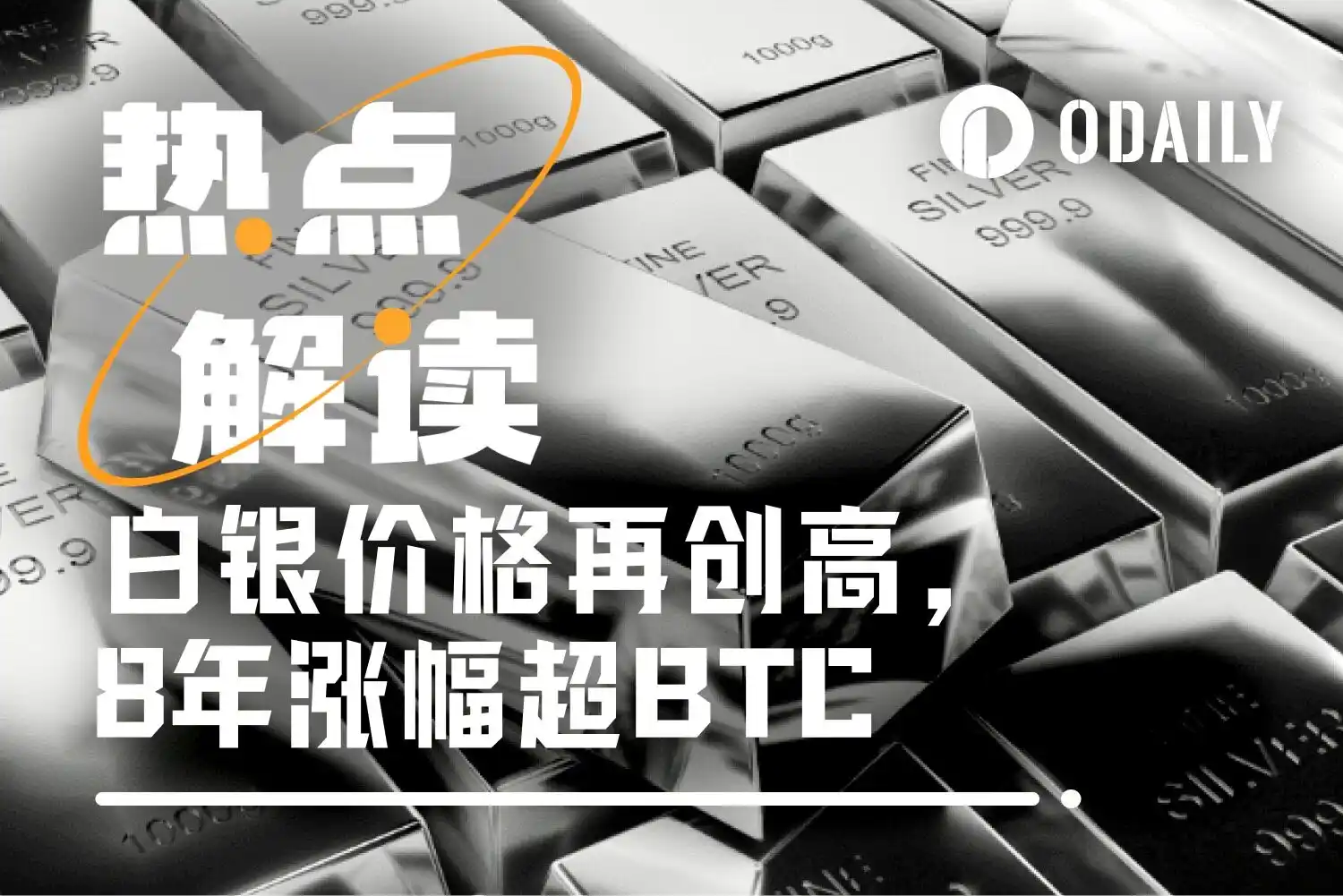
Silver, this precious metal asset once called "poor man's gold," is sweeping the global market with a storm-like momentum. The reason is none other than its terrifying surge.

Recently, the price of silver once broke through $117 per ounce intraday, hitting a record high. As a result, since the high point of the 2017 crypto cycle, silver has officially surpassed Bitcoin's gain (about 500%) and gold's gain (slightly less than 300%) with a cumulative increase of approximately 517%. According to data from the 8marketcap website, the current price of silver is around $110, with a market capitalization reaching $6.18 trillion, ranking second among global assets, second only to gold. Such an astonishing trend naturally triggers market frenzy. Besides buying silver funds or physical silver through traditional brokers or offline stores, tokenized silver might also be an option, especially the leveraged contracts on exchanges and on-chain Perp DEXs.

Current State of Tokenized Silver: Only 2 Targets Have Relatively Good Liquidity

According to data from the Coingecko website, the overall market capitalization of the tokenized silver sector is temporarily reported at approximately $446 million, with a 24-hour increase of about 5.6%; specifically, the tokenized silver with relatively good liquidity are the following 2 types:

Kinesis Silver (KAG): Market cap temporarily reported at $406 million

Like the gold token KAU, the KAG silver token is launched by Kinesis, a British digital asset utility platform registered in the Cayman Islands. Major trading platforms include Kinesis Money, BitMart, UAE exchange Emirex, and others.

It is understood that KAG is backed by fully insured and regularly audited vaults (globally distributed storage), with each token pegged to 1 ounce of investment-grade silver; it supports global real-time payments; supports physical silver redemption; and has no storage fees.

Its potential risks are similar to those of the Tether company, which issues the XAUT gold token. This token highly depends on the asset credibility of the issuer and faces certain regulatory uncertainties. Furthermore, limited by its small market cap, the market depth is relatively average, and market fluctuations may lead to premiums or discounts, relying more on the trading platform to manage order matching.

Nevertheless, information on the Coingecko website shows that KAG's 24-hour trading volume is about $5.5 million, already ranking second in trading volume in the tokenized silver market.

iShares Silver Trust(SLV): Market cap temporarily reported at $39.5 million

A silver token pegged to the iShares Silver Trust, launched by Ondo Finance, holds the corresponding physical silver through the BlackRock iShares Silver Trust (SLV) ETF.

Its advantages lie in tracking a regulated traditional SLV ETF, having good liquidity, and supporting instant minting or redemption (for users outside the US); combining traditional finance with blockchain convenience; institutional-level endorsement; no need to handle physical silver directly.

Its potential risks include: primarily relying on the asset credibility of issuers like BlackRock and Ondo; does not support physical silver ownership or direct redemption; includes certain ETF fund management fee costs; US users are restricted from trading, and it faces potential securities regulatory restrictions.

Main trading platforms include centralized exchanges such as Gate, Bitmart, Bitget, AscendEX, etc.

It is worth mentioning that SLV also supports contract trading, with leverage up to 10x.

Coingecko website information shows that SLVON's 24-hour trading volume is about $21.2 million, ranking first in trading volume in the tokenized silver market.

Besides the two major silver tokens KAG and SLVON, the silver token Silver rStock (SLVR) launched by Solana生态 stock tokenization platform Remora Market, and the Gram Silver (GRAMS) token pegged to 1 gram of silver launched by Token Teknoloji A.Ş also belong to spot tokens, but their market capitalization and liquidity are extremely low. Compared to KAG and SLVON, the price difference from physical silver is larger, and participation in trading is not recommended.

Silver Leverage Trading Platforms: Hyperliquid, Binance, Bitget, and other exchanges

Besides spot silver tokens, currently many US stock tokenization platforms, on-chain Perp DEXs, CEXs, and DEXs have opened leveraged contract trading related to silver, supporting leverage up to 20x. The following are specific trading platforms for readers' reference:

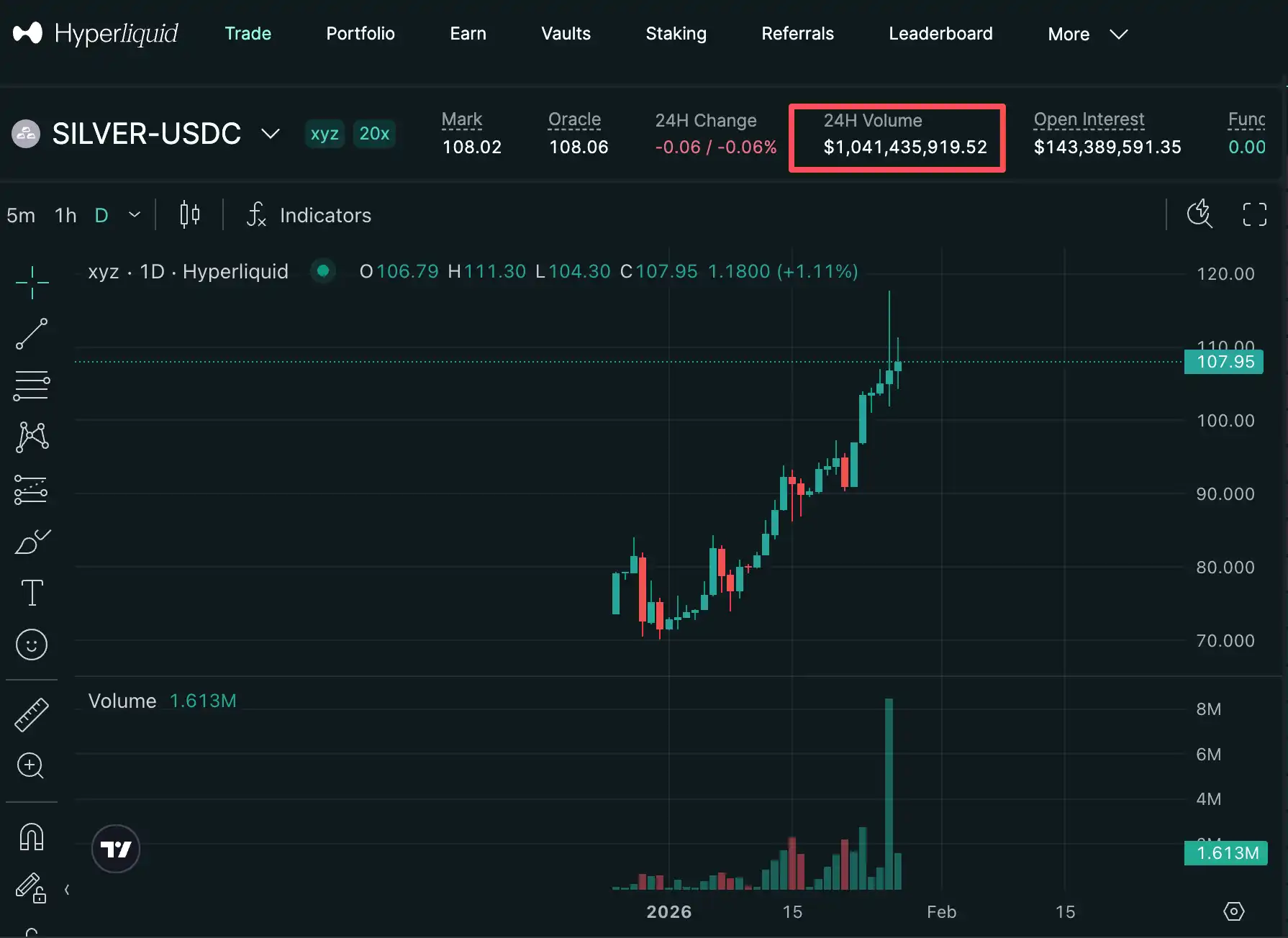
Channel One——Hyperliquid: https://app.hyperliquid.xyz/trade/xyz:SILVER, the Silver/USDC contract trading pair's 24-hour trading volume exceeded $1 billion;
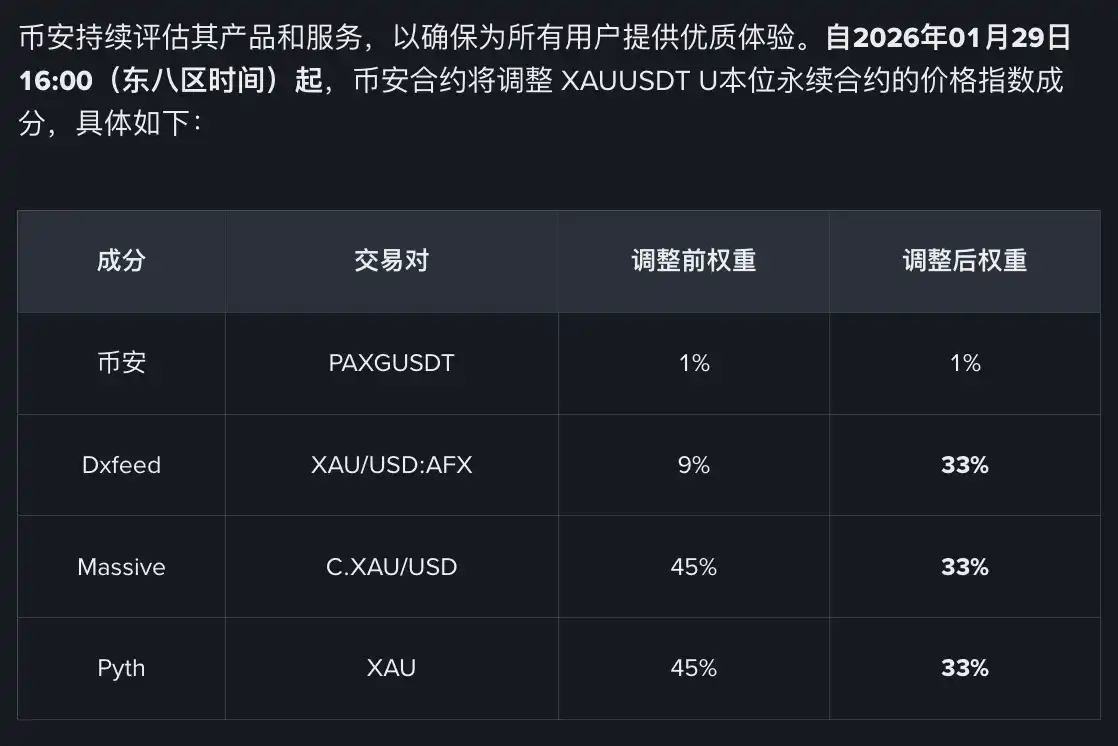
Channel Two——Binance:https://www.binance.com/zh-CN/futures/XAGUSDT, supports leveraged trading for the XAG/USDT trading pair, with leverage up to 20x. Currently, the 24-hour trading volume is $1.32 billion. According to the announcement, this trading pair was officially opened on January 7th; the latest news shows that Binance will change the price index composition of this contract on January 29, 2026.
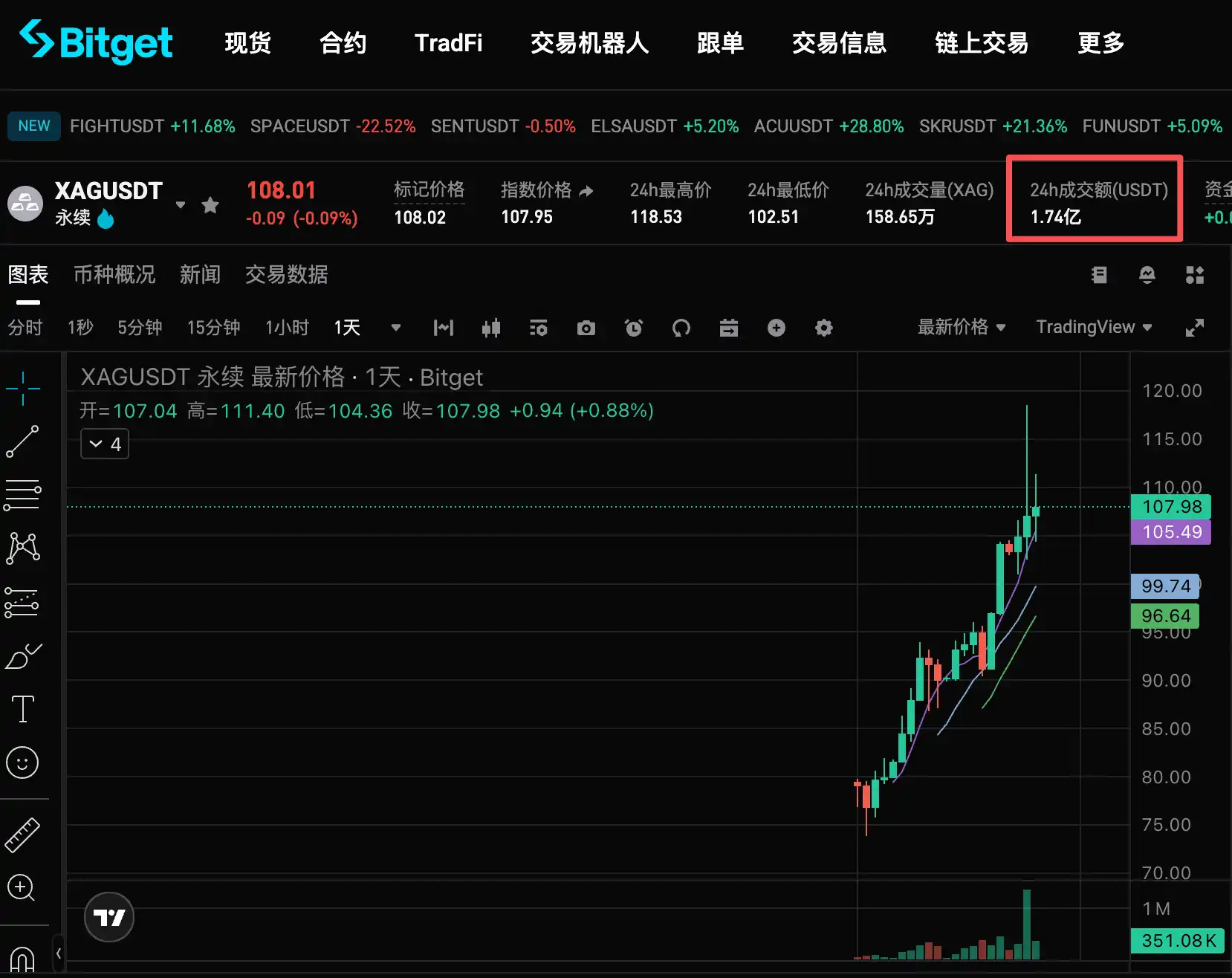
Channel Three——Bitget:https://www.bitget.site/zh-CN/futures/usdt/XAGUSDT, supports leveraged trading for the XAG/USDT trading pair, with leverage up to 20x. Currently, the 24-hour trading volume is $174 million.
Conclusion: Trump's Hawkish Policies and Dovish Rate Preferences Will Be the Best Catalyst for Precious Metals

Looking back, Trump's rise to power leading to tense international political and economic situations, tariff trade wars, and his preference for Federal Reserve rate cuts are the best catalysts for the rise in precious metal prices. Specifically for silver, besides past reasons like supply tightness and its role as an important raw material, risk-off assets and the US attitude are crucial.

J. Safra Sarasin strategist Claudio Wewel pointed out that the continuous surge in silver prices stems from the market's reduced expectations for US rate cuts and silver's newly acquired status as a key mineral. The US Department of the Interior listed silver as a critical mineral in November, increasing the possibility of the US imposing tariffs on this metal. He noted that this exacerbates long-term supply tightness and prompts US importers to accelerate silver purchases. Meanwhile, retail investors, finding it difficult to buy gold at historically high prices, are turning to silver as a safe-haven asset.

In other words, silver's main rise comes from both "scarcity" and "safe-haven nature." Combined with the recently tense Middle East situation again, the price peak for silver may be far from over.


Preguntas relacionadas

QWhat are the two tokenized silver assets with relatively good liquidity mentioned in the article?

AKinesis Silver (KAG) and iShares Silver Trust (SLV).

QWhich platform offers a silver contract with up to 20x leverage and has a 24-hour trading volume of 13.2 billion US dollars?

ABinance, for the XAG/USDT trading pair.

QWhat are the main reasons cited for the surge in silver prices according to the article?

AMarket expectations of reduced US interest rate cuts, its new status as a US critical mineral (increasing potential tariffs), long-term supply tightness, and its role as a risk-off asset for retail investors.

QWhat is the key difference between the KAG and SLV tokenized silver products regarding physical redemption?

AKAG supports physical silver redemption, while SLV does not offer direct physical silver ownership or redemption.

QWhich on-chain Perp DEX is mentioned for trading a silver/USDC perpetual contract with a significant 24-hour volume?

AHyperliquid, for its SILVER/USDC trading pair.

Lecturas Relacionadas

Jensen Huang 'Saves' South Korean Stock Market: Locks In SK Hynix Memory, Chip Shortage to Continue

On June 5th, South Korea's stock market experienced a sharp decline, with major chipmakers like Samsung and SK Hynix dropping nearly 10%. Amidst the turmoil, NVIDIA CEO Jensen Huang's visit to Seoul played a dramatic role in boosting market sentiment. Following a dinner meeting with SK Group Chairman Chey Tae-won and SK Hynix CEO Kwak Noh-Jung, Huang confirmed that NVIDIA's new Vera CPU will utilize SK Hynix DRAM. The companies announced a multi-year technical partnership to co-develop next-generation memory for NVIDIA's AI infrastructure, covering products from data centers to personal AI and robotics. This collaboration extends beyond memory supply. SK Hynix is integrating NVIDIA's AI and Omniverse platform into its own semiconductor design and manufacturing processes, including computational lithography and creating digital twins of its fabrication plants for autonomous operation. While strengthening ties with SK Hynix, NVIDIA is diversifying its supply chain for the upcoming HBM4 memory, with Samsung, SK Hynix, and Micron all certified as suppliers for its Vera Rubin platform. Despite this, Huang warned that the global chip shortage, driven by relentless demand from AI factory construction, is expected to persist for several years across the entire supply chain. His visit underscores NVIDIA's systematic effort to deepen integration with South Korea's broader tech industry.

marsbitHace 44 min(s)

Jensen Huang 'Saves' South Korean Stock Market: Locks In SK Hynix Memory, Chip Shortage to Continue

marsbitHace 44 min(s)

Nasdaq Plunges 4.2% in a Single Day: Does "Black Friday" Burst the U.S. Stock Market Bubble?

The Nasdaq plunged 4.18% on June 5, 2026, its worst single-day drop in over a year, as a much stronger-than-expected US jobs report triggered fears of economic overheating and delayed Federal Reserve interest rate cuts. The selloff, centered on high-valuation tech and AI stocks like Nvidia and Broadcom, spread across major indices. The article examines whether this signals a market top. The strong May non-farm payrolls data, nearly double expectations, pushed bond yields higher, directly hurting rate-sensitive tech stocks. This exposed vulnerabilities in the crowded AI trade, where valuations had soared on narratives of infinite growth, despite emerging signs of slowing order momentum and corporate AI monetization challenges. Prior to the drop, market indicators flashed warning signs: historically high valuations (e.g., Shiller CAPE ratio near 39.5), extreme bullish sentiment, and high levels of leverage. Technical charts showed key support levels being breached. Wall Street is divided on the outlook. Bears, citing risks of "stagflation" and AI bubble comparisons to the dot-com era, warn of a potential significant correction. Bulls view the drop as a healthy correction within a bull market, underpinned by a strong economy and expected corporate earnings growth of around 7% in 2026. The immediate future hinges on upcoming key events: the May CPI inflation data and the mid-June FOMC meeting. Their outcomes will critically shape market expectations for the Fed's rate path. The article concludes that conditions for a major market top are aligning, marking a fragile transition from narrative-driven gains to a phase demanding validation from macroeconomic data and corporate fundamentals. Caution is advised.

marsbitHace 48 min(s)

Nasdaq Plunges 4.2% in a Single Day: Does "Black Friday" Burst the U.S. Stock Market Bubble?

marsbitHace 48 min(s)

Nasdaq Plunges 4.2% in a Single Day, Did 'Black Friday' Pop the U.S. Stock Bubble?

The Nasdaq Composite plummeted 4.18% on June 5, its biggest single-day drop since April 2025, triggering widespread debate over whether the U.S. stock market has peaked. The sell-off was sparked by a stronger-than-expected U.S. non-farm payrolls report, which fueled fears of economic overheating and pushed back market expectations for Federal Reserve rate cuts, leading to a sharp rise in Treasury yields. The AI sector, the primary driver of the recent bull market, suffered severe losses, with the Philadelphia Semiconductor Index crashing over 10%. Stocks like Nvidia, Broadcom, and Micron led the decline. Concerns are mounting about the sustainability of AI capital expenditures and high valuations, with signs of order cuts for next-generation chips emerging. Analyses point to several warning signs: historically high market valuations (e.g., elevated Shiller CAPE ratio, Buffett Indicator), extreme bullish sentiment indicators, and significant insider selling. The sell-off also caused a key technical breakdown, with the S&P 500 breaking below its short-term moving average and testing its 200-day moving average. Wall Street is divided on the outlook. Bears warn this could be the start of a bubble deflation or a "stagflation" scenario, while bulls view it as a healthy, overdue correction within a bull market driven by solid corporate earnings growth. A more moderate view suggests the easy liquidity-driven rally is over, and markets are entering a phase of fundamental stock-picking with potential for consolidation. The immediate future hinges on key upcoming events: the May CPI report and the mid-June FOMC meeting. Their outcomes will be critical in determining whether this is a temporary pullback or the beginning of a more significant trend reversal. The consensus is that the era of one-directional market gains may be ending, requiring increased investor caution.

Odaily星球日报Hace 54 min(s)

Nasdaq Plunges 4.2% in a Single Day, Did 'Black Friday' Pop the U.S. Stock Bubble?

Odaily星球日报Hace 54 min(s)

The First Case on AI Agents: What Was Adjudicated?

"The First 'Agent' Ruling: What Was Decided?" On April 30, the Guangzhou Internet Court issued a ruling—China's first behavior preservation order in the intelligent agent (AI agent) field. The defendant, an open-source AI agent software, was ordered to stop downloads, cease actions that bypassed a platform's technical protection measures, and delete related tutorials and data. The core issue: the software used the operating system's "accessibility service" permissions to automate user interactions within other apps without those platforms' authorization. This mirrors a recent US case where Amazon sued Perplexity for similar reasons—bypassing Amazon's API to directly scrape and interact with its pages—and won a preliminary injunction. Both rulings establish a crucial legal boundary for the AI agent era: agents cannot operate unchecked. The article argues the fundamental legal principle emerging is one of **dual authorization**. An AI agent requires both **user consent** AND **platform consent** to operate legitimately within that platform's ecosystem. Bypassing platform rules through system-level permissions, even with user permission, undermines platform responsibilities for content moderation, data security, and user privacy, creating liability issues. The piece uses the evolution of "Doubao Phone" (an AI-integrated smartphone) as a case study. Its initial, aggressive version that bypassed platform controls faced roadblocks. Its upcoming 2.0 version is reportedly pivoting to negotiate API access and authorization deals with major platforms (like Alibaba's ecosystem), seen as a strategic adaptation to the new regulatory reality. A global trend is identified: the era of unregulated, "wild west" growth for AI agents is ending, replaced by a **compliance race**. This raises barriers to entry, as securing platform authorizations becomes a new cost. Open-source status is also not a legal shield if the code facilitates bypassing technical protections. In conclusion, these first rulings target not the largest, but the most **aggressive and representative** cases. By setting precedent with them, regulators are efficiently steering the entire industry towards a new, more regulated operating paradigm defined by dual authorization and platform cooperation.

marsbitHace 59 min(s)

The First Case on AI Agents: What Was Adjudicated?

marsbitHace 59 min(s)

Fired by Google Over a 14-Page Paper, Over 4,000 Rallied for Her. 6 Years Later: She Almost Predicted the Entire AI Era Back Then.

In late 2020, Google AI researcher Timnit Gebru was effectively dismissed following a conflict over a 14-page, unpublished research paper she co-authored titled "On the Dangers of Stochastic Parrots." The paper, which has since been cited over 14,000 times, raised critical early warnings about the risks of large language models (LLMs). It argued that these models, trained on vast, biased internet data, are essentially "stochastic parrots" that mimic language without true understanding, potentially amplifying societal biases, generating plausible but false information (later termed "AI hallucination"), consuming massive energy, and obscuring their training data contents. Gebru's stance led to a clash with Google management, who requested the paper's withdrawal. Her subsequent internal criticism of the company's diversity efforts and handling of the matter culminated in her termination, which sparked protests from over 4,000 Google employees and researchers. Six years later, the paper's predictions have proven remarkably prescient. Issues like AI hallucination, embedded bias (evident in resume screening and healthcare algorithms), soaring energy consumption from AI data centers, unvetted training data containing harmful content, and the risk of "model collapse" from AI-generated internet content have become central industry challenges. The incident also highlighted concerns about AI development being driven primarily by commercial competition within a handful of powerful tech companies, often at the expense of ethical considerations. After leaving Google, Gebru founded the Distributed AI Research Institute (DAIR) to explore these issues independently. The controversy underscores how her early, critical insights into the fundamental limitations and societal impacts of LLMs anticipated many of the most pressing dilemmas in today's AI era.

marsbitHace 1 hora(s)

Fired by Google Over a 14-Page Paper, Over 4,000 Rallied for Her. 6 Years Later: She Almost Predicted the Entire AI Era Back Then.

marsbitHace 1 hora(s)

Trading

Spot
Futuros

Artículos destacados

Cómo comprar T

¡Bienvenido a HTX.com! Hemos hecho que comprar Threshold Network Token (T) sea simple y conveniente. Sigue nuestra guía paso a paso para iniciar tu viaje de criptos.Paso 1: crea tu cuenta HTXUtiliza tu correo electrónico o número de teléfono para registrarte y obtener una cuenta gratuita en HTX. Experimenta un proceso de registro sin complicaciones y desbloquea todas las funciones.Obtener mi cuentaPaso 2: ve a Comprar cripto y elige tu método de pagoTarjeta de crédito/débito: usa tu Visa o Mastercard para comprar Threshold Network Token (T) al instante.Saldo: utiliza fondos del saldo de tu cuenta HTX para tradear sin problemas.Terceros: hemos agregado métodos de pago populares como Google Pay y Apple Pay para mejorar la comodidad.P2P: tradear directamente con otros usuarios en HTX.Over-the-Counter (OTC): ofrecemos servicios personalizados y tipos de cambio competitivos para los traders.Paso 3: guarda tu Threshold Network Token (T)Después de comprar tu Threshold Network Token (T), guárdalo en tu cuenta HTX. Alternativamente, puedes enviarlo a otro lugar mediante transferencia blockchain o utilizarlo para tradear otras criptomonedas.Paso 4: tradear Threshold Network Token (T)Tradear fácilmente con Threshold Network Token (T) en HTX's mercado spot. Simplemente accede a tu cuenta, selecciona tu par de trading, ejecuta tus trades y monitorea en tiempo real. Ofrecemos una experiencia fácil de usar tanto para principiantes como para traders experimentados.

603 Vistas totalesPublicado en 2024.12.10Actualizado en 2026.06.02

Cómo comprar T

Discusiones

Bienvenido a la comunidad de HTX. Aquí puedes mantenerte informado sobre los últimos desarrollos de la plataforma y acceder a análisis profesionales del mercado. A continuación se presentan las opiniones de los usuarios sobre el precio de T (T).

活动图片