Original|Odaily Planet Daily(@OdailyChina)
Author|Wenser(@wenser 2010)
Silver, this precious metal asset once called "poor man's gold," is sweeping the global market with a storm-like momentum. The reason is none other than its terrifying surge.
Recently, the price of silver once broke through $117 per ounce intraday, hitting a record high. As a result, since the high point of the 2017 crypto cycle, silver has officially surpassed Bitcoin's gain (about 500%) and gold's gain (slightly less than 300%) with a cumulative increase of approximately 517%. According to data from the 8marketcap website, the current price of silver is around $110, with a market capitalization reaching $6.18 trillion, ranking second among global assets, second only to gold. Such an astonishing trend naturally triggers market frenzy. Besides buying silver funds or physical silver through traditional brokers or offline stores, tokenized silver might also be an option, especially the leveraged contracts on exchanges and on-chain Perp DEXs.
Current State of Tokenized Silver: Only 2 Targets Have Relatively Good Liquidity
According to data from the Coingecko website, the overall market capitalization of the tokenized silver sector is temporarily reported at approximately $446 million, with a 24-hour increase of about 5.6%; specifically, the tokenized silver with relatively good liquidity are the following 2 types:
Kinesis Silver (KAG): Market cap temporarily reported at $406 million
Like the gold token KAU, the KAG silver token is launched by Kinesis, a British digital asset utility platform registered in the Cayman Islands. Major trading platforms include Kinesis Money, BitMart, UAE exchange Emirex, and others.
It is understood that KAG is backed by fully insured and regularly audited vaults (globally distributed storage), with each token pegged to 1 ounce of investment-grade silver; it supports global real-time payments; supports physical silver redemption; and has no storage fees.
Its potential risks are similar to those of the Tether company, which issues the XAUT gold token. This token highly depends on the asset credibility of the issuer and faces certain regulatory uncertainties. Furthermore, limited by its small market cap, the market depth is relatively average, and market fluctuations may lead to premiums or discounts, relying more on the trading platform to manage order matching.
Nevertheless, information on the Coingecko website shows that KAG's 24-hour trading volume is about $5.5 million, already ranking second in trading volume in the tokenized silver market.
iShares Silver Trust(SLV): Market cap temporarily reported at $39.5 million
A silver token pegged to the iShares Silver Trust, launched by Ondo Finance, holds the corresponding physical silver through the BlackRock iShares Silver Trust (SLV) ETF.
Its advantages lie in tracking a regulated traditional SLV ETF, having good liquidity, and supporting instant minting or redemption (for users outside the US); combining traditional finance with blockchain convenience; institutional-level endorsement; no need to handle physical silver directly.
Its potential risks include: primarily relying on the asset credibility of issuers like BlackRock and Ondo; does not support physical silver ownership or direct redemption; includes certain ETF fund management fee costs; US users are restricted from trading, and it faces potential securities regulatory restrictions.
Main trading platforms include centralized exchanges such as Gate, Bitmart, Bitget, AscendEX, etc.
It is worth mentioning that SLV also supports contract trading, with leverage up to 10x.
Coingecko website information shows that SLVON's 24-hour trading volume is about $21.2 million, ranking first in trading volume in the tokenized silver market.
Besides the two major silver tokens KAG and SLVON, the silver token Silver rStock (SLVR) launched by Solana生态 stock tokenization platform Remora Market, and the Gram Silver (GRAMS) token pegged to 1 gram of silver launched by Token Teknoloji A.Ş also belong to spot tokens, but their market capitalization and liquidity are extremely low. Compared to KAG and SLVON, the price difference from physical silver is larger, and participation in trading is not recommended.
Silver Leverage Trading Platforms: Hyperliquid, Binance, Bitget, and other exchanges
Besides spot silver tokens, currently many US stock tokenization platforms, on-chain Perp DEXs, CEXs, and DEXs have opened leveraged contract trading related to silver, supporting leverage up to 20x. The following are specific trading platforms for readers' reference:
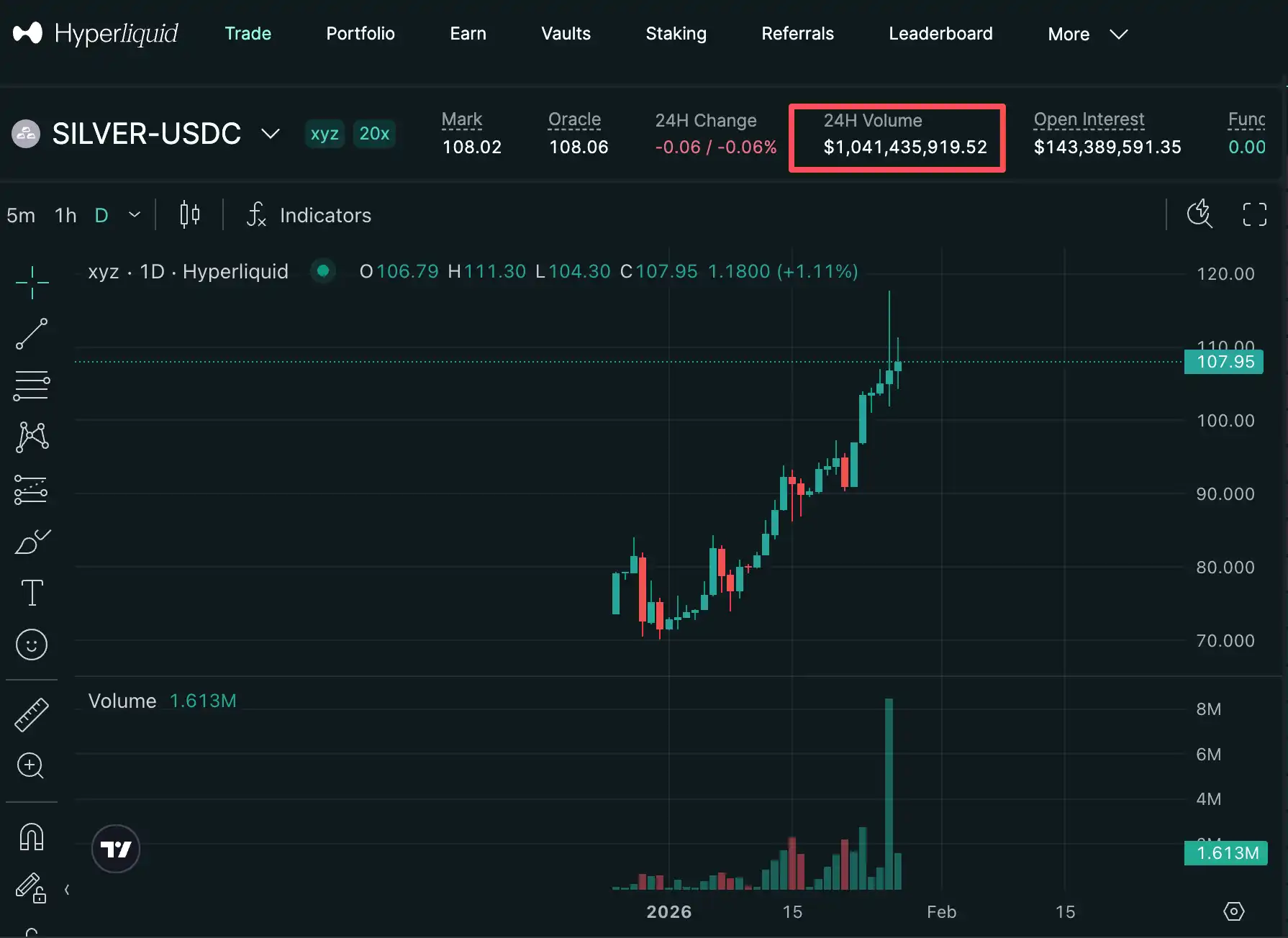
Channel One——Hyperliquid: https://app.hyperliquid.xyz/trade/xyz:SILVER, the Silver/USDC contract trading pair's 24-hour trading volume exceeded $1 billion;
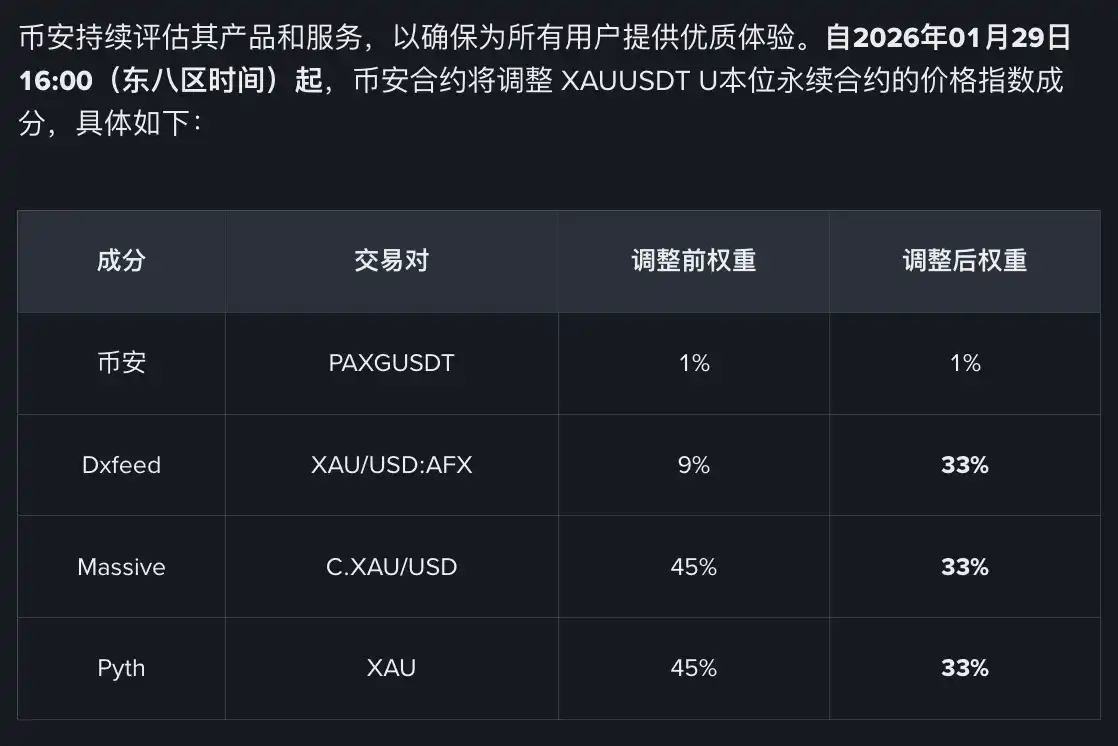
Channel Two——Binance:https://www.binance.com/zh-CN/futures/XAGUSDT, supports leveraged trading for the XAG/USDT trading pair, with leverage up to 20x. Currently, the 24-hour trading volume is $1.32 billion. According to the announcement, this trading pair was officially opened on January 7th; the latest news shows that Binance will change the price index composition of this contract on January 29, 2026.
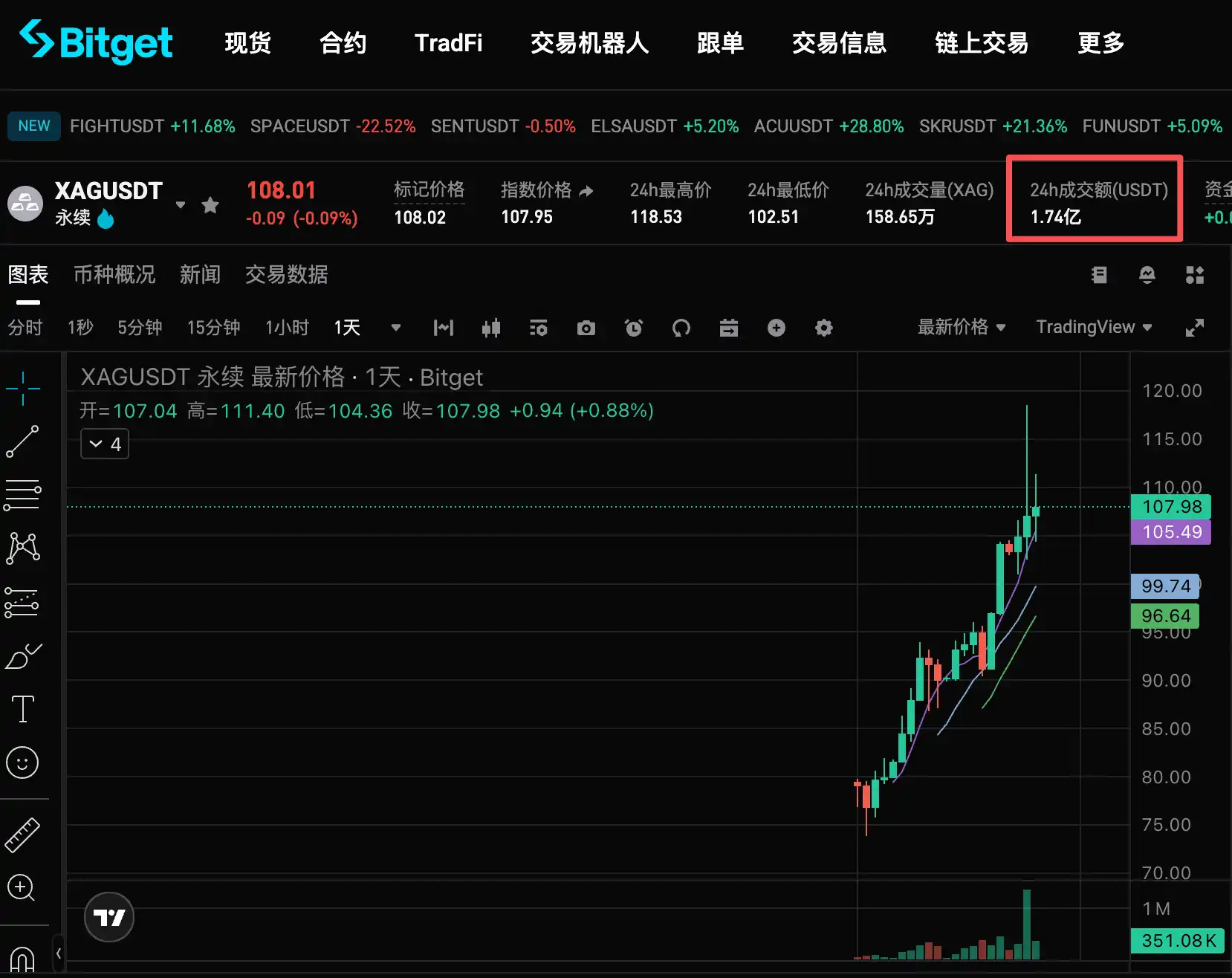
Channel Three——Bitget:https://www.bitget.site/zh-CN/futures/usdt/XAGUSDT, supports leveraged trading for the XAG/USDT trading pair, with leverage up to 20x. Currently, the 24-hour trading volume is $174 million.
Conclusion: Trump's Hawkish Policies and Dovish Rate Preferences Will Be the Best Catalyst for Precious Metals
Looking back, Trump's rise to power leading to tense international political and economic situations, tariff trade wars, and his preference for Federal Reserve rate cuts are the best catalysts for the rise in precious metal prices. Specifically for silver, besides past reasons like supply tightness and its role as an important raw material, risk-off assets and the US attitude are crucial.
J. Safra Sarasin strategist Claudio Wewel pointed out that the continuous surge in silver prices stems from the market's reduced expectations for US rate cuts and silver's newly acquired status as a key mineral. The US Department of the Interior listed silver as a critical mineral in November, increasing the possibility of the US imposing tariffs on this metal. He noted that this exacerbates long-term supply tightness and prompts US importers to accelerate silver purchases. Meanwhile, retail investors, finding it difficult to buy gold at historically high prices, are turning to silver as a safe-haven asset.
In other words, silver's main rise comes from both "scarcity" and "safe-haven nature." Combined with the recently tense Middle East situation again, the price peak for silver may be far from over.

















