Silent Payments: A New Era of Bitcoin Privacy

marsbitPublicado a 2026-01-20Actualizado a 2026-01-20

Resumen

Silent Payments: A New Era for Bitcoin Privacy Silent Payments, as proposed in BIP 352, offer a method for receiving Bitcoin without revealing private information like balance or transaction history to anyone viewing a public address. This innovation addresses the privacy drawbacks of address reuse, a common practice that exposes all transaction details on the public blockchain. The concept, evolving from earlier ideas like "stealth addresses" and BIP 47, provides a more efficient and private solution. Unlike stealth addresses, which require adding data to the blockchain for every transaction, or BIP 47, which needs an initial on-chain notification transaction, Silent Payments generate a unique, one-time address for each payment using cryptographic techniques. This allows a single, reusable public address to be shared, while ensuring only the sender and receiver know the transaction details. For users, the process is simple: generate and share a Silent Payment code (e.g., as a QR code). The receiver's wallet must scan new Taproot transactions to detect payments, a process optimized for efficiency. The address structure uses bech32m encoding with an "sp1" prefix and contains two public keys to generate a Taproot script. Early adopters include Cake Wallet and BitBox, which have implemented support. A feature called "labeling" allows users to distinguish between different senders or purposes (e.g., donations from different platforms) without sacrificing privacy, adding flexi...

Author: Area Bitcoin

Compiled by: Felix, PANews

Summary: Silent Payments can reduce address reuse and enhance overall privacy.

The privacy of Bitcoin transactions is receiving increasing attention. As the demand for more secure and private ways to conduct on-chain transactions grows, a new proposal has emerged: Silent Payments.

This article will explore what Silent Payments are, their importance to the Bitcoin network, and the structure of Silent Payment addresses, among other topics.

What are Silent Payments?

Silent Payments are a method of receiving Bitcoin that does not leak private information, such as your balance or transaction history, to anyone who can see your public address.

This concept originates from a proposal called BIP 352, which suggests using reusable addresses in Bitcoin.

Imagine you want to accept Bitcoin donations or need to receive payments multiple times throughout the year. Currently, you would either need to create a new address for each transaction or reuse the same address, sacrificing privacy and allowing anyone to track all incoming and outgoing records of that address via a blockchain explorer.

However, with Silent Payments, you simply provide a public key address that can be reused without worrying about privacy leaks.

The concept of Silent Payments was first proposed in March 2022. Recently, this BIP was integrated into the official codebase, marking a significant milestone in the development of this technology.

This integration indicates that the technology has undergone sufficient review, and wallet developers can begin implementation, although some minor adjustments may still be needed.

Why is this important?

Bitcoin addresses are currently similar to bank account numbers. However, because the blockchain is completely transparent, anyone can view all transactions associated with an address through a block explorer.

If you reuse the same address, every payment you receive will be public.

Silent Payments change this: you only need to share a public address, and the transaction details are visible only to the sender and receiver. This is achieved through a cryptographic technique that allows the receiver to receive funds to a completely different, unique address each time, and only the receiver can identify and access these funds.

"Silent Payments" is not a completely new idea; it evolved from the concept of "stealth addresses" proposed in 2012.

However, until now, this idea had not been effectively implemented in Bitcoin.

Stealth addresses were mentioned earlier, but what exactly are they?

Stealth Addresses and BIP 47: The Challenges and Limitations in the Pursuit of Privacy

Bitcoin transaction privacy has been a core concern since the network's inception. Over time, various proposals to enhance privacy have emerged, with stealth addresses and BIP 47 being notable, initially proposed by Peter Todd.

The following explores the limitations and challenges these methods face in the pursuit of greater anonymity and transaction efficiency.

Stealth Addresses

Stealth addresses were one of the earliest attempts to improve Bitcoin transaction privacy.

The idea is simple: allow the recipient to generate a unique and private address that only they can access through encryption.

But there was a major obstacle: for the system to work, an additional key needed to be added to the blockchain, typically using the OP_RETURN field.

This presented two serious drawbacks:

  • Loss of Anonymity: Adding extra data to the blockchain makes it obvious that this is a transaction using a stealth address. Any observer can identify this technique, compromising anonymity.

  • Inefficiency and High Cost: Increasing the blockchain data volume makes transactions bulkier, less efficient, and more expensive, contradicting Bitcoin's principle of being lightweight and easily accessible.

An alternative emerged at the time: utilizing an existing key in the transaction to avoid adding extra data.

But due to technical complexity and the lack of efficient tools at the time (e.g., libraries like Lipsack P that simplify these calculations today), this idea was shelved.

BIP 47

Over time, another proposal aimed at solving these issues emerged: BIP 47.

BIP 47 introduced the concept of a notification system instead of adding data to the blockchain with every payment. In this approach, the sender only needs to upload data to the blockchain once, and the receiver can identify this data and use this "key" to simplify future payment processes.

Advantages of BIP 47:

  • Clear Identification for Receiver: The receiver can easily identify which part of the on-chain data is intended for them, making the verification process simpler.

  • Reduced Extra Data: Notification data is only added the first time, saving more space and resources compared to stealth addresses adding data every time.

Disadvantages of BIP 47:

  • More Complex for Sender: Each payment requires the sender to first send an on-chain notification, equivalent to an extra transaction, which becomes very cumbersome at scale.

  • Inefficient Blockchain Usage: The data added for notification is unrelated to the actual payment, considered inefficient.

  • Payment Linkability: If paying the same person multiple times, the receiver might discover the funds come from the same source, compromising anonymity (whereas in Silent Payments the sender is completely anonymous).

  • Identity Exposure: In the notification transaction, the sender's payment code is exposed to the receiver, which can be problematic in situations requiring high anonymity (e.g., donations to sensitive causes).

Although BIP 47 has its advantages (like clarity for the receiver), significant drawbacks such as extra transactions and lack of full anonymity limited its adoption.

Silent Payments aim to address these issues, offering a more intuitive and private user experience. The only disadvantage compared to BIP 47 is the need to scan the blockchain, but this might be a worthwhile trade-off for a significant privacy boost.

In summary, both stealth addresses and BIP 47 contributed to Bitcoin privacy, but their respective limitations hindered widespread adoption.

Silent Payments now emerge as a promising solution, trying to combine the best of both:

  • Strong Privacy

  • High Efficiency

  • Simplified User Experience

How do Silent Payments work?

For the user, the operation is very simple.

Suppose you have a Bitcoin wallet connected to your own node. You generate an SP (Silent Payment) code, which can be shared as a QR code. Anyone who supports Silent Payments can scan the QR code or enter the code to make a payment... it's that simple.

For receivers running a full node, the cost is almost zero due to optimizations that make the process efficient.

However, the recipient has to do a bit more work. The recipient must check every new Taproot transaction on the network to determine if it contains a payment to their Silent Payment address, which requires more processing by the wallet software.
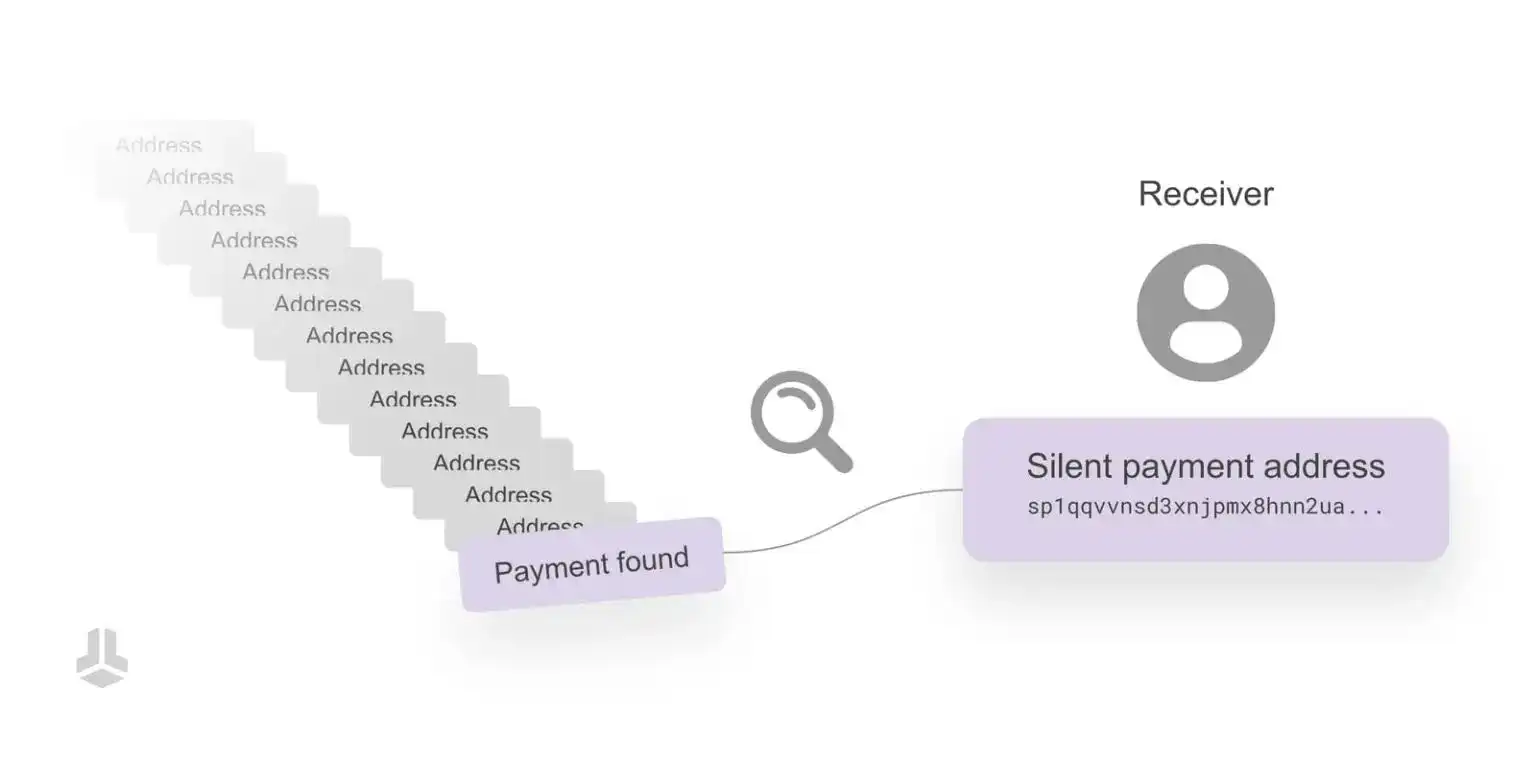
What does a Silent Payment address look like?

The structure of a Silent Payment address is the same as a Taproot address. Taproot addresses use the "bc" prefix, indicating a Bitcoin address, followed by a "1" and a version number, with the rest using bech32m encoding.

Silent Payments also use bech32m encoding, but with the prefix "sp1" (indicating it is a Silent Payment address), and this address contains two public keys. These two public keys do not directly show the destination of the Bitcoin but provide instructions for generating a Taproot public key script.

In practice, users can generate, share, and securely reuse Silent Payment addresses just like a regular Bitcoin address, without sacrificing privacy, which is its core advantage.

Which wallets support this address?

Currently, wallets that support Silent Payment addresses include Cake Wallet and BitBox.

As the Silent Payment feature is still under development and not yet widely adopted, Cake Wallet is one of the first wallets to implement Bitcoin Silent Payments. The wallet is already available in public beta on Android and iOS.

Here's how to use Silent Payments in Cake Wallet:

Click the "Silent Payments" button on the card/box on the wallet's main page to start scanning the blockchain for these transactions.

It is important to note that because Silent Payment transactions are anonymous, the wallet must actively scan the blockchain to search for transactions.
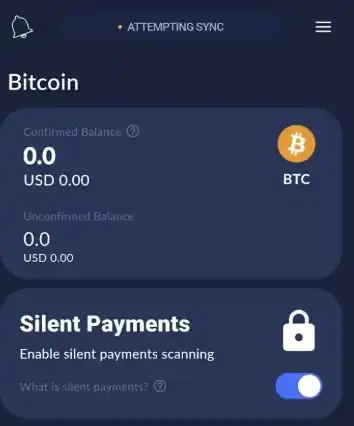
Once the scan is complete, Silent Payment verification automatically turns off upon reaching the latest block.

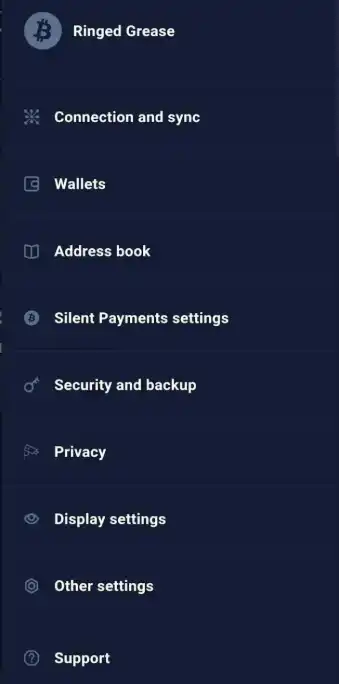
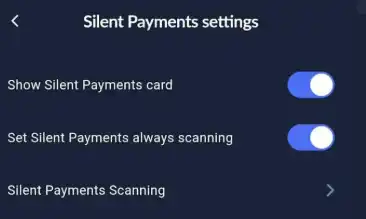
If you want the wallet to continue automatically checking new blocks for Silent Payments, go to "Menu" -> "Silent Payment Settings" and enable the "Always Scan for Silent Payments" option.
BitBox

Like the hot wallet Cake Wallet, BitBox is one of the first hardware wallets to support Silent Payments, greatly enhancing user privacy protection.

Through Silent Payments, the sender can generate a unique address from the receiver's fixed public key. This is particularly useful for activists, NGOs, and charities: they can share a reusable address to receive donations without exposing the identity of the donor or the amount received.

This integration allows BitBox users to support various causes and make payments while avoiding exposing financial activities to unnecessary third parties.

The Role of Labeling

An initial challenge with Silent Payments was how to identify who sent the payment. The solution was the introduction of Labeling.

So, what is Labeling?

Labeling allows you to distinguish between different senders when using a single Silent Payment address, without sacrificing privacy or significantly increasing scanning costs.

This technology allows adding additional information to a Silent Payment address without compromising user privacy. It works by deterministically tweaking the spending key.

Simply put, the spending key is like a digital signature authorizing the use of funds in the address. By tweaking this key slightly, different payment sources can be identified.

For example, suppose you have two Silent Payment addresses:

  • One for activity on X

  • Another for activity on Nostr

With labeling, the first half of these two addresses is the same (indicating they both belong to you), but the second half is slightly different, helping you identify the source of the payment.

This way, when viewing your funds, you can see that some payments came from X users and some from Nostr.

This flexibility strikes a balance between protecting privacy and collecting useful transaction information.

Of course, if you want complete anonymity, you can also just use a standard Silent Payment address without labels, ensuring the sender has no identifiable information. But if you need to track the source of payments, labeling provides an efficient way.

This technology can be applied to various scenarios such as exchanges, social media platforms, personal use, allowing you to manage multiple online identities without creating obvious links, or simply to get more payment information when needed.

Exchange Silent Payment Example

Interesting application scenarios would emerge if exchanges adopted this technology.

Suppose you deposit funds into an exchange. With Silent Payments, instead of giving you a reusable deposit address, the exchange generates a Silent Payment address for you.

Every time you send a payment to this address, the exchange can automatically identify it as yours (through the labeling mechanism), without you having to manage multiple addresses. Furthermore, this technology is also very useful for automatic withdrawals.

You can reuse the same Silent Payment address across platforms without managing different extended public keys (xPubs) for each platform, greatly simplifying the process.

Conclusion

Silent Payments have the potential to revolutionize the way Bitcoin is used, offering a simpler, more intuitive experience while significantly enhancing privacy.

If this technology is widely adopted, the rate of on-chain address reuse could drop significantly, thereby creating a safer and more private environment for everyone.

Silent Payments provide a great opportunity to align user incentives with best privacy practices, making future Bitcoin payments more covert and secure than ever before.

Related reading: Over 1.7 million BTC potentially under direct attack? Bitcoin faces quantum controversy again, public chains begin defense battle


Preguntas relacionadas

QWhat are Silent Payments and how do they improve privacy in Bitcoin transactions?

ASilent Payments are a method for receiving Bitcoin that allows users to reuse a single public address without revealing transaction history or balance information to third parties. They generate unique, one-time addresses for each transaction using cryptographic techniques, ensuring that only the sender and receiver can see the transaction details, thereby reducing address reuse and enhancing overall privacy.

QHow do Silent Payments differ from previous privacy solutions like Stealth Addresses and BIP 47?

ASilent Payments address limitations of earlier solutions: Stealth Addresses required adding extra data to the blockchain (e.g., via OP_RETURN), reducing anonymity and efficiency. BIP 47 introduced a notification system but required additional on-chain transactions for each sender, complicating the process and exposing sender identities. Silent Payments eliminate these issues by leveraging Taproot transactions and deterministic key adjustments, offering stronger privacy, efficiency, and simpler user experience without extra on-chain data or notifications.

QWhat is the structure of a Silent Payment address and how is it used?

AA Silent Payment address uses the same structure as a Taproot address, with a 'bc' prefix for Bitcoin, followed by '1' and a version number, encoded in bech32m. However, it specifically uses the prefix 'sp1' and includes two public keys that provide instructions for generating a Taproot script. Users can generate, share, and reuse this address securely without privacy compromises, as each payment derives a unique on-chain address.

QWhich wallets currently support Silent Payments, and how do they implement the feature?

ACake Wallet and BitBox are among the first wallets to support Silent Payments. Cake Wallet (available on Android and iOS) allows users to scan blocks for Silent Payment transactions through a dedicated interface, with options for continuous scanning. BitBox, a hardware wallet, integrates Silent Payments to enable private donations and transactions, particularly useful for activists and organizations. Both wallets require scanning the blockchain to detect incoming Silent Payments due to their anonymous nature.

QWhat is the role of 'labeling' in Silent Payments, and how does it enhance functionality?

ALabeling in Silent Payments allows recipients to distinguish between different senders or contexts (e.g., donations from Twitter vs. Nostr) while maintaining privacy. It works by deterministically tweaking the spending key, creating slight variations in the address that identify the payment source without revealing sensitive information. This enables users to manage multiple identities or track transactions efficiently, balancing privacy with practical needs like exchange deposits or automated withdrawals.

Lecturas Relacionadas

How Many Tokens Away Is Yang Zhilin from the 'Moon Chasing the Light'?

The article explores the intense competition between two leading Chinese AI companies, DeepSeek and Kimi (Moon Dark Side), and the mounting pressure on Yang Zhilin, the founder of Kimi. While DeepSeek re-emerged after 15 months of silence with its powerful V4 model—boasting 1.6 trillion parameters and low-cost, long-context capabilities—Kimi has been focusing on long-context processing and multi-agent systems with its K2.6 model. Yang faces a threefold challenge: technological rivalry, commercialization pressure, and investor expectations. Despite Kimi’s high valuation (reaching $18 billion), its revenue heavily relies on a single product with low paid conversion rates, while DeepSeek’s strategic silence and open-source influence have strengthened its market position and valuation prospects, now targeting over $20 billion. Both companies reflect broader trends in China’s AI ecosystem: Kimi aims for global influence through open-source contributions and agent-based advancements, while DeepSeek prioritizes foundational innovation and hardware independence, notably shifting to Huawei’s chips. Their competition is seen as vital for China’s AI progress, with the gap between top Chinese and U.S. models narrowing to just 2.7% on the Elo rating scale. Ultimately, the article argues that this rivalry, though anxiety-inducing for leaders like Zhilin, is essential for driving innovation and solidifying China’s role in the global AI landscape.

marsbitHace 10 hora(s)

How Many Tokens Away Is Yang Zhilin from the 'Moon Chasing the Light'?

marsbitHace 10 hora(s)

Trading

Spot
Futuros

Artículos destacados

Qué es BITCOIN

Entendiendo HarryPotterObamaSonic10Inu (ERC-20) y Su Posición en el Espacio Cripto En los últimos años, el mercado de criptomonedas ha sido testigo de un aumento en la popularidad de las monedas meme, capturando el interés no solo de los comerciantes, sino también de aquellos que buscan compromiso comunitario y valor de entretenimiento. Entre estos tokens únicos se encuentra HarryPotterObamaSonic10Inu (ERC-20), un proyecto intrigante que mezcla referencias culturales en el tejido de las criptomonedas. Este artículo profundiza en los aspectos clave de HarryPotterObamaSonic10Inu, explorando sus mecanismos, ethos impulsado por la comunidad y su relación con el paisaje cripto más amplio. ¿Qué es HarryPotterObamaSonic10Inu (ERC-20)? Como su nombre sugiere, HarryPotterObamaSonic10Inu es una moneda meme construida sobre la blockchain de Ethereum, clasificada bajo el estándar ERC-20. A diferencia de las criptomonedas tradicionales que pueden enfatizar la utilidad práctica o el potencial de inversión, este token prospera en el valor de entretenimiento y la fuerza de su comunidad. El proyecto tiene como objetivo fomentar un entorno donde los usuarios comprometidos puedan reunirse, compartir ideas y participar en actividades inspiradas por diversos fenómenos culturales. Una característica notable de HarryPotterObamaSonic10Inu es su cero impuestos en las transacciones. Este atractivo elemento tiene como objetivo incentivar el comercio y la participación comunitaria, sin cargos adicionales que puedan disuadir a los comerciantes de pequeña escala. El suministro total de la moneda está establecido en mil millones de tokens, una cifra que marca su intención de mantener una circulación sustancial dentro de la comunidad. Creador de HarryPotterObamaSonic10Inu (ERC-20) Los orígenes de HarryPotterObamaSonic10Inu están algo envueltos en misterio; los detalles sobre el creador siguen siendo desconocidos. El desarrollo de este token carece de un equipo identificable o de un plan explícito, lo cual no es inusual dentro del sector de monedas meme. En cambio, el proyecto ha surgido de manera orgánica, con su progreso muy dependiente del entusiasmo y la participación de su comunidad. Inversores de HarryPotterObamaSonic10Inu (ERC-20) En cuanto a inversiones externas y respaldo, HarryPotterObamaSonic10Inu también sigue siendo ambiguo. El token no lista ninguna fundación de inversión conocida o apoyo organizacional significativo. En cambio, la savia del proyecto es su comunidad de base, que informa su crecimiento y sostenibilidad a través de la acción colectiva y el compromiso en el espacio cripto. ¿Cómo Funciona HarryPotterObamaSonic10Inu (ERC-20)? Como una moneda meme, HarryPotterObamaSonic10Inu opera principalmente fuera de los marcos tradicionales que a menudo rigen el valor de los activos. Hay varios aspectos distintivos que definen cómo funciona el proyecto: Transacciones Sin Impuestos: Sin tarifas impositivas en las transacciones, los usuarios pueden comprar y vender el token libremente sin preocuparse por costos ocultos. Compromiso Comunitario: El proyecto prospera en la interacción comunitaria, aprovechando plataformas de redes sociales para crear entusiasmo y facilitar la participación. Las discusiones, el intercambio de contenido y el compromiso son elementos cruciales que ayudan a expandir su alcance y fomentar la lealtad entre los seguidores. Sin Utilidad Práctica: Cabe señalar que HarryPotterObamaSonic10Inu no ofrece utilidad concreta dentro del ecosistema financiero. Más bien, se clasifica como un token principalmente para actividades de entretenimiento y comunitarias. Referencia Cultural: El token incorpora astutamente elementos de la cultura popular para atraer interés, conectando con entusiastas de los memes y seguidores de las criptomonedas por igual. HarryPotterObamaSonic10Inu ejemplifica cómo las monedas meme operan de manera diferente a los proyectos de criptomonedas más tradicionales, ingresando al mercado como construcciones sociales innovadoras en lugar de activos utilitarios. Cronología de HarryPotterObamaSonic10Inu (ERC-20) La historia de HarryPotterObamaSonic10Inu está marcada por varios hitos notables: Creación: El token surgió de un meme viral, capturando la imaginación de muchos entusiastas de las criptomonedas. Las fechas específicas de creación no están disponibles, subrayando su ascenso orgánico. Listado en Exchanges: HarryPotterObamaSonic10Inu ha llegado a varios exchanges, permitiendo un acceso y comercio más fácil por parte de la comunidad. Iniciativas de Compromiso Comunitario: Actividades continuas destinadas a mejorar la interacción comunitaria, incluyendo concursos, campañas en redes sociales y generación de contenido por parte de fanáticos y defensores. Planes de Expansión Futuros: La hoja de ruta del proyecto incluye el lanzamiento de una colección de NFT, mercancía y un sitio de comercio electrónico relacionado con sus temas culturales, involucrando aún más a la comunidad e intentando añadir más dimensiones a su ecosistema. Puntos Clave Sobre HarryPotterObamaSonic10Inu (ERC-20) Naturaleza Impulsada por la Comunidad: El proyecto prioriza la participación colectiva y la creatividad, asegurando que la involucración de los usuarios esté a la vanguardia de su desarrollo. Clasificación como Moneda Meme: Representa la epítome de las criptomonedas basadas en el entretenimiento, diferenciándose de los vehículos de inversión tradicionales. Sin Afiliación Directa con Bitcoin: A pesar de la similitud en el nombre del ticker, HarryPotterObamaSonic10Inu es distinto y no tiene relación con Bitcoin u otras criptomonedas establecidas. Enfoque en la Colaboración: HarryPotterObamaSonic10Inu está diseñado para crear un espacio para la colaboración y el intercambio de historias entre sus poseedores, proporcionando una vía para la creatividad y el vínculo comunitario. Perspectivas Futuras: La ambición de expandirse más allá de su premisa inicial hacia NFTs y mercancías describe un camino para que el proyecto potencialmente ingrese a avenidas más tradicionales dentro de la cultura digital. A medida que las monedas meme continúan capturando la imaginación de la comunidad de criptomonedas, HarryPotterObamaSonic10Inu (ERC-20) se destaca debido a sus lazos culturales y su enfoque centrado en la comunidad. Si bien puede no encajar en el molde típico de un token impulsado por la utilidad, su esencia radica en la alegría y la camaradería fomentadas entre sus seguidores, destacando la naturaleza en evolución de las criptomonedas en una era cada vez más digital. A medida que el proyecto continúa desarrollándose, será importante observar cómo las dinámicas comunitarias influyen en su trayectoria en el cambiante paisaje de la tecnología blockchain.

1.3k Vistas totalesPublicado en 2024.04.01Actualizado en 2024.12.03

Qué es BITCOIN

Cómo comprar BTC

¡Bienvenido a HTX.com! Hemos hecho que comprar Bitcoin (BTC) sea simple y conveniente. Sigue nuestra guía paso a paso para iniciar tu viaje de criptos.Paso 1: crea tu cuenta HTXUtiliza tu correo electrónico o número de teléfono para registrarte y obtener una cuenta gratuita en HTX. Experimenta un proceso de registro sin complicaciones y desbloquea todas las funciones.Obtener mi cuentaPaso 2: ve a Comprar cripto y elige tu método de pagoTarjeta de crédito/débito: usa tu Visa o Mastercard para comprar Bitcoin (BTC) al instante.Saldo: utiliza fondos del saldo de tu cuenta HTX para tradear sin problemas.Terceros: hemos agregado métodos de pago populares como Google Pay y Apple Pay para mejorar la comodidad.P2P: tradear directamente con otros usuarios en HTX.Over-the-Counter (OTC): ofrecemos servicios personalizados y tipos de cambio competitivos para los traders.Paso 3: guarda tu Bitcoin (BTC)Después de comprar tu Bitcoin (BTC), guárdalo en tu cuenta HTX. Alternativamente, puedes enviarlo a otro lugar mediante transferencia blockchain o utilizarlo para tradear otras criptomonedas.Paso 4: tradear Bitcoin (BTC)Tradear fácilmente con Bitcoin (BTC) en HTX's mercado spot. Simplemente accede a tu cuenta, selecciona tu par de trading, ejecuta tus trades y monitorea en tiempo real. Ofrecemos una experiencia fácil de usar tanto para principiantes como para traders experimentados.

4.7k Vistas totalesPublicado en 2024.12.12Actualizado en 2025.03.21

Cómo comprar BTC

Qué es $BITCOIN

ORO DIGITAL ($BITCOIN): Un Análisis Integral Introducción al ORO DIGITAL ($BITCOIN) ORO DIGITAL ($BITCOIN) es un proyecto basado en blockchain que opera en la red Solana, cuyo objetivo es combinar las características de los metales preciosos tradicionales con la innovación de las tecnologías descentralizadas. Aunque comparte un nombre con Bitcoin, a menudo referido como “oro digital” debido a su percepción como un refugio de valor, ORO DIGITAL es un token separado diseñado para crear un ecosistema único dentro del paisaje Web3. Su meta es posicionarse como un activo digital alternativo viable, aunque los detalles sobre sus aplicaciones y funcionalidades aún están en desarrollo. ¿Qué es ORO DIGITAL ($BITCOIN)? ORO DIGITAL ($BITCOIN) es un token de criptomoneda diseñado explícitamente para su uso en la blockchain de Solana. A diferencia de Bitcoin, que proporciona un papel de almacenamiento de valor ampliamente reconocido, este token parece centrarse en aplicaciones y características más amplias. Aspectos notables incluyen: Infraestructura Blockchain: El token está construido sobre la blockchain de Solana, conocida por su capacidad para manejar transacciones de alta velocidad y bajo costo. Dinámicas de Suministro: ORO DIGITAL tiene un suministro máximo limitado a 100 cuatrillones de tokens (100P $BITCOIN), aunque los detalles sobre su suministro circulante no se han divulgado actualmente. Utilidad: Si bien las funcionalidades precisas no están delineadas explícitamente, hay indicios de que el token podría ser utilizado para diversas aplicaciones, potencialmente involucrando aplicaciones descentralizadas (dApps) o estrategias de tokenización de activos. ¿Quién es el Creador de ORO DIGITAL ($BITCOIN)? En la actualidad, la identidad de los creadores y el equipo de desarrollo detrás de ORO DIGITAL ($BITCOIN) sigue siendo desconocida. Esta situación es típica entre muchos proyectos innovadores dentro del espacio blockchain, particularmente aquellos alineados con las finanzas descentralizadas y fenómenos de monedas meme. Si bien tal anonimato puede fomentar una cultura impulsada por la comunidad, intensifica las preocupaciones sobre la gobernanza y la responsabilidad. ¿Quiénes son los Inversores de ORO DIGITAL ($BITCOIN)? La información disponible indica que ORO DIGITAL ($BITCOIN) no tiene patrocinadores institucionales conocidos ni inversiones destacadas de capital de riesgo. El proyecto parece operar en un modelo de peer-to-peer centrado en el apoyo y la adopción de la comunidad en lugar de rutas de financiamiento tradicionales. Su actividad y liquidez se sitúan principalmente en intercambios descentralizados (DEX), como PumpSwap, en lugar de plataformas de trading centralizadas establecidas, lo que resalta aún más su enfoque de base. Cómo Funciona ORO DIGITAL ($BITCOIN) Los mecanismos operativos de ORO DIGITAL ($BITCOIN) pueden elaborarse en función de su diseño blockchain y atributos de red: Mecanismo de Consenso: Al aprovechar el único proof-of-history (PoH) de Solana combinado con un modelo de proof-of-stake (PoS), el proyecto asegura una validación de transacciones eficiente que contribuye al alto rendimiento de la red. Tokenómica: Si bien los mecanismos deflacionarios específicos no se han detallado extensamente, el vasto suministro máximo de tokens implica que podría atender microtransacciones o casos de uso nicho que aún están por definirse. Interoperabilidad: Existe el potencial de integración con el ecosistema más amplio de Solana, incluyendo varias plataformas de finanzas descentralizadas (DeFi). Sin embargo, los detalles sobre integraciones específicas permanecen no especificados. Cronología de Eventos Clave Aquí hay una cronología que destaca hitos significativos relacionados con ORO DIGITAL ($BITCOIN): 2023: El despliegue inicial del token ocurre en la blockchain de Solana, marcado por su dirección de contrato. 2024: ORO DIGITAL gana visibilidad al estar disponible para trading en intercambios descentralizados como PumpSwap, permitiendo a los usuarios comerciar contra SOL. 2025: El proyecto presencia actividad de trading esporádica y potencial interés en compromisos liderados por la comunidad, aunque no se han documentado asociaciones notables o avances técnicos hasta el momento. Análisis Crítico Fortalezas Escalabilidad: La infraestructura subyacente de Solana soporta altos volúmenes de transacciones, lo que podría mejorar la utilidad de $BITCOIN en varios escenarios de transacción. Accesibilidad: El potencial bajo precio de trading por token podría atraer a inversores minoristas, facilitando una participación más amplia debido a oportunidades de propiedad fraccionada. Riesgos Falta de Transparencia: La ausencia de patrocinadores, desarrolladores o un proceso de auditoría conocidos públicamente puede generar escepticismo sobre la sostenibilidad y confiabilidad del proyecto. Volatilidad del Mercado: La actividad de trading depende en gran medida del comportamiento especulativo, lo que puede resultar en una volatilidad de precios significativa y en incertidumbre para los inversores. Conclusión ORO DIGITAL ($BITCOIN) surge como un proyecto intrigante pero ambiguo dentro del ecosistema de Solana en rápida evolución. Si bien intenta aprovechar la narrativa del “oro digital”, su alejamiento del papel establecido de Bitcoin como refugio de valor subraya la necesidad de una diferenciación más clara de su utilidad y estructura de gobernanza previstas. La aceptación y adopción futura dependerán probablemente de abordar la actual opacidad y de definir sus estrategias operativas y económicas de manera más explícita. Nota: Este informe abarca información sintetizada disponible hasta octubre de 2023, y pueden haber ocurrido desarrollos más allá del período de investigación.

83 Vistas totalesPublicado en 2025.05.13Actualizado en 2025.05.13

Qué es $BITCOIN

Discusiones

Bienvenido a la comunidad de HTX. Aquí puedes mantenerte informado sobre los últimos desarrollos de la plataforma y acceder a análisis profesionales del mercado. A continuación se presentan las opiniones de los usuarios sobre el precio de BTC (BTC).

活动图片