Shiba Inu Lead Dev Issues Must-Read Year-End Letter: What You Must Know

bitcoinistPublicado a 2025-12-30Actualizado a 2025-12-30

Resumen

Shiba Inu lead developer Kaal Dhairya published a year-end letter describing the project's most difficult period, marked by a hack and leadership departures. He confirmed engagement with federal law enforcement and outlined technical recovery steps, including reactivating the Plasma Bridge with enhanced security. Dhairya introduced the SOU ("Shib Owes You") system, an on-chain NFT-based claims process on Ethereum to track and repay affected users. He stressed that ecosystem revenue must be directed toward repayments as an obligation, not an option. The letter calls for a shift from hype to focused rebuilding and financial accountability in the year ahead.

Shiba Inu lead developer Kaal Dhairya published a year-end letter on Dec. 29 describing what he called the most difficult period in the project’s history, outlining post-hack recovery steps, law-enforcement engagement, and a proposed on-chain claims system meant to track repayment to affected users.

Shiba Inu’s Team Year-End Letter

“This year — especially the last few months — has been the hardest period in Shiba Inu’s history,” Dhairya wrote. “The hack happened. The leadership that was supposed to be here and help us through this difficult time — isn’t. They left, without accountability, and without looking back. I stayed.”

Dhairya said he is not writing as Shiba Inu’s “official ‘leader,’” but argued the community deserves a direct update on what has been done, what is still unresolved, and what changes internally. He described the team working “around the clock — all-nighters, weekends, holidays,” and positioned the letter as an accountability-driven reset focused on repayment and core infrastructure.

Addressing claims that the team failed to file official complaints, Dhairya said a formal process is underway and pushed back on demands for public proof. “I have personally been interviewed by not one, not two, but three federal agents,” he wrote. “I passed on everything I have — all the information, all the OSINT, all the details we gathered during and after the incident. The official process is happening. It has been happening.”

He declined to share a complaint ID and said he would not continue “defending” the response to opportunistic critics, arguing some are “looking to sell their snake oil and keep extracting from you.”

Dhairya said “the technical recovery is largely complete,” detailing changes made after the hack. He wrote that the Plasma Bridge is back online with new safeguards, including “blacklisting, 7-day withdrawal delays, and hardened contracts,” and said more than 100 critical contracts have been moved to hardware custody. Hexens reviewed “every major change,” he added, and the checkpoint system is functioning again.

He also flagged a longer-term architecture change: “We’re also decoupling the bridge from the validators,” describing it as foundational work intended to enable decentralization of Shibarium. Even with that, he cautioned that malicious validators remain a risk and decentralizing the chain “won’t be easy.” Dhairya drew a hard distinction between restoring infrastructure and repaying users. “But technical recovery is not the same as making people whole,” he wrote.

SOU: ‘Shib Owes You’ Claims Via NFT

To address repayment, Dhairya introduced SOU (“Shib Owes You”), a system he stressed is “not live yet” and likely to attract scammers pretending otherwise. Under the proposal, every affected user receives an “SOU NFT” that records what the ecosystem owes them as an on-chain claim on Ethereum.

“This isn’t a promise in a database somewhere,” Dhairya wrote. “It’s cryptographic proof that you own a claim, recorded permanently on the Ethereum blockchain where no one can manipulate it or make it disappear.”

Each SOU tracks a principal amount that declines as payouts occur or donations are applied, with progress visible “in real time” and verifiable. Dhairya said SOUs can be “merged, split, or transferred,” including the option to sell a claim for liquidity on supported marketplaces. He added that the system’s components—“minting, payouts, donations, transfers”—have been audited by Hexens.

Dhairya argued the system only works if cash flow is routed into it, and said that should be treated as an obligation for ecosystem participants, particularly those controlling official distribution channels. “For SOU to function — for affected users to actually get made whole — revenue has to flow into the system,” he wrote. “That means everyone who benefits from the Shiba Inu ecosystem needs to contribute back. Not optionally. As an obligation.”

He said he will pause or sunset projects that are not generating revenue or reaching break-even, and prioritize initiatives that can fund repayment. “Revenue flows to SOU. SOU pays back affected users. If a project doesn’t fit that chain, it waits,” Dhairya wrote. He also previewed potentially contentious changes, including revisiting tokenomics and restructuring or merging systems to redirect value “back to the network and to the users who were affected.”

In closing, Dhairya said he has personally committed significant time and funds to keep the ecosystem running, but cannot do so indefinitely. “I cannot keep doing this forever,” he wrote, calling for others to step up if they believe Shib should be “a decentralized network” rather than “a meme” or “a pump.”

“The year ahead won’t be about hype,” Dhairya added. “It will be about repair, focus, and building something that can actually last.”

At press time, Shiba Inu traded at $0.00000721.
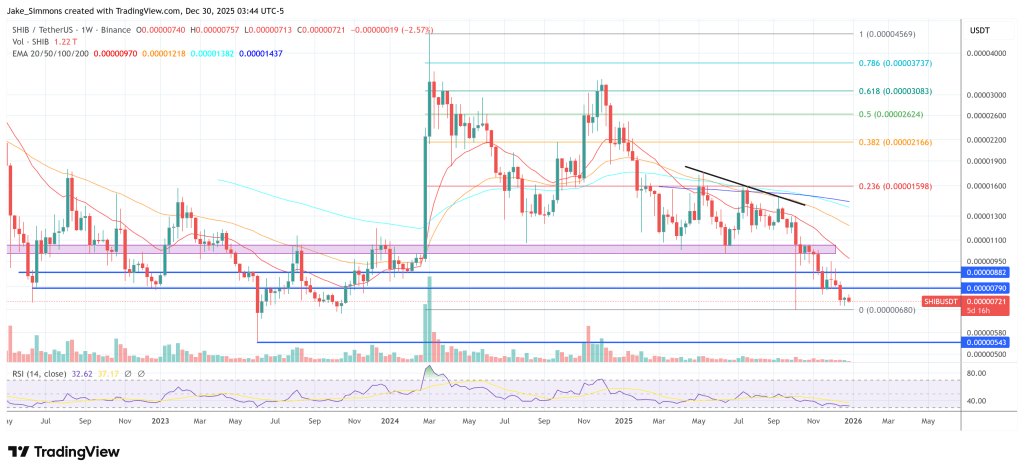
Shiba Inu remains in deep bearish territory, 1-week chart | Source: SHIBUSDT on TradingView.com

Criptos en tendencia

Lecturas Relacionadas

DRAM ETF Issuer: Samsung, SK Hynix, Micron All Surpass $1 Trillion, the AI Era of Memory Chips Has Only Just Begun

Authors: Dave Mazza, Thomas DiFazio | Source: Deep Tide TechFlow The article, written by Roundhill Investments (issuer of the DRAM ETF), responds to Morningstar's caution about investing in memory chip stocks. Morningstar warns of the sector's history of boom-bust cycles, a lack of economic moats, and potential momentum-driven overvaluation. Roundhill argues the current situation is structurally different due to AI. Key points in Roundhill's rebuttal include: * **Changed Demand & Supply Dynamics:** AI infrastructure, not consumer electronics, is now the primary growth driver for memory demand. New, strict long-term supply agreements with hyperscalers reflect the high capital intensity of advanced manufacturing. * **Existence of a Moat:** High-Bandwidth Memory (HBM), essential for AI, has extremely high manufacturing barriers. The market is dominated by Samsung, SK Hynix, and Micron, with new entrants blocked by technological complexity and long lead times for equipment like ASML's EUV machines. * **Strong Fundamental Outlook:** Analyst consensus projects the three companies will rank among the world's most profitable by 2027, with combined profits of $704 billion on over $1 trillion in revenue. Their operating margins have already reached record highs. * **Valuation Re-rating:** Despite significant stock price gains, memory stocks trade at attractive valuations (e.g., a median NTM P/E of 8.37x for the DRAM ETF) relative to projected explosive EPS growth. Roundhill suggests historical valuation frameworks may no longer apply given the new profitability paradigm. Conclusion: Roundhill contends the rally is justified by fundamentals, marking a structural shift for the memory industry into a new era of sustained, AI-driven demand against constrained supply, rather than a repeat of past cycles.

marsbitHace 18 min(s)

DRAM ETF Issuer: Samsung, SK Hynix, Micron All Surpass $1 Trillion, the AI Era of Memory Chips Has Only Just Begun

marsbitHace 18 min(s)

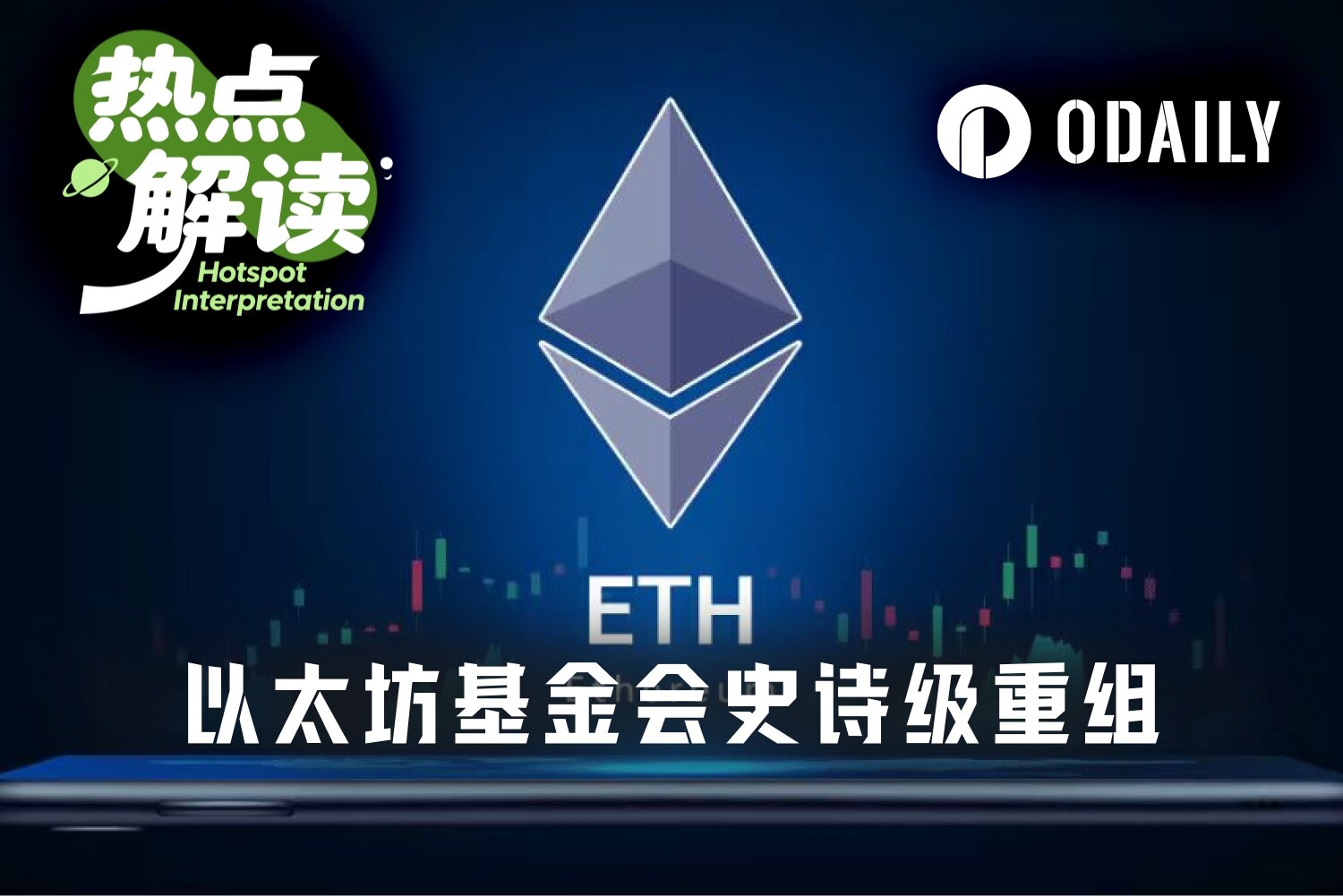
EF's Epic Reorganization: 20% Layoffs, Budget Halved, Is Ethereum Gearing Up for a Leaner Future?

The Ethereum Foundation (EF) has announced a major organizational restructuring, involving a 20% staff reduction (approx. 54 employees) and a division into functional clusters like Protocol, Access, User, Community, and Institutional layers. Co-founder Vitalik Buterin further revealed plans to cut the EF's budget by around 40% over the coming years, aiming to reduce its annual spending rate from about 15% to roughly 5% by 2030, transitioning to an endowment-driven model. This overhaul is seen as a long-overdue correction to the EF's ambiguous role. As Ethereum grew, the foundation faced persistent criticism over ETH sales, perceived lack of execution, and unclear strategy, often becoming a focal point for community frustration amid ETH's price stagnation. The reform aims to redefine the EF's boundaries, narrowing its focus to core protocol research, public goods funding, and ecosystem coordination, while offloading more applied development work to the broader market. Concurrently, ecosystem forces like the newly formed Ethlabs (founded by ex-EF researchers) and other independent groups are stepping in to fill the space, signaling a shift from a centralized model to a more distributed, collaborative ecosystem structure. The move was notably praised by Solana co-founder toly, who viewed a "leaner" EF as potentially more decisive and agile.

Odaily星球日报Hace 58 min(s)

EF's Epic Reorganization: 20% Layoffs, Budget Halved, Is Ethereum Gearing Up for a Leaner Future?

Odaily星球日报Hace 58 min(s)

Dragonfly Partner Haseeb: The Fastest-Growing Companies of the Future May All Get Stuck at 149 Employees

Dragonfly partner Haseeb explores the distorted economics of AI model pricing, drawing parallels to tax policy. He notes that startups and small teams (under 150 users) enjoy heavily subsidized, fixed-price AI subscriptions (like Claude Code), where the marginal cost of an additional token is effectively zero. This creates a powerful incentive for them to maximize token usage ("token-maxxing") and innovate aggressively with AI automation. In contrast, large enterprises (over 150 users) are forced onto "Enterprise" plans, paying per-token API fees with high (~75%) markups. This acts like a steep "tax" on AI-powered labor, disincentivizing marginal automation and experimental use, and encouraging them to retain more human workers. Haseeb argues this pricing creates a "150-person cliff," a regulatory notch similar to labor laws in France that discourage firms from growing past 50 employees. He predicts the fastest-growing future companies may deliberately cap their headcount at 149 to avoid the punitive enterprise pricing. This would foster an "AI-first" management philosophy obsessed with automation and outsourcing to stay lean. While not intentionally designed, this bifurcated pricing could become one of the most influential de facto tax policies, shaping how AI replaces labor—not through mass layoffs at big firms, but through agile, AI-native startups outcompeting them.

marsbitHace 1 hora(s)

Dragonfly Partner Haseeb: The Fastest-Growing Companies of the Future May All Get Stuck at 149 Employees

marsbitHace 1 hora(s)

Trading

Spot
Futuros

Artículos destacados

Qué es NATGAS

El contrato perpetuo NATGASUSDT es el símbolo de negociación para el gas natural cotizado en dólares estadounidenses, representando 1 MMBtu (millón de unidades térmicas británicas) de gas natural.

38 Vistas totalesPublicado en 2026.06.18Actualizado en 2026.06.18

Qué es NATGAS

Cómo comprar NATGAS

¡Bienvenido a HTX.com! Hemos hecho que comprar Natgas (NATGAS) sea simple y conveniente. Sigue nuestra guía paso a paso para iniciar tu viaje de criptos.Paso 1: crea tu cuenta HTXUtiliza tu correo electrónico o número de teléfono para registrarte y obtener una cuenta gratuita en HTX. Experimenta un proceso de registro sin complicaciones y desbloquea todas las funciones.Obtener mi cuentaPaso 2: ve a Comprar cripto y elige tu método de pagoTarjeta de crédito/débito: usa tu Visa o Mastercard para comprar Natgas (NATGAS) al instante.Saldo: utiliza fondos del saldo de tu cuenta HTX para tradear sin problemas.Terceros: hemos agregado métodos de pago populares como Google Pay y Apple Pay para mejorar la comodidad.P2P: tradear directamente con otros usuarios en HTX.Over-the-Counter (OTC): ofrecemos servicios personalizados y tipos de cambio competitivos para los traders.Paso 3: guarda tu Natgas (NATGAS)Después de comprar tu Natgas (NATGAS), guárdalo en tu cuenta HTX. Alternativamente, puedes enviarlo a otro lugar mediante transferencia blockchain o utilizarlo para tradear otras criptomonedas.Paso 4: tradear Natgas (NATGAS)Tradear fácilmente con Natgas (NATGAS) en HTX's mercado spot. Simplemente accede a tu cuenta, selecciona tu par de trading, ejecuta tus trades y monitorea en tiempo real. Ofrecemos una experiencia fácil de usar tanto para principiantes como para traders experimentados.

31 Vistas totalesPublicado en 2026.06.18Actualizado en 2026.06.18

Cómo comprar NATGAS

Qué es NASDAQ100

El Índice Nasdaq-100 incluye 100 de las empresas no financieras más grandes que cotizan en el Mercado de Valores Nasdaq y se utiliza ampliamente como un referente para las acciones de crecimiento y tecnología de gran capitalización en EE. UU.

6 Vistas totalesPublicado en 2026.06.18Actualizado en 2026.06.18

Qué es NASDAQ100

Discusiones

Bienvenido a la comunidad de HTX. Aquí puedes mantenerte informado sobre los últimos desarrollos de la plataforma y acceder a análisis profesionales del mercado. A continuación se presentan las opiniones de los usuarios sobre el precio de A (A).

活动图片