Despite the support of AI concepts, Meish Technology (001229.SZ), a domestic provider of distributed audiovisual and multimodal AI visual application solutions, has shown signs of development fatigue just a few years after its listing, with both revenue and net profit declining successively. It was at this time that the hottest "Indium Phosphide" semiconductor concept unexpectedly emerged in the A-share market.
Meish Technology decisively chose to make an emergency cross-border move, attempting to gain another slice of the pie in the frontier track of the AI computing power industry chain. From swiftly registering a wholly-owned subsidiary in July to urgently convening a temporary shareholders' meeting in August to authorize management to advance the project, the pace of the company's capital operations was astonishingly tight.
However, behind this drama of "cross-border self-rescue" lies the deep pressure on fundamental performance, the accurate high-level reduction of holdings by major shareholders, and the cold reality that the new business is still in the stage of "painting a big pie."
Intensive Capital Operations and Accurate Reduction of Holdings
Meish Technology's recent layout in indium phosphide reveals a sense of urgency akin to "racing against time."
Source: Tianyancha APP
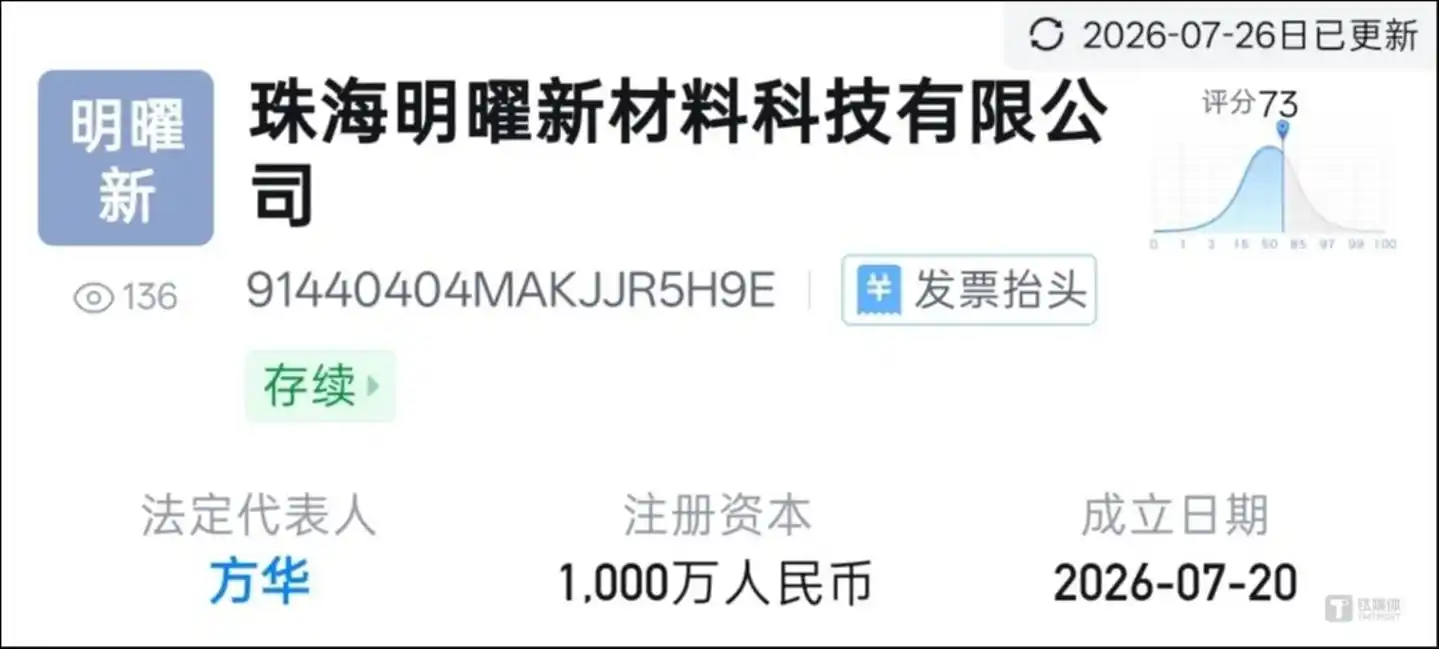
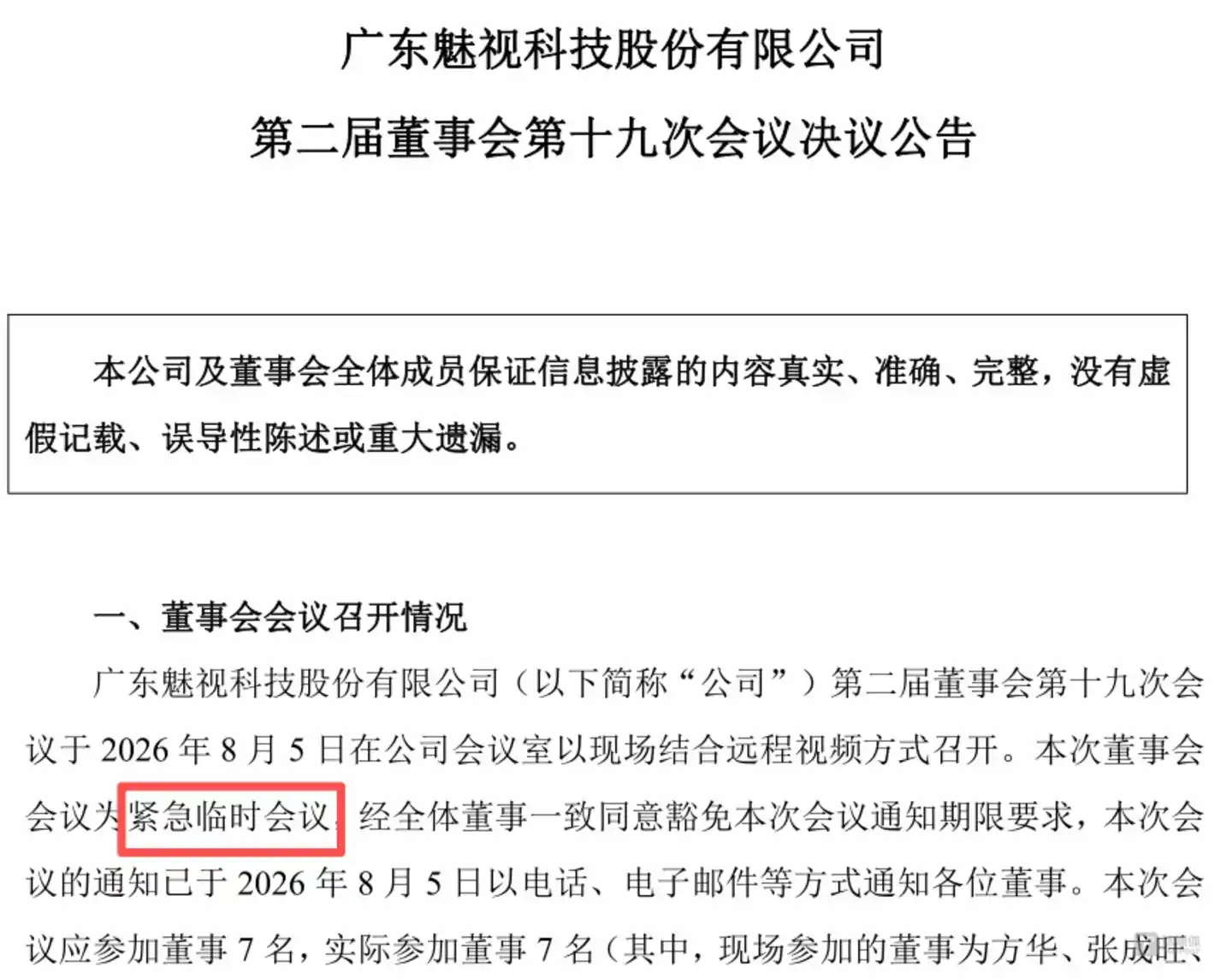
On July 20, 2026, the company quietly registered and established a wholly-owned subsidiary, Zhuhai Mingyao New Material Technology Co., Ltd., with a registered capital of 10 million yuan, designating it as the implementation entity for the indium phosphide semiconductor material project. Shortly after, on August 5, the company urgently convened a board meeting, and with three directors joining via video link, unanimously reviewed and passed the "Proposal on Authorizing the Company's Management to Conduct Preliminary Preparation Work for the Indium Phosphide Semiconductor Material Industrialization Project." This tightly arranged schedule hints at management's eagerness to enter the track.
Source: Announcement
According to the disclosure, the company's plan is divided into two phases: the first phase intends to invest 12 million yuan to build an R&D laboratory, configure 20 sets of process validation equipment for process validation and feasibility verification of small-batch production lines; if the experimental conclusion is feasible, the second phase is expected to invest a huge sum of 200 to 260 million yuan to advance industrialization. To reserve space for subsequent advancement, the company even initiated administrative approvals such as environmental impact and safety assessments in advance. Currently, indium phosphide is an indispensable substrate material for optical chips in the AI computing power era, mainly used in optical module devices, sensor devices, and RF devices. With the global explosion in demand for AI computing power, its market scale is expected to continue expanding. However, as of now, this project is still in an extremely preliminary preparation stage and "has not had a substantial impact on the company's operating performance."
In fact, there were already signs of this cross-border move. Apart from regular annual performance report communication meetings in 2024 and 2025, Meish Technology only held one communication meeting for institutional investors each year. However, in June 2026 alone, the company arranged three consecutive communication meetings for institutional investors, with the number of participating institutions far exceeding the previous two years. As early as the survey on June 3, 2024, when asked about the company's future M&A directions during a survey with multiple institutions, Meish Technology clearly stated, "The M&A direction is in semiconductor, computing power, and related fields." The company basically maintained this viewpoint in the two subsequent surveys on June 9 and 29.
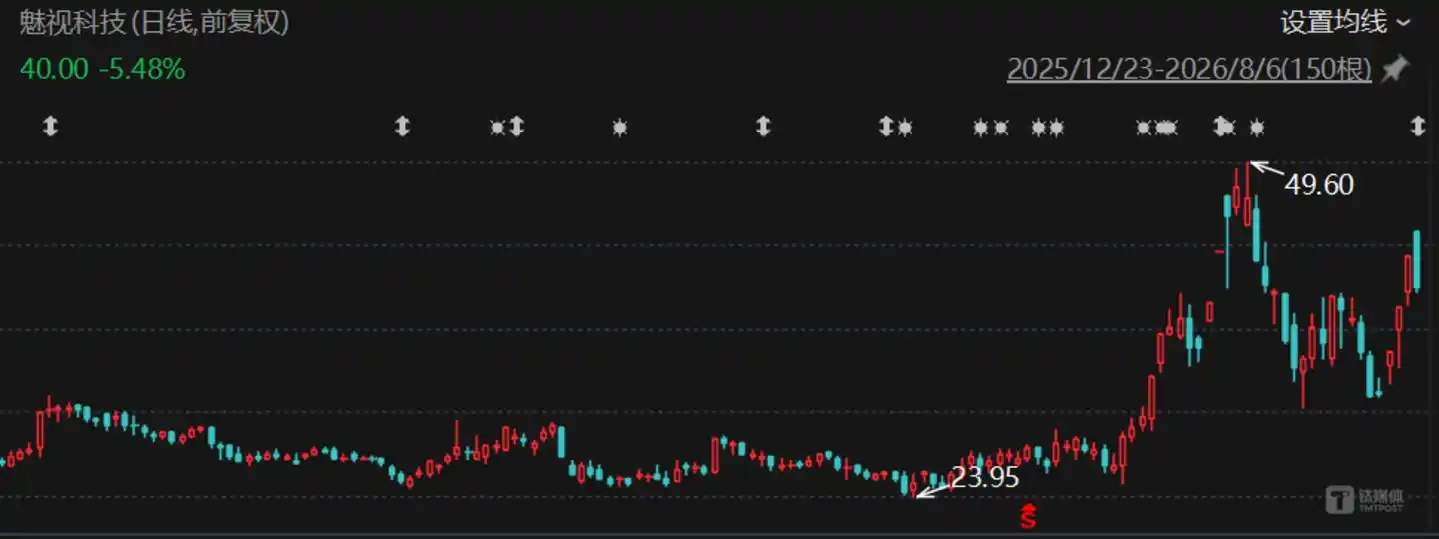
Meanwhile, in the secondary market, the company's stock price began to rise under the impetus of capital and future M&A expectations. The starting point of the rally was on June 24, when the stock price opened low and rose high, surging 8.81%, and then entered a channel of stepped consecutive gains. On July 13, it hit an intraday high of 49.60 yuan, setting a new record high since the company's listing, with a maximum increase of nearly 74% during the interval.
Source: Choice
The author, comparing the timeline, found that just before the sharp rise in Meish Technology's stock price, major shareholders accurately seized the window for high-level cash-outs. On July 6, 2026, shareholder and director Ye Weifei, holding more than 5% of shares, successfully completed the share reduction plan, reducing a total of 4.3029 million shares, accounting for 3% of the company's total share capital. Among them, 1.4343 million shares were sold via centralized bidding, with an average transaction price of 35.29 yuan per share; the remaining 2.8686 million shares were transferred through block trades, with an average transaction price of 31.76 yuan per share. The cumulative cash-out amounted to approximately 142 million yuan.
It is worth noting that after the shareholder reduction was completed, negative news about performance also hit. Following Ye Weifei's cash-out, the company released its 2026 interim performance forecast on July 14. The data showed that the company expects its net profit attributable to shareholders in the first half of the year to be only 4.2 to 5.5 million yuan, a significant year-on-year decline of 71.17% to 77.98%.
The Performance Dilemma of Peaking Immediately After Listing
The underlying logic for Meish Technology's urgency to cross borders and chase hot topics is deeply buried in the downward-sloping performance curve since its listing.
Since its listing in 2022, Meish Technology has not continued the high growth halo from before but quickly fell into the curse of "peaking immediately after listing." Financial data shows that before listing in 2021, the company's operating revenue once reached a high of 236 million yuan, with a net profit attributable to shareholders of 96.809 million yuan; by 2025, although operating revenue hovered around 229 million yuan, the net profit attributable to shareholders had shrunk to 69.4776 million yuan, which was lower than before the listing. Entering 2026, performance showed a cliff-like decline, with a single-quarter loss of 4.686 million yuan in the first quarter of 2026. The 2026 interim report forecast was impacted by tens of millions in share-based payment amortization, leading to a year-on-year plunge of over 70% in reported profit. Excluding the one-time impact of equity incentives, the company's main business profitability was basically flat compared to the same period last year, showing weak growth.
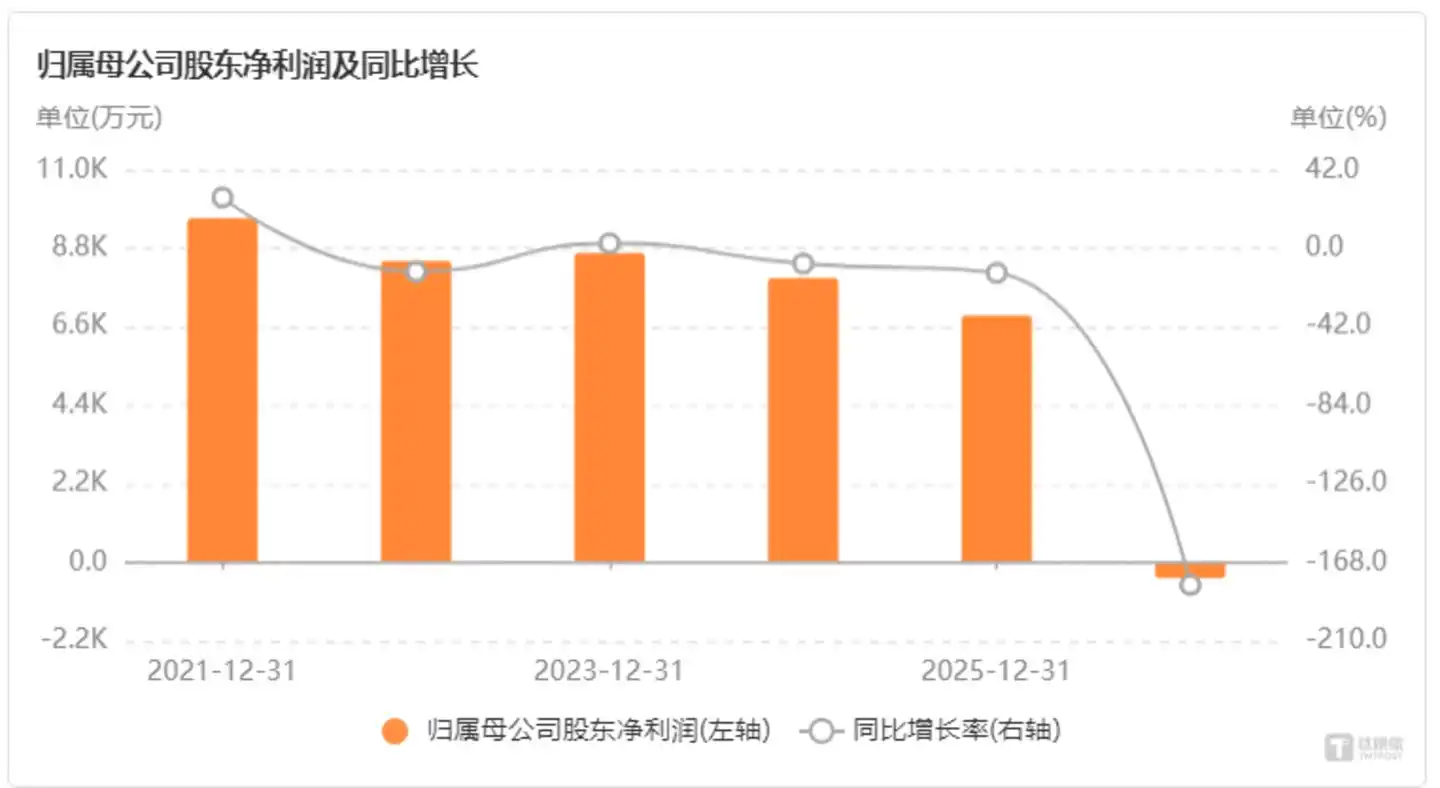
Source: Choice
Currently, the moat of the company's core main business, "Distributed Audio and Video Control Systems," is not wide. Although the company has long maintained a high gross profit margin of over 70%, this is built on an extremely low base of revenue scale. As industry competition intensifies, the existing market share is difficult to translate into continuously expanding profit increments, and the gross profit margin of the main business also fell below 70% for the first time in 2025. More critically, the company's revenue growth rate and net profit growth rate have long been severely divergent. In 2025, while revenue increased slightly by 16.58%, net profit significantly declined by 13.16%. This means that relying solely on selling "audio-video controllers" can no longer tell an attractive growth story or support the high valuation given by the secondary market.
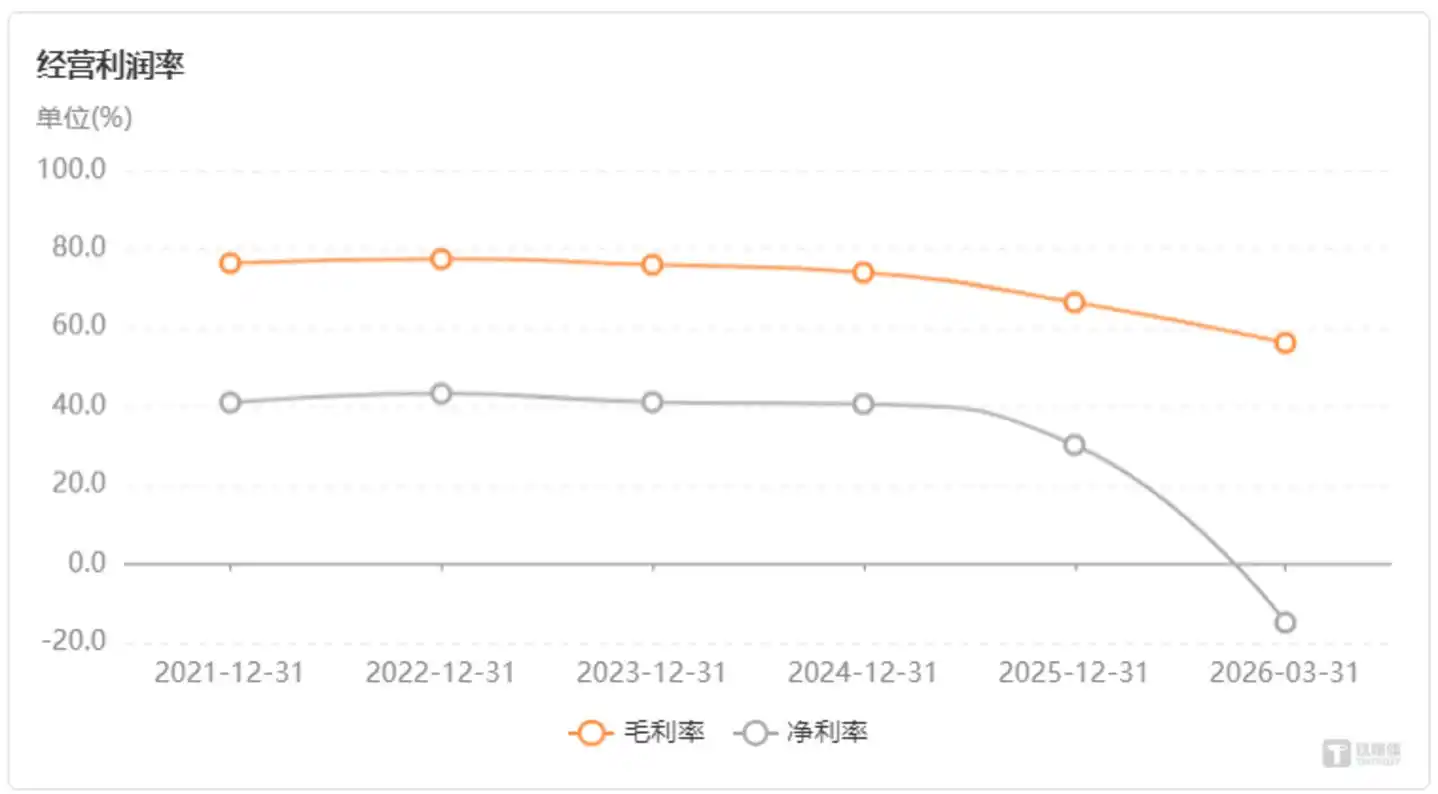
Source: Choice
Although the AI business generated revenue of 25.3422 million yuan for the company in 2025, a staggering year-on-year increase of 212.59%, it still could not stop the decline in the company's net profit.
Under the predicament of main business growth peaking, "cross-border M&A" has become the fastest path to salvage valuation and create new imagination space. From hinting at institutions in June 2026 about "M&A in semiconductor and computing power fields" to directly announcing the cross-border move into indium phosphide in August 2026, Meish Technology's strategic shift is not based on long-term, profound technological accumulation but more like a "market value management" exercise centered around capital market preferences.
For a company with limited cash on hand and declining main business profitability, crossing borders into the highly technical, capital-intensive compound semiconductor material field is undoubtedly a huge gamble. Although indium phosphide is hot, its technological攻关 period is long, and equipment procurement and流片 costs are high. Meish Technology's announcement of a 260 million yuan expansion plan at this time seems less like an ambitious strategic transformation and more like a desperate move to address performance difficulties. If it cannot quickly revitalize assets and raise profit expectations through cross-border moves, the company will face a Davis double kill of valuation and performance. (Author: Company Observer, Author: Cao Shengyuan, Editor: Deng Haotian)