Senator Lummis pushes for CLARITY Act, calls it ‘best thing to happen to DeFi community’

ambcryptoPublicado a 2026-04-02Actualizado a 2026-04-02

Resumen

Senator Cynthia Lummis advocates for the Digital Asset Market Clarity Act of 2025, calling it the "best thing to happen to the DeFi community." She argues the legislation would provide legal certainty and a "safe harbor" for developers, validators, and node operators, ensuring American innovation remains in the U.S. However, this optimism contrasts with Polymarket's prediction market, where the act's odds of passage are only 49%, reflecting broader market uncertainty. This skepticism may stem from ongoing disagreements between the White House and crypto entities like Coinbase. Concurrently, stablecoin infrastructure is evolving. The Better Money Company, backed by A16z crypto, is developing a "stablecoin clearinghouse" to simplify the use of multiple stablecoins across different blockchains. This development follows the passage of the GENIUS Act in 2025, which streamlined stablecoin regulations. Visa's on-chain analytics report a massive $72.3 trillion in stablecoin transaction volume over the past year, with USDC recently outpacing USDT in monthly transaction volume.

The hype around the Digital Asset Market Clarity Act of 2025 is increasing day by day. Senator Cynthia Lummis is the latest to lend some fresh optimism to the ongoing discussion around yield generations, with the Senator claiming that the CLARITY Act is the “best thing that could happen to the DeFi community.”

This is evidence of how even big officials can see the ongoing uncertainty surrounding regulations that are coming up in the way of actual growth of the crypto ecosystem. Hence, by pushing demand for the passage of the CLARITY Act, Lummis believes that this would finally give the crypto community “the legal certainty they deserve”.

Lummis also stressed on the seriousness of the situation as she explained how this proposed law is a one-pot solution to “developers, validators, and node operators.”

Once approved, this Act would provide “a safe harbor” and also “ensure American innovation stays right here on U.S soil.”

Polymarket odds are painting a negative picture

However, this optimism is in contrast to Polymarket odds. At the time of writing, they sat at 49%, even below the neutral level – A sign that the broader market is still unsure about the passage of the Act.
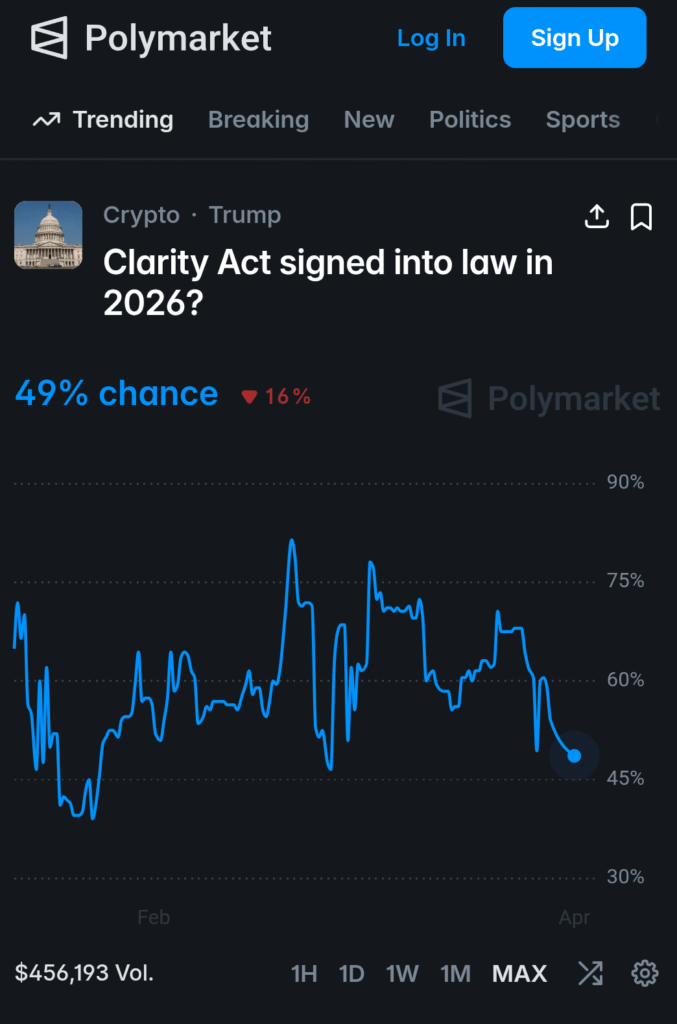
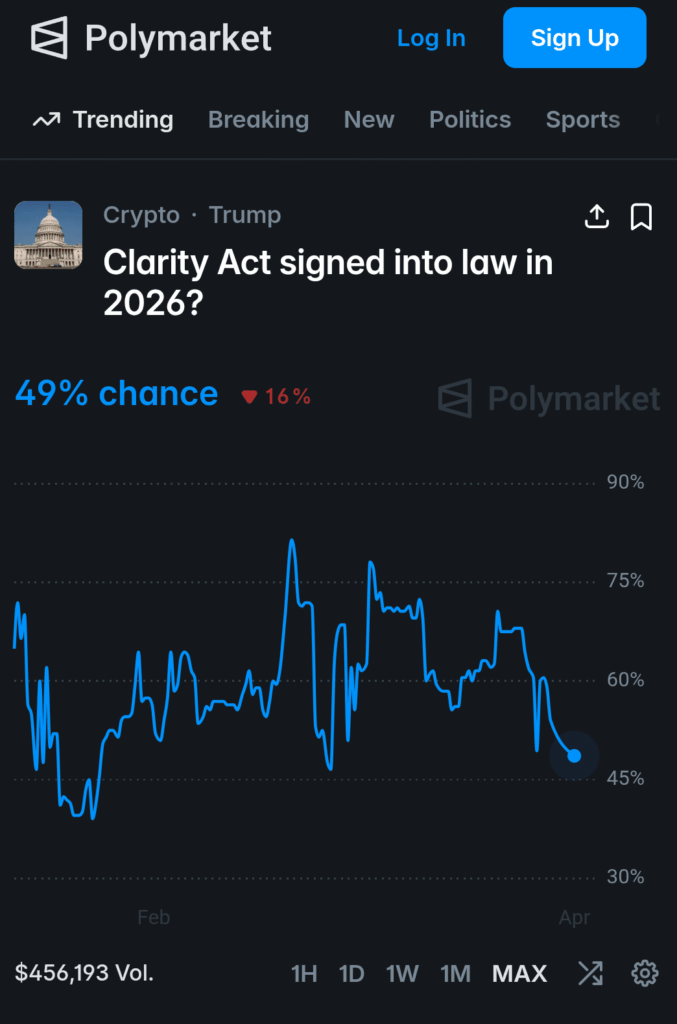
Source: Polymarket

This might be due to the series of disagreements between the White House and Coinbase.

On the contrary, others like the Better Money Company, a stablecoin infrastructure firm, are aiming to build “the next era of money”.

The current situation of the stablecoin market is such that different stablecoins exist across multiple blockchains, issuers, and platforms. And, they often require manual, costly conversions and sometimes even trading at slight value differences.

Finding the missing piece

Hence, to remove this roadblock, The Better Money Company is aiming to build “a stablecoin clearinghouse.” Under this plan, the firm will simplify how developers and businesses integrate stablecoins, enabling them to send, receive, and use multiple stablecoins as if they were one consistent form of money.

With A16z crypto investing in the startup, the plan is simply to develop the “critical missing connectivity layer” required to make the stablecoin ecosystem function effectively.

Other developments in and around stablecoins

All this is happening along the heels of the GENIUS Act that was passed in 2025, making stablecoin regulations seamless.

In the meantime, the total transaction volume of stablecoins hit a count of $72.3 trillion in the last 12 months, as per Visa’s on-chain analytics.
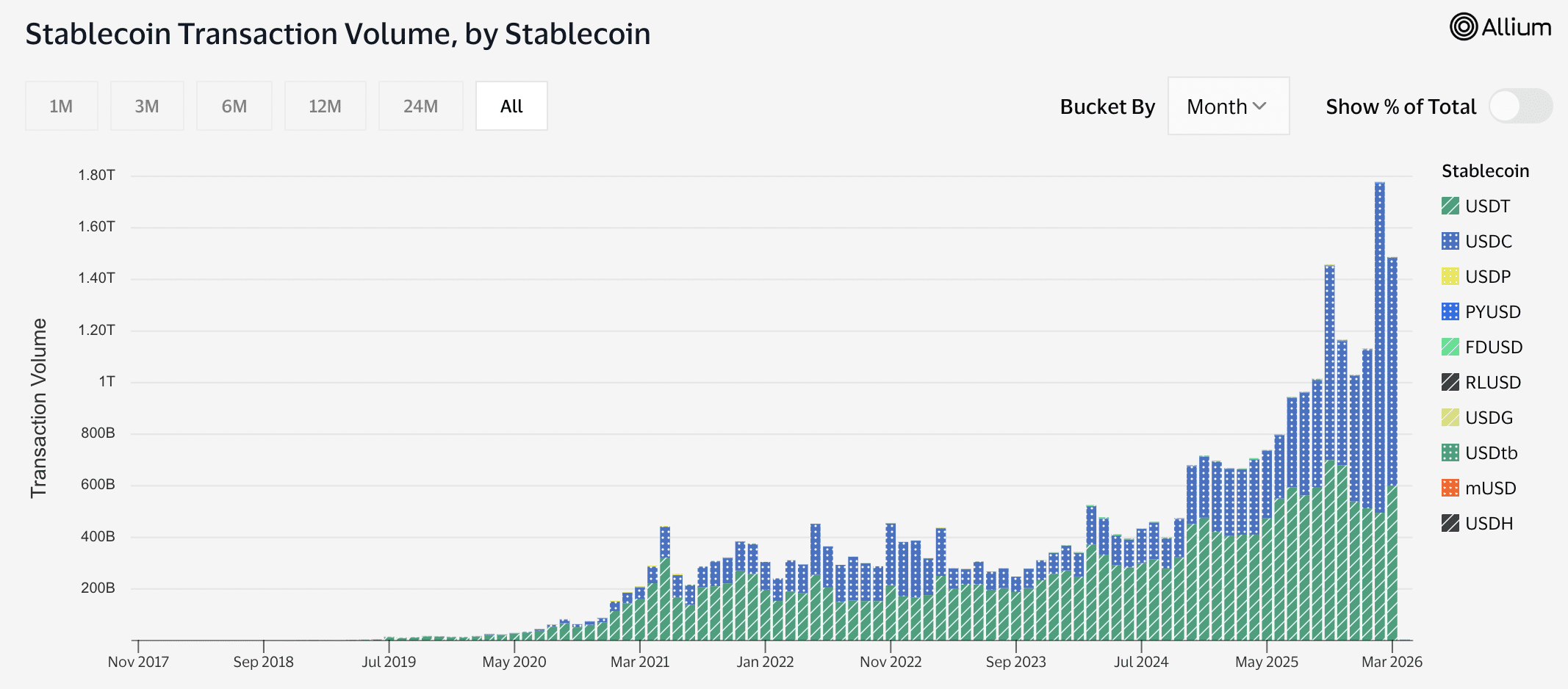
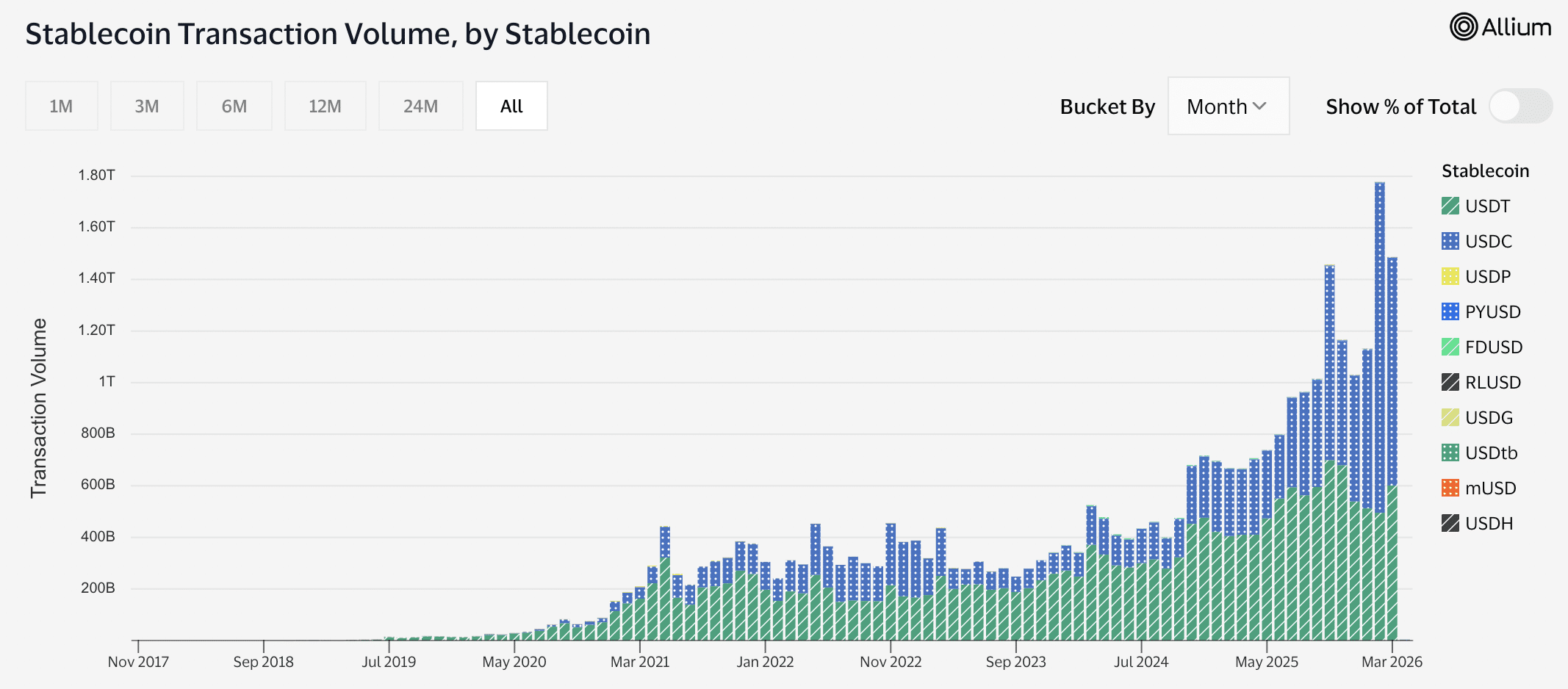
Source: Visa on-chain analytics

That’s not all either as data also revealed that USDC has been outpacing USDT lately. In fact, until last year, most months saw USDT ruling the transaction volume. However, things seem to have changed since 2026.


Final Summary

  • Despite growing optimism from the likes of Senator Cynthia Lummis, Polymarket odds remain below par.
  • Firms like Better Money Company now stepping in with new stablecoin plans.

Preguntas relacionadas

QWhat is the CLARITY Act and why does Senator Lummis support it?

AThe CLARITY Act refers to the Digital Asset Market Clarity Act of 2025. Senator Lummis supports it because she believes it will provide the DeFi community with 'the legal certainty they deserve,' act as a one-pot solution for developers, validators, and node operators, provide a 'safe harbor,' and ensure American innovation stays in the U.S.

QAccording to the article, what do the current Polymarket odds suggest about the Act's passage?

AThe current Polymarket odds, sitting at 49% (below the neutral level), suggest that the broader market is still unsure about the passage of the CLARITY Act.

QWhat problem is The Better Money Company aiming to solve with its 'stablecoin clearinghouse'?

AThe Better Money Company aims to solve the problem of different stablecoins existing across multiple blockchains, issuers, and platforms, which often require manual, costly conversions and can trade at slight value differences. Their clearinghouse would simplify integration, allowing users to send, receive, and use multiple stablecoins as one consistent form of money.

QWhat significant development in stablecoin regulation preceded the events in this article?

AThe GENIUS Act, which was passed in 2025 and made stablecoin regulations seamless, preceded the events discussed in the article.

QWhat does the data from Visa's on-chain analytics reveal about stablecoin transaction volume and the performance of USDC vs. USDT?

AVisa's on-chain analytics revealed that the total transaction volume of stablecoins was $72.3 trillion in the last 12 months. The data also showed that USDC has been outpacing USDT lately, a change from previous years where USDT typically ruled the transaction volume.

Lecturas Relacionadas

The AI Agent Era Accelerates Its Arrival: Questflow Defines a New Paradigm of Financial Intelligence with On-Chain AI Brokerage

The AI Agent era is accelerating, with the CB Insights AI 100 list highlighting global investment confidence. The focus has shifted from whether AI works to its speed of deployment and ability to manage complex workflows, with autonomous AI Agents driving this transformation. At the forefront is Questflow, a Singapore-based startup redefining financial intelligence through its on-chain AI brokerage. Unlike tools that merely provide data dashboards, Questflow deploys AI Agents that proactively scan markets, form judgments, and execute trades via a conversational interface—operating 24/7 without requiring manual confirmation for each decision. This embodies the new AI paradigm of agents capable of executing multi-step workflows autonomously. Questflow's mission is to democratize institutional-grade trading intelligence. Historically reserved for the ultra-wealthy, this capability is now accessible starting from just $1 through Questflow's "AI Clone + Copy Trade" model. The platform charges only a 1% execution fee, aligning its incentives directly with users and eliminating traditional management or performance fees. The timing is opportune, aligning with key trends identified by CB Insights: the scalable deployment of AI Agents, accelerated AI adoption in financial services, and the maturation of on-chain infrastructure. With robust liquidity on platforms like Hyperliquid and Polymarket, alongside advancements in AI reasoning and non-custodial wallet security, Questflow is positioned to merge the roles of broker, fund, and exchange into a single, accessible platform for millions.

链捕手Hace 18 min(s)

The AI Agent Era Accelerates Its Arrival: Questflow Defines a New Paradigm of Financial Intelligence with On-Chain AI Brokerage

链捕手Hace 18 min(s)

Why Pricing Social Interactions is Doomed to Fail?

Titled "Why Putting a Price on Social Interaction Is Doomed to Fail," this article critiques attempts to monetize social networks directly through SocialFi models, arguing their inevitable failure stems from a fundamental misunderstanding of media dynamics. Using Marshall McLuhan's theory of "hot" and "cold" media, the author posits that social networks are inherently "cold" media. Their value isn't contained in individual posts but is co-created through user participation, interpretation, and fragmented, ongoing interaction (e.g., replies, shares). This ambiguity and need for user involvement are core to their function. The article asserts that SocialFi projects like Friend.tech failed because introducing real-time, tradable financial pricing (a definitive "hot" signal) into this "cold" environment doesn't add a layer—it replaces the medium's essence. The unambiguous price signal overshadows and nullifies the nuanced, participatory social signal. Users become traders, not participants, and when speculative profits vanish, the underlying social ecosystem—never genuinely cultivated—collapses entirely. This principle extends beyond crypto. The author argues platforms like Twitter have gradually "heated up" through metrics (likes, retweets counts, algorithmically defined value), shifting users from participants to performers and eroding organic engagement. The solution isn't to abandon capital but to manage its entry point. Successful models like Substack, Patreon, or Bandcamp allow capital to "condense" at specific, isolated nodes (e.g., subscriptions, one-time payments) without permeating and "heating" every social interaction. They preserve the core "cold," participatory medium while enabling monetization at designated boundaries. The NFT boom and bust serves as a stark parallel: the ancient "cold" medium of collecting (valued for story, community, gradual accumulation) was rapidly destroyed by platforms that introduced real-time floor prices, rarity scores, and trading dashboards, transforming collectors into speculators and vaporizing cultural value when prices fell. The core lesson: "Liquidity equals heat." Injecting high liquidity and definitive pricing into a "cold" participatory medium doesn't optimize it; it fundamentally alters and destroys its value-creating mechanism. The future lies not in pricing every social gesture but in finding precise, non-invasive points for capital to condense without overheating the entire ecosystem.

marsbitHace 26 min(s)

Why Pricing Social Interactions is Doomed to Fail?

marsbitHace 26 min(s)

Jensen Huang's CMU Speech: In the AI Era, Don't Just Watch, Build

Jensen Huang, CEO of NVIDIA and a first-generation immigrant, delivered the commencement address to Carnegie Mellon University's class of 2026. He shared his personal journey from a humble background to founding NVIDIA, emphasizing resilience, learning from failure, and the responsibility that comes with leadership. Huang framed the present moment as the dawn of the AI revolution, a shift he believes is more profound than previous computing waves. He described AI as fundamentally resetting computing—moving from human-written software to machines that understand, reason, and use tools. This will create a new industry for generating intelligence and transform every sector. While acknowledging AI's potential to automate tasks and displace some jobs, Huang distinguished between the *tasks* of a job and its core *purpose*. He argued AI will augment human capability, not replace humans. The real risk, he stated, is not AI itself, but people being left behind by those who effectively use AI. He presented AI as a generational opportunity for massive infrastructure investment—in chip factories, data centers, energy grids, and advanced manufacturing—that could re-industrialize nations like the U.S. and bridge the digital divide by making computing and intelligent tools accessible to all. Huang called for a balanced approach: advancing AI safely and responsibly, establishing prudent policies, ensuring broad access, and encouraging universal participation. He urged the graduates not to fear the future but to engage with optimism and ambition, reminding them of CMU's motto, "My heart is in the work." His core message was clear: this is their moment to actively build and shape the AI-powered future, not merely observe it.

marsbitHace 1 hora(s)

Jensen Huang's CMU Speech: In the AI Era, Don't Just Watch, Build

marsbitHace 1 hora(s)

Trading

Spot
Futuros

Artículos destacados

Cómo comprar HYPE

¡Bienvenido a HTX.com! Hemos hecho que comprar Hyperliquid (HYPE) sea simple y conveniente. Sigue nuestra guía paso a paso para iniciar tu viaje de criptos.Paso 1: crea tu cuenta HTXUtiliza tu correo electrónico o número de teléfono para registrarte y obtener una cuenta gratuita en HTX. Experimenta un proceso de registro sin complicaciones y desbloquea todas las funciones.Obtener mi cuentaPaso 2: ve a Comprar cripto y elige tu método de pagoTarjeta de crédito/débito: usa tu Visa o Mastercard para comprar Hyperliquid (HYPE) al instante.Saldo: utiliza fondos del saldo de tu cuenta HTX para tradear sin problemas.Terceros: hemos agregado métodos de pago populares como Google Pay y Apple Pay para mejorar la comodidad.P2P: tradear directamente con otros usuarios en HTX.Over-the-Counter (OTC): ofrecemos servicios personalizados y tipos de cambio competitivos para los traders.Paso 3: guarda tu Hyperliquid (HYPE)Después de comprar tu Hyperliquid (HYPE), guárdalo en tu cuenta HTX. Alternativamente, puedes enviarlo a otro lugar mediante transferencia blockchain o utilizarlo para tradear otras criptomonedas.Paso 4: tradear Hyperliquid (HYPE)Tradear fácilmente con Hyperliquid (HYPE) en HTX's mercado spot. Simplemente accede a tu cuenta, selecciona tu par de trading, ejecuta tus trades y monitorea en tiempo real. Ofrecemos una experiencia fácil de usar tanto para principiantes como para traders experimentados.

165 Vistas totalesPublicado en 2024.12.11Actualizado en 2026.04.28

Cómo comprar HYPE

Discusiones

Bienvenido a la comunidad de HTX. Aquí puedes mantenerte informado sobre los últimos desarrollos de la plataforma y acceder a análisis profesionales del mercado. A continuación se presentan las opiniones de los usuarios sobre el precio de HYPE (HYPE).

活动图片