‘Seems bearish’ – Circle slides 17% as Open USD enters the stablecoin race

ambcryptoPublicado a 2026-07-01Actualizado a 2026-07-01

Resumen

Circle's stock (CRCL) plunged 17.5% on June 30, its largest daily drop since March. This sharp decline was triggered by the announcement of a new stablecoin competitor, Open USD (OUSD), backed by a consortium of 140 firms including Visa, Mastercard, and BlackRock. The market reacted bearishly on concerns that OUSD, targeting enterprise treasury and merchant payments, could challenge the market share dominance of Circle's USDC and Tether's USDT. Analysts noted the move could pressure Circle's revenue-sharing agreements and distribution. While Circle's market share had recently grown to 24%, the rise of new competitors like OUSD introduces uncertainty. Despite the sell-off, analysts maintain a consensus price target of $120 for CRCL, implying significant upside.

Circle’s stock, CRCL, dumped 17.5% to $62.63 on the 30th of June, marking the largest daily loss since March. It’s worth noting that in March, the stock fell 20% following a draft proposal to ban stablecoin yield on idle balance.

This raised concerns about likely limited USDC adoption and the potential impact on the second-largest stablecoin issuer’s revenue outlook if the proposal were enacted. The dip on the 30th of June, however, was driven by a new rival in the stablecoin space.
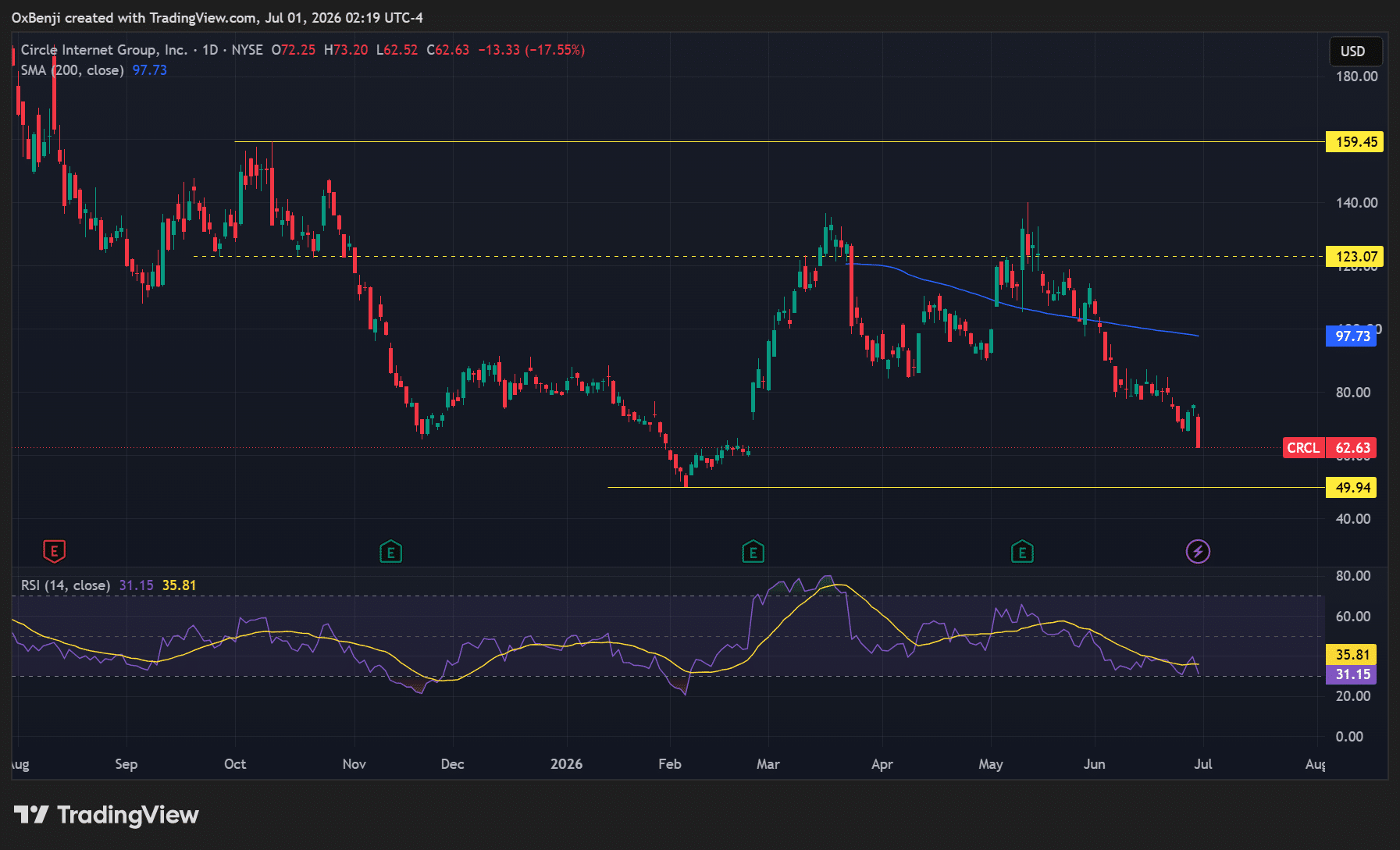
Source: Circle stock price performance, TradingView

Will Open USD challenge Circle, Tether’s dominance?

A consortium of 140 firms, including traditional cross-border payment players such as Visa, Mastercard, BlackRock and Google, launched a new stablecoin, Open USD (OUSD). According to the coalition, reserve earnings will be shared among partners, with zero transfer fees.

The target for OUSD? Enterprise treasury management and merchant payments. While not entirely focused on retail, the two segments are also eyed by both Tether’s USDT and Circle’s USDC.

The new stablecoin will be offered later in the year, and Circle’s stock reaction suggested the market share dominance could be challenged. In fact, Matthew Sigel, head of digital research at asset manager VanEck, echoed this stance as the stock dumped on Tuesday.

$CRCL -13% as Stripe, Coinbase and BlackRock back rival stablecoin ‘Open USD’

Sam Ruskin, an investment associate at crypto-focused venture firm Reciprocal Ventures, also reinforced Sigel’s outlook. He added,

This will either force Circle to continue their revenue share agreements, find new distributors for USDC (although nearly everyone interested in stablecoins today is backing OUSD). Whatever way you cut it, this seems bearish for Circle.

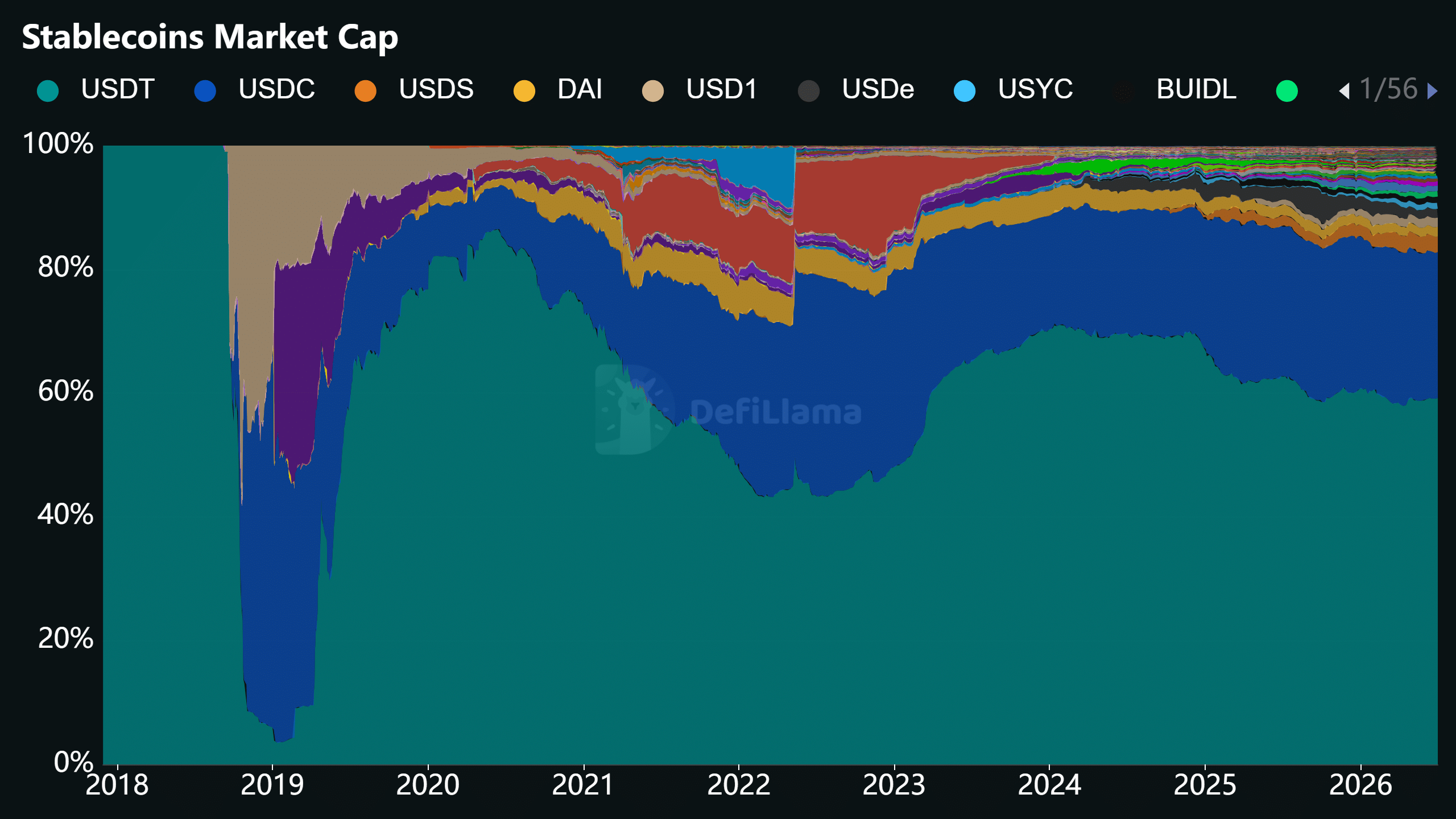
There has been increased competition in the stablecoin market after the GENIUS Act passage in 2025. In fact, over the same period, Tether’s USDT still holds dominance, but its market share shrank from 62% to 59%.
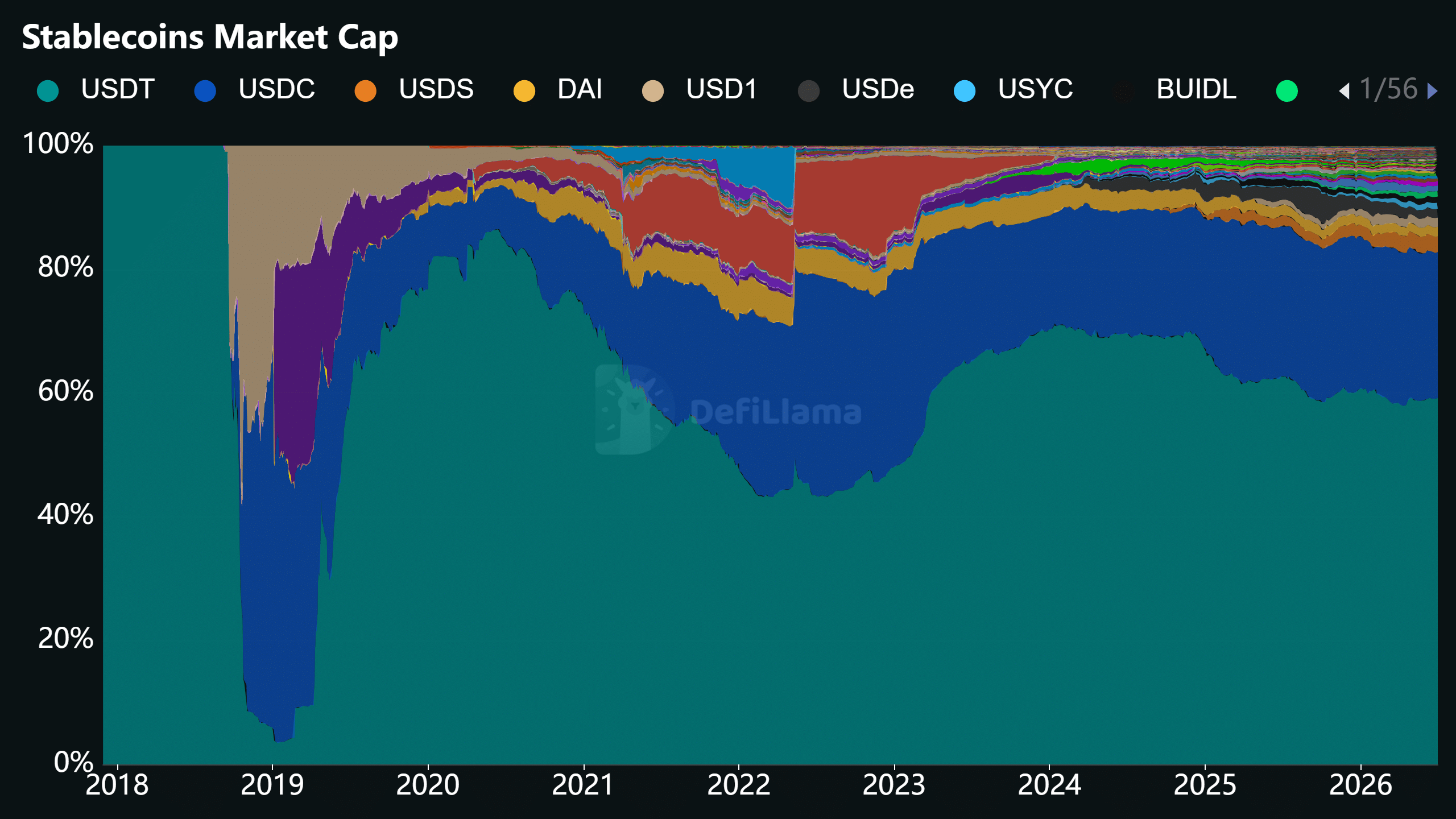
Source: DeFiLlama

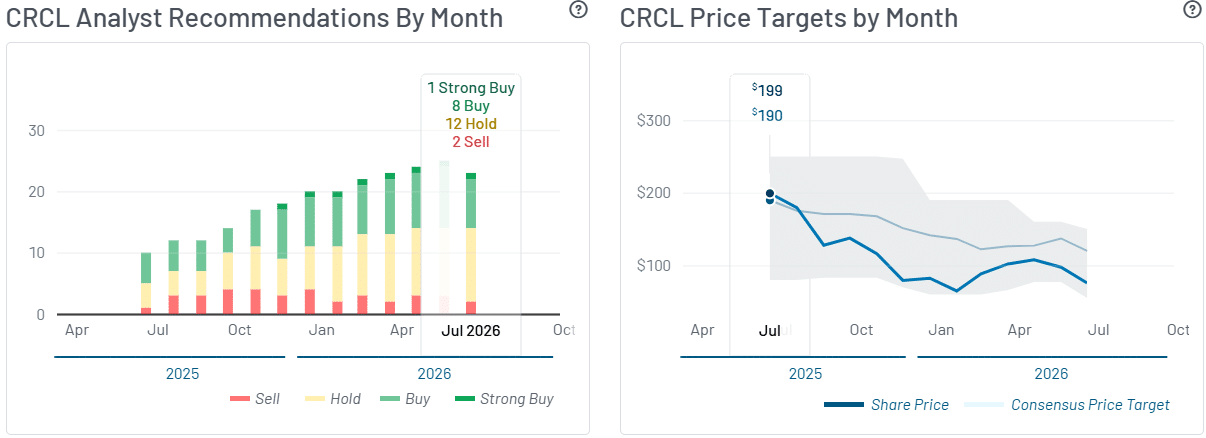
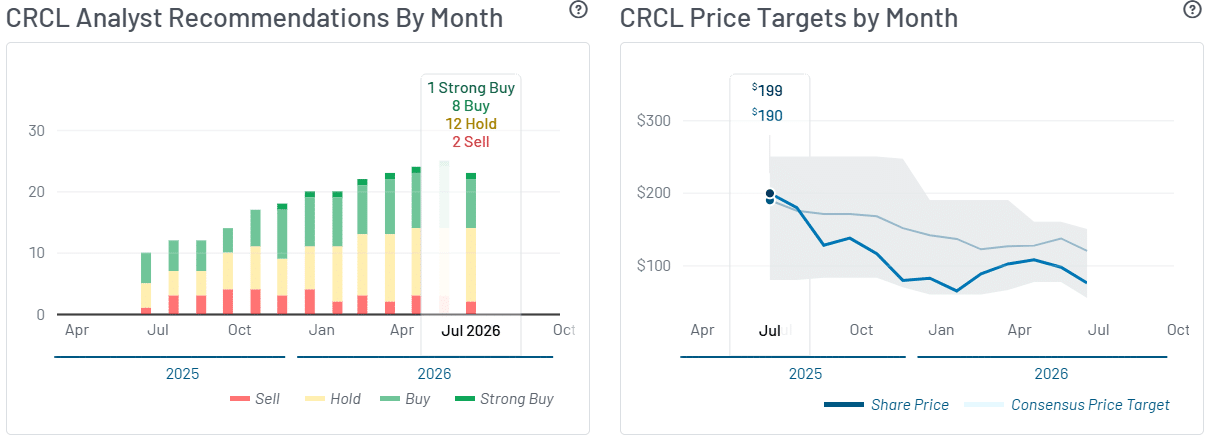
On the other hand, Circle’s market share rose from 19% to 25% before easing slightly to 24% in 2026. Whether new competitors will erode that share remains uncertain. Even so, analysts remain bullish on the stock, with a consensus price target of $120, implying roughly 91% upside from current levels.
Source: MarketBeat

Final Summary

  • Circle stock, CRCL, saw a massive loss of 17.5% on Tuesday
  • The bearish move followed a new rival, Open USD, backed by Visa and 140 other partners.

Preguntas relacionadas

QWhy did Circle's stock price drop 17.5% on June 30th?

ACircle's stock price dropped primarily due to the announcement of a new rival stablecoin called Open USD (OUSD), which is backed by a consortium of 140 firms including Visa and Mastercard, posing a potential threat to Circle's market share.

QWhat is Open USD (OUSD) and who is behind it?

AOpen USD (OUSD) is a new stablecoin launched by a consortium of 140 firms, including traditional payment companies like Visa, Mastercard, as well as BlackRock and Google. It aims to target enterprise treasury management and merchant payments.

QWhat was the market reaction to the launch of Open USD, according to analysts mentioned?

AAnalysts like Matthew Sigel and Sam Ruskin viewed the launch as bearish for Circle. They believe it will challenge Circle's market dominance, potentially forcing Circle to renegotiate revenue share agreements or find new distributors, as many interested parties are backing OUSD.

QHow has the stablecoin market share changed for Tether and Circle recently?

AFollowing the GENIUS Act passage in 2025, Tether's USDT dominance shrank from 62% to 59%. Circle's USDC market share initially rose from 19% to 25% but has since eased slightly to 24% in 2026.

QWhat is the consensus price target for Circle's stock (CRCL) despite the recent drop?

AAnalysts remain bullish on Circle's stock with a consensus price target of $120, which implies roughly a 91% upside from its price level at the time of the article.

Lecturas Relacionadas

IPO Imminent, OpenAI Faces Major Personnel Upheaval

OpenAI, preparing for a potential IPO, is experiencing significant leadership turmoil. In mid-August 2026, longtime "GPU geek" Scott Gray quietly left, and within three days, Chief Operating Officer Brad Lightcap (8-year veteran) and Chief Revenue Officer Denise Dresser (8-month tenure) departed. This follows a broader exodus of at least 10 senior executives in 2026, including heads of product, safety, and ethics. Analysts view this as a strategic "surgery" to transform from a research lab into a sales-driven enterprise company before going public. Revenue now tilts toward enterprise clients, surpassing consumer income sooner than expected, with annualized revenue reaching $40 billion. The new CRO, Dali Rajic, is a veteran enterprise sales leader. Concurrently, OpenAI has disbanded independent safety teams like "Preparedness," which assessed catastrophic risks, integrating their functions into core research. Critics warn this removes dedicated "brakes" on AI development. The leadership vacuum raises questions about who is the clear second-in-command after former apps CEO Fidji Simo moved to an advisory role. Co-founder Greg Brockman appears to be consolidating power. As OpenAI races against rival Anthropic ($47B annualized revenue), it faces the dual challenge of commercial execution while managing the departure of foundational technical talent and ensuring responsible AI development remains a priority.

marsbitHace 1 hora(s)

IPO Imminent, OpenAI Faces Major Personnel Upheaval

marsbitHace 1 hora(s)

AI Can 'Have Moods Too'! New Research from USTC: Confusion and Anxiety Make AI Work Better

The article discusses research from the University of Science and Technology of China and Oxford, revealing that allowing AI to recognize and act upon simulated "internal emotions" can significantly improve its performance. The study demonstrates a coherent pairing between specific emotional states in AI agents and their subsequent skill choices. For instance, an agent feeling curious and desirous will search for products, while one feeling confused and tense will rephrase queries. This mirrors human decision-making influenced by emotions. Statistical validation showed a 76.5% semantic consistency in these pairings. Crucially, the research challenges the traditional view of AI errors as flaws to be eliminated. It found that "bad" emotions like confusion, tension, or frustration serve as useful metacognitive signals, indicating a mismatch between the current strategy and the environment. By responding to these signals, AI can proactively adjust before a failure occurs. This is particularly effective in complex tasks prone to failure. For example, in tasks like "heating an item" and "picking up two items," success rates surged from 9.6% to 56.9% and 4.4% to 31.3%, respectively, when using the emotion-driven skill selection method (EMOTION2SKILL). The AI's "nervous" state about a closed microwave, for instance, prompted it to check and open it first, preventing failure. The article also mentions related work from Tianjin University, which embeds emotional prediction into world models (Large Emotional World Model, LEWM), significantly improving prediction accuracy in human-centric environments. Removing emotional data was found to degrade performance even in unrelated logical reasoning tasks. These studies build on earlier findings, like those from Anthropic, that identifiable emotional representations exist within large language models (LLMs). The focus is shifting from philosophical debate about AI emotion to practically harnessing these internal states as functional signals to enhance AI robustness and capability.

marsbitHace 2 hora(s)

AI Can 'Have Moods Too'! New Research from USTC: Confusion and Anxiety Make AI Work Better

marsbitHace 2 hora(s)

Trading

Spot
活动图片