SEC pauses ETFs and key crypto decisions ahead of another government shutdown

ambcryptoPublicado a 2026-02-01Actualizado a 2026-02-01

Resumen

Due to a U.S. government shutdown, the SEC has entered limited operations, pausing key regulatory activities including crypto ETF approvals, registration reviews, and new rule clarifications. While critical systems like EDGAR remain online, most staff are furloughed, halting recent progress on crypto regulation. This stall occurs amid a declining crypto market, with total capitalization dropping over 6% and major assets like Bitcoin and Ethereum seeing significant losses. The shutdown also delays newly agreed collaboration between the SEC and CFTC to resolve jurisdictional disputes and provide clearer industry guidance, exacerbating market uncertainty and reversing weeks of regulatory momentum.

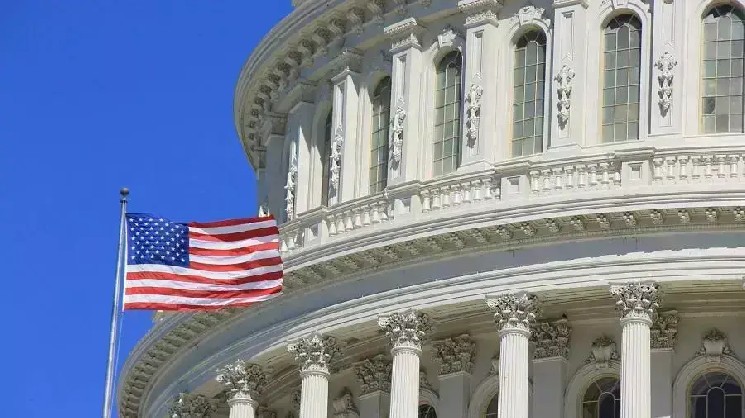
As of the 31st of January 2026, U.S. financial regulation has slowed almost to a stop.

This is because the government has failed to pass a budget, forcing the Securities and Exchange Commission (SEC) to operate under its shutdown plan.

Importantly, the SEC is not fully closed; it is barely functioning. For example, the EDGAR system, where companies submit filings, is still running.

At the same time, most SEC staff are not working, which means few people are actually reviewing or approving those filings.

As a result, the employees who normally approve crypto ETFs, review registration statements, and explain new rules are largely unavailable.

Instead, only a small emergency team remains active, allowed to step in only if there is an emergency related to “market integrity and investor protection.”

Outside of these rare cases, everything else has been paused.

The approach is not new

In fact, it is the same process the SEC follows during every government shutdown. When there is no immediate emergency, normal regulatory work simply stops.

Needless to say, for the crypto industry, this has real consequences.

Recent regulatory progress has suddenly hit pause, meaning decisions, approvals, and regulatory clarity are now delayed until the government reopens.

At the leadership level, SEC Chair Paul Atkins has already had to delay several important updates that the crypto industry was waiting for.

Many people hoped 2026 would finally bring clear crypto laws from Congress. But the shutdown makes it much harder for lawmakers from both parties to work together.

Market in blood stains

That said, this regulatory pause is coming at a bad time for the crypto market.

Prices have already fallen, with the total market down more than 6% to around $2.64 trillion. Bitcoin [BTC] recently dropped to about $78,000, while Ethereum [ETH] fell to nearly $2,400.

At the same time, the ETF market is also feeling the strain.

What’s more?

This further coincided with the U.S. finally entering a new phase of action on crypto regulation.

Senior officials from the SEC and the Commodity Futures Trading Commission met and agreed to work together more closely.

Their goal was to end long-running turf battles, create clearer rules, reduce duplicate work for companies, and finally give the crypto market the guidance it has been asking for.

However, with the government now shut down, those plans are effectively on hold.


Final Thoughts

  • The shutdown has turned regulatory momentum into uncertainty, undoing weeks of progress in just days.
  • Market pressure is rising, with falling prices and stalled ETF momentum worsening investor sentiment.


Preguntas relacionadas

QWhy has the U.S. Securities and Exchange Commission (SEC) slowed its regulatory activities to almost a stop?

ABecause the U.S. government failed to pass a budget, forcing the SEC to operate under its shutdown plan, which means most staff are furloughed and only a small emergency team remains active.

QWhat specific crypto-related work at the SEC has been paused due to the shutdown?

AThe approval of crypto ETFs, the review of registration statements, and the process of explaining new rules have all been largely paused because the employees who handle these tasks are unavailable.

QWhat is the state of the crypto market as described in the article during this regulatory pause?

AThe total crypto market value has fallen more than 6% to around $2.64 trillion, with Bitcoin dropping to about $78,000 and Ethereum falling to nearly $2,400.

QWhat was the goal of the recent meeting between the SEC and the Commodity Futures Trading Commission (CFTC), and what is its current status?

AThe goal was to agree to work together more closely to end turf battles, create clearer rules, reduce duplicate work, and provide guidance for the crypto market. However, these plans are now on hold due to the government shutdown.

QAccording to the article's 'Final Thoughts', what are two major consequences of the government shutdown?

A1. The shutdown has turned regulatory momentum into uncertainty, undoing weeks of progress in just days. 2. Market pressure is rising, with falling prices and stalled ETF momentum worsening investor sentiment.
Lecturas Relacionadas

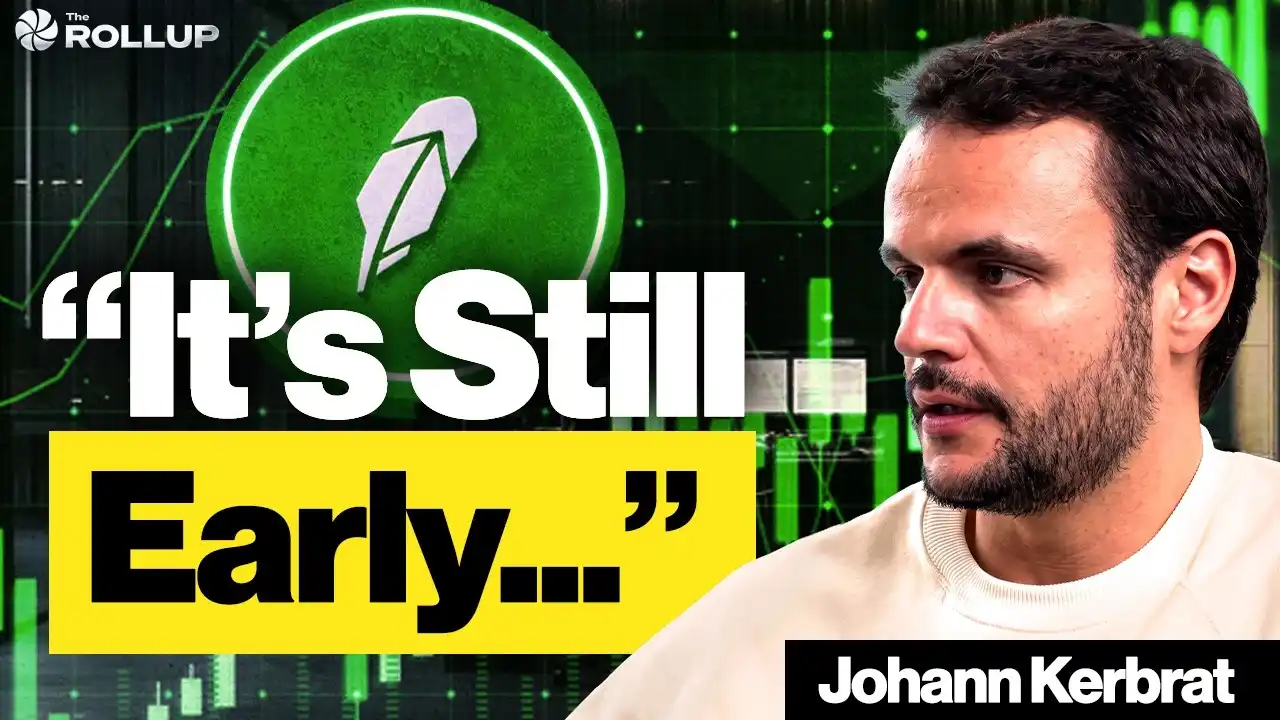
Interview with Robinhood Executive: Meme + Tokenized US Stocks as "Barbell" Customer Acquisition Strategy, All Business Lines Achieve Hundreds of Millions in Revenue

Interview with Robinhood executive Johann Kerbrat reveals the company's "barbell" customer acquisition strategy for its new Robinhood Chain, combining meme tokens with tokenized stocks. Three weeks after mainnet launch, the chain has seen over $3B in weekly DEX volume and 105M transactions. Kerbrat explains the logic behind the permissionless chain: meme tokens attract DeFi users, while tokenized real-world assets (RWA), currently over 90 US stocks and ETFs accessible in 120+ countries, serve global users. The goal is to bring Robinhood's 27 million funded accounts on-chain by simplifying DeFi with a user-friendly interface, exemplified by features like Robinhood Earn which offers yield without requiring wallet management. Built on Arbitrum's technology stack for its speed, low cost, and Ethereum's security, the chain focuses on financial products like Earn, spot trading, and perpetuals. Kerbrat downplays direct competition with platforms like Base, emphasizing the goal of expanding the overall market for on-chain assets. He details selective partnerships (e.g., Morpho, Lighter) based on compliance, unique UX, and differentiation. While regulatory clarity is pending for US perpetuals, the expansion continues via Bitstamp in Europe. Finally, Kerbrat positions Robinhood as a "super app" integrating stocks, options, crypto, banking, and AI trading, with all major business lines generating hundreds of millions in revenue. For the chain, current priority is driving adoption over maximizing gas fee revenue.

marsbitHace 2 hora(s)

Interview with Robinhood Executive: Meme + Tokenized US Stocks as "Barbell" Customer Acquisition Strategy, All Business Lines Achieve Hundreds of Millions in Revenue

marsbitHace 2 hora(s)

Fidelity Q3 Report: BTC, ETH, and SOL Continue to Build Bottoms; How Much Further Will This Crypto Bear Market Go?

Fidelity's Q3 Crypto Signal Report analyzes the current bear market, noting Bitcoin (BTC), Ethereum (ETH), and Solana (SOL) are in a prolonged bottoming phase. Key indicators like the weighted Net Unrealized Profit/Loss (NUPL) have turned negative (-0.01), signaling the market is slightly below its aggregate cost basis, with BTC acting as the primary stabilizing asset. BTC's dominance has risen to 68%, indicating a lack of capital rotation to other digital assets. Performance has been weak across the board, with BTC, ETH, and SOL down significantly year-to-date. Market sentiment is depressed, exacerbated by substantial outflows from spot ETPs and a challenging macro environment. The report compares the current ~203-day downtrend to historical ~300-day bottoming cycles, suggesting the process may be two-thirds complete, with late 2026 as a potential timeframe to monitor. For Bitcoin, NUPL at 0.09 indicates cautious sentiment, while momentum signals remain negative. The Yardstick metric points to potential undervaluation relative to network security (hashrate). Ethereum's NUPL is deep in the "capitulation" zone at -0.43, a historically positive signal for future returns, though its momentum and network fee revenue are negative. Solana shows the deepest NUPL at -0.72 but demonstrates relative resilience in on-chain activity and stablecoin transfer volume. The report concludes that while several metrics are near historical capitulation levels, a definitive market bottom has not yet been established. The path forward likely involves continued consolidation, with BTC's relative strength and fundamental on-chain usage for ETH and SOL providing key areas for investor observation.

marsbitHace 2 hora(s)

Fidelity Q3 Report: BTC, ETH, and SOL Continue to Build Bottoms; How Much Further Will This Crypto Bear Market Go?

marsbitHace 2 hora(s)

Trading

Spot
活动图片