Russia clears Sberbank for crypto trading ahead of December launch

cointelegraphPublished on 2026-10-13Last updated on 2026-10-13

Abstract

Russia's central bank has authorized Sberbank, the country's largest lender, to trade cryptocurrencies ahead of a planned December launch. The updated official register lists ten approved exchange operators and six digital asset custodians, including Sberbank and fellow state-owned bank VTB. Sberbank plans to launch support for Bitcoin (BTC), Ether (ETH), and Tether's USDT on its digital platforms starting December 1, 2026, and has already begun testing related services. This follows Russia's new crypto regulations taking effect on September 1, which bring exchange operators and custodians under central bank supervision. However, the country still bans the use of cryptocurrencies for payments.

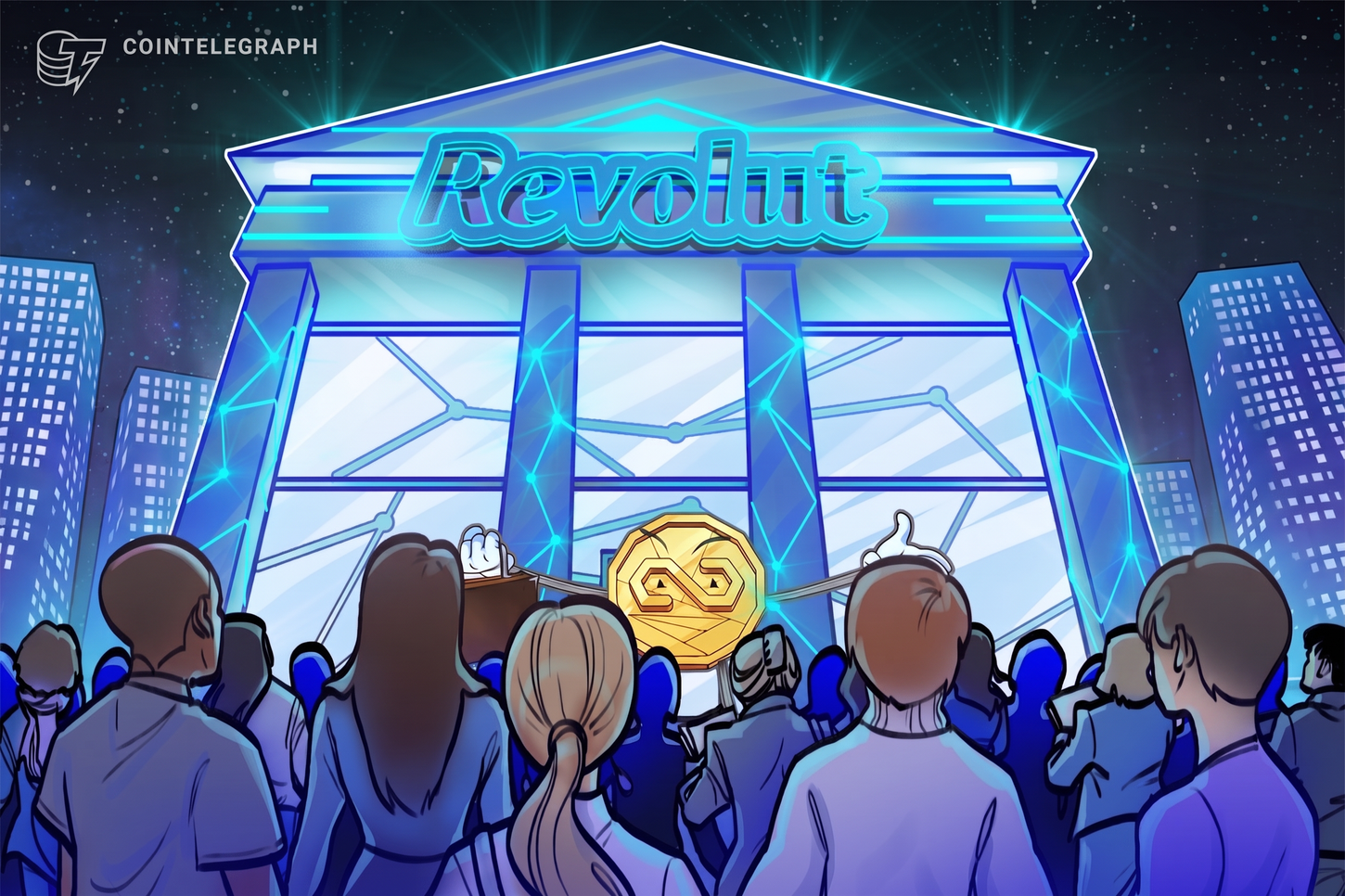
Sberbank, Russia’s largest lender, has secured the central bank’s approval to trade cryptocurrencies, including Bitcoin, ahead of a planned December launch.

The Bank of Russia’s updated register, dated Tuesday, lists 10 authorized crypto exchange operators and six digital custodians, up from four and five, respectively, a week earlier. The lists include major lenders Sberbank and VTB alongside nonbank companies such as T-Invest Lab and Atomyze.

Sberbank previously said it plans to launch crypto products supporting Bitcoin (BTC), Ether (ETH) and Tether’s USDt (USDT) on Dec. 1, 2026, through its existing SberBank Online, SberInvestments and SberBusiness platforms.

Sberbank has already begun testing crypto purchases, sales, deposits and withdrawals through its SberBank Online app, Russian business newspaper Vedomosti reported on Thursday, citing the bank’s press office. The bank said the final launch timeline depends on additional central bank regulations.

The registrations follow the Sept. 1 entry into force of Russia’s new crypto rules, which placed exchange operators and custodians under central bank oversight. The country still prohibits using cryptocurrencies to pay for goods and services.

Sberbank was among the first companies to secure digital custodian status last Tuesday.

Related: UK sanctions three crypto exchanges tied to Russian illicit funds

Trending Cryptos

Related Questions

QWhich Russian bank has received central bank approval for cryptocurrency trading, and what is its launch plan?

ASberbank, Russia's largest lender, has received central bank approval to trade cryptocurrencies. It plans to launch crypto products supporting Bitcoin (BTC), Ether (ETH), and USDt (USDT) on December 1, 2026, through its existing platforms.

QAccording to the article, how many crypto exchange operators and digital custodians were authorized by the Bank of Russia as of the update?

AAs of the update, the Bank of Russia's register lists 10 authorized crypto exchange operators and six digital custodians.

QWhat specific crypto-related services has Sberbank reportedly begun testing?

ASberbank has reportedly begun testing cryptocurrency purchases, sales, deposits, and withdrawals through its SberBank Online application.

QWhat is the legal status of using cryptocurrencies for payments in Russia according to the new rules?

ADespite the new regulations, Russia still prohibits the use of cryptocurrencies to pay for goods and services.

QWhen did Russia's new crypto rules come into force, and what major change did they introduce?

ARussia's new crypto rules came into force on September 1. They placed crypto exchange operators and custodians under the oversight of the central bank.

Related Reads

Upbit and Bithumb Customer Deposits Plunge 31.86%, Falling $1.87 Billion in 2026

Customer deposits in South Korean won at Upbit and Bithumb, South Korea's two largest crypto exchanges, fell 31.86% in the first nine months of 2026, according to regulatory disclosures published November 17. The platforms held about ₩5.36 trillion ($4 billion) in customer cash at end-September, down from ₩7.87 trillion at end-2025—a reduction of roughly ₩2.51 trillion ($1.87 billion). Upbit operator Dunamu saw deposits drop 31.9% from ₩5.83 trillion to ₩3.97 trillion, while Bithumb fell 31.8% from ₩2.04 trillion to ₩1.39 trillion. The figures were disclosed via South Korea's Financial Supervisory Service electronic filing system. Customer crypto holdings also lost value: Upbit's book value fell 10.9% from ₩62.23 trillion to ₩55.46 trillion, and Bithumb declined 13.1% from ₩17.90 trillion to ₩15.56 trillion. However, quantities of several major cryptocurrencies held for customers increased despite lower valuations—Upbit added 13,259 Bitcoin, 337,609 Ether and 1.22 million Solana versus year-end levels, and Bithumb reported higher holdings of Bitcoin, Ether, XRP and Solana. The data indicate the deposit decline does not necessarily mean investors withdrew entirely from the crypto market; disclosures do not explain whether funds went to bank accounts, crypto purchases or elsewhere. The drop comes amid weaker trading activity in South Korea's digital asset market, adding pressure on major exchanges.

TheNewsCrypto13m ago

Upbit and Bithumb Customer Deposits Plunge 31.86%, Falling $1.87 Billion in 2026

TheNewsCrypto13m ago

Naxin Micro Plans to Acquire Geokong Smart for 487 Million Yuan: 268% Valuation Premium with Zero Performance Betting, Another Move in the Sensing Track | M&A Frontline

NOVOSENSE Microelectronics (688052.SH) announced on November 16 a cash acquisition of a 78.152% stake in Ningbo Geskong Intelligent Technology for a total consideration of RMB 487 million, marking its second M&A move in automotive electronics and intelligent sensing after acquiring Magtron in 2024. The deal values the target at an appraised value of RMB 635 million, a 268.40% premium over book net assets based on the income approach, with the transaction implying an overall valuation of about RMB 623 million. Notably, the deal includes no performance commitments or impairment compensation clauses; instead, it relies on deep equity binding of the core team, which will retain 21.85% of shares along with lock-up and mandatory transfer restrictions. Payment is entirely in cash, funded by own capital plus a planned bank acquisition loan of up to RMB 350 million over 10 years, with differentiated installment schedules for different shareholder types. Founded in 2017, Geskong Intelligent focuses on microwave/millimeter-wave radar sensing chips, covering 5.8GHz, 10.5GHz, 24GHz and 60GHz bands and extending toward the mainstream automotive 77GHz band. It remains loss-making, posting RMB 77.59 million in revenue and a net loss of RMB 56.43 million in 2025, and RMB 34.63 million in revenue with a RMB 14.32 million net loss in January-April 2026, largely due to heavy R&D spending on 77GHz automotive radar SoC chips now entering customer introduction. For NOVOSENSE, the acquisition aims to complete its intelligent sensing portfolio, strengthen millimeter-wave radar technology reserves, and create synergies with its sensor, signal chain and power management lines, while leveraging its channels to accelerate mass production. With about RMB 2.67 billion in cash and trading financial assets as of Q3 2026, the company can absorb the cost, though risks remain: without performance guarantees, the target's profitability depends entirely on integration and commercialization progress, and prolonged losses could drag on consolidated profits if 77GHz chip ramp-up or customer expansion falls short.

marsbit28m ago

Naxin Micro Plans to Acquire Geokong Smart for 487 Million Yuan: 268% Valuation Premium with Zero Performance Betting, Another Move in the Sensing Track | M&A Frontline

marsbit28m ago

The board has not considered Jensen Huang's return; how much further could Nvidia's stock fall? Can earnings stabilize market confidence?

NVIDIA investors are awaiting two key answers: one from the upcoming earnings report and one from the board. Reports indicate the board is not currently considering bringing back Jensen Huang as CEO, focusing instead on ongoing investigations, even as some investors and public figures voice support for his return. This creates a market disagreement ahead of earnings. On November 16, NVIDIA fell 4.12% amid a broader tech selloff, with the Nasdaq down 2.49% and the S&P 500 down 1.92%. The article argues that rising support for Huang's return does not necessarily lift the stock. While his influence on technology direction, customer relationships, and ecosystem building has real business value, the board must weigh investigation procedures, corporate governance, employee relations, and investor trust. This creates a "management discount"—not necessarily lower chip sales next quarter, but reduced confidence in operational continuity, leading investors to demand higher risk compensation and pay lower valuations. NVIDIA has appointed CFO Colette Kress as interim CEO and Harvey Jones as board chairman while searching for a permanent successor. This arrangement addresses the chain of command, but investors must watch whether management responsibilities are clearly divided and whether R&D, delivery, and customer service remain stable. Clearer transition arrangements reduce uncertainty; prolonged ambiguity may sustain a risk discount even without order changes. The article also notes that valuation multiples can compress even if earnings expectations hold—for example, a drop from 25x to 22x implies roughly 12% downside. The November 16 decline was not solely about management: the U.S. Commerce Department issued new rules on advanced AI chips and remote access, and broad tech weakness amplified the drop. The Q3 earnings report will be a key test. Investors should focus on revenue and data center performance, gross margins and earnings quality, forward guidance, and management commentary on strategy and customer relations during the earnings call. Strong results may ease operational concerns but won't resolve governance issues; investigation clarity won't guarantee sustained capital spending growth. Investors should watch four things: clearer board management arrangements, stability of customer and supply chain cooperation, changes in AI compute demand and policy environment, and whether earnings stabilize profit expectations. The core question is whether NVIDIA can demonstrate that its technology roadmap, customer relationships, organizational execution, and earnings delivery remain intact beyond any single leader.

marsbit28m ago

The board has not considered Jensen Huang's return; how much further could Nvidia's stock fall? Can earnings stabilize market confidence?

marsbit28m ago

Fed’s Hammack Reiterates Preference for Small Rate Hikes, but Says Faster Pace Forced if Inflation Expectations Get Out of Control

Federal Reserve Bank of Cleveland President Beth Hammack said she prefers raising interest rates in small, steady increments, but warned the Fed may need to act more aggressively if inflation pressures worsen. In a Bloomberg TV interview on November 16, she said she is increasingly seeing businesses and consumers make decisions based on expectations that inflation will continue deteriorating—a trend she finds alarming. She warned that if such inflation psychology becomes entrenched, it "may mean we are already behind the curve" and may have to raise rates faster and by larger amounts, with both the size of individual hikes and the eventual terminal rate potentially higher than previously expected. Hammack dissented at the Fed's October meeting in favor of holding rates steady, and futures markets have already priced in a December hike and another possible increase in January. Hammack said inflation stems from a broad range of sources, including lingering tariff effects, energy supply problems, demand expansion from AI infrastructure buildout, and non-AI-related economic growth. She called the breadth of inflation sources a key reason restrictive policy is needed. On the labor market, she noted some contacts in the Cleveland Fed district report difficulty recruiting both skilled and unskilled labor, possibly an early sign of tightening. More firms are raising pay for lower-income workers, and wage growth is feeding into core services inflation excluding housing through total compensation costs, especially benefits and health insurance. She said the pressure comes not directly from wages but from costs including benefits and health insurance. Still, she does not expect rate hikes to significantly hurt the labor market. On inflation expectations, Hammack said long-term expectations remain broadly anchored to the Fed's 2% goal, giving the committee room to deliberate on the pace and size of hikes. She said market expectations for long-term low inflation and pricing of near-term hikes reflect the Fed's strong credibility. She estimates the policy stance is near or slightly below neutral, and rates need to rise further to dampen investment at the margin. She said strong growth can withstand further tightening, noting some firms, especially B2B companies, have been able to pass on higher costs, indicating demand is not yet notably suppressed.

marsbit1h ago

Fed’s Hammack Reiterates Preference for Small Rate Hikes, but Says Faster Pace Forced if Inflation Expectations Get Out of Control

marsbit1h ago

Trading

Spot

Hot Articles

What is $BANK

Bank AI: A Revolutionary Step in the Future of Banking Introduction In an era marked by rapid advancements in technology, Bank AI stands at the intersection of artificial intelligence (AI) and banking services. This innovative project seeks to redefine the financial landscape, enhancing operational efficiency, security measures, and customer experiences through the power of AI. As we embark on this exploration of Bank AI, we will delve into what the project entails, its operational dynamics, its historical context, and significant milestones. What is Bank AI? At its core, Bank AI represents a transformative initiative aimed at integrating artificial intelligence into various banking operations. This project harnesses the capabilities of AI to automate processes, improve risk management protocols, and enhance customer interaction through personalized services. The primary objectives of Bank AI include: Automation of Banking Functions: By leveraging AI technologies, Bank AI aims to automate routine tasks, reducing the burden on human resources and enhancing efficiency. Enhanced Risk Management: The project utilises AI algorithms to predict and identify risks, thereby fortifying security measures against fraud and other threats. Personalization of Banking Services: Bank AI focuses on offering tailored financial products and services by analysing customer data and behaviours. Improving Customer Experience: The implementation of AI-driven solutions, such as chatbots and virtual assistants, aims to provide users with more human-like interactions, revolutionising the way customers engage with banks. With these goals, Bank AI positions itself as a crucial player in rendering banking more efficient, secure, and user-centric. Who is the Creator of Bank AI? Details regarding the creator of Bank AI remain unknown. As such, no specific individual or organisation has been identified in the available information. The anonymity surrounding the project's inception raises questions but does not detract from its ambitious vision and objectives. Who are the Investors of Bank AI? Similar to the project's creator, specific information regarding the investors or supporting organisations of Bank AI has not been disclosed. Without this information, it is challenging to outline the financial backing and institutional support that might be propelling the project forward. Nevertheless, the importance of having a robust investment foundation is pivotal for sustaining development in such an innovative field. How Does Bank AI Work? Bank AI operates on several innovative fronts, focusing on unique factors that differentiate it from traditional banking frameworks. Below are key operational features: Automation: By applying machine learning algorithms, Bank AI automates various manual processes within banks. This results in reduced operational costs and allows human workers to redirect their efforts towards more strategic activities. Advanced Risk Management: The integration of AI into risk management practices equips banks with tools to accurately predict potential threats such as fraud, ensuring that customer information and assets remain secure. Tailored Financial Recommendations: Through continuous learning from customer interactions, the AI systems develop a nuanced understanding of user needs, enabling them to offer tailored advice on financial decisions. Enhanced Customer Interactions: Utilizing chatbots and virtual assistants powered by AI, Bank AI enables a more engaging customer experience, allowing users to have their queries resolved quickly, thus reducing wait times and improving satisfaction levels. Together, these operational features position Bank AI as a pioneer in the banking sector, establishing new benchmarks for service delivery and operational excellence. Timeline of Bank AI Understanding the trajectory of Bank AI requires a look at its historical context. Below is a timeline highlighting important milestones and developments: Early 2010s: The conceptualization of AI integration into banking services began to gain attention as banking institutions recognised the potential benefits. 2018: A marked increase in the implementation of AI technologies occurred when banks started using AI tools like chatbots for basic customer service and risk management systems for improved security handling. 2023: The sophistication of AI continued to advance, with generative AI being introduced for more complex tasks such as document processing and real-time investment analysis. This year marked a significant leap in the capabilities afforded to banks by AI technology. 2024-Current Status: As of this year, Bank AI is on an upward trajectory, with ongoing research and developments poised to further enhance capabilities in banking operations. Continued exploration of AI applications hints at exciting developments yet to come. Key Points About Bank AI Integration of AI in Banking: Bank AI focuses on adopting artificial intelligence to streamline banking processes and improve user experiences. Automation and Risk Management Focus: The project strongly emphasizes these areas, aiming to shift the burden of routine tasks while enhancing security frameworks through predictive analytics. Personalized Banking Solutions: By harnessing customer data, Bank AI enables tailored banking services that cater to individual user needs. Commitment to Development: Bank AI remains committed to ongoing research and development efforts, ensuring its adaptability and ongoing relevance as technology continues to evolve. Conclusion In summary, Bank AI exemplifies a crucial step forward in the banking industry, leveraging artificial intelligence to reshape operational paradigms, enhance security, and promote customer satisfaction. Despite gaps in information surrounding the creator and investors, the clear objectives and functional mechanisms of Bank AI provide a strong foundation for its ongoing evolution. As AI technology continues to advance and merge with the banking sector, Bank AI is well-positioned to significantly impact the future of financial services, enhancing the way we understand and interact with banking.

4.2k Total ViewsPublished 2024.04.06Updated 2024.12.03

What is $BANK

How to Buy BANK

Welcome to HTX.com! We've made purchasing Lorenzo Protocol (BANK) simple and convenient. Follow our step-by-step guide to embark on your crypto journey.Step 1: Create Your HTX AccountUse your email or phone number to sign up for a free account on HTX. Experience a hassle-free registration journey and unlock all features.Get My AccountStep 2: Go to Buy Crypto and Choose Your Payment MethodCredit/Debit Card: Use your Visa or Mastercard to buy Lorenzo Protocol (BANK) instantly.Balance: Use funds from your HTX account balance to trade seamlessly.Third Parties: We've added popular payment methods such as Google Pay and Apple Pay to enhance convenience.P2P: Trade directly with other users on HTX.Over-the-Counter (OTC): We offer tailor-made services and competitive exchange rates for traders.Step 3: Store Your Lorenzo Protocol (BANK)After purchasing your Lorenzo Protocol (BANK), store it in your HTX account. Alternatively, you can send it elsewhere via blockchain transfer or use it to trade other cryptocurrencies.Step 4: Trade Lorenzo Protocol (BANK)Easily trade Lorenzo Protocol (BANK) on HTX's spot market. Simply access your account, select your trading pair, execute your trades, and monitor in real-time. We offer a user-friendly experience for both beginners and seasoned traders.

10.3k Total ViewsPublished 2025.05.09Updated 2026.06.02

How to Buy BANK

Discussions

Welcome to the HTX Community. Here, you can stay informed about the latest platform developments and gain access to professional market insights. Users' opinions on the price of BANK (BANK) are presented below.

活动图片