Ripple Confirms Over 75 Speakers for Swell 2026 Conference, Expects Over 1,500 Attendees

cryptonews.ruPublicado a 2026-08-16Actualizado a 2026-08-16

Resumen

Ripple has confirmed an expanded program for its Swell 2026 conference in New York, scheduled for October 27-29. The event expects over 1,500 attendees, more than 75 speakers, and over 50 sessions across three stages. The 2026 edition uniquely combines Ripple's institutionally-focused Swell conference with the developer-centric XRPL Apex event, marking the largest Swell to date. It aims to bridge institutional decision-makers with blockchain development teams. Key speakers include Ripple CEO Brad Garlinghouse, President Monica Long, Robinhood's Johann Kerbrat, BNY Mellon's Laide Agboola, and Intercontinental Exchange's Michael Blaugrund. Other participants represent Tradeweb, PwC, Amazon Web Services, and the XRP Ledger Foundation. The agenda will cover payments, capital markets, ETFs, stablecoins, tokenization, treasury management, cybersecurity, compliance, and practical applications of the XRP Ledger. Developer sessions will focus on the XRPL's consensus and transaction infrastructure. The conference takes place as New York develops specific oversight rules for dollar-linked digital assets, following the state's July proposal for new regulations governing payment stablecoin issuers. A pre-conference hackathon is scheduled for October 24-25, with the main stage sessions, breakout discussions, and an exhibition hall running October 28-29 at Manhattan's 'The Shed'.

Ripple has confirmed the expanded program for the Swell 2026 conference in New York City: from October 27 to 29, over 1,500 attendees, more than 75 speakers, and over 50 sessions are expected across three stages. On August 13, Swell shared the latest updates on X, as financial institutions are increasingly engaging with blockchain payments, stablecoins, tokenization, and digital asset infrastructure.

The updated Swell 2026 speaker list includes Robinhood's Senior Vice President and General Manager of Crypto, Johann Kerbrat; BNY's Global Head of Markets, Laide Majiyagbe; and Intercontinental Exchange's Vice President of Strategic Initiatives, Michael Blaugrund. Other participants include Water.org co-founder Matt Damon, Bullish Chairman and CEO Tom Farley, Ripple CEO Brad Garlinghouse, and Ripple President Monica Long.

Representatives from Tradeweb, PwC, State Street, Amazon Web Services, Canary Capital, $XRP Ledger Foundation, and several universities have also confirmed their participation. Key attendees include former Reserve Bank of India Governor Raghuram Rajan, Ripple's Honorary Chief Technology Officer David Schwartz, and Tradeweb CEO Billy Hult; meanwhile, Ripple indicated that the participant list may be expanded.
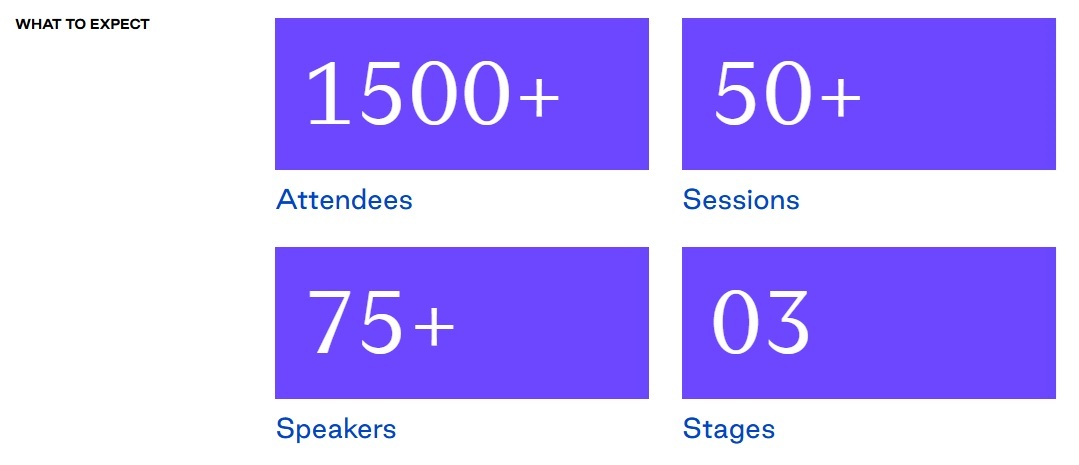
What to Expect from Ripple Swell 2026. Source: Ripple

Swell and XRPL Apex Join Forces for the First Time

The 2026 conference will merge Ripple's institutionally-focused Swell event with XRPL Apex — a developer gathering dedicated to the $XRP Ledger. Ripple previously characterized this combined program as the largest Swell event to date, bringing together financial organization leaders, developers, researchers, investors, and community representatives within a single conference.

This expanded format moves beyond traditional banking and payments discussions, uniting decision-makers in the institutional sector with teams building blockchain applications. Previously published details indicate that this expanded event, focused on finance and the $XRP ecosystem, will feature tracks dedicated to the institutional sector, ecosystem and innovation, as well as an expo hall, technical sessions, and networking events.

The program for the milestone 10th Swell event coincides with Ripple's increased focus on regulated digital asset infrastructure and the participation of institutional players. Ripple's leadership previously linked the conference's 10th anniversary to growth in areas such as tokenization, decentralized finance, interoperability, artificial intelligence, and enterprise technology adoption.

Payments, Stablecoins, and Tokenization Lead the Agenda

Planned topics include payments, capital markets, exchange-traded funds, stablecoins, tokenization, treasury management, cybersecurity, compliance, and practical applications of $XRP. The conference will also discuss privacy, quantum computing, decentralized finance, and agentic finance — a new area related to artificial intelligence systems capable of performing financial tasks within defined control frameworks.

Developers participating in this combined event will focus on the $XRP Ledger's consensus and transaction processing infrastructure. This public blockchain utilizes validators instead of proof-of-work mining, typically settles transactions within seconds, and supports issued assets, decentralized exchange functionality, tokenization, and cross-border transfers.

Sessions on stablecoins will address assets designed to maintain a peg through reserves, collateral, redemption systems, or market incentives. These instruments are increasingly used to support payments, remittances, trading, and treasury operations, although stablecoin structures carry specific risks related to reserves and redemption.

New York Regulation Shapes the Conference Agenda

The Swell conference takes place against the backdrop of New York developing a more concrete oversight system for U.S. dollar-linked digital assets. On July 7, the New York State Department of Financial Services proposed new rules for payment stablecoin issuers, which apply to organizations issuing tokens designed for payments and settlements.

The extensive program will begin with a hackathon on October 24 and 25, followed by an Institutional Summit and welcome reception on October 27. Main stage sessions, breakout discussions, and the expo hall are scheduled for October 28 and 29 at "The Shed" in Manhattan, with a closing celebration on the final evening.


Criptos en tendencia

Preguntas relacionadas

QWhat are the key details of Ripple's Swell 2026 conference announced in the article?

ARipple's Swell 2026 conference will be held in New York from October 27 to 29. It expects over 1,500 attendees, features more than 75 speakers, and includes over 50 sessions across three stages.

QWho are some of the notable confirmed speakers for Swell 2026 mentioned in the text?

ANotable confirmed speakers include Johann Kerbrat (SVP & GM of Crypto at Robinhood), Laide Majiyagbe (Global Head of Markets at BNY), Michael Blaugrund (VP of Strategic Initiatives at ICE), Matt Damon (Co-founder of Water.org), Tom Farley (Chairman and CEO of Bullish), Brad Garlinghouse (CEO of Ripple), and Monica Long (President of Ripple).

QHow is the Swell 2026 conference format unique compared to previous years?

AThe 2026 conference uniquely merges Ripple's institutional-focused Swell event with XRPL Apex, a developer gathering dedicated to the XRP Ledger. This combined format aims to bring together financial executives, developers, researchers, investors, and community members in a single event.

QWhat are some of the main topics on the agenda for the Swell 2026 conference?

AKey agenda topics include payments, capital markets, ETFs, stablecoins, tokenization, treasury management, cybersecurity, compliance, privacy, quantum computing, decentralized finance (DeFi), and agentic finance (AI systems for financial tasks).

QWhat regulatory context in New York is mentioned as relevant to the Swell 2026 conference?

AThe conference is set against the backdrop of New York developing a more concrete oversight framework for dollar-referenced digital assets. On July 7, the New York State Department of Financial Services proposed new rules for payment stablecoin issuers, affecting organizations issuing tokens for payments and settlements.

Lecturas Relacionadas

Media: Anthropic Aims for Revenue Up to $200 Billion by 2028 Ahead of IPO

Anthropic, the AI company behind Claude, is reportedly projecting its revenue could reach between $190 billion and $200 billion by 2028, according to sources cited by Reuters. This forecast, significantly higher than its reported $47 billion annual run-rate in May 2026, is being used by investors and bankers to value the company ahead of a potential IPO. Anthropic has confidentially filed with the SEC, with listing details dependent on market conditions and regulatory approval. The valuation reportedly applies a revenue multiple (EV/Revenue) to these future 2028 figures, an approach common for high-growth tech firms but unusual for a forecast two years ahead of an IPO. This reflects confidence in Anthropic's rapid scaling; its annual run-rate grew tenfold yearly for three years leading into 2026, jumping from ~$9B in late 2025 to over $47B by May 2026. Investors are betting the company's massive spending on GPUs, model training, and infrastructure will eventually outpace costs, leading to expanding margins. Public companies like Palantir, Cloudflare, and SpaceX, valued at high multiples of their forward revenue, serve as benchmarks. While this forward-looking method has precedents, some analysts question the sustainability of such valuations and the actual productivity gains from AI. Despite these concerns, earlier reports suggested Anthropic could be valued at over $1 trillion for its IPO.

cryptonews.ruHace 23 min(s)

Media: Anthropic Aims for Revenue Up to $200 Billion by 2028 Ahead of IPO

cryptonews.ruHace 23 min(s)

Open Blockchain Business: Who Gets the Fees and Why a Foundation is Needed

Business of Open Blockchain: Who Gets the Fees and Why a Foundation is Needed In public blockchains, user transaction fees do not simply become "revenue" for a single entity. The flow of money is complex and protocol-dependent. In Ethereum, fees consist of a base fee (burned, permanently removing ETH from circulation) and a priority tip (paid to the validator). In Solana, half the base fee is burned and half goes to the validator, while priority fees go entirely to validators. Thus, "fees" are not synonymous with "project revenue"; they may go to network operators or be destroyed. Foundations like the Ethereum Foundation do not take a cut of user fees. They are funded by their own treasuries, which can generate income (e.g., from staking rewards) and finance ecosystem development, research, and security. Their role is to fund public goods that are hard to monetize directly. Developers of open-source blockchain code can monetize through services, not the code itself. For example, Optimism provides its technology freely but sells enterprise support and managed services (OP Enterprise). Additionally, networks built on Optimism's tech, like Coinbase's Base, share a portion of their revenue with the Optimism ecosystem via agreements, creating an economic link. Token holders do not automatically receive fees as dividends. In Optimism, a portion of protocol revenue is now used to buy back and treasury-lock OP tokens, creating an indirect link between network usage and token economics. In Ethereum, fee burning reduces ETH supply but doesn't distribute funds to all holders; stakers and validators receive direct rewards. For evaluation, analysts should look beyond total fee figures. Key questions are: Who paid and for what? Where did the money go (to validators, operators, treasury, or burning)? What were the recipient's costs? Is there a mechanism linking this income to the token? The same fee amount impacts different blockchain economies in vastly different ways depending on these factors.

cryptonews.ruHace 25 min(s)

Open Blockchain Business: Who Gets the Fees and Why a Foundation is Needed

cryptonews.ruHace 25 min(s)

Trading

Spot

Artículos destacados

Cómo comprar SWELL

¡Bienvenido a HTX.com! Hemos hecho que comprar Swell Network (SWELL) sea simple y conveniente. Sigue nuestra guía paso a paso para iniciar tu viaje de criptos.Paso 1: crea tu cuenta HTXUtiliza tu correo electrónico o número de teléfono para registrarte y obtener una cuenta gratuita en HTX. Experimenta un proceso de registro sin complicaciones y desbloquea todas las funciones.Obtener mi cuentaPaso 2: ve a Comprar cripto y elige tu método de pagoTarjeta de crédito/débito: usa tu Visa o Mastercard para comprar Swell Network (SWELL) al instante.Saldo: utiliza fondos del saldo de tu cuenta HTX para tradear sin problemas.Terceros: hemos agregado métodos de pago populares como Google Pay y Apple Pay para mejorar la comodidad.P2P: tradear directamente con otros usuarios en HTX.Over-the-Counter (OTC): ofrecemos servicios personalizados y tipos de cambio competitivos para los traders.Paso 3: guarda tu Swell Network (SWELL)Después de comprar tu Swell Network (SWELL), guárdalo en tu cuenta HTX. Alternativamente, puedes enviarlo a otro lugar mediante transferencia blockchain o utilizarlo para tradear otras criptomonedas.Paso 4: tradear Swell Network (SWELL)Tradear fácilmente con Swell Network (SWELL) en HTX's mercado spot. Simplemente accede a tu cuenta, selecciona tu par de trading, ejecuta tus trades y monitorea en tiempo real. Ofrecemos una experiencia fácil de usar tanto para principiantes como para traders experimentados.

99 Vistas totalesPublicado en 2024.12.10Actualizado en 2026.06.02

Cómo comprar SWELL

Discusiones

Bienvenido a la comunidad de HTX. Aquí puedes mantenerte informado sobre los últimos desarrollos de la plataforma y acceder a análisis profesionales del mercado. A continuación se presentan las opiniones de los usuarios sobre el precio de SWELL (SWELL).

活动图片