Ripple Chiseled a Crack in the Wall, But Swift Tore Down the Entire Wall

深潮Publicado a 2025-12-23Actualizado a 2025-12-23

Resumen

At the Sibos 2025 conference, Swift announced a major evolution of its financial infrastructure by integrating a blockchain-based shared ledger to support tokenized assets and enable secure, real-time, and interoperable global transactions. The new system, built on Consensys' Ethereum Layer 2 network Linea, uses zk-EVM rollup technology to reduce costs and settlement times while meeting banking security standards. Over 30 major banks, including JPMorgan and Citibank, are participating in the pilot. The article reflects on Ripple’s long-standing effort to challenge traditional cross-border payments using XRP and RippleNet, which has seen adoption in retail and corporate remittances despite earlier regulatory challenges. However, Swift’s move represents a broader and more systemic shift. Unlike Ripple’s XRP-dependent model, Swift’s ledger is asset-agnostic, supporting CBDCs, stablecoins, and fiat currencies, and leverages its existing network of over 11,000 institutions. This transition marks a convergence of traditional and decentralized finance, enabling 24/7 settlement, reducing reliance on pre-funded accounts, and potentially freeing up trillions in trapped capital. By adopting a neutral, interoperable, and highly scalable blockchain framework, Swift is positioned to redefine global value transfer—moving from a legacy telegraphic model to a digitally-native, mathematically-verified system.

Author: Sanqing, Foresight News

During the Sibos 2025 conference in Frankfurt, Swift's Chief Business Officer Thierry Chilosi and Standard Chartered Bank's Global Head of Transaction Banking, Michael Spiegel, discussed a major transformation in global finance. As tokenization moves from pilot programs to reality, Swift officially announced the addition of a blockchain-based shared ledger to its infrastructure, aiming to achieve trusted and interoperable digital finance on a global scale. This ledger will serve as a secure, real-time transaction record between financial institutions, using smart contracts to validate transaction sequences and execute agreed-upon rules. It is designed to complement existing systems and seamlessly bridge traditional finance with tokenized assets.
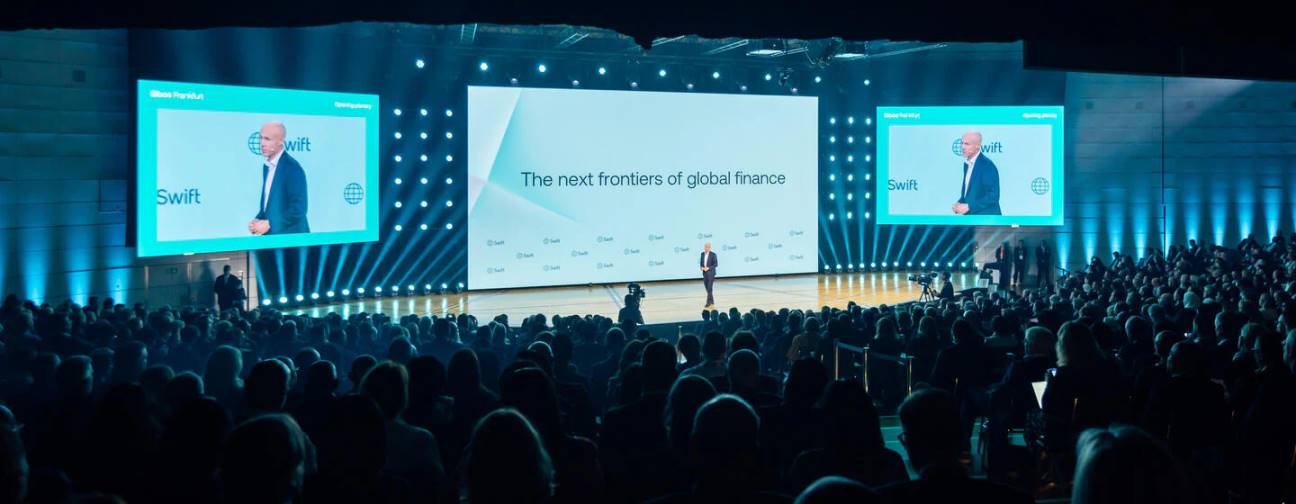
Image Source: Swift Official Website

Although Swift did not explicitly state the technical platform when initially announcing this major development to the banking industry, Consensys CEO Joe Lubin revealed at the Token2049 conference in Singapore that Swift is leveraging the Ethereum Layer 2 network Linea to build its new payment settlement platform. By adopting Linea's zk-EVM rollup technology, Swift can significantly reduce costs and latency while meeting the financial industry's stringent requirements for 24/7 real-time settlement and security. Currently, over 30 top financial institutions, including JPMorgan Chase, Bank of America, and Citibank, are preparing to participate in the pilot of this new blockchain-based payment rail built on Linea.

Ripple's In-Depth Efforts and Current Status

Before discussing Swift, we must revisit the pioneer that challenged the old system for over a decade: Ripple.

In 2012, Ripple emerged with the XRP Ledger (XRPL), with the core goal of replacing the inefficient Swift correspondent banking model. During this period, Ripple successfully built the global payment network RippleNet, connecting over 300 financial institutions. In fragmented markets like Southeast Asia, its On-Demand Liquidity (ODL) service demonstrated that XRP, as a bridge currency, could reduce cross-border settlement times from several days to just 3 to 5 seconds.

By 2020, affected by the U.S. SEC lawsuit, Ripple faced a blockade and stagnation in the U.S. market due to securities allegations. However, its global scale continued to expand. By 2022, its business had reached over 40 payment markets, with total payment volume doubling to approximately $30 billion.

In 2023, Ripple saw a turning point when a court ruled that XRP itself is not a security, marking a milestone victory for Ripple and the industry.

In August 2025, with the SEC completely abandoning its appeal, the five-year legal battle came to an end. The full clarification of its status led to the approval of an XRP spot ETF, marking its official entry into mainstream institutional asset allocation portfolios.

Today, Ripple is conducting cross-border payment and receipt businesses in multiple real-world scenarios, ranging from retail remittances (To C) to enterprise-level payments (To B).

In the retail sector, Japan's SBI Remit uses XRP to bridge real-time remittance channels to the Philippines, Vietnam, and Indonesia, significantly reducing the pre-funding costs for overseas workers. Santander Bank offers transparent real-time transfers to its customers through the One Pay FX app. Meanwhile, the Southeast Asian payment platform Tranglo has significantly improved the efficiency of peso and baht conversions with the support of Ripple ODL.

At the enterprise level, American Express and PNC Bank use RippleNet to optimize B2B trade settlements and international payment collection experiences.

Additionally, in national infrastructure, Ripple is collaborating with over 20 countries, including Palau, Montenegro, and Bhutan, to develop CBDC platforms, applying blockchain technology to the issuance and清算 systems of sovereign currencies.

Why Did Swift Choose Linea?

When giants in the industry布局 the Ethereum ecosystem, they have shown a high degree of consistency in their preference for Layer 2 technology: Coinbase's Base chain is built on OP Stack, while Robinhood announced earlier this year the launch of Robinhood Chain based on Arbitrum technology to support the tokenization and 24/7 trading of RWA.

This preference stems from L2's ability to leverage Ethereum's security while meeting high-performance demands through a modular architecture. Swift's choice of Linea over OP or Arbitrum lies in the core difference in underlying validation logic.

OP and Arbitrum use Optimistic Rollup, which operates on the logic of assuming transactions are valid by default and only verifying them if challenged. Asset withdrawals typically require a multi-day challenge period, which is a significant time cost for financial清算追求流动性.

Linea, on the other hand, uses zk-EVM, which provides instant validity proofs mathematically. For Swift and its partner banks, which need to process massive value settlements, zk-EVM not only offers faster finality but also ensures compliance verification while protecting transaction privacy.

Swift's choice of Linea embodies the first principle of capital operation: maximizing flow velocity.

Capital will flow like a fluid from low-velocity systems (requiring large amounts of idle准备金预存 in Nostro/Vostro accounts), high-friction systems (layers of correspondent bank fees), and slow-settlement systems (settlement taking days) of the traditional telegraphic instruction era to high-velocity, low-friction, fast-settlement blockchain digital systems.

Swift processes approximately $150 trillion in global payments annually. If it can achieve atomic-level reconciliation and 24/7 real-time settlement through Linea's technology stack, it means that trillions of dollars in准备金 currently积压 in the global financial system to hedge against清算 delays will be released and reinjected into the real economy.

As Consensys CEO Joe Lubin stated at the Token 2049 conference in Singapore, this is not merely a technological upgrade but the true convergence of TradFi and DeFi, marking the global value transfer protocol's official transition from the "Telegraphic Instruction Era" to the "Mathematical Verification Era."

The Significance of Swift Embracing Blockchain

As the global financial backbone network handling approximately $150 trillion in annual transaction volume, Swift's decision to build its ledger on Linea, an Ethereum Layer 2, signifies that blockchain technology will become the heart of mainstream finance.

Swift will eliminate fragmentation between different tokenized networks through unified technical standards, breaking down the long-standing barrier between TradFi and DeFi and implanting the efficiency genes of decentralized finance into the traditional清算 system.

Through a 24/7 operational real-time shared ledger, global financial institutions will no longer be limited by the cumbersome manual reconciliation and time-zone delays of the correspondent banking model. The massive amounts of idle capital currently积压 in correspondent bank accounts to hedge against清算 risk will be effectively released. This will enable the speed of capital flow to truly match the demands of the modern economy, ushering in a new era of global value transfer that is more transparent, lower cost, and更具互操作性.

Ripple struggled for a decade to build a new city based on the XRP Ledger outside the old system. However, the scale of financial institutions it currently connects appears势单力薄 compared to Swift's存量 network, which covers over 11,000 institutions across more than 200 countries.

The core threat from Swift lies in its "asset neutrality." Unlike Ripple's ODL model, which heavily relies on XRP as a bridge currency, Swift's blockchain ledger is designed to support multiple assets, including fiat currencies, stablecoins, and CBDCs.

Banks within the Swift system can achieve instant settlement by upgrading their existing rails without bearing the volatility risk of a single asset. This combination of "存量优势 (incumbent advantage) + technical compliance" is giving Ripple its most bone-chilling challenge since its inception.


Preguntas relacionadas

QWhat is the core technological difference between Swift's chosen Linea and other Layer 2 solutions like Optimistic Rollups?

AThe core difference lies in the underlying verification logic. Linea uses zk-EVM (Zero-Knowledge Ethereum Virtual Machine), which provides instant validity proofs for transactions. In contrast, Optimistic Rollups (like OP and Arbitrum) assume transactions are valid by default and only verify them if a challenge is issued, which introduces a multi-day withdrawal delay. For high-value financial settlements requiring speed and finality, zk-EVM's instant cryptographic verification is superior.

QHow did the resolution of Ripple's legal battle with the SEC in 2025 impact its business?

AThe resolution, with the SEC dropping its appeals in August 2025, provided full legal clarity for Ripple. This landmark victory led to the approval of an XRP spot ETF, marking its formal entry into the asset allocation lists of mainstream financial firms and solidifying its legitimacy in the market.

QWhat specific problem is Swift's new blockchain-based shared ledger designed to solve in global finance?

AIt is designed to solve the inefficiencies of the traditional correspondent banking model, including slow settlement times (taking days), high costs from intermediary fees, and the need for large amounts of pre-funded capital (Nostro/Vostro accounts) to hedge against settlement risk. The ledger enables secure, real-time, 24/7 settlement, releasing trapped capital and improving interoperability.

QWhy is Swift's approach considered a greater threat to Ripple than simply competing with its technology?

ASwift's threat stems from its 'asset neutrality' and immense existing network. Unlike Ripple's ODL model, which relies heavily on the XRP token as a bridge currency, Swift's ledger is designed to support multiple assets including fiat currencies, stablecoins, and CBDCs. This allows Swift's vast network of over 11,000 banks to upgrade for instant settlement without exposure to the volatility of a single asset, leveraging its massive existing infrastructure.

QName one retail and one corporate use case where Ripple's technology is currently being implemented.

ARetail: Japan's SBI Remit uses XRP to provide real-time remittance channels to the Philippines, Vietnam, and Indonesia. Corporate: American Express utilizes RippleNet to optimize its B2B trade settlement processes.

Lecturas Relacionadas

KOL's Perspective: Why Is SOL Set to Rise from This Point?

**Summary: Why SOL is Positioned for Growth at This Level** The article argues that SOL is poised for an upward move from its current price point, citing several key factors. Primarily, SOL has just broken out of a 4-month consolidation phase. This breakout signals a return of risk appetite to the broader crypto market, as SOL is seen as a key indicator of overall crypto health. The token's ownership has reportedly shifted from short-term traders and tourists to long-term accumulators, leading to low volume. Any meaningful increase in trading activity could thus trigger significant upward momentum. Fundamental strengths include strong institutional adoption, integration with DeFi and RWAs (Real-World Assets), and the potential benefits from the Clarity Act. Despite its high volatility—having dropped 70% from its all-time high but still up 12x from its bear market low—SOL is highlighted as one of the few tokens from the last cycle to reach new highs. It boasts a robust ecosystem of applications, users, and protocols. Future catalysts include the expected influx of AI developers following the Miami Accelerate conference, which focused on AI on Solana. Furthermore, Solana is positioned as the premier chain for memecoin activity, a trend expected to continue and drive network usage and fees. The article concludes that recent price action reflects a healthy transfer to long-term holders, setting the stage for growth.

marsbitHace 16 min(s)

KOL's Perspective: Why Is SOL Set to Rise from This Point?

marsbitHace 16 min(s)

Those Pre-Bitcoin PoW Protocols Have Recently Been Reimplemented

This article details a recent surge in replicating pre-Bitcoin Proof-of-Work (PoW) protocols, specifically focusing on Hal Finney's 2004 RPOW (Reusable Proofs of Work). Within five days in May 2026, multiple independent builders in the Bitcoin/cypherpunk community launched projects inspired by this early electronic cash proposal. The initiative began with Fred Krueger's `rpow2.com`, a centralized but auditable system that replaced RPOW's original IBM 4758 hardware with Ed25519 signatures. Initially a faithful replica, it later adopted Bitcoin-like features (21M supply cap, difficulty adjustment) and a controversial 5.24% founder allocation. This sparked rapid forks, including `rpow4.com` which incorporated full Bitcoin parameters, a prediction market (`rpowmarket.com`), and a DEX (`rpow2swap.com`). Concurrently, Mike In Space created a prototype of Wei Dai's 1998 b-money proposal (`b-money.replit.app`), pushing the historical exploration even further back. The article contrasts these centralized, server-dependent experiments with Bitcoin's core innovation of decentralized, trustless consensus. It also highlights a parallel development: the `HASH` project on Ethereum, which uses smart contract hooks to enable a purely fair-launch, browser-mineable PoW token with 0% allocations to team or VCs. The collective activity is framed as a meme-driven, educational exploration of cypherpunk history rather than a serious financial movement, with all projects heavily disclaiming any investment value.

marsbitHace 21 min(s)

Those Pre-Bitcoin PoW Protocols Have Recently Been Reimplemented

marsbitHace 21 min(s)

South Korean Exchanges 'Battle' Regulators, Challenging the Boundaries of Enforcement and Legislation

South Korea's cryptocurrency industry is engaged in a rare, direct confrontation with regulators. The Financial Intelligence Unit (FIU), the primary anti-money laundering (AML) watchdog, has recently imposed heavy penalties on major exchanges like Upbit and Bithumb for alleged violations involving unregistered overseas VASPs and AML procedures. However, exchanges are now actively challenging these actions in court and through industry associations. In a significant shift, the Seoul Administrative Court ruled in favor of Upbit's operator, Dunamu, overturning part of an FIU-ordered business suspension. The court found the FIU's penalty criteria and justification insufficiently clear. Similarly, the court suspended the enforcement of a six-month business suspension against Bithumb pending a final ruling, citing potential irreversible harm to the exchange. Beyond legal battles, the industry is contesting proposed legislative amendments. The Digital Asset eXchange Alliance (DAXA) strongly opposes a draft rule that would mandate Suspicious Transaction Reports (STRs) for all crypto transfers over 10 million KRW (~$6,800). DAXA argues this "poison pill" clause violates legal principles and would overwhelm the STR system, increasing reports from 63,000 to an estimated 5.45 million annually for major exchanges, thereby crippling effective AML monitoring. This conflict highlights a structural tension in South Korea's crypto governance: comprehensive digital asset laws are still developing, while regulators rely heavily on AML enforcement. The industry's move from passive compliance to active legal and legislative challenges signifies a new phase, pressing for clearer rules and more proportionate enforcement. While short-term disputes may intensify, this clash could ultimately lead to a more mature and sustainable regulatory framework for South Korea's vibrant crypto market.

marsbitHace 1 hora(s)

South Korean Exchanges 'Battle' Regulators, Challenging the Boundaries of Enforcement and Legislation

marsbitHace 1 hora(s)

After 50x Storage Surge, Justin Sun Always Looks to the Next Decade

Sun Yuchen, known for his controversial stunts like a $30 million lunch with Warren Buffett (canceled due to a kidney stone) and eating a $6.2 million duct-taped banana, is often overshadowed by a significant fact: his decade-long track record of spotting major investment trends. In 2016, he famously advised young people to invest in Bitcoin, Nvidia, Tesla, and Tencent instead of buying property. A hypothetical $20,000 investment in Nvidia and Tesla from that list would now be worth over 50 million RMB. His latest major call was on November 6, 2025, predicting a "50x storage opportunity" tied to the AI boom, which materialized with Sandisk's stock surging nearly 50-fold by 2026. Looking ahead, Sun now focuses on the next frontier: Physical AI. He identifies four key areas: 1. **Embodied AI/Robotics**: He sees this reaching its "iPhone moment," with companies like UBTech and Galaxy General leading in commercialization. 2. **Drones**: Viewed as the first commercially viable form of Physical AI, revolutionizing sectors from warfare (e.g., AeroVironment's Switchblade) to logistics. 3. **Spatial Computing**: Beyond VR, it's about AI understanding physical space, a foundational technology for robotics and autonomous systems, exemplified by Apple's Vision Pro. 4. **Space Exploration**: After a 2025 suborbital flight with Blue Origin, Sun advocates for space as the ultimate frontier, discussing blockchain's potential role in space asset management and data transactions. His investment philosophy involves betting on entire, inevitable trends rather than single companies. For robotics, he sees Tesla (the body/manufacturer) and Nvidia (the brain/AI platform) as complementary plays. In defense drones, he highlights companies making tanks obsolete (AeroVironment) and those augmenting fighter jets (Kratos). For space, he participated in Blue Origin's flight and anticipates SpaceX's potential IPO to redefine the sector's valuation. Sun Yuchen's vision frames the next two decades not as a revolution in information flow (like the internet), but in the fundamental operation of the physical world through AI-powered robots, autonomous systems, and spatial intelligence, ultimately extending human and AI activity into space. While many still focus on conventional assets, he continues to look toward the next technological horizon.

marsbitHace 2 hora(s)

After 50x Storage Surge, Justin Sun Always Looks to the Next Decade

marsbitHace 2 hora(s)

Trading

Spot
Futuros

Artículos destacados

Cómo comprar CC

¡Bienvenido a HTX.com! Hemos hecho que comprar CC(Canton) (CC) sea simple y conveniente. Sigue nuestra guía paso a paso para iniciar tu viaje de criptos.Paso 1: crea tu cuenta HTXUtiliza tu correo electrónico o número de teléfono para registrarte y obtener una cuenta gratuita en HTX. Experimenta un proceso de registro sin complicaciones y desbloquea todas las funciones.Obtener mi cuentaPaso 2: ve a Comprar cripto y elige tu método de pagoTarjeta de crédito/débito: usa tu Visa o Mastercard para comprar CC(Canton) (CC) al instante.Saldo: utiliza fondos del saldo de tu cuenta HTX para tradear sin problemas.Terceros: hemos agregado métodos de pago populares como Google Pay y Apple Pay para mejorar la comodidad.P2P: tradear directamente con otros usuarios en HTX.Over-the-Counter (OTC): ofrecemos servicios personalizados y tipos de cambio competitivos para los traders.Paso 3: guarda tu CC(Canton) (CC)Después de comprar tu CC(Canton) (CC), guárdalo en tu cuenta HTX. Alternativamente, puedes enviarlo a otro lugar mediante transferencia blockchain o utilizarlo para tradear otras criptomonedas.Paso 4: tradear CC(Canton) (CC)Tradear fácilmente con CC(Canton) (CC) en HTX's mercado spot. Simplemente accede a tu cuenta, selecciona tu par de trading, ejecuta tus trades y monitorea en tiempo real. Ofrecemos una experiencia fácil de usar tanto para principiantes como para traders experimentados.

159 Vistas totalesPublicado en 2026.04.21Actualizado en 2026.04.21

Cómo comprar CC

Cómo comprar BLEND

¡Bienvenido a HTX.com! Hemos hecho que comprar Fluent (BLEND) sea simple y conveniente. Sigue nuestra guía paso a paso para iniciar tu viaje de criptos.Paso 1: crea tu cuenta HTXUtiliza tu correo electrónico o número de teléfono para registrarte y obtener una cuenta gratuita en HTX. Experimenta un proceso de registro sin complicaciones y desbloquea todas las funciones.Obtener mi cuentaPaso 2: ve a Comprar cripto y elige tu método de pagoTarjeta de crédito/débito: usa tu Visa o Mastercard para comprar Fluent (BLEND) al instante.Saldo: utiliza fondos del saldo de tu cuenta HTX para tradear sin problemas.Terceros: hemos agregado métodos de pago populares como Google Pay y Apple Pay para mejorar la comodidad.P2P: tradear directamente con otros usuarios en HTX.Over-the-Counter (OTC): ofrecemos servicios personalizados y tipos de cambio competitivos para los traders.Paso 3: guarda tu Fluent (BLEND)Después de comprar tu Fluent (BLEND), guárdalo en tu cuenta HTX. Alternativamente, puedes enviarlo a otro lugar mediante transferencia blockchain o utilizarlo para tradear otras criptomonedas.Paso 4: tradear Fluent (BLEND)Tradear fácilmente con Fluent (BLEND) en HTX's mercado spot. Simplemente accede a tu cuenta, selecciona tu par de trading, ejecuta tus trades y monitorea en tiempo real. Ofrecemos una experiencia fácil de usar tanto para principiantes como para traders experimentados.

162 Vistas totalesPublicado en 2026.04.24Actualizado en 2026.04.24

Cómo comprar BLEND

Cómo comprar ACN

¡Bienvenido a HTX.com! Hemos hecho que comprar AITECH CLOUD NETWORK (ACN) sea simple y conveniente. Sigue nuestra guía paso a paso para iniciar tu viaje de criptos.Paso 1: crea tu cuenta HTXUtiliza tu correo electrónico o número de teléfono para registrarte y obtener una cuenta gratuita en HTX. Experimenta un proceso de registro sin complicaciones y desbloquea todas las funciones.Obtener mi cuentaPaso 2: ve a Comprar cripto y elige tu método de pagoTarjeta de crédito/débito: usa tu Visa o Mastercard para comprar AITECH CLOUD NETWORK (ACN) al instante.Saldo: utiliza fondos del saldo de tu cuenta HTX para tradear sin problemas.Terceros: hemos agregado métodos de pago populares como Google Pay y Apple Pay para mejorar la comodidad.P2P: tradear directamente con otros usuarios en HTX.Over-the-Counter (OTC): ofrecemos servicios personalizados y tipos de cambio competitivos para los traders.Paso 3: guarda tu AITECH CLOUD NETWORK (ACN)Después de comprar tu AITECH CLOUD NETWORK (ACN), guárdalo en tu cuenta HTX. Alternativamente, puedes enviarlo a otro lugar mediante transferencia blockchain o utilizarlo para tradear otras criptomonedas.Paso 4: tradear AITECH CLOUD NETWORK (ACN)Tradear fácilmente con AITECH CLOUD NETWORK (ACN) en HTX's mercado spot. Simplemente accede a tu cuenta, selecciona tu par de trading, ejecuta tus trades y monitorea en tiempo real. Ofrecemos una experiencia fácil de usar tanto para principiantes como para traders experimentados.

92 Vistas totalesPublicado en 2026.04.28Actualizado en 2026.04.28

Cómo comprar ACN

Discusiones

Bienvenido a la comunidad de HTX. Aquí puedes mantenerte informado sobre los últimos desarrollos de la plataforma y acceder a análisis profesionales del mercado. A continuación se presentan las opiniones de los usuarios sobre el precio de A (A).

活动图片













