Recent Regulatory Positive Developments from the U.S. SEC and OCC: What Impact Will Policy Trends Have?

marsbitPublicado a 2025-12-14Actualizado a 2025-12-14

Resumen

The U.S. SEC has granted a no-action letter to the Depository Trust Company (DTC), allowing it to tokenize a range of high-liquidity assets—including stocks, ETFs, and U.S. Treasuries—on approved blockchains under controlled conditions. This initiative, expected to launch in late 2026, aims to bridge TradFi and DeFi, enhancing market efficiency, transparency, and accessibility. Simultaneously, the OCC has clarified that crypto-native firms seeking federal banking charters will be evaluated on equal footing with traditional institutions, emphasizing that digital asset activities, including custody services, fall within the permissible scope for national trust banks. Both moves signal a structured yet progressive U.S. regulatory approach toward integrating blockchain technology into the core financial system, potentially setting global standards for digital finance.

Author: Deng Tong, Golden Finance

On December 11, 2025, the Depository Trust Company (DTC) received a no-action letter from the U.S. Securities and Exchange Commission (SEC), permitting it to tokenize some of its custodial assets. DTC aims to leverage blockchain technology to connect traditional finance (TradFi) and decentralized finance (DeFi), thereby building a more resilient, inclusive, and efficient global financial system. Previously, the U.S. Office of the Comptroller of the Currency (OCC) issued Interpretive Letter 1188, confirming that national banks can engage in permissible banking activities related to risk-free principal crypto asset transactions.

This article focuses on the recent regulatory actions by the U.S. SEC and OCC.

I. SEC: DTCC Can Tokenize Stocks, Bonds, and Treasury Securities

Yesterday, the Depository Trust & Clearing Corporation (DTCC) announced that its subsidiary, the Depository Trust Company (DTC), has received a no-action letter (NAL) from the U.S. Securities and Exchange Commission (SEC), authorizing it to provide a new service under the federal securities laws and regulations, within a controlled production environment, for tokenizing real-world assets held by DTC. DTC expects to begin rolling out this service in the second half of 2026.

The no-action letter authorizes DTC to provide tokenization services for DTC participants and their clients on pre-approved blockchains for a period of three years. According to the no-action letter, DTC will be able to tokenize real-world assets, with the digital versions enjoying the same rights, investor protections, and ownership as traditional assets. Additionally, DTC will provide the same high level of resilience, security, and robustness as traditional markets.

The authorization applies to a range of specific high-liquidity assets, including the Russell 1000 Index (representing the 1,000 largest U.S. publicly traded companies by market capitalization), ETFs tracking major indices, and U.S. Treasury bills, bonds, and notes. This no-action letter is significant because it allows DTC, subject to specific limitations and declarations, to launch the service more quickly than otherwise possible once the service is finalized.

The SEC's no-action letter is a key enabler for the company's broader strategy to advance a secure, transparent, and interoperable digital asset ecosystem, fully leveraging the potential of blockchain technology.

Frank LaSala, President and CEO of DTCC, stated: "I would like to thank the U.S. Securities and Exchange Commission (SEC) for their trust. The tokenization of U.S. securities markets promises numerous transformative benefits, such as collateral liquidity, new trading models, 24/7 access, and programmable assets, but this can only be achieved if market infrastructure lays a solid foundation for this new digital era. We are very excited to have this opportunity to further empower the industry, our participants, and their clients, and to drive innovation. We look forward to collaborating with all parties in the industry to safely and reliably achieve the tokenization of real-world assets, thereby advancing the future of finance for generations to come."

To support this strategy, DTCC's tokenization solution will enable DTC participants and their clients to utilize comprehensive tokenization services supported by the DTCC ComposerX platform suite. This will allow DTC to create a unified liquidity pool within both traditional finance (TradFi) and decentralized finance (DeFi) ecosystems and build a more resilient, inclusive, cost-effective, and efficient financial system.

According to the no-action letter, DTC is permitted to provide limited production environment tokenization services on L1 and L2 providers. DTCC will provide more details in the coming months regarding onboarding requirements (including wallet registration) and the L1 and L2 network approval process.

SEC Chairman Atkins noted: On-chain markets will bring greater predictability, transparency, and efficiency to investors. DTC participants can now transfer tokenized securities directly to the registered wallets of other participants, and these transactions will be tracked by DTC's official records. This initiative by DTC marks a significant step towards on-chain capital markets. I am pleased to see the benefits this program brings to our financial markets and will continue to encourage market participants to innovate to advance our move towards on-chain settlement. But this is just the beginning. I look forward to the SEC considering granting innovation exemptions, allowing innovators to leverage new technologies and business models to begin transitioning our markets on-chain without being burdened by cumbersome regulatory requirements.

II. OCC: Crypto Companies Obtaining Bank Charters to Be Treated Equally with Other Financial Institutions

On December 8, U.S. Comptroller of the Currency Jonathan Gould stated that cryptocurrency companies seeking to obtain a U.S. bank charter should be treated the same as other financial institutions.

So far this year, the OCC has received 14 applications to establish new banks, "including some from entities engaged in novel or digital asset activities," which is almost on par with the number of similar applications the OCC received in the past four years. "The chartering system helps ensure the banking system keeps pace with financial developments and supports the modern economy. Therefore, institutions engaged in digital assets and other emerging technologies should have the opportunity to become federally regulated banks."

The regulator "receives letters from existing national banks almost daily, informing us of exciting innovative products and service initiatives they are launching themselves. All of this strengthens my confidence in the OCC's ability to effectively regulate new entrants as well as new business lines of existing banks in a fair and impartial manner."
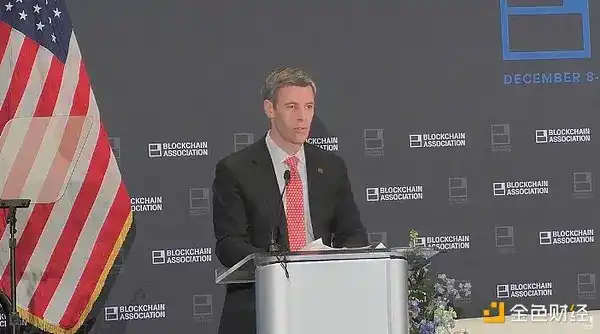
U.S. Comptroller of the Currency Jonathan Gould speaking at the 2025 Blockchain Association Policy Summit. Source: YouTube

III. What Impact Will the Policy Trends of the SEC and OCC Have?

With DTC approved to tokenize core assets like stocks, bonds, and ETFs on-chain, real-world assets are being formally integrated into the U.S. federal securities system. This means that core asset classes in traditional financial markets will have "native versions" on the blockchain in the future, enjoying the full legal rights of traditional assets; The OCC's clear statement that institutions engaged in digital asset businesses can apply for federal bank charters on an equal basis with traditional institutions means the crypto industry has, for the first time, a formal path to enter the "compliant core layer" of the U.S. banking system; The regulatory trends of the SEC and OCC are, in fact, part of the U.S. competition to set global standards for digital finance. As blockchain technology becomes financial infrastructure, the U.S. is adopting a model similar to the internet era: dominating global rule-setting through institutional and regulatory frameworks.

Appendix 1: Main Content of Gould's Speech:

Among the applications currently submitted to the OCC, several are for new national trust banks or banks wishing to convert to national trust banks. This growth indicates healthy market competition, reflects a commitment to innovation, and should be encouraging to all of us. The number of applications has returned to the OCC's normal level, consistent with past experience and practice.

Since the 1970s, the OCC has been responsible for chartering national trust banks, a power explicitly granted to the Administrator of National Banks (ANB) by Congress in 1978. Currently, the OCC regulates approximately 60 national trust banks. Some banks and their industry associations have expressed concerns about some pending applications. They argue that approving these applications would violate OCC precedent, as it would allow national trust banks to engage in non-fiduciary custodial activities.

What they fail to acknowledge is that for decades, the OCC has allowed national trust banks to engage in non-fiduciary custodial activities. In fact, prohibiting national trust banks from engaging in non-fiduciary activities would not only threaten the dynamic development of the federal banking system but also disrupt over a trillion in traditional business of existing national trust banks.

According to relevant regulations, national trust banks must limit their business activities to the operation of trust companies and their related activities. Despite recent claims to the contrary, non-trust activities, particularly custody and safekeeping, have been fully within their authorized business scope since the OCC began issuing national trust bank charters.

In fact, most national trust banks are already engaged in this business, including uninsured national trust banks that are subsidiaries or affiliates of full-service insured national banks or insured state banks. In the third quarter of this year, national trust banks reported that the scale of non-fiduciary custody or safekeeping assets under their management was close to $2 trillion, accounting for about 25% of their total managed assets.

Therefore, if non-fiduciary custody and safekeeping services were deemed unacceptable for pending charter applications, the legality of existing and mature national trust bank operations would also need to be re-evaluated, thereby disrupting the flow of funds in existing economic activities. Although the proposed business of some new charter applicants (particularly those in the digital or fintech space) may be considered new for national trust banks, custody and safekeeping services have been conducted electronically for decades.

For example, various banks, including existing national trust banks, typically hold corporate tickets and client custodianship electronically. Therefore, there is no reason to treat digital assets differently. Furthermore, we should not confine banks (including existing national trust banks) to past technologies or business models.

This is tantamount to decline. The business activities of national trust banks have changed, as have those of other banks across the country. State trust companies are currently also involved in activities related to digital assets. For example, several states, including New York and South Dakota, have authorized their trust companies to provide digital asset-related services to clients, including custody services.

Some existing banks/credit associations have also expressed concerns about potential unfairness or believe the OCC lacks the supervisory capacity to oversee the new activities proposed by current applicants. These concerns could hinder innovative initiatives that could better serve bank customers and support local economies.

As I mentioned earlier, the OCC has been regulating the activities of national trust banks for decades and ensures that both fiduciary and non-fiduciary activities (involving asset management worth millions of dollars) are conducted in a safe and sound manner and in accordance with applicable laws.

The OCC has years of experience supervising a crypto-native bank—a national trust bank—and receives feedback from existing national banks on their innovative products and services almost daily. All of this enhances my confidence in the agency's ability to effectively regulate new entrants as well as new business lines of existing banks in a fair and impartial manner.

We welcome initiatives from existing banking institutions and will ensure that both new and old banking institutions are treated fairly and held to the same high standards when their business activities and risks are similar. One of the greatest strengths of the federal banking system is its ability to evolve from the telegraph era to the blockchain era, actively embracing new technologies to provide banking products and services to customers from rural areas to urban centers. Although Congress reformed national banks over 160 years ago, they remain a vital part of the U.S. financial system to this day. This is no accident. Rather, it is a direct result of Congress and the courts long recognizing that banks can and must adapt and develop new ways to conduct age-old businesses. Preventing national banks, including national trust banks, from engaging in reasonably permissible activities simply because those activities are considered new or different from large tech market advantages would shake this fundamental premise. This could lead to economic stagnation and potentially have profound effects on the banking system.

Appendix 2: What Other No-Action Letters Has the SEC Issued Recently?

A no-action letter is a document originating from the U.S. legal system (in English, No-action Letter). It refers to a formal written document issued by a regulatory agency in response to an application from an institution or individual under its supervision, regarding a specific action the latter plans to undertake. It indicates that if the action is carried out as described in the application, the regulatory agency will not take legal or enforcement action against them. Its core function is to eliminate regulatory uncertainty; it is not a legally binding document.

On September 29, 2025, a no-action letter released by the SEC showed that for a certain token issued by DoubleZero, based on the described factual circumstances, the SEC would not recommend enforcement action regarding the token arrangement. This move is seen as a significant signal of change in crypto market regulation, representing the authorities' increased willingness to make case-by-case rulings on issues such as the classification of certain tokens and securities.

On September 30, 2025, the SEC's Division of Investment Management issued a "no-action letter" to Simpson Thacher, confirming that under certain conditions, state-chartered trust companies can be considered qualified custodians under Rule 206(4)-2 (Advisers Act Qualified Custodian) and permissible custodians under the 1940 Act, and that the SEC would not take enforcement action against enterprises and registered funds regarding this arrangement. This move helps traditional asset management institutions obtain a clearer regulatory positioning around crypto asset custody and compliance services.


Preguntas relacionadas

QWhat is the significance of the SEC's no-action letter to DTC regarding asset tokenization?

AThe SEC's no-action letter allows DTC to tokenize real-world assets like stocks, bonds, and ETFs on approved blockchains, integrating them into the federal securities framework. This enables the creation of digital versions with the same legal rights, investor protections, and ownership as traditional assets, while maintaining high resilience and security. It marks a key step in bridging TradFi and DeFi, fostering innovation in a controlled environment.

QHow does the OCC's stance on crypto companies applying for bank charters impact the industry?

AThe OCC's policy treats crypto companies equally with traditional institutions when applying for federal bank charters, providing a formal path for crypto firms to enter the U.S. banking system's 'compliance core.' This encourages innovation, supports competition, and ensures these entities are regulated under the same high standards as existing banks, fostering a more inclusive financial ecosystem.

QWhat types of assets are authorized for tokenization under DTC's new service?

ADTC is authorized to tokenize high-liquidity assets, including those in the Russell 1000 Index (top 1,000 U.S. companies by market cap), ETFs tracking major indices, and U.S. Treasury bills, bonds, and notes.

QWhat broader strategic goal does the SEC's recent no-action letters signal for U.S. financial markets?

AThe SEC's no-action letters signal a move toward establishing the U.S. as a leader in setting global standards for digital finance. By encouraging innovation through regulatory clarity, the U.S. aims to transition markets to on-chain systems, enhancing predictability, transparency, and efficiency while maintaining robust investor protections.

QHow does the OCC justify allowing national trust banks to engage in non-fiduciary digital asset activities?

AThe OCC argues that non-fiduciary activities like custody and safekeeping have long been within the authorized scope of national trust banks, with existing banks already managing nearly $2 trillion in such assets. Distinguishing against digital assets would hinder technological progress and economic adaptation, contradicting the historical evolution of banking practices.

Lecturas Relacionadas

First Batch of Keynote Speakers and Partners Announced! Web2+3 Summit: Defining the Next Generation of Digital Economy

Web2+3 Summit: Defining the Next Generation of Digital Economy The 6th BEYOND International Technology Innovation Expo (BEYOND Expo 2026), Asia's largest tech and ecosystem exhibition, is launching a dedicated Web2+3 stage for the first time. Co-hosted by BEYOND Expo and ChainNeXT Group, the Web3 Summit will take place from May 28–30, 2026. Against the backdrop of accelerating global tech integration, the boundaries between Web2 and Web3 are rapidly blurring. With clearer global regulations for blockchain-driven internet (Web3) and the special issuance of a Hong Kong dollar stable币 license by the Hong Kong SAR government on April 10, 2026, Web3's decentralized principles are quickly merging with traditional industries (Web2) such as e-commerce, finance, and artificial intelligence. Focused on blockchain-driven digital economy elements, the summit will center on three core principles—implementability, commercial viability, and compliance. It will bring together top Web3 experts to discuss key integration areas like stablecoin payment finance (PayFi), real-world asset tokenization (RWA), and decentralized AI (DeAI), unveiling new opportunities for industrial innovation. The first wave of confirmed speakers includes Jack Kong (Director of Hong Kong Cyberport, Chairman of Nano Labs), Yat Siu (Chairman of Animoca Brands), Michael Wu (Co-founder & CEO of Amber Group), Michael Heinrich (Co-founder & CEO of 0G), and Art Abal (Co-founder of Vana). More Web3 ecosystem pioneers, AI, and fintech experts will be announced soon. Core forum topics include: - Web2+DeAI: New AI Paradigms Driven by Decentralized Infrastructure - Web2+RWA: Real-World Asset Tokenization and Global Liquidity - Web2+PayFi: Cross-Border Payments and Financial Innovation Powered by Crypto Infrastructure - Web2+3 AI: Autonomous Agents and the Crypto Economy - Web2+3 Wealth: On-Chain and Off-Chain Integrated Investment Ecosystems - Web2+3 Commerce: A New Landscape for Global Trade Driven by Stablecoins Additional agenda details will be released in the near future.

marsbitHace 1 hora(s)

First Batch of Keynote Speakers and Partners Announced! Web2+3 Summit: Defining the Next Generation of Digital Economy

marsbitHace 1 hora(s)

Trading

Spot
Futuros

Artículos destacados

Qué es $S$

Entendiendo SPERO: Una Visión General Completa Introducción a SPERO A medida que el panorama de la innovación continúa evolucionando, la aparición de tecnologías web3 y proyectos de criptomonedas juega un papel fundamental en la configuración del futuro digital. Un proyecto que ha atraído la atención en este campo dinámico es SPERO, denotado como SPERO,$$s$. Este artículo tiene como objetivo reunir y presentar información detallada sobre SPERO, para ayudar a entusiastas e inversores a comprender sus fundamentos, objetivos e innovaciones dentro de los dominios web3 y cripto. ¿Qué es SPERO,$$s$? SPERO,$$s$ es un proyecto único dentro del espacio cripto que busca aprovechar los principios de descentralización y tecnología blockchain para crear un ecosistema que promueva la participación, la utilidad y la inclusión financiera. El proyecto está diseñado para facilitar interacciones de igual a igual de nuevas maneras, proporcionando a los usuarios soluciones y servicios financieros innovadores. En su esencia, SPERO,$$s$ tiene como objetivo empoderar a los individuos al proporcionar herramientas y plataformas que mejoren la experiencia del usuario en el espacio de las criptomonedas. Esto incluye habilitar métodos de transacción más flexibles, fomentar iniciativas impulsadas por la comunidad y crear caminos para oportunidades financieras a través de aplicaciones descentralizadas (dApps). La visión subyacente de SPERO,$$s$ gira en torno a la inclusividad, buscando cerrar brechas dentro de las finanzas tradicionales mientras aprovecha los beneficios de la tecnología blockchain. ¿Quién es el Creador de SPERO,$$s$? La identidad del creador de SPERO,$$s$ sigue siendo algo oscura, ya que hay recursos públicos limitados que proporcionan información de fondo detallada sobre su(s) fundador(es). Esta falta de transparencia puede derivarse del compromiso del proyecto con la descentralización, una ética que muchos proyectos web3 comparten, priorizando las contribuciones colectivas sobre el reconocimiento individual. Al centrar las discusiones en torno a la comunidad y sus objetivos colectivos, SPERO,$$s$ encarna la esencia del empoderamiento sin señalar a individuos específicos. Como tal, comprender la ética y la misión de SPERO sigue siendo más importante que identificar a un creador singular. ¿Quiénes son los Inversores de SPERO,$$s$? SPERO,$$s$ cuenta con el apoyo de una diversa gama de inversores que van desde capitalistas de riesgo hasta inversores ángeles dedicados a fomentar la innovación en el sector cripto. El enfoque de estos inversores generalmente se alinea con la misión de SPERO, priorizando proyectos que prometen avances tecnológicos sociales, inclusión financiera y gobernanza descentralizada. Estas fundaciones de inversores suelen estar interesadas en proyectos que no solo ofrecen productos innovadores, sino que también contribuyen positivamente a la comunidad blockchain y sus ecosistemas. El respaldo de estos inversores refuerza a SPERO,$$s$ como un contendiente notable en el dominio de proyectos cripto que evoluciona rápidamente. ¿Cómo Funciona SPERO,$$s$? SPERO,$$s$ emplea un marco multifacético que lo distingue de los proyectos de criptomonedas convencionales. Aquí hay algunas de las características clave que subrayan su singularidad e innovación: Gobernanza Descentralizada: SPERO,$$s$ integra modelos de gobernanza descentralizada, empoderando a los usuarios para participar activamente en los procesos de toma de decisiones sobre el futuro del proyecto. Este enfoque fomenta un sentido de propiedad y responsabilidad entre los miembros de la comunidad. Utilidad del Token: SPERO,$$s$ utiliza su propio token de criptomoneda, diseñado para servir diversas funciones dentro del ecosistema. Estos tokens permiten transacciones, recompensas y la facilitación de servicios ofrecidos en la plataforma, mejorando la participación y la utilidad general. Arquitectura en Capas: La arquitectura técnica de SPERO,$$s$ apoya la modularidad y escalabilidad, permitiendo la integración fluida de características y aplicaciones adicionales a medida que el proyecto evoluciona. Esta adaptabilidad es fundamental para mantener la relevancia en el cambiante paisaje cripto. Participación de la Comunidad: El proyecto enfatiza iniciativas impulsadas por la comunidad, empleando mecanismos que incentivan la colaboración y la retroalimentación. Al nutrir una comunidad sólida, SPERO,$$s$ puede abordar mejor las necesidades de los usuarios y adaptarse a las tendencias del mercado. Enfoque en la Inclusión: Al ofrecer tarifas de transacción bajas e interfaces amigables para el usuario, SPERO,$$s$ busca atraer a una base de usuarios diversa, incluyendo a individuos que anteriormente pueden no haber participado en el espacio cripto. Este compromiso con la inclusión se alinea con su misión general de empoderamiento a través de la accesibilidad. Cronología de SPERO,$$s$ Entender la historia de un proyecto proporciona información crucial sobre su trayectoria de desarrollo y hitos. A continuación se presenta una cronología sugerida que mapea eventos significativos en la evolución de SPERO,$$s$: Fase de Conceptualización e Ideación: Las ideas iniciales que forman la base de SPERO,$$s$ fueron concebidas, alineándose estrechamente con los principios de descentralización y enfoque comunitario dentro de la industria blockchain. Lanzamiento del Whitepaper del Proyecto: Tras la fase conceptual, se lanzó un whitepaper completo que detalla la visión, los objetivos y la infraestructura tecnológica de SPERO,$$s$ para generar interés y retroalimentación de la comunidad. Construcción de Comunidad y Primeras Interacciones: Se realizaron esfuerzos de divulgación activa para construir una comunidad de primeros adoptantes y posibles inversores, facilitando discusiones en torno a los objetivos del proyecto y obteniendo apoyo. Evento de Generación de Tokens: SPERO,$$s$ llevó a cabo un evento de generación de tokens (TGE) para distribuir sus tokens nativos a los primeros seguidores y establecer liquidez inicial dentro del ecosistema. Lanzamiento de la dApp Inicial: La primera aplicación descentralizada (dApp) asociada con SPERO,$$s$ se puso en marcha, permitiendo a los usuarios interactuar con las funcionalidades centrales de la plataforma. Desarrollo Continuo y Alianzas: Actualizaciones y mejoras continuas a las ofertas del proyecto, incluyendo alianzas estratégicas con otros actores en el espacio blockchain, han moldeado a SPERO,$$s$ en un jugador competitivo y en evolución en el mercado cripto. Conclusión SPERO,$$s$ se erige como un testimonio del potencial de web3 y las criptomonedas para revolucionar los sistemas financieros y empoderar a los individuos. Con un compromiso con la gobernanza descentralizada, la participación comunitaria y funcionalidades diseñadas de manera innovadora, allana el camino hacia un paisaje financiero más inclusivo. Como con cualquier inversión en el espacio cripto que evoluciona rápidamente, se anima a los posibles inversores y usuarios a investigar a fondo y participar de manera reflexiva con los desarrollos en curso dentro de SPERO,$$s$. El proyecto muestra el espíritu innovador de la industria cripto, invitando a una mayor exploración de sus innumerables posibilidades. Mientras el viaje de SPERO,$$s$ aún se desarrolla, sus principios fundamentales pueden, de hecho, influir en el futuro de cómo interactuamos con la tecnología, las finanzas y entre nosotros en ecosistemas digitales interconectados.

72 Vistas totalesPublicado en 2024.12.17Actualizado en 2024.12.17

Qué es $S$

Qué es AGENT S

Agent S: El Futuro de la Interacción Autónoma en Web3 Introducción En el paisaje en constante evolución de Web3 y las criptomonedas, las innovaciones están redefiniendo constantemente cómo los individuos interactúan con las plataformas digitales. Uno de estos proyectos pioneros, Agent S, promete revolucionar la interacción humano-computadora a través de su marco agente abierto. Al allanar el camino para interacciones autónomas, Agent S busca simplificar tareas complejas, ofreciendo aplicaciones transformadoras en inteligencia artificial (IA). Esta exploración detallada profundizará en las complejidades del proyecto, sus características únicas y las implicaciones para el dominio de las criptomonedas. ¿Qué es Agent S? Agent S se presenta como un marco agente abierto innovador, diseñado específicamente para abordar tres desafíos fundamentales en la automatización de tareas informáticas: Adquisición de Conocimiento Específico del Dominio: El marco aprende inteligentemente de diversas fuentes de conocimiento externas y experiencias internas. Este enfoque dual le permite construir un rico repositorio de conocimiento específico del dominio, mejorando su rendimiento en la ejecución de tareas. Planificación a Largo Plazo de Tareas: Agent S emplea planificación jerárquica aumentada por la experiencia, un enfoque estratégico que facilita la descomposición y ejecución eficiente de tareas complejas. Esta característica mejora significativamente su capacidad para gestionar múltiples subtareas de manera eficiente y efectiva. Manejo de Interfaces Dinámicas y No Uniformes: El proyecto introduce la Interfaz Agente-Computadora (ACI), una solución innovadora que mejora la interacción entre agentes y usuarios. Utilizando Modelos de Lenguaje Multimodal de Gran Escala (MLLMs), Agent S puede navegar y manipular diversas interfaces gráficas de usuario sin problemas. A través de estas características pioneras, Agent S proporciona un marco robusto que aborda las complejidades involucradas en la automatización de la interacción humana con las máquinas, preparando el terreno para una multitud de aplicaciones en IA y más allá. ¿Quién es el Creador de Agent S? Si bien el concepto de Agent S es fundamentalmente innovador, la información específica sobre su creador sigue siendo elusiva. El creador es actualmente desconocido, lo que resalta ya sea la etapa incipiente del proyecto o la elección estratégica de mantener a los miembros fundadores en el anonimato. Independientemente de la anonimidad, el enfoque sigue siendo en las capacidades y el potencial del marco. ¿Quiénes son los Inversores de Agent S? Dado que Agent S es relativamente nuevo en el ecosistema criptográfico, la información detallada sobre sus inversores y patrocinadores financieros no está documentada explícitamente. La falta de información disponible públicamente sobre las bases de inversión u organizaciones que apoyan el proyecto plantea preguntas sobre su estructura de financiamiento y hoja de ruta de desarrollo. Comprender el respaldo es crucial para evaluar la sostenibilidad del proyecto y su posible impacto en el mercado. ¿Cómo Funciona Agent S? En el núcleo de Agent S se encuentra una tecnología de vanguardia que le permite funcionar de manera efectiva en diversos entornos. Su modelo operativo se basa en varias características clave: Interacción Humano-Computadora Similar a la Humana: El marco ofrece planificación avanzada de IA, esforzándose por hacer que las interacciones con las computadoras sean más intuitivas. Al imitar el comportamiento humano en la ejecución de tareas, promete elevar las experiencias de los usuarios. Memoria Narrativa: Empleada para aprovechar experiencias de alto nivel, Agent S utiliza memoria narrativa para hacer un seguimiento de las historias de tareas, mejorando así sus procesos de toma de decisiones. Memoria Episódica: Esta característica proporciona a los usuarios una guía paso a paso, permitiendo que el marco ofrezca apoyo contextual a medida que se desarrollan las tareas. Soporte para OpenACI: Con la capacidad de ejecutarse localmente, Agent S permite a los usuarios mantener el control sobre sus interacciones y flujos de trabajo, alineándose con la ética descentralizada de Web3. Fácil Integración con APIs Externas: Su versatilidad y compatibilidad con varias plataformas de IA aseguran que Agent S pueda encajar sin problemas en ecosistemas tecnológicos existentes, convirtiéndolo en una opción atractiva para desarrolladores y organizaciones. Estas funcionalidades contribuyen colectivamente a la posición única de Agent S dentro del espacio cripto, ya que automatiza tareas complejas y de múltiples pasos con una intervención humana mínima. A medida que el proyecto evoluciona, sus posibles aplicaciones en Web3 podrían redefinir cómo se desarrollan las interacciones digitales. Cronología de Agent S El desarrollo y los hitos de Agent S pueden encapsularse en una cronología que resalta sus eventos significativos: 27 de septiembre de 2024: El concepto de Agent S fue lanzado en un documento de investigación integral titulado “Un Marco Agente Abierto que Usa Computadoras Como un Humano”, mostrando las bases del proyecto. 10 de octubre de 2024: El documento de investigación fue puesto a disposición del público en arXiv, ofreciendo una exploración profunda del marco y su evaluación de rendimiento basada en el benchmark OSWorld. 12 de octubre de 2024: Se lanzó una presentación en video, proporcionando una visión visual de las capacidades y características de Agent S, involucrando aún más a posibles usuarios e inversores. Estos marcadores en la cronología no solo ilustran el progreso de Agent S, sino que también indican su compromiso con la transparencia y la participación comunitaria. Puntos Clave Sobre Agent S A medida que el marco Agent S continúa evolucionando, varios atributos clave destacan, subrayando su naturaleza innovadora y potencial: Marco Innovador: Diseñado para proporcionar un uso intuitivo de las computadoras similar a la interacción humana, Agent S aporta un enfoque novedoso a la automatización de tareas. Interacción Autónoma: La capacidad de interactuar de manera autónoma con las computadoras a través de GUI significa un salto hacia soluciones informáticas más inteligentes y eficientes. Automatización de Tareas Complejas: Con su metodología robusta, puede automatizar tareas complejas y de múltiples pasos, haciendo que los procesos sean más rápidos y menos propensos a errores. Mejora Continua: Los mecanismos de aprendizaje permiten a Agent S mejorar a partir de experiencias pasadas, mejorando continuamente su rendimiento y eficacia. Versatilidad: Su adaptabilidad en diferentes entornos operativos como OSWorld y WindowsAgentArena asegura que pueda servir a una amplia gama de aplicaciones. A medida que Agent S se posiciona en el paisaje de Web3 y criptomonedas, su potencial para mejorar las capacidades de interacción y automatizar procesos significa un avance significativo en las tecnologías de IA. A través de su marco innovador, Agent S ejemplifica el futuro de las interacciones digitales, prometiendo una experiencia más fluida y eficiente para los usuarios en diversas industrias. Conclusión Agent S representa un audaz avance en la unión de la IA y Web3, con la capacidad de redefinir cómo interactuamos con la tecnología. Aunque aún se encuentra en sus primeras etapas, las posibilidades para su aplicación son vastas y atractivas. A través de su marco integral que aborda desafíos críticos, Agent S busca llevar las interacciones autónomas al primer plano de la experiencia digital. A medida que nos adentramos más en los reinos de las criptomonedas y la descentralización, proyectos como Agent S sin duda desempeñarán un papel crucial en la configuración del futuro de la tecnología y la colaboración humano-computadora.

328 Vistas totalesPublicado en 2025.01.14Actualizado en 2025.01.14

Qué es AGENT S

Cómo comprar S

¡Bienvenido a HTX.com! Hemos hecho que comprar Sonic (S) sea simple y conveniente. Sigue nuestra guía paso a paso para iniciar tu viaje de criptos.Paso 1: crea tu cuenta HTXUtiliza tu correo electrónico o número de teléfono para registrarte y obtener una cuenta gratuita en HTX. Experimenta un proceso de registro sin complicaciones y desbloquea todas las funciones.Obtener mi cuentaPaso 2: ve a Comprar cripto y elige tu método de pagoTarjeta de crédito/débito: usa tu Visa o Mastercard para comprar Sonic (S) al instante.Saldo: utiliza fondos del saldo de tu cuenta HTX para tradear sin problemas.Terceros: hemos agregado métodos de pago populares como Google Pay y Apple Pay para mejorar la comodidad.P2P: tradear directamente con otros usuarios en HTX.Over-the-Counter (OTC): ofrecemos servicios personalizados y tipos de cambio competitivos para los traders.Paso 3: guarda tu Sonic (S)Después de comprar tu Sonic (S), guárdalo en tu cuenta HTX. Alternativamente, puedes enviarlo a otro lugar mediante transferencia blockchain o utilizarlo para tradear otras criptomonedas.Paso 4: tradear Sonic (S)Tradear fácilmente con Sonic (S) en HTX's mercado spot. Simplemente accede a tu cuenta, selecciona tu par de trading, ejecuta tus trades y monitorea en tiempo real. Ofrecemos una experiencia fácil de usar tanto para principiantes como para traders experimentados.

675 Vistas totalesPublicado en 2025.01.15Actualizado en 2025.03.21

Cómo comprar S

Discusiones

Bienvenido a la comunidad de HTX. Aquí puedes mantenerte informado sobre los últimos desarrollos de la plataforma y acceder a análisis profesionales del mercado. A continuación se presentan las opiniones de los usuarios sobre el precio de S (S).

活动图片