QCP Capital: Bitcoin Withstands Strategy Sales and Coldcard Hack

cryptonews.ruPublicado a 2026-08-07Actualizado a 2026-08-07

Resumen

QCP Capital's latest market report highlights Bitcoin's resilience in the face of recent challenges. Despite a large corporate sell-off by Strategy and a significant security breach affecting Coldcard wallets, resulting in losses of over $110 million, BTC recovered from around $62.5K to near $64K without a sustained breakdown. Options market data supports this stability narrative. Short-term implied volatility remains near recent lows, and the demand for downside protection has diminished, as evidenced by a recovery in the 7-day risk reversal metric. Traders have shown a balanced positioning, selling August put options at a $50K strike while selectively buying near-term call options at $65K, indicating cautious optimism rather than panic. Macroeconomic conditions present a mixed picture. U.S. business activity remains strong, but hiring has cooled. Geopolitical tensions in the Strait of Hormuz and developments in Japan's monetary policy and bond yields continue to influence global liquidity and volatility. Overall, QCP concludes the crypto market is demonstrating resilience, absorbing multiple shocks without a clear directional trend emerging. While regulatory clarity in the U.S. faces further delays, the market's ability to withstand recent pressures is seen as a foundational fact for future expectations.

Trading firm QCP Capital published a fresh market report, analyzing how Bitcoin weathered corporate sales, a major security incident, and a tense macroeconomic backdrop. The analysts' main takeaway: the market is demonstrating resilience, not panic, although a clear signal for continued growth is not yet present.

Bad News Without a Crash

According to QCP, Bitcoin recovered from around $62.5k at the start of the week to levels close to $64k. Analysts note that the speed of the move is less important than the fact that the market managed to "digest" along the way.
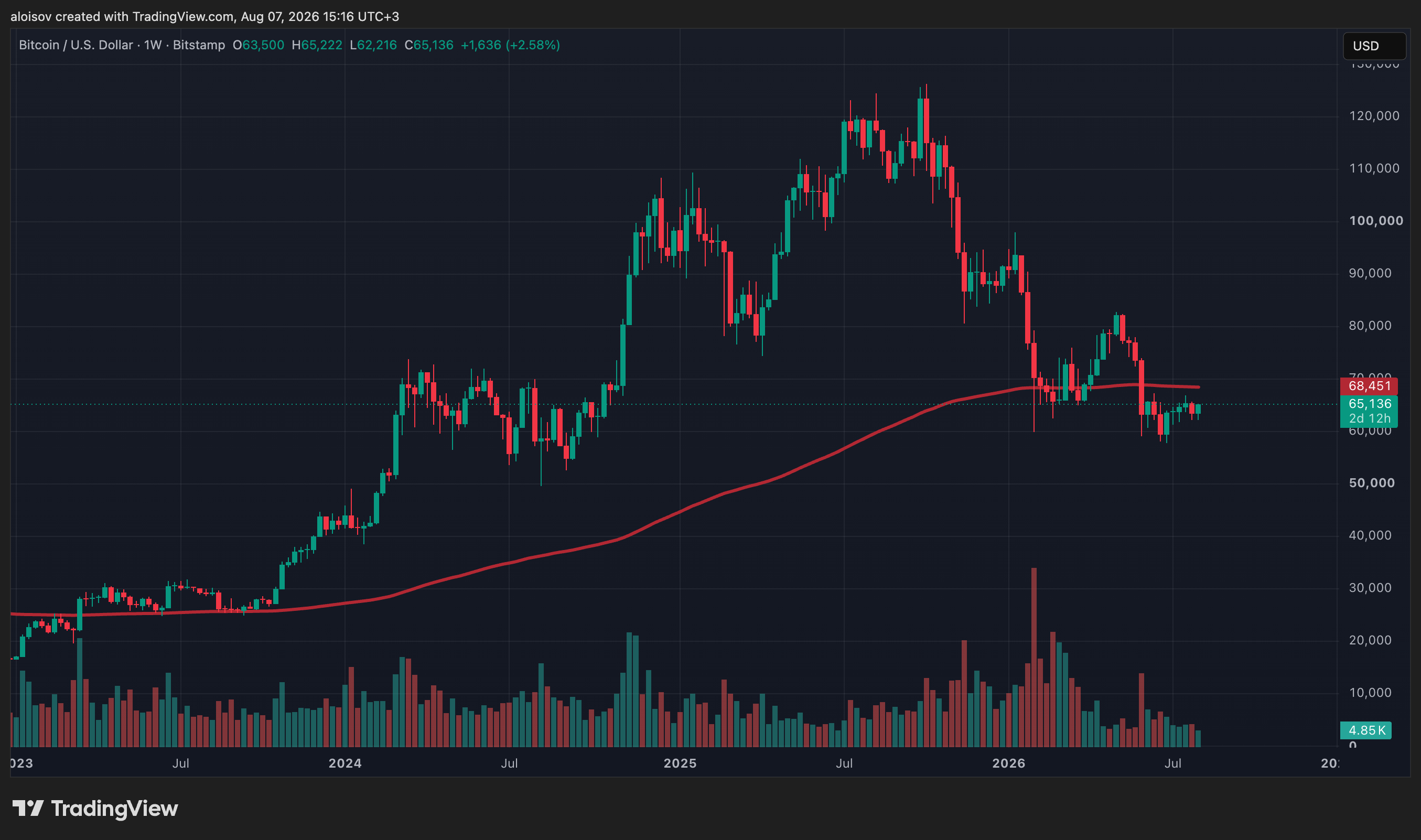
1-week chart of BTC/USD and 200EMA. Source: Bitstamp

Last week, the company Strategy disclosed the sale of 1,638 bitcoins for approximately $104.7 million, while the security incident with Coldcard crypto wallets continued to escalate. According to estimates in the report, losses amounted to around 1,755 bitcoins, or about $110 million, affecting roughly 5,000 wallets as of August 4th. None of these events, QCP emphasizes, led to a sustained breakdown to the downside.

Volatility Refuses to Panic

The options market, as noted by QCP, tells a similar story. According to the firm's Wednesday data, the at-the-money (ATM) implied volatility for 7 and 30 days stood at 28.8 and 32.6 respectively—both figures are at the lower end of recent ranges, while the 90-day volatility remains at 37.1.

The discount for downside protection on the near end of the curve also quickly narrowed: the 7-day 25-delta risk reversal recovered from -7.39 to -2.10. Short-term implied volatility remains slightly above recent realized volatility, whereas on the 90-day horizon it is, conversely, below realized. Trader positioning has become more balanced—notable volumes of put options at the $50k strike expiring in August were sold, while selective demand for near-term call options at the $65k strike was observed concurrently.

The overall message from QCP is simple: despite several crypto-market-specific shocks, options markets are not showing the level of stress recorded during previous sell-offs.

What's Behind Such Trades: The Essence of Options Strategies

The options structures mentioned by QCP are derivative instruments, meaning their value depends on the price of the underlying asset (in this case Bitcoin), not on direct ownership of it.

  1. Selling a put option means a trader receives a premium now but takes on the obligation to buy Bitcoin at a predetermined price (the strike) if the market is below that level at expiration. This is a bet that the price will not fall below a certain level.
  2. Buying a call option, conversely, gives the right (but not the obligation) to buy Bitcoin at a fixed price in the future. The trader pays a premium for this opportunity, betting that the asset will rise above the strike price.
  3. A risk reversal is a combination of a sold put and a bought call (or vice versa) that helps gauge whether the market fears a sharp drop or a sharp rise more.

The advantage of selling puts is immediate income from the premium and the opportunity to buy the asset cheaper if the scenario plays out. The risk is the obligation to acquire Bitcoin at the strike price even if the price falls significantly lower. Buying calls limits the risk to the size of the paid premium but requires the price increase to justify these costs.

The report talks about precisely such a balance: some players were selling puts at the $50k strike expiring in August, betting that the price would not go that low, while another part selectively bought calls at $65k for near terms, counting on moderate growth. According to QCP's assessment, such a combination reflects not panic, but cautious optimism.

The Economy Keeps Growing, Hiring Cools Down

The macroeconomic picture in the US, according to the report, remains mixed. The Institute for Supply Management (ISM) Manufacturing Purchasing Managers' Index (PMI) for July rose to 55.6—the highest reading in over four years—and the services sector also remained in expansion territory at 54.1. However, employment indicators look weaker: the Job Openings and Labor Turnover Survey (JOLTS) number of openings fell to 7.36 million, private sector payrolls according to ADP increased by only 44 thousand, and the ISM Services Employment Index dipped back into contraction territory.

In aggregate, QCP notes, economic activity remains resilient, while the pace of hiring has slowed. At the same time, the wave of layoffs remains relatively subdued, suggesting slower hiring rather than mass job cuts.

Market attention is now focused on July's labor market data (payrolls). A Wall Street Journal survey suggests nonfarm payrolls grew by about 83 thousand, with the unemployment rate holding at 4.2%. Against a backdrop of still-elevated inflation, this data will become another factor in assessing the future trajectory of Fed policy.

The Strait of Hormuz: Uncertainty Persists

Geopolitical tensions also remain elevated. Iran and Oman, according to QCP, have made progress in negotiations on a mechanism for commercial passage through the Strait of Hormuz, but a full opening of the route has not yet occurred. The proposed scheme involves separate sea corridors supervised by Iran and Oman, with issues of transit fees and unhindered passage remaining unresolved.

Concurrently, the report notes, an Iranian parliamentary committee is considering a bill that could restrict passage for vessels linked to countries Tehran considers hostile and impose fines of up to 20% of cargo value for violations. US maritime authorities continue to assess the risk of attacks on commercial shipping in the region as high.

Brent crude oil prices returned above $83 as markets continue to monitor the potential impact of the situation on energy supplies and shipping. The combination of ongoing negotiations and persistent shipping safety concerns makes the Strait of Hormuz a significant source of volatility for several asset classes at once.

Japan Remains the Key Liquidity Theme

The situation in Japan is another important factor for various asset class markets. Attention to the topic intensified after handwritten notes from US Treasury Secretary Scott Bessent indicated a potential $5-10 billion US purchase of yen. The subsequent US intervention was conducted by the Federal Reserve Bank of New York on behalf of the Treasury and—unusually—involved selling euros to buy yen, not selling dollars.

This trade structure is important as it shows the interconnection between currencies, reserve management, and global bond markets. The Bank of Japan still holds about half of all the country's issued government bonds (JGBs), while rising domestic yields have increased the relative attractiveness of Japanese debt after many years of ultra-low rates.

For global markets, the question, as QCP notes, is less about the specific intervention and more about whether the rise in Japanese yields will change the incentives for domestic investors to deploy capital abroad. It is this transmission channel that maintains the significance of the yen and the Japanese government bond market for global duration conditions and liquidity.

Resilience, Not Momentum

For the cryptocurrency market, the price dynamics over the week, according to QCP's assessment, speak more of resilience than a clear directional confirmation of the trend. Bitcoin withstood corporate sales and a major security incident, while near-term options markets show limited demand for panic protection.

At the same time, the macroeconomic backdrop remains uncertain: labor market data, energy prices, US Treasury yields, and funding conditions in Japan continue to affect the overall level of liquidity surrounding digital assets.

The legislative process in the US regarding digital asset market regulation has also moved further along the calendar. The Senate did not complete consideration of the CLARITY Act before the August recess, and the next legislative window will likely shift to September. The document, QCP notes, continues to face procedural hurdles, unresolved ethical provisions, and concerns from regional banks about competition from stablecoins for deposits.

Bottom Line

The legislative process remains active, but the delay reduces regulatory clarity in the short term. As noted by QCP, the situation resembles a calm after a series of storms: the waves have subsided, but the wind capable of setting a new direction has not yet picked up.

The market absorbed several blows at once—from corporate sales to shipping threats—and did not sink. That in itself is a fact around which expectations for further movement are now being built.

end-content

Criptos en tendencia

Preguntas relacionadas

QWhat are the two main negative events that Bitcoin weathered recently according to QCP Capital's report?

AThe two main negative events were: 1) Corporate selling by Strategy, which sold 1,638 bitcoins for approximately $104.7 million, and 2) The Coldcard wallet security incident, estimated to have resulted in losses of about 1,755 bitcoins (around $110 million).

QWhat does the activity in the options market, specifically the selling of puts and buying of calls, indicate about trader sentiment?

AThe activity indicates cautious optimism rather than panic. Selling puts at a $50,000 strike for August shows traders betting the price won't fall that low, while selective buying of calls at a $65,000 strike for near terms reflects expectations for moderate growth.

QHow does QCP characterize the current macroeconomic picture in the US regarding economic activity and employment?

AQCP characterizes it as uneven. Economic activity remains resilient, with the ISM Manufacturing PMI hitting a multi-year high. However, hiring has cooled, shown by a drop in JOLTS job openings and a weak ADP report, though mass layoffs are not evident.

QWhat two geopolitical factors are highlighted by QCP as sources of market volatility?

AThe two geopolitical factors are: 1) The ongoing uncertainty and negotiations regarding commercial passage through the Strait of Hormuz, and 2) The situation in Japan, specifically its impact on global bond yields and liquidity via changes in Japanese investor behavior.

QWhat is the main conclusion of QCP's report regarding Bitcoin's recent price action and market state?

AThe main conclusion is that the market is demonstrating resilience, not panic, and lacks a clear directional signal for a continued rally. Bitcoin absorbed several shocks without a sustained breakdown, but the overall market is in a state of stability rather than strong momentum.

Lecturas Relacionadas

Trading

Spot

Artículos destacados

Qué es BITCOIN

Entendiendo HarryPotterObamaSonic10Inu (ERC-20) y Su Posición en el Espacio Cripto En los últimos años, el mercado de criptomonedas ha sido testigo de un aumento en la popularidad de las monedas meme, capturando el interés no solo de los comerciantes, sino también de aquellos que buscan compromiso comunitario y valor de entretenimiento. Entre estos tokens únicos se encuentra HarryPotterObamaSonic10Inu (ERC-20), un proyecto intrigante que mezcla referencias culturales en el tejido de las criptomonedas. Este artículo profundiza en los aspectos clave de HarryPotterObamaSonic10Inu, explorando sus mecanismos, ethos impulsado por la comunidad y su relación con el paisaje cripto más amplio. ¿Qué es HarryPotterObamaSonic10Inu (ERC-20)? Como su nombre sugiere, HarryPotterObamaSonic10Inu es una moneda meme construida sobre la blockchain de Ethereum, clasificada bajo el estándar ERC-20. A diferencia de las criptomonedas tradicionales que pueden enfatizar la utilidad práctica o el potencial de inversión, este token prospera en el valor de entretenimiento y la fuerza de su comunidad. El proyecto tiene como objetivo fomentar un entorno donde los usuarios comprometidos puedan reunirse, compartir ideas y participar en actividades inspiradas por diversos fenómenos culturales. Una característica notable de HarryPotterObamaSonic10Inu es su cero impuestos en las transacciones. Este atractivo elemento tiene como objetivo incentivar el comercio y la participación comunitaria, sin cargos adicionales que puedan disuadir a los comerciantes de pequeña escala. El suministro total de la moneda está establecido en mil millones de tokens, una cifra que marca su intención de mantener una circulación sustancial dentro de la comunidad. Creador de HarryPotterObamaSonic10Inu (ERC-20) Los orígenes de HarryPotterObamaSonic10Inu están algo envueltos en misterio; los detalles sobre el creador siguen siendo desconocidos. El desarrollo de este token carece de un equipo identificable o de un plan explícito, lo cual no es inusual dentro del sector de monedas meme. En cambio, el proyecto ha surgido de manera orgánica, con su progreso muy dependiente del entusiasmo y la participación de su comunidad. Inversores de HarryPotterObamaSonic10Inu (ERC-20) En cuanto a inversiones externas y respaldo, HarryPotterObamaSonic10Inu también sigue siendo ambiguo. El token no lista ninguna fundación de inversión conocida o apoyo organizacional significativo. En cambio, la savia del proyecto es su comunidad de base, que informa su crecimiento y sostenibilidad a través de la acción colectiva y el compromiso en el espacio cripto. ¿Cómo Funciona HarryPotterObamaSonic10Inu (ERC-20)? Como una moneda meme, HarryPotterObamaSonic10Inu opera principalmente fuera de los marcos tradicionales que a menudo rigen el valor de los activos. Hay varios aspectos distintivos que definen cómo funciona el proyecto: Transacciones Sin Impuestos: Sin tarifas impositivas en las transacciones, los usuarios pueden comprar y vender el token libremente sin preocuparse por costos ocultos. Compromiso Comunitario: El proyecto prospera en la interacción comunitaria, aprovechando plataformas de redes sociales para crear entusiasmo y facilitar la participación. Las discusiones, el intercambio de contenido y el compromiso son elementos cruciales que ayudan a expandir su alcance y fomentar la lealtad entre los seguidores. Sin Utilidad Práctica: Cabe señalar que HarryPotterObamaSonic10Inu no ofrece utilidad concreta dentro del ecosistema financiero. Más bien, se clasifica como un token principalmente para actividades de entretenimiento y comunitarias. Referencia Cultural: El token incorpora astutamente elementos de la cultura popular para atraer interés, conectando con entusiastas de los memes y seguidores de las criptomonedas por igual. HarryPotterObamaSonic10Inu ejemplifica cómo las monedas meme operan de manera diferente a los proyectos de criptomonedas más tradicionales, ingresando al mercado como construcciones sociales innovadoras en lugar de activos utilitarios. Cronología de HarryPotterObamaSonic10Inu (ERC-20) La historia de HarryPotterObamaSonic10Inu está marcada por varios hitos notables: Creación: El token surgió de un meme viral, capturando la imaginación de muchos entusiastas de las criptomonedas. Las fechas específicas de creación no están disponibles, subrayando su ascenso orgánico. Listado en Exchanges: HarryPotterObamaSonic10Inu ha llegado a varios exchanges, permitiendo un acceso y comercio más fácil por parte de la comunidad. Iniciativas de Compromiso Comunitario: Actividades continuas destinadas a mejorar la interacción comunitaria, incluyendo concursos, campañas en redes sociales y generación de contenido por parte de fanáticos y defensores. Planes de Expansión Futuros: La hoja de ruta del proyecto incluye el lanzamiento de una colección de NFT, mercancía y un sitio de comercio electrónico relacionado con sus temas culturales, involucrando aún más a la comunidad e intentando añadir más dimensiones a su ecosistema. Puntos Clave Sobre HarryPotterObamaSonic10Inu (ERC-20) Naturaleza Impulsada por la Comunidad: El proyecto prioriza la participación colectiva y la creatividad, asegurando que la involucración de los usuarios esté a la vanguardia de su desarrollo. Clasificación como Moneda Meme: Representa la epítome de las criptomonedas basadas en el entretenimiento, diferenciándose de los vehículos de inversión tradicionales. Sin Afiliación Directa con Bitcoin: A pesar de la similitud en el nombre del ticker, HarryPotterObamaSonic10Inu es distinto y no tiene relación con Bitcoin u otras criptomonedas establecidas. Enfoque en la Colaboración: HarryPotterObamaSonic10Inu está diseñado para crear un espacio para la colaboración y el intercambio de historias entre sus poseedores, proporcionando una vía para la creatividad y el vínculo comunitario. Perspectivas Futuras: La ambición de expandirse más allá de su premisa inicial hacia NFTs y mercancías describe un camino para que el proyecto potencialmente ingrese a avenidas más tradicionales dentro de la cultura digital. A medida que las monedas meme continúan capturando la imaginación de la comunidad de criptomonedas, HarryPotterObamaSonic10Inu (ERC-20) se destaca debido a sus lazos culturales y su enfoque centrado en la comunidad. Si bien puede no encajar en el molde típico de un token impulsado por la utilidad, su esencia radica en la alegría y la camaradería fomentadas entre sus seguidores, destacando la naturaleza en evolución de las criptomonedas en una era cada vez más digital. A medida que el proyecto continúa desarrollándose, será importante observar cómo las dinámicas comunitarias influyen en su trayectoria en el cambiante paisaje de la tecnología blockchain.

2.5k Vistas totalesPublicado en 2024.04.01Actualizado en 2024.12.03

Qué es BITCOIN

Cómo comprar BTC

¡Bienvenido a HTX.com! Hemos hecho que comprar Bitcoin (BTC) sea simple y conveniente. Sigue nuestra guía paso a paso para iniciar tu viaje de criptos.Paso 1: crea tu cuenta HTXUtiliza tu correo electrónico o número de teléfono para registrarte y obtener una cuenta gratuita en HTX. Experimenta un proceso de registro sin complicaciones y desbloquea todas las funciones.Obtener mi cuentaPaso 2: ve a Comprar cripto y elige tu método de pagoTarjeta de crédito/débito: usa tu Visa o Mastercard para comprar Bitcoin (BTC) al instante.Saldo: utiliza fondos del saldo de tu cuenta HTX para tradear sin problemas.Terceros: hemos agregado métodos de pago populares como Google Pay y Apple Pay para mejorar la comodidad.P2P: tradear directamente con otros usuarios en HTX.Over-the-Counter (OTC): ofrecemos servicios personalizados y tipos de cambio competitivos para los traders.Paso 3: guarda tu Bitcoin (BTC)Después de comprar tu Bitcoin (BTC), guárdalo en tu cuenta HTX. Alternativamente, puedes enviarlo a otro lugar mediante transferencia blockchain o utilizarlo para tradear otras criptomonedas.Paso 4: tradear Bitcoin (BTC)Tradear fácilmente con Bitcoin (BTC) en HTX's mercado spot. Simplemente accede a tu cuenta, selecciona tu par de trading, ejecuta tus trades y monitorea en tiempo real. Ofrecemos una experiencia fácil de usar tanto para principiantes como para traders experimentados.

5.8k Vistas totalesPublicado en 2024.12.12Actualizado en 2026.06.02

Cómo comprar BTC

Qué es $BITCOIN

ORO DIGITAL ($BITCOIN): Un Análisis Integral Introducción al ORO DIGITAL ($BITCOIN) ORO DIGITAL ($BITCOIN) es un proyecto basado en blockchain que opera en la red Solana, cuyo objetivo es combinar las características de los metales preciosos tradicionales con la innovación de las tecnologías descentralizadas. Aunque comparte un nombre con Bitcoin, a menudo referido como “oro digital” debido a su percepción como un refugio de valor, ORO DIGITAL es un token separado diseñado para crear un ecosistema único dentro del paisaje Web3. Su meta es posicionarse como un activo digital alternativo viable, aunque los detalles sobre sus aplicaciones y funcionalidades aún están en desarrollo. ¿Qué es ORO DIGITAL ($BITCOIN)? ORO DIGITAL ($BITCOIN) es un token de criptomoneda diseñado explícitamente para su uso en la blockchain de Solana. A diferencia de Bitcoin, que proporciona un papel de almacenamiento de valor ampliamente reconocido, este token parece centrarse en aplicaciones y características más amplias. Aspectos notables incluyen: Infraestructura Blockchain: El token está construido sobre la blockchain de Solana, conocida por su capacidad para manejar transacciones de alta velocidad y bajo costo. Dinámicas de Suministro: ORO DIGITAL tiene un suministro máximo limitado a 100 cuatrillones de tokens (100P $BITCOIN), aunque los detalles sobre su suministro circulante no se han divulgado actualmente. Utilidad: Si bien las funcionalidades precisas no están delineadas explícitamente, hay indicios de que el token podría ser utilizado para diversas aplicaciones, potencialmente involucrando aplicaciones descentralizadas (dApps) o estrategias de tokenización de activos. ¿Quién es el Creador de ORO DIGITAL ($BITCOIN)? En la actualidad, la identidad de los creadores y el equipo de desarrollo detrás de ORO DIGITAL ($BITCOIN) sigue siendo desconocida. Esta situación es típica entre muchos proyectos innovadores dentro del espacio blockchain, particularmente aquellos alineados con las finanzas descentralizadas y fenómenos de monedas meme. Si bien tal anonimato puede fomentar una cultura impulsada por la comunidad, intensifica las preocupaciones sobre la gobernanza y la responsabilidad. ¿Quiénes son los Inversores de ORO DIGITAL ($BITCOIN)? La información disponible indica que ORO DIGITAL ($BITCOIN) no tiene patrocinadores institucionales conocidos ni inversiones destacadas de capital de riesgo. El proyecto parece operar en un modelo de peer-to-peer centrado en el apoyo y la adopción de la comunidad en lugar de rutas de financiamiento tradicionales. Su actividad y liquidez se sitúan principalmente en intercambios descentralizados (DEX), como PumpSwap, en lugar de plataformas de trading centralizadas establecidas, lo que resalta aún más su enfoque de base. Cómo Funciona ORO DIGITAL ($BITCOIN) Los mecanismos operativos de ORO DIGITAL ($BITCOIN) pueden elaborarse en función de su diseño blockchain y atributos de red: Mecanismo de Consenso: Al aprovechar el único proof-of-history (PoH) de Solana combinado con un modelo de proof-of-stake (PoS), el proyecto asegura una validación de transacciones eficiente que contribuye al alto rendimiento de la red. Tokenómica: Si bien los mecanismos deflacionarios específicos no se han detallado extensamente, el vasto suministro máximo de tokens implica que podría atender microtransacciones o casos de uso nicho que aún están por definirse. Interoperabilidad: Existe el potencial de integración con el ecosistema más amplio de Solana, incluyendo varias plataformas de finanzas descentralizadas (DeFi). Sin embargo, los detalles sobre integraciones específicas permanecen no especificados. Cronología de Eventos Clave Aquí hay una cronología que destaca hitos significativos relacionados con ORO DIGITAL ($BITCOIN): 2023: El despliegue inicial del token ocurre en la blockchain de Solana, marcado por su dirección de contrato. 2024: ORO DIGITAL gana visibilidad al estar disponible para trading en intercambios descentralizados como PumpSwap, permitiendo a los usuarios comerciar contra SOL. 2025: El proyecto presencia actividad de trading esporádica y potencial interés en compromisos liderados por la comunidad, aunque no se han documentado asociaciones notables o avances técnicos hasta el momento. Análisis Crítico Fortalezas Escalabilidad: La infraestructura subyacente de Solana soporta altos volúmenes de transacciones, lo que podría mejorar la utilidad de $BITCOIN en varios escenarios de transacción. Accesibilidad: El potencial bajo precio de trading por token podría atraer a inversores minoristas, facilitando una participación más amplia debido a oportunidades de propiedad fraccionada. Riesgos Falta de Transparencia: La ausencia de patrocinadores, desarrolladores o un proceso de auditoría conocidos públicamente puede generar escepticismo sobre la sostenibilidad y confiabilidad del proyecto. Volatilidad del Mercado: La actividad de trading depende en gran medida del comportamiento especulativo, lo que puede resultar en una volatilidad de precios significativa y en incertidumbre para los inversores. Conclusión ORO DIGITAL ($BITCOIN) surge como un proyecto intrigante pero ambiguo dentro del ecosistema de Solana en rápida evolución. Si bien intenta aprovechar la narrativa del “oro digital”, su alejamiento del papel establecido de Bitcoin como refugio de valor subraya la necesidad de una diferenciación más clara de su utilidad y estructura de gobernanza previstas. La aceptación y adopción futura dependerán probablemente de abordar la actual opacidad y de definir sus estrategias operativas y económicas de manera más explícita. Nota: Este informe abarca información sintetizada disponible hasta octubre de 2023, y pueden haber ocurrido desarrollos más allá del período de investigación.

424 Vistas totalesPublicado en 2025.05.13Actualizado en 2025.05.13

Qué es $BITCOIN

Discusiones

Bienvenido a la comunidad de HTX. Aquí puedes mantenerte informado sobre los últimos desarrollos de la plataforma y acceder a análisis profesionales del mercado. A continuación se presentan las opiniones de los usuarios sobre el precio de BTC (BTC).

活动图片