Pundit Explains What Happened With The XRP-Solana Integration

bitcoinistPublicado a 2025-12-11Actualizado a 2025-12-11

Resumen

The unexpected "589" post from Solana's official X account sparked widespread speculation about a potential integration between Solana and the XRP ecosystem. While no official announcement has been made, crypto commentator SonOfaRichard provided context, explaining that Solana and XRPL operate in complementary rather than competitive domains. Solana excels in consumer-facing applications, DeFi, and high-speed execution but lacks deep regulated market access. XRP and XRPL specialize in enterprise solutions, compliance, settlement, and liquidity infrastructure. Together, they could form an optimal pair: Solana driving user activity and value creation, while XRPL provides the regulated framework for secure, large-scale movement of value. Ripple’s upcoming regulated stablecoin, RLUSD, could further bridge the ecosystems by offering Solana a compliant USD pathway, with XRP acting as the underlying settlement layer. The "589" post—a number tied to XRP community memes and price expectations—garnered over six million views, though it may simply be part of a broader social media strategy rather than signaling a confirmed partnership.

The unexpected “589” post from Solana’s official X account quickly opened up new discussions about whether something significant is forming between Solana and the XRP ecosystem. One of the reactions came from a community figure known as Cobb, who openly wondered if Ripple had just secured a major deal with Solana.

Nothing official has been announced, but a detailed breakdown from crypto commentator SonOfaRichard has brought clearer context to the situation. His explanation outlines what may be taking shape with the XRP-Solana connection and why the two networks could end up working together in a structured way.

Solana And XRPL Operate On Opposite Ends

In his response, SonOfaRichard noted how we’ve seen talks about Solana and XRPL integrations for a while, but then it has gone quiet. The pundit explained that Solana and the Ledger are often seen as competitors, yet their strengths sit in completely different areas.

Solana is known for dominating the consumer-facing side of crypto for fast applications, active DeFi projects, and high-volume execution. What it lacks is corridor depth in regulated markets, a strong connection to compliant liquidity.

XRP and the XRPL fill that gap. Ripple focuses on enterprise channels, settlement, compliance, and liquidity, while the Ledger acts as the underlying banking layer that institutions depend on.

This creates a situation where Solana brings the activity and the audiences, and the Ledger brings the settlement and regulatory foundation. Rather than overlapping or competing, the two ecosystems form a natural and optimal design pair: one pushes value into the economy, and the other provides the framework that allows that value to move safely and at scale.

Another major part of the pundit’s explanation is also the role of RLUSD, Ripple’s regulated USD stablecoin. Solana, despite its massive activity, does not yet have a strong, compliant USD pathway.

RLUSD could fill that need, acting as the channel through which consumer activity on Solana connects to regulated corridors worldwide. Under that arrangement, XRP becomes the collateral and final settlement layer sitting beneath both networks.

Explaining The “589” Message

The strong reaction to the post came from the fact that “589” is a well-known marker in the community. Solana followed it with another post showing the number in Morse code, paired with the flags of Solana, XRP, and Bitcoin, along with the caption “Time to flip the switch,” and even tagged Ripple’s CTO, David Schwartz.

Together, those posts have had more than six million views, making them the most-engaged content Solana has ever shared on the platform. The attention stemmed from the history of “589” itself, a number tied to long-running XRP memes and bold price expectations that have circulated within the community for years. Even so, there is still nothing concrete to confirm deeper intentions, and the posts could simply be part of a broader social media strategy.

XRP trading at $2.08 on the 1D chart | Source: XRPUSDT on Tradingview.com

Criptos en tendencia

Lecturas Relacionadas

Bitwise CIO: Three Major Cognitive Errors Common Among Crypto Investors Today

Bitwise CIO Matt Hougan highlights three key misconceptions he believes many crypto investors currently hold, presenting them as opportunities for those who see beyond them. First, investors significantly underestimate the total addressable market for crypto applications. While many view platforms like Uniswap only as tools for trading crypto assets (a ~$2 trillion market), their true potential lies in tokenizing and trading *all* asset classes—such as stocks and bonds—which represent markets hundreds of trillions of dollars in size. Second, there's a persistent overestimation of traditional financial institutions' ability to dominate crypto-native sectors. Examples like PayPal's stable币 (with ~1% market share vs. Tether/Circle's 88%) and Fidelity's custody business (trailing Coinbase) show that crypto-native firms often win due to faster iteration, focused expertise, and established user trust within the crypto ecosystem. Third, investors linearly extrapolate future on-chain transaction volumes from today's data, severely underestimating potential growth. The shift to 24/7 trading for tokenized assets could multiply trading hours by 5x. When combined with AI agents that may execute trades far more frequently than humans, transaction volumes could grow by 10x to 100x, massively boosting revenue for underlying blockchains and applications. Hougan concludes that the gap between the rapid pace of industry change and slower mainstream perception updates creates significant investment opportunities.

marsbitHace 1 min(s)

Bitwise CIO: Three Major Cognitive Errors Common Among Crypto Investors Today

marsbitHace 1 min(s)

Two IPOs in Half a Month: Hefei Becomes China's Fourth City

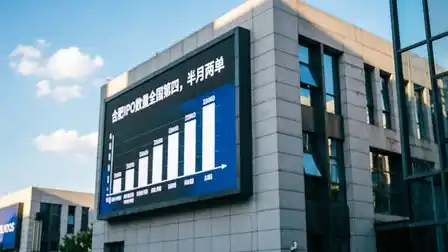
Hefei, China's "Capital of Venture Capital," Ascends to Fourth Place in A-P-Share Market Value with Two Recent IPOs Within two weeks, two major IPOs propelled Hefei's A-share market capitalization from 1.27 trillion yuan to over 4.55 trillion yuan, ranking the city fourth nationwide, behind only Beijing, Shenzhen, and Shanghai. This surge is led by Changxin's massive listing, creating over 1 trillion yuan in paper gains for state-owned investors. Simultaneously, Hefei's GDP growth leads among Chinese cities exceeding 1 trillion yuan GDP. This success stems not from gambling on single companies, but from a decades-long, systematic "industrial investment" strategy. Hefei targets critical gaps in its industrial chain, providing patient capital. It invested in BOE in 2008 to secure display panels for its appliance hub, in Changxin in 2016 for semiconductors, and in NIO in 2020 to anchor a new energy vehicle cluster. Each investment was calculated based on long-term industrial necessity. Another IPO, Guoyi Quantum, originates from Hefei's ecosystem. Founded by a prodigy inspired by his professor's experience with overpriced foreign instruments, it symbolizes high-end scientific instrument localization. Behind the trillion-yuan paper gains is remarkable political continuity and a self-reinforcing cycle. Proceeds from earlier successful exits (e.g., BOE, NIO) were reinvested into newer projects like Changxin. The strategy withstands individual project failures and transcends typical government terms, focusing on decade-long industrial cultivation. Hefei's system integrates the University of Science and Technology of China for tech talent, state capital for long-term funding, and an unwavering focus on building complete industrial chains. While risks remain—market volatility, intense EV competition, quantum's commercialization timeline—Hefei demonstrates that when a government calculates returns over decades, the outcome differs fundamentally from short-term bets.

marsbitHace 4 min(s)

Two IPOs in Half a Month: Hefei Becomes China's Fourth City

marsbitHace 4 min(s)

U.S. Treasury Yield at 5% Frightens AI Investors

U.S. Treasury Yields Surpass 5%, Spooking AI Investors Recent weeks have seen a sharp rise in long-term U.S. Treasury yields, with the 10-year and 30-year rates climbing 34 and 45 basis points, respectively. The 30-year yield has exceeded 5%, reaching its highest level since 2004. This surge in the global risk-free rate anchor has triggered a broad re-pricing of assets, impacting equities, currencies, and commodities, including the volatile AI sector. The primary driver is a fundamental imbalance in bond market supply and demand. Persistent U.S. fiscal expansion and massive Treasury issuance are the root cause. Concurrently, demand from traditional large buyers—foreign central banks and the Federal Reserve—has waned, shifting the burden to commercial financial institutions whose investment strategies increase market volatility. A significant marginal factor is the AI-driven corporate debt boom. Tech giants like Amazon, Alphabet, and Microsoft have issued over $1200 billion in bonds recently to fund capital expenditures, creating competition for investor capital and putting upward pressure on Treasury yields. Furthermore, resilient inflation data and expectations of a more hawkish Federal Reserve under Chair Wash have pushed up long-term inflation risk premiums. For the AI investment theme, higher yields pose a serious valuation challenge. They systematically raise the discount rate for future earnings, pressuring highly-valued tech stocks. This is a key factor behind the recent correction and profit-taking in previously crowded trades like semiconductor memory. The situation echoes the pre-2008 financial crisis period, where high financing costs exposed underlying asset-liability mismatches. There are concerns that slowing growth in AI monetization (e.g., Anthropic's Annual Recurring Revenue) may struggle to justify massive debt-fueled capital spending, especially under higher interest rates. Investor memories of the 2007 crisis are fueling a valuation reassessment. Additionally, the AI industry's own rush to issue debt before rates climb further exacerbates market liquidity strain, potentially creating a cycle where corporate borrowing contributes to the very high-rate environment that threatens its profitability.

marsbitHace 6 min(s)

U.S. Treasury Yield at 5% Frightens AI Investors

marsbitHace 6 min(s)

Breaking News, Fable 5.1 Leaked, Claude Experiences Another Global Major Outage

Breaking News: Fable 5.1 Leaked, Claude Faces Another Global Outage Today, Fable 5.1, the successor to Fable 5, was reportedly leaked and is in limited灰度 testing. Some Claude users are allegedly gaining free access. Reliable leaker leo@synthwavedd disclosed this, suggesting users of Claude Web端 with Fable 5 or Claude Code may already be on Fable 5.1. This follows Anthropic's recent internal development of a Model 2 stronger than Mythos, which it stated would not be released. Patterns suggest a full rollout of Fable 5.1 is imminent, potentially by late August, likely maintaining current pricing. The demand stems from Fable 5's history: launched with Mythos 5 in June, its public version included restrictive "safety classifiers," leading to a brief suspension and ongoing performance limitations, fueling developer desire for an improved model. In a related incident, Claude suffered a major global outage today, affecting all models and platforms for nearly 3 hours. This marks the 166th service disruption this year, with 7 occurring in the past five days alone. The frequent downtime is potentially linked to the model leak and underlying compute strain, despite Anthropic's skyrocketing projected annual revenue of $65 billion. The timing is critical as Anthropic prepares for a potential trillion-dollar IPO. Fable 5.1 is viewed as a strategic card to demonstrate its capability to leverage massive compute investments and compete ahead of a pivotal period, with significant pressure to show clear performance gains.

marsbitHace 8 min(s)

Breaking News, Fable 5.1 Leaked, Claude Experiences Another Global Major Outage

marsbitHace 8 min(s)

Trading

Spot

Artículos destacados

Qué es XRP 2.0

XRP 2.0: Una Nueva Frontera en el Panorama de las Criptomonedas Introducción a XRP 2.0 En el siempre cambiante ámbito de las criptomonedas, nuevos proyectos surgen continuamente, compitiendo por atención y adopción. Una de estas iniciativas prometedoras es XRP 2.0, un nuevo proyecto de criptomoneda diseñado para aprovechar la tecnología blockchain avanzada y metodologías de encriptación robustas. Aunque el nombre establece paralelismos con el XRP de Ripple, es crucial señalar que XRP 2.0 opera de manera independiente, enfocándose en mejorar la seguridad de las transacciones, la privacidad y la escalabilidad. A medida que el panorama financiero digital abraza cada vez más soluciones descentralizadas, XRP 2.0 busca contribuir de manera significativa a web3 y a la expansión general de los proyectos de criptomonedas. ¿Qué es XRP 2.0? En esencia, XRP 2.0 es un proyecto de criptomoneda que busca crear un ecosistema de moneda digital seguro y descentralizado. Su tecnología fundamental integra principios avanzados de blockchain con técnicas de encriptación de vanguardia. El objetivo principal de XRP 2.0 es establecerse como una plataforma confiable y eficiente que permita la ejecución rápida de transacciones mientras prioriza la protección de la privacidad de sus usuarios. El proyecto se promociona como una solución a muchas limitaciones enfrentadas por las criptomonedas existentes, proponiendo un sistema que puede manejar un mayor volumen de transacciones con mejor velocidad y privacidad. Esta versatilidad posiciona a XRP 2.0 como un competidor significativo en un mercado plagado de diversas monedas digitales. ¿Quién es el Creador de XRP 2.0? La identidad del creador detrás de XRP 2.0 ha sido señalada como 'Wilbur.' Sin embargo, los detalles completos sobre Wilbur o su entidad asociada siguen siendo elusivos. La anonimidad de muchos creadores de criptomonedas no es un fenómeno poco común en la industria, a menudo diseñado para mantener un grado de privacidad y seguridad. ¿Quiénes son los Inversores de XRP 2.0? Hasta ahora, la información específica relacionada con las fundaciones o organizaciones de inversión que apoyan a XRP 2.0 no está disponible públicamente. En el sector de las criptomonedas, el respaldo de inversores respetables puede influir significativamente en la credibilidad y el éxito de un proyecto, sin embargo, la transparencia sobre los patrocinadores financieros de XRP 2.0 no se ha establecido. ¿Cómo Funciona XRP 2.0? XRP 2.0 se destaca al emplear una combinación de tecnología blockchain y algoritmos de encriptación avanzados que aseguran transacciones seguras y descentralizadas. Su estructura innovadora incluye características únicas diseñadas para fomentar el compromiso del usuario y ampliar las funcionalidades más allá de las transacciones convencionales de criptomonedas. Entre estas características, XRP 2.0 incorpora capacidades impulsadas por IA, como funcionalidades de texto a imagen y de texto a voz. Estas adiciones están diseñadas para mejorar la experiencia interactiva de los usuarios, promoviendo una mayor aplicabilidad en diversos sectores. Al unir avances tecnológicos con un diseño centrado en el usuario, XRP 2.0 busca captar la atención de una amplia gama de individuos y empresas que buscan integrar soluciones de criptomonedas en sus marcos operativos. Cronología de XRP 2.0 Entender XRP 2.0 requiere examinar los hitos que han definido su viaje hasta ahora: 23 de julio de 2023: Se presenta XRP 2.0 como un nuevo proyecto de criptomonedas, con el objetivo de revolucionar las capacidades de transacciones seguras y descentralizadas en el ámbito de blockchain. 8 de septiembre de 2023: Se lanza otro proyecto, XRP20, marcando la aparición de un token ERC-20 en la blockchain de Ethereum que no guarda relación con XRP 2.0. 13 de noviembre de 2023: El Libro Mayor de XRP experimenta una actualización significativa con el lanzamiento de la versión 2.0.0 del software del servidor rippled. Es esencial señalar que este desarrollo está desconectado del proyecto de criptomonedas XRP 2.0. Puntos Clave sobre XRP 2.0 Para destilar la esencia de XRP 2.0, surgen varios factores críticos: Características Únicas: La inclusión de características como texto a imagen y texto a voz impulsadas por IA diversifica aún más las aplicaciones potenciales de XRP 2.0. Tecnología Blockchain: El marco utiliza mecanismos avanzados de blockchain y protocolos de encriptación, asegurando un entorno seguro y descentralizado para las transacciones. Escalabilidad y Privacidad: XRP 2.0 prioriza la protección mejorada de la privacidad en los procesos de transacción y la escalabilidad necesaria para acomodar una base de usuarios creciente. No Afiliación con Ripple: Es importante destacar que, a pesar de su nombre, XRP 2.0 no tiene ninguna lealtad ni colaboración con el XRP de Ripple, diferenciando su marco operativo y objetivos dentro del ecosistema de criptomonedas. Conclusión XRP 2.0 representa una ambiciosa aventura en la esfera de las criptomonedas, buscando ofrecer una combinación de seguridad, privacidad y eficiencia en las transacciones digitales. Al integrar tecnologías sofisticadas y características amigables para el usuario, el proyecto se propone ampliar los horizontes de lo que la criptomoneda puede lograr en la economía digital de hoy. Si bien la anonimidad de su creador y la falta de inversores revelados pueden generar cuestionamientos para algunos, el enfoque de XRP 2.0 en funcionalidades avanzadas y descentralización realza su atractivo en un mercado de criptomonedas cada vez más abarrotado. A medida que el paisaje de las criptomonedas sigue evolucionando, XRP 2.0 podría emerger como un jugador crucial en la expansión de soluciones blockchain seguras y escalables.

322 Vistas totalesPublicado en 2024.04.05Actualizado en 2024.12.03

Qué es XRP 2.0

Cómo comprar XRP

¡Bienvenido a HTX.com! Hemos hecho que comprar XRP (XRP) sea simple y conveniente. Sigue nuestra guía paso a paso para iniciar tu viaje de criptos.Paso 1: crea tu cuenta HTXUtiliza tu correo electrónico o número de teléfono para registrarte y obtener una cuenta gratuita en HTX. Experimenta un proceso de registro sin complicaciones y desbloquea todas las funciones.Obtener mi cuentaPaso 2: ve a Comprar cripto y elige tu método de pagoTarjeta de crédito/débito: usa tu Visa o Mastercard para comprar XRP (XRP) al instante.Saldo: utiliza fondos del saldo de tu cuenta HTX para tradear sin problemas.Terceros: hemos agregado métodos de pago populares como Google Pay y Apple Pay para mejorar la comodidad.P2P: tradear directamente con otros usuarios en HTX.Over-the-Counter (OTC): ofrecemos servicios personalizados y tipos de cambio competitivos para los traders.Paso 3: guarda tu XRP (XRP)Después de comprar tu XRP (XRP), guárdalo en tu cuenta HTX. Alternativamente, puedes enviarlo a otro lugar mediante transferencia blockchain o utilizarlo para tradear otras criptomonedas.Paso 4: tradear XRP (XRP)Tradear fácilmente con XRP (XRP) en HTX's mercado spot. Simplemente accede a tu cuenta, selecciona tu par de trading, ejecuta tus trades y monitorea en tiempo real. Ofrecemos una experiencia fácil de usar tanto para principiantes como para traders experimentados.

1.7k Vistas totalesPublicado en 2024.12.10Actualizado en 2026.06.02

Cómo comprar XRP

Discusiones

Bienvenido a la comunidad de HTX. Aquí puedes mantenerte informado sobre los últimos desarrollos de la plataforma y acceder a análisis profesionales del mercado. A continuación se presentan las opiniones de los usuarios sobre el precio de XRP (XRP).

活动图片