Profits Fall by a Quarter: Why Tether Abandoned Its $20 Billion Financing Plan

marsbitPublicado a 2026-02-05Actualizado a 2026-02-05

Resumen

In the face of a cooling crypto market and investor skepticism, Tether, the world's largest stablecoin issuer, has significantly scaled back its ambitious fundraising plans. Initially targeting $15-20 billion, which would have valued the company at $500 billion, the firm is now considering raising only about $5 billion. CEO Paolo Ardoino downplayed the original target, calling it a "misunderstanding" and a maximum cap, not a goal, while emphasizing that Tether is highly profitable and doesn't urgently need the capital. Despite the success of its USDT stablecoin, which has a market cap of approximately $185 billion, Tether faces persistent investor caution. Concerns revolve around its $500 billion valuation—comparable to major AI firms and SpaceX—ongoing regulatory scrutiny, and the lack of a full independent audit, relying instead on quarterly attestations. Ardoino defended the valuation, contrasting Tether's substantial profits with the losses of highly-valued AI companies. While new U.S. stablecoin legislation and competitor Circle's IPO have boosted momentum, regulatory risks and Tether's controversial history remain hurdles. The company's profits fell by about a quarter in 2025, attributed to declining Bitcoin prices, though it gained $8-10 billion from its gold holdings. Tether's massive scale has made it a major player in U.S. Treasuries and gold markets, positioning it as a critical bridge between traditional finance and the volatile crypto world.

Editor's Note: Against the backdrop of a cooling crypto market and pressured valuation narratives, Tether finds itself in a delicate position. On one hand, the continued expansion of USDT has made it an undeniable 'new financial player' in the U.S. Treasury and gold markets. On the other hand, a lofty $500 billion valuation expectations, an incomplete comprehensive audit, and long-standing regulatory and compliance controversies continue to make potential investors cautious.

Tether's next move may reflect not only its own choices but also the practical boundaries the entire stablecoin industry is facing.

The following is the original text:

As investors expressed skepticism about its $500 billion valuation target, the CEO of Tether, the world's largest stablecoin issuer, proactively downplayed expectations and attention regarding its financing scale.

This crypto group, registered in El Salvador, initiated financing negotiations last year, planning to raise $15 to $20 billion. Had the deal been completed, it would have placed Tether among the world's most valuable private companies.

But according to informed sources, after encountering investor hesitation, Tether's advisors have begun exploring the possibility of raising only about $5 billion.

Tether CEO Paolo Ardoino downplayed the potential financing scale, calling the previously stated $15 to $20 billion target "a misunderstanding."

"That number was not our target; it was just the maximum we were willing to sell," he said in an interview. "We would be equally happy not selling a single cent."

Ardoino stated that Tether is highly profitable and has received "significant interest" at the $500 billion valuation level. He added that the company has not yet decided how much equity to sell, partly because insiders are reluctant to reduce their holdings.

The company's dollar-pegged stablecoin, USDT, currently has a scale of approximately $1.85 trillion and is regarded as the "reserve currency" of the digital asset market. Control of Tether is concentrated in the hands of a small group of long-serving executives.

The market has been closely watching Tether's progress in attracting well-known investors, seeing it as a key indicator of investor interest in the crypto industry. It is widely believed that this move is more about consolidating Tether's credibility and network, as the company, generating billions of dollars in profit annually, does not urgently need new capital.

Following Trump's election as president, the market was once boosted by expectations of a more friendly U.S. regulatory environment for digital assets. However, over the past six months, as traders retreated from high-risk speculative assets, the crypto market has seen a significant pullback.

Some investors have privately expressed concerns about the $500 billion valuation, which would place Tether among the top private companies globally, alongside AI firms like OpenAI and Anthropic, as well as Musk's SpaceX and TikTok's parent company ByteDance.

Ardoino argued that Tether—which disclosed profits of approximately $10 billion last year, primarily from returns on the asset reserves backing USDT's value—deserves a valuation comparable to these still-unprofitable AI model companies.

"These AI companies make about the same amount of money as we do, just with a huge minus sign in front," he said. "If you're willing to believe an AI company with a massive minus sign in front is worth $800 billion, that's your choice."

Both Tether and its financing advisor, Cantor Fitzgerald, declined to comment on the size of this financing. The investment bank, run by the children of U.S. Commerce Secretary Howard Lutnick, also holds a stake in Tether.

Informed sources cautioned that the negotiations are ongoing and the financing terms could still change; if the overall crypto market strengthens again, investor sentiment could also reverse.
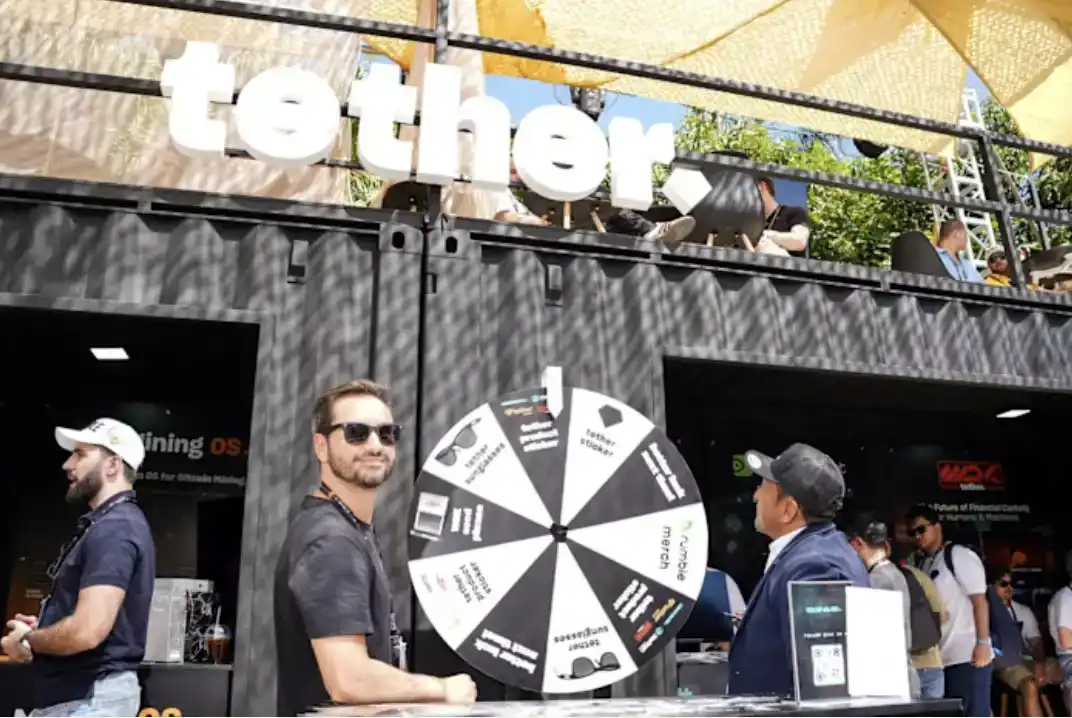
Ardoino stated that the new U.S. stablecoin legislation signed into law by Trump, coupled with the listing of U.S. rival Circle last year, has further increased market attention and momentum for Tether. Tether recently also launched a new token in the U.S. that complies with this regulatory framework.

But informed sources said some potential investors remain cautious about the regulatory risks surrounding Tether. Since its founding in 2014, this crypto group has long faced scrutiny, with controversies primarily focusing on whether its tokens are used for illegal activities and the transparency and quality of its asset reserves.

In recent years, Tether has begun publishing quarterly reserve attestations by the accounting firm BDO Italia, but it has never undergone a full independent audit.

Ardoino stated that the company has demonstrated the depth of its technical tools for collaboration with various law enforcement agencies to potential investors, to prove its capabilities in compliance and law enforcement cooperation.

S&P Global Ratings downgraded Tether's reserve rating to the lowest tier in its system late last year, citing its increasing exposure to high-risk assets like Bitcoin and gold. In response, Ardoino said at the time: "We wear your disdain as a badge of honor."

Since 2020, the growth of USDT has significantly accelerated, making Tether one of the world's largest buyers of U.S. Treasuries and, in recent months, a major player in the gold market.

Asset allocation on such a massive scale makes Tether one of the most critical connecting nodes between the global financial system and the highly volatile world of cryptocurrency.

Compared to the previous year, Tether's profits for 2025 fell by about a quarter. Ardoino attributed this change to the decline in Bitcoin's price. He added that the company gained approximately $8 to $10 billion in profits from its gold holdings, benefiting from rising precious metal prices.

Preguntas relacionadas

QWhy did Tether significantly scale back its fundraising target from up to $20 billion to potentially only $5 billion?

ATether's CEO, Paolo Ardoino, stated that the initial $15-20 billion figure was a 'misunderstanding' and represented the maximum they were *willing* to sell, not a target. Investor hesitation over the company's $500 billion valuation and internal shareholders' reluctance to sell their stakes contributed to the reduced scale.

QWhat was the primary reason for Tether's 25% profit decline in 2025, according to its CEO?

APaolo Ardoino attributed the approximately 25% profit decline in 2025 primarily to a decrease in the price of Bitcoin.

QWhat are the main regulatory and transparency concerns that make some potential investors cautious about Tether?

APotential investors are cautious due to Tether's long history of scrutiny over whether its tokens are used for illicit activity, the transparency and quality of its asset reserves, and the fact that it has not undergone a full independent audit, relying instead on quarterly attestations from BDO Italia.

QHow does Tether's CEO justify the company's proposed $500 billion valuation compared to major AI companies?

APaolo Ardoino argues that Tether, which is highly profitable, deserves a valuation comparable to major AI companies that are still reporting losses, stating, 'These AI companies make about the same money as us, just with a big minus sign in front.'

QWhat two major roles does Tether now play in the broader financial system, according to the article?

ATether has become one of the world's largest buyers of U.S. Treasury bonds and a significant participant in the gold market. This makes it a critical connecting node between the global financial system and the highly volatile world of cryptocurrencies.

Lecturas Relacionadas

Soaring 20% Then Dropping 5%: When Will the Bottom of the Korean Stock Market Be?

"South Korean stocks face a turbulent period as the KOSPI index, after a 20% surge, fell 5% to 6257 points. The market is grappling with severe issues: over 500,000 leveraged retail accounts have been liquidated, and more than 24 trillion won has flowed from stocks into bank deposits for safety. This reflects a significant loss of market liquidity and shaken investor confidence. In response, Korean financial regulators are taking action. They have tripled the minimum保证金 (margin) requirement for single-stock leveraged ETF trades to 30 million won and are considering granting themselves "emergency intervention" powers. These could include capping leverage ratios and setting investment limits on these ETFs, seen by many as amplifying market volatility. Initial results show a 75% drop in these products' trading volume post-regulation. The market downturn has political repercussions, pushing President Yoon Suk-yeol's approval rating to a new low. Meanwhile, foreign investors made a record net purchase of 7.18 trillion won during a recent rebound, while domestic retail investors sold off massively. Morgan Stanley has upgraded South Korean stocks to "overweight," citing the ongoing "leverage unwinding" and potential for a 36% upside, with giants like Samsung Electronics and SK Hynix providing valuation support. However, analysts caution that the market's structure remains vulnerable to foreign capital flows, and the current low may not be the bottom."

marsbitHace 10 min(s)

Soaring 20% Then Dropping 5%: When Will the Bottom of the Korean Stock Market Be?

marsbitHace 10 min(s)

Goldman Sachs Stakes a Clear Position: This Is the Largest Capital Demand Cycle in Human History, and the Fed Is Just an Observer

Goldman Sachs argues that the world is entering the most capital-intensive investment cycle in history, driven by concurrent massive demands from AI infrastructure, reindustrialization, defense reinvestment, power grid rebuilding, supply chain realignment, and sovereign debt financing. This structural competition for capital is pushing its cost higher, fundamentally altering investment paradigms. Goldman's Mark Wilson states that the Federal Reserve is merely a "passenger, not the driver" in this shift, with rising yields rooted in these real economy demands rather than just monetary policy. While major indices appeared calm in July, underlying market movements were historic, featuring extreme stock dispersion and a severe momentum factor crash, leading to significant de-risking by fund managers. Wilson cautions against expecting a quick reversal in August, citing ongoing digestion of higher rates, disrupted risk models, and typically muted market performance ahead of US midterm elections. Corporate fundamentals remain robust with strong earnings, though growth rates are peaking in the US while accelerating in Europe. Notably, hyperscale cloud companies like Amazon and Microsoft are announcing staggering capital expenditure projections for 2027-2028, justified by explosive AI-related revenue growth and high returns. Amazon revealed its AI revenue run-rate exceeds $25 billion, growing triple-digits annually, and expressed confidence that AWS could become a trillion-dollar revenue business. The report concludes that a transitional period is underway, marked by a growing tension between aggressively investing private tech giants and increasingly capital-constrained sovereign governments. The AI super-cycle continues, with August likely being a consolidation phase.

marsbitHace 15 min(s)

Goldman Sachs Stakes a Clear Position: This Is the Largest Capital Demand Cycle in Human History, and the Fed Is Just an Observer

marsbitHace 15 min(s)

Outflow of Stablecoins from South Korea Continues for 18 Consecutive Months, Exceeding $360 Million in June

In June 2026, South Korea experienced a net outflow of stablecoins to overseas crypto exchanges, amounting to 560.3 billion won ($367 million). This represents approximately 78% of the net value of foreign stocks purchased by Korean investors in the same period. According to the Financial Supervisory Service (FSS), this marks the 18th consecutive month of net outflows, a trend ongoing since January 2025. The FSS reported that 2.76 trillion won ($1.8+ billion) in stablecoins were withdrawn from the country's five major exchanges to foreign platforms in June, while 2.2 trillion won ($1.4 billion) flowed back in. The second quarter of 2026 saw a significant net outflow of 1.69 trillion won (~$1.1 billion), surpassing net sales of foreign stocks in the same period. Analysts cite access to unavailable domestic financial instruments as a primary driver. Foreign platforms offer crypto derivatives, spot and futures products tied to major Korean stocks like Samsung and Hyundai, along with RWA tokenization, DeFi, staking, and leveraged products. Lawmaker Lee Jong-wook warned that the stablecoin outflows constitute capital flight, exposing investors to risks on unregulated foreign platforms. He called for accelerated regulatory reform and enhanced investor protection measures. The government is reportedly working on a digital assets law to foster the blockchain sector.

cryptonews.ruHace 20 min(s)

Outflow of Stablecoins from South Korea Continues for 18 Consecutive Months, Exceeding $360 Million in June

cryptonews.ruHace 20 min(s)

Trading

Spot
活动图片