Profits Fall by a Quarter: Why Tether Abandoned Its $20 Billion Financing Plan

marsbitPublicado a 2026-02-05Actualizado a 2026-02-05

Resumen

In the face of a cooling crypto market and investor skepticism, Tether, the world's largest stablecoin issuer, has significantly scaled back its ambitious fundraising plans. Initially targeting $15-20 billion, which would have valued the company at $500 billion, the firm is now considering raising only about $5 billion. CEO Paolo Ardoino downplayed the original target, calling it a "misunderstanding" and a maximum cap, not a goal, while emphasizing that Tether is highly profitable and doesn't urgently need the capital. Despite the success of its USDT stablecoin, which has a market cap of approximately $185 billion, Tether faces persistent investor caution. Concerns revolve around its $500 billion valuation—comparable to major AI firms and SpaceX—ongoing regulatory scrutiny, and the lack of a full independent audit, relying instead on quarterly attestations. Ardoino defended the valuation, contrasting Tether's substantial profits with the losses of highly-valued AI companies. While new U.S. stablecoin legislation and competitor Circle's IPO have boosted momentum, regulatory risks and Tether's controversial history remain hurdles. The company's profits fell by about a quarter in 2025, attributed to declining Bitcoin prices, though it gained $8-10 billion from its gold holdings. Tether's massive scale has made it a major player in U.S. Treasuries and gold markets, positioning it as a critical bridge between traditional finance and the volatile crypto world.

Editor's Note: Against the backdrop of a cooling crypto market and pressured valuation narratives, Tether finds itself in a delicate position. On one hand, the continued expansion of USDT has made it an undeniable 'new financial player' in the U.S. Treasury and gold markets. On the other hand, a lofty $500 billion valuation expectations, an incomplete comprehensive audit, and long-standing regulatory and compliance controversies continue to make potential investors cautious.

Tether's next move may reflect not only its own choices but also the practical boundaries the entire stablecoin industry is facing.

The following is the original text:
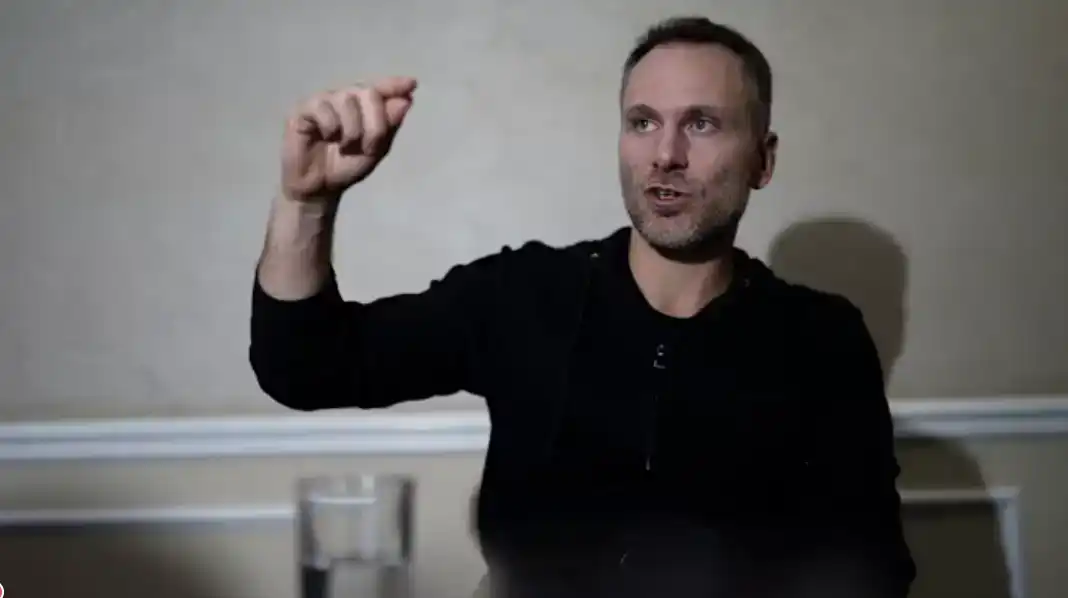
As investors expressed skepticism about its $500 billion valuation target, the CEO of Tether, the world's largest stablecoin issuer, proactively downplayed expectations and attention regarding its financing scale.

This crypto group, registered in El Salvador, initiated financing negotiations last year, planning to raise $15 to $20 billion. Had the deal been completed, it would have placed Tether among the world's most valuable private companies.

But according to informed sources, after encountering investor hesitation, Tether's advisors have begun exploring the possibility of raising only about $5 billion.

Tether CEO Paolo Ardoino downplayed the potential financing scale, calling the previously stated $15 to $20 billion target "a misunderstanding."

"That number was not our target; it was just the maximum we were willing to sell," he said in an interview. "We would be equally happy not selling a single cent."

Ardoino stated that Tether is highly profitable and has received "significant interest" at the $500 billion valuation level. He added that the company has not yet decided how much equity to sell, partly because insiders are reluctant to reduce their holdings.

The company's dollar-pegged stablecoin, USDT, currently has a scale of approximately $1.85 trillion and is regarded as the "reserve currency" of the digital asset market. Control of Tether is concentrated in the hands of a small group of long-serving executives.

The market has been closely watching Tether's progress in attracting well-known investors, seeing it as a key indicator of investor interest in the crypto industry. It is widely believed that this move is more about consolidating Tether's credibility and network, as the company, generating billions of dollars in profit annually, does not urgently need new capital.

Following Trump's election as president, the market was once boosted by expectations of a more friendly U.S. regulatory environment for digital assets. However, over the past six months, as traders retreated from high-risk speculative assets, the crypto market has seen a significant pullback.

Some investors have privately expressed concerns about the $500 billion valuation, which would place Tether among the top private companies globally, alongside AI firms like OpenAI and Anthropic, as well as Musk's SpaceX and TikTok's parent company ByteDance.

Ardoino argued that Tether—which disclosed profits of approximately $10 billion last year, primarily from returns on the asset reserves backing USDT's value—deserves a valuation comparable to these still-unprofitable AI model companies.

"These AI companies make about the same amount of money as we do, just with a huge minus sign in front," he said. "If you're willing to believe an AI company with a massive minus sign in front is worth $800 billion, that's your choice."

Both Tether and its financing advisor, Cantor Fitzgerald, declined to comment on the size of this financing. The investment bank, run by the children of U.S. Commerce Secretary Howard Lutnick, also holds a stake in Tether.

Informed sources cautioned that the negotiations are ongoing and the financing terms could still change; if the overall crypto market strengthens again, investor sentiment could also reverse.
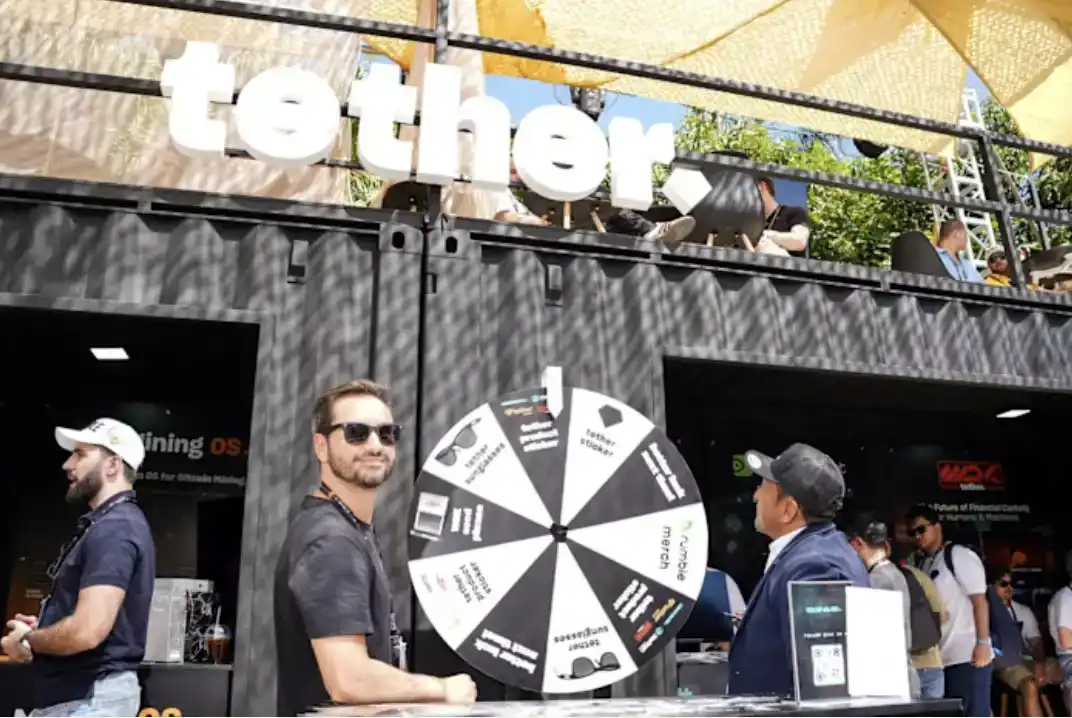
Ardoino stated that the new U.S. stablecoin legislation signed into law by Trump, coupled with the listing of U.S. rival Circle last year, has further increased market attention and momentum for Tether. Tether recently also launched a new token in the U.S. that complies with this regulatory framework.

But informed sources said some potential investors remain cautious about the regulatory risks surrounding Tether. Since its founding in 2014, this crypto group has long faced scrutiny, with controversies primarily focusing on whether its tokens are used for illegal activities and the transparency and quality of its asset reserves.

In recent years, Tether has begun publishing quarterly reserve attestations by the accounting firm BDO Italia, but it has never undergone a full independent audit.

Ardoino stated that the company has demonstrated the depth of its technical tools for collaboration with various law enforcement agencies to potential investors, to prove its capabilities in compliance and law enforcement cooperation.

S&P Global Ratings downgraded Tether's reserve rating to the lowest tier in its system late last year, citing its increasing exposure to high-risk assets like Bitcoin and gold. In response, Ardoino said at the time: "We wear your disdain as a badge of honor."

Since 2020, the growth of USDT has significantly accelerated, making Tether one of the world's largest buyers of U.S. Treasuries and, in recent months, a major player in the gold market.

Asset allocation on such a massive scale makes Tether one of the most critical connecting nodes between the global financial system and the highly volatile world of cryptocurrency.

Compared to the previous year, Tether's profits for 2025 fell by about a quarter. Ardoino attributed this change to the decline in Bitcoin's price. He added that the company gained approximately $8 to $10 billion in profits from its gold holdings, benefiting from rising precious metal prices.


Preguntas relacionadas

QWhy did Tether significantly scale back its fundraising target from up to $20 billion to potentially only $5 billion?

ATether's CEO, Paolo Ardoino, stated that the initial $15-20 billion figure was a 'misunderstanding' and represented the maximum they were *willing* to sell, not a target. Investor hesitation over the company's $500 billion valuation and internal shareholders' reluctance to sell their stakes contributed to the reduced scale.

QWhat was the primary reason for Tether's 25% profit decline in 2025, according to its CEO?

APaolo Ardoino attributed the approximately 25% profit decline in 2025 primarily to a decrease in the price of Bitcoin.

QWhat are the main regulatory and transparency concerns that make some potential investors cautious about Tether?

APotential investors are cautious due to Tether's long history of scrutiny over whether its tokens are used for illicit activity, the transparency and quality of its asset reserves, and the fact that it has not undergone a full independent audit, relying instead on quarterly attestations from BDO Italia.

QHow does Tether's CEO justify the company's proposed $500 billion valuation compared to major AI companies?

APaolo Ardoino argues that Tether, which is highly profitable, deserves a valuation comparable to major AI companies that are still reporting losses, stating, 'These AI companies make about the same money as us, just with a big minus sign in front.'

QWhat two major roles does Tether now play in the broader financial system, according to the article?

ATether has become one of the world's largest buyers of U.S. Treasury bonds and a significant participant in the gold market. This makes it a critical connecting node between the global financial system and the highly volatile world of cryptocurrencies.

Lecturas Relacionadas

How Risky is the "Death Spiral" of MSTR and STRC?

Summary: This article explores the perceived "death spiral" risk between MicroStrategy (MSTR), its Bitcoin holdings, and its perpetual preferred stock (STRC), drawing comparisons to the LUNA-UST collapse. While both systems feature price anchors, high yields for holders, and potential feedback loops, their core mechanisms differ fundamentally. The MSTR-STRC structure relies on continuous financing to sustain its high dividend payouts, primarily through stock ATM offerings. A negative feedback cycle could occur: falling MSTR stock price makes raising equity capital harder, increasing pressure to sell Bitcoin, which undermines STRC confidence and further depresses MSTR. However, unlike LUNA-UST's automated, direct linkage, the MSTR-STRC loop is weaker and has brakes: STRC dividends can be deferred or rates lowered, and STRC holders have a $100/share liquidation preference in bankruptcy, providing a price floor. The company's sustainability hinges on its ability to continue financing. Its current ~$900 million USD reserves cover only about 6.3 months of its ~$1.71 billion annual interest/dividend burden. The next six months are critical, aligning with both the potential bottom in Bitcoin's four-year cycle and the depletion timeline of its reserves. While a LUNA-style catastrophic collapse is deemed highly unlikely due to structural differences, the key question is whether MicroStrategy can navigate this period through healthy deleveraging to restart its capital engine.

Foresight NewsHace 4 min(s)

How Risky is the "Death Spiral" of MSTR and STRC?

Foresight NewsHace 4 min(s)

How Much Debt Does Strategy Really Have? Is There a Risk of Implosion?

MicroStrategy's Debt Risk: A Turning Point in the "Never Sell" Strategy As of June 3, 2026, MicroStrategy holds 843,706 bitcoins (valued at ~$53.1B) but faces significant financial obligations. Its capital structure includes $6.75B in convertible notes and $15.48B in perpetual preferred stock (led by the $8.5B STRC series), creating an annual payout burden of ~$1.71B. With software revenue at only ~$500M, interest and dividend obligations far exceed operating income. A critical shift occurred in late May 2026 when the company sold 32 bitcoins for ~$2.5M to cover dividends, breaking CEO Michael Saylor's long-standing "never sell" pledge. This symbolic move triggered a sharp decline in both Bitcoin's price and MSTR stock, reflecting market fears about cash flow sustainability. The core of the strain is the STRC perpetual preferred stock, designed as a "permanent loan" with no maturity date but requiring high monthly dividends (currently 11.5%). Its business model relies on a three-part cycle: issuing new STRC shares, using proceeds to buy more Bitcoin and fund a USD reserve, and using that reserve to pay dividends. This cycle depends on continuous investor demand for STRC and Bitcoin's price appreciation. Analysis shows Bitcoin needs to appreciate at least 2.3% annually to cover the $1.71B in yearly obligations at current holdings. With Bitcoin price down ~22% from March 2026 highs, this pressure has intensified. The company's $900M USD reserve can only cover about 7 months of payments if STRC issuance stalls. Key risks are not immediate bankruptcy or forced Bitcoin liquidation (as BTC is not collateral), but rather: 1) The erosion of MSTR's premium to its Bitcoin holdings (mNAV), which would cripple its ability to raise cheap capital; 2) A vicious cycle where stagnant Bitcoin prices reduce STRC demand, draining the USD reserve and forcing BTC sales, further depressing prices. The period from February 2027 to September 2028 is a crucial test, with over $5.9B in convertible notes facing put options or maturity. In essence, MicroStrategy has evolved from a simple Bitcoin holder into a complex financial entity acting like a "private Bitcoin bank," leveraging its BTC holdings to create layered financial products. Its survival depends on maintaining Bitcoin's price trend, its stock premium, and market appetite for its preferred shares. The recent token sale marks not a betrayal of its Bitcoin thesis, but an admission that the leveraged strategy must eventually be paid for.

marsbitHace 15 min(s)

How Much Debt Does Strategy Really Have? Is There a Risk of Implosion?

marsbitHace 15 min(s)

Anthropic Cries Wolf: Is the AGI Threat Real, or Just an IPO Story?

Anthropic has published an article titled "When AI builds itself," discussing the emerging concept of "recursive self-improvement," where AI begins to actively participate in designing, training, testing, and optimizing its own subsequent versions. The company presents internal data showing that by May 2026, over 80% of code merged into its codebase was written by Claude, its AI model. Claude's capabilities have expanded to handling complex, open-ended engineering tasks, achieving a 76% success rate in such areas, and even contributing to research processes, such as optimizing code performance and conducting AI safety experiments. Anthropic outlines an evolution from human-driven development to AI-assisted workflows, culminating in the current stage where AI agents can autonomously write, run, and delegate code. The company cautions that the path toward a "closed loop," where AI continuously improves itself, is becoming visible. It calls for coordinated global mechanisms to potentially slow or pause frontier AI development to allow safety research and societal structures to catch up. However, the timing of this warning coincides with Anthropic's preparations for an IPO, framing the narrative not just as a safety concern but also as a demonstration of Claude's advanced capabilities and its integral role in accelerating Anthropic's own R&D—creating a potential "flywheel" effect for competitive advantage. This contrasts with OpenAI's recent, more policy-oriented discussion of the same risks, highlighting the competitive dynamics in the AI industry as companies position themselves in both the technological and regulatory landscape.

marsbitHace 1 hora(s)

Anthropic Cries Wolf: Is the AGI Threat Real, or Just an IPO Story?

marsbitHace 1 hora(s)

Trading

Spot
Futuros
活动图片




