Pi Network App Studio Releases 2026 Feature Update: Creator Campaigns, Payment Functions, and Expanded Access

marsbitPublicado a 2026-01-24Actualizado a 2026-01-24

Resumen

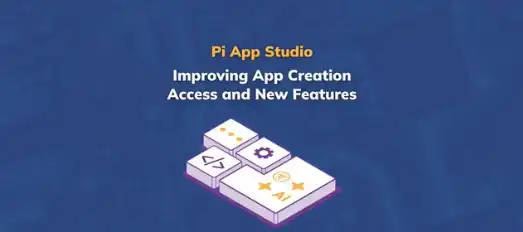
Pi Network has announced the first 2026 update for Pi App Studio, introducing key features to foster a more inclusive and sustainable app creation environment. The update enables Pioneers to easily integrate Pi payments into their applications without any coding or technical background, currently supporting Test-Pi transactions. A new ad-supported option also allows users to deploy app iterations by watching ads instead of paying Pi, lowering barriers for those with low Pi balances or who haven’t migrated to Mainnet. Additionally, Pi Network launched a creator campaign and feedback survey, offering 5 Pi credits each to the first 1,000 qualified respondents to use for app creation. The collected feedback will guide future improvements to the platform. These enhancements collectively expand accessibility, encourage active participation, and support the integration of Pi cryptocurrency into practical, utility-driven applications. By reducing both technical and cost barriers, Pi App Studio empowers users of all backgrounds to turn creativity into application ownership and contribute to the long-term growth of the Pi ecosystem.

Pi Network announced the first 2026 update for Pi App Studio, introducing community creator campaigns, new payment integration features, and expanded app creation access, aiming to help more Pioneers experiment, iterate, and build practical applications to enhance Pi's utility. This update supports a more inclusive and sustainable app creation environment for the Pi ecosystem.

Core Feature Upgrades

Pioneers can now easily integrate Pi payment functions through App Studio without programming or technical background, currently supporting Test-Pi transactions. This feature simplifies the complex payment integration process into non-technical interactive steps, allowing creators to enable payment functionality by mentioning "Pi payment" in prompts when customizing applications. This innovation enables non-technical users to benefit from Pi payment integration like developers, supporting the sustainable development of App Studio applications.

Simultaneously, an ad-supported app creation option is introduced, allowing Pioneers to deploy application iterations by watching ads without paying Pi, particularly benefiting users who have not migrated to Mainnet or have insufficient Pi balances. This feature becomes available when a user's App Studio balance falls below 0.25 Pi. Although ad revenue cannot fully cover the actual costs of application generation and deployment, this subsidized measure aims to expand access and increase creative participation while preventing platform abuse.

Community Incentive Program

Pi Network has also launched a creator campaign and feedback survey, inviting Pioneers to participate in the survey, share feedback, and recommend App Studio applications they find useful. The first 1,000 qualified respondents will receive 5 Pi credits specifically for application creation and customization within App Studio. The collected feedback will guide future improvements to App Studio features and tools, ensuring the platform continuously meets creators' needs.

Significance for Ecosystem Development

These updates collectively expand the accessibility of Pi App Studio, encourage active usage, and help better integrate Pi cryptocurrency into the application experiences within the Pi ecosystem. By lowering technical barriers and cost obstacles, Pi Network provides a truly user-friendly application creation platform for all users, regardless of their technical background. By collecting feedback, enabling easy payment integration, and expanding app creation access, Pi App Studio continues to drive the creation of applications with genuine utility and use cases in 2026, helping Pioneers transform creativity into application and online business ownership, supporting the long-term development and practical application of the Pi ecosystem.


Preguntas relacionadas

QWhat are the key new features introduced in the Pi App Studio 2026 update?

AThe key new features include community creator campaigns, new payment integration capabilities, and expanded app creation access. These are designed to help more Pioneers experiment, iterate, and build utility apps to enhance Pi's utility.

QHow does the new Pi payment integration feature in App Studio work for non-technical users?

AThe Pi payment integration is simplified into non-technical, interactive steps. Creators can enable it by mentioning 'Pi payment' in their prompts when customizing an app, allowing non-technical users to benefit from the feature without coding knowledge. It currently supports Test-Pi transactions.

QWhat is the purpose of the ad-supported app creation option in the update?

AThe ad-supported option allows Pioneers to deploy app iterations by watching ads instead of paying Pi. This is particularly beneficial for users who have not migrated to Mainnet or have insufficient Pi balances. It aims to broaden access and increase creative participation while preventing platform abuse.

QWhat incentive does the Creator Campaign and Feedback Survey offer to participants?

AThe first 1,000 qualified respondents to the feedback survey will receive 5 Pi credits. These credits are dedicated to app creation and customization within the App Studio. The collected feedback will also guide future improvements to the platform's features and tools.

QWhat is the overall goal of these updates for the Pi ecosystem in 2026?

AThe overall goal is to create a more inclusive and sustainable app creation environment. By lowering technical and cost obstacles, the updates encourage active use, better integrate Pi cryptocurrency into app experiences, and support the long-term development and real-world application of the Pi ecosystem through the creation of apps with genuine utility.

Lecturas Relacionadas

Institutional Adoption of Prediction Markets Stuck at the Third Stage

Prediction markets are transitioning from niche platforms focused on elections and sports to mainstream financial tools, as highlighted at Kalshi Research's inaugural conference. While sports still dominate trading volume (around 80%), non-sports categories like macroeconomics, politics, and entertainment are growing faster, signaling a shift from entertainment-based trading to information and risk management tools. Institutions, including Wall Street firms, are increasingly using prediction markets for data reference (Stage 1 adoption), with some progressing to system integration (Stage 2). However, full-scale trading (Stage 3) is limited due to the lack of margin trading, requiring full collateral for positions—a barrier for leverage-dependent entities. Kalshi is working with regulators to introduce margin mechanisms. Key insights from participants like Goldman Sachs and CNBC emphasize the value of real-time pricing for events (e.g., Fed decisions, tariffs), providing benchmarks previously unavailable. The path to maturity mirrors historical financial instruments like options, with expectations that prediction markets will become institutional staples within five years. Political leaders, including Trump and Schumer, now cite Kalshi odds, underscoring its growing influence. The platform rewards domain expertise over traditional finance backgrounds, attracting diverse participants from fields like music and poker. Ultimately, prediction markets are evolving into critical infrastructure for pricing uncertainty.

marsbitHace 7 min(s)

Institutional Adoption of Prediction Markets Stuck at the Third Stage

marsbitHace 7 min(s)

The First Year of Computing Power Inflation: The Cheaper DeepSeek Gets, the Harder It Is to Stop This Round of Price Hikes

The year 2026 marks the beginning of "computing power inflation." While AI inference costs have dropped by over 80% in 18 months globally, China's three major cloud providers—Alibaba Cloud, Baidu AI Cloud, and Tencent Cloud—simultaneously announced price hikes of 20–30%. This reflects a deeper structural shift driven by Jevons Paradox: as unit costs fall (e.g., via models like DeepSeek-R1), demand explodes, especially with the rise of reasoning models and AI agents that consume 10–50x more tokens per task. Although DeepSeek open-sourced its model weights, it did not release its inference optimization stack, leaving a significant engineering efficiency gap between cloud providers and smaller players. The big three are leveraging this advantage to reposition: Alibaba focuses on high-margin premium clients, Baidu filters out low-value users, and Tencent capitalizes on ecosystem lock-in. Meanwhile, ByteDance’s Volcano Engine adopts a more moderate pricing strategy to capture displaced customers. Unexpectedly, the price surge is pushing large enterprises toward self-built computing solutions once their cloud bills exceed a certain threshold. While cloud providers aim to boost profitability, they risk driving away innovative startups and accelerating competition from GPU leasing and domestic hardware providers like Huawei. The涨价 trend is expected to persist for 2–3 years, fueled by rising token consumption from reasoning models, AI agent adoption, and NVIDIA export restrictions. The inflection point depends on whether domestic chips can match NVIDIA’s efficiency, likely around 2027–2028. Until then, cloud providers will maintain pricing power, and the key for AI companies is to optimize token usage—the real moat in this era.

marsbitHace 1 hora(s)

The First Year of Computing Power Inflation: The Cheaper DeepSeek Gets, the Harder It Is to Stop This Round of Price Hikes

marsbitHace 1 hora(s)

Trading

Spot
Futuros
活动图片