Outsmarting Algorithmic Manipulation on Twitter: How to Grow Your Account with Dignity?

marsbitPublicado a 2026-01-19Actualizado a 2026-01-19

Resumen

This article analyzes the significant decline in engagement and reach experienced by many Twitter (X) content creators, attributing it to two major platform changes. First, the platform has weakened the "Following" tab, defaulting users to the algorithmic "For You" feed. Second, it has shifted from a chronological timeline to algorithmically recommended content, heavily influenced by its AI model, Grok. This results in a polarized content performance: deep, analytical posts receive minimal views and zero interaction, while sensationalist, controversial, or low-quality content (e.g., clickbait, politics, or adult material) often goes viral. The author argues this strategy, designed to increase ad revenue by keeping users in a recommendation loop, ultimately degrades the platform's community and commercial value. It incentivizes "farming" engagement through divisive or shallow content, driving away high-quality vertical creators who are increasingly migrating to platforms like Substack. The piece concludes with a three-part strategy for creators: 1) adapt by mixing deep content with high-engagement hooks and subscribing to Premium for better reach, 2) build direct audience connections through newsletters or private groups, and 3) wait for potential platform improvements. The core message is a call to maintain integrity while navigating the algorithmic challenges.

If you are a Twitter blogger, you have been experiencing abnormal phenomena for nearly half a year.

Specifically, your traffic and interaction data suddenly plummeted at a certain point, and the nature of viral content has become strange—deep analyses get dozens of views with zero interaction, while posting provocative or sensational content leads to a surge in followers.

The main content of this article is about why this phenomenon occurs. In other words, how did the clever design of the X platform ruin the vertical audience you worked so hard to build?

Platform Weakens the Following Page, Defaults to the Recommendation Page

This is caused by two measures from the platform:

· Weakening the "Following" page and defaulting users to the "For You" recommendation page; this has become so severe that some bloggers have to write custom scripts to force a switch back to the Following page.

· Phasing out the chronological display of followers' content in favor of algorithmic recommendations.

The reason is that last year, the platform introduced Grok as a weighting factor in algorithmic judgments. Without delving into the complexities, the result is: This makes posts either completely silent or suddenly blessed by the algorithm, going viral with no middle ground.

The motivation behind this is easy to understand: if users only see content from accounts they follow, platform ad insertion would be very awkward. For example, it would have to insert ads abruptly, like on WeChat, and then fabricate comments and likes from friends below the ad.
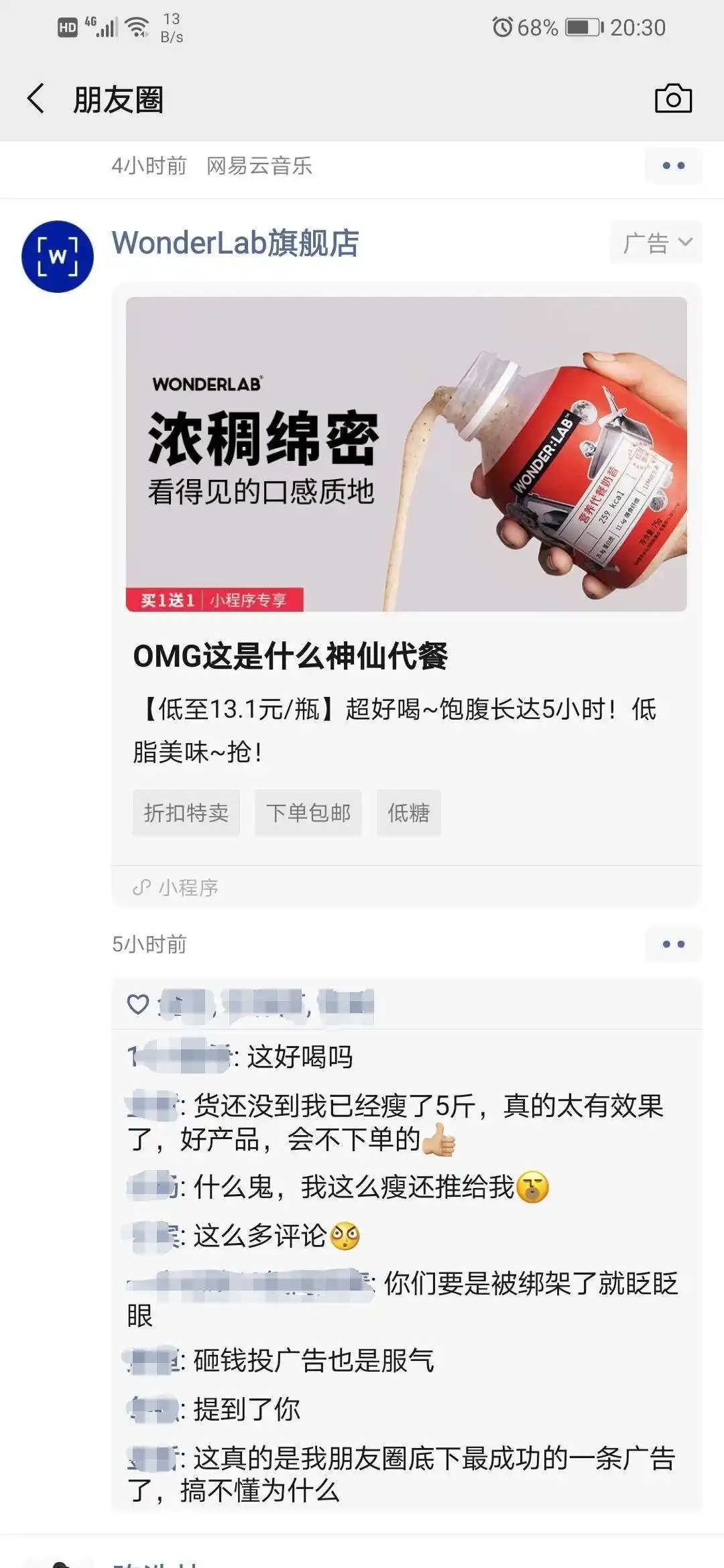
This seems to enhance the platform's commercial value in the short term, but in practice, it doesn't work out that way, especially in the casino-like atmosphere of the crypto circle.

@supermao has an incisive discussion on this in an article: Everyone says CT content is declining? What is the root cause? Have you been to Las Vegas? Have you seen high rollers in casinos needing to read newspapers or books? What they need are presidential suites, luxury, and beautiful women. The crypto circle is essentially too heavily narrative-driven around gambling, with everything revolving around gains, losses, and bets. More and more smart people realize that if your entire life is tied directly to market trends, it's hard to maintain long-term physical and mental health and clear thinking.

The result of these two measures is that a large amount of paid promotional content, such as AI-spun articles, suggestive images, borderline content, and political sensationalism, dominates users' recommended timeline. Rogue matrix accounts have become mainstream.

You probably understand how algorithms work better than I do: the more users click on this type of content, the system automatically judges it as your interest, and you get more of it. Eventually, the recommendation feed is full of this stuff.

The Destruction of Deep Content

The result: Many niche bloggers find their tweet traffic incredibly strange. They spend a long time writing deep content that gets dozens of views and zero interaction, but posting a sexy picture or some anti-social rant suddenly gains them hundreds of followers.

In reality, the attention channel for their vertical content distribution has been hijacked by the recommendation mechanism. Their followers haven't seen what they've been posting for a long time.

The following image depicts a common scenario:

In the end, vertical bloggers are forced to post content that pleases the base audience to survive, or else they should leave the platform and find a new one.

This leads to a massive loss of high-quality creators. Social platforms rely heavily on atmosphere. Weibo, Zhihu, and Bilibili have at times turned into public toilets, filled with misogyny, misandry, political sensationalism, and various anti-social, hostile content, all stemming from a loss of control over community atmosphere. After all, content that creates conflict and suggestive images are the most attention-grabbing. While this increases interaction in the short term, it leads to a dual loss of quality content and commercial value in the long run.

Many bloggers, like @nic_carter and @notboringco, are gradually moving towards Substack.

Rebuilding Your Influence with a Network Value Strategy

All week, Dan Koe's "One Day to Reset" long-form article became a viral hit.

This article had over 150 million reads. For a non-celebrity, non-president, non-billionaire to have traffic at this level, it must be officially boosted. Elon Musk's retweet and the million-dollar new concept essay contest are telling, and it also somewhat supports Nikita Bier's product-driven growth strategy.

I wrote about his thinking in a profile of Nikita Bier. It essentially revolves around one point: network value.

· Increase interaction between nodes in the network—content that stirs controversy, recommendation feeds.

· What kind of content increases network value?—Deep articles, preferably professional鸡汤 (chicken soup for the soul with expertise).

· Increased network value—Subscriptions + ad revenue up.

Increasing network value is necessary. Although major advertisers like Apple and Disney have returned, and subscription numbers have grown, Twitter still reported a net loss of $577 million in the third quarter of last year. This effort needs to be intensified.

Thinking about it this way, our action guide can be divided into three parts:

1. If you can't beat them, join them:

· First, buy a Premium subscription. You need the article writing function, right? Traffic now revolves around Blue V checks. At the very least, it allows paid promotions to reach more users.

· Wait for the algorithm's blessing. Mix deep articles with high-engagement hooks (like questions, hot takes).

2. Customized Service: Once traffic comes, build WeChat/Twitter/Telegram small groups or a Newsletter to ensure point-to-point reach. I have already developed the habit of reading deep content in my email.

3. Wait: Do nothing, just keep posting content diligently. I have a feeling that @nikitabier will probably start solving this problem soon.

I can't write any further here. In short, it's that slogan:

Let's grow our accounts with dignity!

Preguntas relacionadas

QWhat are the two main platform changes that have led to a decline in traffic for vertical content creators on X (Twitter)?

AThe two main changes are: 1. The weakening of the 'Following' tab, with users being defaulted to the 'For You' recommendation page. 2. The shift away from a chronological feed of followed accounts toward an algorithm-driven recommendation system.

QAccording to the article, what type of content tends to go viral under the new algorithm, and what type suffers?

AContent featuring clickbait, sensationalism, borderline (risqué) material, and politically charged hot takes tends to go viral and gain followers. In contrast, deep, analytical, and vertical-specific content suffers, often receiving few views and zero interaction.

QWhat is the stated business motive for the platform (X) implementing these algorithmic changes?

AThe primary business reason is to better integrate and monetize advertising. If users only see content from accounts they follow, inserting ads is more abrupt and less native. The algorithmic feed allows for smoother ad integration and increases the potential for ads to go viral, thereby boosting the platform's commercial value.

QWhat long-term negative consequence for the platform's health does the article predict due to these changes?

AThe article predicts a mass exodus of high-quality, vertical content creators. This will lead to a degradation of the community atmosphere, filling it with more divisive, sensational, and low-quality content. While this may boost short-term engagement, it will cause a long-term loss of both quality content and commercial value.

QWhat are the three suggested strategies for creators to 'stand up and grow their account' despite the algorithm?

AThe three suggested strategies are: 1. 'If you can't beat them, join them': Subscribe to X Premium for better reach, and mix deep content with high-engagement hooks (like questions or hot takes) to attract the algorithm's favor. 2. 'Customized Service': Direct traffic to private channels like WeChat groups, Telegram groups, or a Newsletter to ensure direct reach to an audience. 3. 'Wait': Do nothing but continue posting quality content, with the hope that the platform will eventually address the issue.

Lecturas Relacionadas

Google and Amazon Simultaneously Invest Heavily in a Competitor: The Most Absurd Business Logic of the AI Era Is Becoming Reality

In a span of four days, Amazon announced an additional $25 billion investment, and Google pledged up to $40 billion—both direct competitors pouring over $65 billion into the same AI startup, Anthropic. Rather than a typical venture capital move, this signals the latest escalation in the cloud wars. The core of the deal is not equity but compute pre-orders: Anthropic must spend the majority of these funds on AWS and Google Cloud services and chips, effectively locking in massive future compute consumption. This reflects a shift in cloud market dynamics—enterprises now choose cloud providers based on which hosts the best AI models, not just price or stability. With OpenAI deeply tied to Microsoft, Anthropic’s Claude has become the only viable strategic asset for Google and Amazon to remain competitive. Anthropic’s annualized revenue has surged to $30 billion, and it is expanding into verticals like biotech, positioning itself as a cross-industry AI infrastructure layer. However, this funding comes with constraints: Anthropic’s independence is challenged as it balances two rival investors, its safety-first narrative faces pressure from regulatory scrutiny, and its path to IPO introduces new financial pressures. Globally, this accelerates a "tri-polar" closed-loop structure in AI infrastructure, with Microsoft-OpenAI, Google-Anthropic, and Amazon-Anthropic forming exclusive model-cloud alliances. In contrast, China’s landscape differs—investments like Alibaba and Tencent backing open-source model firm DeepSeek reflect a more decoupled approach, though closed-source models from major cloud providers still dominate. The $65 billion bet is ultimately about securing a seat at the table in an AI-defined future—where missing the model layer means losing the cloud war.

marsbitHace 1 hora(s)

Google and Amazon Simultaneously Invest Heavily in a Competitor: The Most Absurd Business Logic of the AI Era Is Becoming Reality

marsbitHace 1 hora(s)

Computing Power Constrained, Why Did DeepSeek-V4 Open Source?

DeepSeek-V4 has been released as a preview open-source model, featuring 1 million tokens of context length as a baseline capability—previously a premium feature locked behind enterprise paywalls by major overseas AI firms. The official announcement, however, openly acknowledges computational constraints, particularly limited service throughput for the high-end DeepSeek-V4-Pro version due to restricted high-end computing power. Rather than competing on pure scale, DeepSeek adopts a pragmatic approach that balances algorithmic innovation with hardware realities in China’s AI ecosystem. The V4-Pro model uses a highly sparse architecture with 1.6T total parameters but only activates 49B during inference. It performs strongly in agentic coding, knowledge-intensive tasks, and STEM reasoning, competing closely with top-tier closed models like Gemini Pro 3.1 and Claude Opus 4.6 in certain scenarios. A key strategic product is the Flash edition, with 284B total parameters but only 13B activated—making it cost-effective and accessible for mid- and low-tier hardware, including domestic AI chips from Huawei (Ascend), Cambricon, and Hygon. This design supports broader adoption across developers and SMEs while stimulating China's domestic semiconductor ecosystem. Despite facing talent outflow and intense competition in user traffic—with rivals like Doubao and Qianwen leading in monthly active users—DeepSeek has maintained technical momentum. The release also comes amid reports of a new funding round targeting a valuation exceeding $10 billion, potentially setting a new record in China’s LLM sector. Ultimately, DeepSeek-V4 represents a shift toward open yet realistic infrastructure development in the constrained compute landscape of Chinese AI, emphasizing engineering efficiency and domestic hardware compatibility over pure model scale.

marsbitHace 1 hora(s)

Computing Power Constrained, Why Did DeepSeek-V4 Open Source?

marsbitHace 1 hora(s)

Trading

Spot
Futuros
活动图片