Original Editor: Moses Peaches
Original Source: New Zhiyuan
Just now, the Silicon Valley century trial has reached its conclusion!
The $150 billion sky-high lawsuit filed by Musk against OpenAI was unanimously dismissed by the jury in less than two hours.
All charges were dismissed without exception.
And the sole reason that completely shattered this lawsuit: Musk filed too late, the statute of limitations had expired......
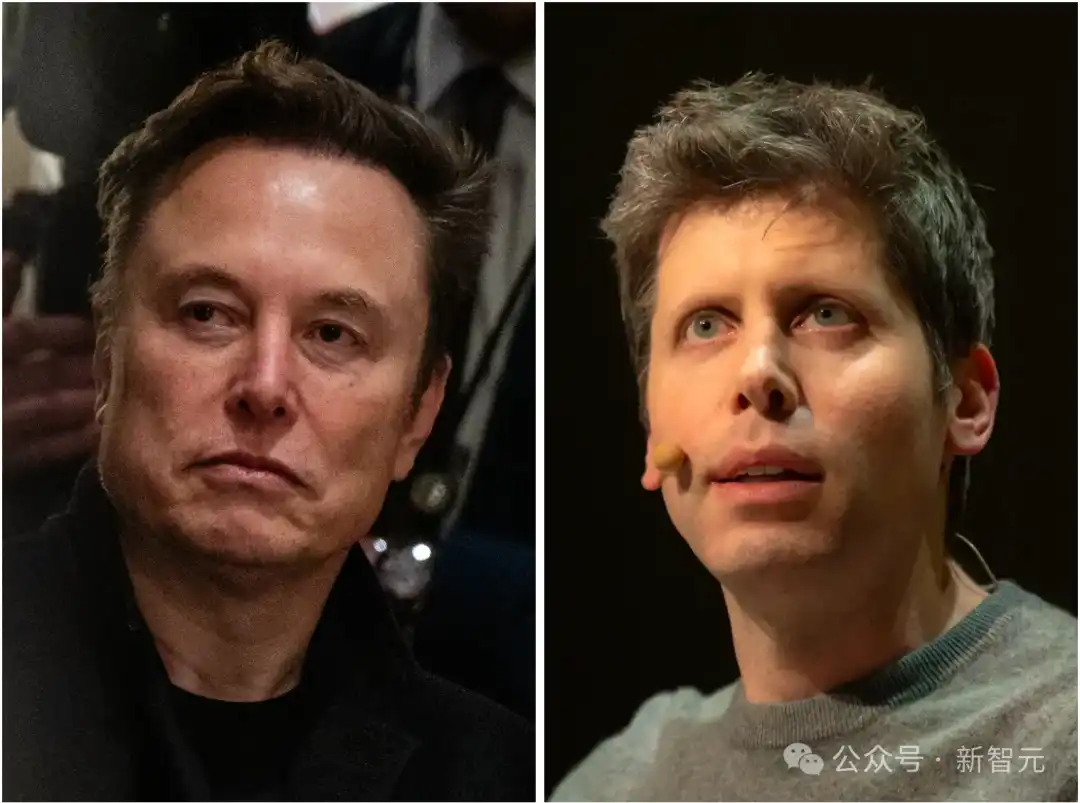
This might be the most absurd courtroom scene of 2026.
Before this, it was a high-profile tug-of-war——
Three weeks of trial, 11 days of testimony, dozens of top Silicon Valley figures taking turns on the stand, hundreds of pages of private emails, text messages, and diaries turned inside out.
However, just as everyone held their breath, the jury swiftly and decisively rejected it all.
Judge Yvonne Gonzalez Rogers stated in court that she fully agreed with the jury's conclusion.
The verdict sparked an uproar online. Countless netizens expressed confusion: Was the entire three-week spectacular trial just a farce?
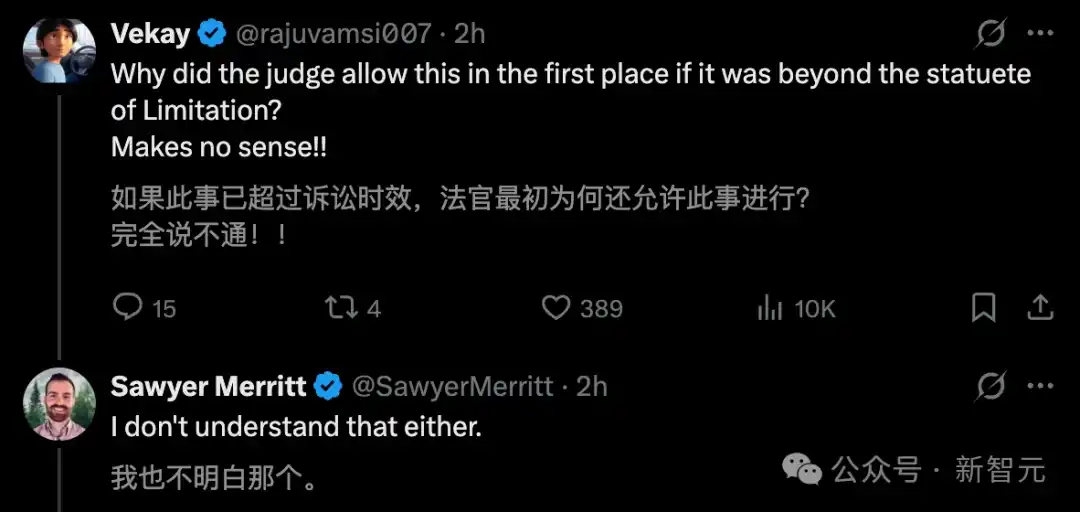
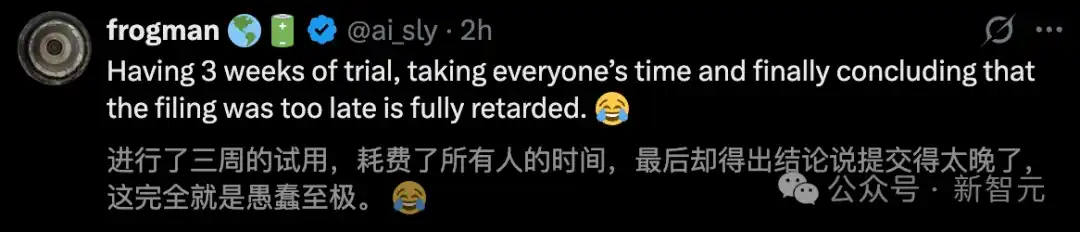
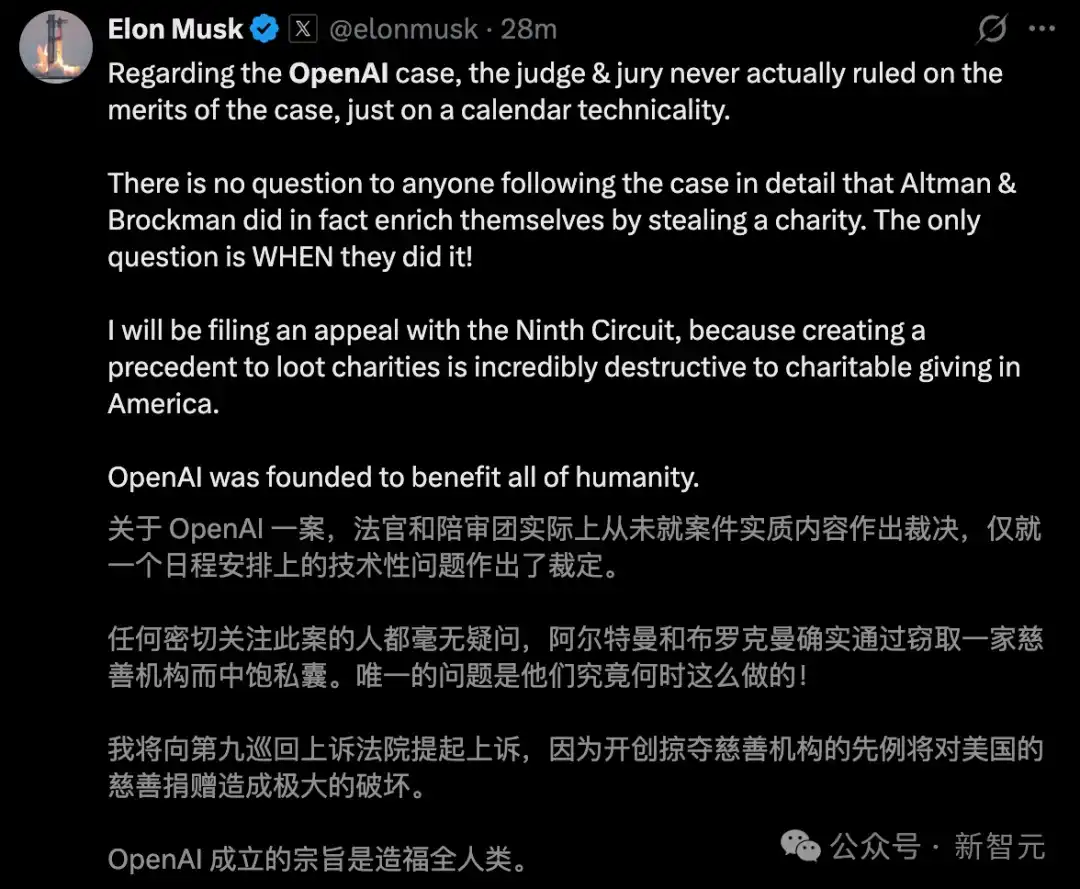
In response, an indignant Musk posted again——
Altman and Greg Brockman's actions amount to stealing a charity for personal enrichment.
Next step: continue appealing.
OpenAI Century Lawsuit, All Three Men Absent
Monday morning at 8:30 AM, the jury began closed-door deliberations.
At 10:23 AM Pacific Time, court clerk Edwin Cuenco handed the judge a note.
The judge announced: "We have a result."
From deliberation to verdict: 90 minutes.
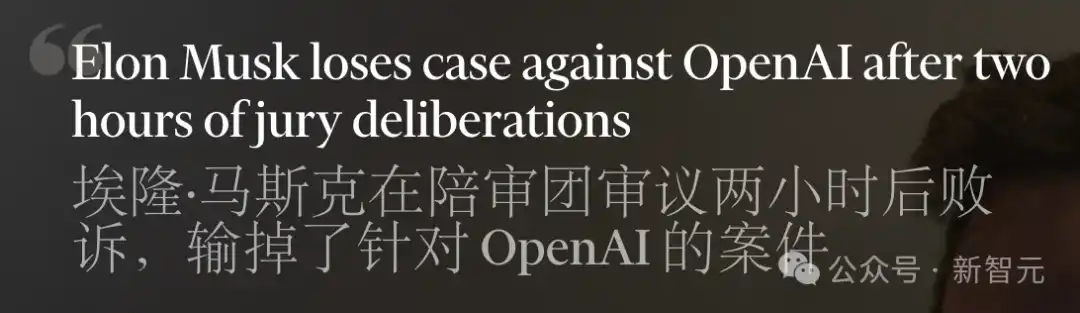
This speed was absurdly fast. Musk alone spent three days on the witness stand.
Brockman testified for five hours.
The massive accumulation of evidence and testimony from three weeks of trial was essentially glanced over by the jury, who made their decision primarily based on the timeline.
Even more surreal, at the moment of the verdict, the three protagonists of this century battle—Musk, Altman, and Brockman—were not present in the courtroom.
A $150 billion lawsuit verdict, plaintiff and defendant collectively absent.
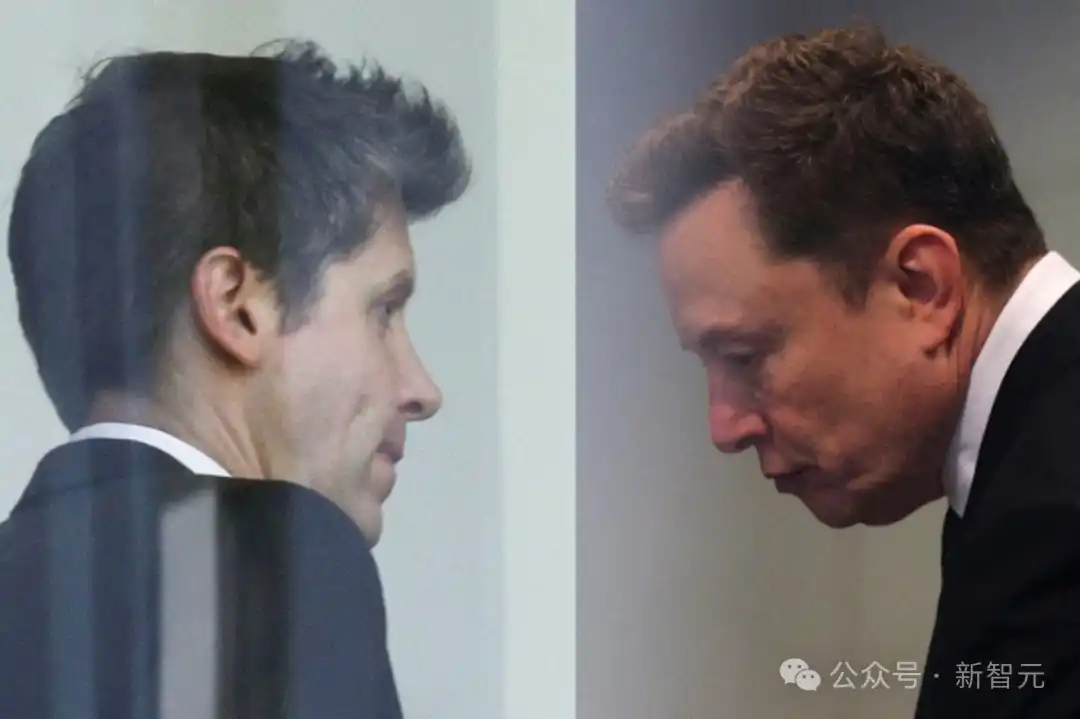
Both sides' legal teams, however, provided ample emotion.
During a brief court recess after the verdict, lawyers for OpenAI and Microsoft hugged and patted each other on the back in the courtroom corridor in celebration.
Musk's lead lawyer, Marc Toberoff, walked out of the courtroom doors and, faced with swarming reporters, uttered only two words.
"Appeal."
Musk, Defeated by Time
The jury's verdict logic was actually very simple.
California law stipulates that the statute of limitations for lawsuits alleging breach of charitable trust is "three years," and for unjust enrichment, two years.
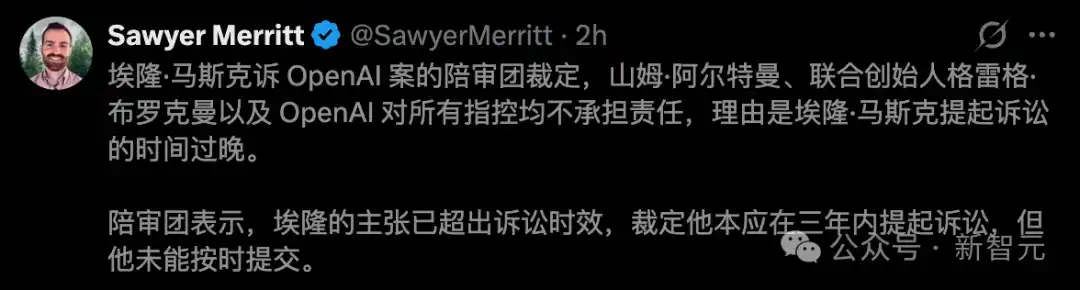
And OpenAI's lawyers proved a crucial fact. Musk knew about OpenAI's shift towards for-profit as early as 2021.
He himself sent a text to Altman, reading "I am troubled to see OpenAI having a $20 billion valuation" "It's a wolf in sheep's clothing."
That was around late 2022 to early 2023. But Musk didn't file the lawsuit until February 2024.
The jury determined that the time limit had expired, the lawsuit was too late.
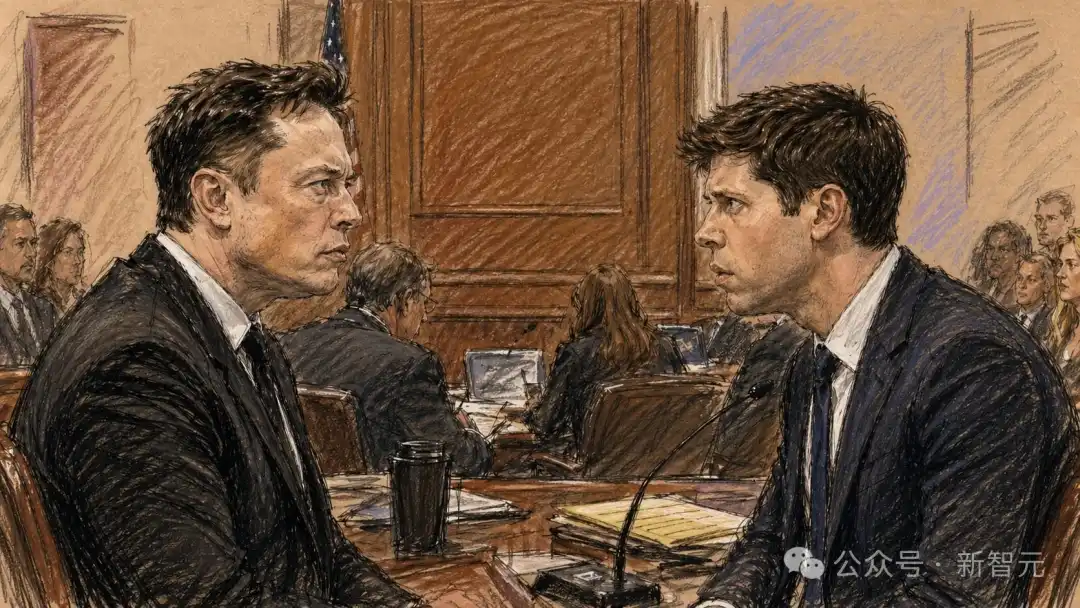
Musk's explanation in court was that he kept believing Altman's assurances until Microsoft's $10 billion investment landed in 2023, and he realized "the for-profit entity was the tail wagging the dog."
"Suspecting someone might steal your car and someone actually stealing your car are not the same thing," Musk said on the witness stand.
"If I had known they had stolen the charity, I would have sued long ago."
But the jury wasn't buying it.
Due to this procedural hurdle of the statute of limitations, the jury never entered substantive deliberations.
Meaning, Musk's three core charges—"breach of charitable trust," "unjust enrichment," and "Microsoft's aiding and abetting"—were never formally discussed.
All those explosive testimonies, staggering figures, dramatic fallouts—in legal terms, they might as well have not happened.
That Night of the Mansion Party, OpenAI Turned Towards For-Profit
Although the jury didn't adjudicate the substantive charges, the three-week trial laid bare OpenAI's most secretive inner workings over the past 11 years.
Some details even the old Silicon Valley gossipers hadn't heard.
In the summer of 2017, OpenAI's AI defeated the world's top players in Dota 2.
Musk immediately sent an email: "Time to take the next step. This is the trigger event."
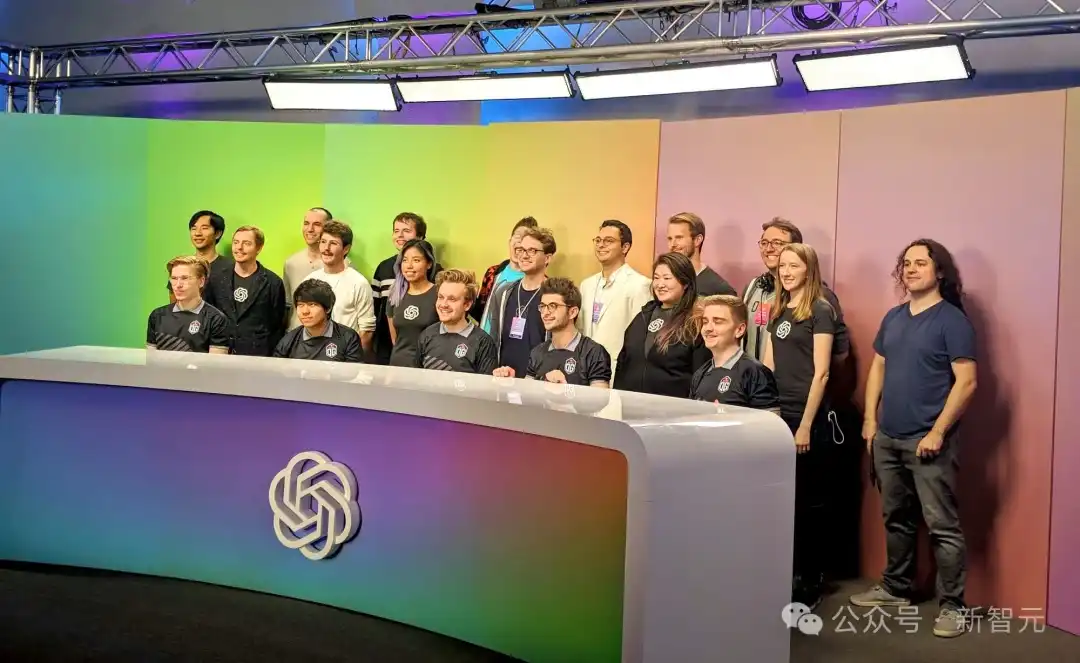
He called the core team to his 16,000-square-foot mansion in South Bay, known in the circle as the "Haunted House."
Brockman recalled in his testimony that upon entering, he saw confetti scraps and plastic cups from the previous night's party scattered across the floor.
In this living room amidst the party aftermath, the discussion to move OpenAI towards a for-profit model officially began.
Musk's lawyer, Steven Molo, projected Brockman's electronic diary onto the courtroom screen during the trial. One entry written during negotiations that same year read: "What gets me to $1 billion?"
Another from November 2017: "Turning into a B Corp without him (Musk) is morally bankrupt."
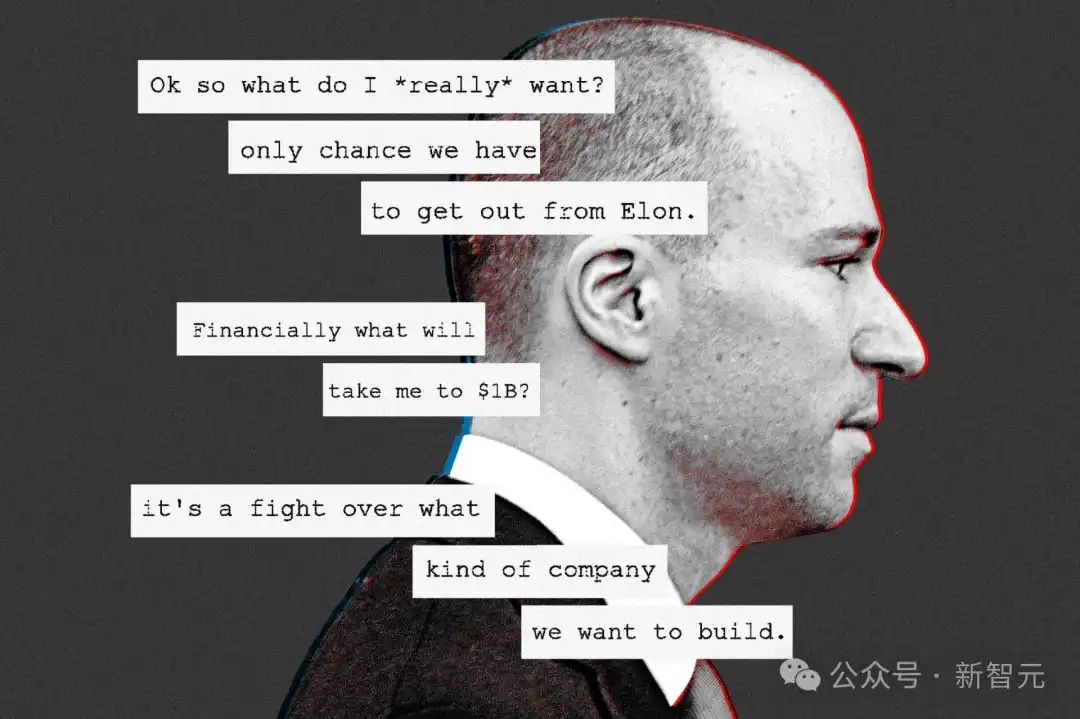
Nine years later, he sits on $30 billion in equity while under cross-examination.
Court evidence also unveiled other hidden plotlines——
Musk and Zuckerberg exchanged texts discussing a joint acquisition of OpenAI;
OpenAI even seriously considered using cryptocurrency for funding in its early days. The financing path from crypto to Microsoft's $13 billion is itself an epitome of an era.
This trial could be a documentary, but the jury turned the page in 90 minutes.
The Trillion-Dollar IPO Is About to Begin, There's No Pause Button in the Finals
After the trial concluded, OpenAI lawyer Savitt told reporters——
OpenAI is an organization driven by a non-profit mission, has been in the past, and will continue to be in the future.
Microsoft also swiftly issued a statement: "The facts and timeline of this case have been clear for some time, and we welcome the jury's dismissal of these claims on timeliness grounds."
Although OpenAI's win was not a graceful one.
The revelations during the three-week trial——
Brockman cashing out $30 billion at zero cost, Altman lying about safety approvals, Cerebras related-party transactions, Ilya's 52 pages of evidence, Murati's "chaos and distrust" allegations—this content won't vanish from public memory just because the "statute of limitations expired."
When Altman was asked on the witness stand, "Are you completely trustworthy?" he couldn't even give a straightforward "yes."
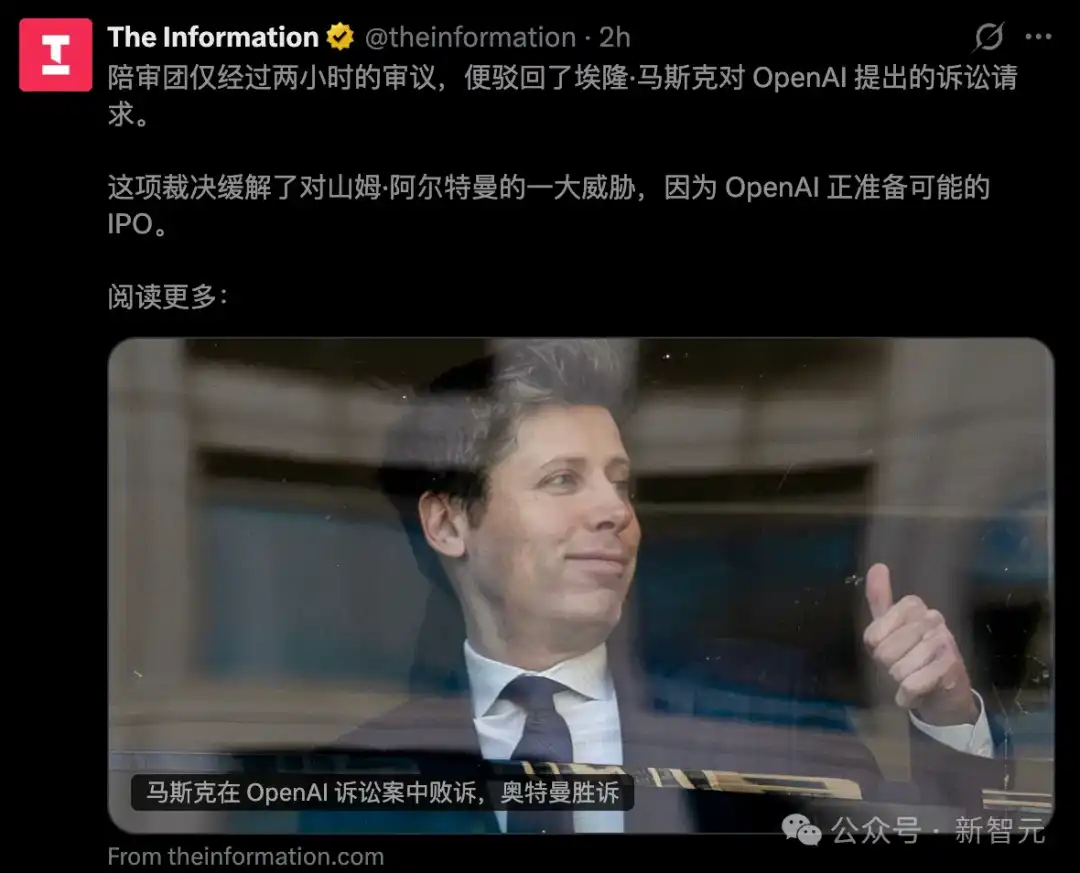
But the biggest impact of this verdict is clearing the biggest legal obstacle on OpenAI's path to an IPO.
ASI Ultimate Showdown, Imminent
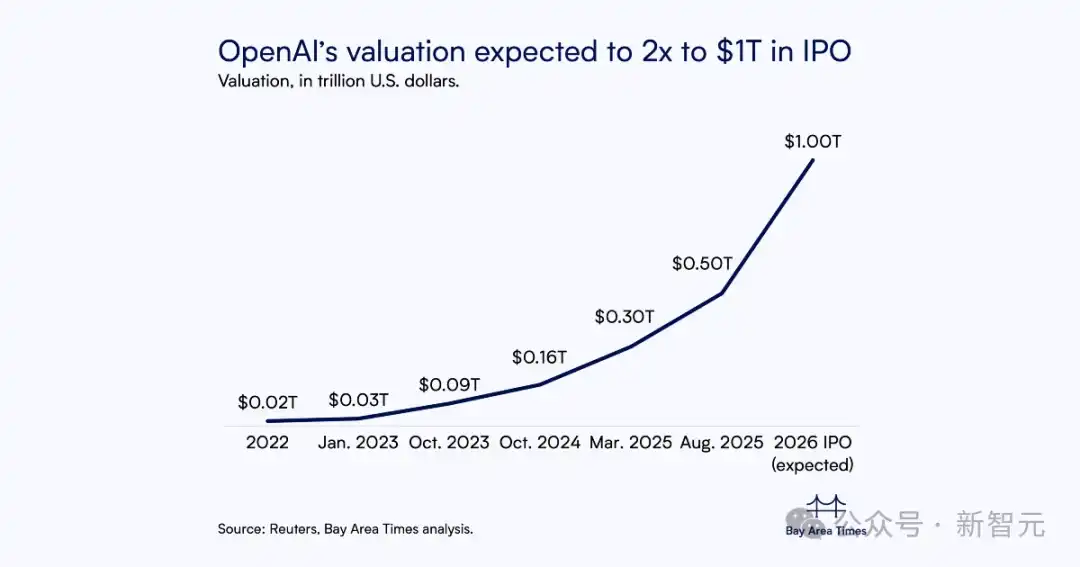
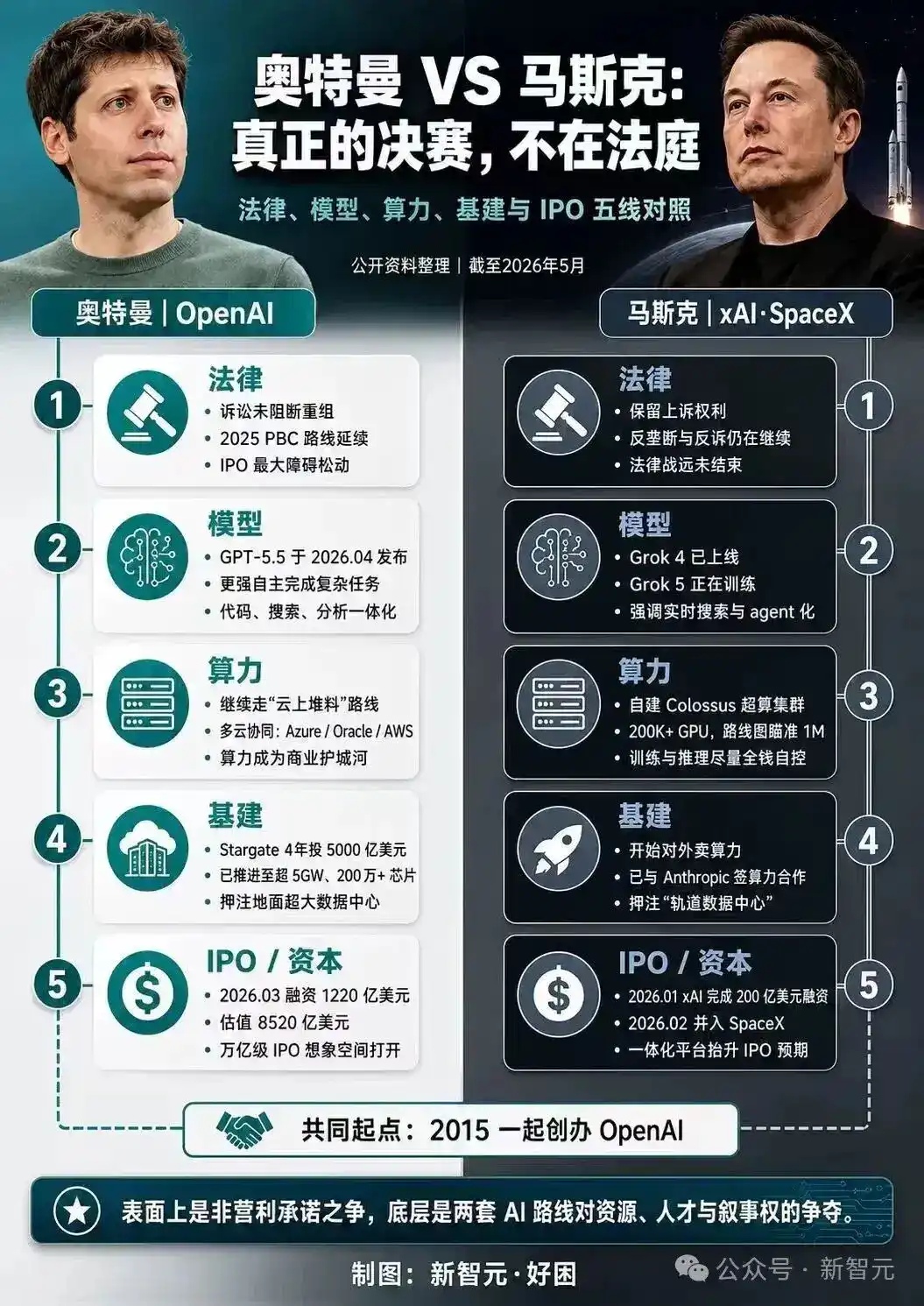
This March, OpenAI just completed a $122 billion funding round, valuing it at $852 billion.
The 2025 for-profit restructuring hasn't been overturned, Microsoft's over $100 billion partnership hasn't been revoked, Altman and Brockman haven't been ousted from management. The road to a trillion-dollar IPO is now clear.
Supporting this astronomical valuation is OpenAI's true trump card:
GPT-5.5, released in April, which focuses on independently completing complex tasks without humans feeding step-by-step instructions, from writing code to data analysis in one go.
In terms of compute power, Altman is betting on the traditional path: throwing money at cloud computing.
The scale of compute procurement has ballooned to the level of $600 billion, spanning five cloud providers including Microsoft Azure, Oracle, and AWS.
On Musk's side, SpaceX secretly filed for an IPO in April; after merging with xAI, the valuation has reached $1.25 trillion, with the prospectus expected to be public as soon as this week.
In terms of models, they are taking a more radical path: 7 large models training simultaneously, burning roughly $1 billion per month.
From the full series of Grok 4.4 to Grok 5, among which Grok 5 is several times the parameter scale of GPT-5.5, all running on Colossus 2.
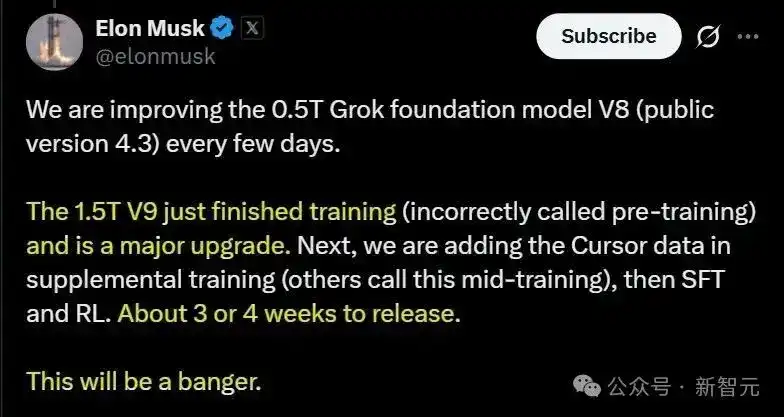
But one detail is even more intriguing: In early May this year, Colossus 2 signed a compute power contract with Anthropic, beginning to sell compute externally.
This means Musk isn't just building models; he's becoming an AI era arms dealer——
Training his own models with one hand, selling compute power to competitors with the other. This kind of playbook has almost no precedent in tech history.
Now, the two men who once co-founded OpenAI together are each sprinting towards their own trillion-dollar IPOs.
But the lawsuit isn't truly over.
Musk's lawyers have explicitly reserved the right to appeal, although the judge's attitude makes a turnaround seem slim.
More importantly, this is just one of multiple fronts——
xAI's antitrust lawsuits against OpenAI and Apple, xAI's trade secret misappropriation lawsuit against OpenAI, OpenAI's countersuit against Musk, are all still ongoing.
The legacy of this trial lies not in the verdict itself.
It was the first time the core governance issues of the AI industry were brought into a federal courtroom for the whole world to see.
On the road to ASI, issues of trust and safety won't disappear with a single verdict.
As for Musk, the next episode's "appeal" storyline isn't finished.
References:
https://www.bloomberg.com/news/articles/2026-05-18/elon-musk-loses-case-against-sam-altman-to-force-openai-overhaul
https://www.cnbc.com/2026/05/18/musk-altman-openai-trial-verdict.html
https://www.reuters.com/legal/government/elon-musk-loses-lawsuit-against-openai-2026-05-18/
https://www.wired.com/story/musk-v-altman-jury-verdict/
https://nypost.com/2026/05/18/business/elon-musk-loses-lawsuit-against-openai-in-unanimous-verdict/