On-Chain Whales' New Battleground: Hyperliquid Confronts Wall Street and Compliance Challenges

比推Publicado a 2026-03-17Actualizado a 2026-03-17

Resumen

Hyperliquid, a leading decentralized exchange (Perp DEX) for perpetual futures, is rapidly expanding beyond crypto into traditional finance, particularly through its HIP-3 market for real-world assets (RWAs) like commodities and indices. With a monthly trading volume of $173.4 billion and over 172.9 million users, it has become a hub for institutional and large-scale traders, with the top 100 addresses accounting for over 81% of total trading activity. Recent geopolitical events, such as the U.S.-Iran conflict, have highlighted Hyperliquid’s role in providing 24/7 price discovery for assets like WTI crude oil, attracting attention from mainstream financial media like Bloomberg. This positions Hyperliquid as a emerging competitor to traditional markets like CME. However, its growth brings regulatory challenges. As U.S. regulators, including the CFTC, move toward approving crypto perpetual futures, Hyperliquid faces pressure to comply with financial regulations while preserving its permissionless, non-custodial nature. To address this, it has established a policy center in Washington, D.C., led by Jake Chervinsky, to engage with regulators and shape a legal framework for DeFi. The platform’s future depends on balancing innovation with compliance as it seeks to become a sustainable part of the global financial infrastructure.

Author: Nancy, PANews

Original Title: Hyperliquid "Invades" Wall Street: A Playground for On-Chain Whales, Facing Compliance Pressure


The narrative of on-chain finance is rapidly expanding into global markets.

Within less than a week, multiple mainstream media outlets have turned their attention to Hyperliquid. This Perp DEX, which previously focused on crypto derivatives, is experiencing a "breakout moment," with decentralized pricing power becoming a focal point of discussion on Wall Street. However, as the volume of on-chain transactions continues to grow, the balance between decentralized innovation and compliance regulation is becoming an unavoidable challenge.

HIP-3 Invades Mainstream Finance, Hyperliquid is a Whale Playground

As a leading Perp DEX, Hyperliquid is continuously widening the gap with its competitors and gradually becoming an emerging infrastructure force in mainstream financial markets.

According to DeFiLlama data, as of March 16, Hyperliquid's monthly trading volume reached $173.42 billion, far surpassing similar platforms.

RWA (Real World Asset) trading is a significant growth driver for Hyperliquid recently. Platform data shows that in the past 24 hours alone, its perpetual futures trading volume reached $5.4 billion, with the HIP-3 sector contributing approximately 21.3% (about $1.15 billion).
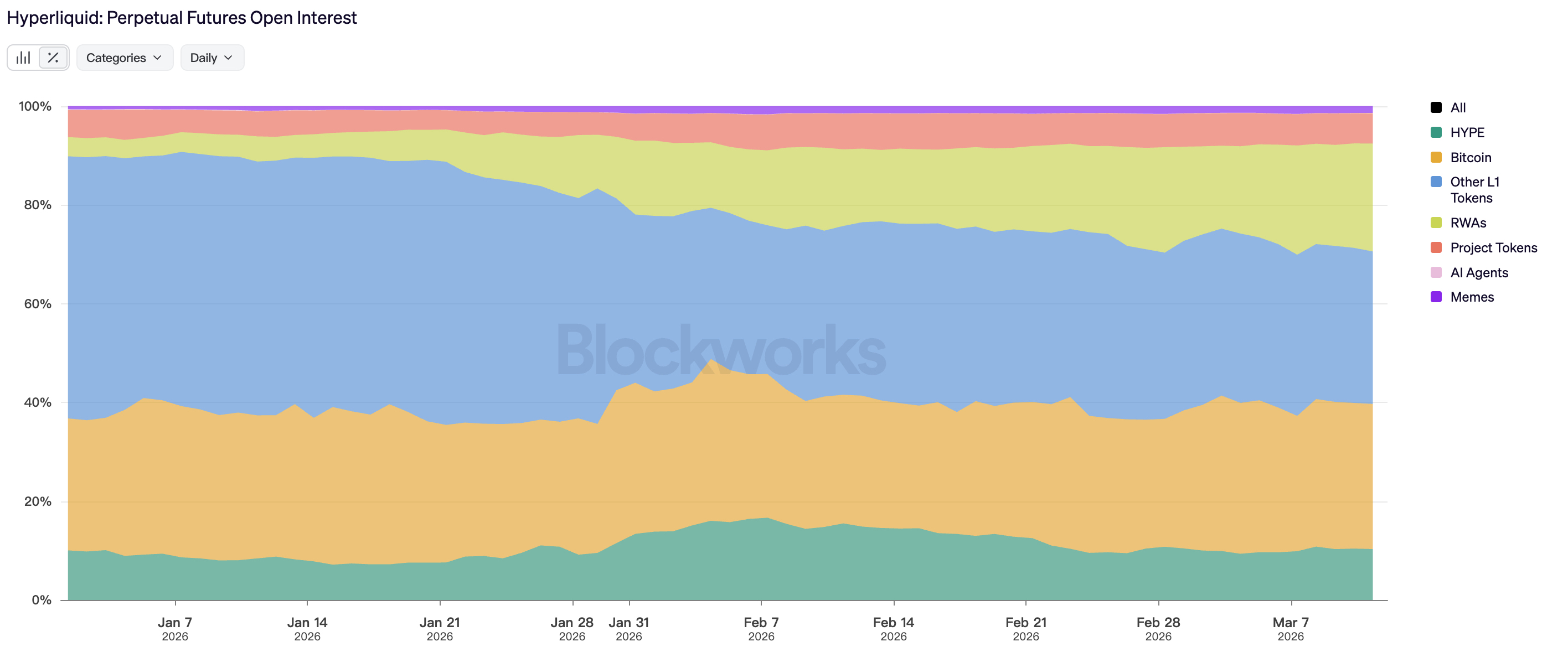
HIP-3 deploys perpetual futures markets for various assets such as commodities and stock indices. Among these traditional assets on HIP-3, WTI crude oil, silver, Brent crude oil, and XYZ100 currently show the most significant demand and activity, with WTI crude oil's daily trading volume accounting for over 35% of the total.

Behind the rapid expansion of trading scale is the influx of a large number of whale players into Hyperliquid, whose global user base has exceeded 1.729 million. Further analysis by Hyperliquid Hub, an ecosystem data analysis service, points out that Hyperliquid's total trading volume has reached a staggering $411 trillion, with the top 100 addresses contributing over $334 trillion, accounting for 81.3% of all trading volume. The top 200 addresses account for almost 98.81%, leaving only about 1.19% of the trading volume for the remaining addresses.
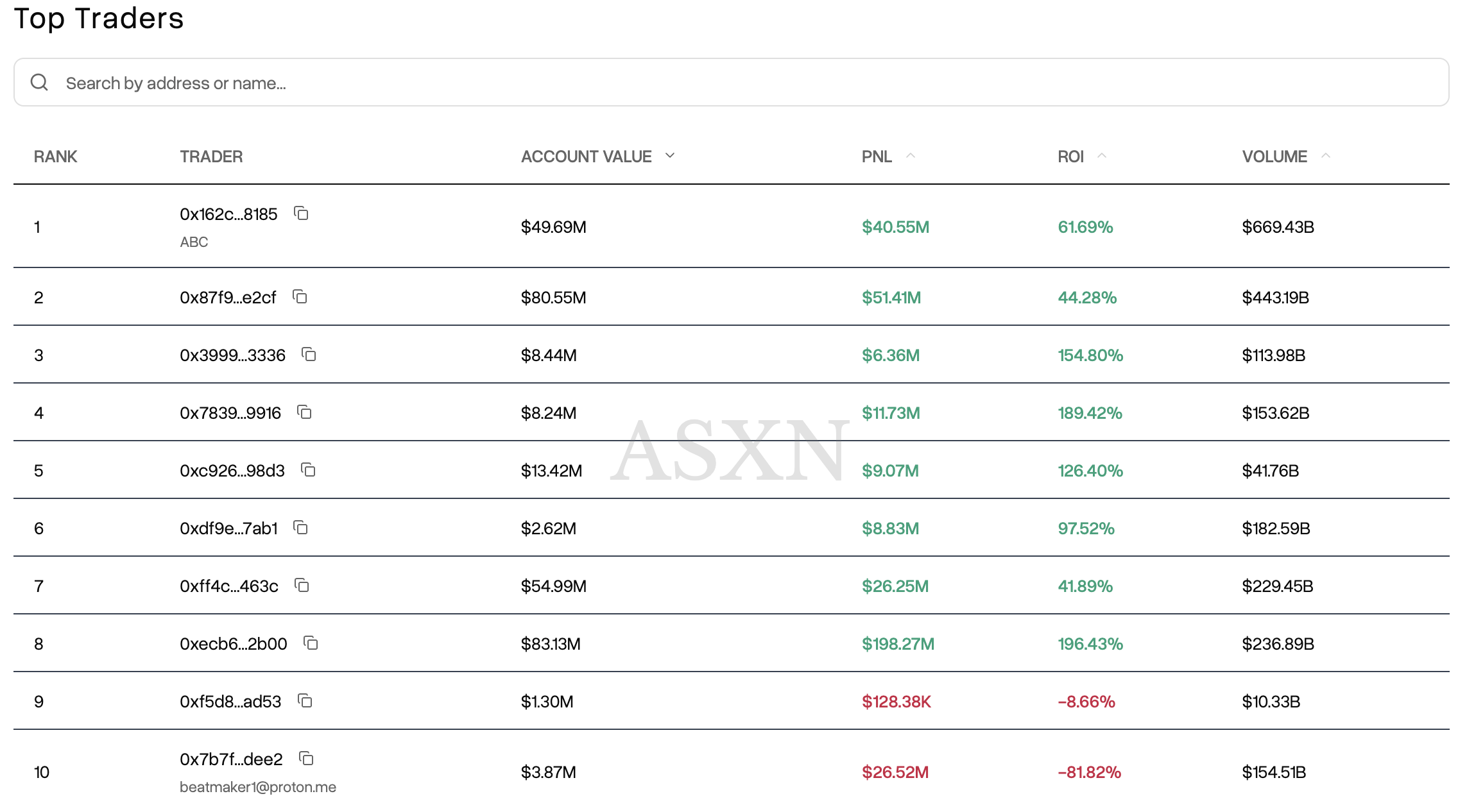
Clearly, Hyperliquid is not a playground for retail investors but is dominated by a small number of well-funded, highly active traders, such as institutions, whales, high-frequency traders, and professional market makers.

Looking further, the number of unique traders on HIP-3 has accumulated to over 1.85 million (Note: the same wallet connecting on different days is counted as two separate wallets), with over 810,000 new traders added in the past month alone, further confirming the demand for tokenized asset trading.
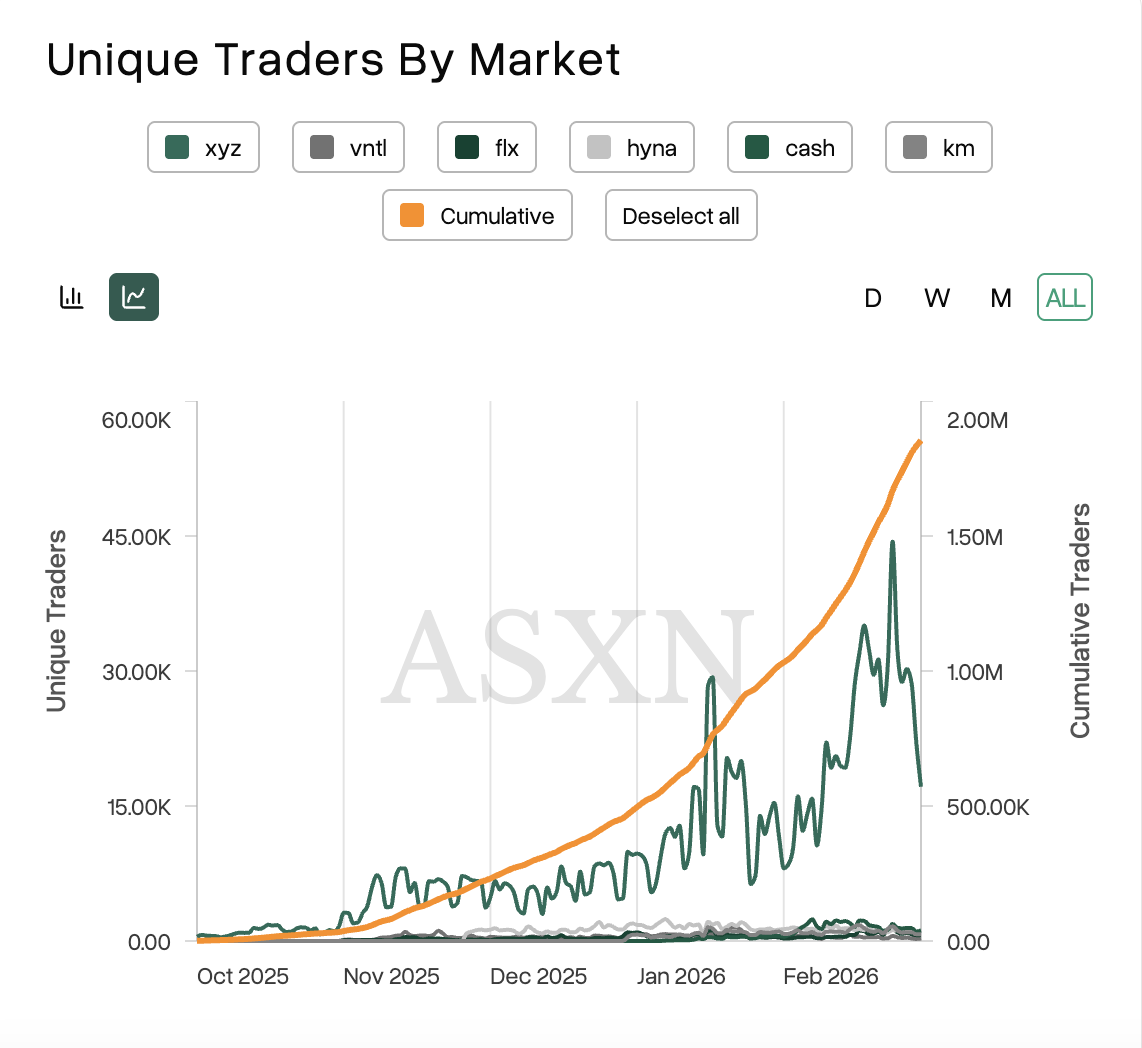
The recent significant growth in HIP-3 business is directly linked to the US-Iran conflict event, making Hyperliquid a new hub for global macro trading. Mainstream media outlets like Bloomberg, Wall Street News, and Fortune, in recent reports, directly referenced Hyperliquid's crude oil contracts as a price reference and pointed out that before the CME (Chicago Mercantile Exchange) opened on Monday, Hyperliquid had already completed price discovery over the weekend, becoming a real-time window for global macro assets.

It is by seizing TradFi pricing power, liquidity vacuums, and macro hedging demand that Hyperliquid has begun to truly "invade" mainstream financial markets.

Matt Hougan, Chief Investment Officer of Bitwise, also stated that the US-Iran event has put the non-stop crypto market in the spotlight. In the past, if a major geopolitical shock occurred on a Sunday morning, investors typically had to wait for the US futures market to open on Sunday at 6 PM (Eastern Time) to understand its impact. Now, they can directly turn to 24/7 on-chain trading platforms to execute trades in real-time. The shift of the financial industry to on-chain is an irreversible trend, like a ball rolling down a hill, unstoppable and far faster than imagined. However, there are still barriers to participating in on-chain markets, including familiarity with wallets, stablecoins, and platforms like Hyperliquid and Uniswap. (Related reading: Beyond Wall Street Time, Traditional Asset Pricing Power Shifts On-Chain)

Faced with this rapidly developing trend of on-chain finance, traditional financial players like Nasdaq and CME have also begun to lay out tokenized trading businesses to seize future market opportunities for themselves.

Crypto Perpetual Futures May Land in the US Next Month, Hyperliquid Faces Compliance Challenges Head-On

Since last year, the Perp DEX market has witnessed a significant explosion in liquidity.

A recent CoinGecko report pointed out that DEX perpetual futures surged to $6.7 trillion in 2025, an increase of about 346% compared to the previous year, while CEX open interest fell by 20.8% during the same period. Behind this trend is the rise of perpetual DEXs like Hyperliquid and Lighter, also reflecting the large-scale migration of funds from CEXs to DEXs.
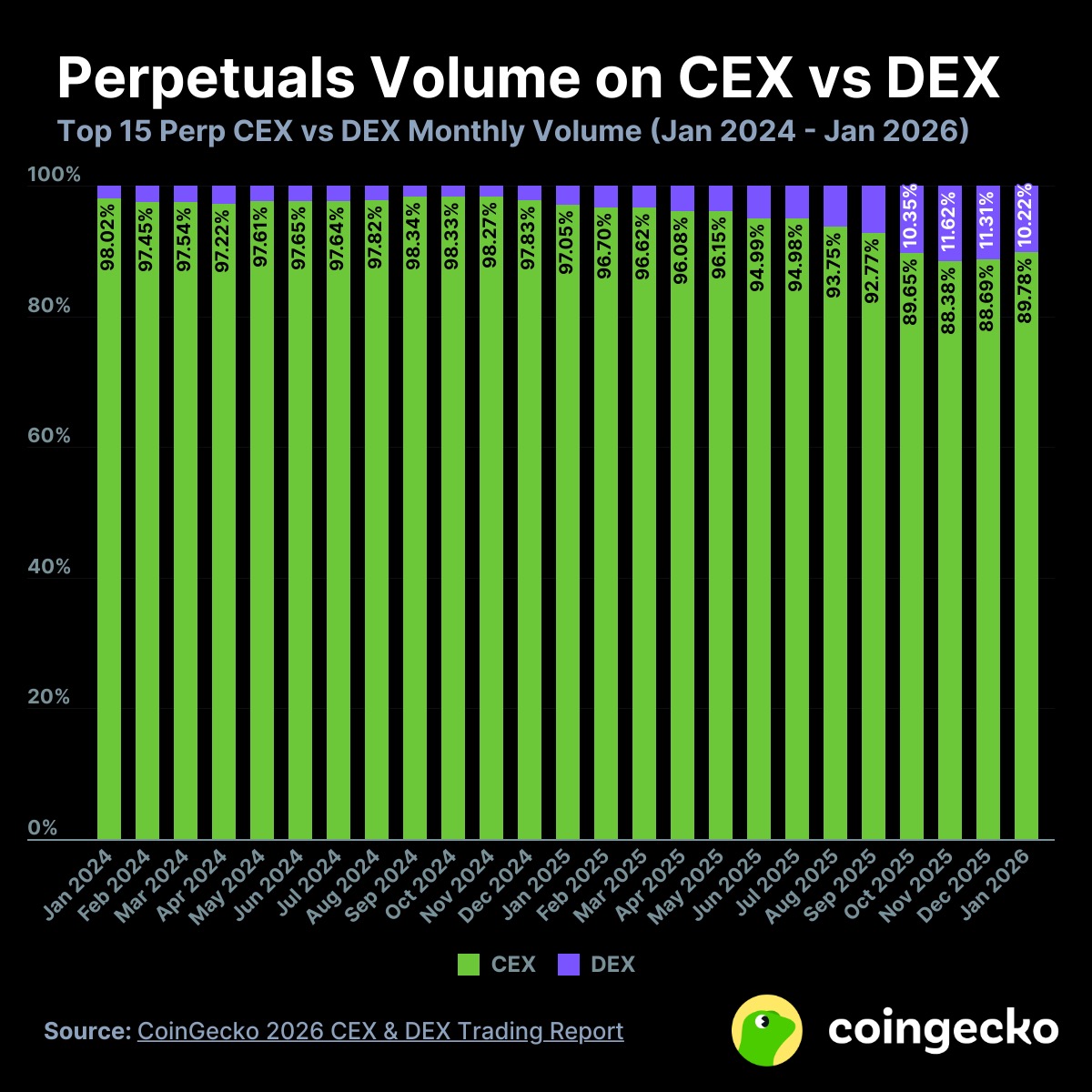
The gradual clarification of the regulatory environment is further amplifying the development space of the perpetual futures market, making more mainstream capital willing to enter this field. Recently, Mike Selig, Chairman of the U.S. Commodity Futures Trading Commission (CFTC), also discussed the regulatory progress of crypto perpetual futures and prediction markets in a public speech. He stated that the CFTC is working to launch true perpetual futures in the US and expects to announce relevant policies in about a month to attract liquidity back to the US while providing investors with more comprehensive protection. Selig also pointed out that in the past, due to regulatory uncertainty, a large amount of liquidity flowed overseas, and the CFTC is cooperating with US SEC Chairman Paul Atkins to advance Project Crypto to coordinate and promote digital asset regulatory reform.

However, regulatory clarity could also lead to another outcome. Once the permissionless, intermediary-free on-chain trading path is broken due to compliance requirements, the core appeal of Perp DEXs may be significantly diminished, and they will directly face competition from compliant crypto platforms and traditional financial institutions.

In fact, for many users, besides factors such as incentive mechanisms, self-custody needs, capital efficiency, and hedging demand, the lack of KYC is also an important reason attracting funds to on-chain trading.

For example, on-chain analyst Eye previously posted that some institutional trading parties active on Hyperliquid showed obvious discomfort after their on-chain trading wallets were identified, even actively contacting the analyst to pressure them to stop disclosing information, often related to the possibility of losing trades being known to the outside world.

If Hyperliquid hopes to be seen as a legitimate participant in the new financial system, it may have to accept and comply with corresponding regulatory rules. Especially in the context of previous controversial cases involving token manipulation and insider trading on the platform, its compliance pressure may further increase.

To address regulatory challenges, Hyperliquid formally established the Hyperliquid Policy Center in Washington, D.C., in February, with veteran crypto lawyer Jake Chervinsky as its first CEO. The center aims to create a legal path for the widespread adoption of DeFi in the US, help Congress and federal agencies understand the underlying technology of DeFi, and provide professional support for regulatory rule-making.

Chervinsky stated that the current regulatory framework was formed in the "analog era" and struggles to encompass new trading forms like decentralized protocols. One of the policy center's primary tasks is to develop a legal framework for perpetual contracts. To support its operation, the affiliated Hyperliquid Foundation has donated 1 million platform native tokens HYPE (currently worth approximately $28 million).

Hyperliquid co-founder Jeff Yan emphasized in a recent interview that he wants the platform to "be used forever," not to fade away quickly with market hype. He also stressed distinguishing Hyperliquid Labs from the Hyperliquid platform and ecosystem, and is committed to building Hyperliquid into a financially neutral platform, providing sustainable infrastructure for the development of on-chain perpetual contracts and decentralized finance.

When DeFi attempts to challenge traditional finance, compliance has become a prerequisite for opening up larger markets. This is not only a test for Hyperliquid but also a reality that other DEXs and even the entire DeFi track must face head-on.


Twitter:https://twitter.com/BitpushNewsCN

Bitpush TG Discussion Group:https://t.me/BitPushCommunity

Bitpush TG Subscription: https://t.me/bitpush

Original link:https://www.bitpush.news/articles/7620373

Preguntas relacionadas

QWhat is Hyperliquid and what role is it playing in the global financial markets according to the article?

AHyperliquid is a decentralized exchange (Perp DEX) that started with crypto derivatives but has expanded to include real-world assets (RWA) like commodities and indices. It is becoming a new infrastructure force in mainstream finance, acting as a global macro trading hub and challenging traditional financial pricing power, especially during events like the US-Iran conflict when it provided real-time price discovery before traditional markets opened.

QHow significant is the trading volume and user concentration on Hyperliquid, and what does it indicate about its user base?

AHyperliquid's monthly trading volume reached $1734.2 billion as of March 16. The platform is dominated by a small number of large players; the top 100 addresses contributed over 81.3% of the total $4.34 trillion in historical trading volume, and the top 200 addresses accounted for nearly 98.81%. This indicates that the platform is primarily used by institutions, whales, high-frequency traders, and professional market makers, not retail散户 investors.

QWhat is HIP-3 on Hyperliquid and which assets are most actively traded within it?

AHIP-3 is a sector on Hyperliquid that deploys perpetual futures markets for various traditional assets like commodities and stock indices. The most active and in-demand assets are WTI crude oil, silver, Brent crude oil, and XYZ100. WTI crude oil alone accounted for over 35% of the daily trading volume in this sector.

QWhat regulatory challenges does Hyperliquid face as it grows, and how is it addressing them?

AHyperliquid faces compliance challenges as decentralized finance (DeFi) innovation clashes with regulatory frameworks. The need for KYC and adherence to rules could diminish its permissionless appeal. To address this, Hyperliquid established the Hyperliquid Policy Center in Washington D.C., led by lawyer Jake Chervinsky, to help create a legal path for DeFi adoption in the U.S. and donated $28 million worth of HYPE tokens to support its operation.

QAccording to the CFTC Chairman, what is the expected timeline for crypto perpetual futures to be officially launched in the U.S., and why is this significant?

ACFTC Chairman Mike Selig stated that he expects policies for 'true crypto perpetual futures' to be unveiled in the U.S. within about a month. This is significant because clearer regulations are expected to attract liquidity back to the U.S. and provide better investor protection, potentially increasing mainstream capital inflow into the perpetual合约 market.

Lecturas Relacionadas

Behind ZEC's Over 30% Plunge: An 'Unlimited Minting' Vulnerability with No Way to Prove if It Was Ever Exploited

A critical vulnerability was discovered in Zcash's Orchard privacy pool, allowing for the theoretical creation of undetectable counterfeit ZEC. Researcher Taylor Hornby found the flaw on May 29th, 2024, within the Orchard circuit's cryptographic constraints, which could let an attacker bypass asset conservation rules. Although a rapid emergency fix was deployed within days via a coordinated soft and hard fork, a core uncertainty remains: due to Orchard's privacy features, it is impossible to cryptographically prove whether this "unlimited mint" flaw was exploited in the nearly four years since the pool's 2022 launch. This uncertainty, rather than the patched flaw itself, triggered a market panic, causing ZEC's price to drop over 30%. While the Zcash Foundation stated no evidence of exploitation was found, independent entity Shielded Labs emphasized the impossibility of definitively proving no counterfeit ZEC was ever created. The incident highlights the unique trust challenge in privacy systems. To address this, developers are proposing a new network upgrade with enhanced auditing to allow verifiable proof of supply integrity. Notably, the researcher utilized the newly released AI model Claude Opus 4.8 as a tool during the security review, signaling the growing role of advanced AI in uncovering complex cryptographic vulnerabilities.

marsbitHace 2 min(s)

Behind ZEC's Over 30% Plunge: An 'Unlimited Minting' Vulnerability with No Way to Prove if It Was Ever Exploited

marsbitHace 2 min(s)

imToken's 10th Anniversary Unveils Strategic Direction for the Next Decade: Evolving from a Trusted Main Wallet to a Personal Digital Hub

On its tenth anniversary, decentralized wallet imToken announced its strategic vision for the next decade: evolving from a "trusted main wallet" into a "personal control interface." This new direction aims to help users manage not only digital assets but also identity, permissions, and AI agent actions in an increasingly open and intelligent internet. imToken outlined that while the past decade focused on Store, Send, and Stake—securing assets, enabling transfers, and facilitating network participation—the future introduces a fourth core proposition: Sign. This expanded concept goes beyond transaction signing to encompass expressing intent, granting permissions, setting rules, delegating actions, and revoking authorizations. As AI agents gain autonomy, imToken emphasizes the need for clear, verifiable, and revocable user control over their actions. CEO Ben He stated that imToken's mission is shifting from enabling ownership of digital assets to ensuring user sovereignty over their entire digital world in the AI era. The company's core principle has been upgraded from "Digital Assets, Under Your Control" to "Your Digital World, Under Your Control." Future development will focus on three areas: upholding self-custody principles, extending security from transactions to authorizations and automated actions, and building product capabilities for managing permissions, delegations, policies, and revocations. imToken views the wallet's role as expanding into a trusted control interface for human-AI collaboration, where managing keys, signatures, and permissions forms the infrastructure for personal digital sovereignty. Founded in 2016, imToken serves millions of users across 150+ countries, providing non-custodial wallet services supporting over 50 blockchain networks.

marsbitHace 3 min(s)

imToken's 10th Anniversary Unveils Strategic Direction for the Next Decade: Evolving from a Trusted Main Wallet to a Personal Digital Hub

marsbitHace 3 min(s)

With 300 Million Financing to Accumulate ETH, the Hidden Concerns Behind BitMine's High-Yield Preferred Shares

BitMine, led by Thomas Lee, plans to raise up to $300 million through an initial public offering of 3 million shares of perpetual Series A preferred stock on the NYSE (ticker: BMNP). The stock offers a fixed 9.5% annual dividend. The funds are intended to further the company's accumulation of Ethereum, expand its staking node operations, and for general corporate purposes. This move comes as BitMine faces significant challenges. Its massive Ethereum holdings, over 5.3 million ETH (roughly 4.5% of circulating supply), are currently at an unrealized loss exceeding $8.5 billion due to the crypto market downturn. The company's core business model relies on staking these ETH holdings to generate yield, which it presents as the primary means to cover the new, substantial annual dividend obligation of approximately $28.5 million if the offering is fully subscribed. While the model is similar to MicroStrategy's bitcoin-focused strategy of using capital markets to fund crypto acquisitions, BitMine's product differs with its fixed, non-adjustable dividend rate. The company acknowledges risks, stating dividend payments could also come from cash reserves, asset sales, or future financing, and warns that staking yields may underperform or be illiquid during market stress. The 9.5% fixed rate reflects the higher risk premium demanded from investors for a company heavily exposed to Ethereum's volatility.

Foresight NewsHace 6 min(s)

With 300 Million Financing to Accumulate ETH, the Hidden Concerns Behind BitMine's High-Yield Preferred Shares

Foresight NewsHace 6 min(s)

A Year of Observing Agent Payments: The Cold Reality Behind the Hot Narrative

A Year in Agent Payments: The Cold Reality Behind a Hot Narrative This article examines the current state of "Agent payments," a year after it became a major trend at the intersection of AI, payments, and crypto. Despite significant investments from major players like Stripe, Visa, and Google, the author—having built products and spoken with merchants and developers—finds genuine, large-scale demand still lacking. Key findings across several hyped scenarios reveal structural challenges: * **Agent-to-Merchant Commerce:** For most product categories (e.g., clothing, electronics), AI shopping via chat is inferior to traditional visual e-commerce. Merchant interest is largely defensive, focused on future-proofing rather than current consumer demand. True potential exists only in specific, high-frequency/low-decision scenarios (like food orders) or for simplifying broken checkout experiences, but these require massive consumer distribution, favoring incumbents. * **Agent-to-API/Machine Commerce:** While stablecoin micropayments are touted for API calls, developers already solve small-value payments via prepaid credits and subscriptions. Large SaaS providers prefer enterprise contracts over fragmented micro-pricing. The market exists for long-tail services outside the top providers but is inherently smaller than the hype suggests. * **Agent-to-Agent Payments:** This remains a theoretical long-term vision with negligible real transaction volume. The core challenges—discovery, trust, negotiation, dispute resolution—are unsolved. While the potential for a new, high-speed settlement layer is real, it is not the current market. * **Agent Finance:** This is the sole area with existing, paying customers (fund managers, DeFi users). AI enhances real-time monitoring and autonomous rebalancing, offering real capability gains. However, competition favors established, regulated institutions with existing licenses and client relationships. The author concludes that the core deficiency in the Agent economy is not merely a payment layer, but a more complex **coordination** capability—figuring out how Agents and humans work together, verify task completion, and settle outcomes. Payment is just one component of settlement, which is itself part of coordination. For large companies, investing now is a defensive, long-term bet with minimal cost. For startups, however, the imperative is to find markets that exist today, not wait for a future wave that remains on the horizon.

marsbitHace 8 min(s)

A Year of Observing Agent Payments: The Cold Reality Behind the Hot Narrative

marsbitHace 8 min(s)

China's First Embodied Data Compliance Outbound: How Does Paxini Become a Game-Changer for Industry Development?

"Embodied Intelligence Data Compliance Goes Global: A Breakthrough Moment. At the 2026 World Intelligent Industry Expo, Paxini, the sole Chinese company authorized for cross-border embodied data transfer, launched a pioneering project in Tianjin. This marks the first officially approved case of its kind in China, resolving a major industry bottleneck for compliant international data flow. As the ultimate direction of AI evolution, embodied intelligence relies on vast, multi-modal physical world interaction data. Despite booming global demand, stringent compliance had previously trapped the domestic industry. Paxini's breakthrough establishes a formal compliance framework, setting a benchmark for standardized development. The core of Paxini's success lies in its industry-leading data infrastructure and compliant security architecture, aligning with national data strategy. It operates a large-scale 'data collection factory' for high-quality, multi-modal data and has established a full-chain compliant pathway from 'collection-processing-certification-outbound transfer'. This dual advantage in data scale/quality and compliance secures its leadership. Beyond immediate commercial impact, the project signifies long-term strategic value: international market validation from top-tier financial institutions and the compounding benefits of ecosystem building. High-quality physical world data possesses enduring value. By solving fundamental infrastructure and compliance challenges, Paxini not only contributes a 'Chinese model' to the global embodied intelligence industry but also solidifies a key competitive moat for the long haul. This enables safe, efficient global flow of China's quality embodied data, amplifying its influence in the intelligent manufacturing landscape."

marsbitHace 10 min(s)

China's First Embodied Data Compliance Outbound: How Does Paxini Become a Game-Changer for Industry Development?

marsbitHace 10 min(s)

Trading

Spot
Futuros
活动图片





