On-Chain Lending Bull Market Logic: The Inflection Point Has Arrived, How to Position?

比推Publicado a 2026-01-26Actualizado a 2026-01-26

Resumen

On-chain Lending Bull Market Logic: Inflection Point Arrived, How to Position? The on-chain lending market is at a cyclical inflection point (Stage 4), characterized by low capital and low interest rates. Key drivers for the next growth phase include necessary product upgrades to attract institutional capital, unlocking new demand, and capital returning as rates stabilize above risk-free rates. The sector's valuation multiples are compressing towards Fintech levels (currently 21x-42x P/S vs. 8.4x for public Fintech lenders), presenting a potential entry opportunity for 2026. Critical developments include: - **Superior Collateral**: Modular protocols (e.g., Kamino, Aave, Morpho) enabling higher-risk lending and tokenization of traditional assets (e.g., securities lending, HELOCs). - **Protocol Improvements**: New loan types (term loans, whitelisted addresses, tri-party agreements) improving capital efficiency and compressing spreads. - **Yield Generation**: Tokenized yield products (e.g., 8-15% returns from credit funds) becoming crucial for yield funds as basis trade returns compress. The thesis suggests sustainable lending demand growth can occur even if crypto prices decline, with fundamental catalysts providing a stronger foundation for the next cycle.

Source: X

Author: Noah

Compiled and Edited by: BitpushNews


Core Summary

  • Product Upgrades: On-chain lending will undergo necessary product improvements to better cater to the needs of scaled capital.

  • Demand Release: As functionalities are released, the current low lending rates will induce strong borrowing demand.

  • Capital Inflow: Lending rates will begin to stabilize above the risk-free rate, thereby driving capital inflows.

  • Valuation Return: The sector's valuation multiples are compressing towards Fintech levels, providing a potential entry opportunity for investment next year.

The Cyclical Pattern of On-Chain Lending

Historically, on-chain lending has followed a cyclical behavior with four phases:

  1. Low capital in the system, low interest rates.

  2. Rising interest rates, capital flows into the system.

  3. Due to excess capital, interest rates begin to fall.

  4. Due to excessively low rates, capital leaves the system.

Lending protocol token prices tend to follow a similar pattern: prices rise as interest rates increase and capital flows in, and fall as interest rates decrease and capital flows out.
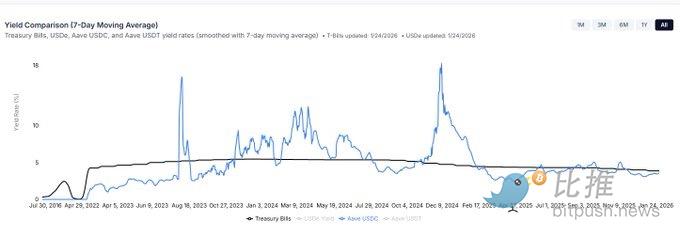
We are currently in the fourth phase. In the past, lending markets could rely on the positive Beta of the crypto market to induce leverage demand, thereby pushing up interest rates; or use token subsidies to stimulate higher yields. Token subsidies worked in highly "reflexive" markets (high price = more subsidies = more platform capital = higher price), but there may no longer be an excess capital base willing to participate in this behavior. I believe most lending protocols are no longer willing to tie their fate to the crypto market's Beta, and subsidies are difficult to scale without increasing costs.

The current issue causing stablecoin lending rates to be below the Secured Overnight Financing Rate (SOFR) is: 1. Insufficient borrowing demand; 2. Capital inefficiencies caused by protocols (such as cash drag from the peer-to-pool model, lack of rehypothecation mechanisms, etc.). Furthermore, on-chain lending rates are significantly lower than most alternative capital sources, a state that is clearly not a long-term equilibrium.

How to Stimulate Lending Demand?

The key to inducing lending demand is to offer a lower price than the alternatives. The current problem is that lending protocols cannot yet provide the collateral asset classes and loan structures that borrowers are accustomed to.

1. Higher Quality Collateral Assets

The security of "monolithic" lending protocols depends on their worst-quality asset, so they tend to be overly conservative when introducing new assets. Currently, almost all protocols are shifting to a modular architecture to allow for higher-risk lending.

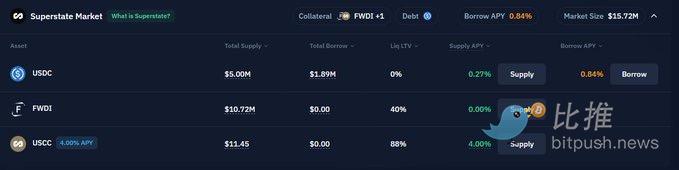
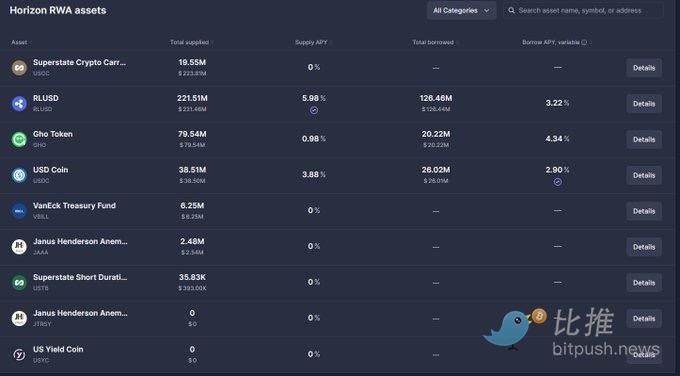
Many traditional collateral assets are currently difficult to obtain on-chain. Securities lending is a multi-trillion dollar market, with settlement rates typically at $SOFR + 75-250$ basis points. Although still in its early stages, we are seeing the beginnings of securities lending, such as Kamino's Superstate market, Aave's Horizon market, and Morpho's curated markets.
2. Protocol Design Improvements

Historically, lending protocols primarily offered floating-rate margin loans for highly liquid crypto assets using a "peer-to-pool" model. This only suits a narrow group of borrowers and imposes a substantial cash drag on lenders due to utilization-based interest rate models.

Kamino, Aave, and Morpho are all releasing upgrades this year to significantly expand loan types. As protocols add features like term loans, address whitelisting, tri-party agreements with compliant custodians, and direct matching, lenders will see spread compression (more of what the borrower pays flows to the lender), and borrowers will gain more flexible loan options.

This will induce borrowing demand, push up interest rates, and subsequently attract capital supply, moving us into "Phase Two" of the lending cycle.

Creating High-Yield Opportunities

High-yield opportunities are crucial for the survival of crypto yield funds. While the market might survive without them, it's better not to take that risk. Historically, on-chain yield funds needed 12-15% returns to justify their existence and raise capital.

Due to the tokenization of basis trades and the increased capital efficiency of CME basis trades, basis yields have been compressed for the foreseeable future. Achieving lending demand above 10% would require an (unpredictable) crypto bull market.
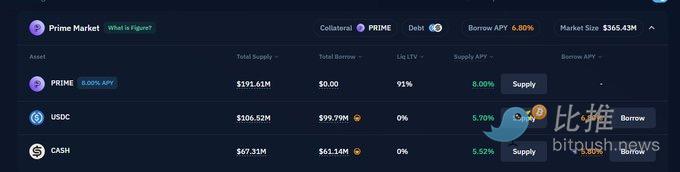
This means funds will be forced to seek opportunities with slightly higher risk but good risk-adjusted returns. The most likely opportunities lie in the entry of tokenized yield products. For example, Figure has already launched tokenized Home Equity Line of Credit (HELOC) with an 8% yield, and yield funds can use revolving leverage on Kamino to achieve returns exceeding their target rate.

2026 may see more equivalents of credit funds being tokenized, offering 8-15% yields. A word of caution: revolving leverage carries risks that are difficult to quantify, and the legal structures of tokenized credit products must be sound.

Conclusion

I believe there is a plausible logic: even if token prices continue to fall, on-chain lending demand can still grow sustainably. While I refrain from commenting on the Beta valuation of the crypto market, if the above logic holds, protocol valuations will become very reasonable at some point in 2026.
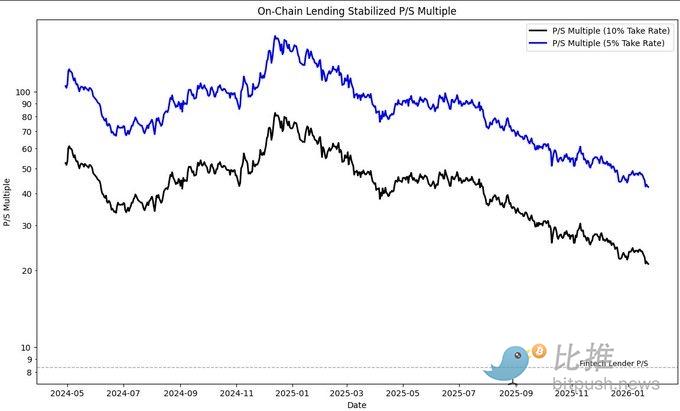
Data Calculation:

Assuming on-chain lending companies extract 5-10% of interest as revenue, with an average interest rate of 6.5%. The current Price/Sales (P/S) multiple for the sector is 21x to 42x, while listed Fintech lending companies are around 8.4x.

While the nuances between the two are not worth debating, you must be optimistic about on-chain lending over the next two years for the current valuation multiples to seem reasonable. Even so, these multiples are compressing rapidly due to falling token prices and growth in Key Performance Indicators (KPIs).
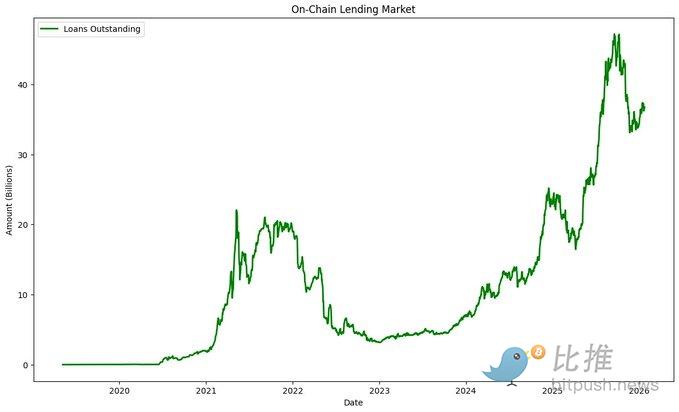
I believe 2026 will be an opportunity to "swing big" in this sector. Although short-term growth may be slow due to falling crypto asset prices, the upcoming fundamental catalysts could provide another inflection point for on-chain lending activity, with greater sustainability.


Original link:https://www.bitpush.news/articles/7606139

Preguntas relacionadas

QWhat are the four cyclical stages of on-chain lending described in the article?

A1. Low system capital and low interest rates. 2. Rising interest rates and capital inflow into the system. 3. Interest rates begin to fall due to excess capital. 4. Capital leaves the system due to excessively low interest rates.

QWhat are the two main reasons identified for the current problem of stablecoin lending rates being below the Secured Overnight Financing Rate (SOFR)?

A1. Insufficient borrowing demand. 2. Capital inefficiencies caused by protocol design (e.g., cash drag from the peer-to-pool model, lack of re-collateralization mechanisms).

QAccording to the article, what are the two key areas of improvement needed to stimulate borrowing demand in on-chain lending?

A1. Access to higher-quality collateral assets (e.g., traditional securities). 2. Improvements in protocol design to offer more flexible loan types like term loans, whitelisted addresses, and tri-party agreements.

QWhy are high-yield opportunities crucial for crypto yield funds, and what is a potential source for these opportunities mentioned in the article?

ACrypto yield funds historically needed 12-15% returns to justify their existence and raise capital. A potential source for these opportunities is tokenized yield products, such as tokenized home equity loans (HELOCs) or other tokenized credit fund equivalents offering 8-15% yields.

QHow does the article's valuation analysis compare the Price-to-Sales (P/S) multiples of on-chain lending protocols to traditional Fintech lending companies?

AThe article states that the current P/S multiple for the on-chain lending sector is 21x to 42x, while the multiple for listed Fintech lending companies is around 8.4x, indicating a compression towards Fintech levels.

Lecturas Relacionadas

Warsh Hearing Concludes: What Are the Notable Signals for the Crypto Industry?

The Senate Banking Committee held a confirmation hearing for Judy Shelton, a Federal Reserve nominee, who faced intense questioning regarding her ability to maintain the central bank's independence amid pressure from President Trump to lower interest rates. Shelton denied any pre-arranged commitments on rate cuts and emphasized her independence, though Democrats remained skeptical, citing contradictions with Trump's public statements. Shelton characterized post-pandemic inflation as a major policy failure and called for a "regime change" in the Fed’s approach, including reforms to inflation measurement and communication strategies. She criticized the current practice of Fed officials frequently signaling future rate moves and did not commit to maintaining post-meeting press conferences, suggesting potential reductions in transparency. Regarding crypto markets, Shelton’s extensive investments in digital asset companies—including Solana, DeFi, and blockchain infrastructure—were noted, though she has pledged to divest these holdings due to ethics rules. Her familiarity with the crypto industry and deregulatory leanings may signal a more open, though cautious, stance toward digital assets. However, concerns were raised about potential conflicts of interest, especially given Trump family involvement in crypto-financial ventures. The timing of her confirmation remains uncertain, pending a Justice Department investigation into current Chair Powell. Shelton’s potential leadership could lead to a more hawkish, productivity-focused Fed with tighter policy communication—factors that may significantly influence liquidity conditions and macro narratives for crypto markets.

marsbitHace 7 hora(s)

Warsh Hearing Concludes: What Are the Notable Signals for the Crypto Industry?

marsbitHace 7 hora(s)

Trading

Spot
Futuros

Artículos destacados

Cómo comprar CORE

¡Bienvenido a HTX.com! Hemos hecho que comprar CORE (CORE) sea simple y conveniente. Sigue nuestra guía paso a paso para iniciar tu viaje de criptos.Paso 1: crea tu cuenta HTXUtiliza tu correo electrónico o número de teléfono para registrarte y obtener una cuenta gratuita en HTX. Experimenta un proceso de registro sin complicaciones y desbloquea todas las funciones.Obtener mi cuentaPaso 2: ve a Comprar cripto y elige tu método de pagoTarjeta de crédito/débito: usa tu Visa o Mastercard para comprar CORE (CORE) al instante.Saldo: utiliza fondos del saldo de tu cuenta HTX para tradear sin problemas.Terceros: hemos agregado métodos de pago populares como Google Pay y Apple Pay para mejorar la comodidad.P2P: tradear directamente con otros usuarios en HTX.Over-the-Counter (OTC): ofrecemos servicios personalizados y tipos de cambio competitivos para los traders.Paso 3: guarda tu CORE (CORE)Después de comprar tu CORE (CORE), guárdalo en tu cuenta HTX. Alternativamente, puedes enviarlo a otro lugar mediante transferencia blockchain o utilizarlo para tradear otras criptomonedas.Paso 4: tradear CORE (CORE)Tradear fácilmente con CORE (CORE) en HTX's mercado spot. Simplemente accede a tu cuenta, selecciona tu par de trading, ejecuta tus trades y monitorea en tiempo real. Ofrecemos una experiencia fácil de usar tanto para principiantes como para traders experimentados.

185 Vistas totalesPublicado en 2024.12.13Actualizado en 2025.03.21

Cómo comprar CORE

Discusiones

Bienvenido a la comunidad de HTX. Aquí puedes mantenerte informado sobre los últimos desarrollos de la plataforma y acceder a análisis profesionales del mercado. A continuación se presentan las opiniones de los usuarios sobre el precio de CORE (CORE).

活动图片












