Oil Again Becomes the Main Subject on the Chain|TradeXYZ Weekend Watch

marsbitPublicado a 2026-06-22Actualizado a 2026-06-22

Resumen

Tensions surrounding the Iran-US ceasefire memorandum and the Strait of Hormuz drove volatile market movements over the weekend of June 19-22. Despite an initial announcement of a deal, friction escalated when Israel continued airstrikes in Lebanon, prompting Iran to threaten closing the strait. This pushed crude oil prices to a peak near $79. Subsequent aggressive rhetoric from Trump, including threats to potentially take control of the strait, added to volatility. However, by June 22, negotiations in Switzerland showed progress, with Iran indicating it would not block the strait for 60 days, causing oil prices to retreat nearly 6% from their highs. US stock indices traded flat to slightly lower, with minor declines in major tech and growth stocks. In commodities, gold and silver gained, supported by falling yields and a weaker dollar amid receding inflation fears rather than traditional safe-haven demand. Natural gas prices rose (+2.51%) following an explosion at a key Qatari LNG facility, though this was partially offset by signals that Qatari LNG shipments were preparing to resume. Overall, geopolitical developments in the Middle East remained the primary driver for oil and related asset prices.

Last weekend, Trump announced 'an agreement with Iran is complete' and the Strait of Hormuz would open. But peace is never delivered by a single post from Trump. This weekend, the implementation of the ceasefire Memorandum of Understanding (MOU) encountered its first significant friction—and oil prices, precious metals, and stock indices all moved back and forth in a complete cycle, pulled by this main narrative.

On June 19-20, Israel conducted sustained airstrikes against Lebanon. Iran once postponed talks with the US as a result, with the Revolutionary Guards declaring a 'high state of alert' and threatening to withdraw from negotiations if Israeli strikes continued.

On June 20, Trump, while stating that 'about 700 ships are transiting the Strait, and Iran must reach an agreement within 60 days,' described the ceasefire MOU in an interview as 'basically Iran's unconditional surrender,' and threatened 'further action' if no deal is reached within 60 days. Tehran was thoroughly angered. Later that day, Iran's Supreme Military Joint Headquarters once declared the Strait of Hormuz closed due to US-Israeli 'violations of the ceasefire MOU.' Although US Central Command refuted this, claiming 'Iran does not control the Strait,' 55 commercial vessels still passed through that day.

On June 21, technical-level quadrilateral (US, Iran, Qatar, Pakistan) consultations commenced in Bürgenstock, Switzerland, led personally by Vice President Vance, with Iranian Foreign Minister Araghchi sitting at the same table. During the initial 80-minute closed-door session, the Iranian delegation briefly left in protest over Trump's remarks but soon returned.

By June 22 (this morning), the atmosphere had noticeably warmed. Qatar and Pakistan issued a joint statement announcing three phased outcomes: the establishment of a high-level political oversight committee, the locking-in of a 60-day roadmap for a final agreement, and the activation of a mechanism for resolving the Lebanon conflict. The mediators described the negotiation atmosphere as 'extremely positive and constructive.' Pakistan also revealed that Iran would not obstruct ship passage through the Strait in the next 60 days, and passage would be free of charge. An Iranian Foreign Ministry spokesperson stated that 'the Swiss talks have made good progress.'

Crude Oil

Crude oil continued to oscillate with the news over the weekend but maintained an overall downtrend.

On June 19, citing US intelligence, The New York Times reported that 'Israel is likely to continue striking Lebanon,' pushing oil prices from $76.5 to around $78.
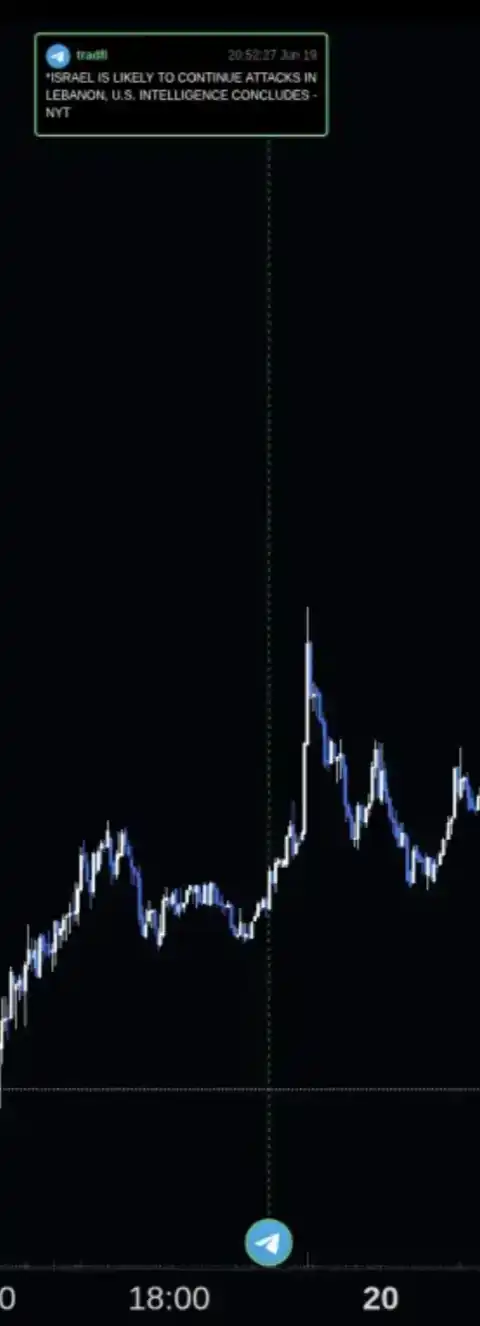
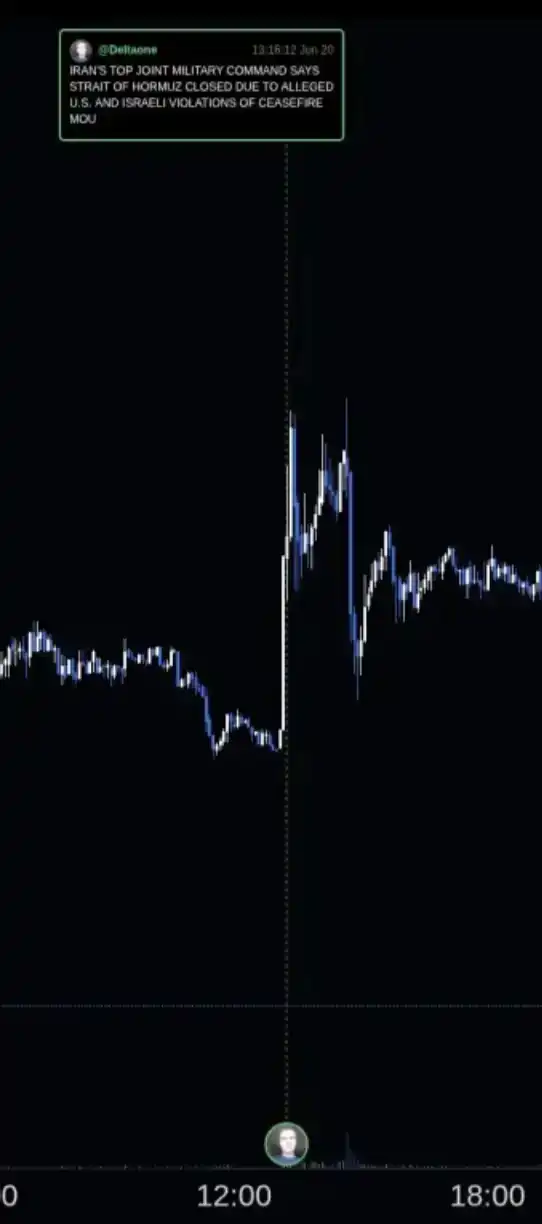
On the evening of June 20, when Iran's Supreme Military Headquarters declared the 'closure of the Strait,' oil prices surged instantly to a high of $79.
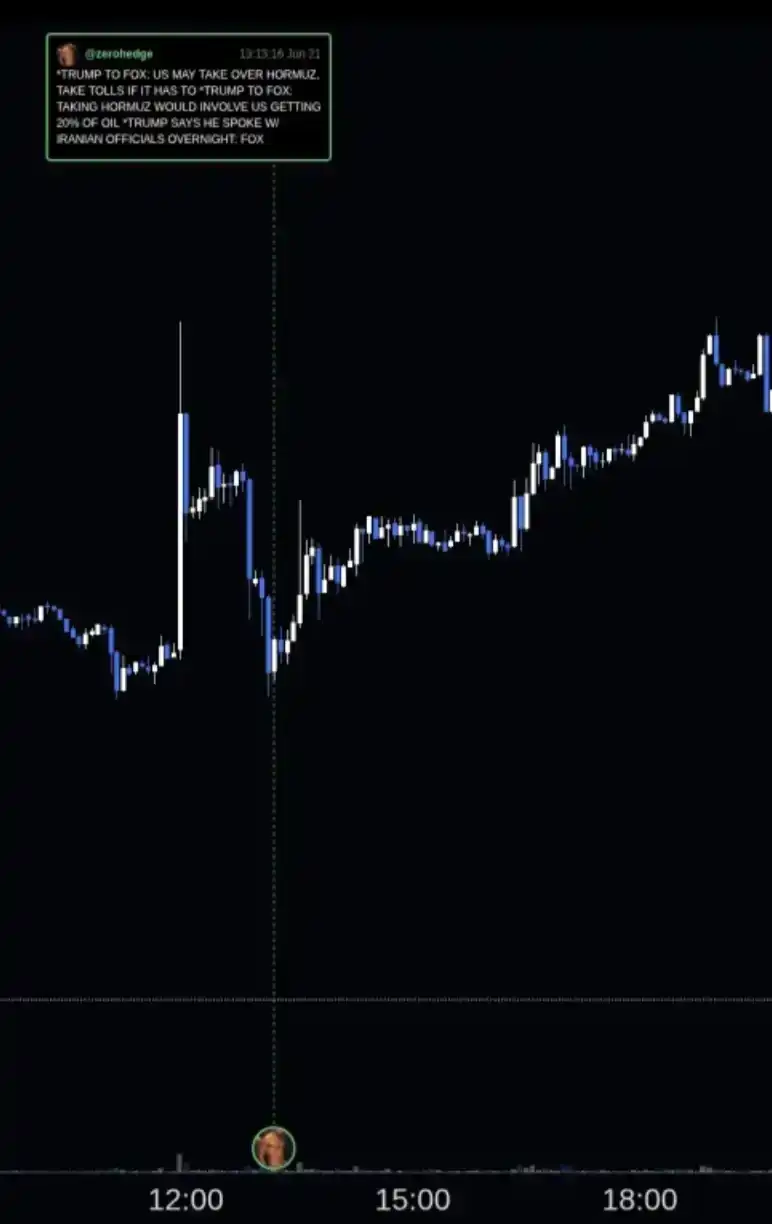
Subsequently, Trump made more aggressive remarks to Fox: 'The US may take over the Strait of Hormuz and charge tolls if necessary,' 'taking over the Strait means the US gets 20% of the oil,' and claimed to have had overnight calls with Iranian officials. Crude oil then rose slowly.
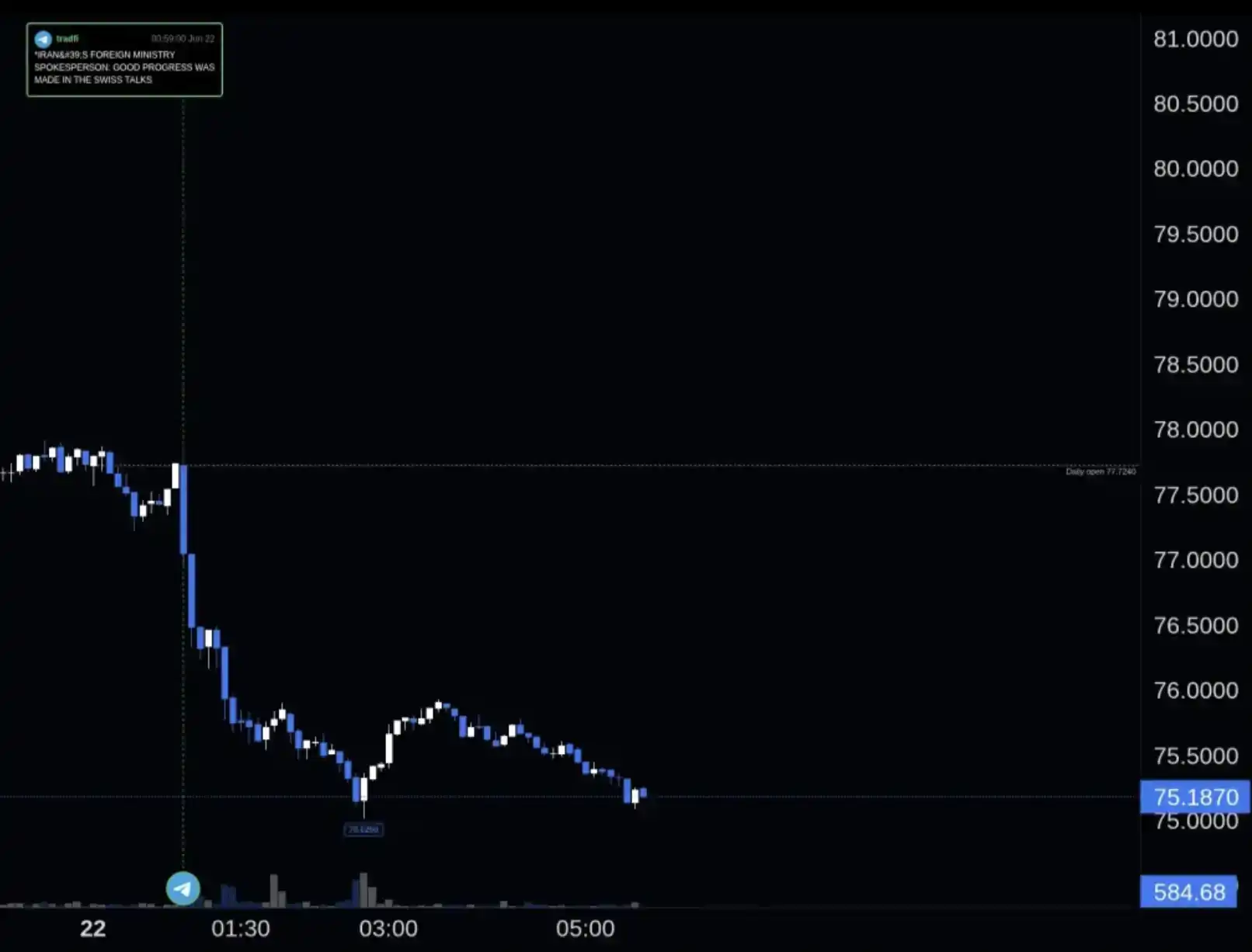
In the early hours of June 22, the Iranian Foreign Ministry's characterization that 'the Swiss talks have made good progress' led crude oil futures to retreat nearly 6% from the weekend's highs.
US Stocks

Compared to crude oil's sharp volatility, US stocks performed much more flatly this week.

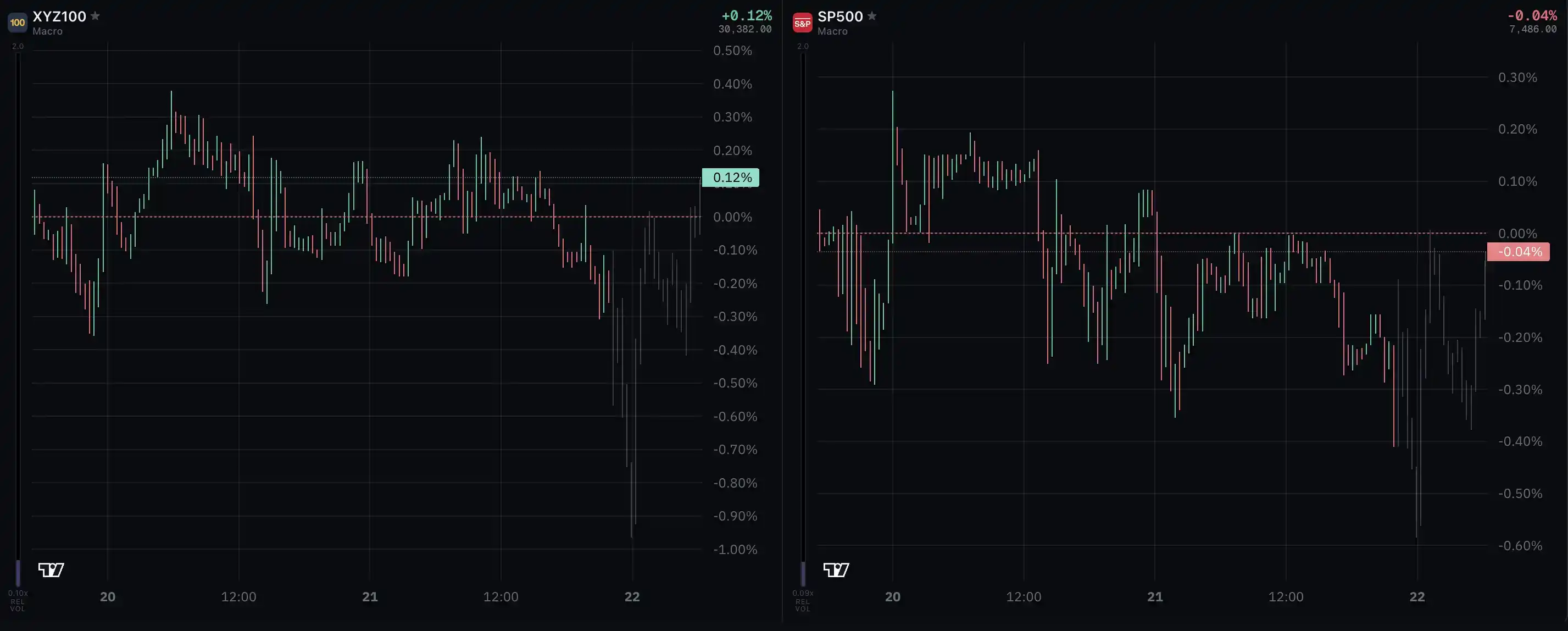
On the index front, XYZ100 and SP500 basically oscillated around the zero line throughout the weekend, weakening intraday at one point (SP500 briefly probed near −0.6%) before recovering alongside the opening gains in index futures.
At the individual stock level, most followed the broader market slightly lower: tech sector SKHX −0.79%, MU −0.63%, NVDA −0.8%, SMSN −3.0%;
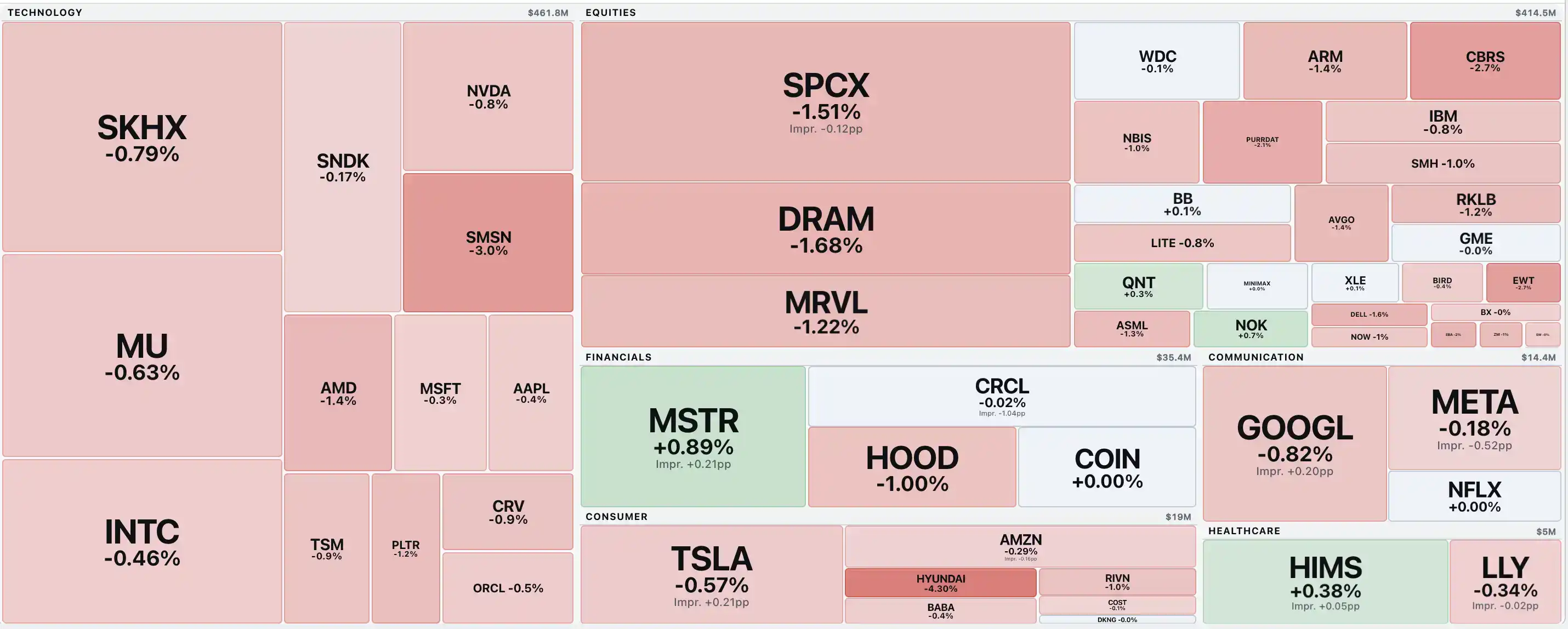
High-beta growth stocks SPCX −1.51%, DRAM −1.68%, MRVL −1.22% also pulled back in sync; relatively strong stocks included MSTR +0.89% and HIMS +0.38%.

Commodity Futures

Gold and silver saw a gap-up at the futures market open. This continued the 're-pricing of easing' logic that emerged last weekend. Falling oil prices reinforced expectations of peak inflation, lower yields, and a weaker dollar, which instead supported precious metals, rather than traditional safe-haven buying.
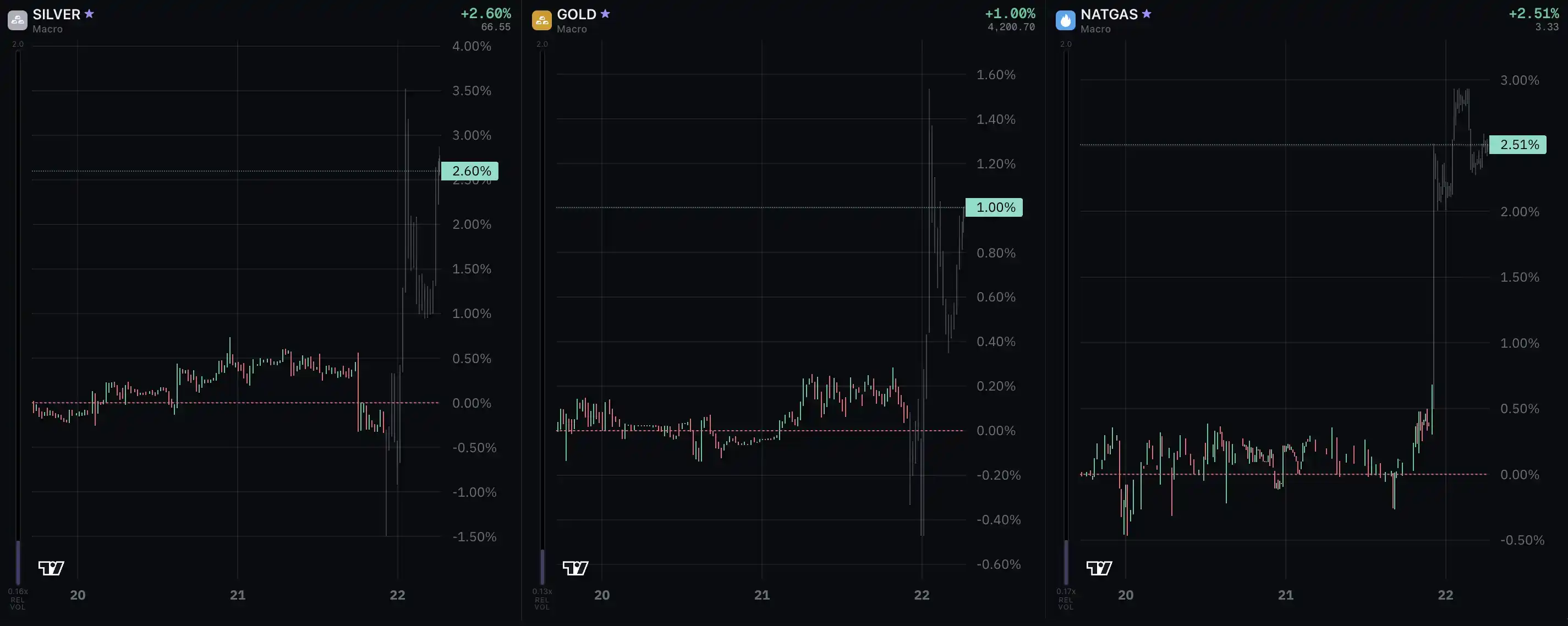
An unexpected move was the counter-trend rise in natural gas (+2.51%).

The increase may stem from an accident. Earlier today, a fire and explosion occurred at a natural gas plant at Qatar's core LNG processing base, Ras Laffan, injuring 54 people with 18 missing. The Barzan gas plant at this base supplies gas for Qatar's domestic industry and power generation. It is still unclear if LNG production is affected. Qatar was the world's second-largest LNG exporter before the war and had temporarily suspended production due to facility attacks and Strait closures in the early stages of the conflict.
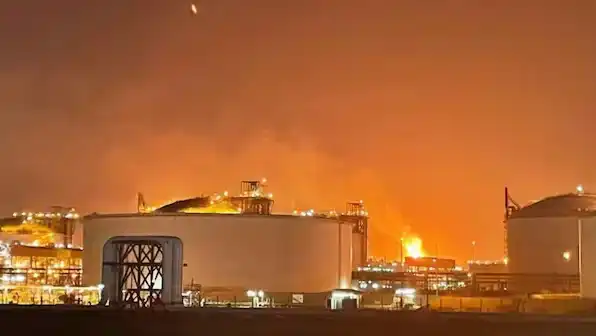
In subtle contrast to this explosion was another 'production resumption' signal: Qatar has begun recalling empty LNG carriers to re-enter the Persian Gulf, with market predictions that gas supply from Qatar is about to resume.

Preguntas relacionadas

QAccording to the article, what were the key events from June 19 to June 22 that caused volatility in the price of crude oil?

AOn June 19, crude oil rose from $76.5 to near $78 after a New York Times report suggested Israel would likely continue strikes in Lebanon. On the evening of June 20, it surged to a high near $79 after Iran's top military command announced the closure of the Strait of Hormuz. It saw further slow gains following Trump's aggressive comments about potentially taking control of the Strait. Finally, on the morning of June 22, prices fell nearly 6% from the weekend's high after Iran's Foreign Ministry characterized the Swiss talks as having 'made good progress.'

QHow did the US stock market, specifically indices and tech stocks, perform over the weekend described in the article?

AThe US stock market performance was relatively flat. Major indices like the XYZ100 and SP500 oscillated near the zero line, with the SP500 briefly dipping to around -0.6% before recovering. In the tech sector, stocks like SKHX fell -0.79%, MU -0.63%, NVDA -0.8%, and SMSN -3.0%. High-beta growth stocks such as SPCX, DRAM, and MRVL also saw declines of over 1%.

QWhat was the unexpected commodity that rose in price over the weekend, and what event likely caused this increase?

ANatural gas was the unexpected commodity that rose in price, gaining +2.51%. The increase was likely triggered by an explosion and fire at the Barzan gas plant in Qatar's key Ras Laffan LNG processing complex. The incident resulted in 54 injuries and 18 missing persons, raising concerns about potential supply disruptions.

QWhat was the outcome of the four-party technical-level consultations held in Switzerland, as mentioned in the article?

AAccording to statements from Qatar and Pakistan, the consultations in Switzerland yielded three main results: 1) The establishment of a high-level political oversight committee, 2) A finalized 60-day roadmap for a final agreement, and 3) The launch of a mechanism to resolve the conflict in Lebanon. Mediators described the atmosphere as 'extremely positive and constructive.' Pakistan also indicated that Iran would not block ships from passing through the Strait of Hormuz for the next 60 days and that passage would be free.

QAccording to the article, what was the primary market logic supporting the prices of gold and silver over the weekend, rather than traditional safe-haven buying?

AThe primary logic supporting gold and silver prices was a 'loose re-pricing' driven by macroeconomic factors. Falling oil prices reinforced expectations of peak inflation, leading to lower bond yields and a weaker US dollar. This environment was supportive for precious metals, rather than direct safe-haven demand due to geopolitical tensions.

Lecturas Relacionadas

27-Year Reign Ends: SK Hynix Market Cap Surpasses Samsung for First Time, an AI-Driven Reshuffle of Korean Chip Power

On June 22, 2026, SK Hynix made history by surpassing Samsung Electronics in market capitalization, ending Samsung's 27-year reign as South Korea's most valuable company. This dramatic reversal is powered by the AI boom and SK Hynix's dominant position in High Bandwidth Memory (HBM), a critical component for AI model training. Once a heavily indebted firm on the brink of bankruptcy, SK Hynix bet early on HBM, which has evolved from a niche product to essential AI infrastructure. It now commands a 59% share of the global HBM market. Its financial performance is staggering, with Q1 2026 net profit soaring nearly fourfold year-over-year to KRW 40.35 trillion, translating to over 2 billion RMB in daily net profit. HBM now drives roughly 40% of its revenue with exceptionally high margins. In contrast, Samsung, with its broad portfolio spanning memory chips, smartphones, and foundry services, has lagged in the HBM race while facing headwinds in other divisions. This shift signifies a deeper restructuring of South Korea's economy, moving from consumer electronics to AI-driven growth. However, the future remains competitive. With major capacity expansions planned industry-wide by 2028 and Samsung aiming to catch up in HBM technology, the new market leader cannot afford complacency. This event marks a pivotal moment in the global semiconductor industry's ongoing power realignment.

marsbitHace 6 min(s)

27-Year Reign Ends: SK Hynix Market Cap Surpasses Samsung for First Time, an AI-Driven Reshuffle of Korean Chip Power

marsbitHace 6 min(s)

Why Does 'AGI Godfather' Ben Goertzel Believe the Future of AI Relies on Blockchain?

Ben Goertzel, known as the "AGI Godfather," argues that the future of Artificial General Intelligence (AGI) must be built on blockchain to prevent its control by a few corporations or venture capital firms. He believes the core AGI code should be free and open-source, but that this alone is insufficient without a decentralized infrastructure to run it affordably. His blockchain project, SingularityNET, and the broader Artificial Superintelligence Alliance aim to create a user-owned, decentralized network for hosting and deploying AGI, contrasting with the closed models of companies like OpenAI and Anthropic. Goertzel criticizes the shift of other labs from open to closed development. He argues that while a closed path is simpler, an open, decentralized model—akin to Linux and the internet—is both possible and ultimately better for humanity. He envisions an "Agent economy" where individuals orchestrate teams of AI agents to perform tasks, including transactions, on an open network rather than corporate clouds. While his current model relies on cryptocurrency, plans include offering paid AI services to businesses with the decentralized blockchain as the backend. Goertzel predicts human-level AGI could arrive by 2029 and warns that a gap in understanding and access to AGI could drastically worsen inequality. The first test of his decentralized approach will be the upcoming release of the Agent Omega Claw.

Foresight NewsHace 36 min(s)

Why Does 'AGI Godfather' Ben Goertzel Believe the Future of AI Relies on Blockchain?

Foresight NewsHace 36 min(s)

Trading

Spot
Futuros
活动图片