Odaily Exclusive丨Polymarket Opens Store in New York, Kalshi Gives Away $50 Supermarket Vouchers: Are Prediction Markets Now Handing Out Eggs Too?

Odaily星球日报Publicado a 2026-02-04Actualizado a 2026-02-04

Resumen

Polymarket and Kalshi, two leading prediction market platforms, are launching offline promotional campaigns in New York to attract users ahead of the Super Bowl. Kalshi hosted a pop-up event at a local supermarket, offering $50 worth of free groceries to participants, while Polymarket is set to open a "free grocery store" in New York on February 12, alongside a $1 million donation to a local food bank. These initiatives aim to engage users with low-barrier, real-world event predictions, such as gas price changes. The campaigns also appear strategically timed to align with local political discussions around food affordability and potential regulatory changes, including proposed bills that could restrict prediction markets in New York. The author notes that such offline tactics echo classic user-acquisition strategies long used in China’s internet industry.

Original | Odaily Planet Daily (@OdailyChina)

Author | Wenser(@wenser 2010)
"Each generation has its own eggs to claim"—the value of this statement continues to rise!

This time, the two giants of the prediction market—Kalshi and Polymarket—are the ones stirring up this egg-grabbing battle.

To gain more attention ahead of the "American Super Bowl," the two platforms recently started their own "offline promotion performances"—Kalshi gave away $50 worth of free groceries to users at a supermarket in New York; Polymarket went even further, directly launching its long-planned "first free grocery store in New York," scheduled to open on February 12. In the competition for attention and user growth, the prediction market giants, valued at tens of billions of dollars, have chosen the most old-school but effective "offline promotion" route.

Regarding this, we immediately contacted Odaily Planet Daily’s New York-based colleague Connie to get the latest on "Kalshi and Polymarket’s offline promotions" and real information such as "how much $50 can actually buy in New York," to share with our readers.

When Prediction Market Giants Dive into Offline Promotions: Kalshi’s Pop-Up, Polymarket’s "Instant Store"

As one of America’s major metropolises, New York has become a battleground and focal point for the two prediction market giants, Kalshi and Polymarket.

Addressing the increasingly pressing issue of rising living costs in New York and across the U.S., Kalshi and Polymarket have rolled out their big moves—
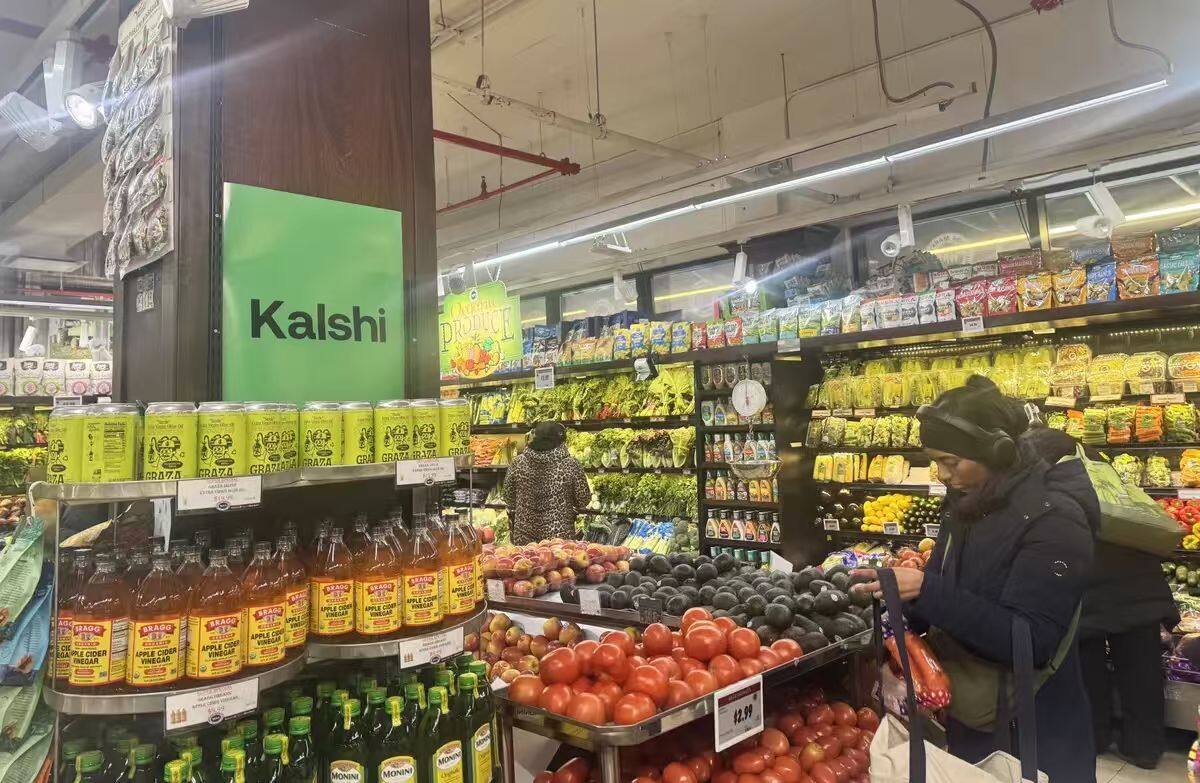
On February 3, Kalshi 【limited time】 offered $50 worth of free groceries to select users at Westside Market on Third Avenue, 84th Street, to attract more users to participate in various real-event predictions on its platform.

Judging from the surrounding "flyers," "supermarket KT boards," and other promotional materials, Kalshi’s offline promotion更像是一场即兴的“快闪活动”,更像是一场即兴的“快闪活动”更像是一场即兴的“快闪活动”更像是一场即兴的“快闪活动”更像是一场即兴的“快闪活动”更像是一场即兴的“快闪活动”更像是一场即兴的“快闪活动”更像是一场即兴的“快闪活动”更像是一场即兴的“快闪活动”更像是一场即兴的“快闪活动”更像是一场即兴的“快闪活动”更像是一场即兴的“快闪活动”更像是一场即兴的“快闪活动”更像是一场即兴的“快闪活动”更像是一场即兴的“快闪活动”更像是一场即兴的“快闪活动”更像是一场即兴的“快闪活动”更像是一场即兴的“快闪活动”更像是一场即兴的“快闪活动”更像是一场即兴的“快闪活动”更像是一场即兴的“快闪活动”更像是一场即兴的“快闪活动”更像是一场即兴的“快闪活动”更像是一场即兴的“快闪活动”更像是一场即兴的“快闪活动”更像是一场即兴的“快闪活动”更像是一场即兴的“快闪活动”更像是一场即兴的“快闪活动”更像是一场即兴的“快闪活动”更像是一场即兴的“快闪活动”更像是一场即兴的“快闪活动”更像是一场即兴的“快闪活动”更像是一场即兴的“快闪活动”更像是一场即兴的“快闪活动”更像是一场即兴的“快闪活动”更像是一场即兴的“快闪活动”更像是一场即兴的“快闪活动”更像是一场即兴的“快闪活动”更像是一场即兴的“快闪活动”更像是一场即兴的“快闪活动”更像是一场即兴的“快闪活动”更像是一场即兴的“快闪活动”更像是一场即兴的“快闪活动”更像是一场即兴的“快闪活动”更像是一场即兴的“快闪活动”更像是一场即兴的“快闪活动”更像是一场即兴的“快闪活动”更像是一场即兴的“快闪活动”更像是一场即兴的“快闪活动”更像是一场即兴的“快闪活动”更像是一场即兴的“快闪活动”更像是一场即兴的“快闪活动”更像是一场即兴的“快闪活动”更像是一场即兴的“快闪活动”更像是一场即兴的“快闪活动”更像是一场即兴的“快闪活动”更像是一场即兴的“快闪活动”更像是一场即兴的“快闪活动”更像是一场即兴的“快闪活动”更像是一场即兴的“快闪活动”更像是一场即兴的“快闪活动”更像是一场即兴的“快闪活动”更像是一场即兴的“快闪活动”更像是一场即兴的“快闪活动”更像是一场即兴的“快闪活动”更像是一场即兴的“快闪活动”更像是一场即兴的“快闪活动”更像是一场即兴的“快闪活动”更像是一场即兴的“快闪活动”更像是一场即兴的“快闪活动”更像是一场即兴的“快闪活动”更像是一场即兴的“快闪活动”更像是一场即兴的“快闪活动”更像是一场即兴的“快闪活动”更像是一场即兴的“快闪活动”更像是一场即兴的“快闪活动”更像是一场即兴的“快闪活动”更像是一场即兴的“快闪活动”更像是一场即兴的“快闪活动”更像是一场即兴的“快闪活动”更像是一场即兴的“快闪活动”更像是一场即兴的“快闪活动”更像是一场即兴的“快闪活动”更像是一场即兴的“快闪活动”更像是一场即兴的“快闪活动”更像是一场即兴的“快闪活动”更像是一场即兴的“快闪活动”更像是一场即兴的“快闪活动”更像是一场即兴的“快闪活动”更像是一场即兴的“快闪活动”更像是一场即兴的“快闪活动”更像是一场即兴的“快闪活动”更像是一场即兴的“快闪活动”更像是一场即兴的“快闪活动”更像是一场即兴的“快闪活动”更像是一场即兴的“快闪活动”更像是一场即兴的“快闪活动”更像是一场即兴的“快闪活动”更像是一场即兴的“快闪活动”更像是一场即兴的“快闪活动”更像是一场即兴的“快闪活动”更像是一场即兴的“快闪活动”更像是一场即兴的“快闪活动”更像是一场即兴的“快闪活动”更像是一场即兴的“快闪活动”更像是一场即兴的“快闪活动”更像是一场即兴的“快闪活动”更像是一场即兴的“快闪活动”更像是一场即兴的“快闪活动”更像是一场即兴的“快闪活动”更像是一场即兴的“快闪活动”更像是一场即兴的“快闪活动”更像是一场即兴的“快闪活动”更像是一场即兴的“快闪活动”更像是一场即兴的“快闪活动”更像是一场即兴的“快闪活动”更像是一场即兴的“快闪活动”更像是一场即兴的“快闪活动”更像是一场即兴的“快闪活动”更像是一场即兴的“快闪活动”更像是一场即兴的“快闪活动”更像是一场即兴的“快闪活动”更像是一场即兴的“快闪活动”更像是一场即兴的“快闪活动”更像是一场即兴的“快闪活动”更像是一场即兴的“快闪活动”更像是一场即兴的“快闪活动”更像是一场即兴的“快闪活动”更像是一场即兴的“快闪活动”更像是一场即兴的“快闪活动”更像是一场即兴的“快闪活动”更像是一场即兴的“快闪活动”更像是一场即兴的“快闪活动”更像是一场即兴的“快闪活动”更像是一场即兴的“快闪活动”更像是一场即兴的“快闪活动”更像是一场即兴的“快闪活动”更像是一场即兴的“快闪活动”更像是一场即兴的“快闪活动”更像是一场即兴的“快闪活动”更像是一场即兴的“快闪活动”更像是一场即兴的“快闪活动”更像是一场即兴的“快闪活动”更像是一场即兴的“快闪活动”更像是一场即兴的“快闪活动”更像是一场即兴的“快闪活动”更像是一场即兴的“快闪活动”更像是一场即兴的“快闪活动”更像是一场即兴的“快闪活动”更像是一场即兴的“快闪活动”更像是一场即兴的“快闪活动”更像是一场即兴的“快闪活动”更像是一场即兴的“快闪活动”更像是一场即兴的“快闪活动”更像是一场即兴的“快闪活动”更像是一场即兴的“快闪活动”更像是一场即兴的“快闪活动”更像是一场即兴的“快闪活动”更像是一场即兴的“快闪活动”更像是一场即兴的“快闪活动”更像是一场即兴的“快闪活动”更像是一场即兴的“快闪活动”更像是一场即兴的“快闪活动”更像是一场即兴的“快闪活动”更像是一场即兴的“极速快闪活动” (pop-up event), collaborating with local supermarkets to place offline materials for a short time, using "free $50 groceries" as "bait" to attract people to line up, participate, and spectate. This was also confirmed by Connie.
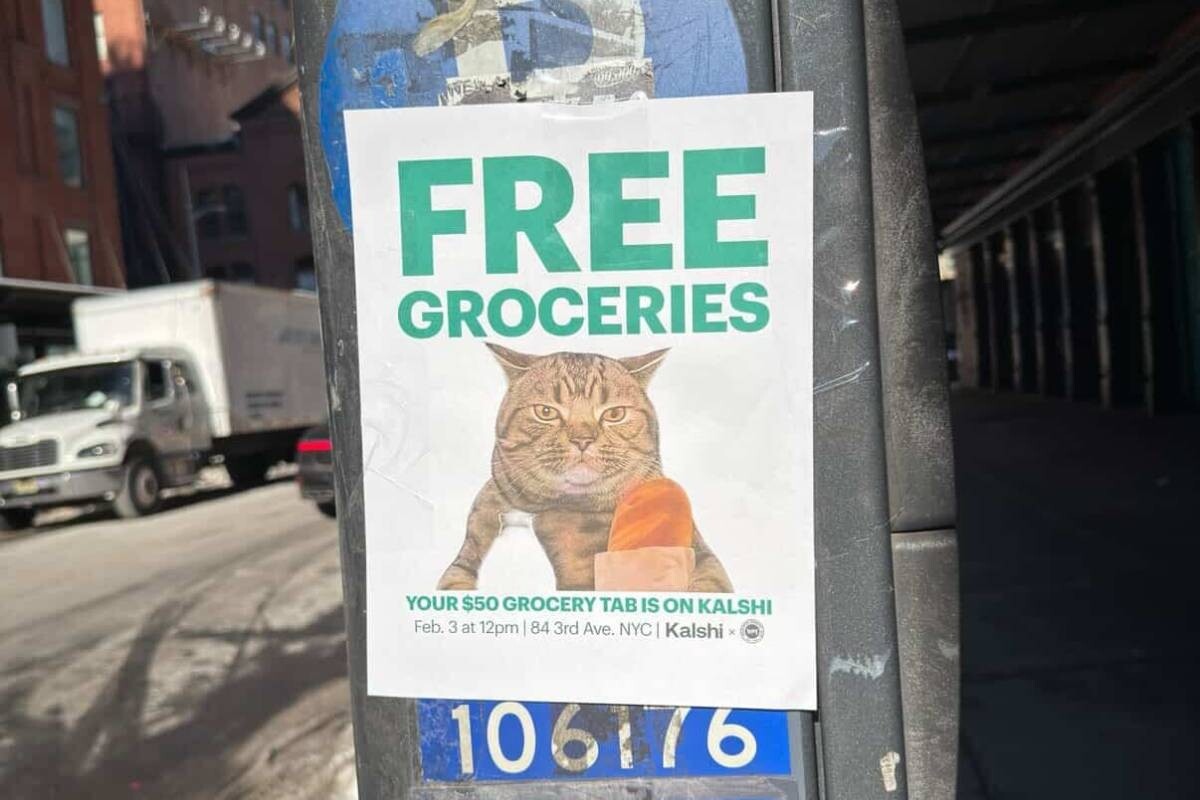
Additionally, it's clear that through this pop-up, Kalshi hopes to get more people to join the prediction market by betting on everyday, low-threshold, easy-to-understand questions like "Will New York City's gas price exceed $3.3 this year?" thereby achieving commercial goals like brand marketing and user activation.
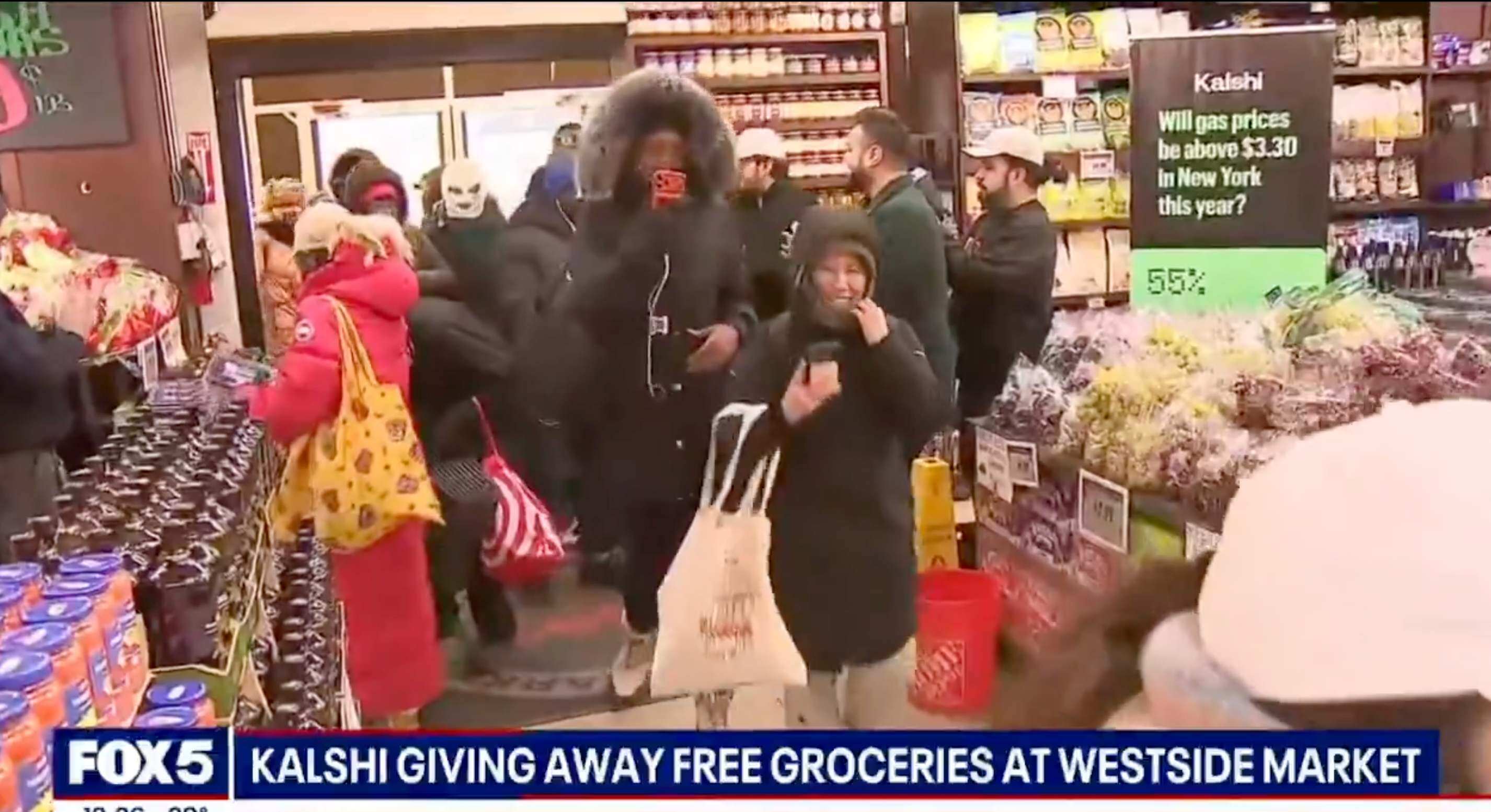
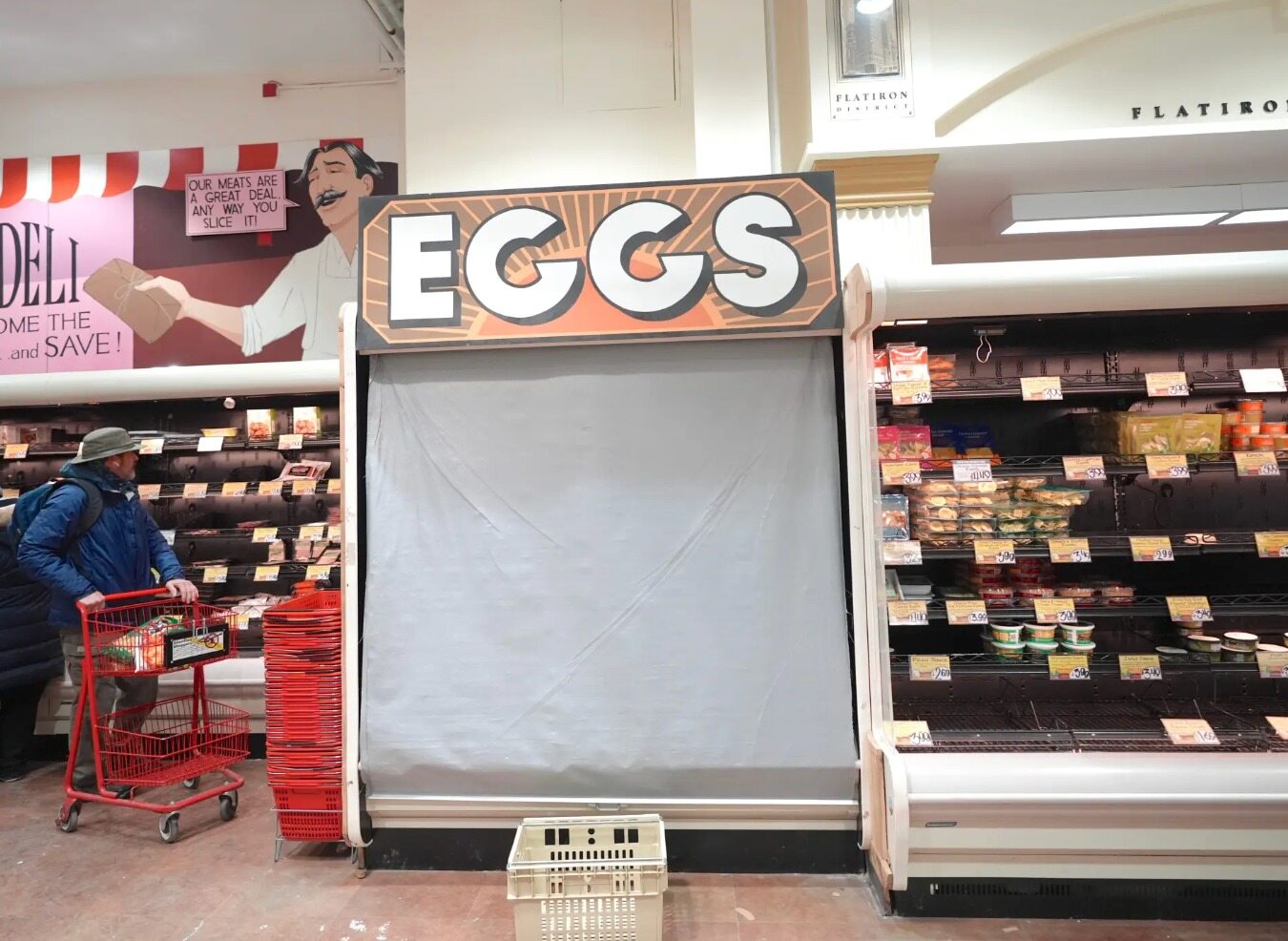
Kalshi co-branded pop-up supermarket eggs were snapped up

Compared to Kalshi's somewhat crude and highly commercial approach, Polymarket's preparations were much more thorough.

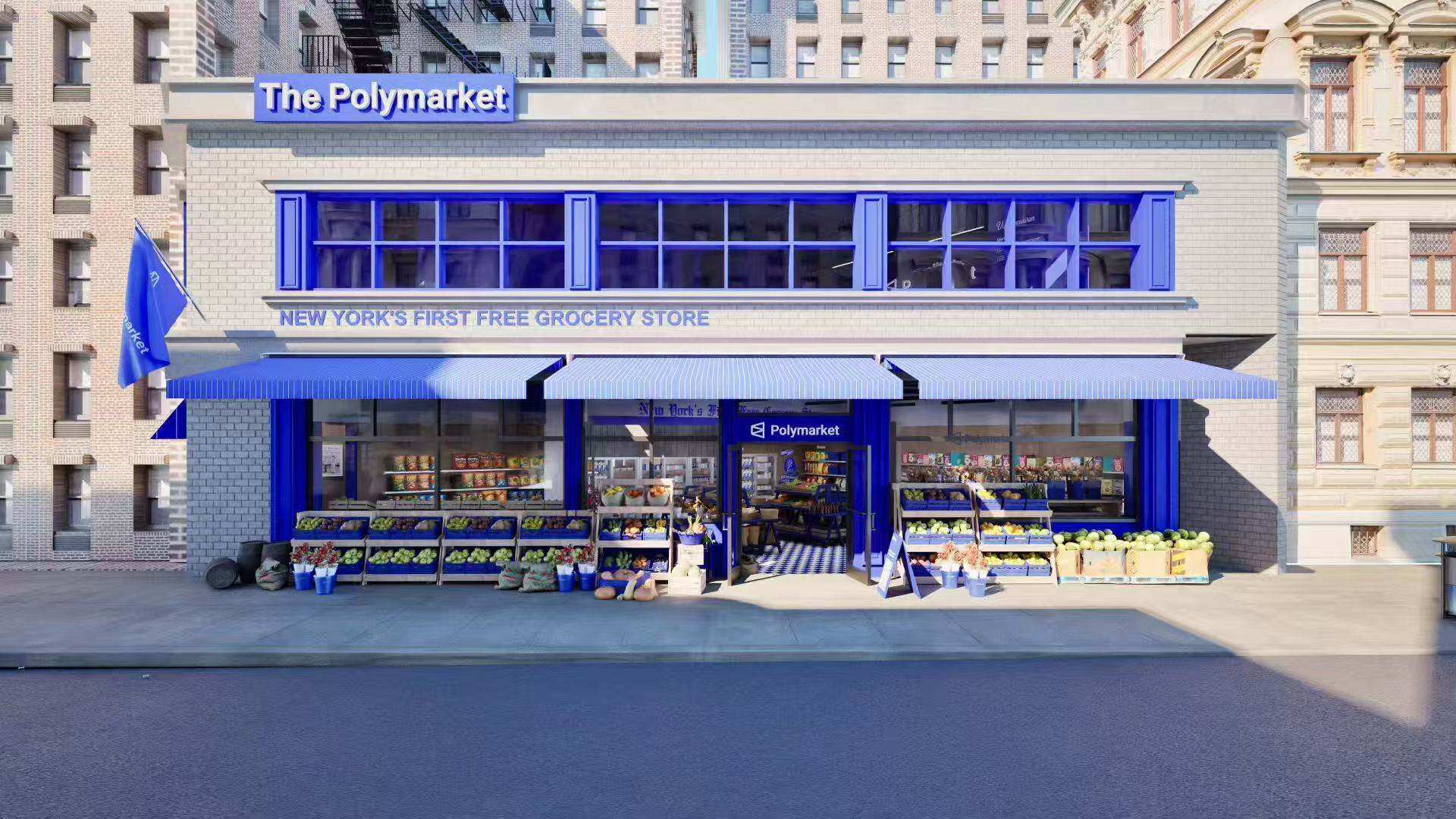
On February 3, slightly earlier than Kalshi's announcement, Polymarket officially announced that after months of offline preparation, it plans to open the "first free grocery store in New York" on February 12 (EST) by leasing a physical storefront. Additionally, Polymarket donated $1 million to the New York City Food Bank to address the "hunger issue" in the area.
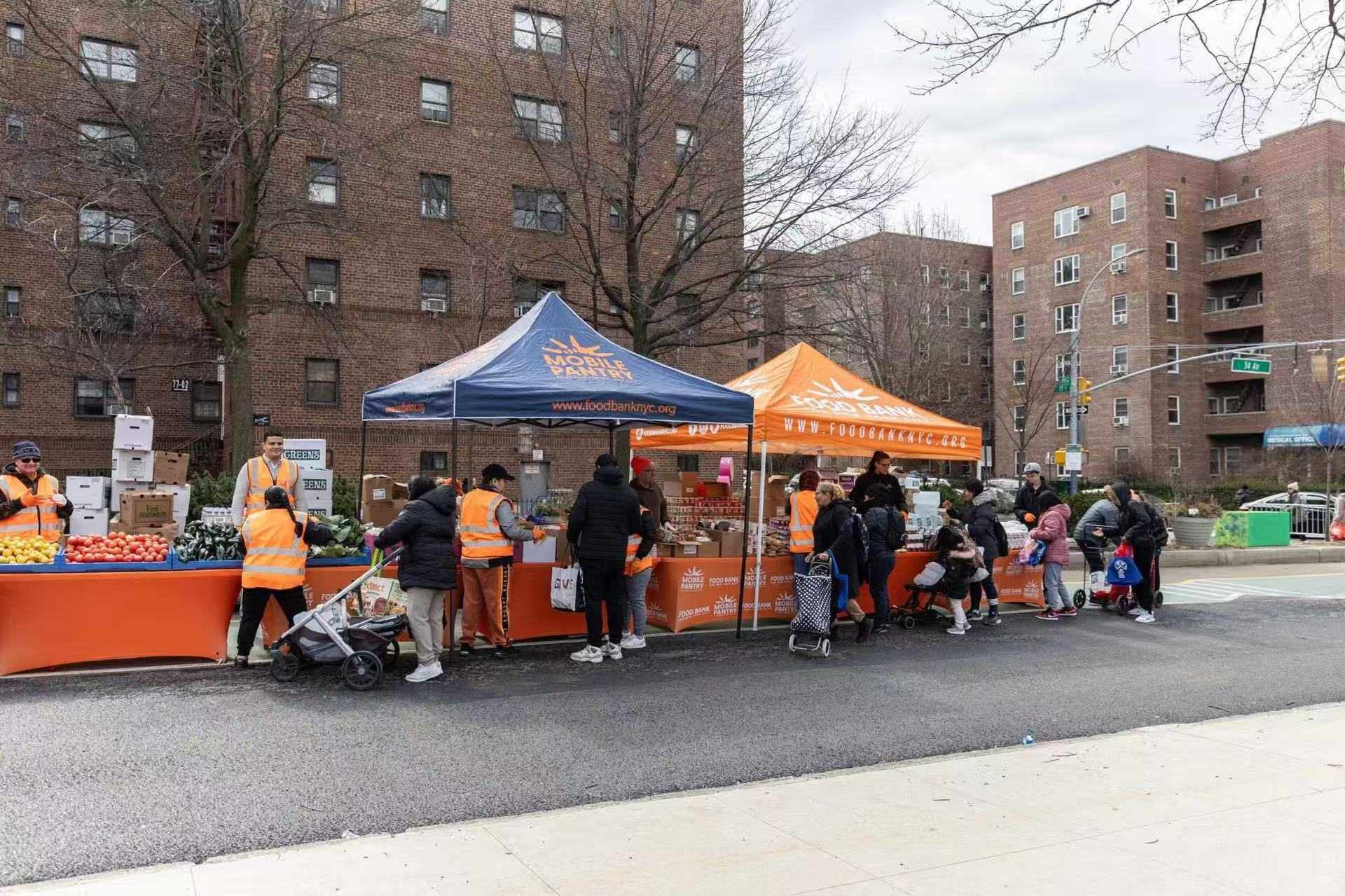
Polymarket also released actual photos of distributing vegetables like tomatoes and eggplants offline, instantly reminiscent of the domestic internet platform's ground promotion era, full of the vibe of "download the APP get eggs" or "first recharge get newcomer gift pack."
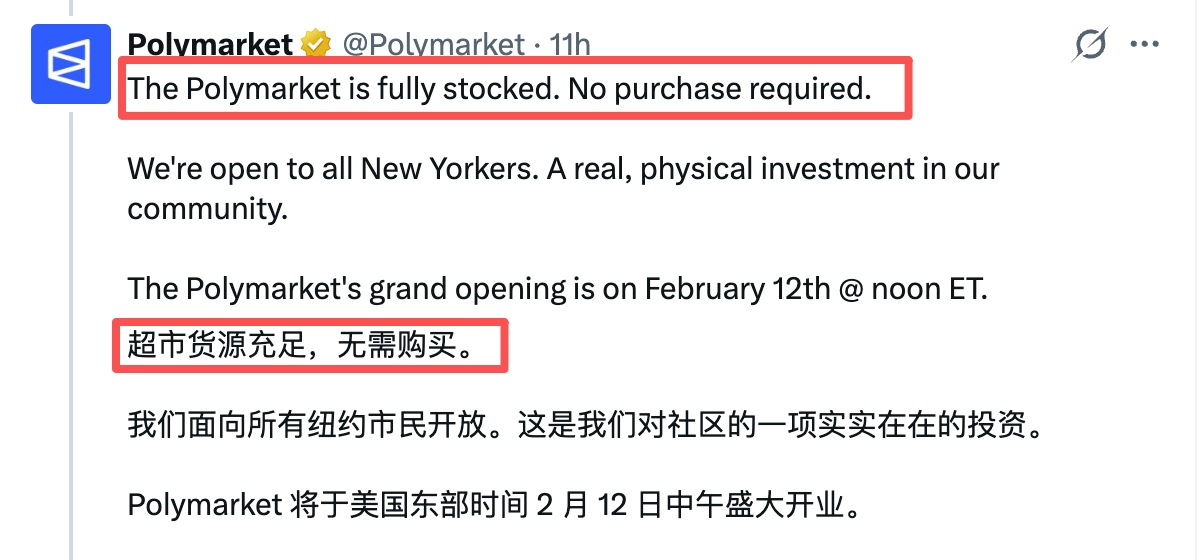
It is worth mentioning that Polymarket not only emphasized that "Polymarket's offline store is well-stocked, no purchase necessary," but also called on everyone to donate to the New York City Food Bank at the end of its tweet, encouraging people to take practical action to solve the real "hunger problem" caused by high food costs and high cost of living.
Seeing this, I can't help but sigh—

Fake crypto project ground promotion: Hold offline conferences, eat seafood feasts, shill various fake concept tokens;

Real crypto project ground promotion: Give away vegetables, give away eggs, open offline stores to distribute free food, do charity and public welfare, call on people to donate and show love.
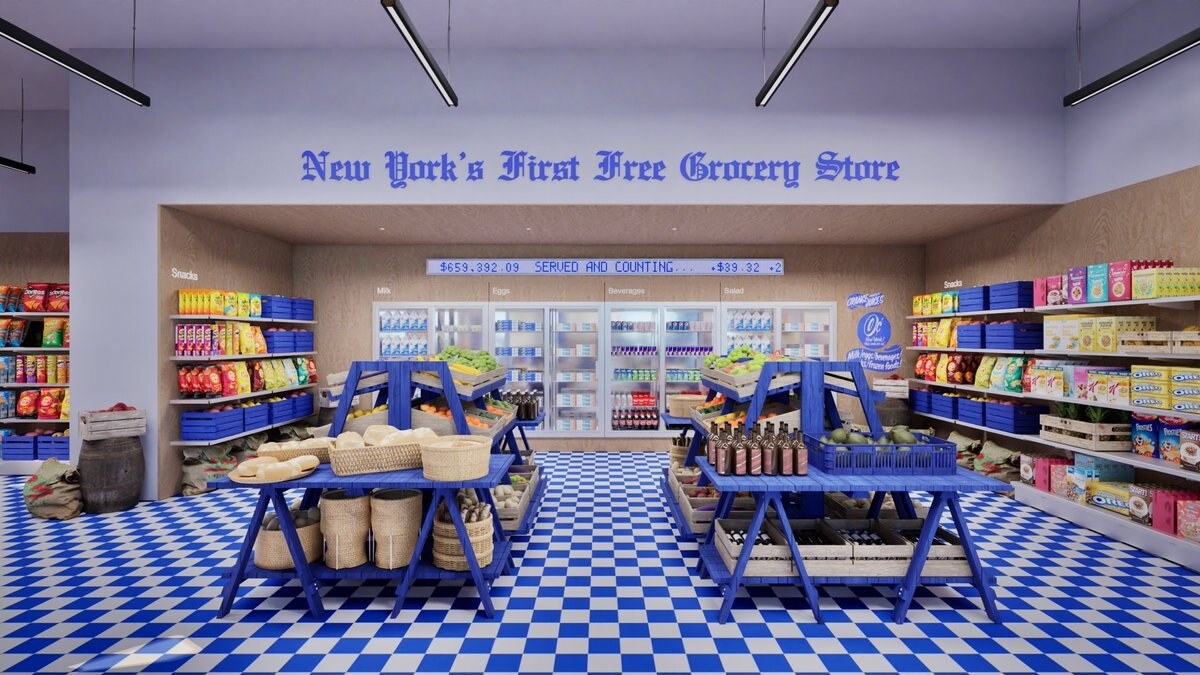
Regarding the real purchasing power of Kalshi and Polymarket's "egg collection activities," we also had a detailed discussion with Connie from Odaily in New York.

The Real Purchasing Power of $50 in New York, USA: 5 McDonald's Meals, 1.5 lbs of Beef, or 2 Days of Food for the Average Person

According to Connie, the real purchasing power of $50 in New York, USA, can be considered "quite valuable."

"Buying a 0.5 lb (about 0.45 kg) portion of beef at a local supermarket in New York costs about $18, so $50 can buy about 1.5 lbs of beef," which is enough protein for an adult's three meals a day. For comparison, the price of one jin (0.5 kg) of beef in China is only about 30 RMB, which is only 1/8 of the cost in New York.
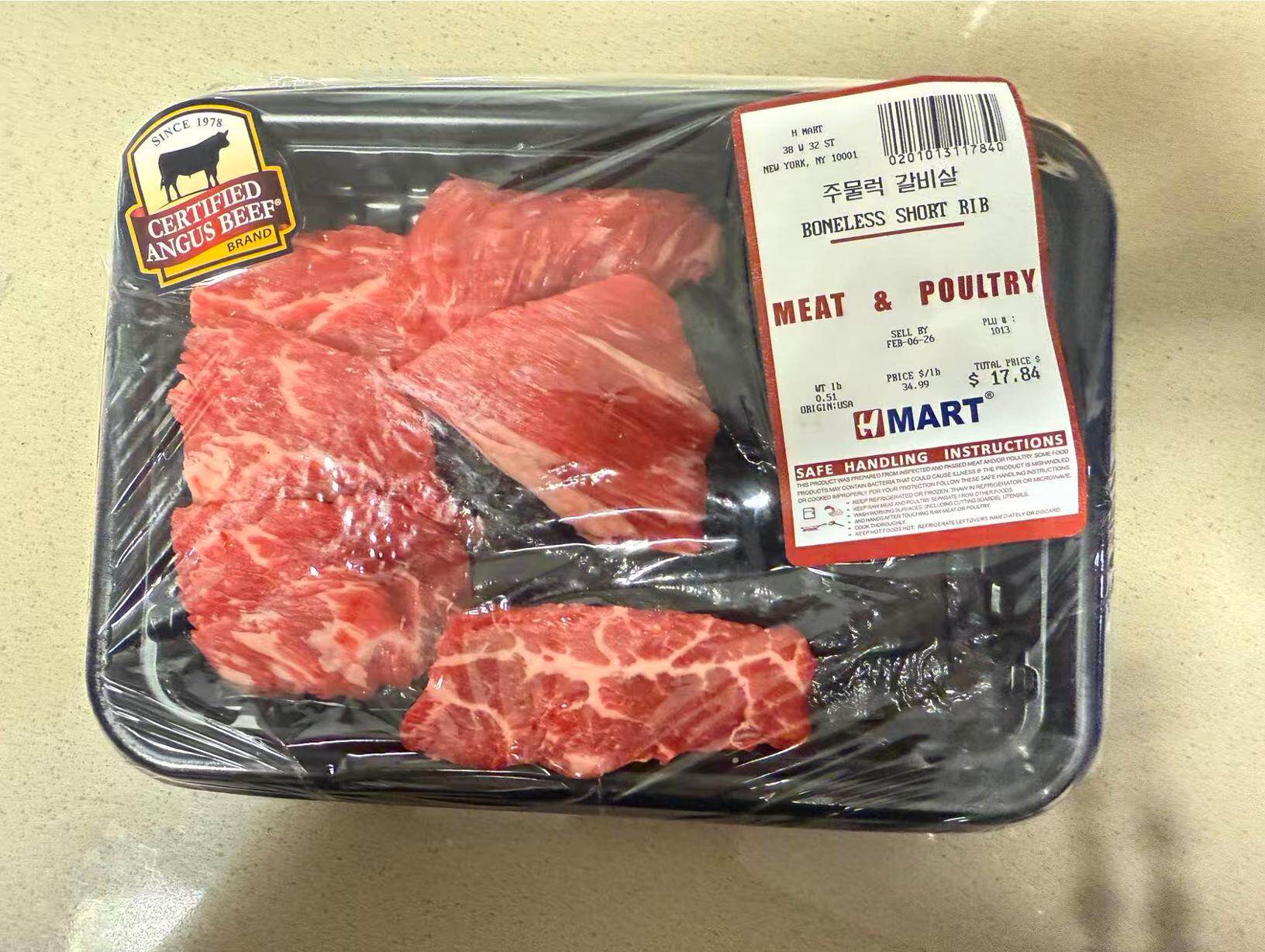
Converting to the well-known "Big Mac Index," the real purchasing power of $50 is also quite astonishing—a cheeseburger combo meal delivery with about 800-1000 calories costs about $10.89, so $50 can buy about 5 combo meals; if you buy a double burger with 580 calories, it only costs about $7.20. Of course, this price is "sky-high" domestically; the same burger combo in China only costs 25-40 RMB, which is only 1/2 the price of the same food in New York.

In other words, spent frugally, $50 is close to covering the food cost for an average person in New York for about 2 days (calculated as 5~6 meals). According to Connie, Kalshi's event attracted many Americans to line up for "free food," and "Americans' enthusiasm for lining up to receive things is even higher than that of Chinese people." Polymarket's "offline free grocery store" is also expected to attract a large crowd to line up and participate. Based on the existing information released by Kalshi and Polymarket, the hard costs of the two platforms' related activities are estimated to be at least $50,000 to $100,000.

Investing so much manpower and resources, beyond doing charity and showing love, Kalshi and Polymarket also have their own "business calculations."

The "Business Strategy" Behind Prediction Market Platforms "Giving Away Eggs": Using Political Issues to Influence Institutional Regulation

None of the above food donation activities by Kalshi and Polymarket were coordinated or communicated with the New York City government; they were spontaneous company actions.

However, the wording and purpose of their external statements are very similar to the "policies" repeatedly emphasized by New York's new mayor, Zohran Mamdani, during his campaign—the latter had proposed "opening publicly owned grocery stores in New York's five boroughs to lower food prices." Furthermore, Zohran Mamdani pointed out that city-owned grocery stores could reduce rent and operating costs through non-profit operating models and the use of public property. This proposal is still in the pilot stage, and a final implementation timetable has not been determined.

On the other hand, as one of the important key states in the U.S., New York's legislators are busy drafting new bills targeting the emerging prediction market industry. Among them, the 《ORACLE Act》 plans to restrict or prohibit New York residents from betting on certain prediction market events and impose stricter restrictions on event-based prediction markets; another piece of legislation plans to require prediction market operators to obtain a state-issued license before operating.

It is clear that some legislative decision-makers still have various concerns about prediction markets, viewing them as similar to unregulated gambling or more susceptible to insider manipulation.

In light of this, although the New York mayor has no direct jurisdiction over the regulation of prediction markets (Odaily Planet Daily Note: Regulatory authority over prediction market platforms belongs to state and federal governments), Kalshi and Polymarket's move may also be an attempt to seek regulatory friendliness through indirect means.

Finally, regardless of the ultimate impact of their "egg-giving" actions, we have to say that China's internet promotion models are at least 5-10 years ahead of the Western world.


Preguntas relacionadas

QWhat are the two major prediction market platforms mentioned in the article that are conducting offline promotions in New York?

AKalshi and Polymarket.

QWhat specific free benefit did Kalshi offer to users during its flash promotion at a New York market?

AKalshi offered a $50 free food benefit to users.

QWhat is the name of the bill mentioned in the article that aims to restrict or ban New York residents from betting on certain prediction market events?

AThe ORACLE Act.

QHow much did Polymarket donate to the New York City Food Bank, as stated in the article?

APolymarket donated $1 million to the New York City Food Bank.

QAccording to the article, what is the estimated cost of a 0.5-pound portion of beef in a New York supermarket?

AA 0.5-pound portion of beef costs approximately $18 in a New York supermarket.

Lecturas Relacionadas

After Three Consecutive Quarters of Decline, Can the Crypto Market Find a Window for Stabilization in Q3?

The cryptocurrency market has just concluded its worst-performing quarter since 2022, with total capitalization dropping 12.6% to $2.1 trillion. All core metrics indicate capital is leaving the sector, not just rotating within it. Bitcoin fell 14.2% and Ethereum dropped 25.4% in Q2, breaking their previous correlation with US tech stocks. A key driver is the reversal in US spot Bitcoin ETF flows, which saw a net outflow of approximately $4.67 billion in Q2, including a record monthly outflow near $4.5 billion in June. While recent data suggests long-term holders are accumulating again, sustained ETF outflows mean continued selling pressure. Market focus is now singularly on the Federal Reserve. The upcoming July FOMC meeting is seen as the most critical event for Q3. A dovish signal could support Bitcoin reclaiming a $68,000-$84,000 range, while a hawkish stance might establish a new trading band around $50,000-$56,000. Additionally, regulatory uncertainty persists, with the progress of the crucial *CLARITY Act* stalling in the Senate, reducing its perceived 2026 passage probability to 40-45%. Despite the broad downturn, a few sectors showed growth. Prediction markets saw nominal volume surge 48.7% year-over-year to $113.8 billion, and tokenized collectibles transaction volume rose 143% quarterly to $1.4 billion. The Real-World Asset (RWA) tokenization sector also continued steady growth, now representing ~$28.1 billion in on-chain value. The market's foundation for an extreme crash appears limited, with Bitcoin price hovering near its 200-week moving average. However, the trading paradigm has shifted from narrative-driven speculation to decisions based on price action, policy developments, and interest rate expectations, making a broad sentiment-driven rally unlikely in the near term.

marsbitHace 10 hora(s)

After Three Consecutive Quarters of Decline, Can the Crypto Market Find a Window for Stabilization in Q3?

marsbitHace 10 hora(s)

BIT Trading Moment: BTC Still Suppressed by Weekly 200 EMA, Rejection May Restart Decline; Storage and Semiconductors that Surged Last Night Begin Falling in Evening Trading

**Crypto & Stock Market Wrap: Bitcoin Tests Resistance, Stocks Retreat After AI Surge** Bitcoin consolidates around $66,000, facing key resistance near $68,000—an area seen as a major psychological and technical hurdle where previous rallies have failed. Analysts note the cryptocurrency is caught between its 200-week moving average (~$63,333) and 200-week EMA (~$68,328). A clear break above $68k is needed to signal a stronger bullish trend, while a rejection could lead to a retest of $63k support. Market sentiment remains cautious, with low futures open interest pointing to a low-liquidity rebound rather than a full bull market. Bitcoin spot ETFs saw another $203 million inflow. US stock futures pointed lower after a strong Tuesday session led by a massive rebound in semiconductors and memory stocks. The rally was fueled by renewed optimism about AI-driven hardware demand, with Micron, SanDisk, and SK Hynix surging. However, those gains reversed in pre-market trading. Super Micro Computer (SMCI) soared over 20% after hours on strong guidance and a record backlog. Other standouts included Rocket Lab and nuclear energy plays Oklo and X-Energy. Rising oil prices (Brent above $91) and climbing Treasury yields (10-year near 4.64%), however, are reigniting inflation concerns and acting as a headwind for equities. In Asia, markets were mixed. South Korea's KOSPI pared early gains to close slightly higher as semiconductor stocks like SK Hynix gave back initial surges. Japan's Nikkei edged lower as the yen hit a fresh 38-year low against the dollar, raising fears of potential market intervention. Key events to watch include the Samsung Galaxy launch, AMD's AI event, and a slew of major tech earnings from Alphabet, Tesla, and IBM after the close on Wednesday, followed by the ECB meeting and Intel's earnings on Thursday.

marsbitHace 10 hora(s)

BIT Trading Moment: BTC Still Suppressed by Weekly 200 EMA, Rejection May Restart Decline; Storage and Semiconductors that Surged Last Night Begin Falling in Evening Trading

marsbitHace 10 hora(s)

Former CFTC Chairman, Circle President Tarbert: Preaching Long-Termism While Cashing Out $30 Million Himself

Former CFTC Chairman and Circle President Heath Tarbert has consistently advocated for a long-term vision in public, urging patience from investors as Circle’s stock price has fallen significantly from its peak. However, it has been revealed that since Circle’s IPO, Tarbert has continuously sold his CRCL shares through pre-arranged trading plans, cashing out approximately $30 million, without making any public market purchases. This contrast between his public messaging and personal actions has drawn criticism. Tarbert joined Circle in July 2023 as Chief Legal Officer, leveraging his regulatory experience to help guide the company through its IPO and expansion. Despite promoting stablecoins as long-term infrastructure, he established a 10b5-1 trading plan just before Circle went public, leading to substantial stock sales over the following year. In March 2026, he initiated another plan to sell more shares. His career trajectory highlights a pattern of moving between high-level regulatory roles and influential positions in the financial sector. After resigning as CFTC Chairman in early 2021, he joined Citadel Securities as Chief Legal Officer just 27 days later, during a period of intense regulatory scrutiny for the firm. He later joined Circle, aiding its efforts to navigate regulatory challenges for its public listing. While Tarbert's expertise in policy and compliance is valuable to companies like Circle, his actions—advocating long-term confidence while personally divesting—raise questions about the alignment between his public statements and his private financial decisions, leaving investors who followed his advice to bear the market risks.

marsbitHace 10 hora(s)

Former CFTC Chairman, Circle President Tarbert: Preaching Long-Termism While Cashing Out $30 Million Himself

marsbitHace 10 hora(s)

Gate Research Institute: The 'Wall Street-ization' Wave of Crypto Financial Products – Competition or Integration?

The article titled "Gate Research Institute: Are Crypto Financial Products Sparking a 'Wall Street' Wave—Competition or Convergence?" explores the evolving relationship between the crypto ecosystem and traditional finance (TradFi). The piece begins by reflecting on Bitcoin's original 2009 vision of decentralization, disintermediation, and moving away from banks. It then contrasts this with the 2024 landscape, where key crypto assets like Bitcoin are increasingly held through Wall Street products like ETFs issued by giants like BlackRock. The article questions whether this signifies that TradFi is systematically taking over the rights to issue, price, custody, and distribute crypto financial assets. The core argument is that this is not a zero-sum takeover but rather a bidirectional convergence where each side addresses the other's weaknesses. Crypto offers 24/7 global markets, programmable settlement, and open access but lacks compliant channels, institutional-grade custody, deep fiat liquidity, and mainstream distribution. TradFi possesses these but is constrained by legacy systems, limited operating hours, and slow settlement. Two primary convergence paths are highlighted: * **Path A (CEX to TradFi):** Exemplified by Gate, which has progressed from offering tokenized stocks and CFDs to providing direct, real stock trading (US, Hong Kong, South Korea) within its platform, using USDT. * **Path B (TradFi to Crypto):** Exemplified by Robinhood, which has integrated crypto trading, acquired exchanges like Bitstamp, and is moving traditional assets like stocks onto the blockchain via tokenization and its own Layer 2. Both paths are ultimately competing to become the next-generation, unified financial account—a "super account" where users can seamlessly trade cryptocurrencies, stocks, ETFs, RWA (Real World Assets), and tokenized treasury products in one interface. The growth of RWA and tokenized treasuries (e.g., BlackRock's BUIDL) is presented as the asset-layer fusion, providing stable, yield-bearing assets on-chain and acting as a bridge between the two worlds. In conclusion, the "Wall Street-ization" of crypto is framed as a mutual transformation. Decentralized ideals persist in the protocol layer, while at the application layer, a more efficient, global, and accessible unified capital market is emerging from this convergence. The future competition lies not between crypto exchanges and stockbrokers, but between platforms vying to offer the most comprehensive asset coverage, liquidity, and user experience within a single account.

marsbitHace 10 hora(s)

Gate Research Institute: The 'Wall Street-ization' Wave of Crypto Financial Products – Competition or Integration?

marsbitHace 10 hora(s)

Trading

Spot
活动图片




