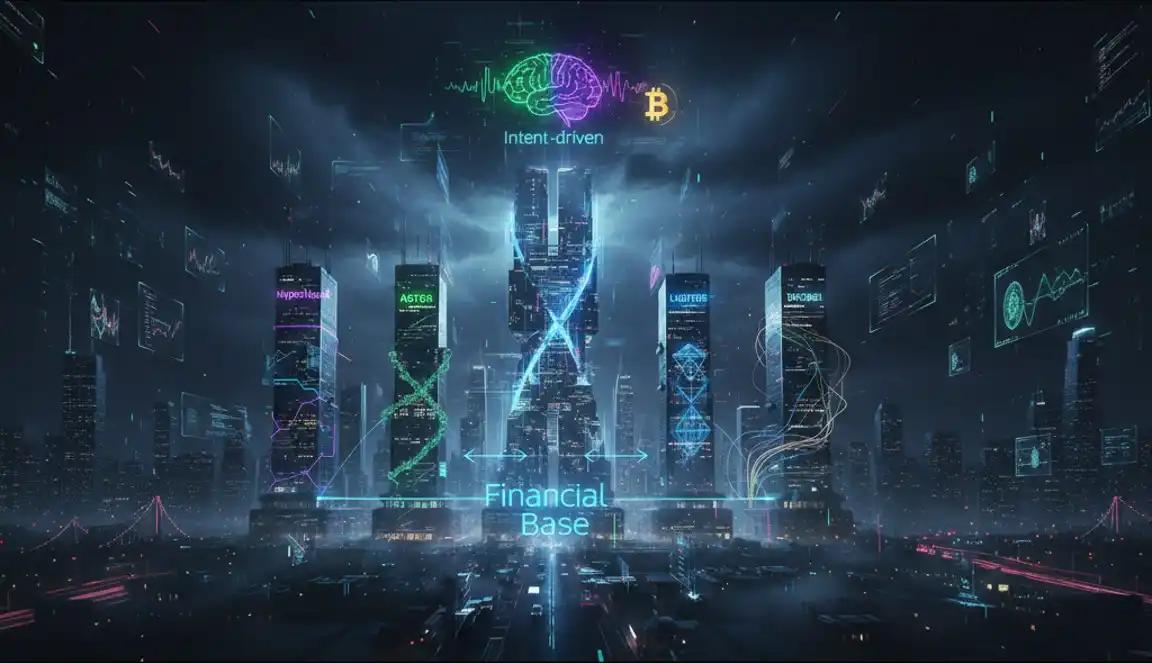
NVIDIA's Jensen Huang Latest Article: The 'Five-Layer Cake' of AI

marsbitPublicado a 2026-03-10Actualizado a 2026-03-10

Resumen

NVIDIA's Jensen Huang articulates AI not merely as a software application but as a fundamental infrastructure, comparable to electricity or the internet, in a layered "five-layer cake" structure. This stack begins with **Energy** as the foundational constraint, powering real-time intelligence generation. Above it, **Chips** convert energy into computational power efficiently. The **Infrastructure** layer comprises data centers and systems that function as "AI factories." **Models** form the next layer, processing diverse data types like language, biology, and physics. At the top, **Applications**—such as drug discovery, autonomous vehicles, and robotics—create economic value. Huang emphasizes that AI is an industrial-scale transformation, driving massive global infrastructure expansion requiring trillions in investment and a skilled workforce—from electricians to network technicians—beyond just computer scientists. He notes that AI has recently crossed a threshold: models are now reliable enough for widespread use, reducing hallucinations and improving reasoning, which accelerates real-world applications. Open-source models, like DeepSeek-R1, further propel growth across the entire stack. This infrastructure revolution will reshape energy consumption, manufacturing, labor, and economic growth. Every company and country will participate, though the field remains early-stage, with vast opportunities and responsibilities ahead.

Editor's Note: Artificial intelligence is evolving from a cutting-edge technology into a foundational infrastructure supporting the modern economy. In its first long-form article published on its official account, NVIDIA attempts to systematically deconstruct the AI industry structure from first principles: from energy and chips, to data center infrastructure, then to models and applications, forming a complete five-layer technology stack.

The article points out that AI is not just a competition in software or models, but a global industrial endeavor involving energy, computing power, manufacturing, and applications, with a scale that could become one of the largest infrastructure expansions in human history. Through this 'five-layer cake' perspective, NVIDIA aims to illustrate that the true significance of AI is not just smarter software, but an infrastructure revolution on par with electricity and the internet.

Below is the original text:

Artificial intelligence is one of the most powerful forces shaping the world today. It is not merely a clever application, nor a single model, but an infrastructure, as crucial as electricity and the internet.

AI runs on real hardware, real energy, and a real economic system. It transforms raw materials into mass-produced 'intelligence.' Every company will use it, every country will build it.

To understand why AI is unfolding in this manner, it is helpful to start from first principles and examine the fundamental changes occurring in computing.

From 'Pre-Made Software' to 'Real-Time Generated Intelligence'

For the vast majority of computing history, software has been 'pre-made.' Humans first define an algorithm, and then the computer executes the commands. Data must be meticulously structured, stored in tables, and retrieved through precise queries. SQL is indispensable because it enables this entire system to function.

AI shatters this paradigm.

For the first time, we have computers that can understand unstructured information. They can see images, read text, listen to sounds, and comprehend their meaning; they can reason about context and intent. More importantly, they can generate intelligence in real-time.

Every response is a new generation. Every answer depends on the context you provide. This is no longer software retrieving pre-written instructions from a database; it is software reasoning in real-time and generating intelligence on demand.

Because intelligence is generated in real-time, the entire computing technology stack that supports it must be reinvented.

AI as Infrastructure

Viewing AI from an industry perspective, it can actually be broken down into a five-layer structure.

Energy

The foundational layer is energy.

Real-time generated intelligence requires real-time generated electricity. The production of every token means electrons are moving, heat is being managed, and energy is being converted into computing power.

There is no abstraction below this layer. Energy is the first principle of AI infrastructure and the fundamental constraint determining how much intelligence the system can produce.

Chips

Above energy are chips. These processors are designed to convert energy into computing power with extreme efficiency and at massive scale.

AI workloads require immense parallel computing power, high-bandwidth memory, and high-speed interconnects. Advancements at the chip layer determine the speed of AI scaling and ultimately how cheap 'intelligence' will become.

Infrastructure

Above chips is infrastructure. This includes land, power delivery, cooling systems, construction engineering, networking systems, and scheduling systems that organize tens of thousands of processors into a single machine.

These systems are essentially AI factories. They are not designed to store information, but to manufacture intelligence.

Models

Above infrastructure are models. AI models can understand various types of information: language, biology, chemistry, physics, finance, medicine, and the real world itself.

Language models are just one category. Some of the most transformative work is happening in areas of: Protein AI, Chemistry AI, Physics Simulation, Robotics, Autonomous Systems

Applications

The top layer is the application layer, where real economic value is generated. Examples include drug discovery platforms, industrial robots, legal copilots, and autonomous vehicles.

An autonomous vehicle is essentially 'an AI application carried by a machine'; a humanoid robot is 'an AI application embodied in a physical form.' The underlying technology stack is the same, only the final form differs.

Thus, this is the five-layer structure of AI: Energy → Chips → Infrastructure → Models → Applications. Every successful application pulls demand through all the layers below it, down to the power plant that supplies its electricity.

An Infrastructure Buildout Still in Its Early Stages

We have only just begun this buildout. Current investment is merely in the scale of hundreds of billions of dollars, while trillions more in infrastructure will need to be built in the future.

Globally, we are witnessing: Chip factories, Computer assembly plants, AI factories.

Being constructed at an unprecedented scale. This is becoming one of the largest infrastructure construction projects in human history.

Labor Demand in the AI Era

The labor force required to support this construction is enormous.

AI factories need: Electricians, Plumbers, Pipefitters, Steelworkers, Network technicians, Equipment installers, Operations and maintenance personnel

These are skilled, well-paying jobs, and there is currently a severe shortage. Participating in this transformation does not necessarily require a PhD in computer science.

Simultaneously, AI is driving productivity gains in the knowledge economy. Take radiology as an example. AI has begun assisting in medical image interpretation, yet the demand for radiologists is still growing.

This is not a contradiction.

The real duty of a radiologist is patient care, and reading images is just one part of that work. As AI takes over more repetitive tasks, doctors can devote more time to judgment, communication, and treatment.

Improved hospital efficiency allows them to serve more patients, consequently requiring more staff. Productivity creates capacity, and capacity creates growth.

What Changed in the Past Year?

Over the past year, AI crossed a critical threshold.

Models have become good enough to be truly useful at scale.

· Reasoning capabilities improved significantly

· Hallucinations reduced markedly

· 'Grounding' in the real world enhanced substantially

For the first time, AI-based applications are starting to create real economic value.

Clear product-market fit has emerged in areas such as: Drug discovery, Logistics, Customer service, Software development, Manufacturing

These applications are powerfully pulling the entire underlying technology stack.

The Role of Open-Source Models

Open-source models play a key role here. The vast majority of the world's AI models are free. Researchers, startups, enterprises, and even entire nations rely on open-source models to compete in advanced AI.

When open-source models reach the technological frontier, they not only change software but also activate demand across the entire technology stack.

DeepSeek‐R1 is a prime example. By making a powerful reasoning model widely available, it spurred rapid growth at the application layer, while also increasing demand for training compute, infrastructure, chips, and energy.

What Does This Mean?

When you view AI as infrastructure, everything becomes clear. AI may have started with Transformers and large language models, but it is far more than that.

It is an industrial-scale transformation that will reshape:

· How energy is produced and consumed

· How factories are built

· How work is organized

· The patterns of economic growth

AI factories are being built because intelligence can now be generated in real-time. Chips are being redesigned because efficiency determines the speed of intelligence scaling. Energy is core because it determines the maximum amount of intelligence the system can produce. Applications are exploding because models have finally crossed the 'viable at scale' threshold.

Each layer reinforces the others.

This is why the scale of this buildout is so vast, why it impacts so many industries simultaneously, and why it will not be confined to one country or one domain.

Every company will use AI.

Every country will build AI.

We are still in the early stages.

Vast infrastructure remains unbuilt, a massive workforce remains untrained, and countless opportunities remain unrealized.

But the direction is very clear.

Artificial intelligence is becoming the foundational infrastructure of the modern world.

And the choices we make today—the speed of construction, the breadth of participation, and the responsibility of deployment—will determine what this era ultimately becomes.


Preguntas relacionadas

QWhat are the five layers of the AI technology stack as described by Jensen Huang in the article?

AThe five layers of the AI technology stack are: 1. Energy, 2. Chips, 3. Infrastructure, 4. Models, and 5. Applications.

QAccording to the article, how does AI fundamentally differ from traditional software?

AAI differs from traditional software because it is not 'pre-made' software that retrieves instructions from a database. Instead, it is a system that understands unstructured information and generates intelligence in real-time through reasoning based on the context provided.

QWhat is the role of the 'Infrastructure' layer in the AI stack?

AThe 'Infrastructure' layer refers to the AI factories, which include land, power delivery, cooling systems, construction engineering, networking, and scheduling systems that organize tens of thousands of processors into a single machine. They are designed not to store information, but to manufacture intelligence.

QWhy does the article claim that the demand for radiologists is still growing even with the adoption of AI?

AThe demand for radiologists is growing because AI is taking over repetitive tasks like reading scans, which allows doctors to focus more on judgment, communication, and treatment. This increases hospital efficiency, enabling them to serve more patients, which in turn creates a need for more staff.

QWhat key threshold did AI cross in the past year, according to the article?

AIn the past year, AI models crossed the key threshold of being 'good enough' to be truly useful at scale. This is marked by significant improvements in reasoning capabilities, a major reduction in hallucinations, and a substantial enhancement in grounding with the real world, allowing AI applications to create real economic value.

Lecturas Relacionadas

From Theft to Re-entry: How Was $292 Million "Laundered"?

A sophisticated crypto laundering operation was executed following the $292 million hack of Kelp DAO on April 18. The attack, attributed to the North Korean Lazarus group, began with anonymous infrastructure preparation using Tornado Cash to fund wallets untraceably. The hacker exploited a vulnerability in Kelp’s cross-chain bridge, stealing 116,500 rsETH. To avoid crashing the market, the attacker used Aave and Compound as laundering tools—depositing the stolen rsETH as collateral to borrow $190 million in clean, liquid ETH. This move triggered a bank run on Aave, causing an $8 billion drop in TVL. After consolidating funds, the attacker fragmented them across hundreds of wallets to evade detection. A major breakpoint was THORChain, where over $460 million in volume—30 times its usual activity—was processed in 24 hours, converting ETH into Bitcoin. This shift to Bitcoin’s UTXO model exponentially increased tracing complexity by shattering funds into countless untraceable fragments. The final destination was Tron-based USDT, the primary channel for illicit crypto flows. From there, funds were cashed out via OTC brokers in China and Southeast Asia, using unlicensed underground banks and UnionPay networks outside Western sanctions scope. Ultimately, the laundered money supports North Korea’s weapons programs, which rely heavily on crypto hacking for foreign currency. The incident underscores structural challenges in DeFi: its openness, composability, and lack of central control make such laundering not just possible, but inherently difficult to prevent.

marsbitHace 49 min(s)

From Theft to Re-entry: How Was $292 Million "Laundered"?

marsbitHace 49 min(s)

Google and Amazon Simultaneously Invest Heavily in a Competitor: The Most Absurd Business Logic of the AI Era Is Becoming Reality

In a span of four days, Amazon announced an additional $25 billion investment, and Google pledged up to $40 billion—both direct competitors pouring over $65 billion into the same AI startup, Anthropic. Rather than a typical venture capital move, this signals the latest escalation in the cloud wars. The core of the deal is not equity but compute pre-orders: Anthropic must spend the majority of these funds on AWS and Google Cloud services and chips, effectively locking in massive future compute consumption. This reflects a shift in cloud market dynamics—enterprises now choose cloud providers based on which hosts the best AI models, not just price or stability. With OpenAI deeply tied to Microsoft, Anthropic’s Claude has become the only viable strategic asset for Google and Amazon to remain competitive. Anthropic’s annualized revenue has surged to $30 billion, and it is expanding into verticals like biotech, positioning itself as a cross-industry AI infrastructure layer. However, this funding comes with constraints: Anthropic’s independence is challenged as it balances two rival investors, its safety-first narrative faces pressure from regulatory scrutiny, and its path to IPO introduces new financial pressures. Globally, this accelerates a "tri-polar" closed-loop structure in AI infrastructure, with Microsoft-OpenAI, Google-Anthropic, and Amazon-Anthropic forming exclusive model-cloud alliances. In contrast, China’s landscape differs—investments like Alibaba and Tencent backing open-source model firm DeepSeek reflect a more decoupled approach, though closed-source models from major cloud providers still dominate. The $65 billion bet is ultimately about securing a seat at the table in an AI-defined future—where missing the model layer means losing the cloud war.

marsbitHace 6 hora(s)

Google and Amazon Simultaneously Invest Heavily in a Competitor: The Most Absurd Business Logic of the AI Era Is Becoming Reality

marsbitHace 6 hora(s)

Trading

Spot
Futuros

Artículos destacados

Cómo comprar LAYER

¡Bienvenido a HTX.com! Hemos hecho que comprar Solayer (LAYER) sea simple y conveniente. Sigue nuestra guía paso a paso para iniciar tu viaje de criptos.Paso 1: crea tu cuenta HTXUtiliza tu correo electrónico o número de teléfono para registrarte y obtener una cuenta gratuita en HTX. Experimenta un proceso de registro sin complicaciones y desbloquea todas las funciones.Obtener mi cuentaPaso 2: ve a Comprar cripto y elige tu método de pagoTarjeta de crédito/débito: usa tu Visa o Mastercard para comprar Solayer (LAYER) al instante.Saldo: utiliza fondos del saldo de tu cuenta HTX para tradear sin problemas.Terceros: hemos agregado métodos de pago populares como Google Pay y Apple Pay para mejorar la comodidad.P2P: tradear directamente con otros usuarios en HTX.Over-the-Counter (OTC): ofrecemos servicios personalizados y tipos de cambio competitivos para los traders.Paso 3: guarda tu Solayer (LAYER)Después de comprar tu Solayer (LAYER), guárdalo en tu cuenta HTX. Alternativamente, puedes enviarlo a otro lugar mediante transferencia blockchain o utilizarlo para tradear otras criptomonedas.Paso 4: tradear Solayer (LAYER)Tradear fácilmente con Solayer (LAYER) en HTX's mercado spot. Simplemente accede a tu cuenta, selecciona tu par de trading, ejecuta tus trades y monitorea en tiempo real. Ofrecemos una experiencia fácil de usar tanto para principiantes como para traders experimentados.

248 Vistas totalesPublicado en 2025.02.11Actualizado en 2025.03.21

Cómo comprar LAYER

Discusiones

Bienvenido a la comunidad de HTX. Aquí puedes mantenerte informado sobre los últimos desarrollos de la plataforma y acceder a análisis profesionales del mercado. A continuación se presentan las opiniones de los usuarios sobre el precio de LAYER (LAYER).

活动图片