"No Questions Asked, Cash Accepted": A Record of Cryptocurrency Street Trading in Montenegro

marsbitPublicado a 2025-12-10Actualizado a 2025-12-10

Resumen

In Montenegro, cryptocurrency transactions operate in a regulatory vacuum, with unverified intermediaries facilitating anonymous cash-for-crypto exchanges on the streets of Podgorica. A BIRN investigation documented a typical transaction: 70 USDT swapped for €60 cash in minutes, with no questions asked about fund origins. These over-the-counter (OTC) deals, often arranged via Telegram groups, bypass banks and legal oversight. Blockchain analysis revealed one trader’s wallet handled millions in transactions over a year, with a quarter flagged as medium-to-high risk—including ties to frozen or sanctioned funds. Traders include locals and foreigners from Russia, Ukraine, and Turkey, who rely on cash exchanges due to banking access barriers. Despite 2025 anti-money laundering amendments requiring KYC checks for transactions over €1,000, enforcement remains absent. Montenegro’s EU-aligned crypto laws are pending, aiming to regulate service providers and enable tax oversight. For now, the gray market thrives, unregistered and unchecked.

In Montenegro, cryptocurrency trading remains in a regulatory vacuum. People conduct transactions through offline cash dealings and unverified intermediaries to circumvent legal oversight.

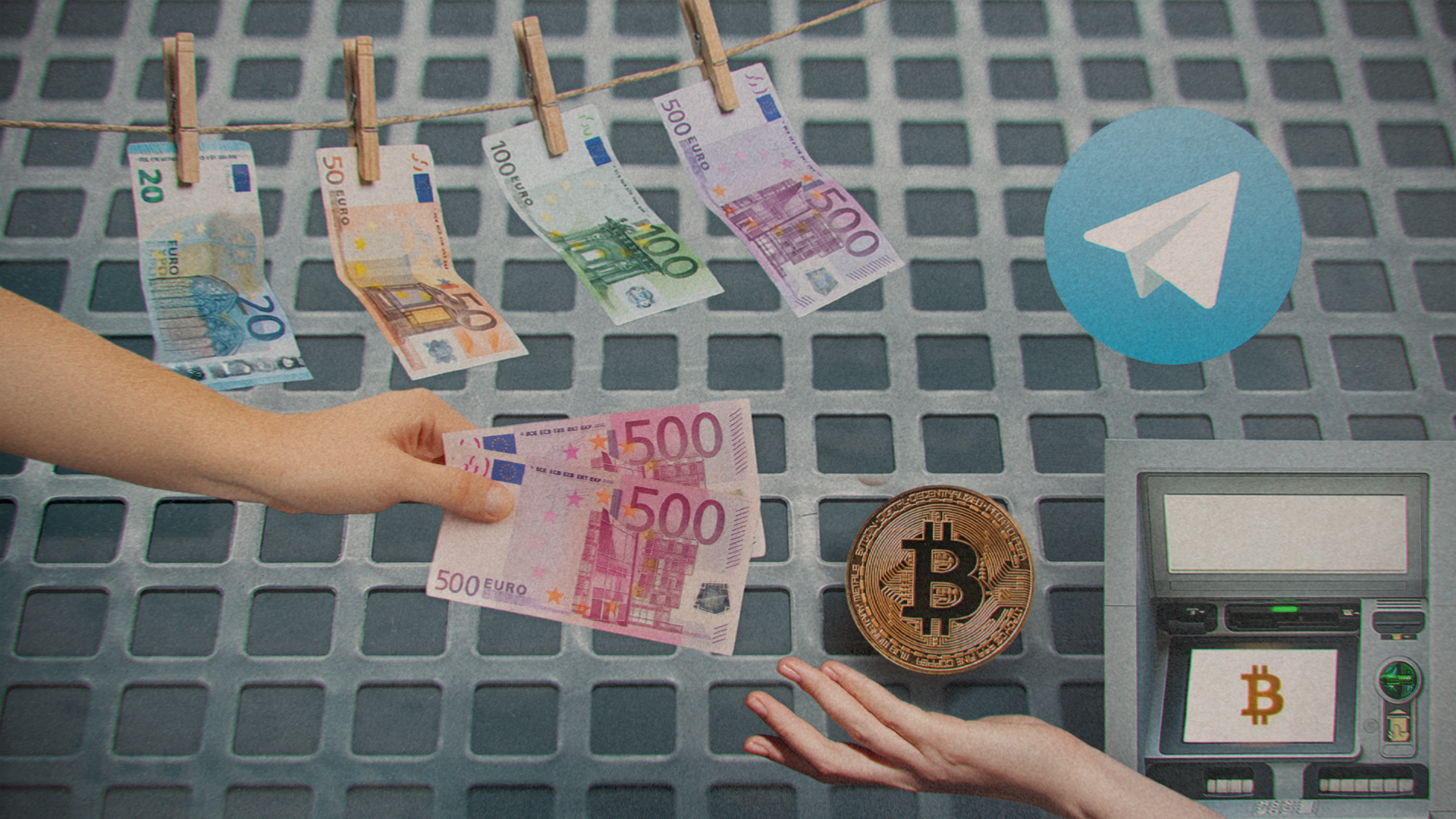
A trader posts an advertisement on social media, and both parties arrange the transaction details via chat software—within just a few minutes, 70 USDT is transferred from one crypto wallet to another, while 60 euros in cash are exchanged on the bustling streets of Podgorica (the capital of Montenegro). A fee of 5 euros is charged, with no questions asked and no inquiries about the source of funds.

After the transaction is completed, both parties quickly shake hands and depart. The trader mentions that he has other clients waiting for his services.

This scene is a true portrayal of Montenegro's cryptocurrency "gray area": cryptocurrencies are exchanged for cash outside the purview of legal regulation, with undercurrents flowing.
Anonymity, Cash, and High Risks

In fact, although Montenegro has promised to enact digital asset regulatory laws since 2020, they have yet to materialize.

While transferring funds from bank accounts to crypto trading platforms is not illegal in itself, cryptocurrencies cannot be converted into fiat currency through banks or registered exchange institutions.

At this point, intermediary platforms, Telegram groups, and online forums become the main channels for transactions—so-called "over-the-counter" (OTC) trading. Transactions are typically completed offline, with cryptocurrencies and cash exchanged directly and without any identity verification.

According to statistics from the blockchain forensics and crypto risk assessment platform "Global Ledger," the crypto wallet address involved in BIRN's transaction handled transactions worth millions of euros between October 2024 and October 2025. The largest single incoming transaction was $440,000, while the largest outgoing transaction exceeded $500,000.

Most of these transactions were conducted through well-known crypto platforms such as Binance and Gate.io, with about 75% of the activity occurring on low-risk platforms. However, a quarter of the transactions were classified as medium to high risk, including dealings with "frozen funds" (assets linked to frozen or sanctioned wallets) and entities sanctioned by the U.S. Financial Crimes Enforcement Network (FinCEN). Global Ledger rated the risk level of the trader's crypto wallet as "medium."

"In Podgorica, ask anyone involved in cryptocurrencies—everyone has their own 'dealer,'" said Ivan Jolicic, developer of Montenegro's digital currency Perper and a crypto expert. These dealers are not only locals but also include many expatriates from Russia, Ukraine, and Turkey.

"Participants include local crypto investors as well as foreigners, especially Russians, Ukrainians, and Turks. For them, this is the only way to make a living in Montenegro," Jolicic told BIRN. "They need to cover their living expenses in Montenegro, but banks are either unwilling or outright refuse to open accounts for them."

Another crypto trader active in the Balkans declined a request from a journalist to exchange 70 euros for Bitcoin, stating that their transaction threshold was "no less than 10,000 euros per transaction."

Russian-Language Telegram Groups Become Trading Hubs

BIRN's investigation found that multiple Telegram channels and online forums operate crypto exchange services in the Balkans or specifically for Montenegro. These groups range from a few dozen to several thousand members, with content including exchange amounts, rates, fees, and specific transaction locations.

A Russian-language Telegram group named "Обмен Валют Montenegro" (Montenegro Currency Exchange) has over 7,000 members and specializes in direct exchanges of cryptocurrencies for cash.
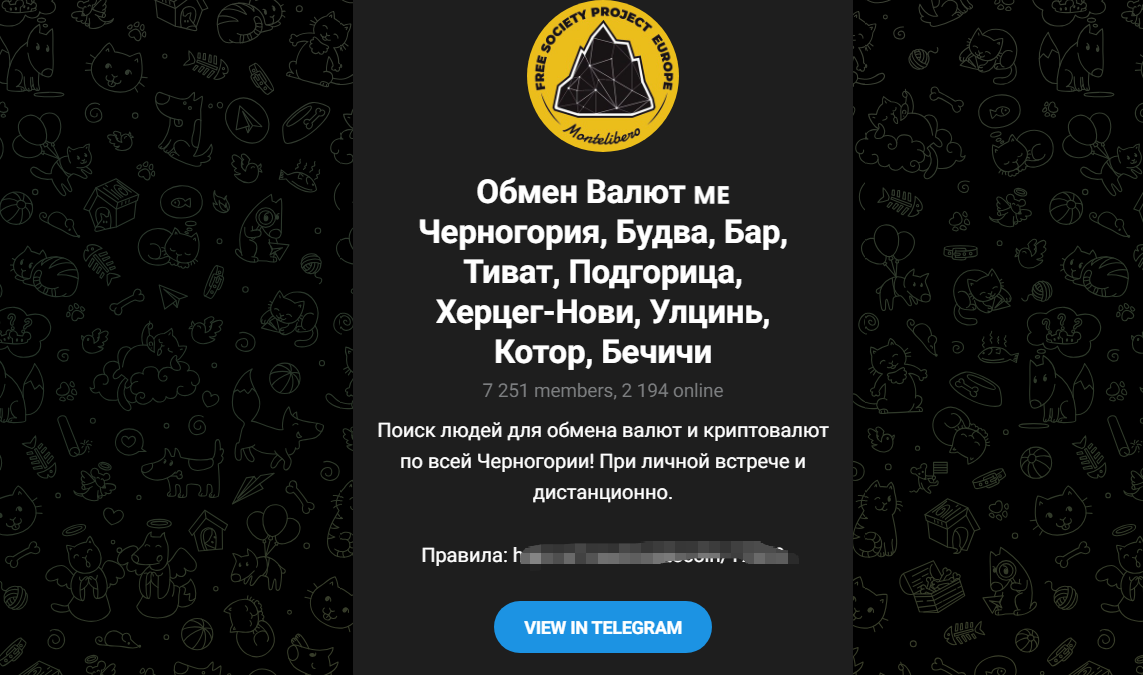
The group advises users to "only conduct transactions in person in public places and take necessary precautions," but also allows transactions through verified traders—these traders must submit passport information for group verification to receive a certified badge.

The group's logo and administrator usernames include the "Montelibero" community symbol. This community, located in Pecurice near the port city of Bar in Montenegro, was established by Russians in 2021. It claims to be a "free society" based on anarcho-capitalist principles and has issued its own cryptocurrency, EURMTL.

Victor Korb, a member of the Montelibero community council, denied any association between the community and the Telegram group: "Questions about others using the Montelibero project identifier should be directed to the users themselves."

Montenegro's tax authorities stated that, due to the lack of a legal basis, they are unable to tax such transactions.

"Until digital assets and their transactions are regulated by law, we cannot take any action," responded the Montenegrin Tax Authority. "Once the legal framework is established, the tax authorities will take all measures within their jurisdiction."

Although the process is slow, there has been preliminary progress.

In February 2025, the parliament passed an amendment to the "Anti-Money Laundering and Counter-Terrorist Financing Law," adding a "Register of Crypto-Asset Service Providers" and requiring "Know Your Customer" (KYC) verification for every crypto transaction exceeding 1,000 euros.

The Montenegrin Capital Market Committee (an independent securities and capital market regulatory body) was required to establish the register by mid-December 2025.

"Individuals or entities providing cryptocurrency-to-cash exchange services through social media operate in an unregulated 'gray area,'" the committee stated. "If service providers are unregistered and do not comply with the law, their activities may be deemed illegal—especially if there is suspicion of money laundering, unauthorized provision of financial services, or evasion of regulatory measures."

However, Jolicic remains skeptical. He believes that the registration requirements contradict the logic of the current gray market operations: "Those engaged in over-the-counter crypto trading must register and perform KYC verification for every client—but currently, no one is doing this. The law remains vague, and I believe these activities are inherently suspect under anti-money laundering regulations."

Legislative Revisions Imminent

BIRN previously exposed cases in Montenegro where cryptocurrencies were used to purchase real estate and vehicles, but such transactions were not incorporated into the tax or legal systems.

Due to the lack of a legal framework, authorities cannot even accurately track crypto assets held by public officials.

In mid-2023, the European Commission, the executive body of the EU, adopted the "Markets in Crypto-Assets Regulation" (MiCA), establishing a unified framework for digital asset regulation in the EU.

In September 2025, Montenegrin Prime Minister Milojko Spajic announced plans to draft digital asset laws in line with EU standards, and the Ministry of Finance has initiated public consultations on the relevant draft.

The proposed amendment to the "Credit Institutions Law" will, for the first time, define the concept of "digital assets," allowing credit institutions to provide crypto-related services (including digital token custody, trading platform operation, and transaction intermediation). The amendment to the "Tax Administration Law" will align Montenegrin law with the EU's "Directive on Automatic Exchange of Information on Crypto-Assets."

The Ministry of Finance stated that this will enable Montenegrin tax authorities to automatically exchange digital asset information with EU member states and other countries. Crypto service providers will need to collect and maintain user data (including accounts, transactions, and crypto income) and submit formal reports to the national service provider register.

"Regarding the taxation of crypto assets, we emphasize that once the digital asset regulatory law takes effect, the Ministry of Finance will amend tax laws to clarify the tax treatment of digital assets," the ministry responded.


Preguntas relacionadas

QWhat is the current regulatory status of cryptocurrency transactions in Montenegro?

ACryptocurrency transactions in Montenegro exist in a regulatory vacuum, with no specific digital asset laws yet implemented, allowing unregulated over-the-counter (OTC) cash exchanges to operate outside legal oversight.

QHow do OTC cryptocurrency transactions typically occur on the streets of Podgorica?

AOTC transactions involve parties agreeing on details via chat apps, transferring crypto between wallets, and exchanging cash in person on busy streets—often with no identity verification or questions about fund origins, completed within minutes.

QWhat risks are associated with the unregulated crypto-to-cash exchanges in Montenegro?

ARisks include medium-to-high risk wallet activities (per Global Ledger analysis), potential ties to frozen/sanctioned funds, anonymity enabling money laundering, and lack of consumer protection or legal recourse.

QWhich group facilitates a significant portion of crypto exchanges in Montenegro via Telegram?

ARussian-language Telegram groups like 'Обмен Валют Montenegro' (with 7,000+ members) serve as key hubs, offering crypto-cash exchanges often linked to foreign nationals (e.g., Russians, Ukrainians, Turks) who face banking access barriers.

QWhat legislative steps is Montenegro taking to regulate digital assets?

AMontenegro amended its Anti-Money Laundering Law in February 2025 to require KYC for transactions over €1,000 and plans EU-aligned laws (e.g., MiCA standards) to define digital assets, establish crypto service provider registries, and enable tax information exchange with the EU.

Lecturas Relacionadas

380,000 Apps Exposed, 2,000+ Apps Leaked Secrets: AI Programming Turns 'Intranet' into Public Internet

Israeli cybersecurity firm RedAccess uncovered a severe data exposure trend linked to "vibe coding" or AI-powered software development tools. Their research found approximately 38,000 publicly accessible web applications built with platforms like Lovable, Base44, Netlify, and Replit. Of these, an estimated 2,000 apps exposed sensitive corporate and personal data, including medical records, financial information, internal strategic documents, and customer chat logs. In some cases, access even granted administrative privileges. The core issue stems from default privacy settings that make applications public by default, combined with a lack of built-in security controls (like authentication) in the AI-generated code. This allows employees without security expertise—"citizen developers"—to easily create and deploy applications that bypass standard corporate security reviews. The exposed apps, often indexed by search engines, are trivially discoverable. While some platform providers (Replit, Lovable, Wix/Base44) argue that security configuration is the user's responsibility and question the validity of some findings, security researchers confirm the widespread reality of such exposures. This pattern, also noted in prior studies, highlights a critical security gap as AI democratizes app creation, potentially leading to massive, unintentional data leaks.

marsbitHace 59 min(s)

380,000 Apps Exposed, 2,000+ Apps Leaked Secrets: AI Programming Turns 'Intranet' into Public Internet

marsbitHace 59 min(s)

Attracting Global Capital, Asia's New 'Super Cycle' Is Unfolding

Investors are turning to Asia as the next frontier for global equity growth, with a new "super cycle" unfolding across the region. Driven by the AI revolution, Asian markets, particularly South Korea, have seen significant rallies. According to Morgan Stanley analysis, the underlying drivers of Asia's industrial cycle are shifting from traditional sectors like real estate and manufacturing to massive investments in AI infrastructure, energy security and transition, and supply chain resilience. Fixed asset investment in Asia is projected to grow from around $11 trillion in 2025 to $16 trillion by 2030, with a 7% annual growth rate from 2026-2030. The AI wave is a primary catalyst, driving immense capital expenditure for chips, servers, data centers, and power systems. Asia is central to this hardware supply chain. In China, AI investment is focused on building a full-system domestic capability, with the local AI chip market potentially reaching $86 billion by 2030. Beyond AI, China's export story is expanding from EVs and batteries to robotics. The country already captures about half of new global industrial robot demand and over 90% of humanoid robot shipments. This growth phase mirrors the early stages of China's EV export boom. Simultaneously, energy security investments, spurred by AI's massive power needs, are rising, with China benefiting from its leadership in solar, batteries, and EVs. Regional defense spending is also increasing structurally, supporting demand for advanced manufacturing. The main beneficiaries are China, South Korea, and Japan, positioned in core supply chain areas. However, risks remain, including potential overcapacity, profit margin pressures from competition, persistent technological restrictions, geopolitical friction, and workforce displacement due to AI-driven automation. Market volatility is also expected to increase as investor expectations diverge on the realization of these capital investment and export themes.

marsbitHace 59 min(s)

Attracting Global Capital, Asia's New 'Super Cycle' Is Unfolding

marsbitHace 59 min(s)

Funding Weekly Report | 14 Public Funding Events, Kalshi Completes $10B New Funding Round at $220B Valuation Led by Coatue Management

Weekly Funding Roundup: 14 Deals and $10.49B+ in Total Funding, Led by Kalshi's $1B Round Last week (5.4-5.10) saw 14 notable funding events in the global blockchain ecosystem, raising over $10.49 billion in total. Key highlights include Kalshi, a prediction market platform, securing a $1 billion round led by Coatue Management, reaching a $22 billion valuation. The platform now boasts ~2 million MAUs and $178B in annualized trading volume. In DeFi, regulated on-chain reinsurer OnRe raised $5 million in Series A funding, and Bitcoin-backed credit protocol Saturn Credit completed a $2 million seed round. For Infrastructure & Tools, OpenTrade raised $17 million to expand its stablecoin yield infrastructure, and RWA platform Balcony secured $12.7 million to deploy its property settlement service in the US. Centralized Finance saw one deal: AI-driven trading platform Stockcoin.ai completed a seed round led by Amber Group. In the prediction market sector alongside Kalshi, AI-powered platform Elastics raised $2 million. Other notable deals include SC Ventures' strategic investment in crypto market maker GSR and Centrifuge securing a "seven-figure" investment from Coinbase to become a core RWA partner for Base. On the investor side, Haun Ventures raised a new $1 billion fund targeting crypto and AI, and Multi Investment raised ~$616 million to focus on blockchain and Web3 investments.

marsbitHace 2 hora(s)

Funding Weekly Report | 14 Public Funding Events, Kalshi Completes $10B New Funding Round at $220B Valuation Led by Coatue Management

marsbitHace 2 hora(s)

Trading

Spot
Futuros

Artículos destacados

Cómo comprar CC

¡Bienvenido a HTX.com! Hemos hecho que comprar CC(Canton) (CC) sea simple y conveniente. Sigue nuestra guía paso a paso para iniciar tu viaje de criptos.Paso 1: crea tu cuenta HTXUtiliza tu correo electrónico o número de teléfono para registrarte y obtener una cuenta gratuita en HTX. Experimenta un proceso de registro sin complicaciones y desbloquea todas las funciones.Obtener mi cuentaPaso 2: ve a Comprar cripto y elige tu método de pagoTarjeta de crédito/débito: usa tu Visa o Mastercard para comprar CC(Canton) (CC) al instante.Saldo: utiliza fondos del saldo de tu cuenta HTX para tradear sin problemas.Terceros: hemos agregado métodos de pago populares como Google Pay y Apple Pay para mejorar la comodidad.P2P: tradear directamente con otros usuarios en HTX.Over-the-Counter (OTC): ofrecemos servicios personalizados y tipos de cambio competitivos para los traders.Paso 3: guarda tu CC(Canton) (CC)Después de comprar tu CC(Canton) (CC), guárdalo en tu cuenta HTX. Alternativamente, puedes enviarlo a otro lugar mediante transferencia blockchain o utilizarlo para tradear otras criptomonedas.Paso 4: tradear CC(Canton) (CC)Tradear fácilmente con CC(Canton) (CC) en HTX's mercado spot. Simplemente accede a tu cuenta, selecciona tu par de trading, ejecuta tus trades y monitorea en tiempo real. Ofrecemos una experiencia fácil de usar tanto para principiantes como para traders experimentados.

158 Vistas totalesPublicado en 2026.04.21Actualizado en 2026.04.21

Cómo comprar CC

Cómo comprar BLEND

¡Bienvenido a HTX.com! Hemos hecho que comprar Fluent (BLEND) sea simple y conveniente. Sigue nuestra guía paso a paso para iniciar tu viaje de criptos.Paso 1: crea tu cuenta HTXUtiliza tu correo electrónico o número de teléfono para registrarte y obtener una cuenta gratuita en HTX. Experimenta un proceso de registro sin complicaciones y desbloquea todas las funciones.Obtener mi cuentaPaso 2: ve a Comprar cripto y elige tu método de pagoTarjeta de crédito/débito: usa tu Visa o Mastercard para comprar Fluent (BLEND) al instante.Saldo: utiliza fondos del saldo de tu cuenta HTX para tradear sin problemas.Terceros: hemos agregado métodos de pago populares como Google Pay y Apple Pay para mejorar la comodidad.P2P: tradear directamente con otros usuarios en HTX.Over-the-Counter (OTC): ofrecemos servicios personalizados y tipos de cambio competitivos para los traders.Paso 3: guarda tu Fluent (BLEND)Después de comprar tu Fluent (BLEND), guárdalo en tu cuenta HTX. Alternativamente, puedes enviarlo a otro lugar mediante transferencia blockchain o utilizarlo para tradear otras criptomonedas.Paso 4: tradear Fluent (BLEND)Tradear fácilmente con Fluent (BLEND) en HTX's mercado spot. Simplemente accede a tu cuenta, selecciona tu par de trading, ejecuta tus trades y monitorea en tiempo real. Ofrecemos una experiencia fácil de usar tanto para principiantes como para traders experimentados.

161 Vistas totalesPublicado en 2026.04.24Actualizado en 2026.04.24

Cómo comprar BLEND

Cómo comprar ACN

¡Bienvenido a HTX.com! Hemos hecho que comprar AITECH CLOUD NETWORK (ACN) sea simple y conveniente. Sigue nuestra guía paso a paso para iniciar tu viaje de criptos.Paso 1: crea tu cuenta HTXUtiliza tu correo electrónico o número de teléfono para registrarte y obtener una cuenta gratuita en HTX. Experimenta un proceso de registro sin complicaciones y desbloquea todas las funciones.Obtener mi cuentaPaso 2: ve a Comprar cripto y elige tu método de pagoTarjeta de crédito/débito: usa tu Visa o Mastercard para comprar AITECH CLOUD NETWORK (ACN) al instante.Saldo: utiliza fondos del saldo de tu cuenta HTX para tradear sin problemas.Terceros: hemos agregado métodos de pago populares como Google Pay y Apple Pay para mejorar la comodidad.P2P: tradear directamente con otros usuarios en HTX.Over-the-Counter (OTC): ofrecemos servicios personalizados y tipos de cambio competitivos para los traders.Paso 3: guarda tu AITECH CLOUD NETWORK (ACN)Después de comprar tu AITECH CLOUD NETWORK (ACN), guárdalo en tu cuenta HTX. Alternativamente, puedes enviarlo a otro lugar mediante transferencia blockchain o utilizarlo para tradear otras criptomonedas.Paso 4: tradear AITECH CLOUD NETWORK (ACN)Tradear fácilmente con AITECH CLOUD NETWORK (ACN) en HTX's mercado spot. Simplemente accede a tu cuenta, selecciona tu par de trading, ejecuta tus trades y monitorea en tiempo real. Ofrecemos una experiencia fácil de usar tanto para principiantes como para traders experimentados.

91 Vistas totalesPublicado en 2026.04.28Actualizado en 2026.04.28

Cómo comprar ACN

Discusiones

Bienvenido a la comunidad de HTX. Aquí puedes mantenerte informado sobre los últimos desarrollos de la plataforma y acceder a análisis profesionales del mercado. A continuación se presentan las opiniones de los usuarios sobre el precio de A (A).

活动图片