No Holiday Break|What Have Crypto KOLs Been Talking About in the Last 24 Hours?

比推Publicado a 2026-02-18Actualizado a 2026-02-18

Resumen

This article summarizes discussions from crypto KOLs on X (formerly Twitter) over the past 24 hours during the Chinese New Year period. Key topics include: - Reflections on the Spring Festival and the growing role of AI, especially its prominence in the Spring Festival Gala. - Kraken Exchange launching an official Chinese account, with executives greeting the community in Chinese. - An analysis of the evolution of crypto listing cycles, arguing that "narratives are dead, utility prevails." The piece discusses different eras—from early chaos, to IEOs, the rise of Airdrops, and the current balance between VCs, projects, and retail. He Yi from Binance commented on the industry’s maturation and shifting dynamics. - Market sentiment discussions, noting that in a bull market, even unrelated news is seen as positive, while in bear markets, all news is perceived negatively. Some expect Bitcoin to consolidate around $60k–$70k for a while. - Humorous community comments about Justin Sun (often referred to as "Sun Ge" or "Sun Cut"), poking fun at his reputation and anecdotal stories. The article includes multiple screenshots of tweets and disclaims that the opinions expressed are personal and not investment advice.

Dear readers, may the Year of the Horse bring you great fortune!

This Bingwu Spring Festival, we wish you: ever-rising portfolios, a mindset as steady as a galloping horse, and profits racing like a track sprint!

Let’s take a look at what KOLs in the crypto space have been hotly discussing over the past 24 hours—

Note: The following content is compiled from the X platform, representing personal opinions only. It does not represent the stance of this platform and should not be considered investment advice.

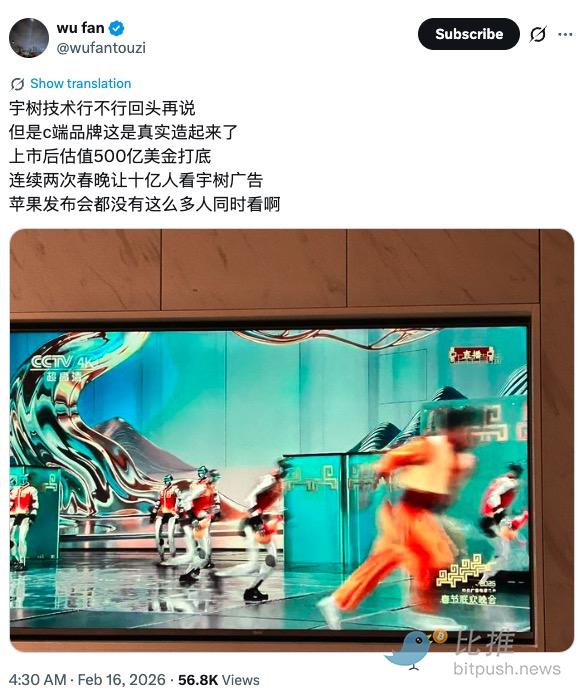
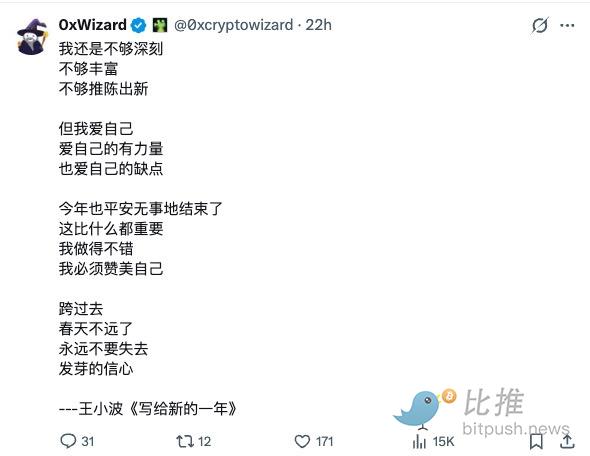
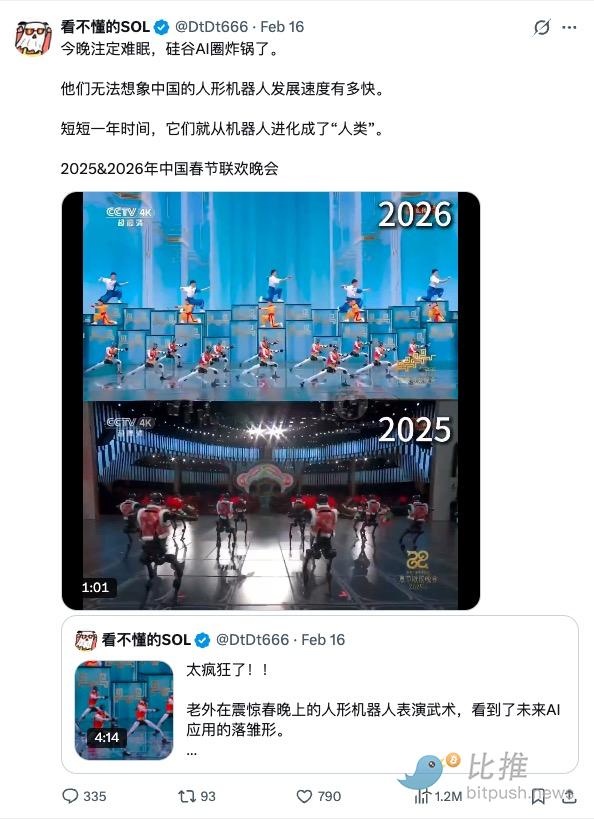
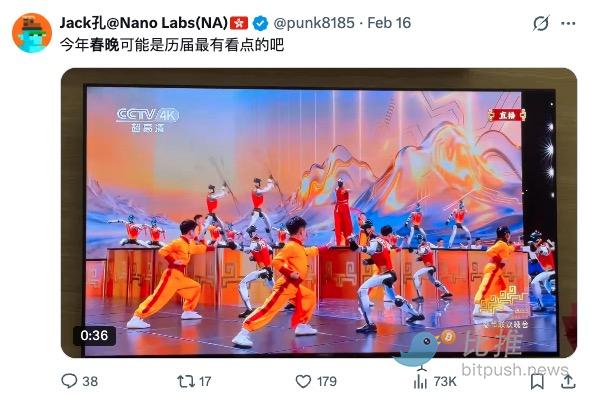
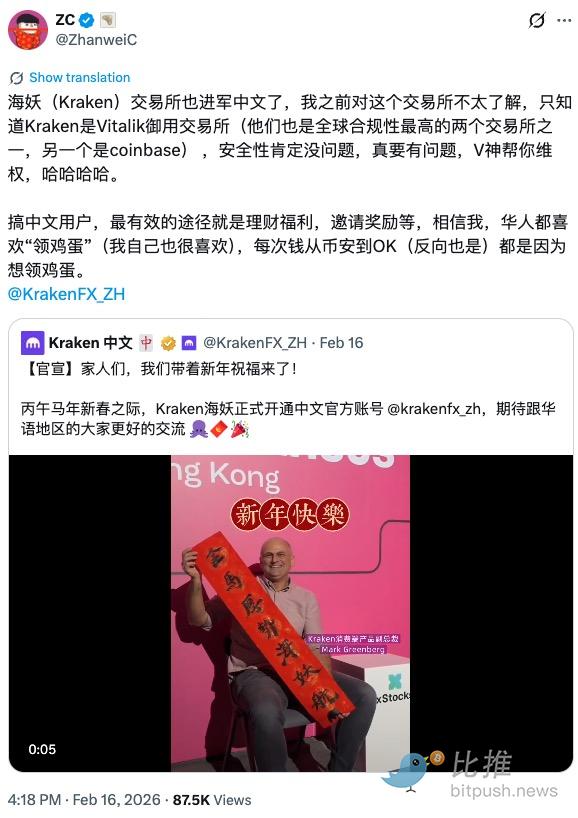
New Year Reflections, and When AI Takes Center Stage at the Spring Festival Gala
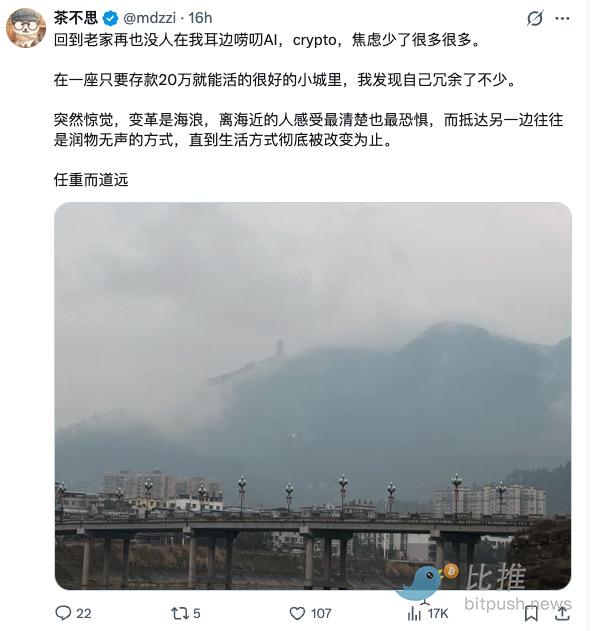
Kraken Exchange Launches Chinese Account, Executives Extend New Year Greetings in Chinese
The Evolution of Listing Cycles: “Narratives Are Dead, Utility Reigns”

Article link: https://www.bitpush.news/articles/7612622

Author’s note: “As an old-timer in crypto who’s anti-VC, this sentiment really resonates with us—do you know how long it took for the crypto community to reclaim pricing power? So today, from the perspective of a seasoned veteran, I’ve strung together these phases to help newcomers understand the journey. This is a hearty dish for you to savor during boring family visits or while traveling. It’s worth reading again and again.”

He Yi’s repost comment:

“From an exchange’s perspective, the first phase was the wild west era where many projects cashed out and left. Binance began restricting investors & project teams from unlocking tokens based on milestones or timelines.

The second IEO era emerged because liquidity was concentrated, giving Binance more leverage to advise projects on low-price TGEs to benefit retail investors, without charging listing fees—a win-win logic. Coupled with the bear market introducing longs, shorts, and leverage, this became the ‘golden age’ everyone reminisces about.

The third era saw AMMs revolutionize DEXs, the rise of VCs, and the professionalization of industry KOLs and institutions. This diluted CEXs’ pricing power and introduced compliance standards, leading to airdrops.

The fourth era is marked by further institutional professionalization among players. Exchanges evolved from early curation to CEXs integrating wallets and enabling trading of any on-chain token, giving rise to ‘the eggs every generation must claim’—Alpha, intended to balance VC & institutional, project, and retail interests.

For any emerging industry, it’s a process of feeling our way forward. Most people lack faith in the industry’s long-term prospects, hence ‘not looking long-term.’ It’s like many don’t believe we can cross this river, but only those who believe can make it to the other shore.”

Market Discussions
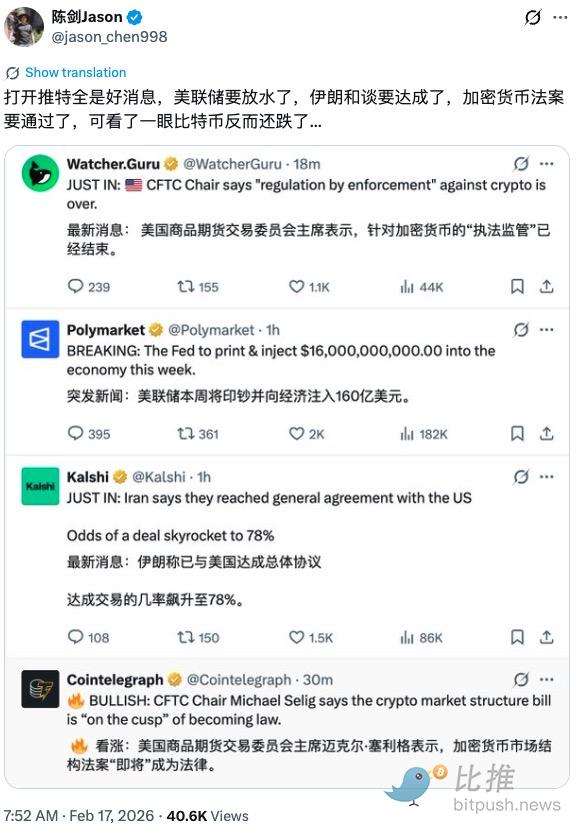
Popular replies:

In a bear market, any news is bearish; in a bull market, even unrelated news is bullish;

When Bitcoin ETFs were approved, the price didn’t rise—it actually dropped from 44k to 38k, but later hit 120k. Probably now it’ll hover around 60k-70k for a long time;

It’s these positive factors that pushed it past 70k; otherwise, it would’ve dropped to 60k already.

The Charm of “Sun Studies”
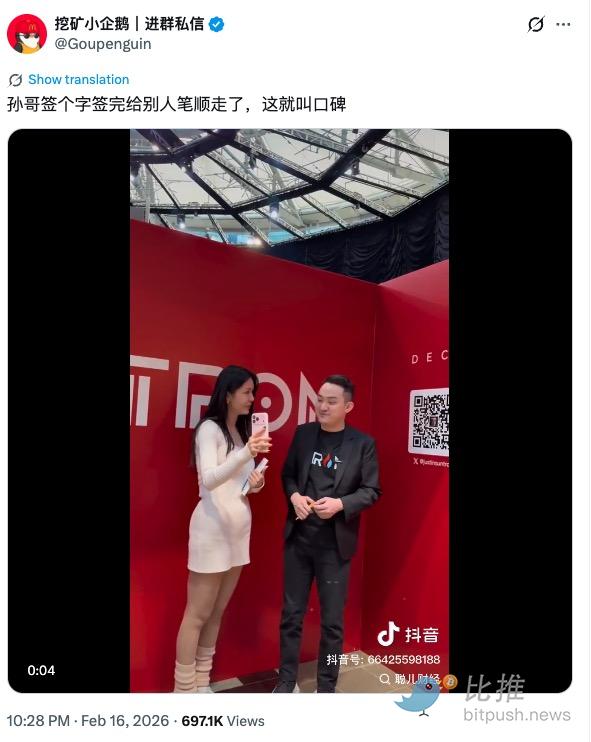
Popular replies:

A joke: you think he’s just borrowing a pen, but when you look back, your wallet’s gone too. Then Brother Sun invites you to dinner under the pretext of returning it, and you end up losing the meal on top of it;

His never-miss-a-trick nature is etched in his genes;

I heard that last time Sun Cut was interviewed in Hong Kong, he pocketed two glass cups on his way out;


Original article link: https://www.bitpush.news/articles/7612688

Preguntas relacionadas

QWhat is the main topic discussed by crypto KOLs in the past 24 hours according to the article?

AThe main topics include Chinese New Year reflections, AI's role in the Spring Festival Gala, Kraken Exchange opening a Chinese account and executives greeting in Chinese, the evolution of token listing cycles, market discussions, and the 'charm of Sun Studies' (referring to Sun Yuchen's influence).

QWhich exchange opened a Chinese account and had executives send New Year greetings in Chinese?

AKraken Exchange opened a Chinese account and had its executives send New Year greetings in Chinese.

QWhat is the core argument in the 'Token Listing Cycle Evolution Theory' mentioned in the article?

AThe core argument is 'Narrative is dead, utility stands,' highlighting a shift from speculative narratives to practical utility in token listings, with insights into the industry's phases from wild growth to institutional professionalism.

QHow did the community react to market discussions, as per the popular replies in the article?

AThe community noted that in a bear market, any news is seen as negative, while in a bull market, even unrelated news is perceived as positive. They also discussed Bitcoin's price consolidation around $60,000-$70,000 after ETF approval.

QWhat is the community's humorous take on 'Sun Studies' (孙学) in the article?

AThe community humorously commented on Sun Yuchen's reputation, joking that he might take advantage of situations, such as 'taking wallets' or even pocketing glass cups after an interview, reflecting his opportunistic character.

Lecturas Relacionadas

Once-Popular Web3 Enters Wave of Layoffs

The once-hot Web3 industry is experiencing a severe wave of layoffs. While many companies attribute job cuts to AI-driven restructuring, the primary reason is often financial pressure. The Web3 sector, at the intersection of tech and finance, has been hit particularly hard. Employees at major cryptocurrency exchanges report sudden, impersonal layoffs—often with system access revoked overnight—and minimal or no severance. Common tactics include setting impossible performance targets or terminating employees for minor policy violations. The working atmosphere has become toxic, marked by intense monitoring, excessive meetings, and management obsessed with control and internal politics rather than product innovation. The industry's core business model is collapsing. Exchange revenue from trading fees and listing charges has plummeted due to a decline in quality projects and retail investor exodus. Events like the massive forced liquidation on October 10th further shattered confidence. Competition from on-chain derivatives platforms and prediction markets is intensifying the downturn. As layoffs continue, displaced workers struggle to find new opportunities. Many transition to the AI sector, but face significant bias from traditional finance and even some AI firms, which view crypto industry experience with suspicion. The current downturn appears more structural than cyclical, driven by unsustainable practices, internal strife, and a failure to innovate, raising questions about the industry's future trajectory.

marsbitHace 10 min(s)

Once-Popular Web3 Enters Wave of Layoffs

marsbitHace 10 min(s)

Sales Drop 26% But Prices Rise? Xiaomi's Dilemma

Xiaomi, facing a significant 26.3% year-on-year decline in global smartphone shipments in Q2 2026, has implemented its third price hike of the year. On August 2nd, prices were raised for nine models, including the flagship Mi 17 series (up 400-500 yuan) and Redmi K90/Turbo 5 series (up 300 yuan). This move completes a pattern where cost pressure, originating from surging memory chip prices, has climbed from entry-level to mid-range and now flagship products. The primary driver is a severe supply squeeze on consumer-grade DRAM and NAND flash memory, as major manufacturers like Samsung shift advanced capacity to more profitable HBM for AI applications. According to Xiaomi President Lu Weibing, memory prices for the same configuration have skyrocketed nearly fourfold since Q1 2025, adding roughly 1500 yuan to the cost of a mainstream 12GB+512GB phone. IDC estimates consumer memory costs have risen nearly 300% year-on-year. While the price increases hurt demand and contributed to the sales slump, Xiaomi's strategy of reducing entry-level models and upgrading its product mix also played a role. Domestically, its market share in China fell to 12% (5th place), while leaders Huawei and Apple saw shipments grow over 24%. To mitigate future risks, Xiaomi is accelerating its in-house "Surge" chip development and optimizing memory configurations across its lineup. Xiaomi is not alone; major brands like OPPO, vivo, and Apple have already raised prices in 2026, with industry insiders predicting another round of increases (200-800 yuan) in the second half. A full-scale industry-wide涨价 cycle is underway, forcing both manufacturers and consumers to recalibrate their strategies and purchasing decisions amid sustained cost pressures.

marsbitHace 21 min(s)

Sales Drop 26% But Prices Rise? Xiaomi's Dilemma

marsbitHace 21 min(s)

Three Consecutive Quarters of Decline: The Crypto Market is Experiencing Its Longest Ebb Since 2022

The cryptocurrency market experienced its third consecutive quarterly decline in Q2 2026, marking its longest downturn since 2022, according to a CoinGecko report. The total market capitalization fell 12.6% to $2.1 trillion, a retreat of roughly 52% from its October 2025 peak. Multiple indicators signal an orderly capital exit from the sector. For the first time since Q3 2023, the total stablecoin market cap shrank (-1.6% to $305.1B), indicating funds are leaving the ecosystem entirely, not just rotating to safer crypto assets. Trading volumes on centralized exchanges dropped 27.9%, while DeFi's Total Value Locked (TVL) plummeted 23.4%. Both Bitcoin (-14.2%) and Ethereum (-25.4%) underperformed traditional risk assets like equities in Q2, breaking from previous correlative narratives. Ethereum saw its first-ever three-quarter losing streak, with its market share falling to around 10%. A few areas saw growth. Prediction market volumes surged 48.7%, largely driven by sports betting. Hyperliquid's HYPE token entered the top 10 by market cap, and tokenized collectibles platforms grew, though primarily via gamified mechanics. Despite a ~9.8% Bitcoin rebound in July, historical trends suggest caution for August. The market, now ~49% below its 2025 high, is undergoing a measured retreat. Its recovery hinges on future Federal Reserve policy and the industry's ability to develop sustainable revenue streams beyond speculation.

marsbitHace 35 min(s)

Three Consecutive Quarters of Decline: The Crypto Market is Experiencing Its Longest Ebb Since 2022

marsbitHace 35 min(s)

Trading

Spot
活动图片