Netherlands To Amend Controversial 36% Tax On Unrealized Crypto, Stock Gains

bitcoinistPublicado a 2026-02-26Actualizado a 2026-02-26

Resumen

Dutch Finance Minister Eelco Heinen has announced that the Netherlands will revise its controversial tax reform bill, which proposed a 36% tax on unrealized gains from crypto, stocks, and other investments. The legislation, known as the Actual Return in Box 3 Act and set to take effect in 2028, has faced strong criticism from lawmakers and investors who argue it is unfair and could drive wealth out of the country. Heinen acknowledged the need for amendments and stated that the government will reexamine the bill with the House of Representatives and the Senate, potentially leading to a complete rewrite if necessary. The current system, which taxes assumed returns, was ruled unsustainable by the Supreme Court, prompting the proposed overhaul.

Dutch financial authorities have revealed that the reform bill to tax unrealized gains on crypto, stocks, and other investments will be revised following criticism from lawmakers and local investors.

Dutch Finance Minister To Revise Tax Overhaul

On Wednesday, the Minister of Finance of the Netherlands, Eelco Heinen, announced that the recently passed bill to tax unrealized gains on crypto and other assets will be reviewed and amended to address multiple concerns brought by the Senate and crypto investors.

“I don’t think the law can go through as it stands,” Heinen told local news outlet RTL Nieuws. “I think something has simply gone wrong here, and the current law needs to be amended.”

The Netherlands plans to overhaul its tax system on January 1, 2028. The proposed system, known as the Actual Return in Box 3 Act, is set to tax investors 36% on the change in value of their crypto and other assets each year, even if these have not been sold.

According to the report, the Dutch finance minister noted that there’s still time to amend the controversial tax overhaul, as it will not be enacted until 2028.

Moreover, he revealed that he has already discussed the bill’s upcoming revision with his state secretary, adding that they are set to examine the legislation and potential amendments with lawmakers.

“We have agreed that we will go back to the drawing board, engage in discussions with the House of Representatives and the Senate, and see how we can amend the law,” he stated.

Heinen also opened the door to a complete rewrite of the crypto tax bill if amendments in certain areas don’t suffice to address the concerns. Nonetheless, he shared that he doesn’t yet know which option will be necessary as they are “just going to have the conversation.”

The Unrealized Crypto, Stock Gains Tax Debate

The new system has been heavily criticized by local investors, who have expressed concerns about being unfairly taxed on their crypto and other assets. Some have argued that the legislation could push wealth out of the country, as crypto investors and other high-net-worth individuals could consider relocating to other jurisdictions with friendlier tax frameworks.

Under the new Box 3 system, the government will calculate tax by comparing the value of an asset at the beginning and end of the year, and the income earned during this period. As a result, both realized and unrealized gains on cryptocurrencies, stocks, bonds, and similar investments will be included.

Only real estate and shares in startups will be exempt from the new system, as they will be taxed when profit is made. Meanwhile, income from these assets will continue to be taxed in the year it is received.

For context, the old Box 3 system taxed investors based on the assumed returns of assets, a practice the Supreme Court ruled unfair and unsustainable after the Dutch state lost several court cases, with every year of delay costing the treasury hundreds of millions, RTL Nieuws detailed.

Since then, lawmakers have been developing the proposed new model that they consider more accurate. However, some reports noted that the government ignored previous concerns and still decided to advance the bill with some adjustments.

Notably, the Dutch House of Representatives passed the legislation two weeks ago, advancing it to the Senate for consideration. RTL Nieuws highlighted that the Dutch Senate, which has yet to discuss the reform plan, also shares similar concerns as investors.
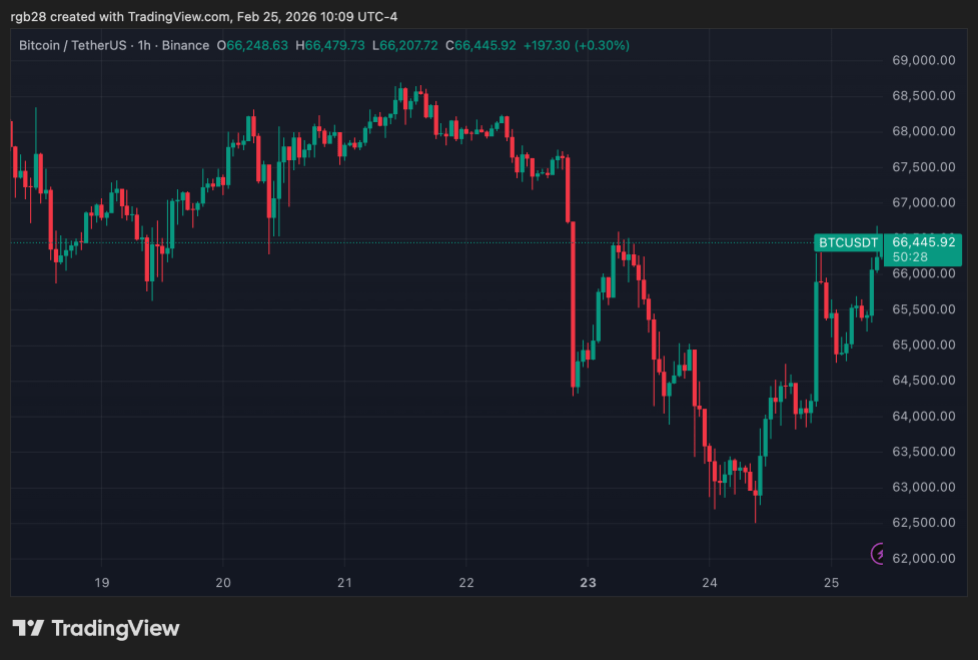
Bitcoin (BTC) trades at $66,445 in the one-week chart. Source: BTCUSDT on TradingView


Preguntas relacionadas

QWhy is the Netherlands planning to amend the controversial tax on unrealized crypto and stock gains?

ADutch Finance Minister Eelco Heinen announced a review and amendment of the tax overhaul due to criticism from lawmakers and local investors, acknowledging that the current law cannot proceed as it stands and something has gone wrong.

QWhat is the proposed tax rate on unrealized gains under the Actual Return in Box 3 Act?

AThe proposed system would impose a 36% tax on the change in value of crypto and other assets each year, even if they have not been sold.

QWhen is the new tax system scheduled to be implemented in the Netherlands?

AThe tax overhaul is planned to take effect on January 1, 2028.

QWhat are the main concerns raised by investors regarding the unrealized gains tax?

AInvestors are concerned about being unfairly taxed on unsold assets, which could lead to wealth leaving the country as high-net-worth individuals might relocate to jurisdictions with more favorable tax frameworks.

QHow did the old Box 3 system differ from the proposed new model?

AThe old Box 3 system taxed investors based on assumed returns of assets, which was ruled unfair by the Supreme Court, while the new model aims to tax actual returns, including both realized and unrealized gains.

Lecturas Relacionadas

Lowering Expectations for BTC's Next Bull Market

The author, Alex Xu, explains his decision to significantly reduce his Bitcoin holdings (from full to ~30% of his portfolio) during the current bull cycle, citing a lowered long-term outlook for BTC's price appreciation in the next cycle. He outlines six key reasons for this reduced expectation: 1. **Diminished Growth Drivers:** The narrative of exponential user adoption has largely played out with institutional ETF adoption. The next major growth phase—adoption by sovereign national reserves or central banks—seems unlikely in the near future. 2. **Personal Opportunity Cost:** More attractive investment opportunities have emerged in other assets, such as undervalued companies. 3. **Industry-Wide Contraction:** The broader crypto industry is struggling, with most Web3 business models (SocialFi, GameFi, DePIN) failing. This overall萧条 (depression) reduces the fundamental demand and consensus for Bitcoin. 4. **Strain on Major Buyer:** MicroStrategy, a major corporate buyer of BTC, faces rising financing expenses for its debt, which could slow its purchasing rate and create significant marginal pressure on the market. 5. **Increased Competition from Gold:** The emergence of "tokenized gold" has closed the functional gap (portability, divisibility) between physical gold and Bitcoin, offering a strong competitor in the non-sovereign store-of-value space. 6. **Security Budget Concerns:** The block reward halving continues to exacerbate the long-standing issue of funding Bitcoin's network security, with new fee source explorations like Ordinals and L2s largely failing. The author's decision to hold a significant (though reduced) position reflects a cautious, not bearish, outlook. He remains open to increasing his exposure if the fundamental reasons for his skepticism change or if new positive catalysts emerge.

marsbitHace 10 min(s)

Lowering Expectations for BTC's Next Bull Market

marsbitHace 10 min(s)

Can Iran 'Control' the Strait of Hormuz?

Iran has announced a comprehensive plan to assert control over the strategic Strait of Hormuz, a critical global oil shipping chokepoint. The proposed measures include requiring all vessels to obtain Iranian permission for passage, imposing fees for security, environmental protection, and navigation management—preferably paid in Iranian rials—and absolutely banning Israeli ships. Vessels from countries deemed hostile by Iran’s top security bodies may also be barred. Analysts suggest Iran’s motives are multifaceted: increasing pressure on the U.S. and Israel by leveraging control over oil transit to influence global prices and inflation; creating a new revenue stream, potentially exceeding $7.7 billion annually, to counter Western sanctions and support postwar reconstruction; and using transit permissions as bargaining chips in future negotiations, notably with the U.S. However, the plan faces significant practical and diplomatic challenges. Enforcing comprehensive interception and fee collection in the busy waterway, patrolled by international military forces, would be difficult. The U.S. has already countering with a blockade of Iranian ports and threats to intercept any ship paying fees, potentially strangling Iran’s oil exports and fee revenue. Broad international opposition, led by European and Gulf states, and legal controversies further complicate implementation. The proposal may ultimately serve more as a negotiating tactic than a feasible policy, with its execution remaining highly uncertain.

marsbitHace 1 hora(s)

Can Iran 'Control' the Strait of Hormuz?

marsbitHace 1 hora(s)

Trading

Spot
Futuros
活动图片




