Nansen Founder Forecasts Bitcoin Bottom

cryptonews.ruPublicado a 2026-08-08Actualizado a 2026-08-08

Resumen

The founder and CEO of blockchain analytics firm Nansen, Alex Svanevik, predicts that Bitcoin is unlikely to ever fall below $60,000 again. He believes the crypto market is gradually shifting from a speculative model to using blockchain for real-world assets, with accumulation by large investors and ongoing demand supporting Bitcoin's price. Svanevik cites Bitcoin's role as a hedge against central bank money supply expansion as a key factor. Analysts from CryptoQuant note that the behavior of large holders around the $70,000 level (the realized price of accumulation addresses) will be a critical decision zone for the market. While acknowledging the recent sale of 1,638 BTC by MicroStrategy for corporate purposes, Svanevik also speculates that a Bitcoin price of $1 million could become the new normal if that level is reached. Separately, Svanevik stated that Solana is undervalued due to its misperception as primarily a memecoin platform, praising its development team and ecosystem. He views the tokenization of traditional assets as a major trend, positively assessing projects like Hyperliquid. Regarding the recently launched Robinhood Chain, he sees it as a potential competitor to Base, leveraging Robinhood's large user base, but questions the need for a separate Robinhood token.

Alex Svanevik, founder and CEO of the blockchain analytics firm Nansen, stated that Bitcoin is unlikely to ever fall below $60,000 again. In his view, the crypto market is gradually transitioning from a speculative model to using blockchain for real-world assets, while accumulation of Bitcoin by large investors and demand for digital assets could support its price.

"My personal opinion is that I don't think Bitcoin will ever fall below $60,000 again. I think that's already in the past [...] forever," said Svanevik.

He links his stance to Bitcoin's role as a hedge against the expansion of the money supply by central banks. He also suggests that the global cycle of monetary expansion will not end anytime soon.

An additional signal for the market was provided by CryptoQuant. Analysts believe the more important factor is the behavior of large holders around the realized price of accumulation addresses—approximately $70,000. This level could become a decision-making zone: if large holders continue to accumulate, it could indicate sustained long-term demand.

Market sentiment is also influenced by the actions of MicroStrategy, which sold 1,638 BTC for $104.73 million, using the funds to pay dividends on preferred shares and repurchase MSTR stock.

Company co-founder Michael Saylor clarified that his famous call to "never sell Bitcoin" refers to his personal assets, not the strategy of the public company.

At the same time, in the long term, Svanevik allows for a significantly higher valuation of the leading cryptocurrency. He stated that Bitcoin at $1 million could quickly become the new normal if the asset reaches that level.

"From our current perspective, it sounds insane to talk about Bitcoin at $1 million, but I'm sure that in 2018, talk about $100,000 sounded just as insane," noted the Nansen CEO.

Svanevik Called Solana Undervalued Due to Memecoins

Separately, the Nansen CEO commented on Solana, stating that the perception of the blockchain as a platform primarily for memecoins is mistaken.

He highlighted the project's team and its ability to develop the ecosystem. However, the expert refrained from making a specific price prediction for the coin over the next 12 months.

Svanevik also views the prospects of Hyperliquid positively and overall considers the crypto industry's shift towards tokenizing traditional assets as an important trend.

"Crypto assets were once the sort of hero of the blockchain 'toy world.' And now we're transitioning to the era of the real world, where you see tokenized stocks, trading of indices like the S&P 500 and Hyperliquid," he noted.

Regarding Robinhood Chain, which launched on July 1, 2026, Svanevik called it a potential competitor to Base. In his opinion, the network's advantage is Robinhood's large user base.

However, the Nansen CEO doubts that Robinhood needs its own token. He said the company has already managed to attract a significant number of users without one, and launching a separate asset could compete with Robinhood shares.

"They clearly don't need it, do they? Many projects launched tokens as a way to stimulate user interest," explained Svanevik.

It is worth recalling that after the launch of its own network, the real-world tokenized asset sector grew nearly sevenfold in less than a month.

Criptos en tendencia

Preguntas relacionadas

QAccording to Alex Svanevik, the founder and CEO of Nansen, what price level does he believe Bitcoin will likely never fall below again?

AAlex Svanevik believes that Bitcoin will likely never fall below $60,000 again.

QWhat did Alex Svanevik cite as a long-term reason supporting Bitcoin's price, besides accumulation by large investors?

AHe cited Bitcoin's role as a hedge against central bank money supply expansion and the ongoing global monetary expansion cycle.

QWhat price did Svanevik suggest could become the new normal for Bitcoin if it reaches that level?

AHe suggested that a price of $1 million for Bitcoin could quickly become the new normal if the asset reaches that level.

QRegarding Solana, what common perception does Svanevik believe is a mistake?

AHe believes the perception of Solana as a blockchain primarily for memecoins is a mistake.

QWhat major trend in the crypto industry does Svanevik view as important, and which projects did he mention as examples?

AHe views the tokenization of traditional assets as an important trend, mentioning Hyperliquid and tokenized stocks or indices like the S&P 500 as examples.

Lecturas Relacionadas

Google's Decade-Long AI Power Struggle Concludes, Pichai Gracefully Consolidates Control

A decade of internal AI rivalry at Google has concluded with CEO Sundar Pichai consolidating power through a masterful, bloodless reorganization. The key moves saw Demis Hassabis, DeepMind's visionary founder, step down as CEO of Google DeepMind to become Alphabet's Chief Scientist, focusing on long-term AGI. Concurrently, Google's legendary technical leader Jeff Dean departed with his team to start a new venture, in which Google invested. This restructuring marks the end of a long-standing divide between the research-focused DeepMind and the product-oriented Google Brain. Pichai's strategy, beginning with their 2023 merger under Hassabis, gradually centralized control. While Hassabis gained public acclaim for Gemini's progress and a Nobel Prize, Pichai quietly elevated Koray Kavukcuoglu, a pragmatic engineering veteran, to oversee daily operations. The catalyst was mounting pressure in 2026 as Gemini's development timelines slipped, causing stock declines. Hassabis, more passionate about pure research and his AI drug discovery company Isomorphic Labs, grew weary of the commercial grind. His graceful "promotion" effectively removed him from operational control. Pichai handled both transitions with characteristic finesse: granting Hassabis a prestigious, future-focused role to prevent a defection to rivals (as happened with former DeepMind co-founder Mustafa Suleyman), and investing in Dean's new company to keep his pioneering work within Google's orbit. The outcome is a fundamental shift: control of Google's AI future has passed from brilliant scientist-visionaries to professional managers and engineers like Kavukcuoglu and Pichai himself. It signals Pichai's bet that the AI race has entered an industrial phase won by systemic execution, organizational efficiency, and stable delivery, rather than lone genius. The era of scientists directly managing core AI is over at Google, replaced by a machine-like division of labor where the CEO decides who decides.

marsbitHace 1 hora(s)

Google's Decade-Long AI Power Struggle Concludes, Pichai Gracefully Consolidates Control

marsbitHace 1 hora(s)

OpenAI Executive: Tools Like Codex, Only Two Months Left to Shine

In a candid statement, OpenAI's product and platform lead, Thibault Sottiaux, predicts that tools like Codex will become "primitive" within 2-3 months. He highlights that the current paradigm of running AI agents (Harness frameworks) locally on laptops is hitting fundamental limits as next-generation models demand more from their environments. The core limitations are threefold: 1) Local hardware constraints on compute and memory when agents handle concurrent subtasks; 2) The impracticality of requiring machines to stay online for long-duration tasks; and 3) The inability of lightweight local setups to manage the massive parallel context and toolchains of advanced models. The solution, Sottiaux suggests, is a shift towards "cloud-native infrastructure." The future lies in "light local command, heavy cloud execution," where developers use their devices as control panels. Complex tasks like code refactoring, testing, and automation will be offloaded to dynamic, parallel cloud clusters (e.g., isolated sandbox containers), with results streamed back. This evolution is already underway, with examples like Anthropic orchestrating 16 Claude instances across 2000 cloud sessions to build a C compiler. The competition will thus move from raw model capability to which platform can most effectively unlock a model's full potential through sophisticated, system-level Harness engineering.

marsbitHace 2 hora(s)

OpenAI Executive: Tools Like Codex, Only Two Months Left to Shine

marsbitHace 2 hora(s)

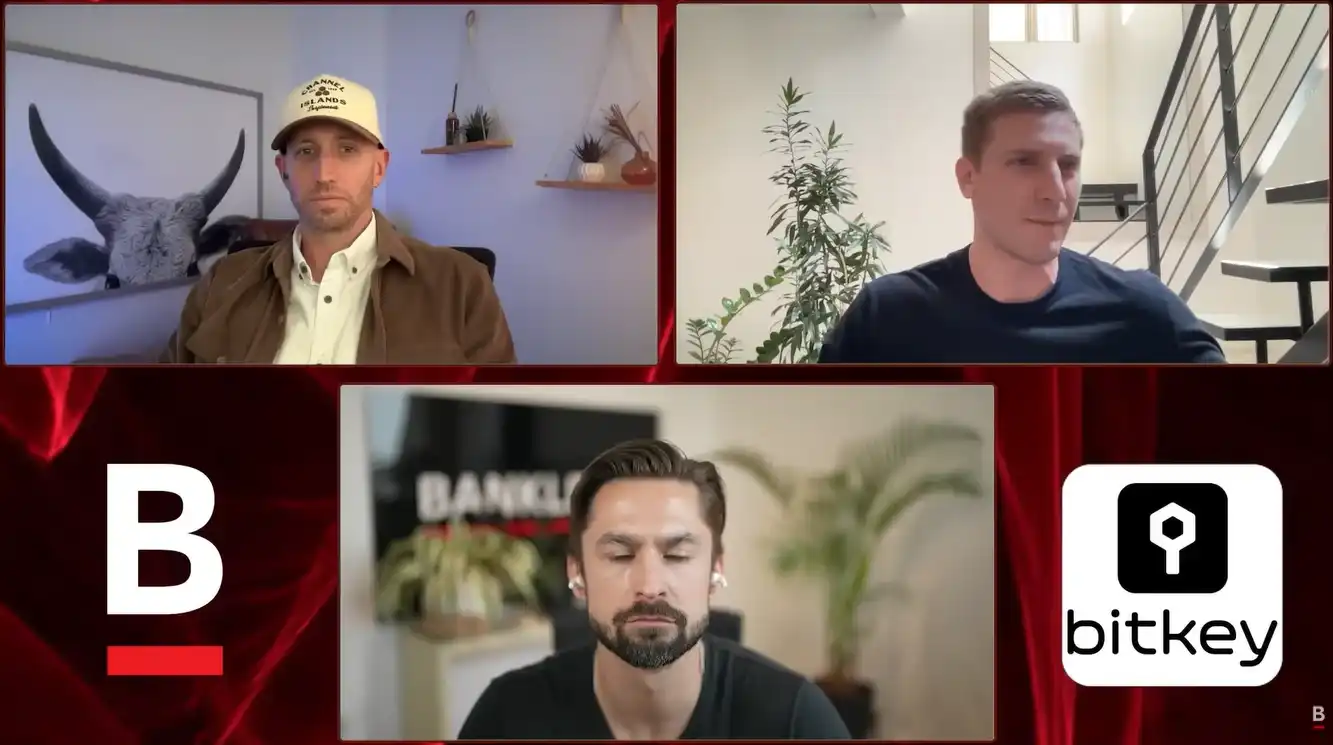
Conversation with Blockchain Capital Partners: The Next Bull Market May Be Right in Front of Us

In a recent Bankless podcast, Blockchain Capital partners Aleks Larsen and Spencer Bogart discussed the crypto market's evolution from infrastructure to applications. They noted that widespread stablecoin adoption has built significant on-chain liquidity, boosting revenues for lending and trading protocols. The partners defended the "buyback and burn" token model, explaining its current effectiveness in aligning incentives and establishing credibility with holders, despite past debates on capital efficiency. Addressing the sentiment divide in crypto, they highlighted positive catalysts like regulatory clarity and institutional entry, even during the bear market. Aleks compared the industry's current state to the 2003-2004 internet era—post-"broadband transition" with cheap block space, awaiting mainstream adoption through applications like stablecoins and prediction markets. They observed a shift from "fat protocol" to "fat application," where value now accrues more at the application layer than the base infrastructure, a sign of a maturing ecosystem. Drawing parallels to AI, they noted similarities in early hype cycles but emphasized crypto's transparent, token-driven market corrections versus AI's private market adjustments. On Real World Assets (RWA), Spencer projected stablecoin market cap to reach trillions by 2030, detailing its multiplier effect on on-chain economic activity. For stock tokenization, he outlined two approaches: permissionless but legally indirect models and compliant, direct ownership channels, suggesting they can coexist in "sidecar" models alongside pure DeFi. The conversation concluded that while the industry's ethos evolves with institutional adoption, crypto's core promise of upgrading global financial infrastructure for greater efficiency remains intact and is steadily progressing.

marsbitHace 3 hora(s)

Conversation with Blockchain Capital Partners: The Next Bull Market May Be Right in Front of Us

marsbitHace 3 hora(s)

Trading

Spot

Artículos destacados

Cómo comprar T

¡Bienvenido a HTX.com! Hemos hecho que comprar Threshold Network Token (T) sea simple y conveniente. Sigue nuestra guía paso a paso para iniciar tu viaje de criptos.Paso 1: crea tu cuenta HTXUtiliza tu correo electrónico o número de teléfono para registrarte y obtener una cuenta gratuita en HTX. Experimenta un proceso de registro sin complicaciones y desbloquea todas las funciones.Obtener mi cuentaPaso 2: ve a Comprar cripto y elige tu método de pagoTarjeta de crédito/débito: usa tu Visa o Mastercard para comprar Threshold Network Token (T) al instante.Saldo: utiliza fondos del saldo de tu cuenta HTX para tradear sin problemas.Terceros: hemos agregado métodos de pago populares como Google Pay y Apple Pay para mejorar la comodidad.P2P: tradear directamente con otros usuarios en HTX.Over-the-Counter (OTC): ofrecemos servicios personalizados y tipos de cambio competitivos para los traders.Paso 3: guarda tu Threshold Network Token (T)Después de comprar tu Threshold Network Token (T), guárdalo en tu cuenta HTX. Alternativamente, puedes enviarlo a otro lugar mediante transferencia blockchain o utilizarlo para tradear otras criptomonedas.Paso 4: tradear Threshold Network Token (T)Tradear fácilmente con Threshold Network Token (T) en HTX's mercado spot. Simplemente accede a tu cuenta, selecciona tu par de trading, ejecuta tus trades y monitorea en tiempo real. Ofrecemos una experiencia fácil de usar tanto para principiantes como para traders experimentados.

804 Vistas totalesPublicado en 2024.12.10Actualizado en 2026.06.02

Cómo comprar T

Discusiones

Bienvenido a la comunidad de HTX. Aquí puedes mantenerte informado sobre los últimos desarrollos de la plataforma y acceder a análisis profesionales del mercado. A continuación se presentan las opiniones de los usuarios sobre el precio de T (T).

活动图片